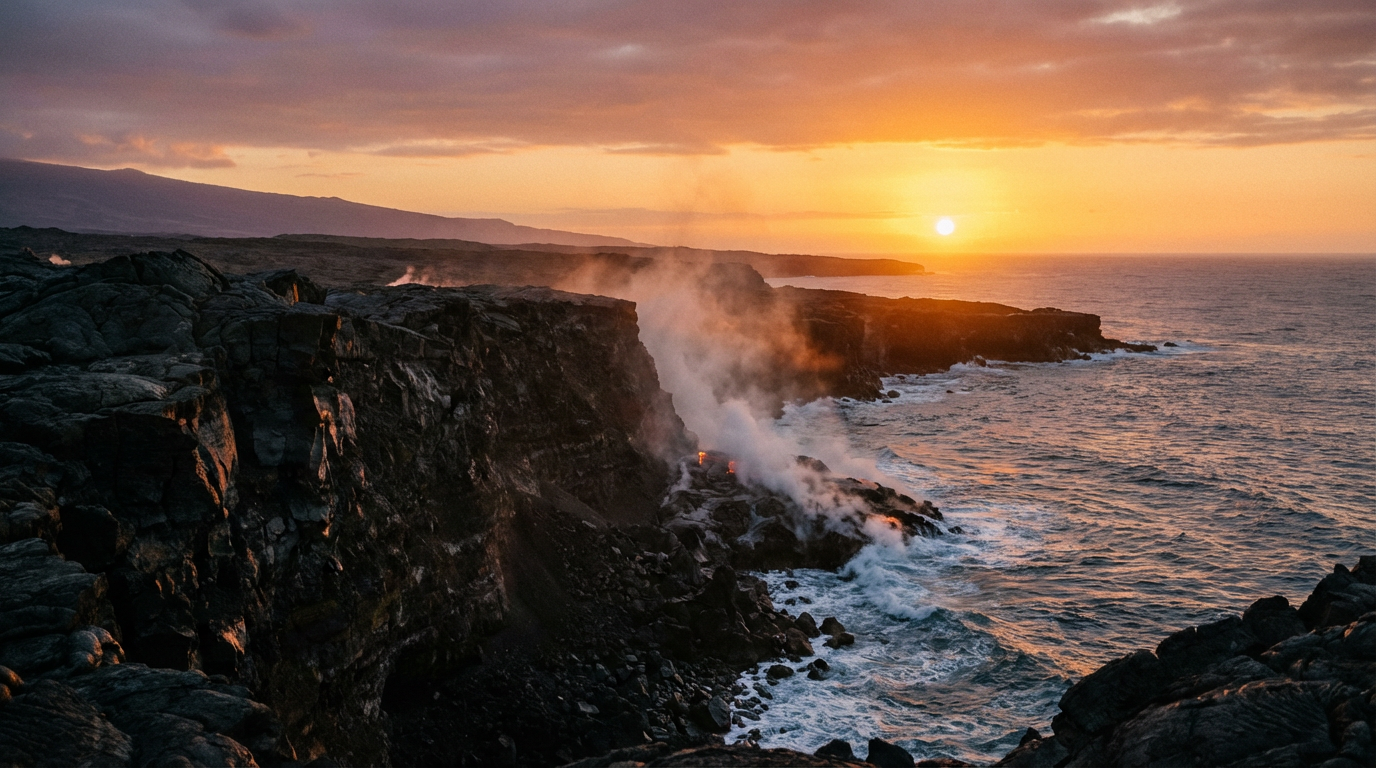
The Big Island of Hawaii is a realm of unparalleled natural diversity, a place where fire meets ice, and lush rainforests give way to stark lava fields. It's the youngest and largest of the Hawaiian islands, constantly growing and evolving with active volcanoes shaping its dramatic landscape. This island offers an abundance of adventures, from exploring black sand beaches to swimming with giant manta rays under the stars.
The Big Island vibe is all about embracing the raw power of nature and a slower pace of life. You'll find a blend of adventure and serene beauty, from hiking through volcanic craters to relaxing on pristine, often uncrowded, beaches. It’s a destination that encourages exploration and connection with the 'aina (land).
Expect a friendly, laid-back atmosphere where the focus is on outdoor activities and experiencing the island's unique ecosystems. Whether you're chasing waterfalls, stargazing from a mountain peak, or marveling at flowing lava, the Big Island offers an unforgettable escape.
Know Before You Go
Getting Around
- A rental car is essential for exploring the Big Island's diverse landscapes, as public transportation is limited. Roads can be winding and mountainous, so allow ample travel time.
Volcanic Activity
- Kīlauea Volcano is one of the world's most active. Check the Hawaii Volcanoes National Park website for current conditions, viewing opportunities, and safety alerts before you visit.
Weather
- The Big Island has multiple climate zones. Kona (west) is typically sunny and dry, while Hilo (east) is greener and wetter. Pack layers to accommodate varying temperatures and conditions.
Ocean Safety
- Always observe ocean safety precautions. Heed warning signs, never turn your back on the ocean, and be aware of strong currents, especially on the dramatic Hāmākua Coast.
Frequently Asked Questions
- What's the best time of year to visit the Big Island?
- The Big Island is a year-round destination. Peak season is generally December to April. Shoulder seasons (April-June and September-November) offer good weather and fewer crowds.
- Do I need a rental car on the Big Island?
- Yes, a rental car is highly recommended. The island is vast, and public transport is limited, making a car essential for exploring its diverse attractions at your own pace.
- What are the must-do activities on the Big Island?
- Must-do activities include visiting Hawaii Volcanoes National Park, snorkeling or diving with manta rays, exploring black sand beaches, and stargazing from Mauna Kea.
- Is it safe to swim in the ocean on the Big Island?
- Most popular beaches are safe for swimming, but always be aware of ocean conditions, strong currents, and heed warning signs. Never turn your back on the ocean.
- What's the difference between the Kona and Hilo sides?
- The Kona side (west) is typically sunny, dry, and known for its resorts and coffee farms. The Hilo side (east) is wetter, lush, and home to rainforests and waterfalls.
- Can I see active lava flows?
- Lava flows are unpredictable and change frequently. Check the official Hawaii Volcanoes National Park website for the most current information on active flows and viewing opportunities.
- What should I pack for a trip to the Big Island?
- Pack light clothing, swimwear, reef-safe sunscreen, sturdy hiking shoes, a light jacket for evenings or higher elevations, and rain gear if visiting the Hilo side or rainforests.
- Are there family-friendly activities on the Big Island?
- Absolutely! Families can enjoy easy hikes in National Parks, swimming at safe beaches, exploring tide pools, snorkeling, and visiting farms or cultural sites.
- How can I respect local culture and the environment?
- Always practice 'Leave No Trace' principles, respect sacred sites, ask permission before photographing people, and learn a few basic Hawaiian phrases like 'Aloha' and 'Mahalo'.
- What are the unique foods to try on the Big Island?
- Don't miss out on Kona coffee, fresh poke, loco moco, shave ice, tropical fruits, and kalua pig from a local luau.
- Is tipping customary in Hawaii?
- Yes, tipping is customary for services like dining, tours, and transportation, similar to mainland US standards.
- What wildlife can I expect to see?
- You might encounter Hawaiian green sea turtles, spinner dolphins, humpback whales (seasonal, winter months), various tropical fish, and native birds.