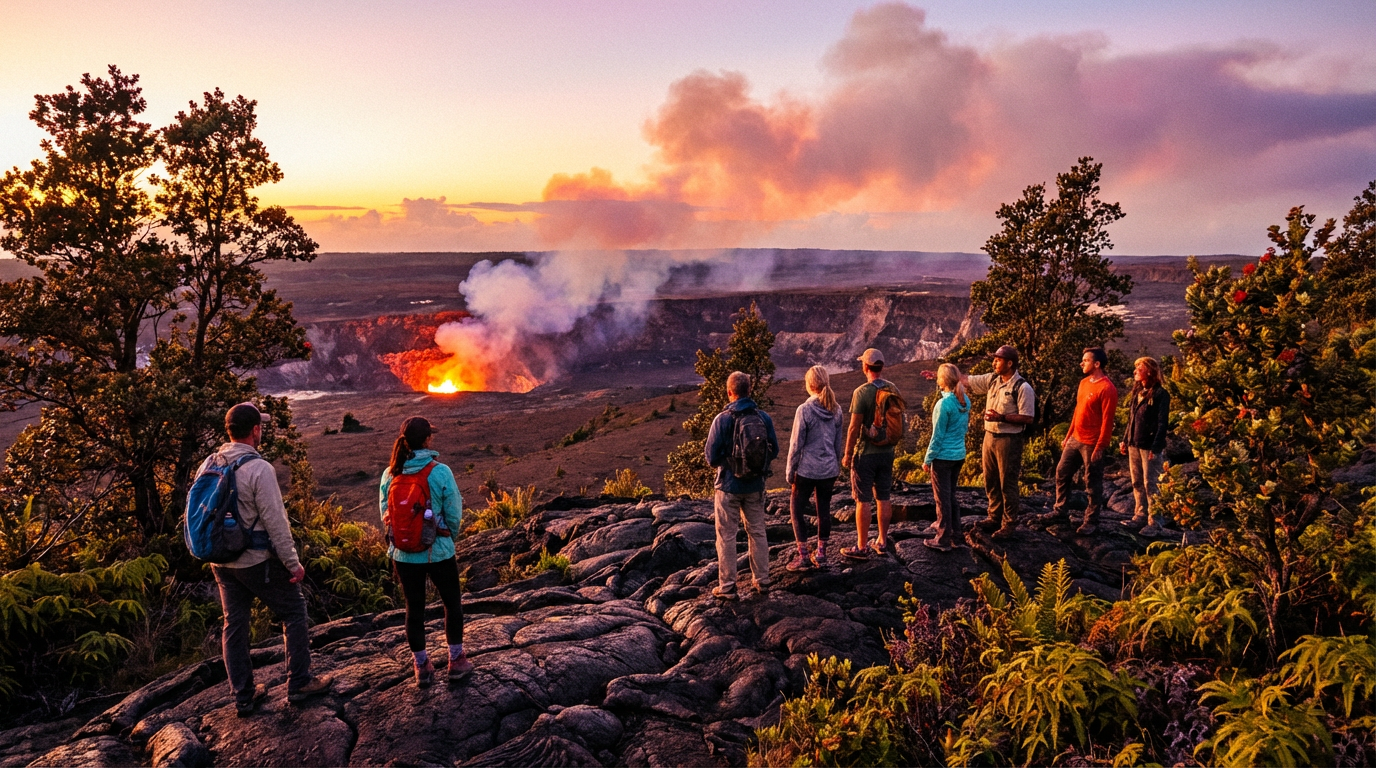
I stood near the Kilauea Visitor Center with four weather tabs open, smelling sharply of wet nylon and genuine panic. I was shivering in an expensive shell jacket that was a complete joke against the 4,000-foot elevation wind. Research is my love language; reality is my ex. I had spent three grueling weeks analyzing 2026 wind patterns, altitude drops, and specific humidity levels just to figure out when the Kilauea crater steam would look most dramatic. I arrived. It was fogged over. Naturally.
Back when I launched my off-road guiding career in 2018, I thought I intimately understood unpredictable dirt. I assumed navigating the deep, swampy ruts of an atv riding in tampa fl excursion was the absolute pinnacle of rugged travel. I was incredibly wrong. The metallic, glassy grit of a Big Island trail makes mainland mud feel like a heavily curated spa treatment. If you want a perfectly sterile vacation, stay on the resort patio. If you actually want to feel the earth aggressively moving beneath your boots, you are in the right place.
Reason 1 The Terrain Actively Fights Back
Mainstream travel blogs conveniently ignore the sharp, shoe-destroying reality of fresh 'a'ā lava. It does not feel like packed dirt. Walking across the Kaʻū Desert trail sounds and feels exactly like grinding miles of shattered diner plates into dust. Every step requires intense focus to avoid slicing an ankle on a razor-sharp edge of volcanic glass.
I read the heavily filtered 1-star TripAdvisor reviews from 2019 so you do not have to. The tourists furiously complaining that the trails are "too difficult" never left the paved visitor center paths. Once you move past the crowds on a raw hawaii volcanoes national park tour, the terrain is brilliantly brutal. I have watched this jagged black earth chew through the synthetic mesh of brand-new trail runners in twenty minutes.
According to the extreme terrain guidelines from the National Park Service, sturdy closed-toe footwear is mandatory. It is quite literally the difference between a pulse-pounding afternoon and a highly embarrassing, incredibly expensive search and rescue operation. The friction out here is the exact opposite of beige travel.
Reason 2 Federal Boundaries Protect You From the Best Mud
This is where my meticulous planning spectacularly failed this season. I spent a ridiculous three days mapping out a rogue 4x4 route to get closer to the Halemaʻumaʻu Crater. I wanted to feel the engine rattle while staring down an active caldera.
Wait, what? You legally cannot do that here.
The realization hit me as I stared at heavily chained federal barricades. Off-roading inside the national park is explicitly forbidden. It carries massive federal fines because the summit environments are strictly protected. The glossy brochures conveniently blur the lines, leaving you to assume you can tear through the crater in a side-by-side. You cannot. The federally mandated park experience is intentionally slow and entirely paved in the high-traffic zones.
This massive logistical glitch actually forces a much better itinerary. You do the slow, respectful hiking portion of your day inside the park limits. Then, you cross the boundary onto the adjacent private ranches to get loud. The actual, chest-rattling muddy adventure happens just outside the federal lines. Scheduling Hawaii ATV Tours in the nearby Hamakua or Puna districts gives you access to the aggressive, untamed terrain that the park simply will not let you drive over.
Reason 3 Ancient Polynesian Culture Is Not a Museum Exhibit Here
If it is on a postcard, it is a trap. I harbor a deep, burning cynicism for perfectly manicured cultural centers where you sit in a padded, air-conditioned theater to learn about indigenous history. That is not exploration. That is watching a documentary with a cover charge.
When you book through Rockon Recreation Rentals for your off-road afternoon, the cultural integration is gritty and completely unpolished. You are not politely looking at artifacts through glass. You are gripping the throttle of a massive ATV, ripping through heavy native mud, and arriving at working replica Polynesian villages deep in the tropical canopy.
The local guides do not recite sterile, memorized scripts. They pull you off the machines to show you how ancient wayfinders utilized the exact flora you just drove past. The air smells intensely of crushed eucalyptus and hot engine grease. You stand in the damp shade of wild ginger, listening to the sharp snap of traditional tools being demonstrated right in front of you. I cannot scientifically prove this, but learning about a deeply rooted warrior culture hits completely differently when you are covered in a thick layer of local volcanic mud. The energy out here feels earned. Trust your gut on this, even if the shiny travel magazines send you to the hotel luaus instead.
Reason 4 Unhinged Volcanic Weather Forces You to Improvise
You cannot bully an active volcano into following your rigid schedule. The mountain always wins.
I refreshed the National Park Service alert page twelve times before finishing my awful motel coffee. You might think booking a standard hawaii volcanoes national park tour guarantees a neat loop drive. It absolutely does not. Sudden trade wind shifts blow invisible toxic gas right across the road. The air turns sour, a bitter metallic taste instantly coats your tongue, and rangers drag heavy gates across the asphalt. Your whole day changes instantly.
According to federal geologists at the USGS Hawaiian Volcano Observatory, sulfurous plumes can shift from faintly unpleasant to genuinely hazardous in a matter of minutes. Back in Florida, survival rules were simple. Alligators have the right of way. No exceptions. But here? Toxic gas dictates exactly where you eat your lunch.
Surrendering to that chaos makes the trip infinitely better. When the main road closes, you are forced onto obscure, desolate paths like the Hilina Pali Road. Out there, the silence has actual, heavy weight to it. The sheer geographical isolation, sitting 2,000 miles from the mainland, suddenly becomes incredibly apparent.
Reason 5 The Scale of the Darkness Alters Your Brain Chemistry
I spent an unreasonable amount of time staring at the thermal webcams, trying to read mapping updates like I suddenly had a PhD in volcanology. I thought the daylight geological tricks—like the Steam Vents—were the main event. I stood near a steaming pothole expecting a curated display. Then the wind shifted, and a wall of clammy heat slapped me across the face.
I realized I was not just standing near a crack in the dirt. I was standing on the fragile, thin ceiling of an active volcanic plumbing system. The ground vibrates slightly through the thick rubber soles of your boots. It forces you to rethink your own size.
2018 me would have leaned right over the edge for a selfie, inhaling a massive face full of sulfur dioxide. 2026 me stands back, entirely humbled by a planet that is still loudly building itself.
This vast, unsettling scale is exactly why you have to stay until the sun drops. Standing on the edge of the Kilauea caldera in pitch darkness—shivering in the bitter wind while watching a violent, neon-red glow reflect off a massive steam plume—completely rewires your perspective. You walk back to your rental car under the glow of a painfully clear Milky Way, dragging mud into the floorboards, knowing you just outsmarted a thoroughly beige itinerary.