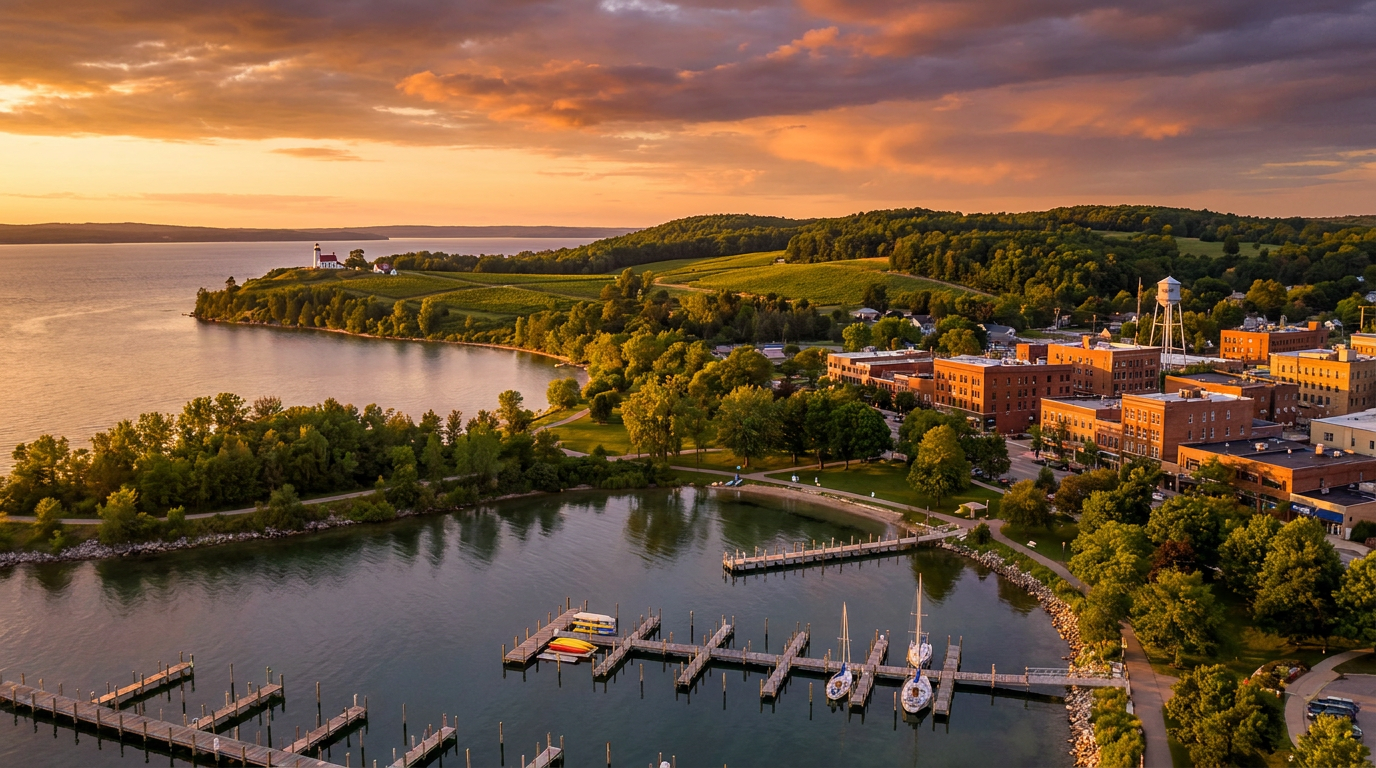
Nestled on the shores of Grand Traverse Bay, Traverse City, Michigan, is a freshwater paradise offering a vibrant blend of outdoor adventure, culinary delights, and charming small-town appeal. From its famous cherry orchards and world-class wineries to pristine beaches and thrilling water sports, this Northern Michigan gem promises an unforgettable escape for every traveler. Discover why Traverse City is often called the "Cherry Capital of the World" and a top inland tourist destination in the USA.
Traverse City's vibe is a delightful mix of relaxed lakeside charm and spirited outdoor enthusiasm. The crystal-clear waters of Grand Traverse Bay invite you to sail, paddle, or simply soak up the sun, while the surrounding hills boast scenic vineyards and orchards.
Beyond the natural beauty, a lively downtown scene offers artisan shops, award-winning restaurants, and craft breweries. It's a destination where you can easily transition from an exhilarating morning on the water to an evening of fine dining and cultural exploration.
Know Before You Go
Best Time to Visit
- Summer (June-August) is ideal for water activities, cherry picking, and festivals like the National Cherry Festival. Fall (September-October) offers stunning foliage and harvest events at local wineries.
Getting Around
- A car is recommended for exploring the wider Traverse City area, including the Old Mission Peninsula and Sleeping Bear Dunes. Downtown is walkable, and bike rentals are popular for scenic trails.
Local Delicacies
- Don't leave without trying cherry-infused treats—pies, wines, and ciders—and fresh-caught whitefish from Lake Michigan.
Water Safety
- Grand Traverse Bay waters can be deep and cool. Always be mindful of weather conditions when engaging in water sports and ensure proper safety gear is used, especially with rentals.
Frequently Asked Questions
- What is Traverse City famous for?
- Traverse City is most famous for its tart cherry production, earning it the title of 'Cherry Capital of the World.' It's also known for its stunning Grand Traverse Bay, numerous wineries, and as a gateway to Sleeping Bear Dunes National Lakeshore.
- When is the best time to visit Traverse City?
- The best time to visit depends on your interests. Summer (June-August) is perfect for water sports, festivals like the National Cherry Festival, and warm weather. Fall (September-October) offers spectacular fall foliage, harvest events at wineries, and cooler temperatures. Spring and winter also offer unique activities for those who enjoy snow sports or a quieter visit.
- How do I get to Traverse City?
- Traverse City is accessible by air via Cherry Capital Airport (TVC), which has direct flights to several major cities. By car, it's a scenic drive from major Midwestern cities. Public transit within the city is limited, so a car is often recommended for exploring the wider region.
- Are there good options for food and drink in Traverse City?
- Absolutely! Traverse City boasts a vibrant culinary scene, from farm-to-table restaurants and award-winning wineries on the Old Mission and Leelanau Peninsulas to craft breweries and charming cafes. Don't miss trying local cherry products and fresh Great Lakes whitefish.
- What outdoor activities can I do in Traverse City?
- Traverse City offers a wealth of outdoor activities including boating, kayaking, paddleboarding, parasailing, and swimming on Grand Traverse Bay. You can also enjoy hiking and dune climbing at Sleeping Bear Dunes, cycling on numerous trails, golfing, and in winter, skiing and snowshoeing.
- Is Traverse City family-friendly?
- Yes, Traverse City is very family-friendly. It offers beaches, parks, family-oriented cruises, nature centers, and attractions like the Great Lakes Children's Museum, making it an ideal destination for families with children of all ages.
- What is the National Cherry Festival?
- The National Cherry Festival is an annual, week-long event held in early July that celebrates the region's cherry harvest. It features parades, airshows, concerts, cherry-themed food, and various family activities, attracting hundreds of thousands of visitors.
- Can I visit wineries in Traverse City?
- Yes, the Traverse City region is a prominent wine destination, particularly on the Old Mission and Leelanau Peninsulas. You can enjoy tours and tastings at numerous wineries, many of which offer stunning views of the bay and vineyards.
- What are the must-see attractions near Traverse City?
- Beyond Traverse City itself, key attractions include Sleeping Bear Dunes National Lakeshore (a short drive west), the scenic Old Mission Peninsula (home to wineries and lighthouses), and the charming surrounding towns like Suttons Bay and Leland.
- Is Traverse City an expensive destination?
- Costs can vary depending on the season and your choices. Summer and fall are peak seasons, so accommodation and popular activities might be pricier. There are options for various budgets, from luxury resorts to more affordable lodging, and many free natural attractions to enjoy.
- What kind of weather should I expect?
- Summers are typically warm and pleasant, with average temperatures in the 70s°F (20s°C). Fall brings crisp air and vibrant colors, with temperatures in the 50s-60s°F (10s°C). Winters are cold and snowy, ideal for winter sports, with temperatures often below freezing. Spring is mild but can be unpredictable.
- Are there good options for group travel?
- Traverse City is an excellent destination for group travel, with ample opportunities for group activities like winery tours, boat charters, and organized outdoor adventures. Many restaurants and accommodations can cater to groups with advance reservations.
- What unique experiences can I find in Traverse City?
- Beyond the mainstream, unique experiences include exploring the historic State Hospital grounds (now The Village at Grand Traverse Commons), visiting a U-pick cherry farm in season, or taking a scenic drive to the Mission Point Lighthouse at the tip of Old Mission Peninsula.
- Is it safe to swim in Grand Traverse Bay?
- Yes, the waters of Grand Traverse Bay are generally safe and clean for swimming. However, always be aware of local conditions, water temperatures, and any advisories. Public beaches are typically monitored during peak season.