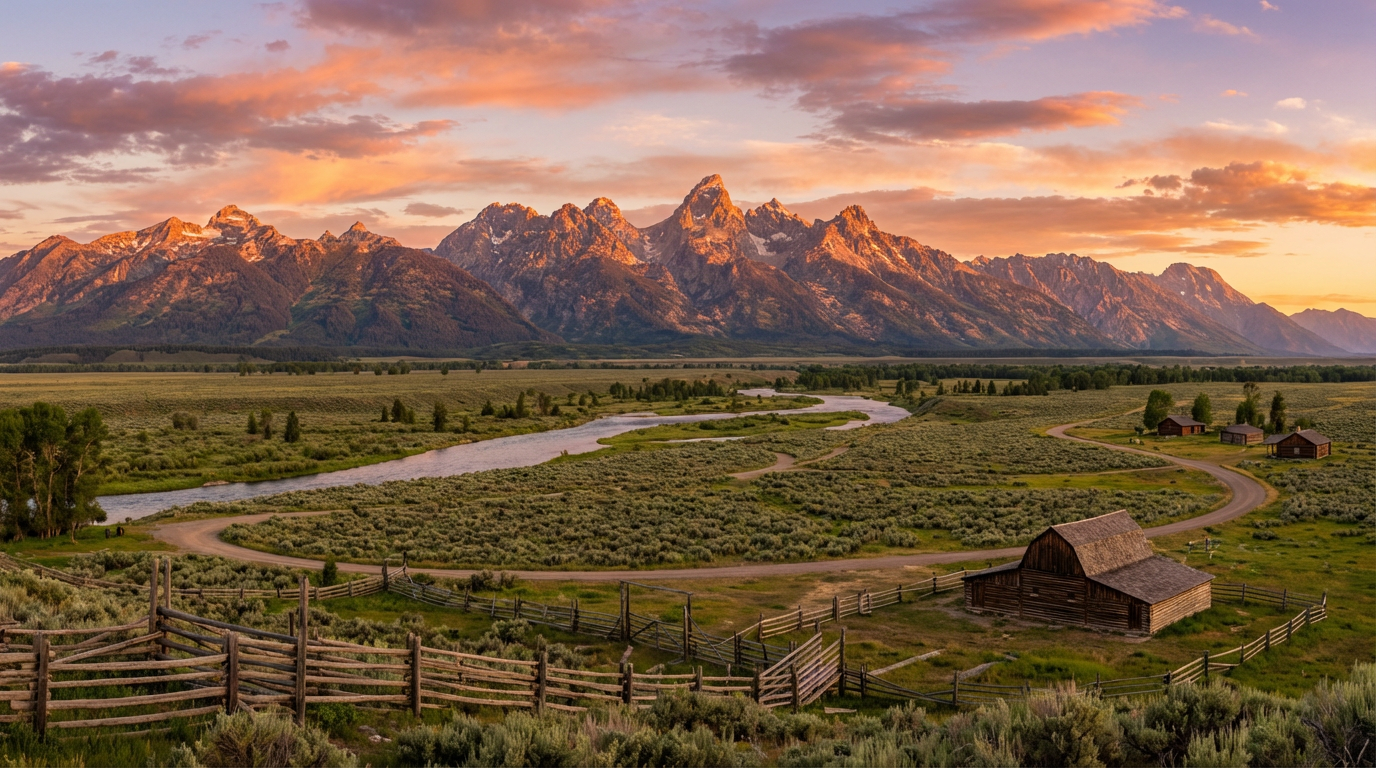
Grand Teton National Park, a jewel in Wyoming's crown, invites you to immerse yourself in a landscape defined by dramatic peaks, pristine alpine lakes, and abundant wildlife. This iconic park, less crowded than its northern neighbor Yellowstone, offers an intimate connection with nature and a wealth of outdoor adventures.
Imagine waking to the crisp mountain air, the jagged Tetons silhouetted against a pastel sky. Days here are filled with the thrill of discovery, whether you're spotting a grizzly bear from afar, kayaking across a glassy lake, or hiking to a panoramic vista that stretches for miles.
The evenings bring the quiet serenity of the wilderness. After a day of exploration, gather around a campfire under a blanket of stars, sharing stories and soaking in the tranquil beauty that makes Grand Teton an unforgettable escape. It's a place where adventure meets tranquility, creating memories that last a lifetime.
Know Before You Go
Park Entry & Fees
- Grand Teton National Park charges an entrance fee. A 7-day private vehicle pass is $35, a motorcycle pass is $30, and an individual pass (on foot or bike) is $20. An annual Grand Teton National Park Pass costs $70. Consider an 'America the Beautiful' pass if you plan to visit multiple national parks.
Wildlife Safety
- Grand Teton is home to bears, moose, elk, and bison. Always maintain a safe distance from wildlife (100 yards for bears and wolves, 25 yards for other animals). Carry bear spray and know how to use it. Store food properly to avoid attracting animals.
Best Time to Visit
- The best time to visit Grand Teton National Park is from May through September when all visitor services are open and temperatures are mild. To avoid peak crowds, consider visiting in late spring or early fall, when wildlife viewing is excellent and the autumn colors are breathtaking.
Getting Around
- While some areas are walkable, a car is essential for exploring the vastness of Grand Teton National Park. Roads can close seasonally due to snow, so check the park's official website for current conditions, especially outside of summer months.
Frequently Asked Questions
- When is the best time to visit Grand Teton National Park?
- The best time to visit Grand Teton National Park is typically from May to September when all park roads and facilities are open, and the weather is most favorable for outdoor activities. Shoulder seasons (late spring and early fall) offer fewer crowds and excellent wildlife viewing.
- Are there entrance fees for Grand Teton National Park?
- Yes, there are entrance fees. A 7-day pass for a private vehicle is $35, a motorcycle pass is $30, and an individual pass (on foot or bicycle) is $20. The America the Beautiful – National Parks and Federal Recreational Lands Pass covers entrance to Grand Teton and other national parks.
- Can I see wildlife easily in Grand Teton National Park?
- Grand Teton National Park is renowned for its abundant wildlife. You have a good chance of seeing bison, elk, moose, pronghorn, various bird species, and if you're lucky, bears (black and grizzly). Early morning and late evening are the best times for wildlife viewing.
- What are some popular activities in Grand Teton National Park?
- Popular activities include scenic drives (like Mormon Row and Oxbow Bend), hiking (Jenny Lake, Taggart Lake, Cascade Canyon), wildlife viewing, boating and fishing on Jenny and Jackson Lakes, rafting on the Snake River, and photography.
- Is Grand Teton National Park suitable for families with children?
- Absolutely! Grand Teton offers many family-friendly activities, including easy hikes, ranger programs, scenic drives with pull-offs for wildlife viewing, and opportunities for boat rides on the lakes. The Jenny Lake area is particularly good for families.
- What should I pack for a trip to Grand Teton National Park?
- Pack layers of clothing as weather can change quickly. Include waterproof outerwear, sturdy hiking shoes, a hat, sunscreen, insect repellent, bear spray (and know how to use it), binoculars, and a camera. Don't forget plenty of water and snacks.
- Are there dining options within Grand Teton National Park?
- Yes, there are several dining options ranging from casual cafes to more formal restaurants located within the park's lodges and visitor service areas, particularly around Jackson Lake and Jenny Lake. The nearby town of Jackson also offers a wide array of dining choices.
- Can I camp in Grand Teton National Park?
- Yes, Grand Teton National Park has several campgrounds available. Reservations are highly recommended, especially during peak season, as campgrounds fill up quickly. There are also first-come, first-served sites, but these are competitive.
- What is the closest town to Grand Teton National Park?
- The closest major town offering extensive services and accommodations is Jackson, Wyoming (often referred to as Jackson Hole, which also encompasses the valley). It's a convenient base for exploring the park.
- Is hiking strenuous in Grand Teton National Park?
- Hiking in Grand Teton ranges from easy, flat lakeside strolls to challenging multi-day backcountry treks. Trails like the Jenny Lake Loop are relatively flat, while others like the climb to Inspiration Point or expeditions into Cascade Canyon offer more strenuous options. Always choose trails appropriate for your fitness level.
- How much time should I allocate to visit Grand Teton National Park?
- To experience the highlights, plan for at least 2-3 full days. This allows time for scenic drives, a few hikes, wildlife viewing, and perhaps a boat trip. For more extensive exploration or backpacking, allocate a week or more.
- What unique geological features can be found in Grand Teton?
- Grand Teton National Park is characterized by its dramatic fault-block mountains, which are among the youngest in the Rocky Mountains. You can observe evidence of glaciers, cirques, and U-shaped valleys carved by ancient ice. The Snake River meanders through the valley, offering stark contrast to the towering peaks.