The Geography Glitch Nobody Mentions
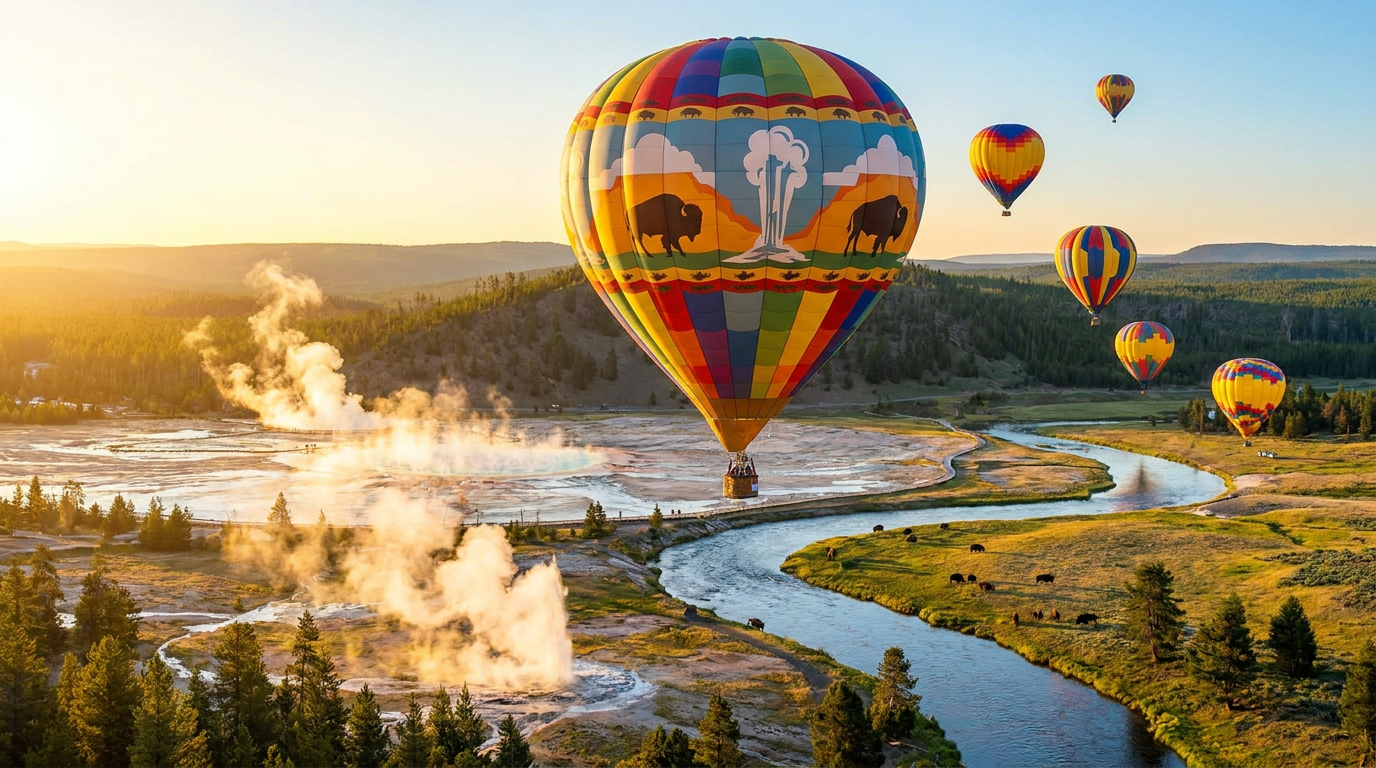
The faint scent of raw propane hangs in the damp air right before the pilot hits the burner for your yellowstone hot air balloon flight. If you look over the edge, you are not floating over the Grand Prismatic Spring. The marketing brochures suggest you will hover directly over Old Faithful. They lie.
According to the National Park Service, federal regulations restrict flights below certain altitudes to protect thermal features and wildlife. A true yellowstone hot air balloon flight traces the edges of the park boundaries. You fly the perimeter. Never the center. I cannot prove this with a written admission, but I swear operators avoid mentioning this geographic technicality until the non-refundable deposit clears.
Launch Zones and Logistics
Launch zones sit well outside the federal gates. Most operators base their flights in Jackson Hole to the south or up near Bozeman in Montana. The drive out there happens in the dark before the wind picks up. Research is my love language; reality is my ex.
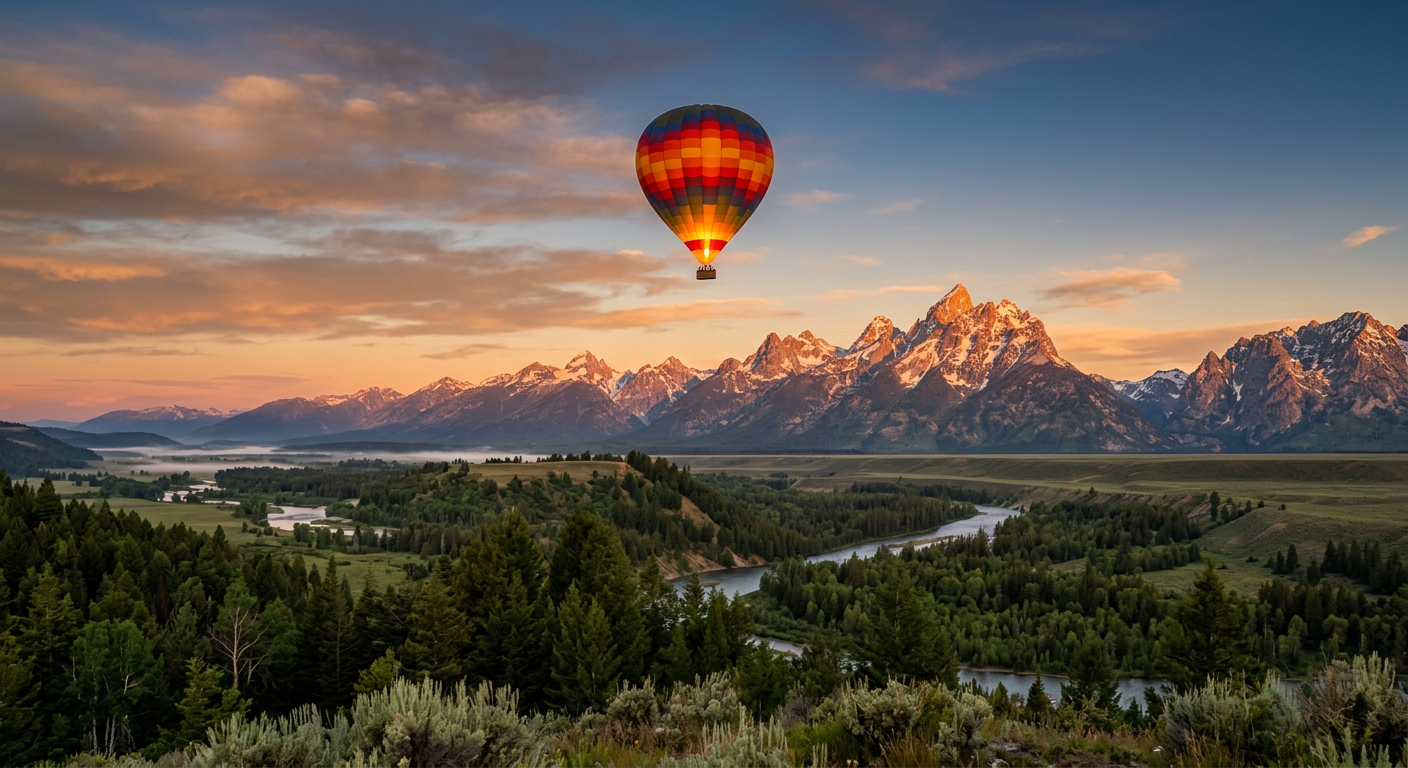
2018 me hated this legal setup. I argued with booking agents, convinced customers were missing the actual park experience. Taking the Jackson Hole route this season reframed my entire perspective. Floating next to the Teton Range instead of peering straight down at lodgepole pines is the better route. The basket had a small scratch on the woven willow rim shaped like a crescent moon.
A lot of folks bundle this region into a massive western road trip. If you just navigated the coast with a California Highway 1 GPS Tour, you are used to oceanic fog and casual mid-morning starts. The northern Rockies operate on a different schedule. Out here, nature dictates the itinerary, and she prefers to work in the dark.
We list operators for these outer-boundary flights through Rockon Recreation Rentals. The flights depart at dawn from flat grass fields. A ground crew follows your flight path in a pickup truck, ready to pack up the fabric when you land.
Federal aviation rules dictate pilots must maintain about 2,000 feet of clearance above designated park lands. Getting that altitude over Paradise Valley offers a broader view of the ecosystem anyway.
Why the Morning Alarm Hurts
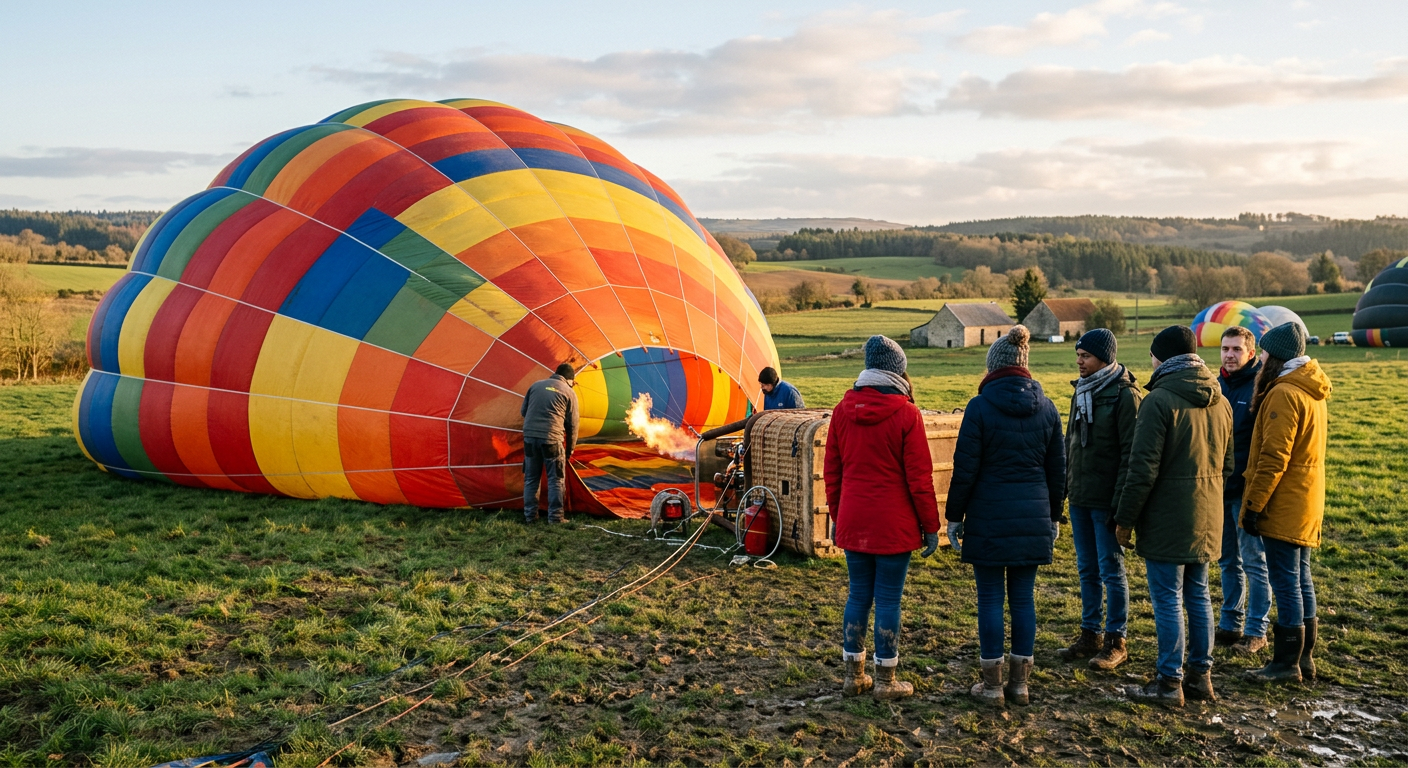
The rhythmic thumping of industrial inflation fans hits your chest the moment you step out of the vehicle. It is a heavy, mechanical sound echoing in the dark. You stand in the frost watching the crew unroll thick sheets of fabric across the ground. Ever wonder why the booking brochures conveniently crop out the wakeup call? The itinerary says the launch happens at dawn. The reality dictates you are standing in a pitch-black field off a dirt road long before the sun even considers rising.
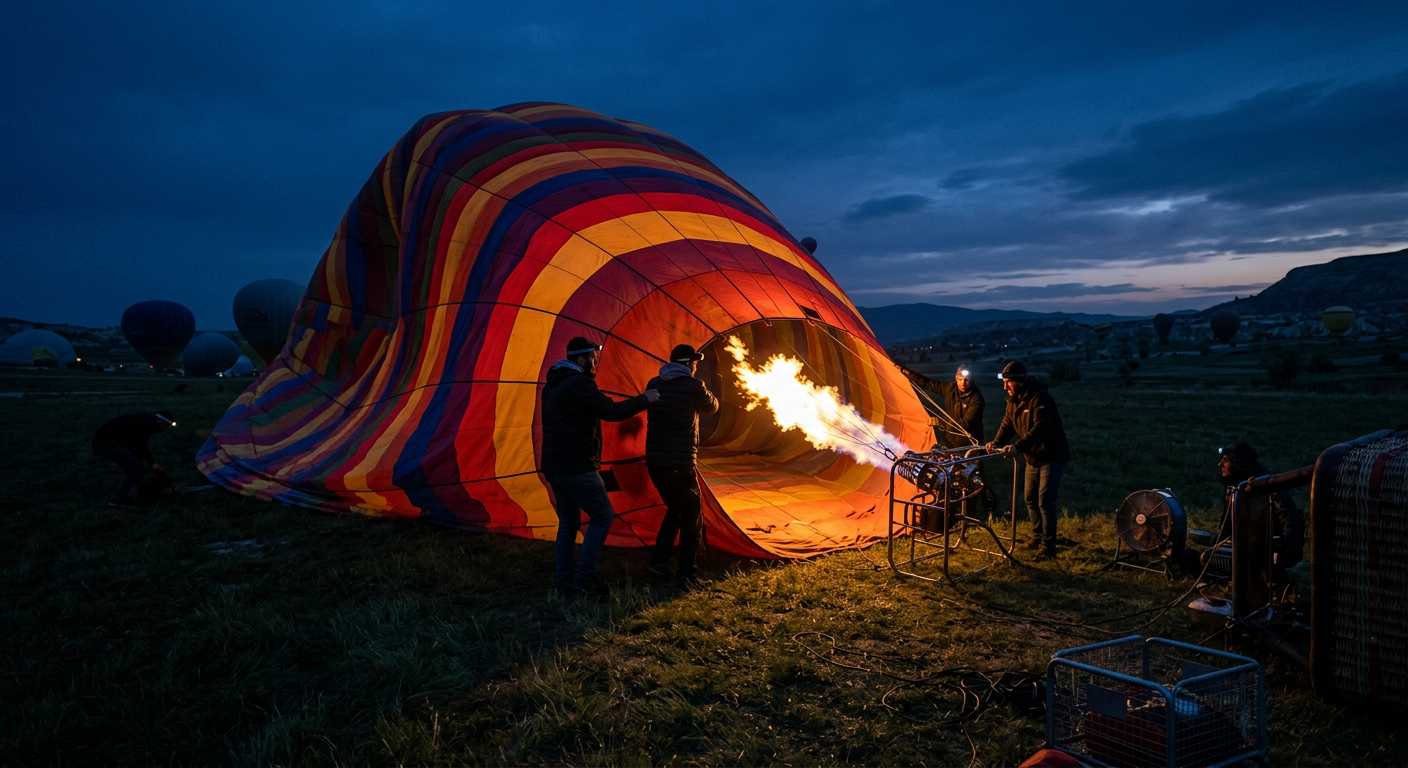
It takes roughly an hour to get the envelope inflated. You just stand there shivering. The pilot working our flight had a faded plastic dinosaur hanging from his truck keys.
2019 me used to tell clients to stay in the heated shuttle van while the ground crew worked. Standing outside in the freezing Wyoming pre-dawn seemed like punishment. Leaving the van is the right move.
Watching the nylon envelope slowly breathe in the fire and expand against the darkness makes the early alarm tolerable. The fan blades push cold air into the mouth of the balloon until it takes shape on the grass.
Local weather patterns demand these harsh start times. According to the National Weather Service, thermal drafts build over the surrounding valleys by mid-morning. Launch a yellowstone hot air balloon much later in the day in 2026, and the wind shears will simply keep the basket grounded. It is a matter of basic atmospheric physics.
The Wait in the Grass
The damp humidity of the morning dew soaks through the cuffs of your pants while you wait. There is no waiting room or coffee shop at the launch zone. You are standing in a ranch pasture or a designated launch field outside the park boundaries.
The process is slow. It is mechanical. You will question your life choices right up until the pilot signals it is time to climb aboard.
The Reality of the Basket Experience
The heat washes over your scalp like an open oven door the second the propane burner ignites. You are packed shoulder-to-shoulder in a woven basket with six strangers. Personal space is a myth up here.
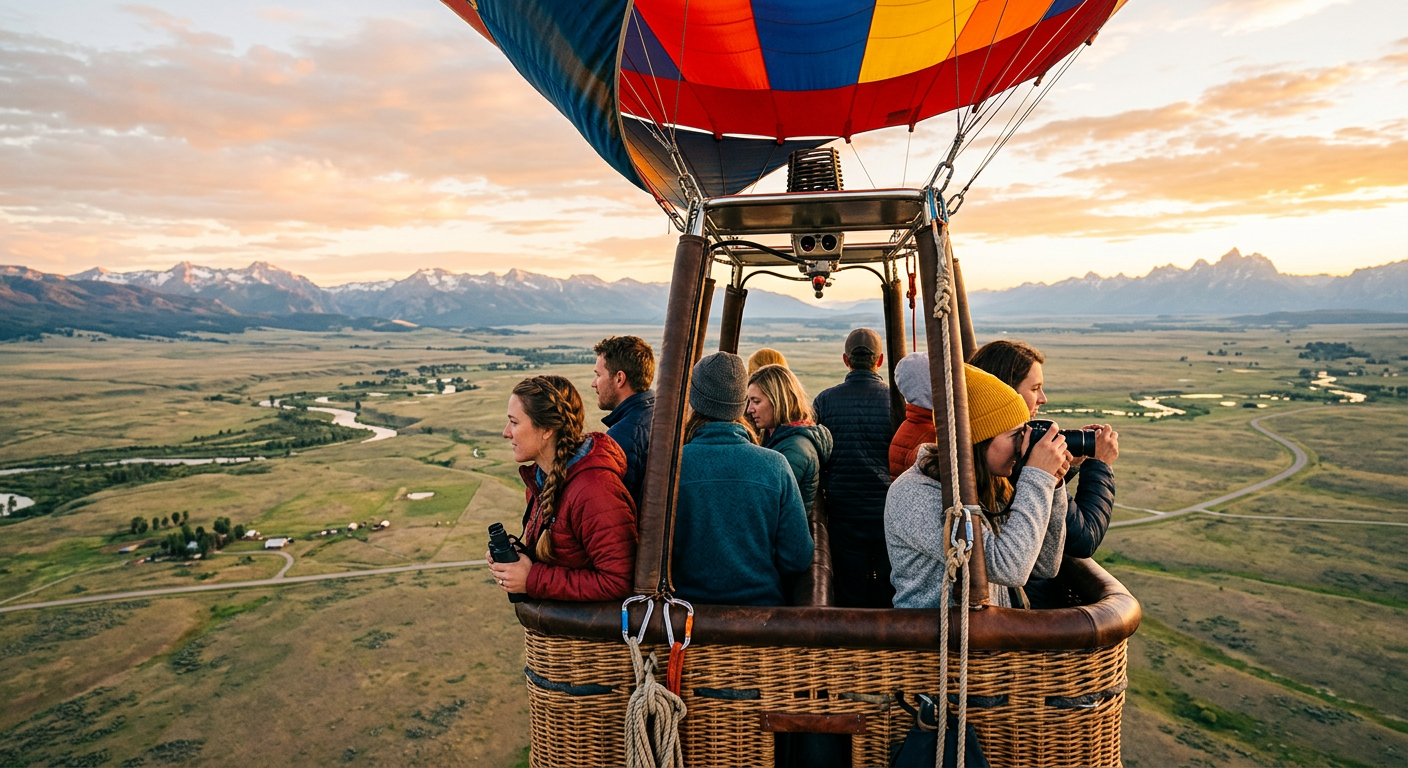
The pilot pulls the valve handle. A yellow flame shoots upward. We rise from the grass and move forward with the wind.
The Myth of the Silent Drift
Marketing photos sell a graceful ascent. The truth involves sudden noise and sporadic jolts. The pilot must blast the burner often to keep the envelope inflated and maintain altitude. It is not a smooth elevator ride.
I used to believe these flights offered a serene escape from the noise of the ground. The constant firing of the dual burners showed me otherwise. You spend the flight talking loud over the hiss of liquid propane.
Wildlife and Wicker
I cannot prove this with biology degrees, but trust your gut on this—the animals below notice you.
A shadow the size of a building moving across the Wyoming scrub brush gets their attention. Herds roam freely outside the managed federal boundaries. Pronghorn antelope tend to scatter when the burner flares.
You are an unidentified floating object to the elk. They stop grazing and stare upward until the wind pushes you over the next ridge.
Dressing for Two Different Seasons
The dry grit of Wyoming dust clings to the lower half of your jeans before the sun even breaches the horizon. At dawn, the ground temperature hovers near freezing. The staging area feels like mid-winter.
You stand around for about an hour watching the crew inflate another yellowstone hot air balloon. Your toes will go numb while the pilot runs through pre-flight safety checks with the ground team.
The Burner Effect
The air inside the basket changes instantly. The dual burners output heat directly downward onto the passengers. People standing over six feet tall receive the radiant heat right on their shoulders.
The flight lasts roughly an hour, and you cannot step away from the flame.
If it is on a postcard, it is a trap. Travel blogs tell you to wear a wide-brimmed felt hat for photos. 2026 me knows a simple baseball cap is a liability up there.
Taking off near Teton Village taught me the metal button on top of a cap absorbs heat until it threatens to singe your scalp. Ditch the headwear. It looks good on the ground, but you will end up holding it in your hands for the whole flight.
Footwear and Layers
Layering is a practical necessity. When you book a sunrise flight, we advise passengers to wear clothes they can shed with one hand.
You are sharing a small wicker box with up to a dozen other people. Once you hit altitude, that freezing ground temperature vanishes. It gets replaced by the stagnant heat trapped in the basket.
The balloon travels with the wind, meaning you feel zero breeze to cool you down. Wear waterproof footwear that can take a beating.
Your canvas sneakers will be soaked through by the time you step over the basket rim. Landings rarely happen on paved surfaces. Prepare your feet for agricultural runoff and dew.
The Chase Crew Dynamic
The pilot is constantly talking to a pickup truck hauling a flatbed trailer somewhere below. You never fly alone.
Balloons have no steering wheels. They go where the wind layers take them. This means the landing zone is mostly a guess until the last few miles. The ground crew spends the entire hour navigating dirt farm roads and property lines trying to beat you to the point of impact.
It might just be my imagination, but the chase crew always seems to be having more fun. Watching them anticipate the wind shifts from the ground is a masterclass in local geography. They are the ones who secure permission from ranchers when the wind decides a private alfalfa field is the only safe place to put down.
The Touchdown and Champagne Tradition
The tart bite of cheap sparkling wine washes down the lingering dust in your throat. Before that happens, rough sagebrush scrapes against the bottom of the willow basket as the pilot cuts the burner. Forget the graceful touchdowns you see in movies. Landing a yellowstone hot air balloon usually involves dragging through the dirt for a few yards before tipping sideways.
It is bumpy, a little dusty, and half the fun of the morning.
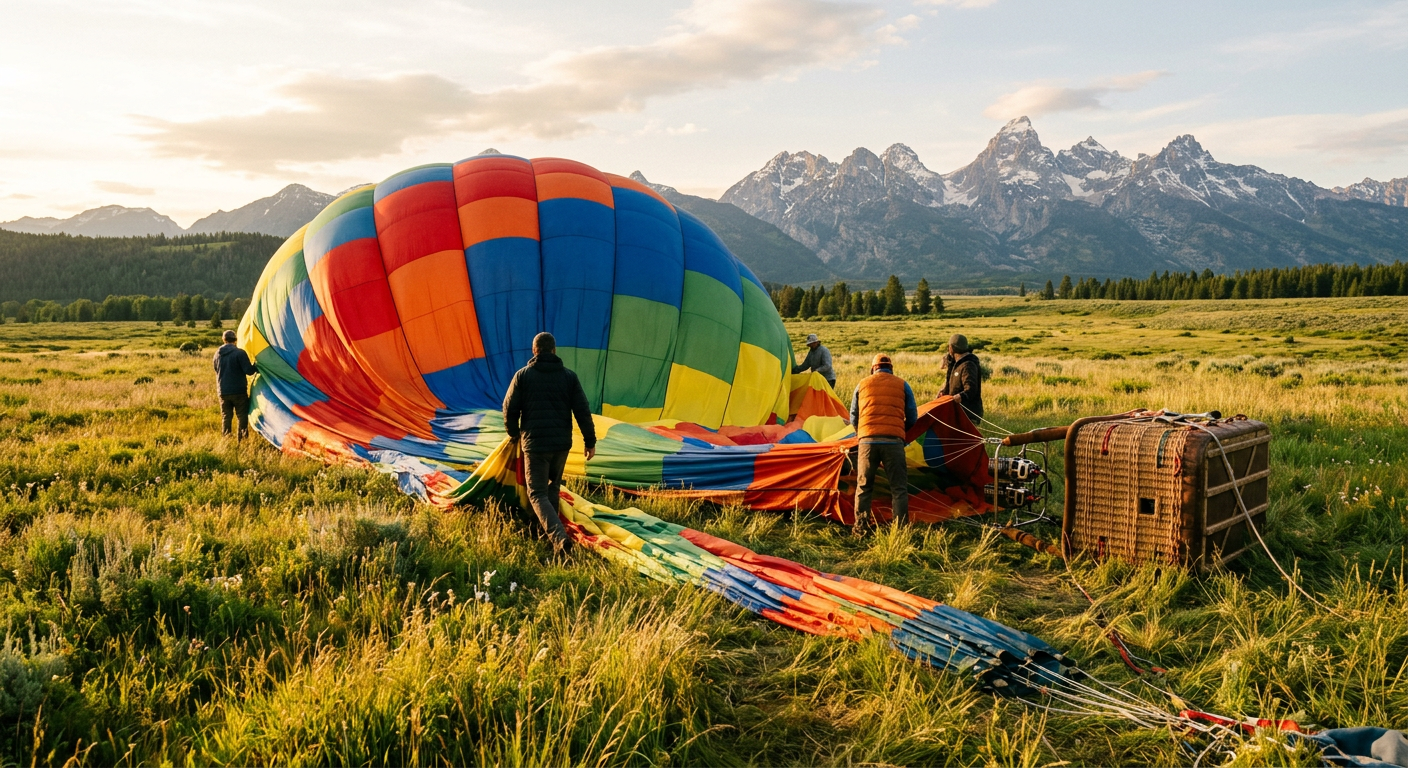
The pilot steps out of the basket onto the dry grass. The chase crew pulls the envelope to release the hot air.
The crew folds the material and loads it into the back of a truck. The pack-up process takes exactly 42 minutes from the moment the basket hits the ground.
The Historic Peace Offering
I used to skip the post-flight drinks because I figured they were just a tourist gimmick. A pilot in Teton Valley handed me a plastic cup of sparkling cider last season. The story he told reframed my view.
This toast dates back to the first flights in France. Early aeronauts brought champagne to prove to frightened farmers that they were human, not fire-breathing dragons falling from the sky.
According to the Smithsonian National Air and Space Museum, that first manned flight happened in 1783. Landing in a random pasture outside the park boundaries today means relying on the good grace of local ranchers. That bubbly drink is a historical peace offering.
I love this little ritual. You stand in an open field holding a cup of champagne. The Teton Range looks huge in the distance. The roaring burner is quiet.
Frequently Asked Questions
Can you fly a yellowstone hot air balloon directly over Old Faithful?
No. Federal airspace laws prohibit flying low over the thermal features. Flights trace the outer edges of the park boundaries. You will see the surrounding mountain ranges rather than the geyser basins.
How early do morning flights launch?
You will meet the crew in the dark, usually an hour before dawn. Local winds demand you get off the ground just as the sun rises to avoid dangerous afternoon thermals.
Is it cold during the balloon flight?
The launch field is freezing, but the dual propane burners radiate heat directly into the basket. Dress in layers you can easily remove once you are airborne.
How long does the actual flight last?
You spend about an hour in the air. The entire experience, from setup to the post-flight toast and return shuttle, takes roughly three hours.
Are there age restrictions for passengers?
Most operators require children to be at least six years old. They need to be tall enough to see over the basket rim without being held.
What happens if it rains on the morning of my flight?
Pilots cancel flights for rain, low visibility, or wind speeds exceeding ten miles per hour. They prioritize safety over schedules, and you will receive a refund or a chance to rebook.
Do I need to wear specific shoes?
Yes. Wear waterproof hiking boots. You will walk through wet, muddy grass during the morning inflation and likely land in an unpaved agricultural field.
Will I get motion sickness in the basket?
The basket moves with the wind, so there is no swaying sensation. Most people who get carsick report feeling fine in the air, though the landing can be bumpy.
Can I bring a large camera bag on board?
Space is limited. Leave bulky bags in your vehicle and bring only your camera on a neck strap. Anything dropped overboard is gone forever.
Where do yellowstone hot air balloon tours land?
Flights do not have designated landing pads. The pilot follows the wind and touches down in open pastures or fields outside the park, coordinating with a chase crew for pickup.
Plan your trip: Ready to experience this firsthand? Book Tours to Yellowstone Park Awaits Your Adventure directly through our marketplace.