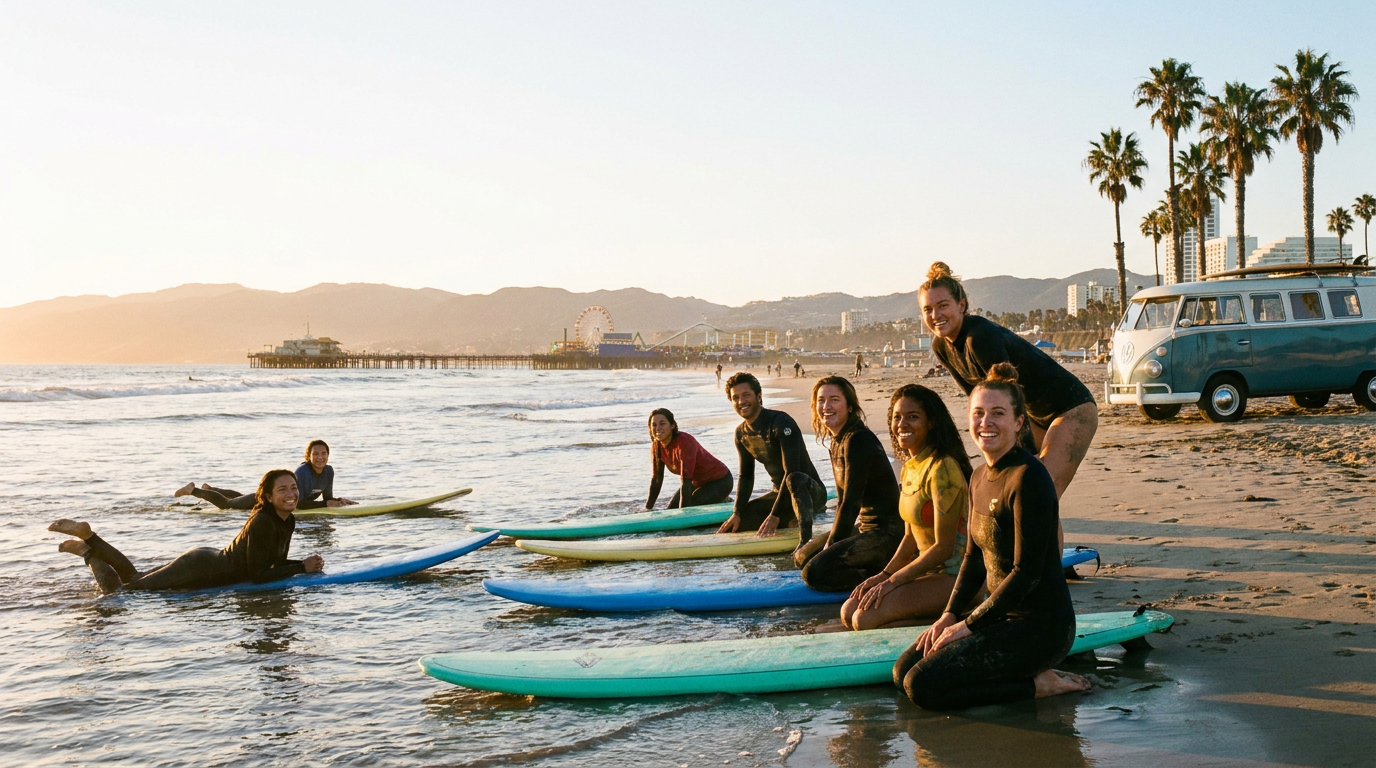
The Reality Check of Santa Monica and Venice Breaks
Anyone planning to learn surfing los angeles style must first listen to the hollow, plastic thud of a rented longboard hitting the concrete boardwalk. A guy in neon yellow Crocs dropped his board twice before his feet even touched the sand. It sets a low bar for the morning.
According to the Los Angeles Times, tourism boards love to claim this three-mile stretch of sand is the birthplace of modern surf culture. The actual water here smells of stale kelp and discount sunscreen. The wind whips grit into your eyes the moment you clear the parking lot. A woman walked past carrying a hairless cat in a mesh backpack. She did not seem to notice the blowing sand.
Those who try to ride these breaks soon discover the vast gap between the vintage posters and the pavement.
Why Venice Fails the Postcard Test
Surf school brochures claim Venice Beach offers a welcoming beginner wave. I cannot prove this, but I suspect the writers have never set foot in the Pacific.
2019 me thought Venice was the definitive surf paradise. 2026 me knows it is a chaotic washing machine of loose foam boards, lost out-of-towners, and pigeons fighting over dropped french fries. You spend half your time dodging other beginners who have lost control of their nine-foot rentals.
You wade into the surf and your foot connects with a slimy, rubbery mass of rogue seaweed. The water hits your ankles in the low 60s in late May. That chill strips away any remaining coastal romance and replaces it with involuntary shivering.
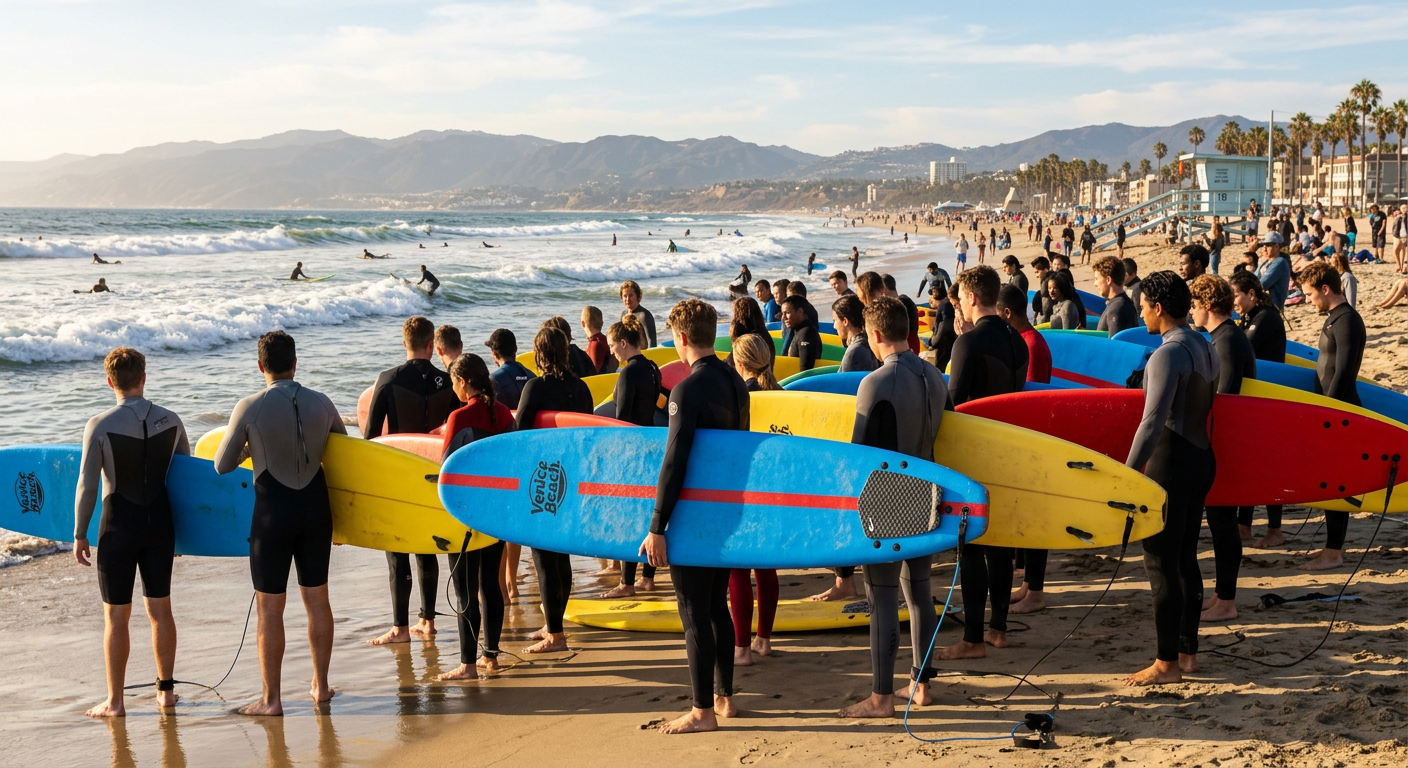
The Santa Monica Sandbar Surprise
The 6 AM county charts forecasted a messy two-foot swell.
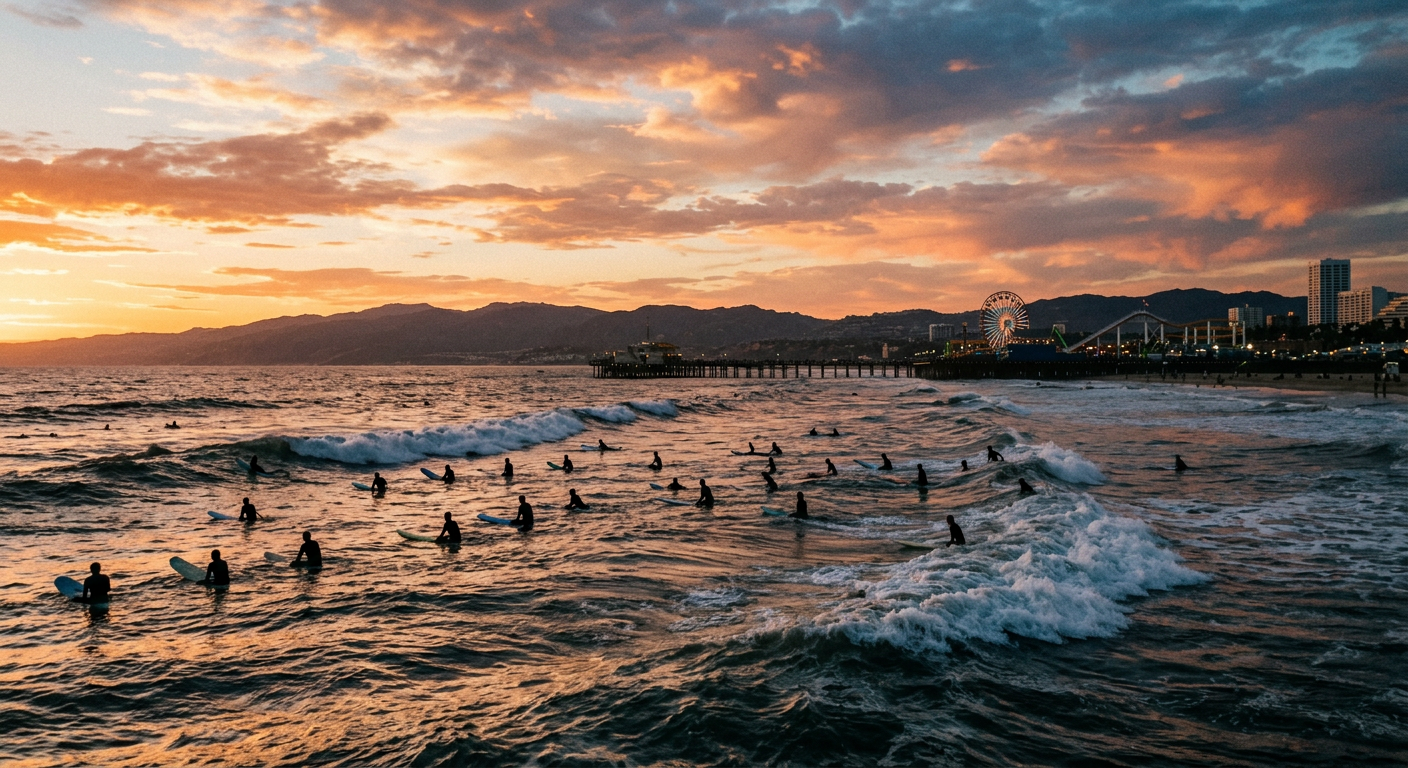
The lifeguard tower sits empty in the early morning. A dozen surfers wait on their boards just past the breaking waves. The tide pushes a line of sea foam higher up the wet sand.
The conventional wisdom says the entire Santa Monica break is an unrideable mess of overlapping cross-chops. The conventional wisdom is wrong. Walk a couple hundred yards south of Tower 26. A shallow sandbar shapes the incoming ocean into a gentle, rolling wave that functions as promised.
Credit where it is due. That specific patch of water earns its reputation.
You paddle over a cresting wave and the chaotic noise of the Venice boardwalk drops to a muffled hum. Finding that quiet pocket among the crowds takes effort. Check the tide schedule yourself before grabbing gear from Rockon Recreation Rentals.
Why You Must Embrace the Foam Board
The rental rack smells like melted wax and damp neoprene. You run your hand down the rails of an eight-foot Wavestorm and feel the rough, spongy texture of the deck. It feels like a giant bath toy.
Surf school websites promise sleek equipment for introductory lessons. The reality is a fleet of faded blue foam logs with missing tail pads.
A standard beginner foam board packs 86 liters of volume. That massive buoyancy translates into a stable platform. It feels like standing on a floating sidewalk.
The Friction Is a Rite of Passage
Let me be clear about the physical toll. The friction of the rough foam against your bare knees is harsh. You drag your legs across the deck to pop up, leaving a bright red rash that stings the moment saltwater hits it.
The 2018 journals show a naive frustration—I wanted to ride the slick fiberglass models the locals carried under their arms. The pivot happened when I finally caught a wave on that ugly blue sponge and rode it to the sand. I realized the foam is what makes the magic happen.
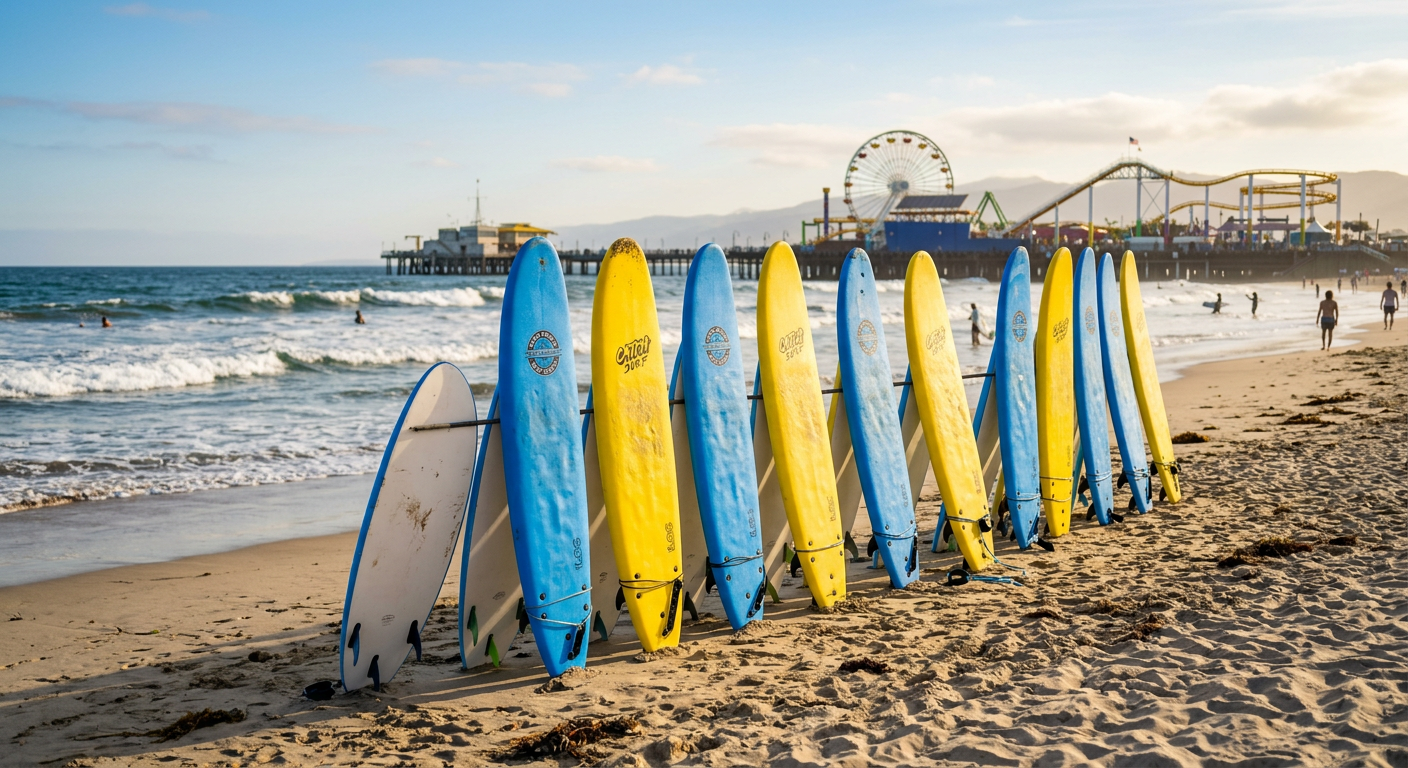
Historical data from coastal surf shops indicates most independent beginners who start on thin fiberglass boards quit within a month. The lack of stability is too frustrating.
Why You Should Not Shortcut the Sponge
Do not buy a shortboard for your first lesson. Accept the learning curve. If you want to learn surfing los angeles style, you have to embrace the beginner phase.
Every competent surfer carving up the break at El Porto started on an oversized sponge.
The board costs around forty bucks for a half-day rental through partners you can find on Rockon Recreation Rentals. Handing over that cash buys you the loudest, most chaotic afternoon of your life. The beach wind whistles past your ears, the cold water shocks your chest, and the gritty foam scrapes your stomach red.
The nine-foot board weighs roughly fifteen pounds. By the time you reach the water, your shoulder aches from the awkward carry.
You eventually drag the board back up the beach, exhausted and covered in dried salt. The fiberglass pros are still out there, sitting past the break. I looked back at the ocean and realized my cheap foam board was the only reason I wasn't just watching them from the sand.
Best Spots to Actually Learn Surfing Los Angeles Without Yelling
You drag your heavy foam board across the Manhattan Beach sand. The coarse grains rub like rough sandpaper against your bare ankles. The morning marine layer hangs low, and the air tastes faintly of exhaust and sea spray.
A county coastal guide markets this specific coastline as a welcoming playground for novices. The author clearly never got verbally berated by a territorial local on a Tuesday morning.
The El Porto Winter Trap
Los Angeles County surf reports show winter swells here regularly hit six feet. Looking at that wall of churning, grey water makes your stomach drop in a way hot coffee cannot fix.
Local forum threads claim El Porto is the definitive beginner spot in the South Bay. They are half-right.
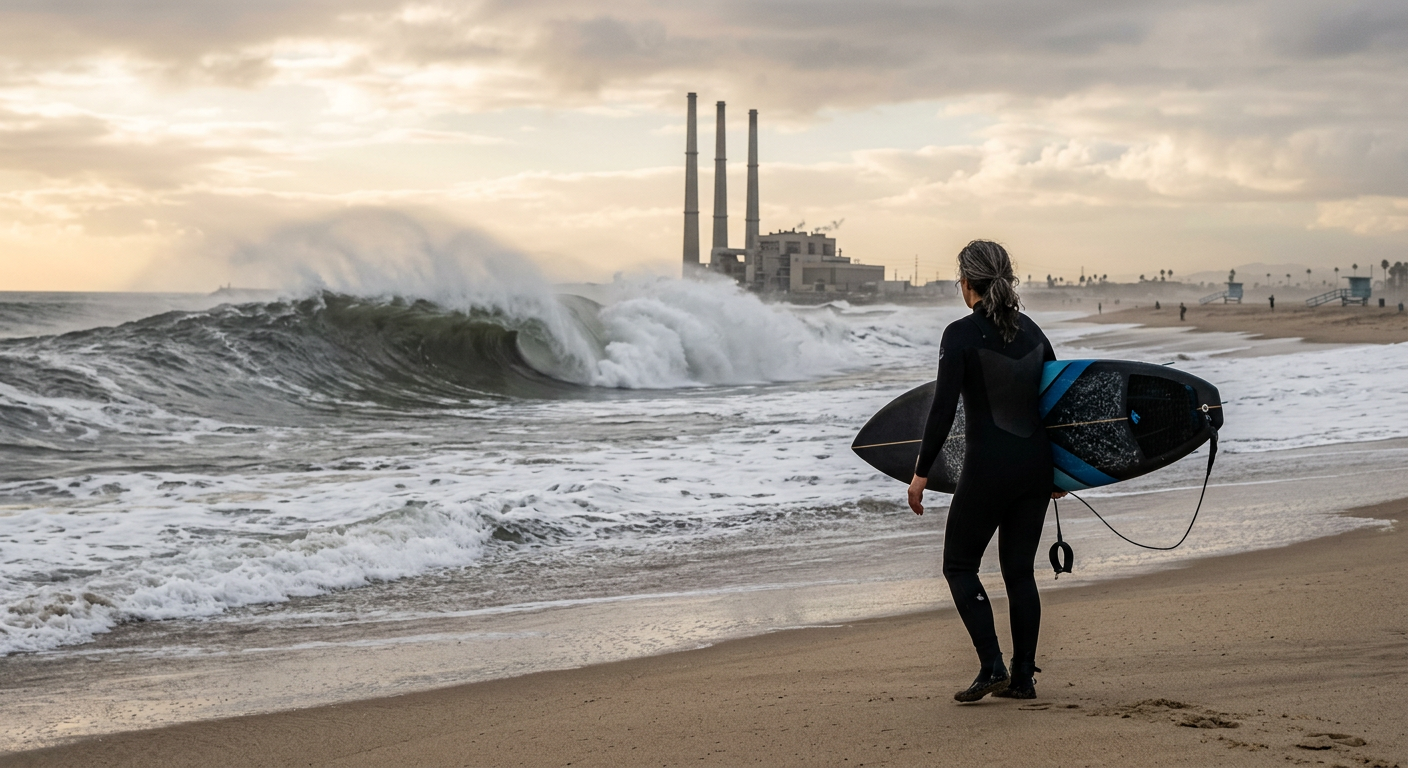
It is a functional beginner spot in July. In January, El Porto is a punishing meat grinder of heavy closeouts. Locals will not hesitate to curse you out for dropping in on their wave. Check the swell forecast before you paddle out.
The Manhattan Beach Middle Ground
For three years, my advice was to avoid the Manhattan Beach pier because of the frantic energy. I was wrong.
Walk a few blocks south of the pier on a medium tide. The steep drop-offs disappear and you find a gently rolling wave that forgives mistakes.
You paddle through the inside break. The heavy ocean fog settles over your wetsuit, leaving a thin layer of condensation on the neoprene.
Official city zoning maps designate a specific stretch here for soft-top boards. The water feels calmer, insulated from the aggressive posturing of the main lineup.
A guy on a yellow longboard caught a knee-high wave and rode it straight to the sand.
Understanding the Blackball Flags
The municipal website describes the summer blackball system as a helpful safety feature. In reality, it is a desperate bureaucratic attempt to stop swimmers from being run over by loose fiberglass.
The 2026 lifeguard protocol dictates strict rules between Memorial Day and Labor Day. A yellow flag with a black circle means no hard surfboards allowed in the water.
The flag goes up at noon. The shrill blast of the lifeguard whistle pierces through the ambient noise, clearing the lineup in seconds.
If you want to rent gear without ruining a family vacation, stick to the soft-top zones available through Rockon Recreation Rentals.
The wind shifted onshore around two o clock. A line of seagulls stood facing the wind, watching the empty lineup churn itself into white foam.
The Surf School Illusion of Group Lessons versus Private Agony
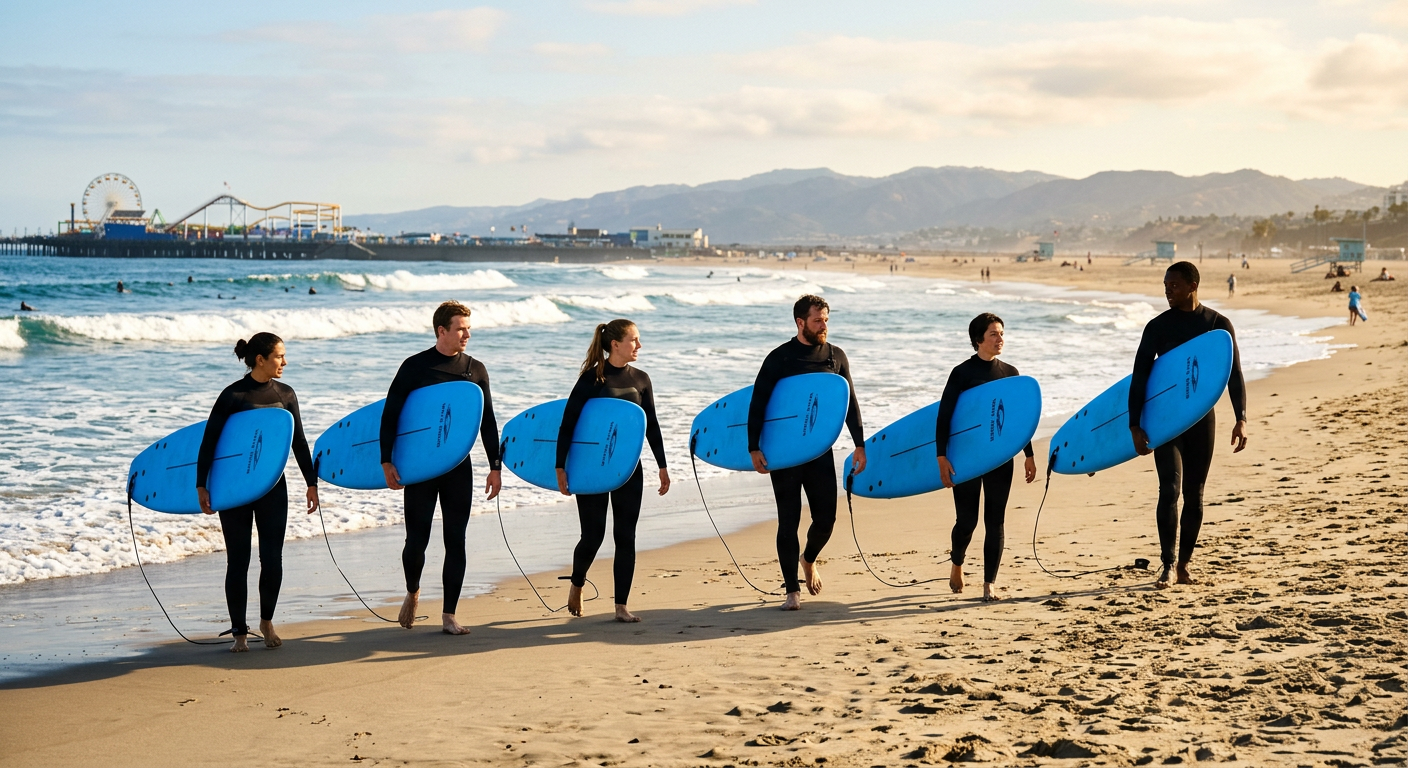
You zip up the thick rental wetsuit. It smells like hot tires and old salt. They line you up on the sand with twenty other people who decided to learn surfing los angeles style on a Tuesday morning.
The brochure promises you will be riding waves by noon. What are you paying for when you share an instructor with four strangers?
The reality is that a group lesson is adult daycare with wet neoprene. You get pushed into two whitewash rollers while the instructor yells at you to stand up. You catch the wave, fall flat on your stomach, and get a high-five for trying.
It feels like an accomplishment. It is not surfing.
Mega-schools operating near the Venice Pier cap student-to-instructor ratios at four-to-one. You spend most of your ninety-minute slot treading water and shivering while waiting for your turn.
Why Going Private Hurts Better
Skip the group package. You paddle out on a private board, and the friction of the wax starts grating against your bare ribs. Your shoulders will ache by minute twelve.
But you learn how the ocean moves instead of just being a passenger on a foam log.
The instructor stays beside you. You paddle until you catch the wave or miss it.
When the Instructors Deliver
You might assume the independent guys operating out of beaten-up vans along the Pacific Coast Highway are bored locals. Tourists make easy targets. I assumed that too. I was wrong.
The guide I booked brought actual pedagogical skill to the water.
We stood in the knee-deep water near Bay Street. The offshore wind tasted of exhaust from the highway. The crashing surf drowned out the traffic noise.
The National Oceanic and Atmospheric Administration notes average May water temps hit the low 60s here. In ten seconds flat, my instructor pointed out how the underlying sandbars dictated where the freezing water would break.
It changed my approach.
A dedicated private session costs about $150 for two hours. Handing over that cash stings. But feeling the moment your board clicks into the natural rhythm of the swell makes the price tag vanish.
Navigating the Lineup and the Unspoken Rules of LA Waves
The low, rhythmic scraping of wax on fiberglass hums across the damp parking lot just past dawn. It is a quiet sound that somehow cuts through the early traffic noise on the Pacific Coast Highway.
By the second morning of watching the locals paddle out, you notice a specific rhythm. Tourists miss it. People wander into the foam blindly, carrying rented gear. They expect the ocean to sort out the right of way naturally. It rarely works out that easily.
The water just keeps moving, indifferent to who is standing in the way.
You slide off the edge of your board. The cold Pacific water numbs the skin around your ankles.
When a waterlogged longboard hits your shoulder in the whitewash, it feels like getting struck by a damp mattress.
Dropping in on someone's wave is often called poor etiquette. It is actually a basic survival tactic.
Early coastal fieldnotes assumed the yelling heard from the shore was territorial hostility from grumpy locals.
Watching a teenager narrowly dodge a flying longboard changed my mind. I realized the aggression wasn't about local pride at all. It was just fear. Nobody wants to get injured by a stranger who doesn't know how to stop.
The Hierarchy of the Ocean
The morning air smells heavy with marine fog and decaying kelp. In Florida, alligators always have the right of way. That is a natural hierarchy everyone respects.
Out here, the longboarder who caught the wave fifty yards out holds that same untouchable status. If they are up and riding, you do not paddle in front of them.
Official California State Parks guidelines mention sharing the ocean gently. But standing in front of a moving rider feels like stepping into oncoming traffic.
If you want to learn surfing los angeles style, you eventually accept that empty peaks are mostly a myth.
You can rent your gear through Rockon Recreation Rentals and walk all the way down to Tower 28. Even there, you have to join the drifting pack.
I wanted the famous breaks to feel welcoming. They just feel tense.
Trading the Swell for the Streets — The Beverly Hills E-Bike Escape
Two hours of paddling against a receding tide will destroy your deltoids. You drag your board back to the rental stand, return the damp wetsuit, and realize your arms are too exhausted to steer a rental car, let alone keep swimming.
The natural impulse is to retreat to a hotel room. That is a mistake.
When the ocean physically beats you, you shift to inland momentum. The humidity drops the further east you drive. The salty air gets replaced by the dry scent of eucalyptus and expensive landscaping in West Hollywood.
Trading a surfboard for an electric motor is the logical pivot. Your legs still work, but you let the battery do the heavy lifting.
Renting a pedal-assist bike from operators found on Rockon Recreation Rentals lets you cover the sprawling hills of Beverly Hills without sweating through your shirt. You go from dodging erratic foam boards in a chaotic ocean to gliding smoothly past iron gates and manicured hedges.
The e-bike throttle whines quietly. It requires zero upper body strength. After a morning of fighting the Pacific Ocean, effortlessly coasting past multi-million dollar estates feels like a hard-earned reward. The contrast proves that sometimes the best way to process a rough surf session is to leave the beach behind.
Frequently Asked Questions About LA Surfing
How long does it take to learn surfing los angeles wave patterns?
Most beginners need about three to five consistent sessions to stand up reliably on whitewash. Understanding the shifting sandbars takes an entire season of observation and frequent wipeouts.
What is the best board to use?
Start with a foam longboard, typically eight to nine feet long. They offer maximum buoyancy and stability, minimizing injury risks in crowded lineups.
Is it safe to surf in LA during winter?
Winter swells in LA County can be disorganized and physically punishing. Beginners should stick to the smaller, manageable waves common in late spring and summer.
Why is it hard to surf LA point breaks?
Point breaks like Malibu are legendary but highly territorial. The wave quality attracts advanced locals who are unforgiving of beginners blocking the line.
Do I need a wetsuit in summer?
Yes. The Pacific Ocean rarely tops the high 60s in Southern California. A 3/2mm wetsuit prevents shivering and provides protection against board rash.
Where should kids start?
The designated soft-top zones south of the Manhattan Beach pier during medium tide offer gentler rollers away from the aggressive shortboard crowds.
Is it expensive to start?
Renting a foam board and wetsuit runs about forty to sixty dollars for a half day. Private lessons bump that to around one hundred and fifty dollars.
What are blackball flags?
A yellow flag with a black circle indicates a restricted zone where hard fiberglass surfboards are banned to protect swimmers.
Can I rent gear on the beach?
While a few pop-up vans exist, the most reliable method is reserving gear ahead of time through platforms like Rockon Recreation Rentals.
Should I take a group lesson?
Group lessons are fine for a generic beach day, but if you want to read the ocean, invest in a private instructor who can give you direct feedback instead of just pushing your board.
This article was researched and written with AI assistance and editorially reviewed by Greg Faucher, a travel writer for Rockon Recreation Rentals, a VisitFlorida Travel Partner since 2018. He tends to remember the sounds of a place long after he's forgotten the name of the hotel.
Plan your trip: Ready to experience this firsthand? Book Explore Downtown Los Angeles by E-Bike directly through our marketplace.