The Digital Seduction of the Live Feed
The mic promises crashing surf. The reality sounds like someone dragging metal across asphalt. Opening a beach cam in panama city beach from a beige cubicle in Ohio in February feels like cheating winter, until the compressed audio feed kicks in and ruins the illusion.
The National Data Buoy Center hardware recorded the Gulf at 63.8 degrees that particular Tuesday morning. On a 1080p monitor, that specific metric feels abstract—a harmless data point detached from the biting chill waiting for a paddler. Local surf forums insist the morning chop flattens out by nine. Book the gear through Rockon Recreation Rentals, they say. Half those predictions fail.
Who calibrates these public broadcasts anyway? The municipal feed promises a window to the coast, but it operates as a low-framerate mirage flattening four-foot swells into bathtub ripples.
The hardware pushes the digital saturation to sell 2026 vacations, right? Actually, no. When the midday sun hits the shallows under the pier, the water radiates that neon emerald shade naturally. The lens frames the color perfectly. The optics tell the truth about the sunlight.
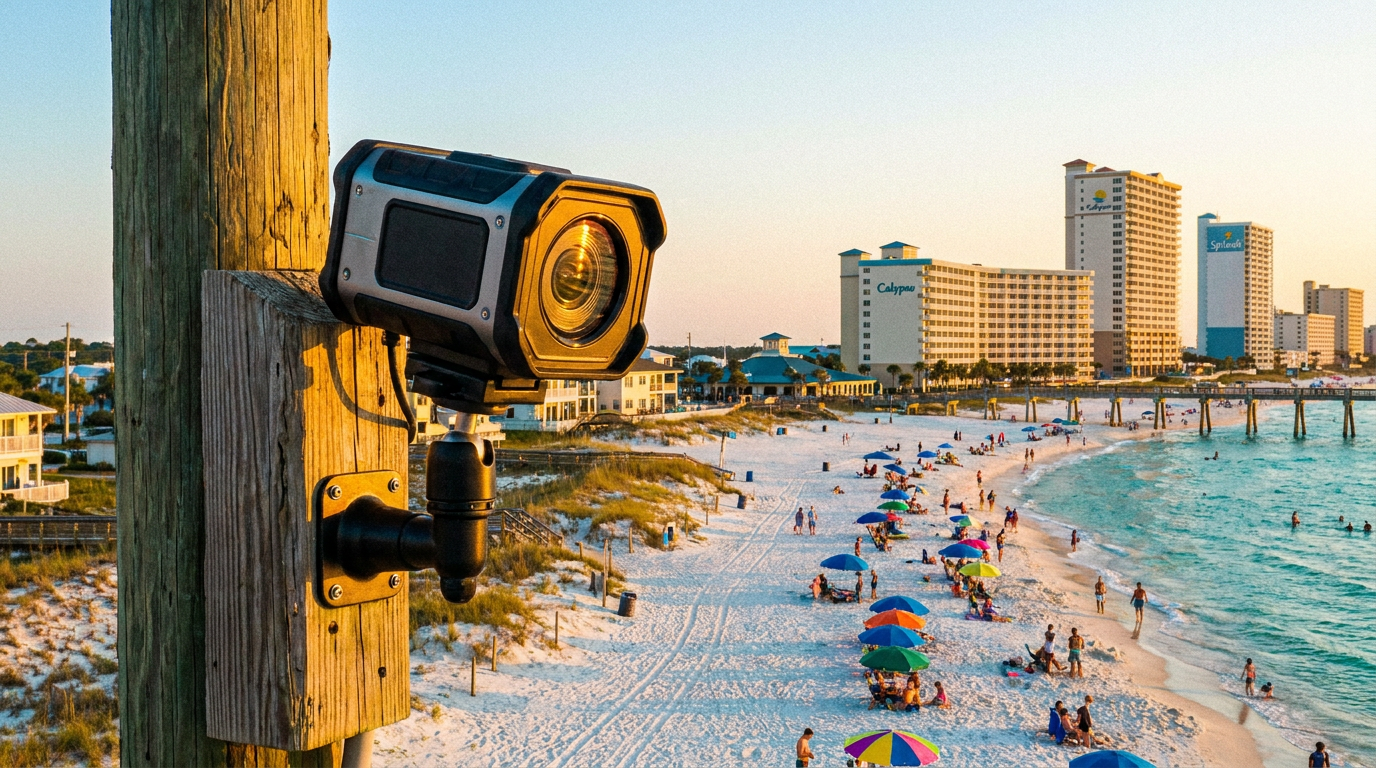
It just leaves out the smell. The camera housing bolts to a wooden piling near the restaurant deck. Step out of your rental car on Front Beach Road, and the scent of decaying kelp mixed with diesel exhaust from a delivery truck hits your sinuses hard. The digital version scrubs all of that context from the experience.
Why the Coastal Surveillance Network Lies
You pull into a paved parking lot off Highway 98. A northern draft cuts through a windbreaker, stinging your bare neck the second you open the door. Checking a beach cam in panama city beach right then just shows a mildly cloudy afternoon on a flat screen.
The primary camera sits bolted to a high-rise roof. It captures a few hundred yards of white quartz and the immediate shoreline break. It misses the physical shiver of the early arrival.
The High-Rise Illusion
The local tourism board portal frames live feeds as a foolproof planning tool. That claim crumbles on arrival. A pixelated stream gives you the superficial illusion of control over a wild environment.
Back in 2018, I religiously monitored these streams before committing to any long excursion. I would watch a whitecap on a grainy feed, assume the Gulf was a washing machine, and abandon a planned 12-hour bottom fishing trip to stay indoors. 2026 me recognizes those coastal lenses sit inside artificial concrete wind tunnels. A heavy 12-hour deep drop is a serious commitment, and you cannot gauge the deep-water reality by looking at a compressed feed of the tourist shoreline. You trust the physical signs—the dampness of the morning air, the seagulls sheltering inland—not a municipal broadcast.
Municipal streams update every minute. In between those digital refreshes, the coastal wind blasts loose sand against your ankles. The sky looks gray on the camera. The beach looks dead. Meanwhile, the local charter captains are out near the distant reefs catching limits.
Getting Past the Jetties
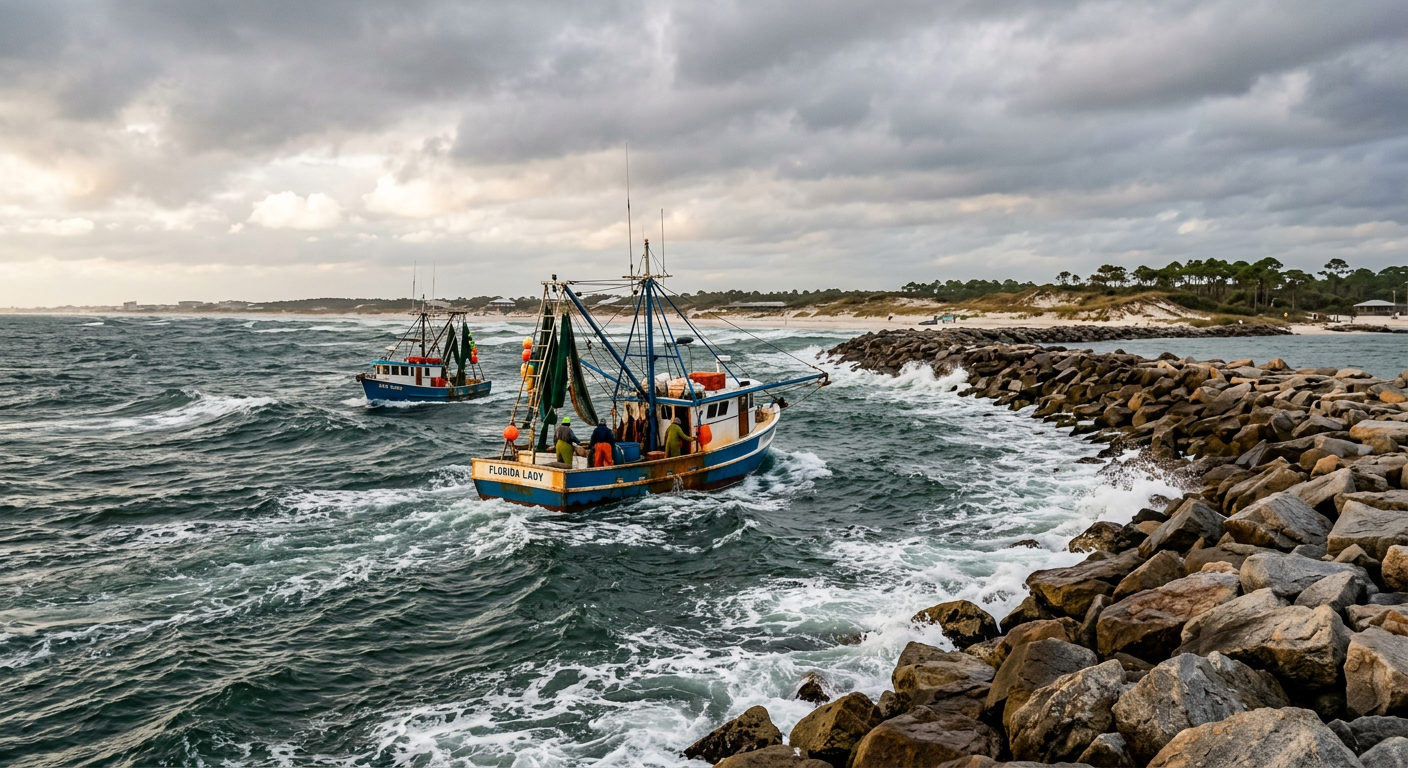
National Weather Service radar portals display offshore conditions as a neat, color-coded grid. Those maps become a joke once you cross past the jetties. The radar signal degrades. Mild green blotches on a smartphone screen shift into a rough, teeth-rattling chop.
The pass out of the harbor should be miserable based on the chopped-up broadcast footage. Then the hull clears the final channel marker. The erratic waves die down. The momentum drops you into a steady, predictable roll the onshore algorithm missed.
Something about the rock walls blocking the crosswind creates a pocket of calm right where the digital model predicts chaos. I cannot prove the physics here. Trust your gut over the forecast.
Booking an offshore charter through Rockon Recreation Rentals gets you safely past the initial breakers. Once you clear that granite barrier, the hum of the outboard motor vibrating through the floorboards tells you more about the Gulf than a lens ever will.
Escaping the Resort Pixelation
The rental car smells like lemon cleaner and stale air conditioning. Rolling the window down two inches changes the atmosphere in seconds. Pull out of Northwest Florida Beaches International Airport, and the howl of radial tires mixing with the damp scent of coastal pine scrub fills the cabin.
The airport sits a short drive north of the coast. That stretch operates as a decompression chamber. The initial drive offers zero scenery—just endless overgrown brush and transmission lines. Near a defunct toll booth, a man in a neon green visor wrestled with a metallic sunshade. He folded it in half twice, missed a final twist, and let it spring back open against his chest. Vacations are tough work.
The Camera Blind Spots
Florida Department of Transportation traffic logs show 2026 average speeds hitting fifty down Highway 79. The data fails to mention the sudden lane closures turning that route into an exhaust-choked parade. Sitting in that creeping herd makes the idea of an isolated escape feel ridiculous.
Loading a beach cam in panama city beach on your phone sets a rigid expectation. The instinctive reaction upon seeing the real Gulf is wanting to frame a photo to prove the stream right.
Then the highway crests the Hathaway Bridge. The glare off the water hits the windshield, blinding and sharp. A briny gust rocks the steering column. You drop the device into the cup holder instead.
Trading Signals for Sand
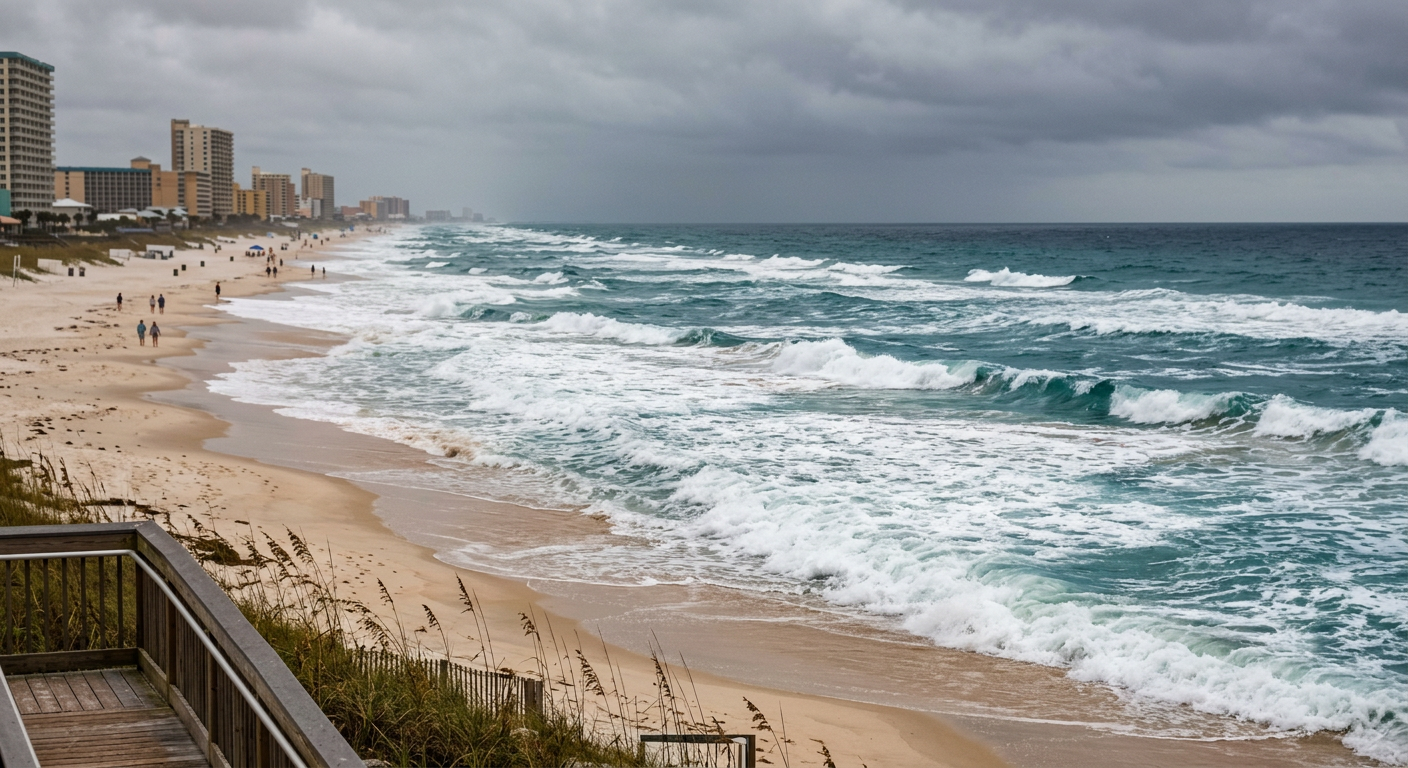
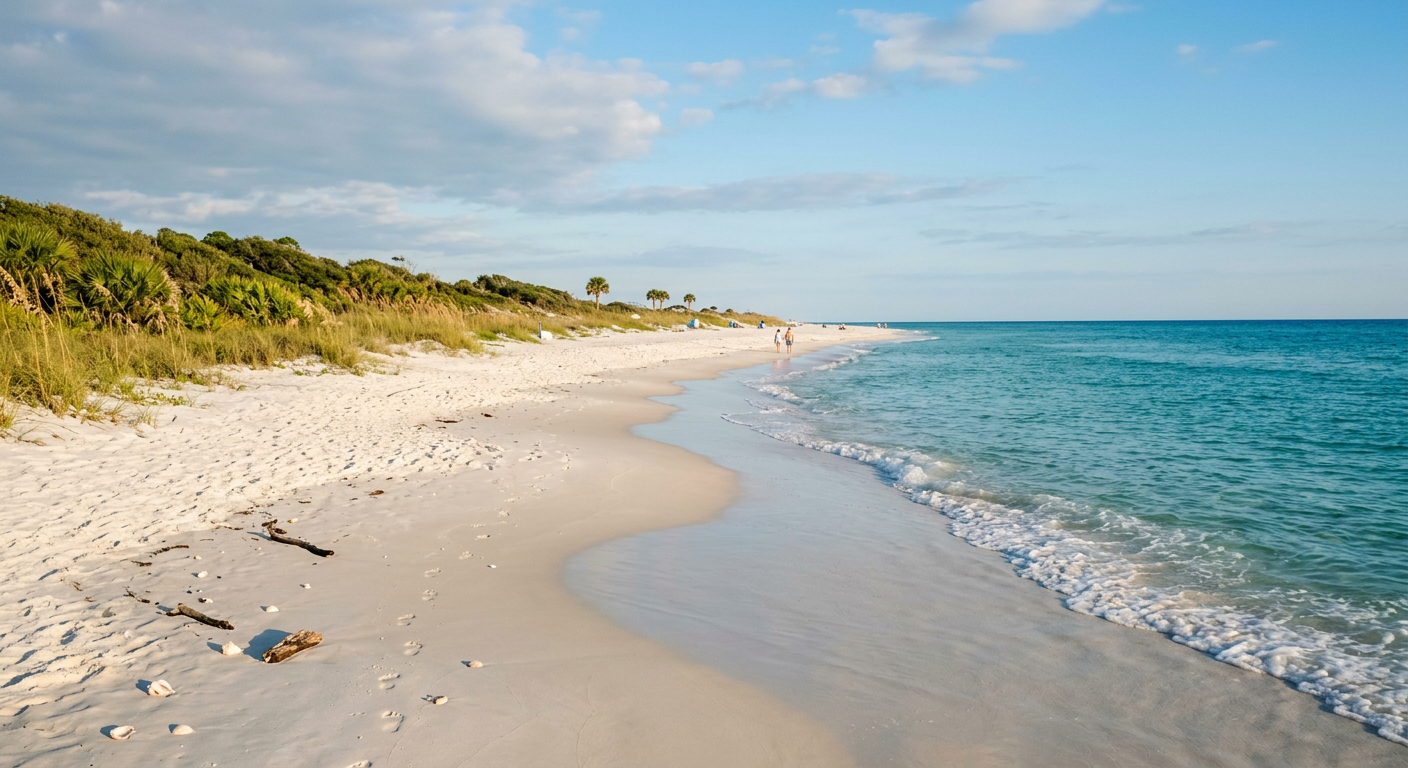
There are over a couple dozen miles of beaches in Bay County. That leaves wide expanses of shoreline operating off the grid. Step away from the pavement, and your shoes sink into fine quartz sand that squeaks like packed snow under your weight.
The artificial compression of the digital stream vanishes. A heavy swell slaps the nearest sandbank with a dense thump you feel in your ribs.
Mapping the municipal view arcs after renting a paddleboard through Rockon Recreation Rentals reveals the truth about the city portal feeds. Large, unmonitored dark zones exist between the major resorts. Beige travel means remaining beneath those lenses, performing a vacation for a distant server.
True travel requires walking past the final lifeguard stand. The tide washes over your ankles, cold and sharp. Keep walking west.
The Reality Check Twelve Miles Out
The twin diesel engines throttle up, and the marina shrinks into a white smudge. A thick mix of burnt fuel vapor and defrosting cigar minnows fills the air. The fiberglass deck hums through the soles of your boots.
Around mile four, the water stops behaving. A beach cam in panama city beach projects a flat, predictable surface line for miles. In reality, NOAA bathymetric models map out a deep ravine right where the shelf steps down just beyond shoreline sightlines. The smooth surface fractures into rolling, erratic currents. The ocean breathes, lifting the hull with a heavy, restless rhythm.
This is the physical tax of a full 12-hour bottom fishing trip. The polished resort aesthetic ends at the sea buoy. The physical journey to the deep reefs lacks visual glamour. The long ride out is monotonous, the cabin holds a persistent odor of bilge water, and the rails stay sticky with old bait.
Booking a deep-water charter through Rockon Recreation Rentals means chasing offshore waters that harbor genuine weight, not tourist comforts. If you booked expecting the gentle ripples seen on a monitor, the physical toll of an all-day drop will rewrite your itinerary.
The Shelf Sits in Silence
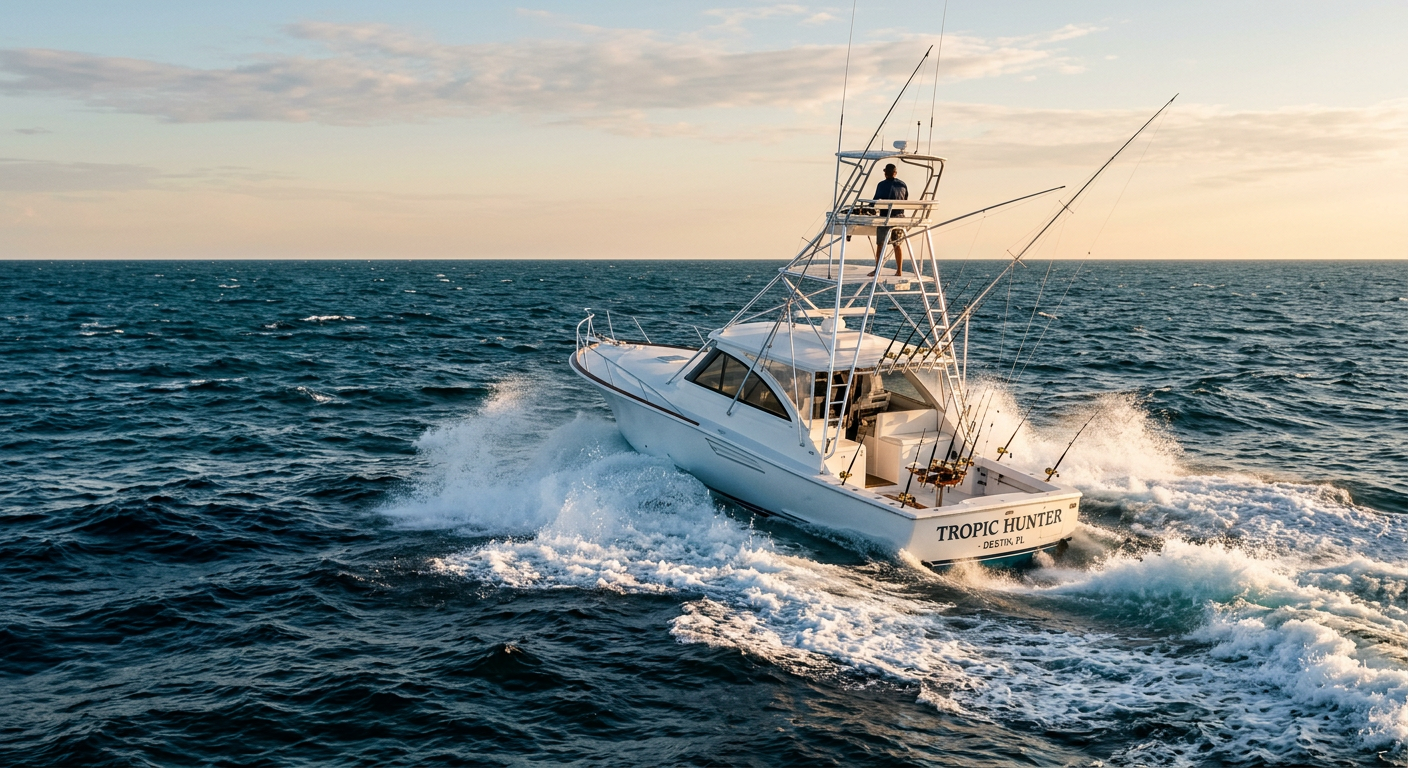
The captain cuts the engines miles offshore. The boat drifts eastward. Deckhands unspool braided lines and snap heavy lead onto the tackle. The coastal skyline fades into a hazy line.
Look straight down past the starboard rail. For years, the assumption was that offshore distance equated to empty space. Standing over the deep reef shatters that mental picture.
Florida Fish and Wildlife Conservation Commission coordinates place this spot directly above a submerged tugboat. The sonar screen flashes dense orange patches of biomass, revealing a crowded vertical city of grouper beneath the hull.
A heavy amberjack hits the line. The violence of the strike travels down the rod handle and locks your forearms. You finally notice the silvers and purples breaking the surf, a flash of muscle wrestling against the modern world. The fish hits the deck with a hollow thud.
What a Broadcast Lens Cannot Capture
Step onto the wooden planks at St. Andrews State Park Marina. The twin outboards vibrate straight through the soles of your shoes. The early morning air coats your sunglasses in a thin, sticky film of salt. A microfiber cloth won't help. It just smears the grit around.
The hull clears the tips of the rock jetties just past sunrise. Just moments later, the boat drops into a deep Gulf trough, and your stomach stays suspended behind your ribs. This is the boundary line where that beach cam in panama city beach stops telling the whole story.
The low-res feed mounted back at the pavilion flattens the sheer vertical drop of a deep-sea swell. It cannot broadcast the sharp, metallic ratcheting of a reel giving out under heavy drag.
Perspectives change miles out by the deep reef. The cut bait hits the bottom, the rod tip snaps down, and the realization hits: marine life ignores surface aesthetics. A little wind chop often signals the larger snapper are feeding.
The Physical Friction of Deep Water
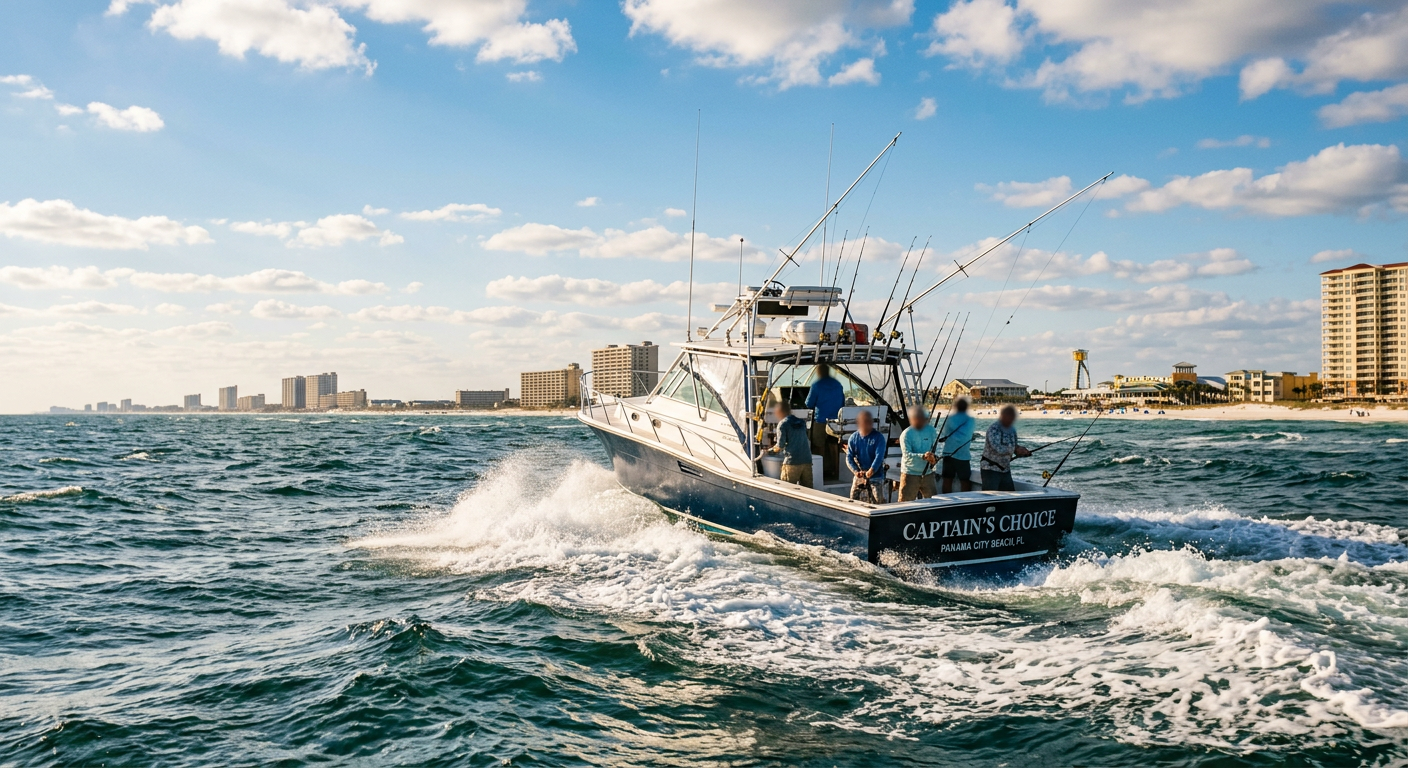
The brochure for this specific vessel promised a smooth, dry ride. It is neither. Every third wave sends a sheet of chilly bathwater straight over the starboard rail.
The engine fights the current. The wind cuts through a jacket, carrying the muffled, rhythmic thump of the bait well pump working behind the bench. The NOAA marine forecast portal translates shifting southern breezes into 'mild chop'.
Physically, that translates to a steady, cold pressure against your forearms as you brace against the gunwales. Local guides booking through Rockon Recreation Rentals recommend heavy leader to handle the rougher reef structures for exactly this reason.
The captain throttles back south of the pass. You pull the rod out of the holder the moment the line goes tight. The fish dives straight down toward a sunken barge. The resulting tension cuts into your palm, burning a red crease into the skin that lasts for two days. The fight exhausts your shoulders. You mostly just feel glad it's over.
Swapping the Tab for a Tackle Box
The air at Capt. Anderson's Marina smells heavily of wet hemp rope and damp wood. Step onto the working docks in the dark. There is no digital compression out here. It houses plenty of working vessels.
Walking past the heavy rigging before dawn gives you a nervous energy that stale coffee cannot replicate.
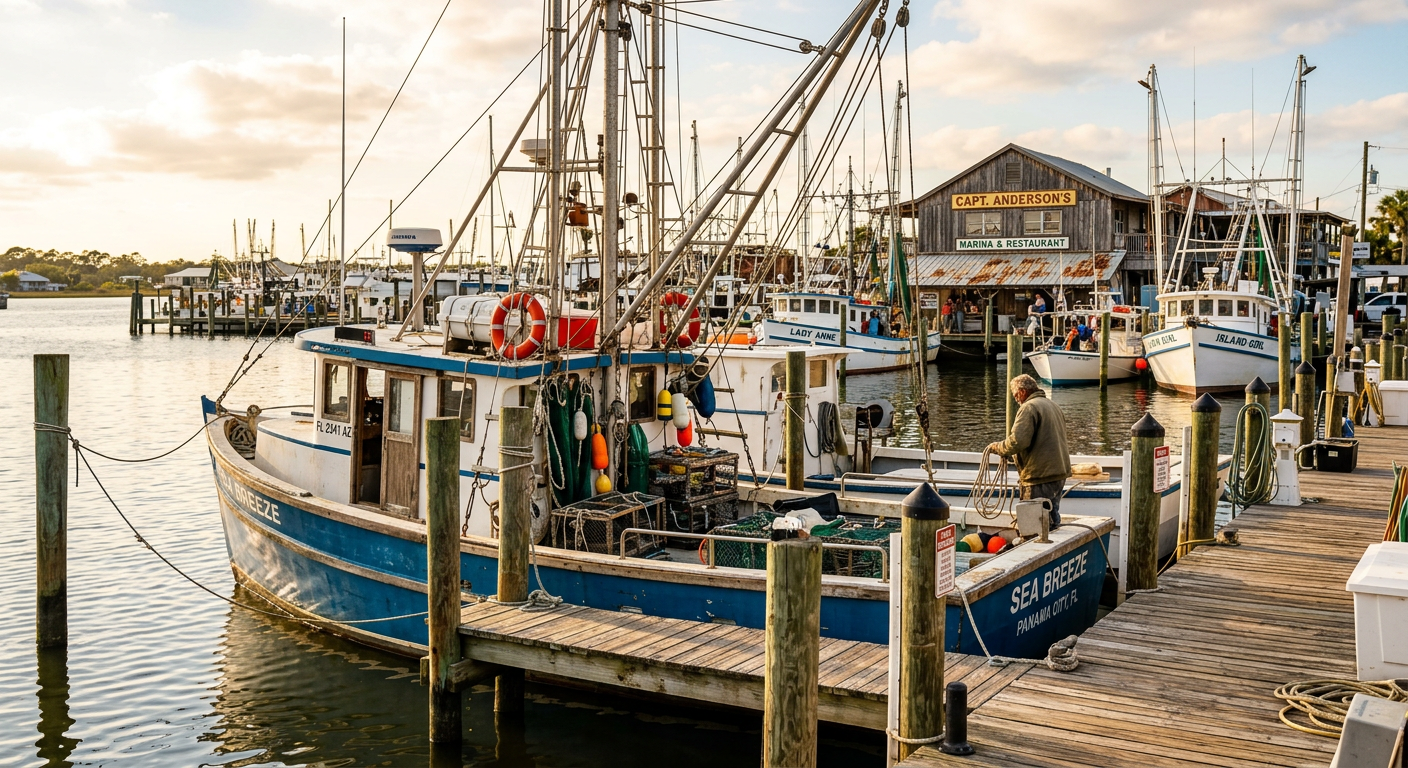
Local charter schedules establish twelve hours as the baseline for a proper bottom fishing trip. Opening a browser tab delivers instant gratification. Bottom fishing demands a massive chunk of a vacation before hinting at a single bite.
The Heavy Investment of the Drop
Tourism portals frame offshore trips as chaotic action. They omit the four hours spent staring at a hard fiberglass bench.
The advertised sea breeze tastes of port fumes until the boat clears the pass. The galley coffee tastes of hot paper. Who decided to market a long offshore navigation as a fast-paced family attraction?
NOAA bathymetric databases position prime natural reefs dozens of miles from the inlet. By the time the hull hits those long-distance marks, the shoreline vanishes. The Gulf wind hits your face with a heavy, wet density.
Endless transit time should ruin the afternoon. It doesn't.
Once cell service drops to zero, the waiting stops feeling like a delay. It becomes the entire point. The mate hoses down the back deck with seawater. The runoff runs pink toward the scuppers and drains back into the ocean.
The lead weight plunges to the sand. Brace your hips against the railing as the heavy line pulls down with a loud, metallic whir. Down at that depth, the pressure is a physical weight you can almost feel in your ears.
Guides from Rockon Recreation Rentals hand out the truth early on. Inland, alligators dictate the pace. Offshore, the snapper dictate the schedule.
Surviving the Long Haul Without Losing Your Mind
The boat pushes past the jetties of St. Andrews State Park sometime around dawn. Glancing back toward the shoreline, the hotels look small and washed out in the gray light.
Checking a beach cam in panama city beach before leaving the hotel room just shows a flat horizon line. That screen offers zero hints about the physical toll of a long boat ride. The tourist version of me used to bring a single bottle of water and flip-flops. The 2026 version packs thermal layers and polarized lenses.
Distance changes the temperature and the texture of the wind. A warm land breeze is replaced by cold, wet salt that sticks to your skin.
An old state wildlife survey indicated red snapper congregate around these deeper reefs. The expectation was a frantic pace. The reality feels a little solitary—hours of shifting from one wet boot to the other, waiting for a tap on the line.
The air out here smells of chopped squid and old fuel. That scent sinks into cotton shirts and follows you for days.
The original goal was a highlight reel of dramatic catches. Instead, the adrenaline wears off by noon, forcing a rhythmic patience into the afternoon. I used to think this downtime was a flaw in the charter layout. It is actually the core filter separating a tourist trip from a genuine offshore experience. The ocean does not care about your timeline. Accepting that indifference ends up being the best part of the trip.
The Geometry of Offshore Preparation
The standard packing list requires waterproof layers that zip tight at the wrist and collar. Deckhands provide the hooks, weights, and cut bait. Store personal bags inside the main cabin to keep them dry.
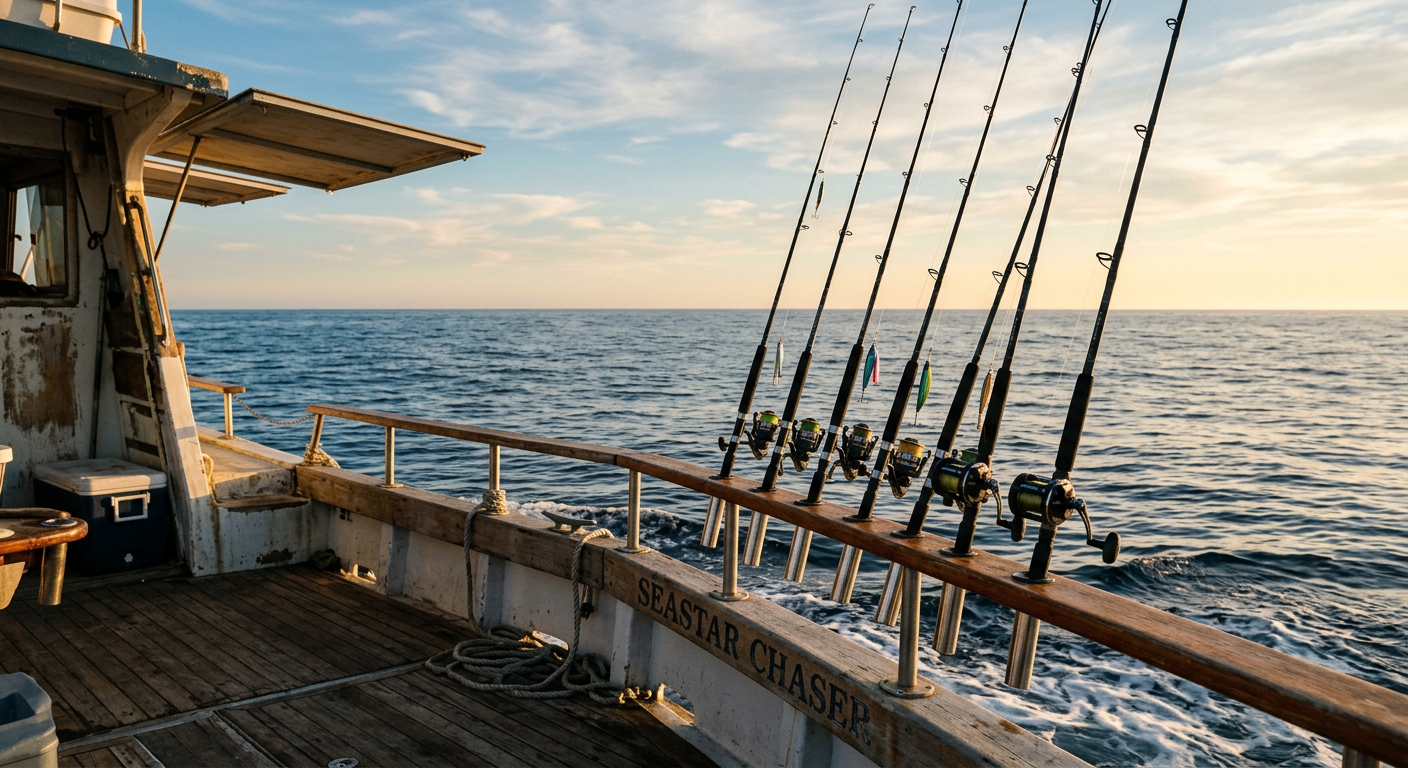
The boat holds internal tanks of drinking water. That simple volume translates to quiet comfort when the midday heat presses down on the open deck. Before booking through Rockon Recreation Rentals, a local guide mentioned leaving expensive touchscreen devices on shore. Follow that understated advice.
Once past the sight of land, you hear the sharp snap of fishing line. You taste the bitter iron of sea spray. The aluminum rail burns warm beneath your palms.
Avoid trusting a simple web feed to dictate comfort levels. Surviving the elements offshore requires accepting the damp reality of the Gulf.
Forget the generic advice to pack a digital camera. By the time the boat returns to the docks at St. Andrews State Park, hands are too coated in dried chum to swipe a screen anyway.
The wake trailing behind the stern catches the fading orange light of the late afternoon. Watch the water roll back toward the open sea. Sitting on the port side bench until the harbor markers finally come into view lets the exhaustion settle. The mate sprays the bloody deck one last time as the engine throttles down. The quiet return drift alongside the concrete pilings feels like waking up from a very long dream.
Plan your trip: Ready to experience this firsthand? Book The Patriot! 12 Hour Bottom Fishing Trip! directly through our marketplace.