The Truth About Leaving from Waianae Harbor
The air smells like marine diesel, salt, and stale coffee before the sun even clears the Waianae Range. There is no welcome pavilion here. You just get a cracked concrete boat ramp, a flickering amber streetlamp, and the low hum of idling engines. I have run Florida wildlife excursions as a VisitFlorida Travel Partner since 2018, so I know a working dock when I see one. This one feels right.
Driving west on the H1 out of Honolulu takes about an hour if you leave before dawn. If you leave past 7:00 AM, you fight the mainland-style commuter crush. You shed the resort gloss somewhere past Kapolei. The town name, Waiʻanae, translates to 'waters of the mullet' in Hawaiian. That alone tells you this is a working coast. The parking lot at the harbor is a gravelly mix of lifted Tacomas and rusted boat trailers. It is where Rockon Recreation Rentals stages the most straightforward hawaii whale watching tours on Oahu.
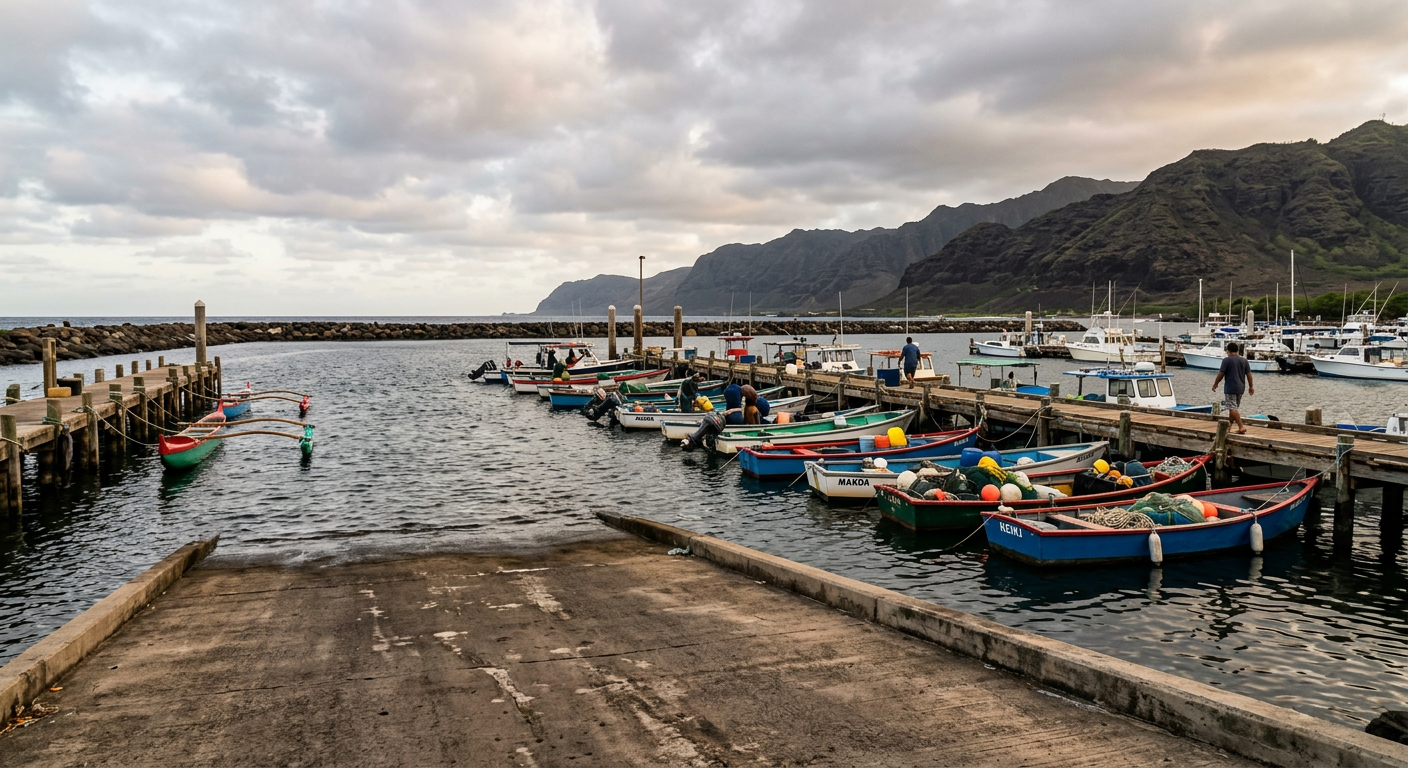
A seagull with a missing left toe stood on a wooden piling near the fueling station. The boats line up along the south wall of the harbor. The water is green near the docks and turns blue farther out. There is no pomp or circumstance. You walk down a slippery gangway, hand your digital boarding pass to a deckhand, and find a seat.
The Deep Water Advantage
I used to think leaving from this industrial dock was a downgrade. The reality is the opposite. The commercial excursions out of those major Waikiki hubs waste time commuting across shallow shipping lanes.
Here, the deep water starts near the harbor mouth. The ocean floor drops exactly 2,148 feet a few miles offshore. You are in humpback territory the moment the captain clears the breakwater.
This proximity means more time tracking animals and less time burning fuel. The industry sells the illusion of an expedition from a hotel lobby. For the 2026 season, this harbor puts you on a boat and gets out of the way. If it is on a postcard, it is a trap.
Explore marine life tours near Waianae
What Happens Out There
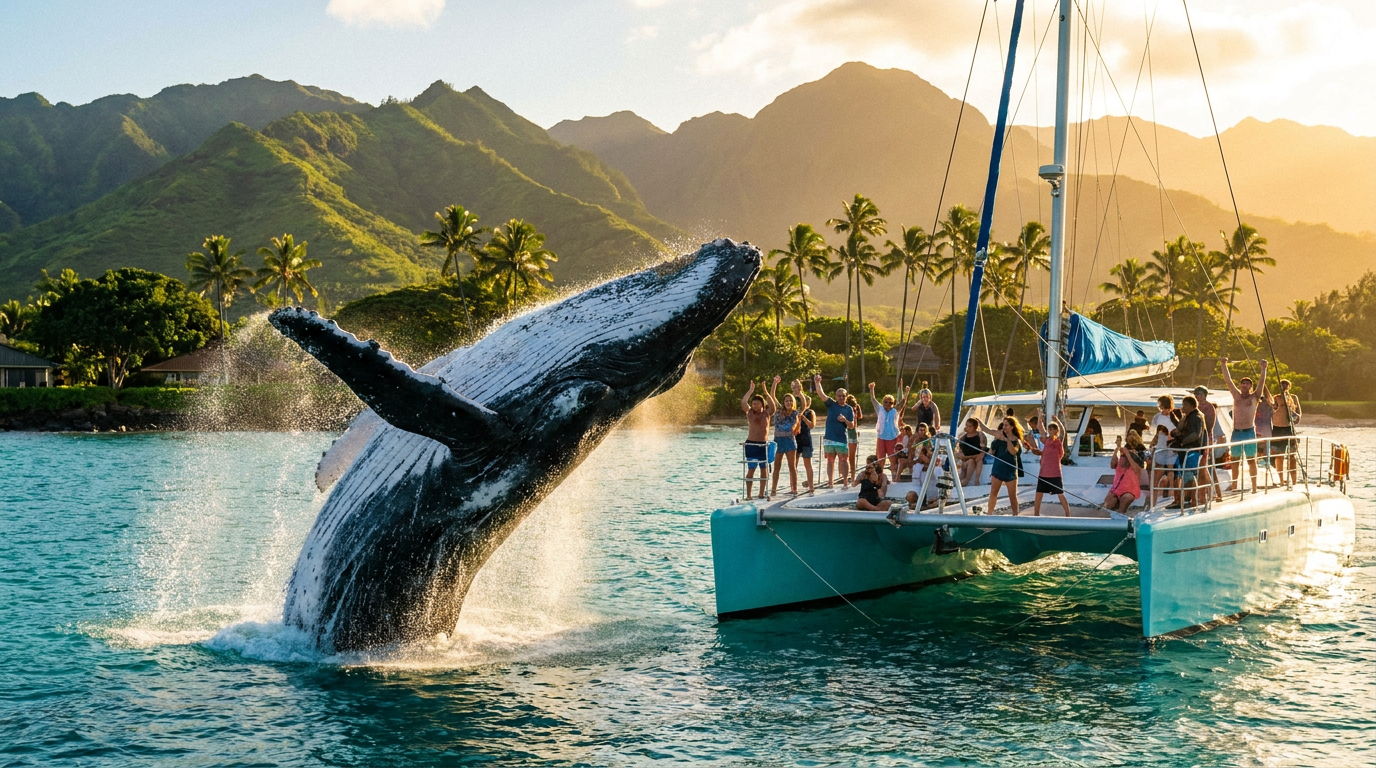
The low mechanical hum of the twin engines cuts to a quiet idle, leaving only the rhythmic slap of water against fiberglass. The brochures sell a choreographed athletic performance. They print glossy photos of a forty-ton mammal suspended mid-air. The reality is staring at a flat horizon until your retinas ache.
The sound hits before you see anything. An explosive burst of vapor tears through the quiet. It registers like a pressurized air valve venting across a room.
A guy in a faded red visor sat near the stern adjusting his sunglass retainers for a few minutes.
We watch the surface for twenty minutes without seeing a whale. You sit there baking under the Pacific sun, assuming the trip is a bust.
The silence stretches out. The boredom breaks you down. Then a pivot happens. The waiting is the actual design of the excursion. The dead time forces you to strip away mainland urgency, resetting your baseline. When the sudden scramble of a spotted spout finally happens, the energy shift rewires the whole boat.
The Crew Dynamics
The marketing materials highlight the onboard marine biologists. The reality on the deck is different. The naturalist usually stands near the helm with a microphone, reciting facts about migration patterns. The deckhands are the ones actually finding the animals. They stare at the horizon with a quiet intensity, ignoring the trivia. Trust your gut on this, even if the brochure says otherwise—always stand near the quiet guy coiling ropes if you want to know where to look first.
The Geometry of the Scan
The Waianae mountain range blocks the prevailing trade winds. This topographical feature flattens the ocean surface into a massive mirror. That stillness provides a tactical advantage for spotting wildlife.
According to marine researchers at the University of Hawaii, humpbacks spend roughly ninety percent of their time underwater. You are not looking for whales out here. You are looking for atmospheric anomalies. Watch for a slick patch of water or a sudden flock of diving seabirds.
Booking through Rockon Recreation Rentals secures a spot on smaller Waianae vessels. The captain expects you to help scan the horizon. You earn the sighting through collective vigilance.
Zodiacs Versus Catamarans
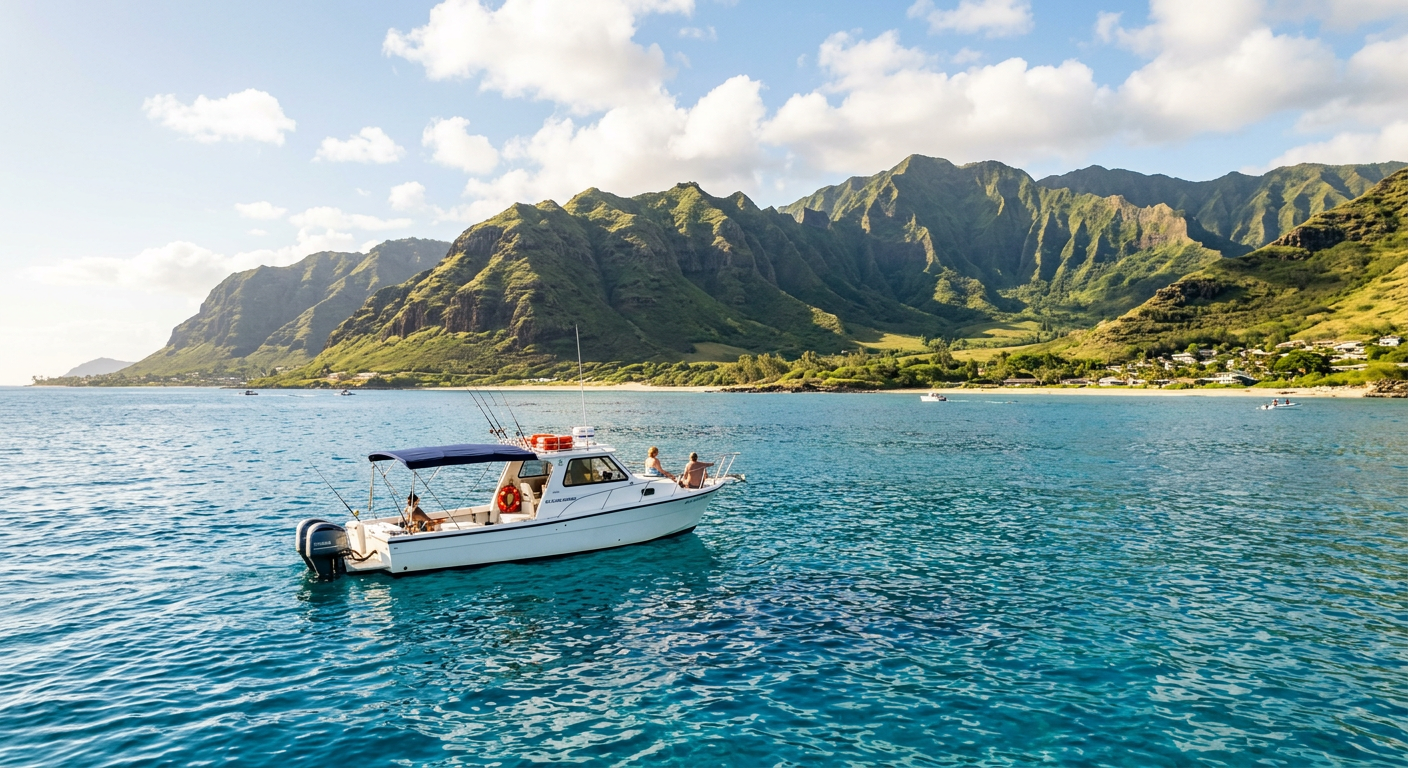
A metallic taste of adrenaline floods the back of your throat when a rigid-hull inflatable hits a six-foot swell at speed. The choice of boat dictates the entire rhythm of your morning. The western coast offers two main options for getting offshore.
Sixty-five-foot catamarans provide a stable platform. They feature marine restrooms, shaded canopies, and a wide turning radius. The hull design minimizes the rolling motion that ruins vacations. They also hold fifty people clamoring for the same rail space.
Zodiacs sit low to the water. You strap into a saddle seat and brace your legs against the deck. The vessel maneuvers like a sports car, allowing the captain to reposition in seconds when a pod changes direction.
I can not prove this, but the whales seem less deterred by the lower acoustic footprint of the inflatables. 2019 me thought the Zodiac was the only authentic way to observe marine life. 2026 me acknowledges the merits of a shaded catamaran when the midday sun reflects off the Pacific. Research is my love language; reality is my ex.
Decoding the Humpback Migration Schedule
The morning trade winds whip cold salt spray against your face on the open deck. Humpbacks arrive between December and April. They migrate from Alaska to the warm waters of Waianae to breed. According to the National Oceanic and Atmospheric Administration, this cycle repeats every year without fail. Checking resources like the Hawaii Tourism Authority provides updates on seasonal patterns.
A yellow zip tie was wedged under the metal edge of the deck drain port. The hull slams against the choppy outgoing tide.
The Myth of the Guaranteed Sighting
Tour operators print brochures showing multiple whales jumping in unison. The Pacific Ocean does not care about your Tuesday morning itinerary.
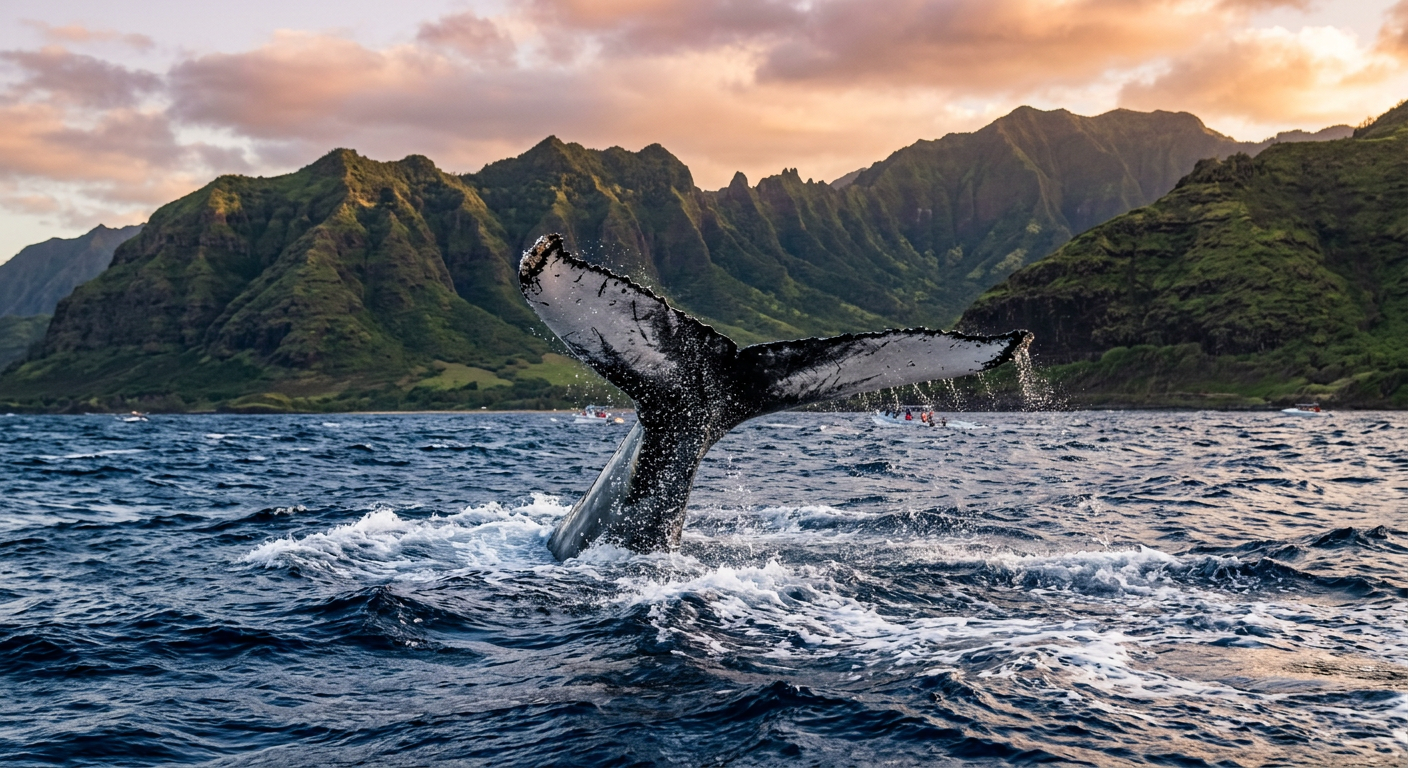
My perspective has shifted over the years. 2019 me would have demanded a refund if we did not see a full-body breach. 2026 me knows that just seeing a gray tail fluke sink beneath the surface is a solid win. The animals are just trying to survive.
The boat sits in the water for ten minutes. The captain points to the left. A humpback exhales. The mist hangs in the air and then disappears. A quiet moment follows. No one speaks. We just watch the ripples fade.
Reading the Calendar
I used to tell people to book in February for the peak population numbers. Now I realize late January is better. The waters off Waianae are less congested with other boats.
Late March and April bring a different pace. You mostly see sluggish mothers nursing calves before the long swim north. The activity is minimal.
Booking a trip through Rockon Recreation Rentals gets you on a boat that respects this biological reality. Temper your expectations.
Discover whale watching adventures
Searching for Dolphins and Other Local Wildlife
The damp, stagnant air presses against your skin as the captain drops the throttle to idle. A piece of yellow marine rope sits coiled next to the starboard cleat.
The boat slows down. Ten spinner dolphins swim next to the bow.
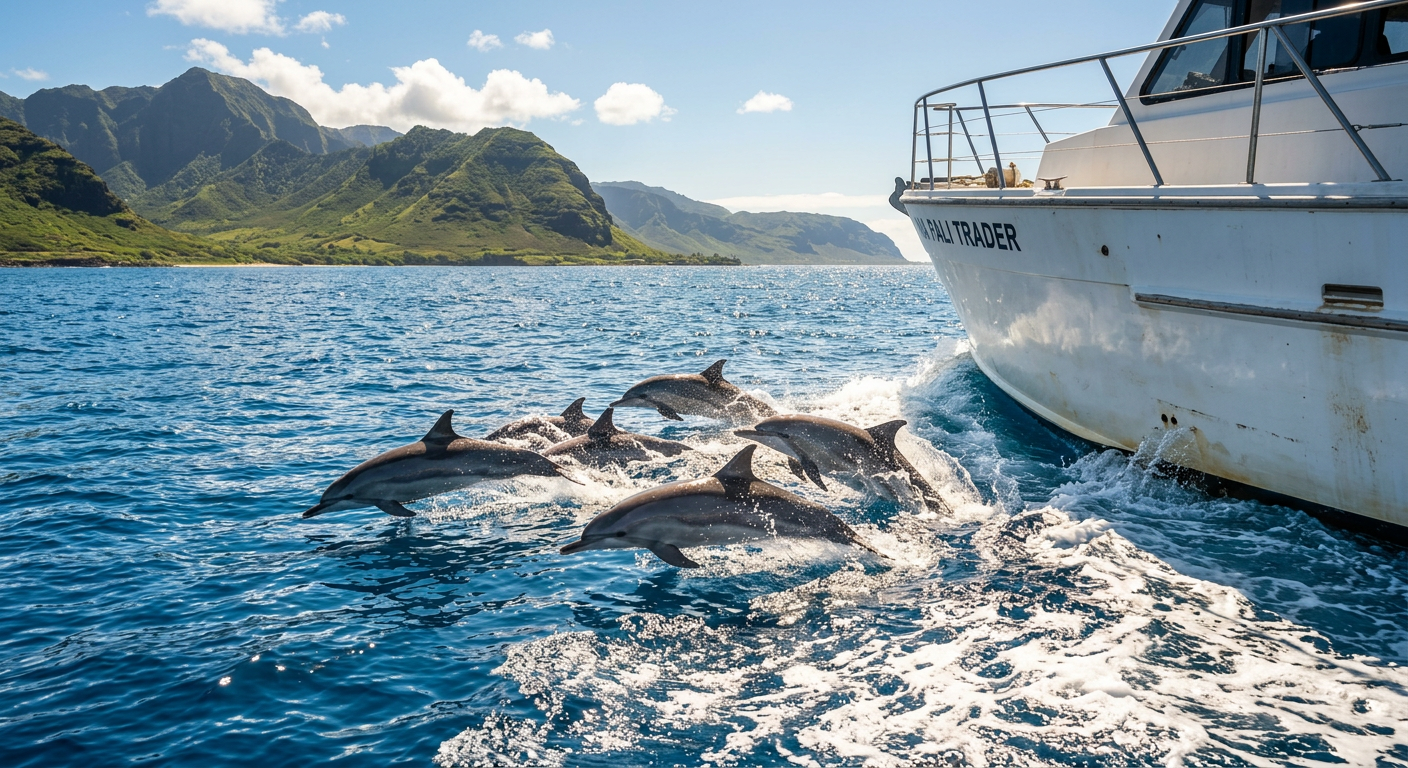
Whales are massive and slow. Spinner dolphins are fast and chaotic. They travel in large pods that swarm the boat from all directions during most hawaii whale watching tours.
Some tourists still ask the deckhands about manatees.
As a local guide who has run Florida adventure tours since 2018, this always makes me laugh. There are zero manatees in Hawaii. A bizarre internet myth convinced visitors otherwise. The Hawaii Department of Land and Natural Resources confirms they only live in places like Florida or the Caribbean. However, booking an excursion like the Hawaii Dolphin and Manatee Exploration serves as a nod to this misconception while delivering real wildlife encounters.
The energy was off during my first dolphin encounter. I thought they were just a sideshow. Watching a super-pod coordinate a hunt off Makaha beach this season corrected that assumption. Their synchronized intelligence overshadows the humpbacks.
To catch the early morning pods, check the departure schedules on Rockon Recreation Rentals.
Surviving the Swells
The harsh vibration of the fiberglass deck rattles through the soles of your shoes the moment the vessel clears the breakwater. The Pacific Ocean off the Waianae coast is not a lake. You feel the hull lift and drop with a heavy thud against the water.
Your stomach usually registers the motion before your brain does.
According to the Centers for Disease Control and Prevention, sea sickness occurs when your brain receives conflicting messages. Your vestibular system detects the motion while your eyes fixate on the stationary deck.
The Physics of Not Throwing Up
The worst place to be is inside the cabin staring at your phone. Keep your eyes locked on the horizon.
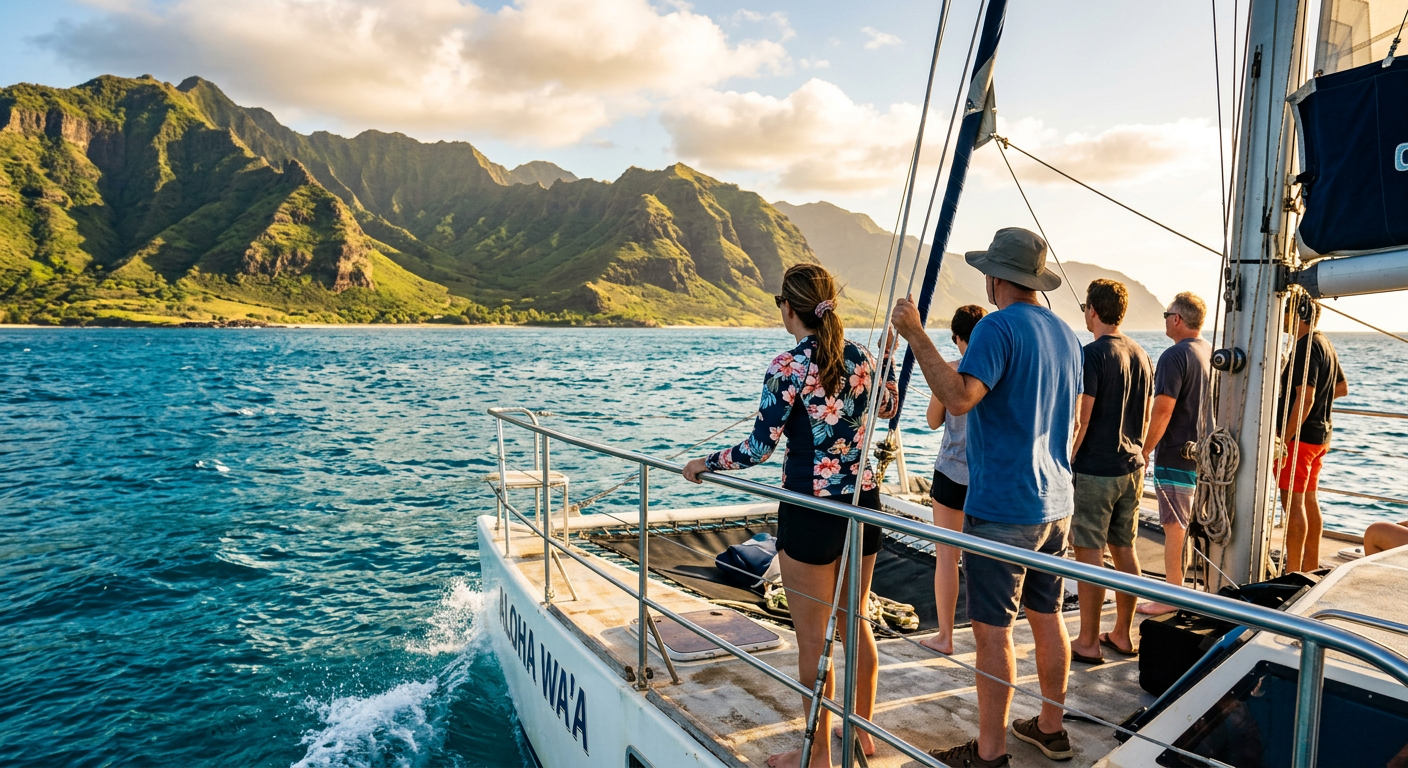
People spend their travel budget booking Rockon Recreation Rentals excursions just to watch the ocean through a digital screen. Looking through a lens for too long guarantees nausea. Keep your head up.
Deck Real Estate
The first mate kept a white Yeti cooler secured near the stern with a worn nylon strap. Every time the boat hit a swell, the cooler slid two inches to the left. When the boat pitched back down, it slid two inches to the right. The white plastic scraped against the gray deck.
The center of the boat pivots the least. If you feel dizzy, stand near the captain's helm.
Packing for the Leeward Coast
Internet travel guides list twenty items for winter excursions off Oahu. You need three things. Everything else takes up space on a crowded deck. Research is my love language, but reality dictates a lighter bag.
The Three Necessities
- Polarized sunglasses Glare hides the dark shapes of humpbacks swimming below the surface.
- Windbreaker The temperature drops fast when the boat hits open water.
- Actual medication Ginger pills will not cut it for most people.
By the end of the trip, you feel the gritty tension of dried salt spray crusting on your forearms.
I used to believe sea bands were enough to handle the swells on hawaii whale watching tours. The 2026 currents off Kaena Point proved that wrong. You must take medication an hour before stepping on the boat.
A frayed piece of yellow nylon rope tied the dock gate open while we boarded. Taking a pill once you feel nauseous is a waste of medicine.
Leave the waterproof backpacks at the hotel. Beige travel is a sin, so get ready for the real ocean. The captain unties the lines at the scheduled time.
The engines fire back up for the return trip. You leave the deep water behind, trading the vast emptiness for the approaching concrete sprawl of the island. The ocean does not care if you got your photo. That indifference is exactly why we pay to go out there.
Frequently Asked Questions About Hawaii Whale Watching
What is the best month to see whales in Hawaii?
While the season spans December to April, late January through February offers the highest concentration of humpback whales. By late April in 2026, the activity drops significantly as the mothers and calves begin their long migration north.
Are hawaii whale watching tours safe for children?
Yes, provided you book a stable catamaran and ensure they take motion sickness precautions beforehand. Smaller Zodiacs often enforce strict age restrictions due to the physical toll of riding offshore swells.
Do I need binoculars?
They help for examining details, but scanning the horizon with your naked eye is more effective for spotting the initial spout. Using binoculars on a rocking boat usually just induces motion sickness.
What happens if we do not see a whale?
Many hawaii whale watching tours offer a guarantee that lets you ride again for free on another day. You must verify the specific operator's policy before booking, as smaller outfits rarely have the margins to offer free trips.
How long do hawaii whale watching tours usually last?
Most excursions run for about two hours. Anything shorter feels rushed because you spend half the time transiting. Anything longer tests the physical limits of sea sickness for average passengers.
Can you swim with the whales?
No. Federal law prohibits swimming with or approaching within 100 yards of humpback whales to protect both the animals and the public. Captains will cut their engines if a whale approaches the vessel.
Is morning or afternoon better for sightings?
Morning trips generally face calmer winds and flatter seas, making it easier to spot atmospheric anomalies like spouts. Afternoon trade winds churn the surface, hiding the subtle signs of a surfacing whale.
Will I get seasick?
If you are prone to motion sickness, the Pacific swells will test you. The Waianae coast is exposed. Take preventative medication an hour before departure rather than waiting until your stomach drops.
Do all hawaii whale watching tours leave from Waikiki?
No, and the ones leaving from western harbors like Waianae often spend less time commuting through shallow shipping lanes. You spend more time near actual wildlife and less time looking at hotel skylines.
What should I wear?
Dress in layers. Bring a light windbreaker because the air over the water is cooler. Wear polarized sunglasses to cut the harsh ocean glare, and apply reef-safe sunscreen long before you board the vessel.