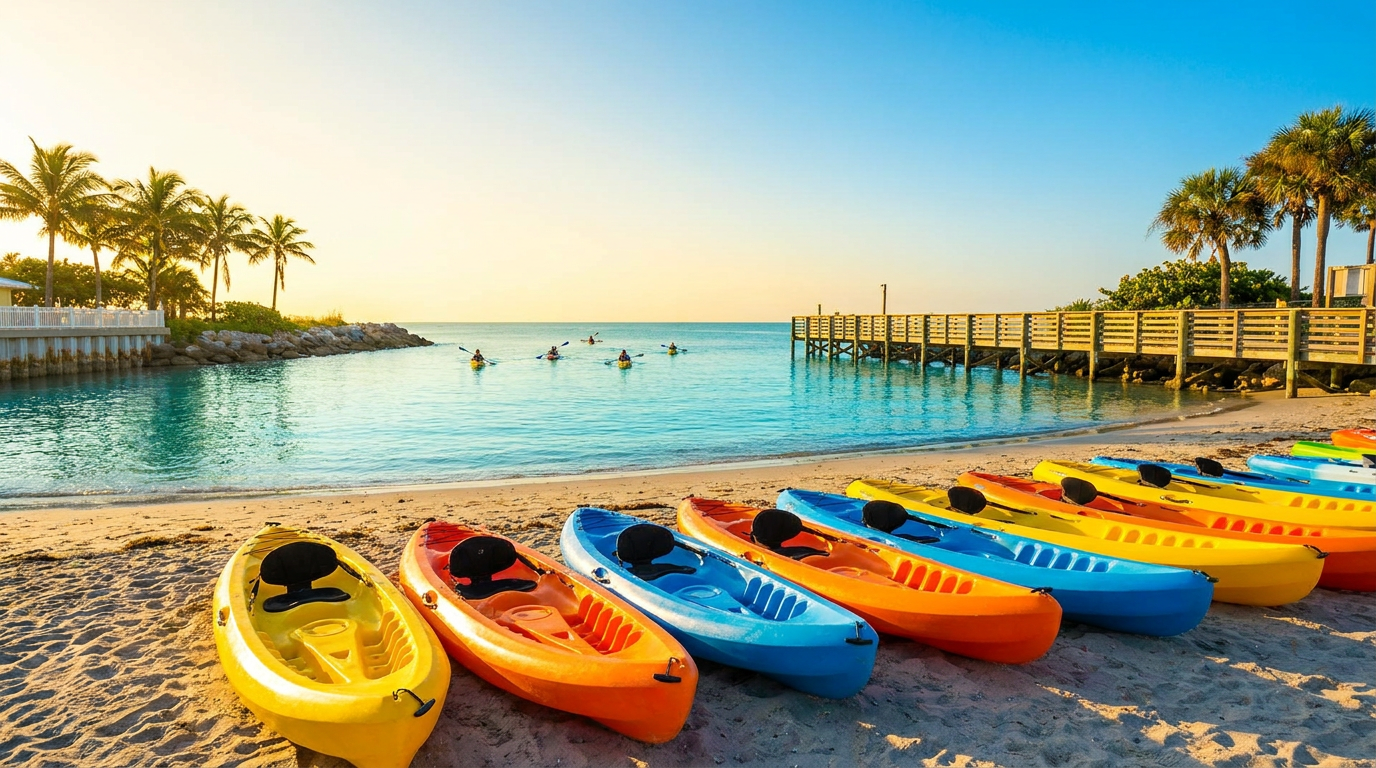
The Banana River Lagoon Reality Check
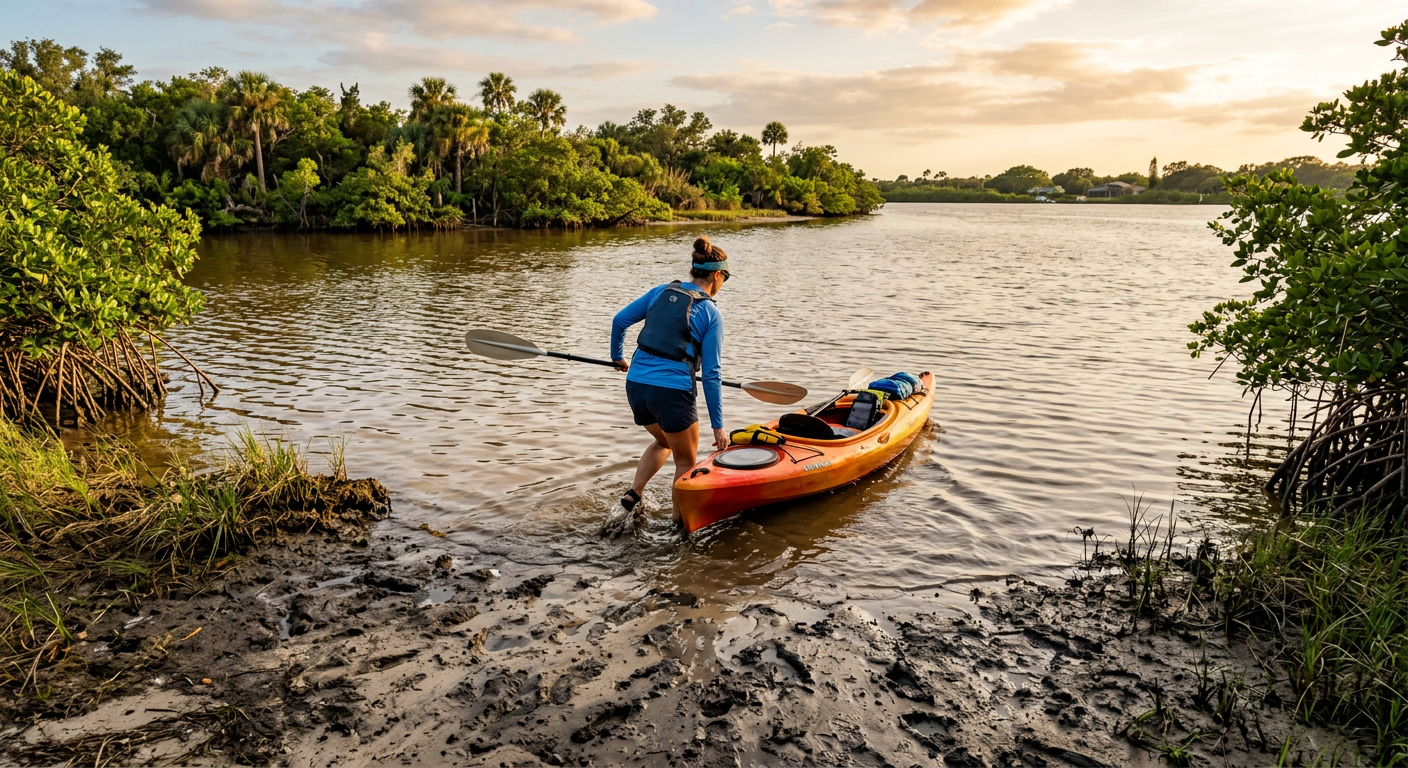
Your heel breaks the crust of the boat ramp. The water shoe sinks an agonizing inch into the gray mud before finding purchase. A faded blue Gatorade cap bobs near a barnacled concrete pylon. The air carries a sharp sulfur note, warning you this estuary operates on its own terms.
The official Visit Florida guides try to sell this coastal area as a polished tropical escape. They crop out the mosquito warning signs and the tangled, decaying sea grass wrack line clinging to the launch. If it is on a postcard, it is a trap.
The Fade of Highway A1A
County maps show the mangrove islands sit a few hundred feet from Route A1A. That brief distance should not swallow the sound of a coastal highway. But the dense wall of black mangroves acts like a studio baffle. You push off the bank, and the drone of cars follows you across the first channel. Then you turn into the labyrinth. The pavement washes away.
One minute you hear tire tread. The next, just the hollow, rhythmic thud of your paddle hitting polyethylene. The water sits flat. Two brown pelicans occupy a rusted channel marker.
Explore daytime kayaking near Cocoa Beach
Murky Water Over Sandy Estuary Floors
Glossy brochures claim the Banana River Lagoon offers clear paddling over pristine sands. The estuary floor is actually a thick suspension of decaying organic matter. Tannins from dropping mangrove leaves dye the surface tea-brown. If you join one of the many cocoa beach kayak rentals tours operated by Rockon Recreation Rentals expecting to see your toes through the ripples, you are setting up your own disappointment.
2019 me filed this ecosystem as a secondary option compared to the clear coastal springs up north. 2026 me knows the murkiness holds the food web together. Once your eyes adjust to the tannins, shadows below morph into manatees grazing on shoal grass. The Florida Department of Environmental Protection notes the Indian River Lagoon system ranks as North America's most diverse estuary. You feel the weight of that biodiversity in the static, heavy humidity pushing down on your shoulders as tiny baitfish slap the plastic hull.
The Physics of Mangrove Mud
The ground beneath the shallowest channels here behaves more like a liquid than solid earth. Standard hiking sandals and open-toed shoes fail immediately when you step out of the boat.
The Suction Problem
The bottom composition consists of decomposed sea grass and silt accumulating over decades. Your foot breaks the surface tension, and the mud creates a near-perfect vacuum around your ankle. Trying to pull straight up leaves your footwear buried eighteen inches down. You have to twist your heel out to break the seal. A guy in the parking lot was adjusting a neon green visor for five minutes before loading his boat. It did not seem to help the glare.
Staying in the seat solves the mobility issue. The challenge arises when rookie paddlers ground their bows on concealed sandbars during lowering tides. Stepping out to push means dealing with the silt. Read the surface texture ahead of the bow. Smooth water over sandbars looks distinctly different from the rippled chop over deep channel cuts.
The Equipment Strategy Nobody Mentions
Choosing the right boat for a labyrinth is not about hydrodynamics or speed. It hinges on blunt force durability.
Plastic Over Fiberglass Hulls
According to manufacturer specifications, a standard tandem kayak spans exactly 33.7 inches wide. Sliding that beam through a 34-inch gap in the root systems requires dragging the gunwales against exposed oyster clusters. The friction pulls a harsh, scraping sound out of the quiet. The canopy closes in overhead.
A lightweight, expensive fiberglass hull would splinter in these corridors. You need the sluggish, indestructible heavy plastic of a commercial fleet vessel.
Pushing into these hidden passes means brushing under golden orb-weaver spiders. You catch a sticky strand of silk across your cheek. You just duck quickly when the clearance drops and keep moving. Breaking through into an isolated interior lagoon explains why local outfitters utilize specific flat-bottomed models. The shallow draft slides over submerged logs that snag high-performance gear.
The Micro Tides and Lunar Logic
The Thousand Islands system does not experience massive tidal swings like the ocean side of the barrier island. It runs on subtle, wind-driven micro-tides.
Wind Driven Currents
A stiff breeze from the north traps water in the basin, raising the level just enough to float over shallow shortcuts. Checking the local NOAA National Weather Service forecasts is critical before launching. When the wind shifts south, the water drains out through the inlets. The difference measures in inches, not feet, but inches matter when you draft three inches of water.
I cannot prove this scientifically, but the mullet seem to know exactly when the shift happens before the water even moves. Trust your gut if the surface suddenly gets hyperactive. It typically means the draft is changing and you need to monitor the depth passing under your paddle blade.
Explore coastal paths near Florida's Space Coast
Bioluminescence Reality and The Lunar Lottery
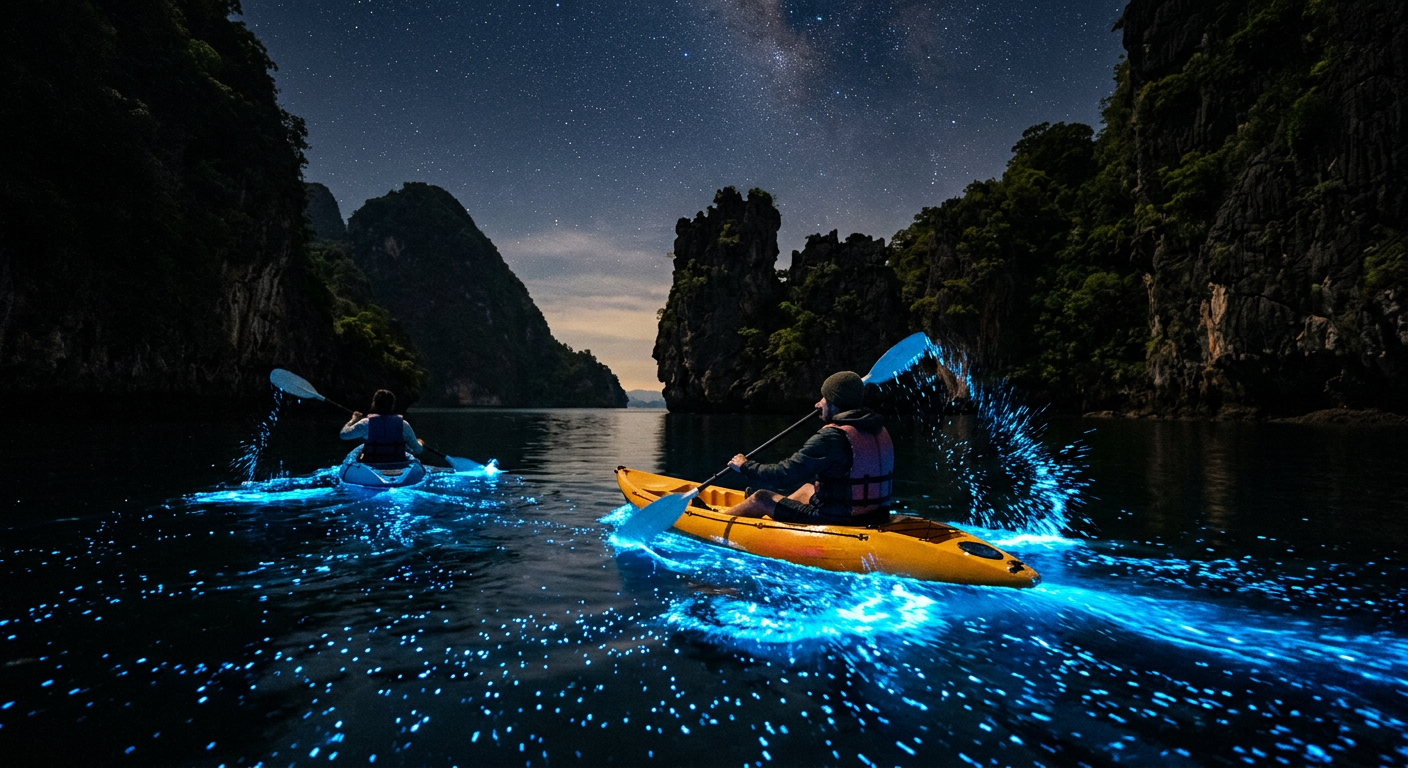
I assumed the glowing water photos circulating online were manufactured. A gimmick designed to sell peak season tickets to tourists. However, when you slide your boat into the channel and lose the visual safety of daylight, the lagoon pivots from a landscape you scrutinize to an environment you navigate by feel. The gimmick is the only honest thing in the brochure.
Trading Sight for Sound
A full moon acts like a giant floodlight across the lagoon, washing out the faint blue light radiating from the dinoflagellates. Consider booking a dedicated sunset and evening paddle to experience this transition firsthand. Book your trip during a new moon. The black sky serves as the only requirement that matters.
A sharp, wet crack echoes across the passage as an unseen fish slaps the surface. The night breeze carries a distinct odor of wet limestone and salt. Your paddle handle turns slick with condensation. The mosquitoes at the dark launch ramp swarm relentlessly. You wipe them away, point the bow north, and wait for your optic nerves to adjust.
Treat yourself to the quiet later in the night. Seeking out cocoa beach kayak rentals tours that launch after dark requires sacrificing comfort for isolated chaos. You sit in the warm blackness, watching silver baitfish streak like glowing meteors under your hull.
Explore evening bioluminescence tours near Cocoa Beach
Navigating the Thousand Islands Geometry
This conservation area covers roughly three hundred acres. It acts as a coastal maze of identical brown structural roots. The sheer scale leaves you isolated. Within twenty minutes, a crust of dried salt forms under your palms. That rough friction blisters thumbs faster than an awkward grip.
The Map Problem and Dead Ends
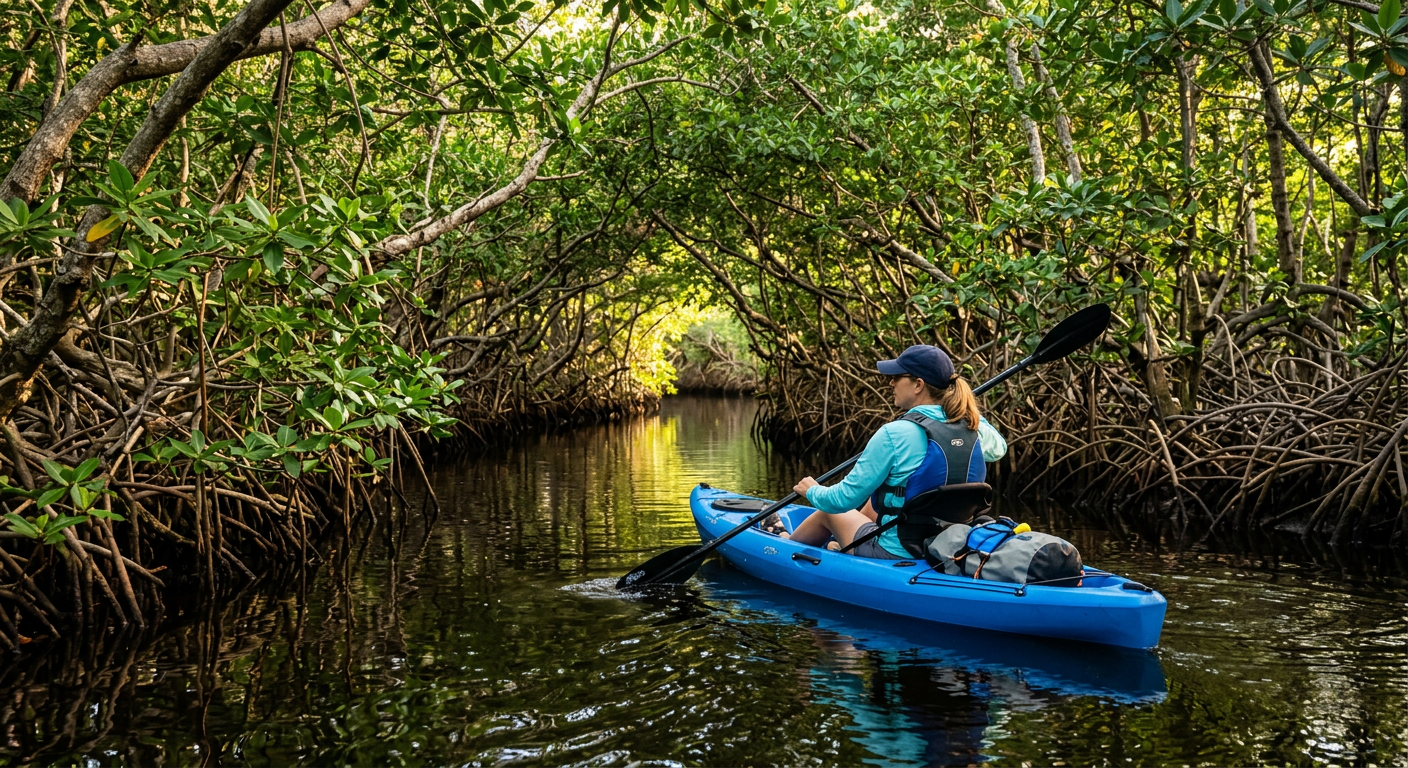
Digital maps display a continuous brushstroke of green masking the water beneath. When you slide your boat under that heavy canopy, your GPS dot loses the cell tower and begins spinning over a gray void. You drive blind.
Back in 2018, I demanded bareboat rentals out of unearned stubbornness. I figured paying someone to paddle in front of me was an idiot tax. 2026 me realizes that navigating identical-looking root systems without local context provides an expensive way to get sunburned and lost. You do not pay the guide to teach you how to steer. You pay them to keep you moving forward.
The water here dismisses strict grids. Landmasses shift with every passing hurricane season. The St. Johns River Water Management District offers offline maps, but reading the current requires physical practice. Ten minutes down a shortcut, the water grows stagnant. A sharp, sulfuric odor of rotting vegetation and trapped mud fills your lungs. You punted yourself into an impenetrable wall of submerged red mangrove props. The brochure highlights endless exploration but conveniently omits how many water trails end in shallow dead ends.
The Kinetic Chain of Mangrove Paddling
Navigating tight corners for two hours breaks down poor paddling form fast. Most vacationers row with their biceps and shoulders. That approach burns out the upper body before crossing the main channel.
Saving Your Shoulders
The trick in these narrow spaces relies on torso rotation. You plant the blade in the mud and twist your core, utilizing the larger muscle groups of your back. This kinetic chain saves your energy for the fighting winds on the return trip. Blistered thumbs ruin more afternoons on the water than bad thunderstorms. Keep a loose, open-handed grip on the recovery stroke.
Why Manatees Dictate the Schedule
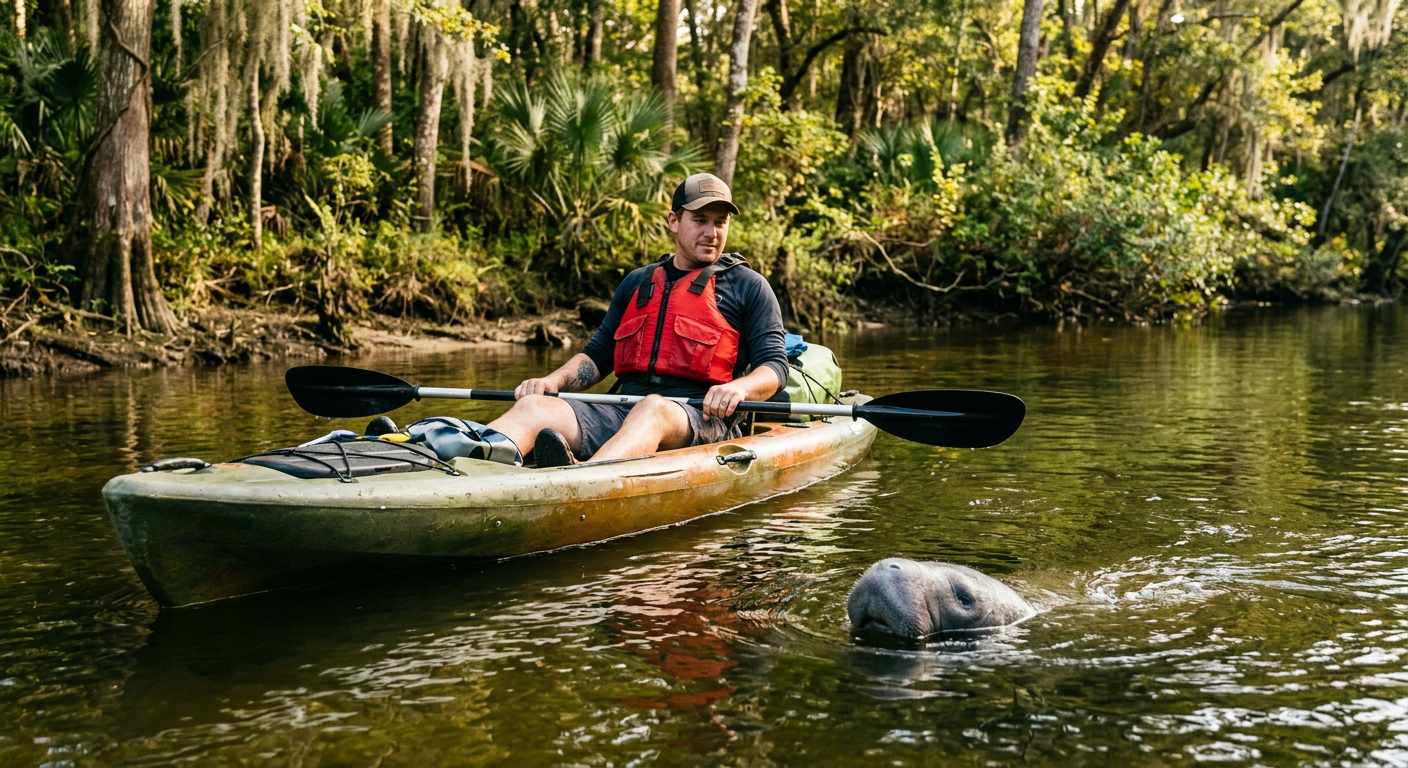
An adult West Indian manatee weighs roughly a thousand pounds. When one nudges the bottom of your kayak, that statistic translates into a hollow, resonant thump vibrating right through your plastic seat.
Negotiating the Right of Way
A heavy, wet exhale follows. That breath carries across the water like a sleepy sigh. It serves as the only warning you get before they bump the hull again.
State regulations dictate paddlers must maintain a fifty-foot distance from marine mammals. In the tightest mangrove tunnels, the manatees rarely consult those guidelines. If they park in your path, you stop. There is no negotiating with a protected species taking a nap in a narrow channel. You just sit there and accept your new schedule.
Tourists often sprint toward surface ripples when they spot movement. Drop your paddle and stay quiet. Curiosity brings them closer than chasing ever will. Booking an organized sunset kayaking tour through Rockon Recreation Rentals means paddling with locals who automatically factor this mandatory waiting time into their seasonal routes. Sitting still while an animal blocks your exit cramps the lower back. It remains a good problem to have.
Timing the Dusk Return Limit
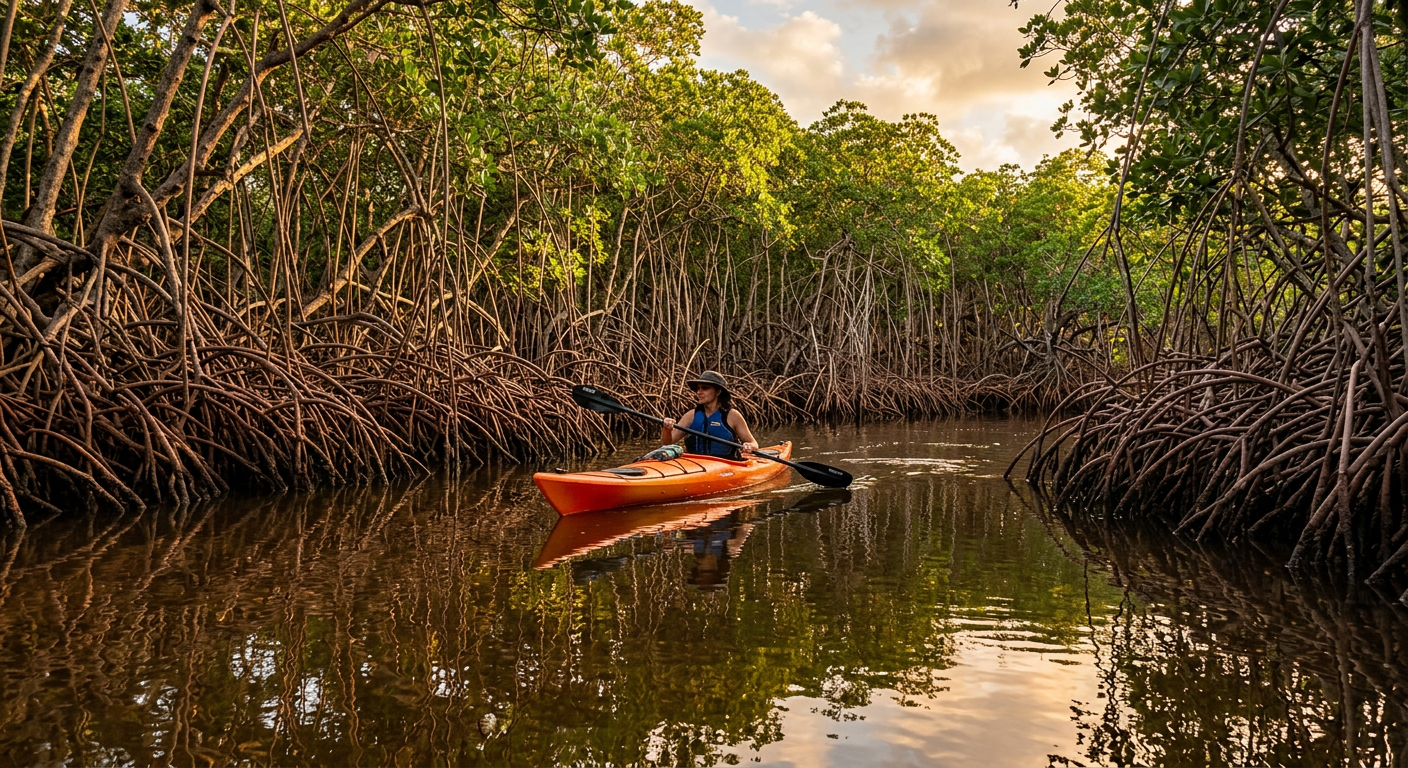
The wind gives up around six. The weighty Florida humidity replaces it instantly. Average wind speeds drop to roughly three knots just before dusk. The water surface turns into a dark, motionless mirror.
Trusting the Dark
Marketing photos never capture the consequence of that stillness. The second the ripples stop, mosquitoes arrive in dense clouds. Apply strong DEET in the paved parking lot before launching. If you spray it on the water, the mist hangs in the dense air, forcing you to taste that chemical bitterness for the next twenty minutes.
The official sunset time for early October hits just before seven. Three minutes past that mark, the sky transitions from bright orange to a bruised purple. Visibility plummets. Silhouettes of islands blur together into solid black walls. Every paddle stroke sounds unnervingly loud against the silence.
The current pulls against you on the return trip. According to National Park Service records for the surrounding Canaveral waterways, the tidal flow forces water back toward the ocean inlets during the evening drop. You rely on headings and memory to reach the boat ramp.
You drag the heavy plastic hull onto the concrete incline. The night air smells of sulfur again, wet sea grass clings to your damp ankles, and the distant hum of highway traffic filters back through the tree line. You load the gear feeling sticky, bitten, and exhausted. The lagoon sits black behind you, holding onto whatever heat is left in the day.