
Reason 1 The Silt Squeeze and Reality of Cavern Diving
A Blue Grotto Florida weekend starts with the hollow, rhythmic hiss of scuba regulators slapping against limestone walls before bouncing up to a wet wooden deck. As noted by Lonely Planet in their guides to the region, Florida is dotted with hundreds of freshwater springs, but only a few possess the massive, gaping infrastructure of this specific sinkhole. You stand on the platform looking down at the main basin. The water is a dark, glassy blue, interrupted only by the silver exhaust bubbles breaking the surface. It sounds like a dozen people breathing through mechanical straws right under your boots. It is barely past sunrise.
The wooden stairs leading down to that launch platform stay perpetually coated in slick green algae. A faded yellow sticker on the metal handrail warns about slipping, mostly ignored by novice students carrying heavy lead weights. Slow down. Wear hard-soled water shoes. The first hazard of the day is not the dive itself. It is the walk to the water.
Navigating the Morning Sediments
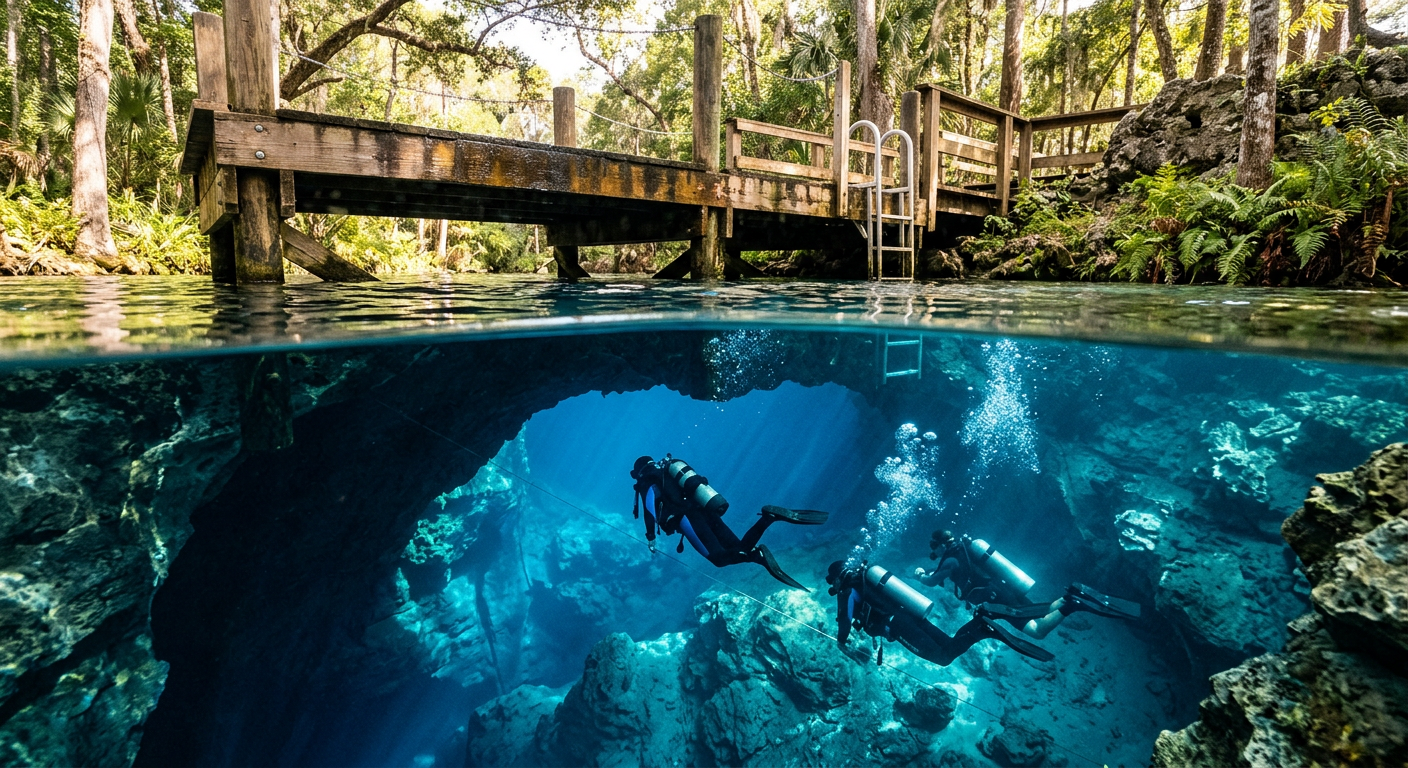
Tourism boards manipulate their photos of a Blue Grotto Florida dive. Glossy postcards show pristine visibility with one solitary diver floating gracefully above the rocks. If it is on a postcard, it is a trap. Reality looks like visibility dropping fast when twenty new divers drag their knees through the silt bottom by mid-morning. If you are the first team in the water at eight o'clock, the crescent-shaped cavern is crystal black-and-blue. By ten, a thick, cloudy haze takes over the lower bowl. Dive early or accept the fog.
Regional site maps peg the bottom of the crescent at a maximum depth of about a hundred feet. That lower section handles constant daily traffic from instructors running deep-water drills. Hovering in suspended sediment while waiting for the group ahead of you to clear the main guideline chills your bones. The cavern itself is massive enough to swallow the noise of a pool-sized crowd. Slipping under the limestone lip feels like entering a submerged cathedral.
The local marine life adds a strange layer of hazard. A resident softshell turtle roams the shallows just past the dock. I cannot prove this, but the creature seems to actively target the highest-priced fins to bite. Trust your gut if you feel a hard tug on your heel while pausing at ten feet. It is not your dive buddy trying to get your attention.
Finding rugged rental equipment for a Blue Grotto Florida trip in this part of Levy County requires sorting through busy gear counters. You can rent direct or check availability through Rockon Recreation Rentals to secure your tanks before the weekend rush. Pack extra weights.
Explore diving experiences near Central Florida
Reason 2 Escaping the Winter Chill at Depth
The scent of rotting oak leaves and damp limestone sits heavy in the January air. You yank a stiff neoprene wetsuit over your shoulders for your descent. The thick rubber grabs your skin, fighting you for every inch of leverage.
According to the Florida Department of Environmental Protection, groundwater pushing out of the Floridan aquifer remains roughly 72 degrees year-round. Stepping off the surface dock in the middle of winter feels like walking into a meat locker. The initial shock hits your chest and narrows your breathing.
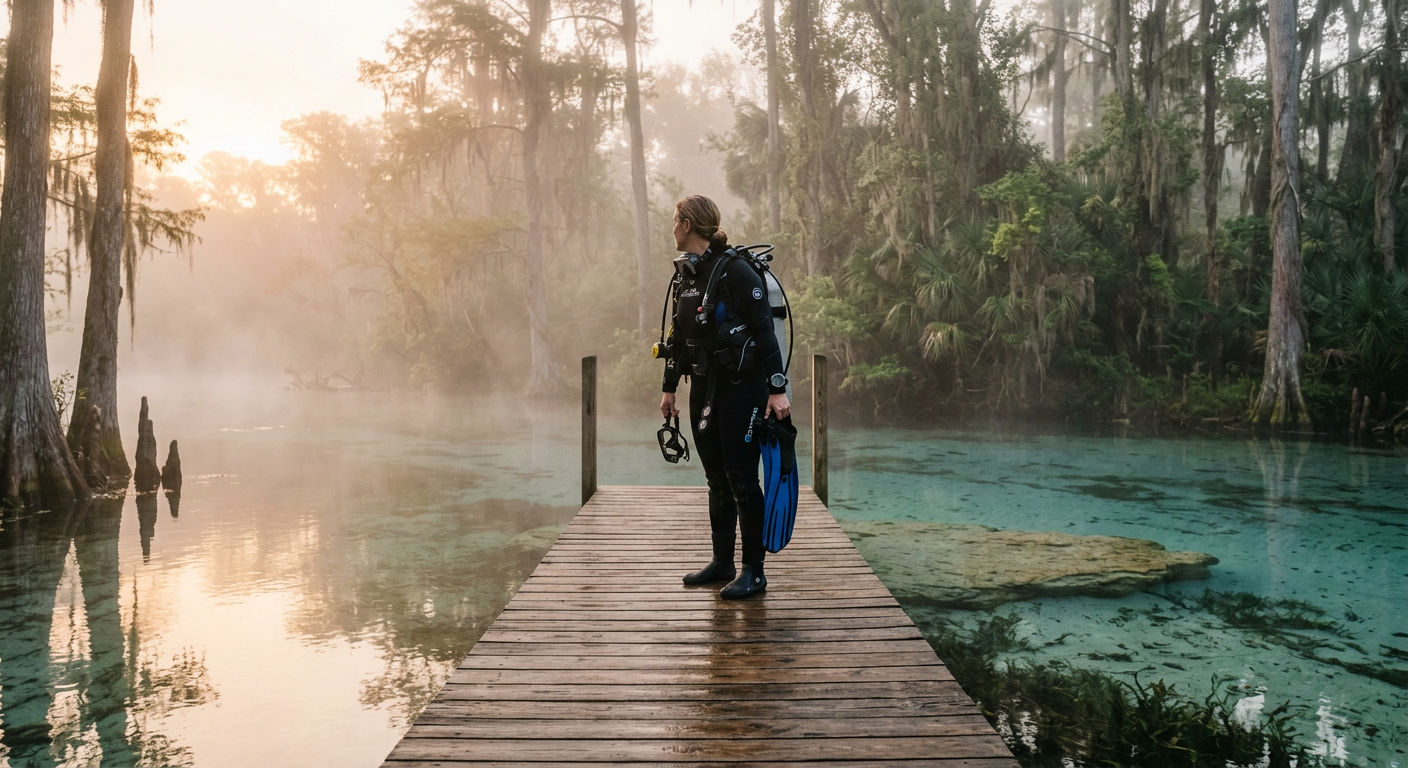
I always assumed the shivering would compound the further down I kicked. It does the opposite. The limestone walls narrow past the thirty-foot mark, cutting off surface wind and prevailing currents. The moment you cross the threshold from the sunlit upper basin into the gloomy overhang, the bite vanishes. Crossing that zone replaces the winter air with a dull, steady warmth from the deep earth. That thermal shift alone rescues the January dive schedule.
There is no heated changing room at the facility. You will stand by your car dripping wet in the breeze.
Managing Surface Intervals The Local Way
Current weather data for the 2026 season shows average morning lows hovering in the upper forties. The cold radiates off the concrete staging tables. The regulars have a system for surviving a standard Blue Grotto Florida surface interval without succumbing to hypothermia.
You fill a heavy metal thermos with boiling water at the hotel before you leave. By the time you haul your gear out of the water after the first jump, the liquid cools to about a hundred degrees. You tip your chin down and pour it directly into the neck of your wetsuit. That sudden rush of heat washes down your spine and stops the shivering instantly. Finding heavier thermal layers is easier if you book early through the network of technical outfitters listed on Rockon Recreation Rentals.
Reason 3 The Rare Luxury of Permanent Guidelines
A dry metallic tang of compressed air lightly coats the back of your throat as you clamp the mouthpiece down. You chew on the rubber tabs and check your gauges on the surface while the morning fog burns off the water.
The layout follows a set geologic pattern. A wide basin funnels down into a curved rocky bowl full of fossils and scarred rock. You follow the main safety line down into the gloom. The light fades from bright green to a muted gray within twenty kicks.
Rethinking the Training Pool Reputation
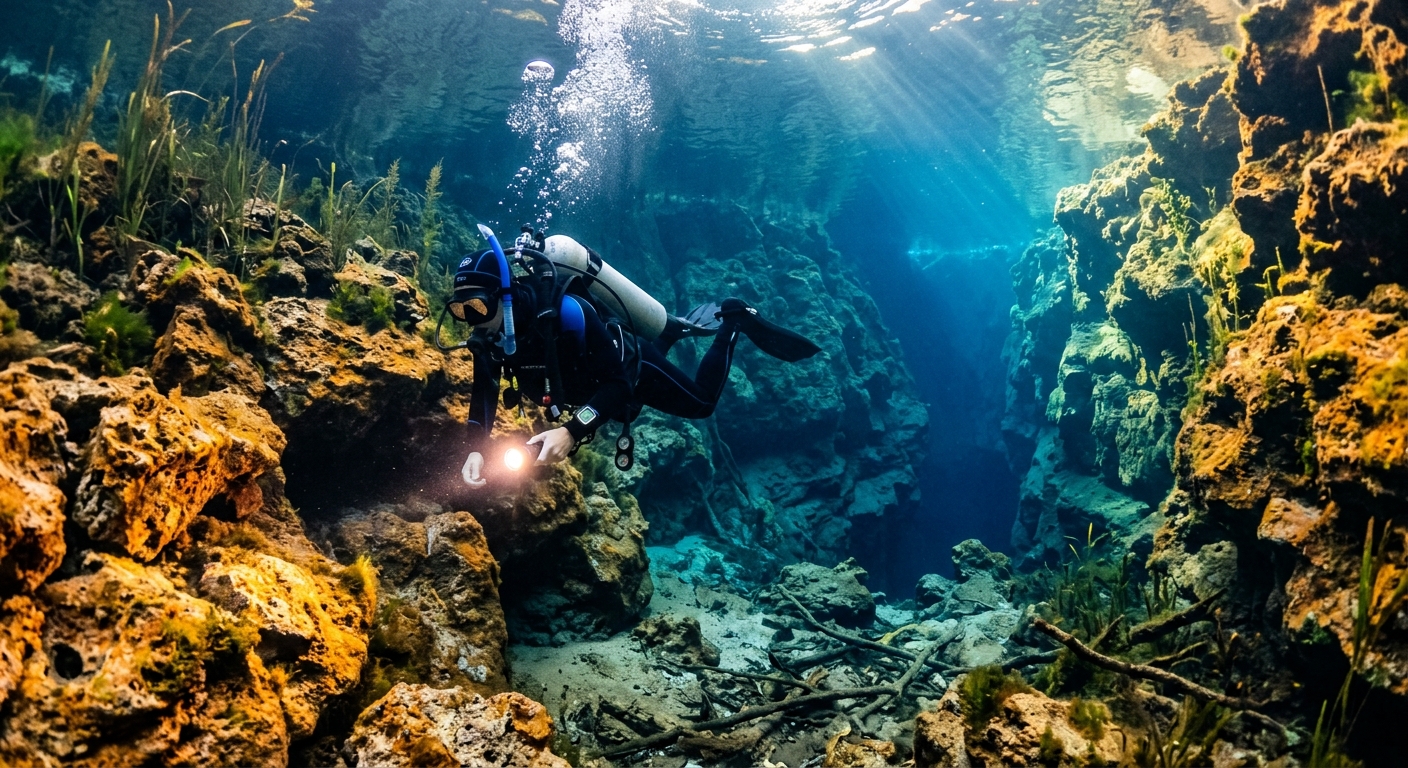
2018 me wrote this place off as a glorified training pool. 2026 me knows better. The logistics of a Blue Grotto Florida deep-water dive with permanent routing, a covered staging structure, and stable entry stairs is a rare luxury. You bypass the hour of hauling heavy gear through muddy forest trails just to reach the water's edge.
At about thirty feet down, an air-filled diving bell hangs bolted to the ceiling. You can surface inside it, pull your regulator out, and talk to your dive buddy in a pocket of trapped gas that echoes like a tin can. It smells like stale breath and wet rubber. Most divers try it exactly once before dropping back into the quiet.
According to state certification tracking maintained by PADI, controlled environments like this lower cavern rank among the most functional technical training sites in the state. The layout isolates students from unpredictable boat traffic. The current 2026 visitor volume remains relentless, meaning you are rarely alone in the water. The onsite fill station handles thousands of pounds of pressurized air every weekend. Grab your scuba cylinders the night before if you can.
Near the fresh water wash hoses, a concrete pad slopes toward the wood decking. Four years ago, a diver named Dave dropped a split fin down a tiny gap in those planks. He stood there shivering in his wetsuit, staring at the dark hole for five long minutes. He never said a word, just packed up his truck and drove away. Every time I pass that concrete wash pad, I look at the gap.
Explore scuba gear rentals near Williston
Reason 4 Avoiding the Chaos of the Staging Area
The staging area traps the morning humidity beneath a dense canopy of Florida pines. A sticky layer of yellow pollen coats the fenders of every truck pulling into the gravel lot. You cut the engine and push the car door open, and the heavy air just sits on your chest.
The staging zone operates as a crowded free-for-all disguised as a dive resort. Two dozen concrete picnic tables dot the sand. Dive clubs claim them faster than concert tickets. Rigging a heavy backplate and wing from a car trunk gets old quickly. Scuba diving is basically the sport of moving an apartment full of heavy, awkward furniture piece by piece. Add loose gravel, and the romanticism dies fast.
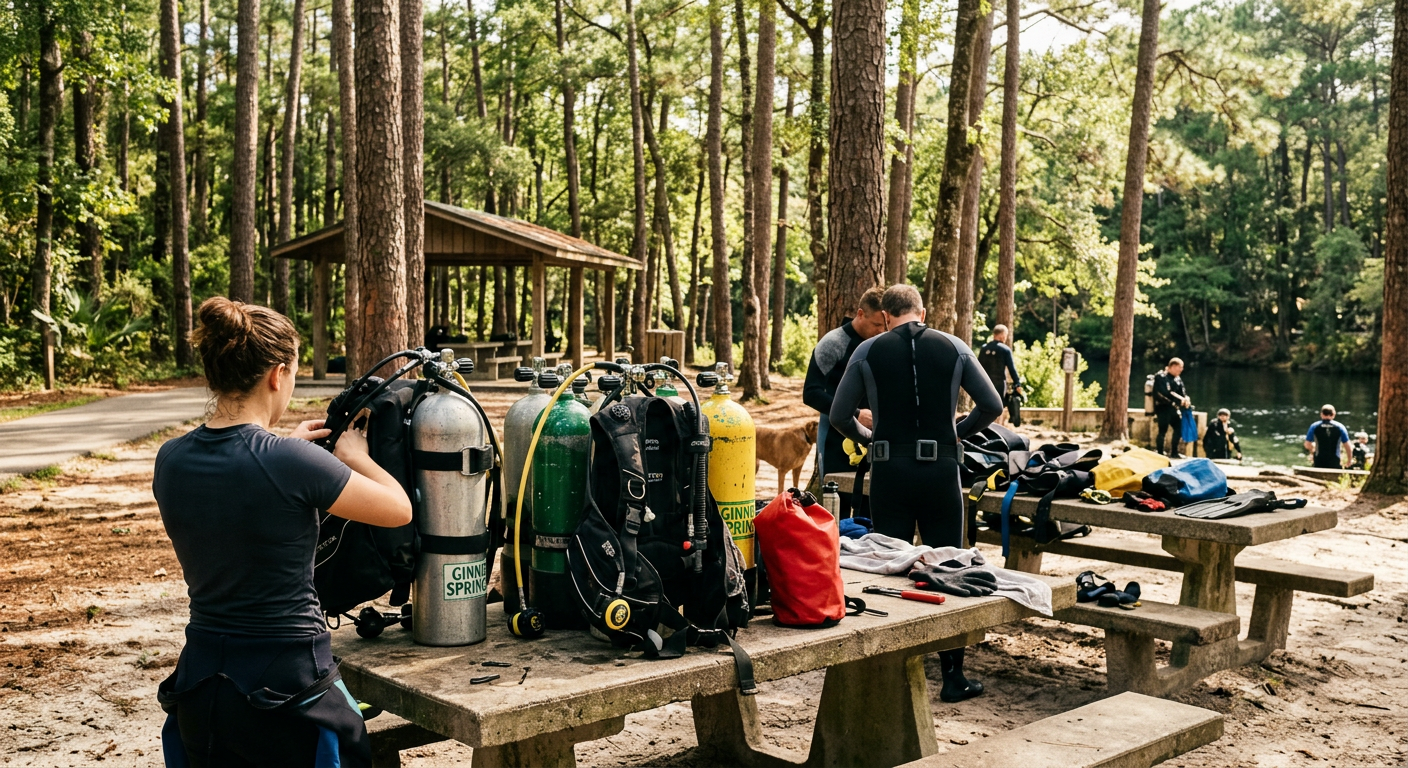
Arrive by half-past seven if you want a table during the weekend rush of a typical Blue Grotto Florida morning. Rolling in later means your open tailgate is your new dive station. I used to laugh at the pre-dawn panic at these Central Florida springs. I assumed it was eager instructors racing to secure shallow water for their students. I realized my mistake after spending forty minutes gearing up in the direct afternoon sun, balancing a tank on the bumper of a rented SUV while sweat pooled in my boots. You pay with sleep or you pay with sweat. Pick one.
Hauling Tanks Across the Gravel
The main compressor building sits away from the primary parking zone. Walking into the open-air shed, the mechanical thud of machinery hammers your eardrums. The air smells like burnt grease, and the freshly filled tanks feel warm against your bare hands.
The official site map measures the walk from the furthest overflow parking to the basin stairs at exactly 164 feet. That is the one and only time I will base a complaint on precise measurements here, because hauling twin steel cylinders across that distance feels like a marathon. You drop the tanks near the bumper and sit on the tailgate. The pine needles are still baking in the sun. After a long day of navigating the chaotic staging area and freezing water, you might want an entirely different kind of thrill for the evening. If you want to dry off and head an hour south into Central Florida, booking a Haunted Hayrides Near Me Orlando is a seasonal favorite perfectly positioned nearby.
Reason 5 Packing Gear That Will Actually Save You
Dry neoprene dragging across sweaty skin provides a terrible, stubborn friction. Someone always shows up for a Blue Grotto Florida plunge with nothing but a thin rash guard. They assume a casual trip implies average tropical ocean conditions. The natural basin sits shaded by massive limestone walls blocking out the sun. A rash guard will not save you here.
Layering Up for the Limestone
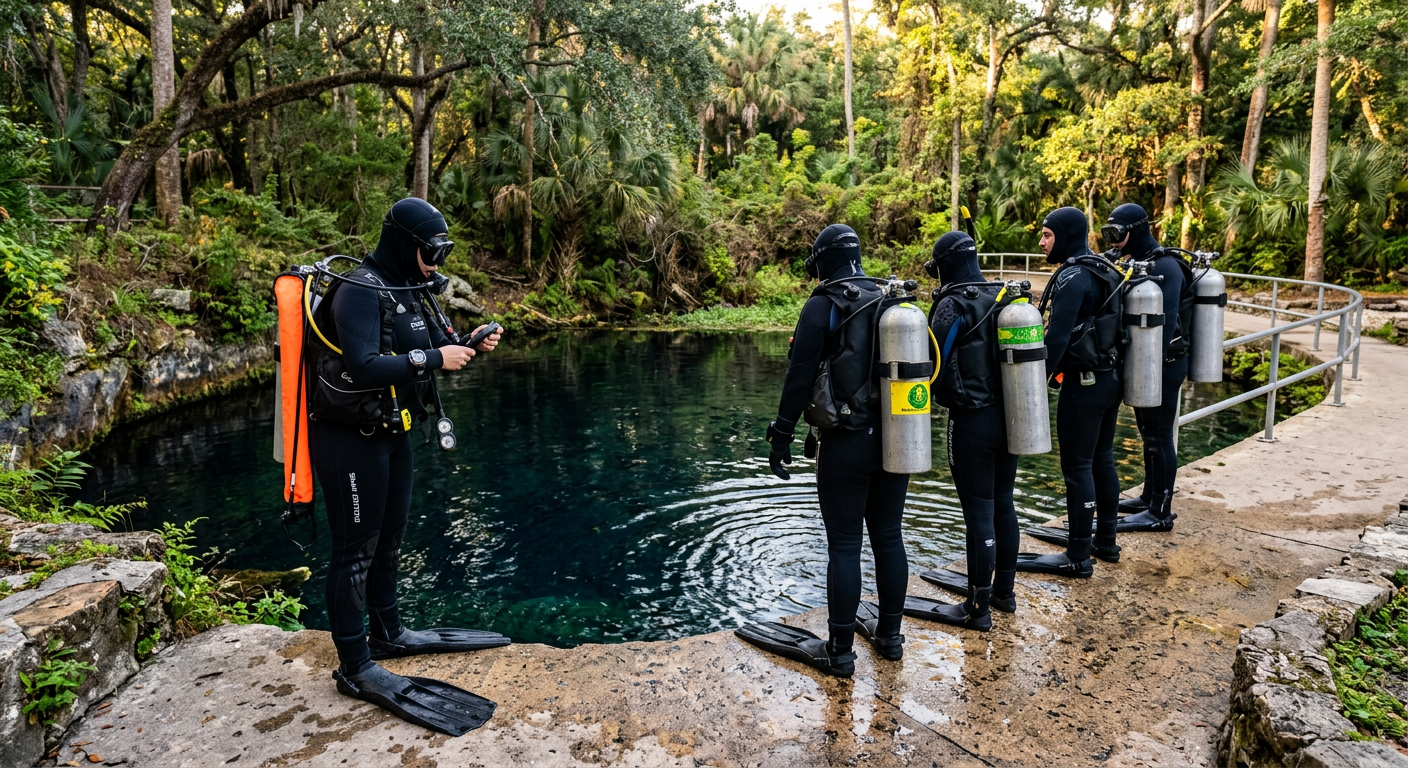
A quick glance at popular dive forums—and even recent outdoor gear guides in Forbes—suggests a 5mm suit is highly recommended for the local springs. The dive forums are wrong. Spend fifty minutes hovering practically motionless in a dark cavern at seventy feet. That manageable surface coolness translates into a persistent ache radiating from your shoulders by the time you hit the safety stop. You want the thick layers.
Yes, wearing a thick hood makes you look like a thumb with a face. Get over it. The water pulls heat directly from your skull during any Blue Grotto Florida descent, and a thick hood blocks that creeping cold from ruining your bottom time.
Bring a commercial defog solution for your mask. Cheap spit stops working the moment the frigid water touches the glass.
Entry-level regulators breathe fine at twenty feet, but pull harder when you drop deeper into the bowl. Securing reliable gear saves you the headache of questioning your air supply in the dark. You step back from the wooden gear bench to pull the thick rubber over your shoulders. You reach blindly to grab the zipper leash on the back of your suit. Your fingers graze the nylon strap. It slips away. You just stand there in the humidity, twisting your arm backward, listening to the generator hum.
This article was editorially reviewed by Greg Faucher. He writes about travel and outdoor experiences for Rockon Recreation Rentals, a VisitFlorida Travel Partner since 2018 — long enough to know that "must-see" usually means "should probably check first."