1 Why The Scent Of Salt Mud Outperforms A Sterile Beach
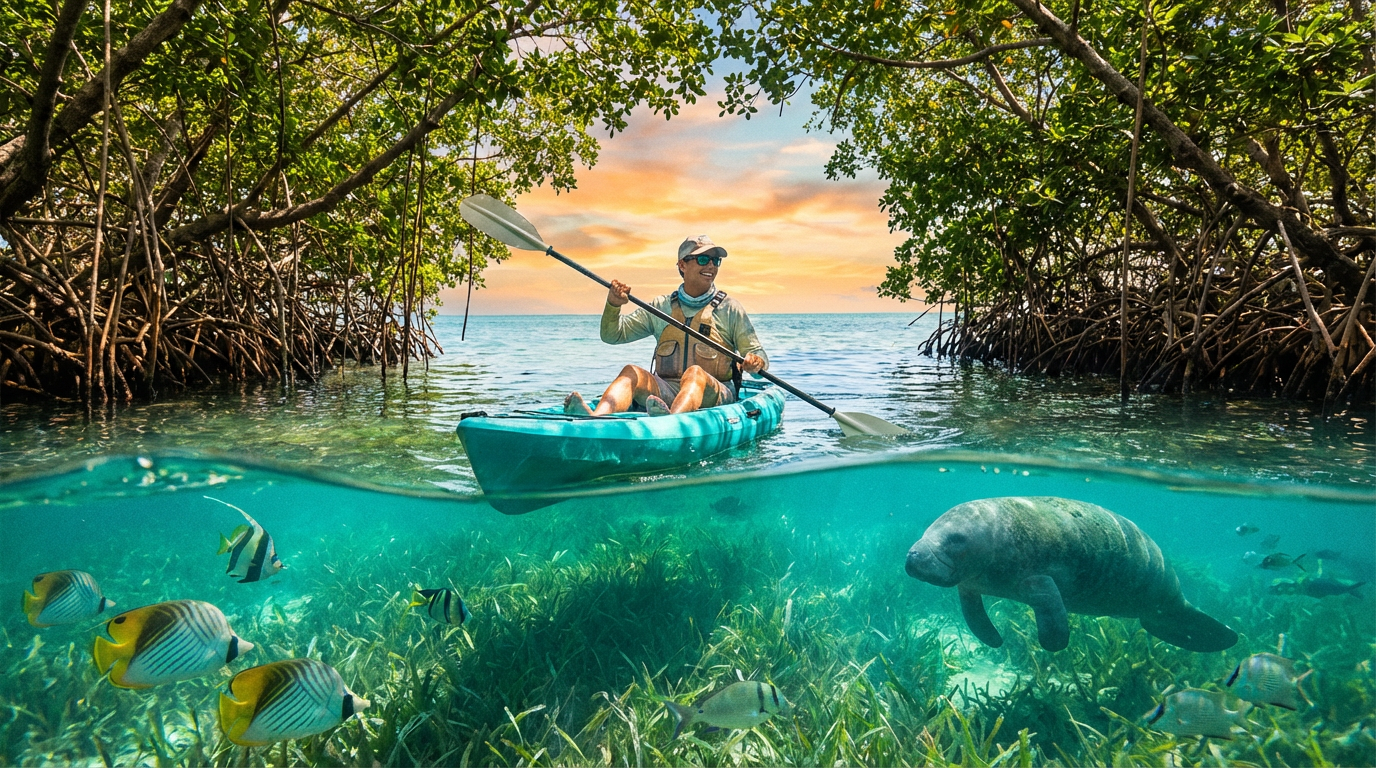
The wet stench of decaying red mangrove leaves and black coastal mud hits my sinuses long before the truck tires sweep across the crushed-shell parking lot in Islamorada. The tidal charts suggested perfect conditions for a backcountry launch—low wind, an incoming tide, a textbook spring morning. I arrived. It was foggy. Naturally. I drag a heavy 60-pound plastic hull over the grit while the sharp limestone bites through cheap neoprene water shoes. The mosquitoes are already awake, and they are hungry.
Tourism boards in 2026 prefer safe adjectives like flawless and pure. They crop the mud out of the brochures. I used to hate this sharp sulfur odor when I first started launching boards down here back in 2018. I thought finding stagnant, brown water meant I picked a dead zone. Beige travel is a tragedy. Glossy drone shots capture the stunning geometry of the flats from a few hundred feet up, but they miss the biological heartbeat running underneath it. That sharp rot is the baseline scent of the coastal food web resetting itself.
According to field reports from biologists at the National Park Service, this exact coastal leaf litter provides the necessary organic foundation for the entire bay. Nature refuses to sanitize itself for a vacation schedule. Without the decay, the bonefish and the migrating tarpon simply starve.
The dawn launch area consists of rutted dirt fading into a gray tide line. A single laughing gull stands on top of the rusted honesty-box for parking fees, staring sideways at a stripped screw. I cannot prove this bird knows I locked my map in the center console, but its posture feels judgmental. Swimming pools exist for a reason. Real coastal exploration requires mud under the fingernails. I often remind friends booking gear through Rockon Recreation Rentals that field biology beats marketing fiction every time. Check the VisitFlorida Travel Partner listings if you need credentials, but out here, the ecosystem sets the terms.
2 How A Navigational Shortcut Becomes A Beautiful Trap
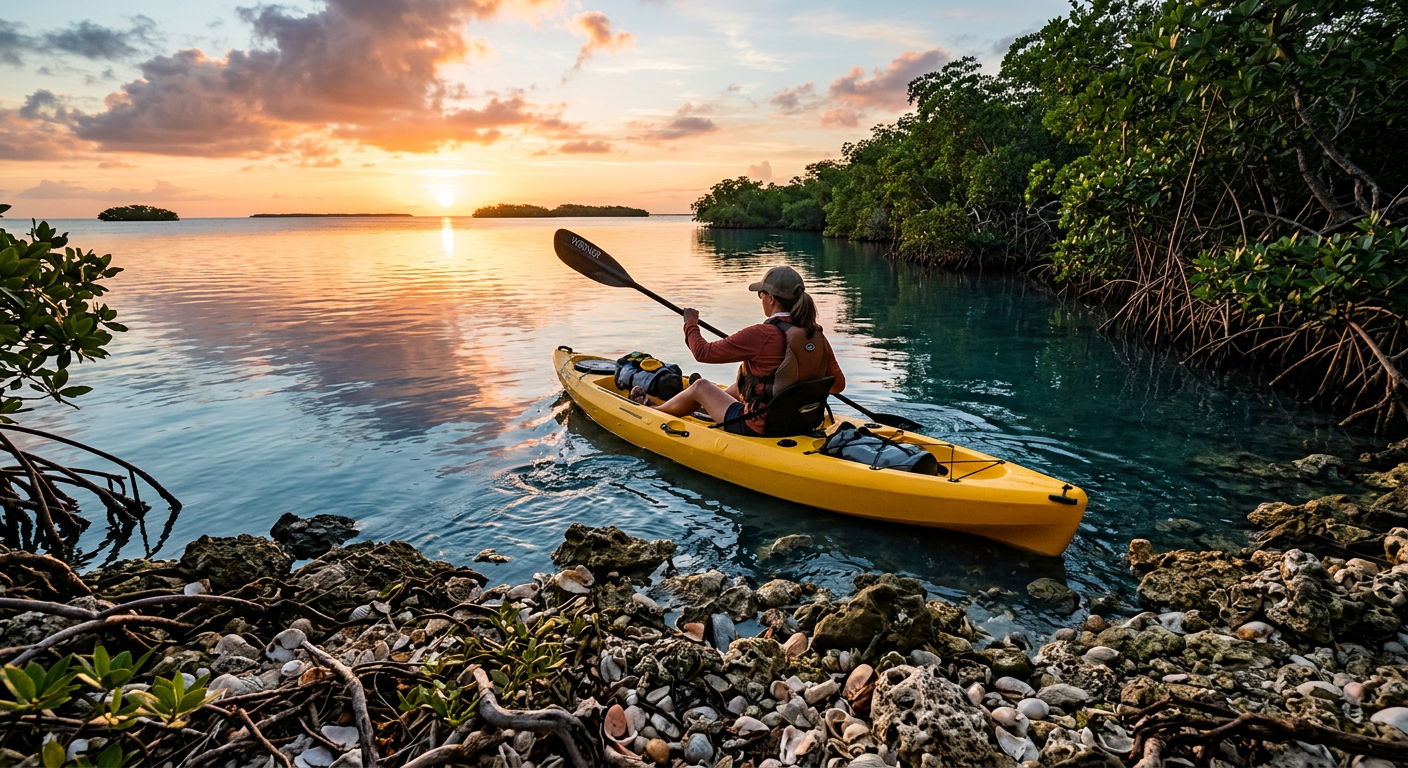
The rough scrape of rigid bark against fiberglass vibrates right up through my elbows. When I paddle the Florida Keys based on a folded grid grabbed at a gas station counter, I wrongly assume the printed blue lines represent clear transit paths. The backcountry behind Shell Key is actually a shifting maze of submerged wood. Modern digital navigation rarely survives contact with the island.
Do satellite mapping companies even send a skiff out here before drawing their cartesian fantasies? I stare at a phone screen showing a bright blue shipping lane, while physically wedging my bow into a dense wall of twisted prop roots holding an orb-weaver spider web. High-resolution imagery still fails to differentiate between a shallow peat bank and a deep ocean channel masked by green canopy cover.
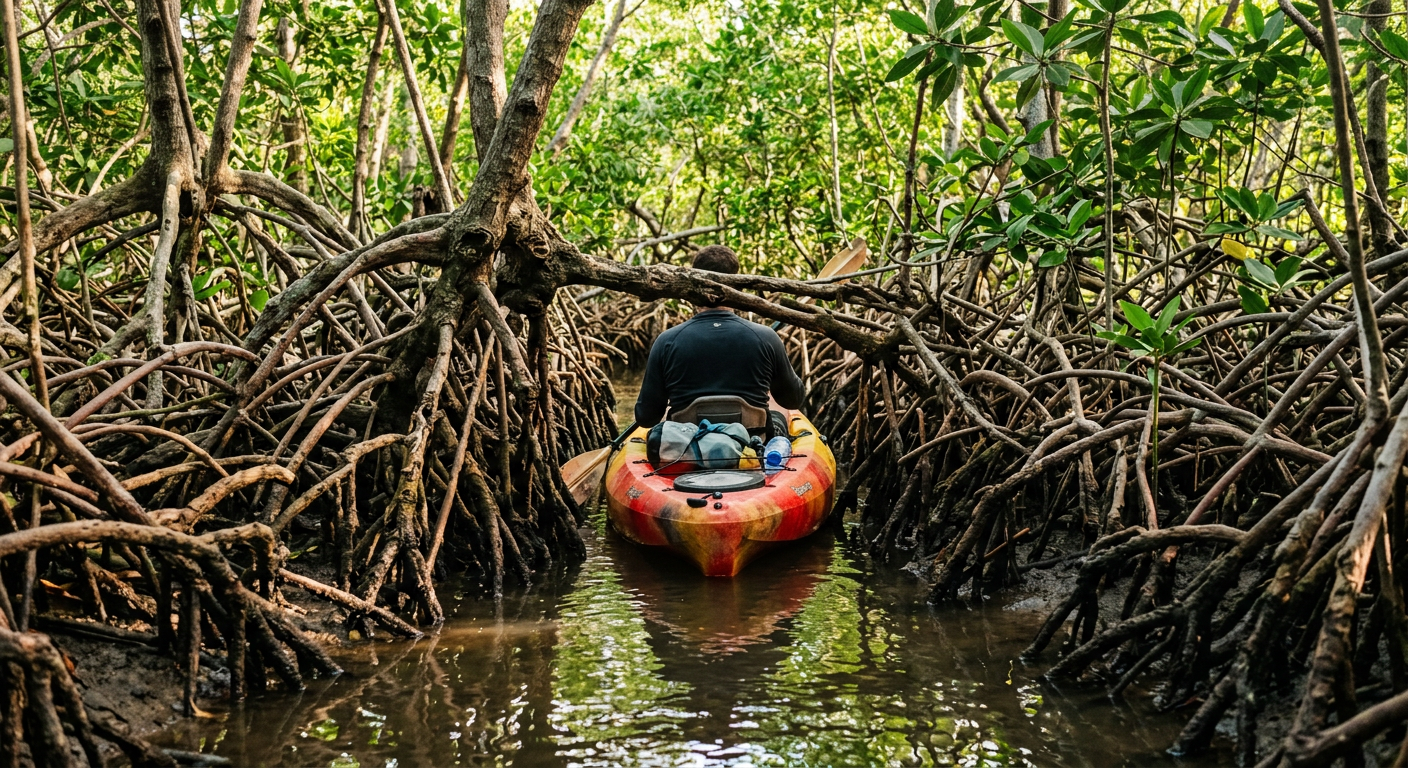
The water depth in the middle of this tunnel is barely a foot. The branches block the morning sun.
The Disorienting Pull of Skinny Water
The blue GPS dot drifts on my screen like a drunk fly. According to coastal engineers at the University of Florida, dense saline canopy environments routinely scramble consumer-grade signals. Trust your gut on this, even if the brochure says otherwise: if a glowing screen claims a shortcut exists through the red canopy, it is a trap designed to steal your morning.
I spent my early years out here assuming a scraped hull meant I had failed at navigation. I thought hitting a dead end meant the morning was ruined. Then a harsh falling tide forced me onto a mudbank last spring. I had to drop the paddle and sit still in the shade for about an hour while the sediment cleared. A spotted eagle ray glided right under my hull, its wings brushing the peat. A small school of juvenile mutton snapper emerged from the shadows once I stopped thrashing. I changed my mind right there. The labyrinth is not an obstacle. It is a waiting room. My frustration evaporated. I realized getting stranded is the actual objective.
When the bow wedges tight between two ancient roots, I cannot simply throw the kayak in reverse. A falling tide leaves my boat isolated exactly 1.4 miles from the nearest paved road. According to the NOAA Ocean Service, these dense root structures act as critical storm buffers for the mainland. They have zero interest in my afternoon schedule.
3 Unpacking The Abrasive Soundtrack Of Florida Bay
The rhythmic thump of a waterproof Bluetooth speaker echoing across Florida Bay is a localized tragedy. I hear the plastic tubes blaring house beats over the breeze long before I spot the oblivious vacationers dragging them through the seagrass. Native marine ecosystems do not require a curated playlist. When I paddle the Florida Keys with quiet intent, the audio profile proves strange and relentlessly busy.
The Frying Bacon Under The Board
I still freeze when I glide onto a shallow grass flat and hear hot grease popping in an enormous pan. The noise surrounds the kayak. The first instinct is to check my gear for slow pneumatic leaks. I listen. The sizzling sound comes directly from the sea floor underneath the hull.
The hum comes from thousands of snapping shrimp hiding in the turtle grass. According to marine ecologists at the Smithsonian Institution, these tiny crustaceans slam their oversized claws fast enough to generate a concussive shockwave causing massive decibel spikes. The blast stuns miniature prey. I am just passing over the collateral acoustic damage.
A Lesson In Striped Mullet Gravity
The background static breaks abruptly when a striped mullet decides to leave the water. The explosion sounds like a wet cinderblock slammed onto a flat wooden deck. Three pounds of muscle and silver scales erupts into the humid air and slaps back down sideways into the chop.
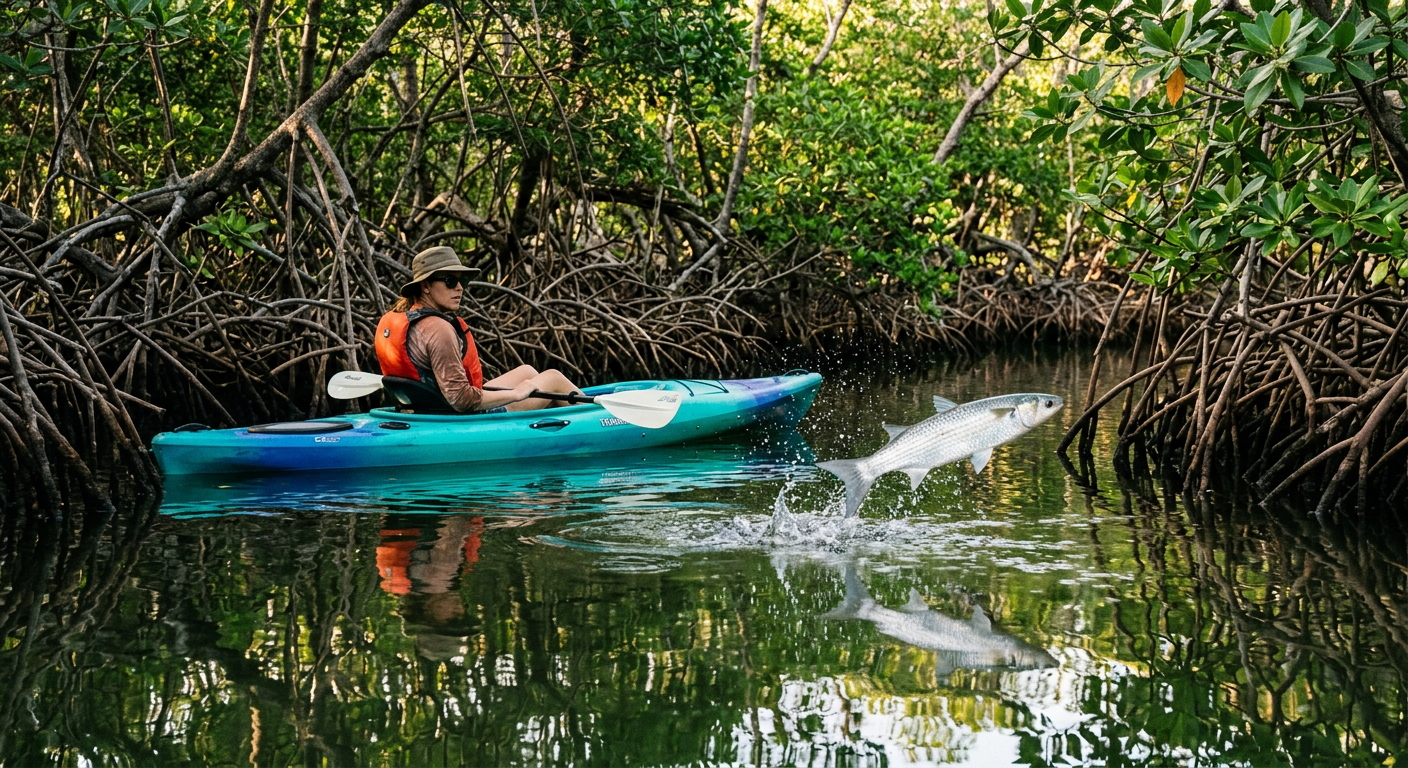
Tourists generally assume a bull shark chases these jumping fish. 2019 me embraced that identical dramatic narrative, bracing for a predatory dorsal fin to break the ripples behind the splash. The science leans toward a mundane motivation. Field biologists note these mullet launch themselves primarily to gulp oxygen-rich air before retreating to the anoxic mud to feed. They are just breathing hard. I can't prove the fish enjoy the theatrical belly-flop, but it feels performative.
4 The Unexpected Comfort Of Coastal Claustrophobia
The ambient tropical heat vanishes the second my bow slips past the edge of the sunlit bay and enters the shadowed canopy. A heavy chill radiating from the wet bark crashes over my shoulders. Paddling the backcountry feels like entering a flooded dirt cellar. The ceiling hangs low.
Claustrophobia knocks on the edge of the subconscious. Thick descending branches limit my paddle strokes. Golden silk spiders the size of a human hand rest quietly at eye level. Most folks question their life choices in these tight channels. It is easy to wish you booked a jet ski in the open ocean off Tavernier instead.
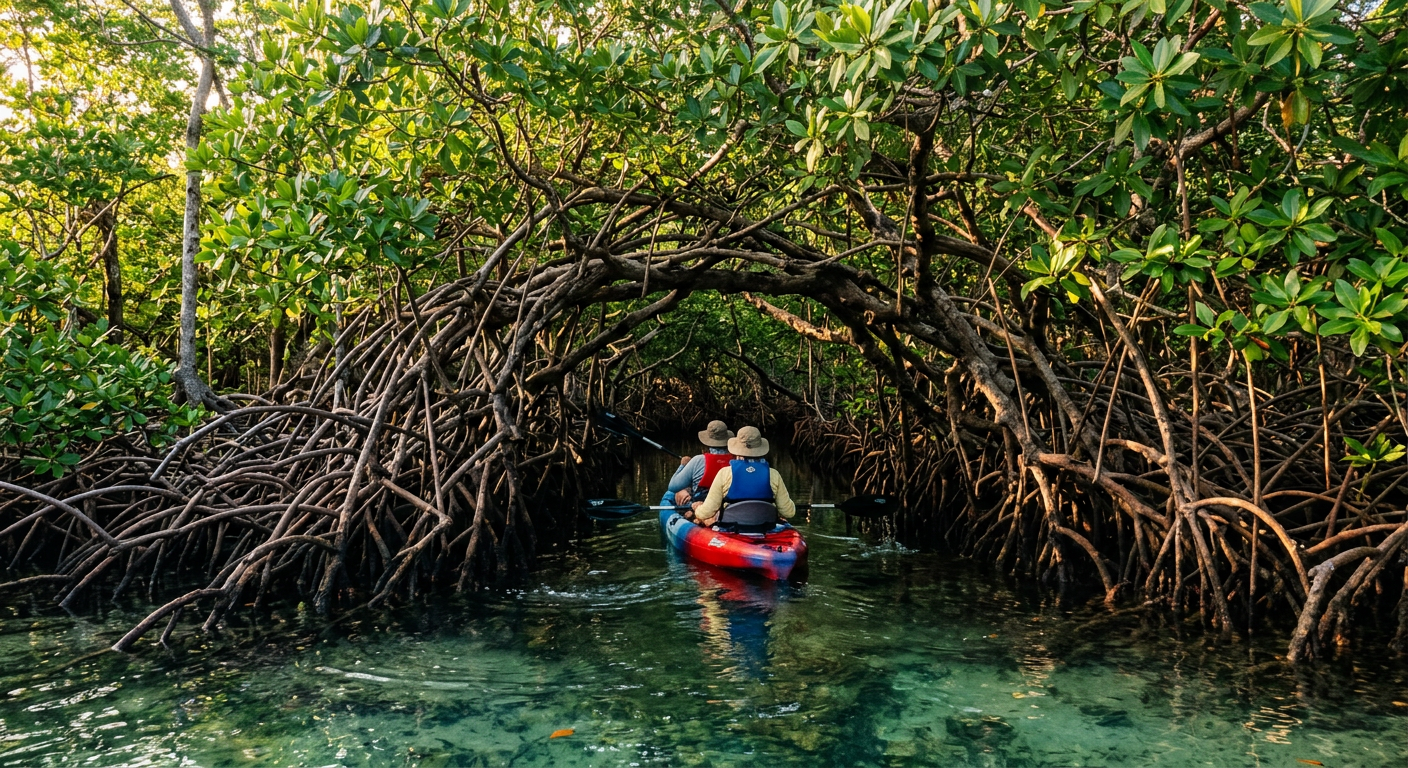
The open water is a blank void masking a sandy desert below. These twisting, dark alleys hold the sanctuary. Narrow tunnels force me to abandon the hunt for a wide-angle photograph and start operating as an active witness to the tide.
5 Finding The Nursery Without The Crowds
The salt spray dries on my lower lip as I pull deeper into the biological engine of the islands. When I paddle the Florida Keys, I float inches above a chaotic and violent nursery of lemon sharks and stingrays. Every stroke pulls me further from the highway noise.
The canopy filters the blinding Atlantic sun into a soft green glow. Red mangrove trunks drop straight into the dark green saltwater, creating a hardened wooden barrier along the shoreline. Small gray snappers hover between the pillars, treating the roots like prison bars keeping larger offshore predators away. Barnacles grip the bark an inch below the tidal mark.
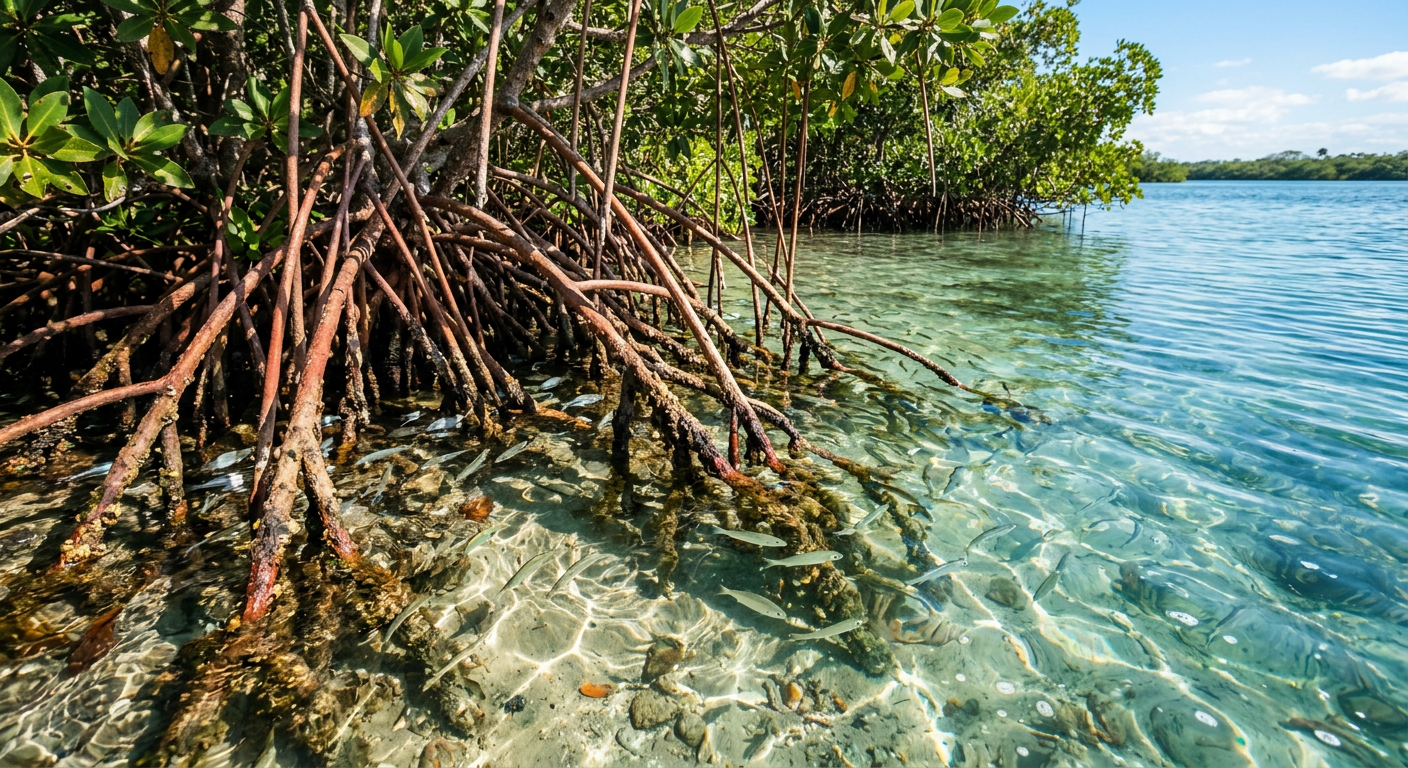
2018 me would have panicked at the dark shadow moving stealthily through the prop scars up ahead. 2026 me recognizes the blunt nose of a curious nurse shark and leans over the gunwale to investigate. Research is my love language; reality is my ex. Yet the biological reality of this specific nursery far exceeds the textbook diagrams. Reports from NOAA detail how these thick coastal forests secure hundreds of species that eventually migrate to the barrier reef tract. Without the shadows, everything here gets eaten.
We routinely urge guests looking at outfitter setups through Rockon Recreation Rentals to skip the roaring airboat tours. Operating under simple human power grants a quiet, front-row seat to the daily survival mechanics of the shoreline.
6 Learning How A Stagnant Current Explains Everything
A stagnant, sudden breeze pushes off the mud flats, sticking damp cotton shirts to my back. It serves as a gentle reminder that the outgoing tide is gaining serious velocity through the pass. The silence wraps around the hull like a heavy blanket. The water runs shallow, dropping toward the low mark.
Going rogue on a paddleboard without checking the local lunar cycle means burning out your shoulders fighting a losing battle against the ocean. A local guide alters the friction of the trip. A solid captain does not just point at resting wading birds and recite facts. They teach you to read the subtle vortexes spinning off the prop roots so you glide rather than grind your way home.
I go where the signage is bad and the coffee is good. Some of the most competent flat-bottom skiff and kayak operators working out of Islamorada lack a dedicated ticket booth. They just meet me at the public gravel launch with a clipboard, an old cooler, and a deep understanding of Florida geography.
7 Trusting The Locals To Decipher The Chaos
Yesterday, my hired guide wore an old, neon yellow visor. The brim was frayed and survived three distinct hurricane seasons. He knew the Latin classification of every solitary marine sponge we drifted over.
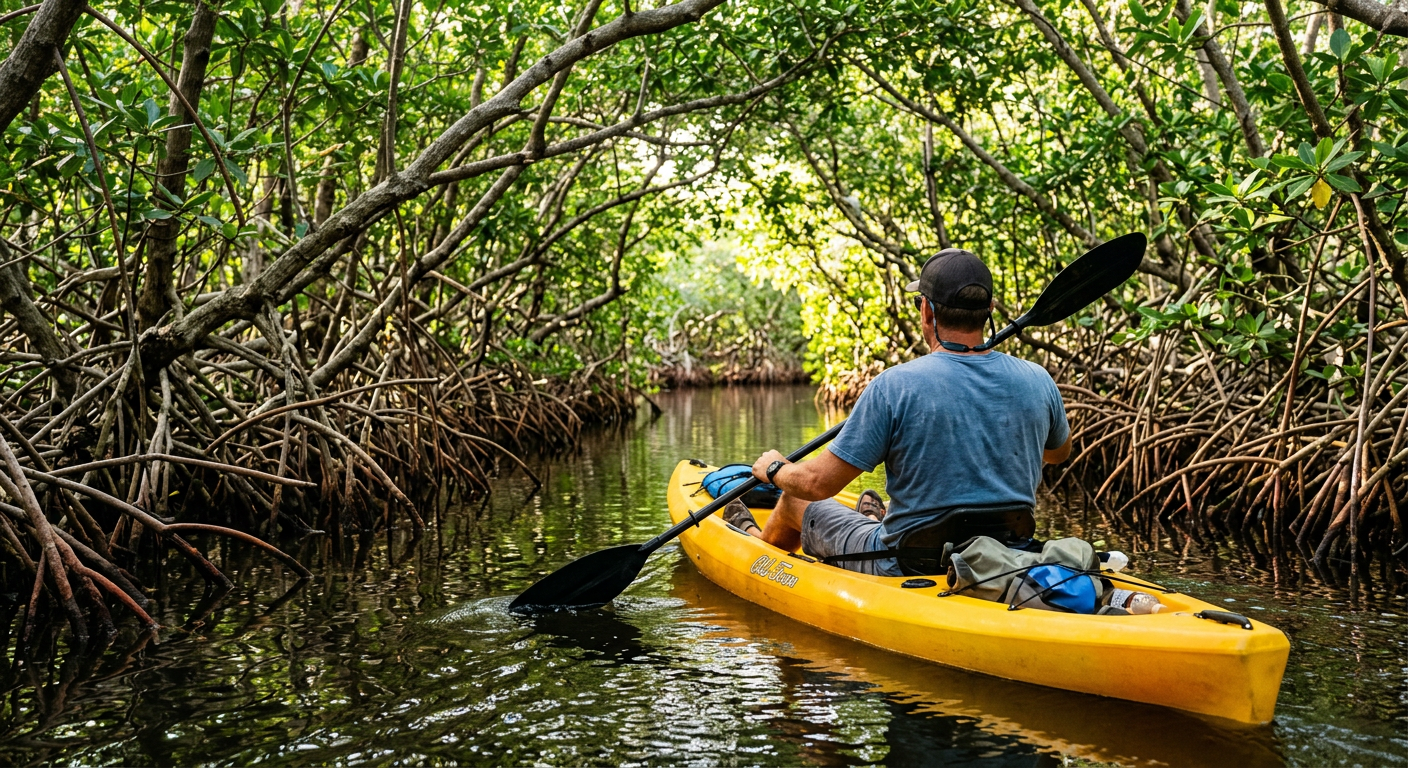
We paddled well past the dredged marina channel. The water turned shallow and clear green. Three brown pelicans sat on a rotting wooden pile, watching us pass. I expected the trip to feel like a rehearsed script aimed at cruise ship passengers. Instead, our guide signaled us to lay paddles across our laps. We sat in silence, listening to the submerged chaos under the hull.
He showed us how to identify the subtle surface ripples betraying a resting stingray buried in the sand. It served as a grounded masterclass in practical marine biology. If you intend to paddle the Florida Keys correctly, ignore the sprawling commercial barges.
- Hunt for the Master Naturalist badge. According to the University of Florida, which oversees this intensive certification, it draws a hard line between genuine local experts and casual hobbyists.
- Verify the tide planning. Capable guides map their backcountry route around the water flow, ignoring fixed clock schedules.
The only adjustment I make next time is packing a long-sleeved sun shirt instead of relying on sweating through thick zinc sunscreen. Having an expert show me the hidden mechanics of the maze transforms a blind workout into the backbone of the trip. The friction of the swamp fades, leaving behind a profound respect for the mud.
Plan your trip: Ready to experience this firsthand? Book Private Mangrove Ecotour directly through our marketplace.