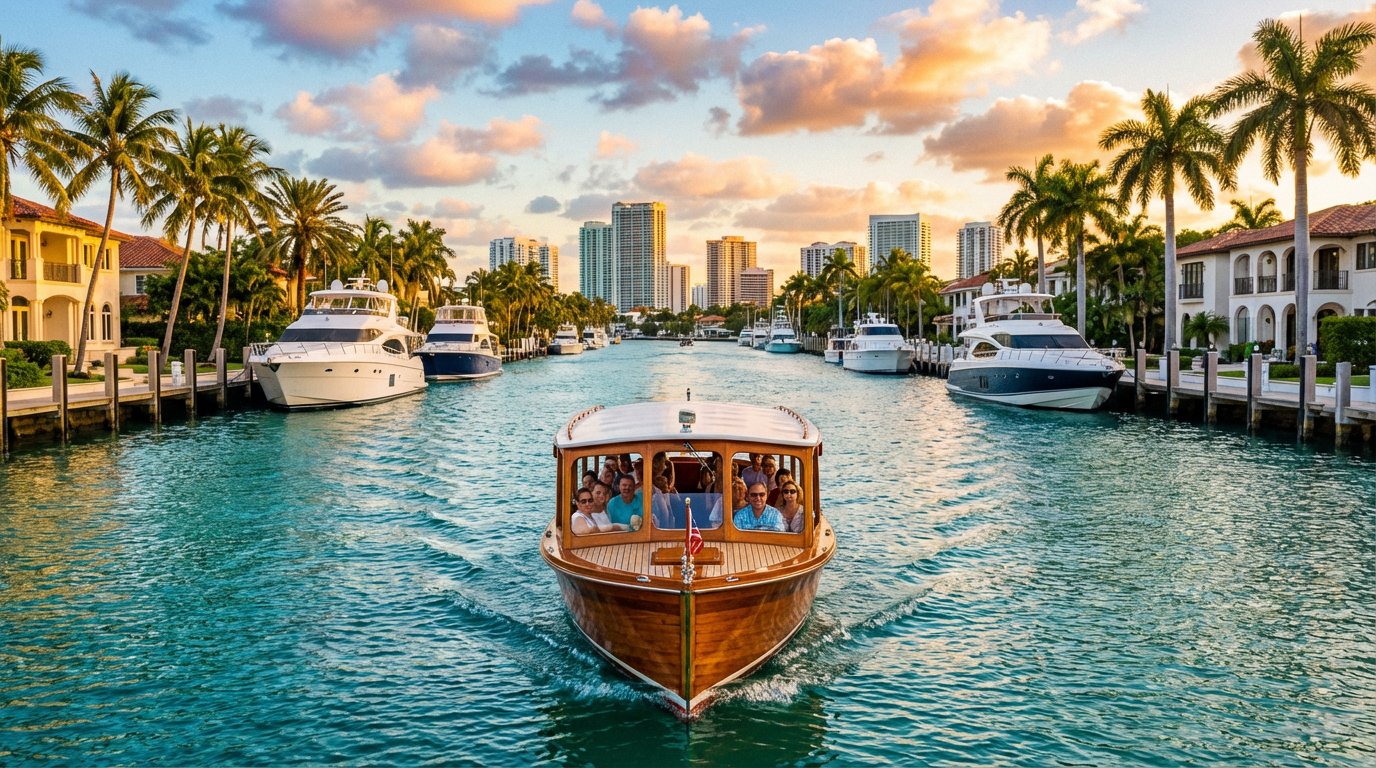
The Reality of Millionaires Row
The acrid taste of diesel exhaust coats the back of your throat the second you board the average Fort Lauderdale boat tour. It mixes with the generic scent of discount coconut sunscreen. We are idling just past the 17th Street bridge, playing our roles in a strange human tradition, crammed alongside dozens of strangers on a slow-moving commercial ferry united by a single desire to stare at empty real estate. 2019 me used to think this voyeurism was aspirational. It felt like sharing a collective dream. Now, leaning against a cold, damp metal railing covered in salt spray, it just feels like inspecting an abandoned film set. Beige is a sin.
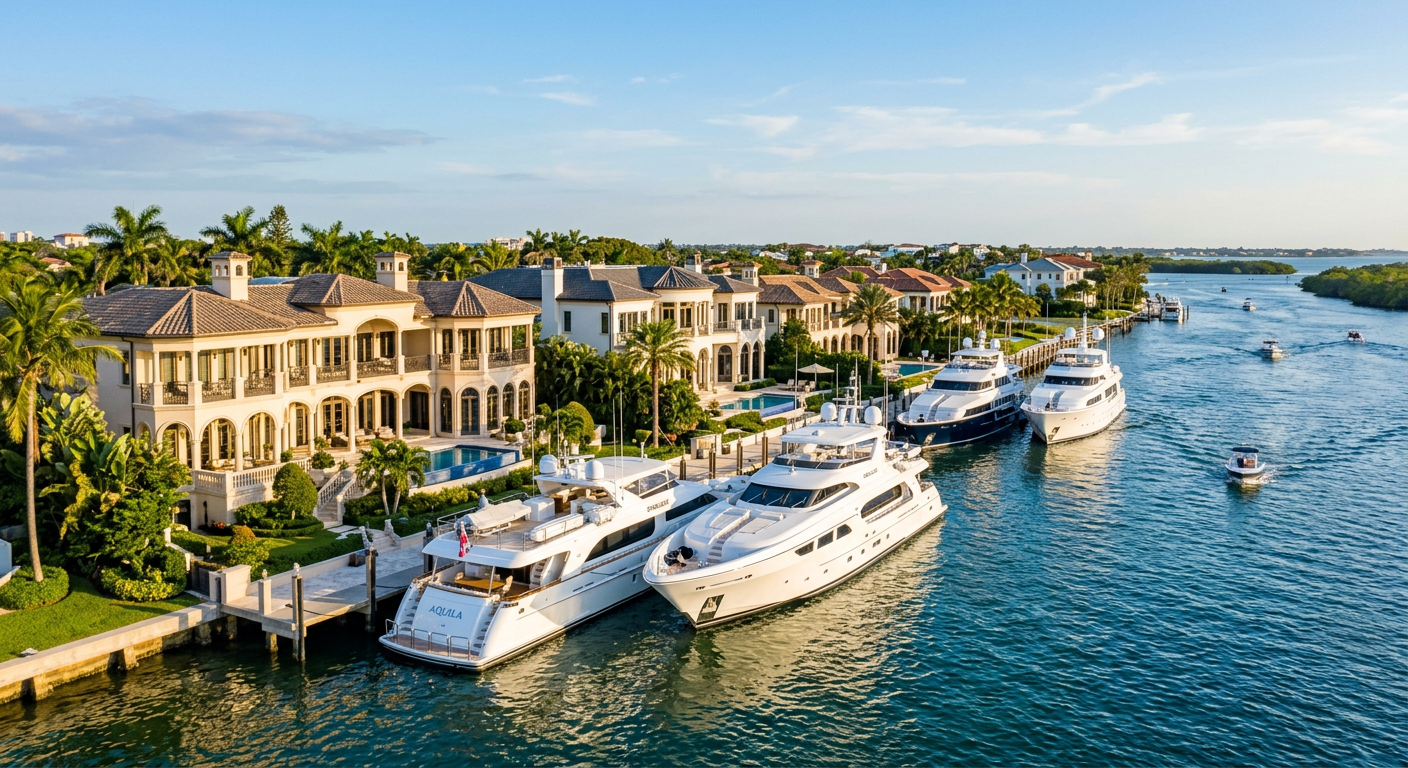
The rhythmic slap of displaced water against our aluminum hull drowns out the captain's tinny loudspeaker commentary. Those giant, unyielding seawalls guard endless variations of the same wealth. You pass pale Mediterranean villas and sterile modern glass boxes. Sweeping infinity pools sit eerily still beneath the harsh sun while massive, multi-tiered mega-yachts block the horizon. A lone landscaper winds a bright orange extension cord around his elbow, staring blankly at the wake. The sheer volume of square footage becomes background noise.
The Ghost Towns of the Intracoastal
For years, as an official VisitFlorida Travel Partner, I told visitors booking trips with Rockon Recreation Rentals that the main draw here was witnessing how the other half lives. My perspective shifted last Tuesday. We drifted past five identical stucco mansions in a row. Each was dark, silent, and devoid of human activity. I cannot prove anyone actually lives in these houses. Trust your gut on this, even if the glossy brochure says otherwise. No porch lights flickered. No shadows moved behind the heavily tinted hurricane glass. A single yellow flip-flop floated upside down near a dock pilon. These stretches of the waterway operate as architectural graveyards for the absent ultra-rich.
Our bow plows sluggishly northward against the outgoing tide, fighting a current that dictates every movement on the New River. Up ahead, a bored guide gestures toward a gray compound on the starboard bank where three identical palms flank a meticulously manicured lawn. Passengers surge collectively against the railing, thrusting their phones over the water to document a billionaire's pristine, lifeless front yard. The vessel lists slightly under the uneven weight. Nobody is home.
Why You Need to Rethink Your Intracoastal Route
Thick, wet atmosphere presses onto your bare shoulders like a heated blanket the moment your vessel turns inland off the main channel. Back in 2018, I thought a double-decker booze cruise blaring steel drum music was peak Florida culture. I told visitors that clutching a sweating plastic cup on the open water was the ultimate coastal adventure. The ocean breeze felt nice, sure. But I was missing the actual pulse of the city. Navigating the 2026 visitor season, those crowded floating parties hold zero appeal.
The Value of a Shallow Draft
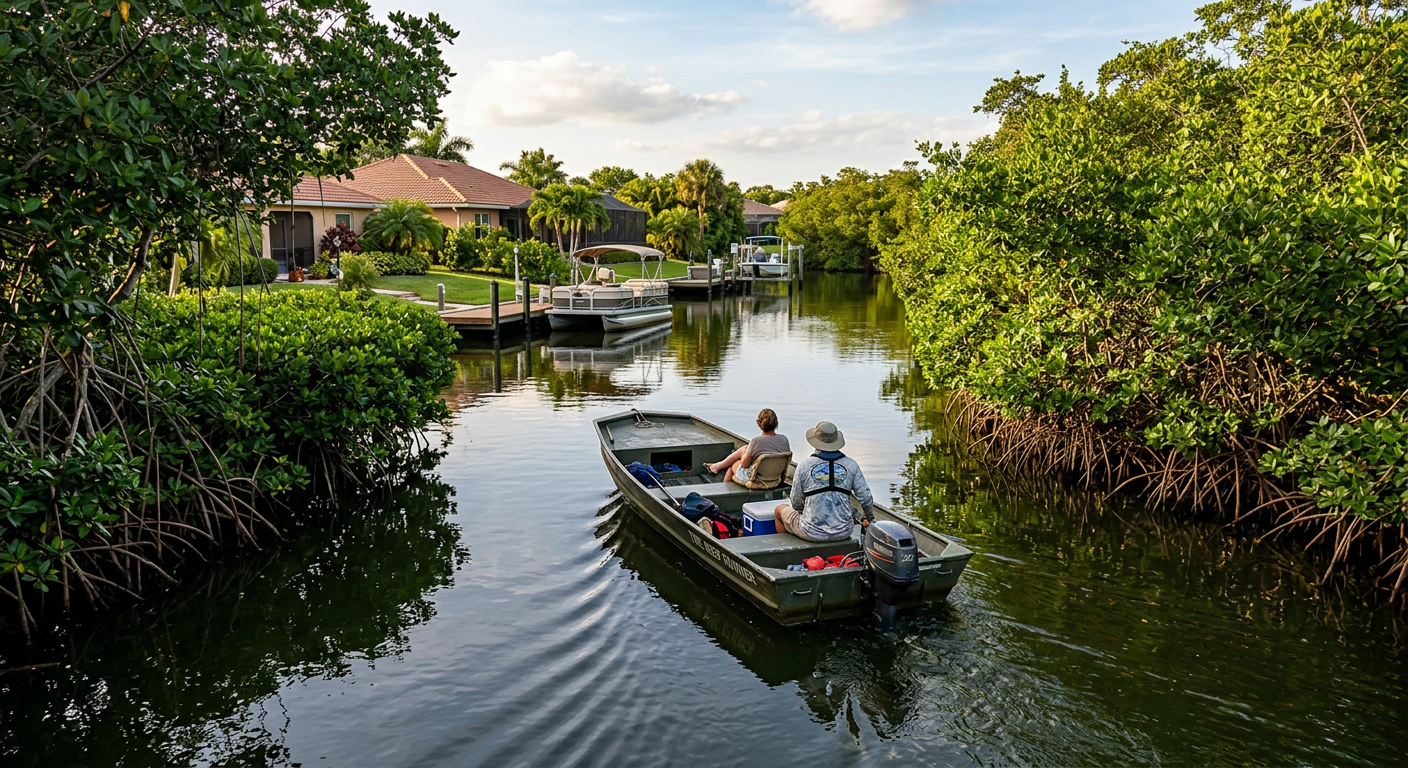
The tacky friction of a worn steering wheel hinted at decades of hard use as our guide pointed the nose of a small skiff down a tight branch of the river. We idled past a cracked concrete seawall choked with oyster shells. The water here runs a dark, tannin-stained green, hiding an entire ecosystem right beneath the suburban grid.
Hopping onto a specialized skiff with a local guide changes your physical relationship with the water. These shallow-draft boats sit inches above the surface. Every passing wake demands your immediate attention. The 2026 habitat reports from the Florida Fish and Wildlife Conservation Commission illustrate how the shifting tides pull dense schools of baitfish through these specific narrow gaps.
Giant commercial ferries cannot safely navigate these tight residential corners. Taking a Fort Lauderdale boat tour on a smaller vessel transforms a passive viewing experience into an active pursuit. You duck under low oak branches instead of listening to a prerecorded script. Book a private river skiff through Rockon Recreation Rentals this season. You will thank me later.
Surviving the Intracoastal Waterway Traffic
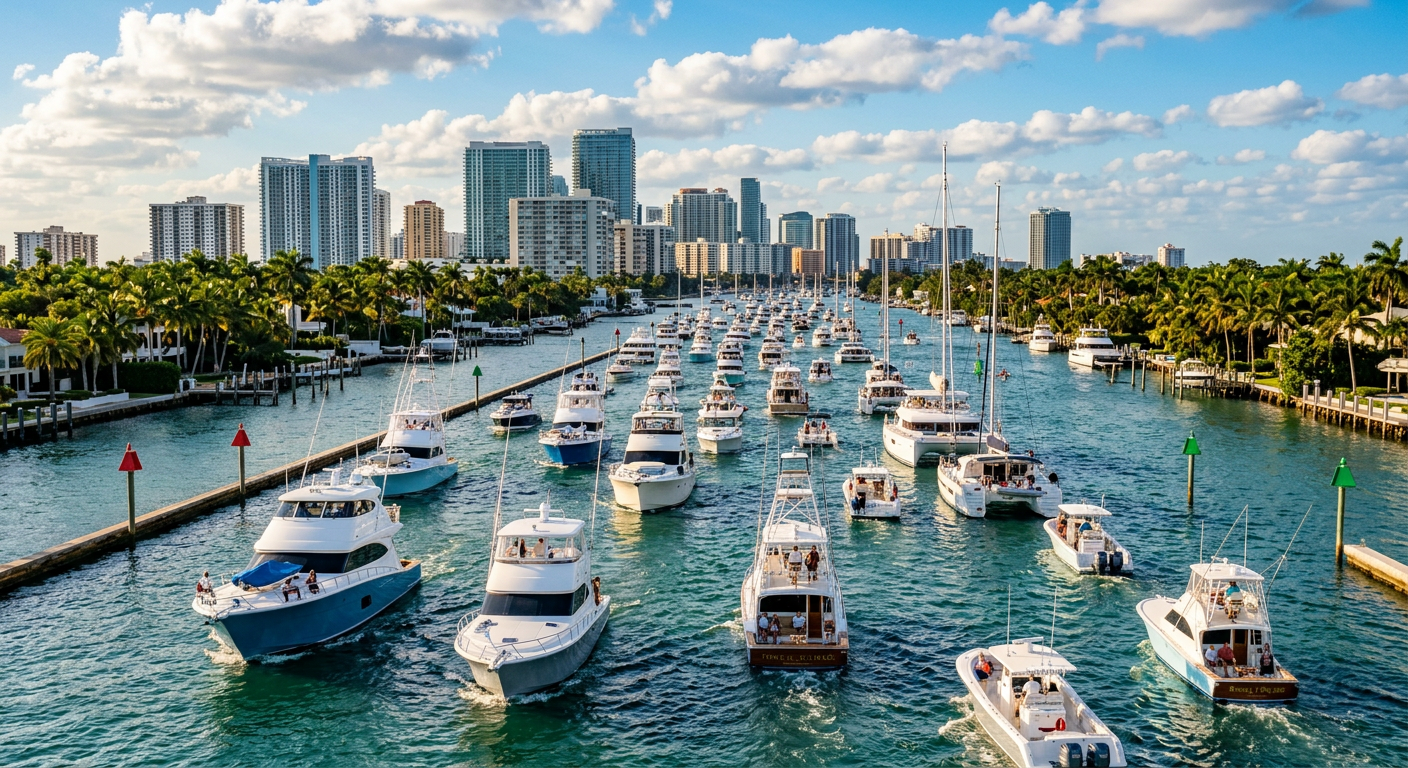
The heavy musk of disturbed river silt mixes with the sharp tang of outboard two-stroke fuel near the Las Olas bend. A Saturday afternoon on the Intracoastal shatters any illusion of quiet maritime rules. Stand-up paddleboarders, erratic center consoles, and ninety-foot luxury charters aggressively fight for the same narrow lanes.
A man on a faded green Sea-Doo wearing a full wedding tuxedo cruised past our port side. His left shoe was unlaced. Naturally.
I used to dread this nautical traffic jam. Riding the main channel on a weekend meant waiting near the marinas, spending half your trip idling while a billionaire's floating palace monopolized the right-of-way. Then I stopped fighting the delays. I realized the gridlock itself is the spectacle. The water devolves into a floating neighborhood block party where the street refuses to stand still.
How to Handle the Weekend Wash
If you rent a vessel to captain yourself, steering through this mess requires specific local knowledge. The compounding kinetic energy bouncing off unyielding seawalls creates a relentless washing machine effect. Novice drivers panic and overcorrect when the boat rocks unpredictably.
- Keep your bow up - Trimming the engine up slightly forces the front of the hull to cut efficiently over crossing wakes.
- Watch the idle zones - Marine patrol officers strictly enforce manatee speed regulations during the winter months. Wake violations carry steep fines that will ruin your afternoon.
- Follow the working boats - Water taxis run these chaotic routes all day. Trail behind them and copy their path through the chop. About fifty yards back seems to be the sweet spot.
Navigating the Downtown Drawbridge Delays
The metallic screech of steel locking mechanisms echoes down the river as the Florida East Coast Railway bridge begins its slow descent. South Florida operates on its own relaxed schedule, but all Intracoastal traffic bows entirely to the freight trains. If you book a standard multi-hour charter without looking at a map, you will spend a noticeable chunk of it bobbing awkwardly south of the downtown crossing.
Massive megayachts idle helplessly, blowing their horns at a bridge tender who cannot override the approaching Brightline train. The 2026 rail schedules reflect an increase in high-speed crossings, meaning these maritime bottlenecks trigger more frequently. The small skiffs slip through. The triple-deck party boats sit and wait.
When a Peacock Bass Charter Beats the Main Channel
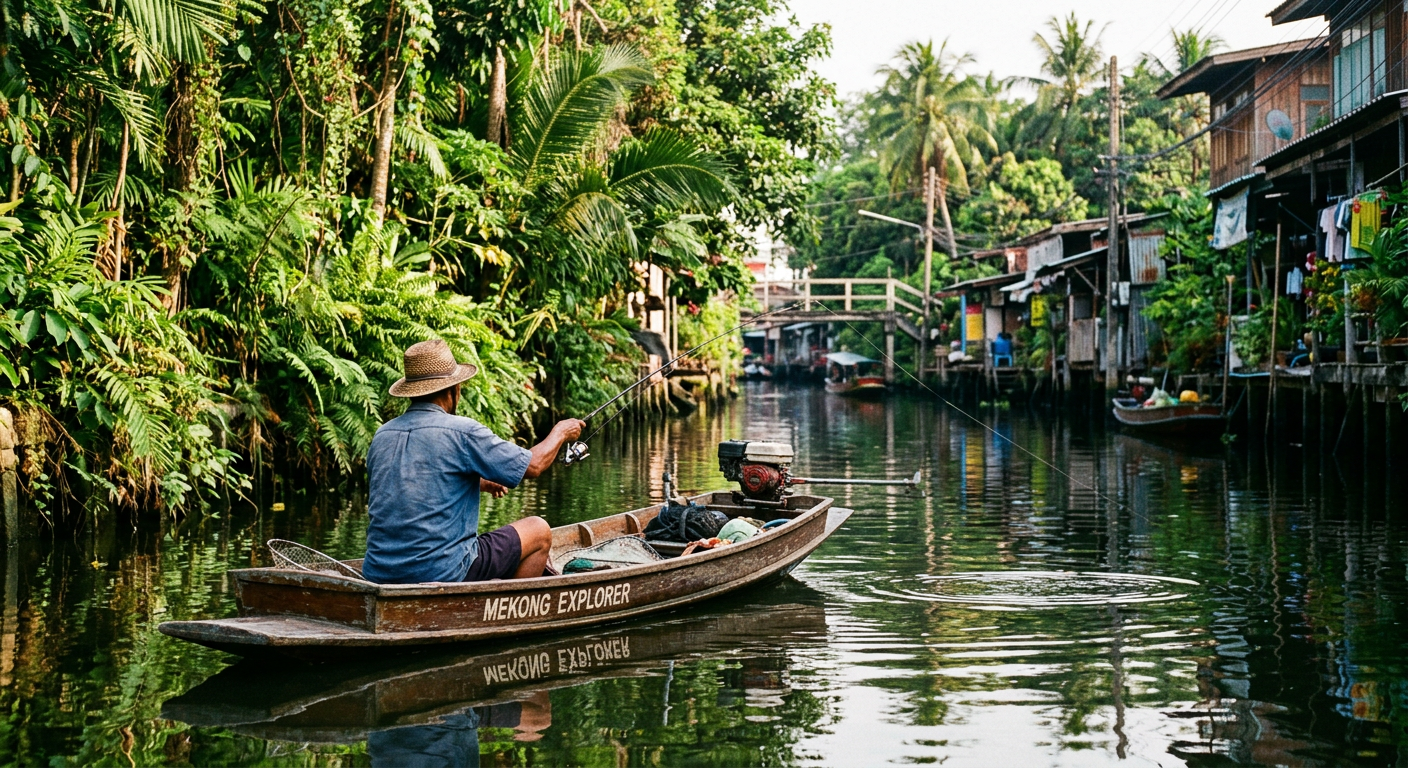
The sharp click of a metal reel pierces the flat morning quiet, followed instantly by the violent splash of a bright yellow predator tearing through glassy surface water. This is the authentic soundtrack of South Florida’s freshwater canal system. It snakes quietly behind thousands of suburban backyards, hiding a vibrant, aggressive ecosystem right next to the concrete sidewalks.
Major sightseeing operators suffer from a plague of terrible online reviews. They detail crowded decks, warm drinks, and repetitive scripts. Why do we keep paying for this specific brand of suffering? We fight over rail space just to photograph empty yachts while missing the real life pulsing beneath the surface. Research is my love language; reality is my ex.
Booking a targeted charter with a Peacock Bass Guide fixes that structural flaw. It forces you to watch the water instead of the real estate.
Escaping the Megaphone Crowds
The electric trolling motor cut out near a stand of dense mangroves. We sat there. Bird calls echoed over the flat water while the current pulled gently against the exposed root system. No loudspeakers. No exhaust fumes.
According to current tracking from the Florida Fish and Wildlife Conservation Commission, these vibrantly colored cichlids were intentionally introduced to control invasive spotted tilapia populations. That localized ecological maneuver turned simple urban drainage ditches into an elite, light-tackle fishing network.
Glossy tourism brochures purposefully skip this gritty reality. They want you looking upward at clean mansions with perfect lawns. If it's on a postcard, it's a trap. Give me a local guide scanning the urban sprawl for neon green fish under highway overpasses any day.
Precision Logistics and Ignoring the Brochure
The damp smell of decaying mangrove leaves hits your nose the second the boat idles near the Port Everglades inlet. You are not sitting inside a climate-controlled living room. A genuine Fort Lauderdale boat tour places you squarely in the raw elements.
The Reality of Maritime Weather
Do not trust the official suggested itinerary on your booking confirmation. If the radar indicates isolated afternoon showers, those showers will find your exact coordinates. You cannot outrun a coastal squall in a rented deck boat.
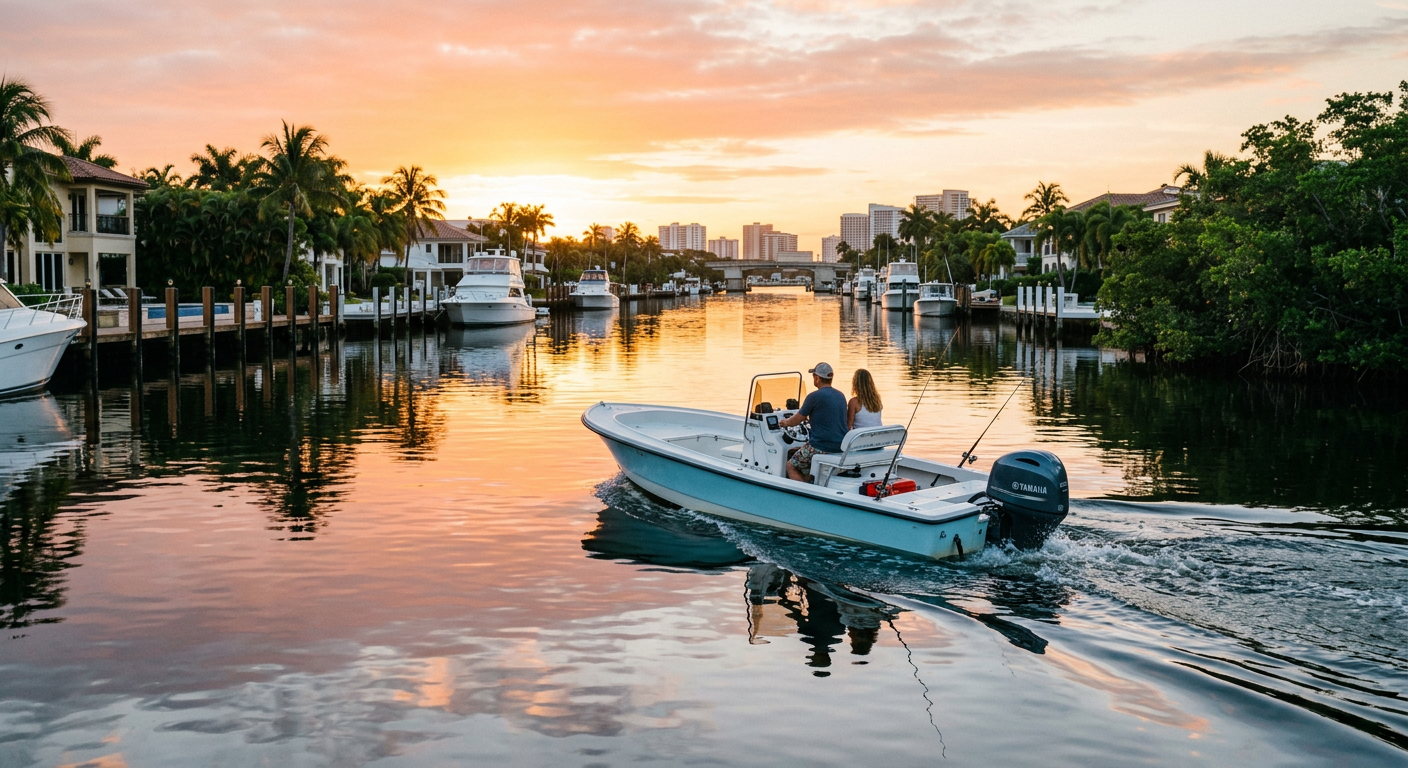
For years, I instructed Rockon Recreation Rentals customers to go out in the late afternoon for bright, saturated skyline photos. That advice was entirely backwards. The harsh afternoon sun turns surface glare into a blinding hazard, and the incoming tide brings unpredictable chop.
Current maritime observations from the National Weather Service confirm our coastal winds drop to their lowest functional baseline right at dawn. By noon, the main channel clogs with rookie drivers and giant catamarans while engine noise bounces off the tall seawalls. If you want glass-calm water, set your alarm clock.
Evaluating the Sunset Booze Cruise Situation
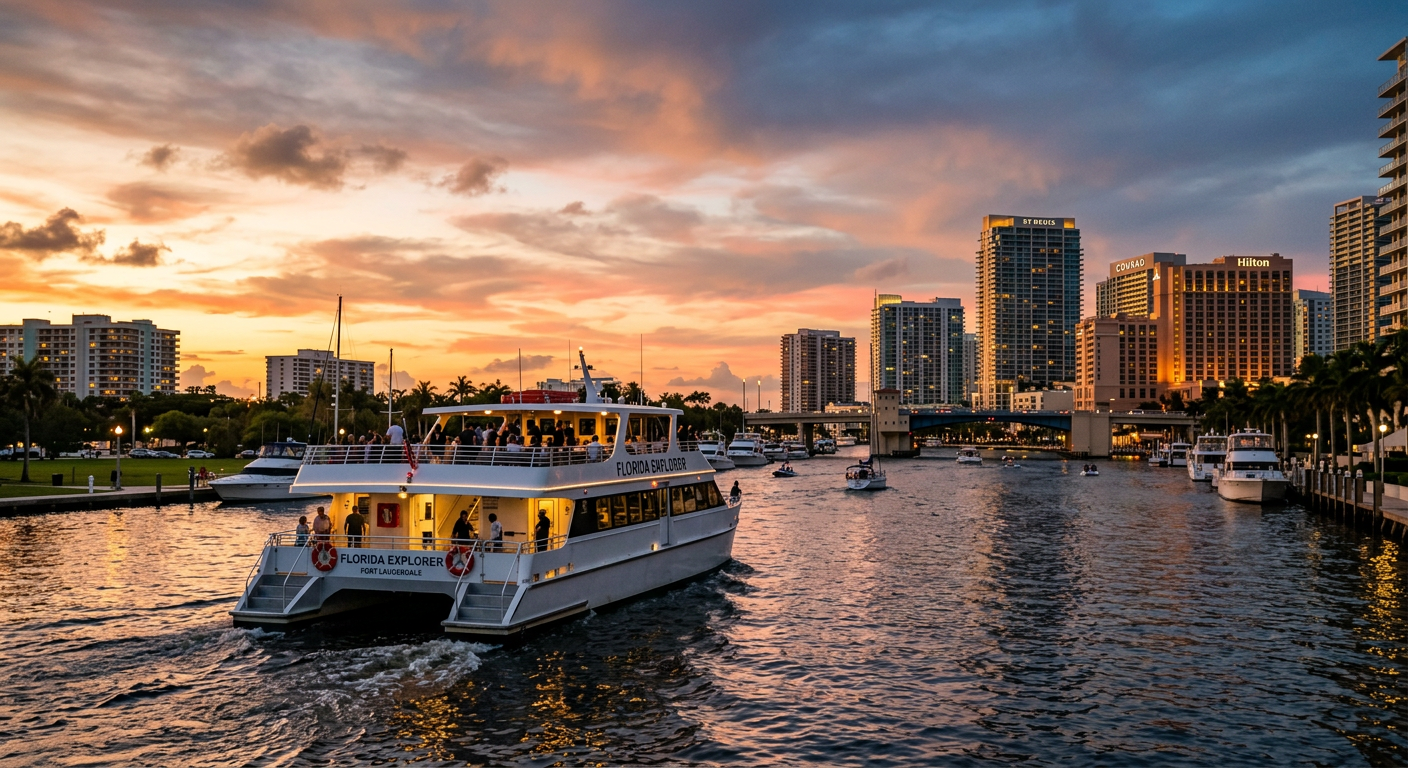
Evening on the main channel tastes like cheap rum punch and synthetic red dye. Massive catamarans bump out top-40 music trapped in 2004 while deckhands hand out sweating plastic cups. Captains skip the localized maritime history. They focus entirely on keeping adults distracted with sugar and bass.
The Mechanics of the Magic Window
The boat travels south along the waterway. The setting sun finally dips behind the glass high-rises on the western shore, casting deep orange reflections across the chop. The rowdy passengers suddenly stop talking. This localized silence lasts for exactly 47.3 seconds before someone asks for another drink. That brief, quiet pocket of ambient light is the only thing validating your ticket price.
Leaving the Breakwater Behind
I used to tell guests to request routes straight out of the Port Everglades inlet to secure a wider ocean view. My perspective flipped during a choppy Tuesday run this season. The captain pushed past the stone jetties, and the bow slammed violently over a rolling six-foot ocean swell. The romantic sunset vibe vanished instantly. Patrons gripped the wet metal rails in pure survival mode. Offshore swells do not care about your tropical vacation itinerary.
Keep your evening route safely inside the barrier islands. The city skyline looks significantly better from flat water anyway.
The Wardrobe Malfunctions You Need to Avoid
Leave the Resort Wear Behind
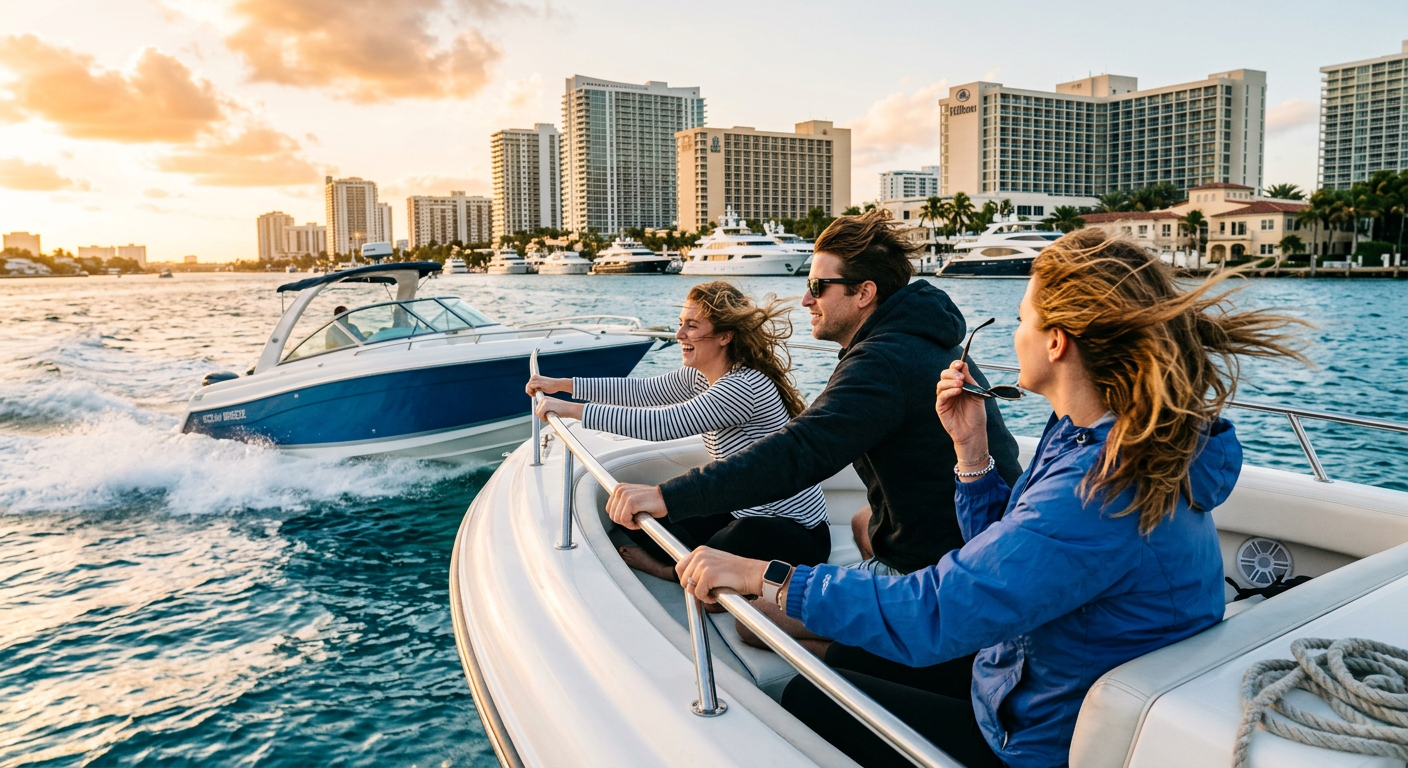
The frigid blast of a sudden coastal crosswind catches you off guard as it rips past the bow, snapping your loose linen shirt against your ribs. People board daytime charters dressed for a luxury catalog shoot. They expect warm breezes and polite mimosas. Reality hits hard a few miles down the waterway when the boat changes direction.
Your wide-brimmed straw hat belongs to the ocean now. Accept it.
The Physics of Polarized Lenses
Optical data from the American Academy of Ophthalmology details how polarized lenses actively block horizontal light waves bouncing off liquid surfaces. The intense Florida sun hits those inland canals and reflects right back into your corneas. Regular tinted sunglasses just darken your blurry vision. Proper polarization cuts through the glare, allowing you to see the distinct shapes of tarpon moving below.
Pack a windbreaker regardless of the morning temperature. Wear sensible, rubber-soled shoes that grip wet aluminum. The water waits, but it offers zero sympathy for poor planning.
Plan your trip: Ready to experience this firsthand? Book Peacock Bass Fishing Guide directly through our marketplace.