Complete Guide to West Palm Beach Boat Rentals and Itineraries
Securing the best west palm beach boat rentals is the first step toward a successful maritime adventure along the Intracoastal Waterway and the Atlantic Ocean. When browsing inventory, the decision ultimately hinges on your itinerary, the size of your party, and your group's comfort levels with navigation.
West Palm Beach offers a diverse aquatic landscape, ranging from the calm, turquoise shallows of the sandbars to the rolling swells of the open ocean. Matching your vessel to these conditions ensures not just safety, but an unforgettable experience for everyone on board according to the Visit Florida official tourism portal.
Choosing the Right Vessel for Your Group
The type of boat you choose shapes your entire experience. Whether you want to lounge in the sun or chase game fish, the local fleet has options tailored to every activity.
Benefits of Pontoon Rentals
For groups prioritizing social interaction and maximum comfort, pontoon boats remain the undisputed champions of the Intracoastal. Often referred to as "living rooms on the water," these vessels offer wide, flat decks that accommodate larger parties without feeling crowded, typically fitting up to 12 passengers comfortably.
The primary advantage of a pontoon is its stability. The multi-hull design significantly reduces rocking, making it an excellent choice for families with children or guests prone to seasickness. In the context of the Palm Beaches, pontoons are particularly advantageous for "sandbar hopping." Their shallow draft allows captains to navigate close to popular spots like Peanut Island without fear of running aground. This accessibility makes it easy to beach the vessel and wade into the water for a picnic or snorkeling session supported by the Florida Department of Environmental Protection guidelines. Furthermore, the ample shade provided by full-length bimini tops offers necessary respite from the South Florida sun.
Advantages of Center Consoles
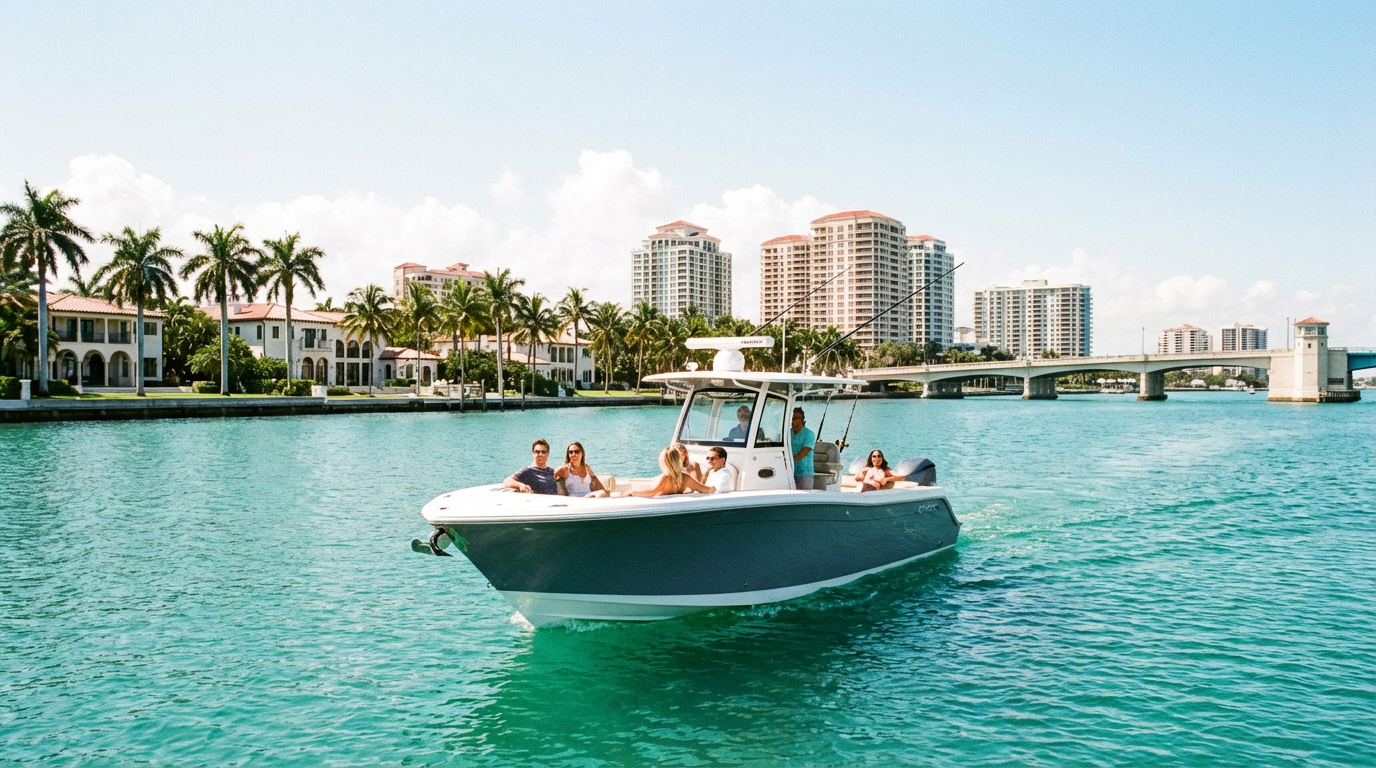
If your agenda involves traversing the Jupiter Inlet to chase sailfish or cruising swiftly between waterfront restaurants, a center console is likely your best fit. Built with a V-hull design, these boats are engineered to cut through chop and handle rougher waters found in the Atlantic Ocean.
Unlike pontoons, which are designed for leisurely speeds, center consoles offer the horsepower required to cover significant distances quickly. This speed gives you the freedom to explore more of the coastline in a single day. Anglers specifically flock to these models because they are designed with 360-degree fishability. Navigating the prolific waters off Palm Beach requires a vessel that can handle the open ocean, much like the experts at Palm Beach Fishing Charters. You can learn more about local fishing regulations and species at the Florida Fish and Wildlife Conservation Commission website. Even for those not fishing, the center console appeals to active groups seeking a sportier ride, especially when tracking conditions with NOAA National Weather Service — Florida data.
Luxury Yacht Charter Options
For those who prefer to leave the navigation to a professional, a luxury yacht charter transforms a day trip into a five-star experience. This option removes the responsibility of piloting the vessel, allowing the host to fully engage with their guests. Charters often come equipped with amenities that smaller bareboat rentals lack, such as air-conditioned cabins, full galleys, and onboard restrooms.
Yacht charters are ideal for special occasions, corporate gatherings, or travelers unfamiliar with local maritime laws. According to Travel + Leisure, chartering a crewed vessel allows for a bespoke itinerary where a local captain can guide you to hidden gems that navigational charts might not make obvious, including protected sites managed by the National Oceanic and Atmospheric Administration (NOAA).
Top Palm Beach Boat Rental Companies & Pricing Insights
When planning your palm beach boating adventure, knowing where to rent and what to expect financially is crucial. Here are some reputable local providers and general pricing guidelines:
- Palm Beach Boat Rentals: Known for a diverse fleet including pontoons, center consoles, and deck boats.
- Pontoons: Starting from $300 for a half-day (4 hours), $500 for a full day (8 hours).
- Center Consoles: Starting from $400 for a half-day, $700 for a full day (often depends on horsepower and size).
- Jupiter Inlet Boat Rentals: Specializes in vessels suited for both Intracoastal cruising and ocean access.
- Pontoons: $325 for a half-day, $550 for a full day.
- Small Center Consoles/Deck Boats: $375 for a half-day, $650 for a full day.
- West Palm Beach Yacht Charters: For luxury experiences with a captain and crew.
- Luxury Yachts: Rates vary significantly based on vessel size, amenities, and duration. Expect to pay anywhere from $1,500 for a 4-hour charter on a smaller yacht to $5,000+ for a full day on a larger, fully-crewed vessel. Fuel, captain, and crew fees are often separate or included in a package.
Important Pricing Notes:
- Prices are estimates and can fluctuate based on season, demand, and specific boat model.
- Most rentals do not include fuel, which will be an additional charge upon return.
- Taxes, cleaning fees, and security deposits are standard.
- Some companies offer multi-day discounts or special packages. Always inquire about all-inclusive pricing or potential hidden fees.
Palm Beach Boating Regulations & Safety Guidelines
Safety is paramount for any maritime excursion. Familiarizing yourself with local regulations ensures a smooth and enjoyable trip for everyone on board. The Florida Fish and Wildlife Conservation Commission (FWC) is the primary authority for boating laws.
Key Regulations for Boaters in Palm Beach:
- Boater Education: Anyone born on or after January 1, 1988, who operates a motorboat of 10 horsepower or more, must complete an approved boater safety course and carry a Boating Safety Education Identification Card. Rental companies often provide temporary certificates or require proof of completion.
- Life Jackets: All vessels must have a U.S. Coast Guard-approved life jacket for each person on board. Children under 6 years of age must wear a life jacket at all times while on a vessel under 26 feet in length, when the vessel is underway.
- Speed Limits: Observe posted speed limits, especially in "No Wake" or "Slow Speed" zones, which are common in canals, marinas, and near environmentally sensitive areas.
- Navigation Lights: If operating between sunset and sunrise, or during periods of restricted visibility, your vessel must display proper navigation lights.
- BUI (Boating Under the Influence): Operating a vessel under the influence of alcohol or drugs is illegal and carries severe penalties, similar to DUI.
- Environmental Protection: Do not litter or discharge waste into the waterways. Be mindful of seagrass beds and coral reefs; anchor in sandy areas away from sensitive habitats.
- Manatee Zones: Palm Beach County has designated manatee protection zones. Always be on the lookout for manatees and observe posted speed restrictions in these areas.
Essential Safety Tips:
- Weather Check: Always check the marine weather forecast before and during your trip. Conditions can change rapidly in South Florida.
- Float Plan: Inform someone on shore of your itinerary, including your destination, expected return time, and the number of people on board.
- Emergency Gear: Ensure your rental boat is equipped with essential safety gear: fire extinguisher, horn/whistle, visual distress signals (flares), and a first-aid kit.
- Communication: Carry a fully charged cell phone and consider a VHF radio, especially if venturing into the ocean.
- Stay Hydrated: The South Florida sun can be intense. Drink plenty of water and use sunscreen.
- Know Your Vessel: Before departing, ensure you understand how to operate the boat, including emergency procedures, and locate all safety equipment.
Customer Experiences: What Renters Say About Palm Beach Boating
Hearing from previous renters can provide valuable insights into what to expect from your palm beach boating experience. Here's a snapshot of common themes from customer reviews:
Positive Feedback Often Highlights:
- Friendly and Knowledgeable Staff: Many reviewers praise rental company staff for being helpful, providing thorough instructions, and offering local tips on best routes and attractions.
- Well-Maintained Boats: Customers frequently comment on the cleanliness and good condition of the rental vessels, leading to a worry-free experience.
- Accessibility to Key Attractions: The ease of reaching popular spots like Peanut Island, sandbars, and waterfront restaurants is a recurring positive.
- Memorable Family Experiences: Families often share stories of successful outings, citing the stability of pontoons for children and the joy of spotting marine wildlife.
- Excellent for Fishing: Anglers appreciate the suitability of center consoles for reaching prime fishing spots and the 360-degree fishability.
"We rented a pontoon from Palm Beach Boat Rentals for a day trip to Peanut Island, and it was perfect! The staff was super friendly, and the boat was spotless. My kids loved swimming in the clear water." - Sarah L.
"As an experienced boater, I was impressed with the quality of the center console from Jupiter Inlet Boat Rentals. We had a fantastic day fishing offshore, and the boat handled the chop beautifully." - Mark T.
Areas for Improvement or Considerations:
- Fuel Costs: Some first-time renters express surprise at the additional cost of fuel, which can add a significant amount to the total. It's always best to budget for this upfront.
- Booking in Advance: During peak season (winter and spring), popular boats can be booked weeks in advance, leading to disappointment for last-minute planners.
- Weather Dependency: While not a rental company issue, some reviews mention trips being cut short or canceled due to sudden weather changes, emphasizing the need to monitor forecasts.
- Parking: Finding parking near some rental docks can sometimes be a challenge, especially on busy weekends.
"Wish I had known about the fuel cost beforehand, but otherwise, our day on the water was incredible. Definitely book your boat early, especially if you want a specific type!" - David R.
These insights underscore the importance of planning, understanding all costs, and communicating clearly with your chosen rental provider to ensure a fantastic palm beach boating adventure.