
Leaving the Itinerary at the Hotel
The air on Royal Street smells like stale Abita beer and damp brick the second you step outside. The rigid spreadsheet in my pocket had us slated for an early cafe stop. By the time we hit the corner, a brass band had bottlenecked Decatur Street, backing up foot traffic for three blocks. Most travel guides tell you to lock in your daily plans months ahead of time, assuming the city cares about your schedule.
Rigid itineraries rarely survive contact with the pavement. In fact, reporting from The New York Times shows that over-planning causes measurable visitor burnout in southern destinations. Running Florida tour operations at Rockon Recreation Rentals since 2018, I see this daily. Visitors show up to our boat launches exhausted from fighting their own watches. The smarter move in a walking city is keeping the morning open.
The Cost of Overscheduling
We walked two blocks down Dumaine Street. The pavement was cracked near a sunken drainage grate. I crossed the intersection at Bourbon without speaking, stepped into a small corner market, and bought a bottle of water. The cashier handed back my change in slightly damp singles. We drank the water on a wooden bench near the river. Sometimes you just have to sit down and stop trying to orchestrate an authentic experience.
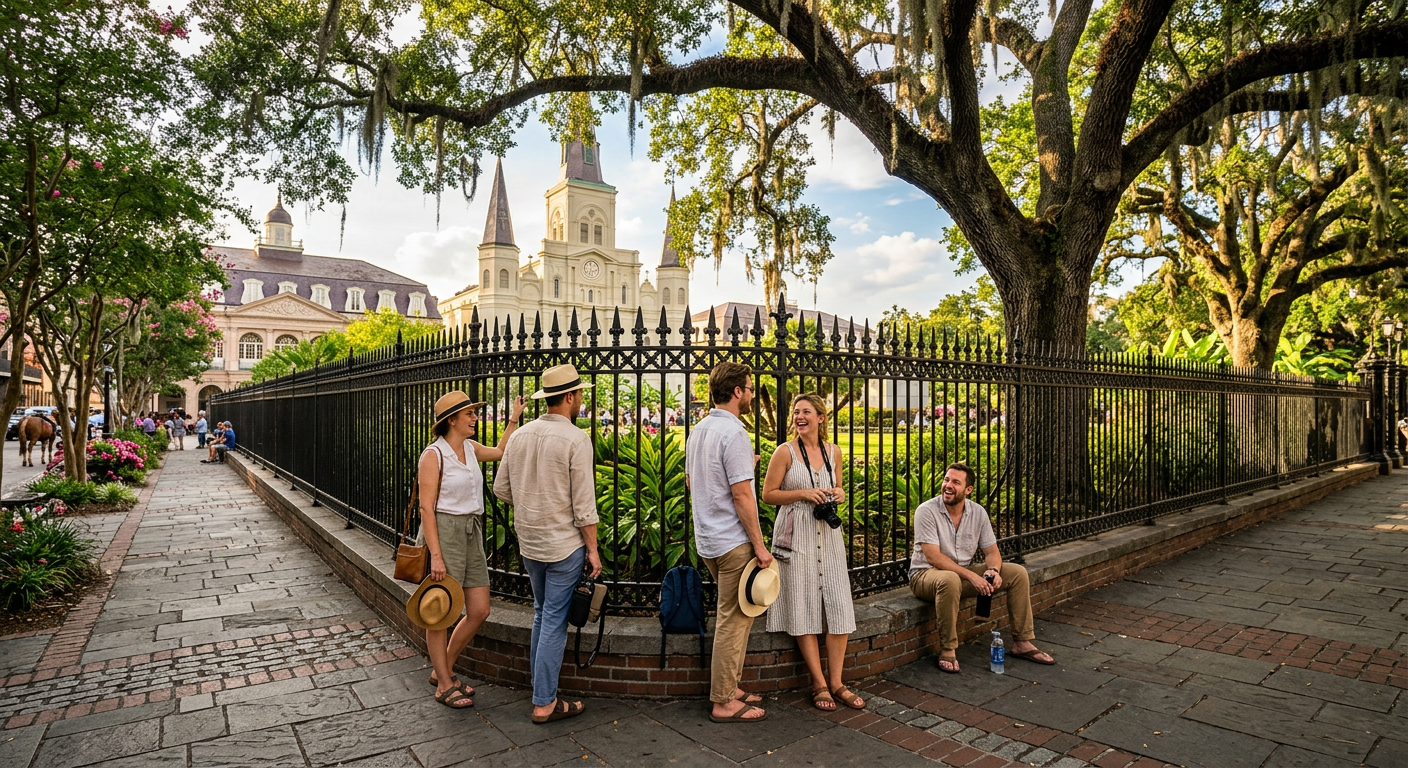
I can't prove this, but leaving things to chance usually drops you right in front of the best historians. I watched a small group forming near Jackson Square. A local in a worn hat was passing out hand-drawn maps, laughing with a few tourists. Nearby, a guy in a faded green sweatshirt was tying his left shoe on the curb. There is structural efficiency to finding walk in tours right where the action starts. Look for the person holding a clipboard under the oak trees. They run off the natural energy of the street, adjusting their routes based on crowd flow. Joining these casual groups lets you match your activity to your current mental bandwidth instead of honoring a digital ticket you bought six months ago.
The Gatekeeping of Historic Ground
The rhythmic thud of a bass drum fading down Frenchmen Street gives you a false sense of urban freedom. You read somewhere that spontaneity is the soul of this city. That strategy works fine for finding live music or an open bar stool. It fails the moment you attempt to cross into a historic burial ground to look at century-old crypts.
Neighborhood strolls through the Marigny are simple to join on the fly. You just find a group and hand over some cash. People assume they can apply that same logic to St. Louis Cemetery No. 1. If it's on a postcard, it's a trap. They expect to stroll right up to Marie Laveau's tomb as a solo explorer, only to hit a massive iron barrier.
2019 me thought unscripted wandering forced a city to reveal its authentic side. 2026 me abandoned that philosophy after watching a dozen tourists get turned away from the cemetery walls in ten minutes. Historic resting places operate under strict gatekeeping. According to the Catholic Cemeteries of the Archdiocese of New Orleans, public access without a licensed guide is banned outright. You cannot just join walk in tours inside the gates on a whim. The city laws govern a select list of registered companies allowed to operate inside the district. Booking these regulated boundaries ahead of time through Rockon Recreation Rentals ensures you secure legal entry.
Spotting the Sidewalk Performers
Airborne river grit coats the back of your throat as you listen to a bad guide leaning on a wrought-iron fence. You can hear them butchering a Wikipedia entry about Madame LaLaurie before the wind shifts. They project through cheap headset microphones, trying to hold the attention of twenty distracted people. Professional historians do not rely on vocal distortion.
I go where the signage is bad and the coffee is good. If the person offering to show you around wears a crushed velvet cape or holds a plastic skull, keep walking. You are funding bad theater. The public zoning laws tell a much darker story than any fabricated vampire myth.
The Zoning Code Ghosts
The smartest strategy involves scanning the pavement before committing to spontaneous walk in tours. According to the New Orleans city archives, century-old property lines dictated wealth distribution and disease spread. Reliable locals know this infrastructure history. They point out old drainage slopes and elevated foundations.
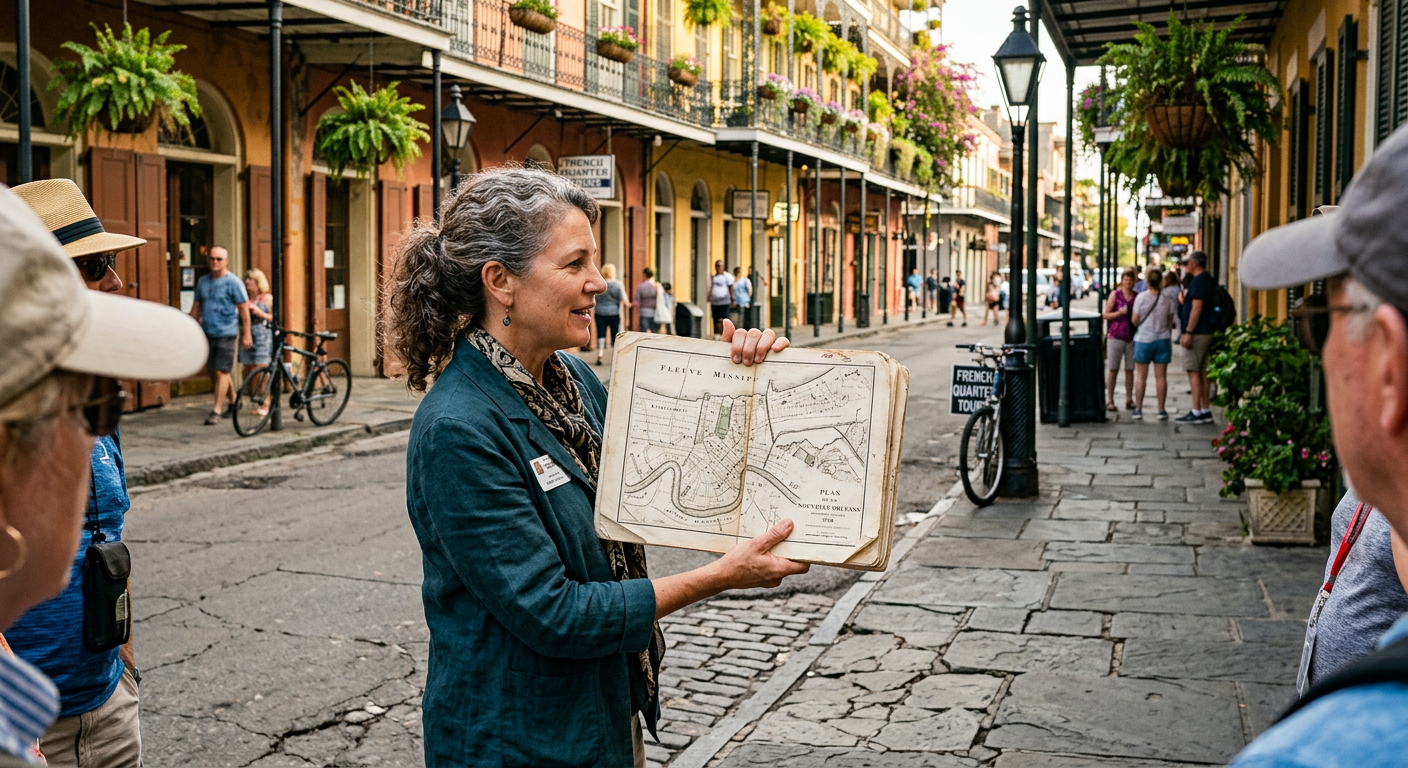
I used to dismiss the costumed crowd as a pointless distraction until a realization hit me while sitting on the steps of the Ursuline Convent. The theatrical spectacle serves a structural physical purpose. It funnels the loudest, rowdiest crowds away from the residential blocks. This allows the real researchers to operate in peace on the quieter side streets. A proper guide knows the 1788 fire destroyed most of the original grid. The best walk in tours start when you spot an un-costumed local explaining 18th-century disaster mitigation to a small circle of intent listeners.
Trading the Pavement for Pedals
A sudden pocket of cool air drops over the Marigny as you push off the bike pedals. A few years ago, I swore by strict pedestrian exploration. I assumed putting wheels under my feet rushed the travel experience. The late-morning heat changed my mind. You forget how dense the atmosphere feels until you cut through it at a swift coast along a shaded avenue.

There is no rule stating you must walk every transitional block between historic sites. Bicycles let you play geographic hopscotch. You ride the flat grade of St. Charles Avenue to close the gap between major sights. The rhythm of spinning spokes becomes a low hum against the distant streetcar rumble. This hybrid transit approach is why checking Rockon Recreation Rentals for alternative transport makes sense. The ride from the Marigny to the Garden District is roughly three miles. Riding a cruiser takes about twenty minutes on flat pavement, conserving your energy for the dense, narrative-heavy blocks.
A 2026 brief from Lonely Planet highlights the city's expanding greenway network. Showing up to impromptu walk in tours is much easier when you arrive fresh rather than exhausted from a two-mile forced march in the sun.
Timing the Tides of the Quarter
The lingering salt of an oyster po-boy stays with you as you duck off the main thoroughfare. It is just past two in the afternoon, and the French Quarter has emptied out in a brief exhale. The midday heat drives most people back to their hotel pools. The morning crowds vanish, and the evening chaos stays quiet for a few precious hours.
My operating theory was always that avoiding crowds meant waking up before sunrise. I realized my mistake at 2:30 PM on a Tuesday. The real urban vacancy happens in the dead of the afternoon. Real rhythm reveals itself when you stop forcing a schedule. Walking these streets without a destination, you notice how the light softens against the plaster of the old Spanish facades.

The Midafternoon Advantage
My assumption was that spontaneity meant wasting time in lines. Then I strolled past a small courtyard off Chartres Street. A local historian was explaining 1800s land grants to three people. He did not advertise online. He just stood outside a bookshop and collected curious stragglers. Finding walk in tours during this afternoon lull provides an intimacy you rarely get with a corporate booking of thirty strangers.
According to National Park Service data for the nearby Jean Lafitte area, foot traffic drops by more than half after lunch. That dip translates safely to the Quarter. You just have to wander a few blocks off Bourbon Street. If you want to dive into unscripted history, watch the clock. The transition from peaceful neighborhood to a chaotic street party happens fast. Linger too long at a corner cafe, and the loud dinner rush will swallow your quiet walk whole.
The Neighborhoods That Demand Your Attention
Thick humidity clings to the heavy Spanish moss in the Lower Garden District, masking the damp river mud underneath. Most visitors let the French Quarter consume their trip. They treat the downtown grid like an enclosed park. The iron balconies are beautiful, but the marquis blocks suffer from serious congestion. You elbow through groups just to look at menus you will never order from.
Stepping Beyond the Grid
Wandering through ancient residential spines like Tremé gives you a solid margin for error. The housing blocks are longer. The sidewalks stretch out, giving neighborhood historians room to speak without yelling over delivery vans. This is where casual walk in tours shine. You might pause near a porch while a homeowner explains the cooling benefits of a shotgun house layout.
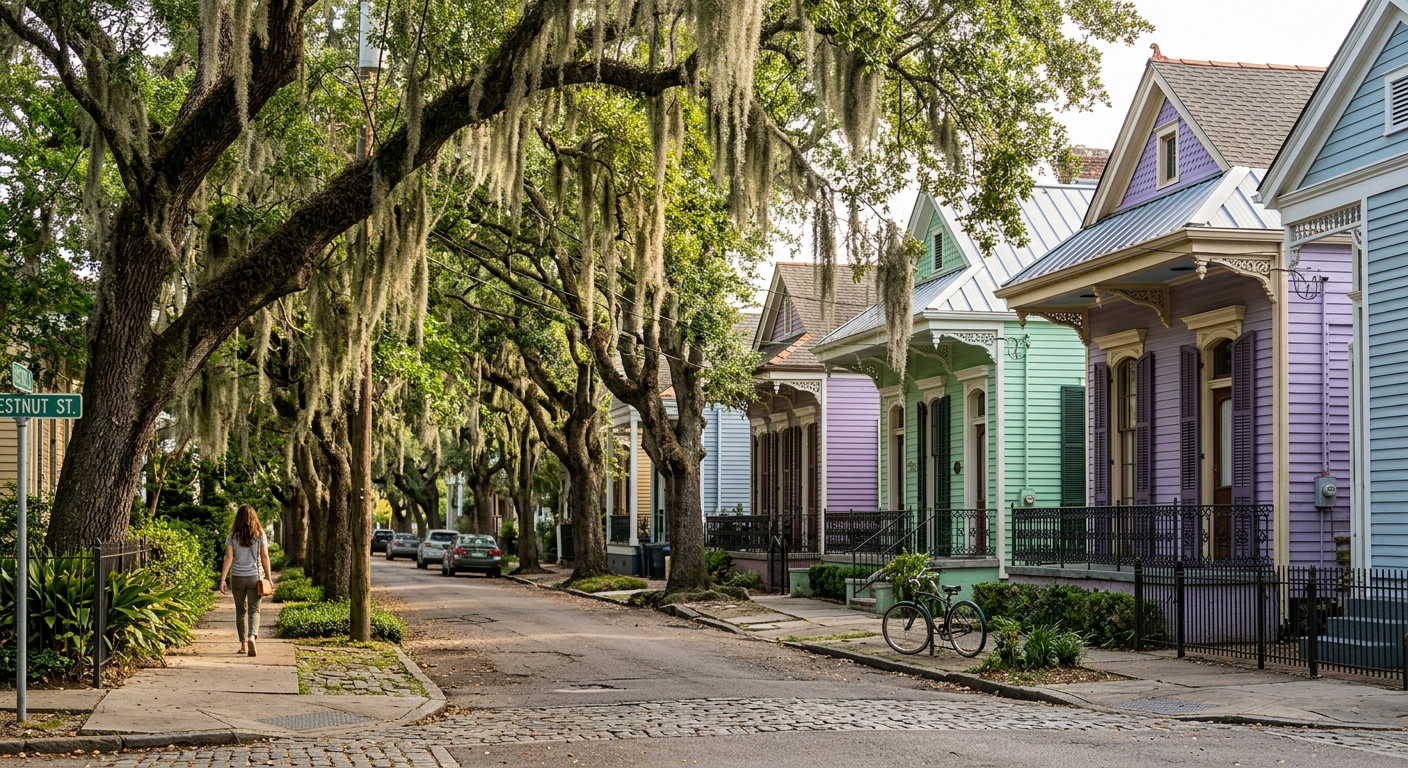
According to the Preservation Resource Center of New Orleans, Tremé holds some of the earliest Creole architecture built by free people of color. When we set up reservations through Rockon Recreation Rentals, prioritizing unscripted afternoons is paramount. Having nowhere to be lets you follow a distant saxophone solo down a side street without checking your watch.
Research is my love language; reality is my ex. Have you ever noticed how the oldest neighborhoods map directly to the high ground? Founders understood the topography long before modern levee systems existed. Exploring these peripheral wards teaches you to read the subtle inclines of the pavement. A rise of a few inches kept an 1800s living room dry. You learn this quickly when you trust your feet over a map.
The Rain Delay Factor
The sharp smell of ozone hits the sidewalk just before the afternoon deluge begins. Gulf Coast weather patterns operate on their own stubborn logic. During the summer months, a daily thunderstorm is practically guaranteed. Scheduling a strict historical overview for 3:00 PM means you will likely spend it huddled under a wrought-iron balcony.
Years of running Florida tour operations taught me that localized weather must dictate a daily schedule. The sudden drop in barometric pressure signals an impending downpour before you even see a physical cloud. I suspect half the city's best historical debates happen purely because disparate tourist groups get trapped under the same coffee shop awning for forty minutes. Unscheduled walk in tours allow you to duck into a museum or a local bar when the sky breaks, rather than suffering through a non-refundable outdoor commitment while drenched.
Final Deployment Mechanics
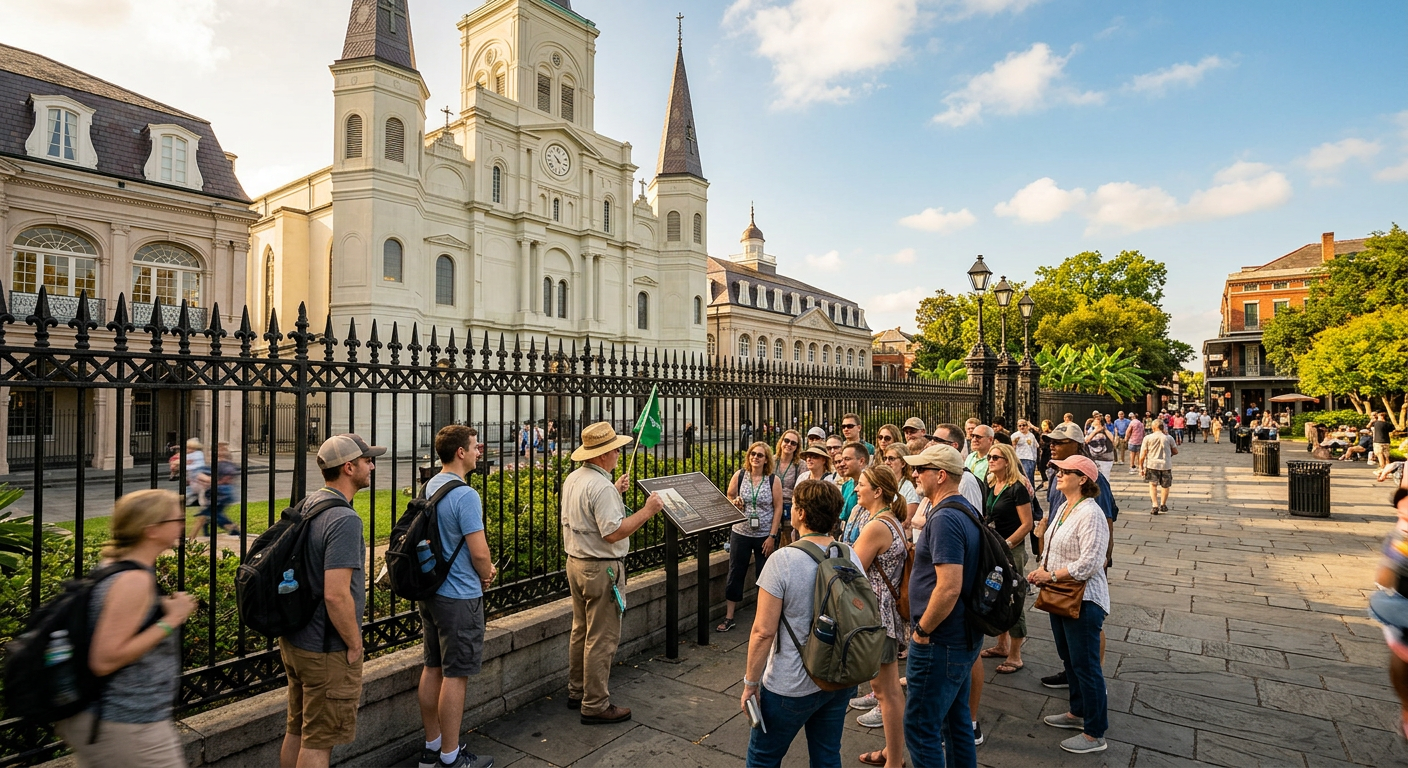
I used to assume independent guides were just amateurs holding cheap umbrellas. Public registry data published on nola.gov proved that assumption false. The informal walk in tours gathering around the Presbytère feature seasoned experts. They simply prefer the freedom of independent operation over sanitized corporate routes.
- Lock down the heavy gear: Book broad baseline activities like airboat excursions through Rockon Recreation Rentals beforehand.
- Keep sidewalks open: Leave your urban street walking unscripted to pivot when necessary.
- Read the room: Make ground-level decisions based on current cloud cover and foot traffic.
Ditch the itinerary. Let the pavement, the weather, and the neighborhood historians dictate how your afternoon unfolds.
Plan your trip: Ready to experience this firsthand? Book Cemetery in New Orleans Louisiana Bike Tour directly through our marketplace.