The Diesel Scent of a Tourist Staple
The scent of aerosol coconut oil and marine exhaust hits you the moment you step onto the concrete dock. You stand on the poured piling, watching the blunt-nosed riverboat pull into its slip. It looks tired.
The metal gangway hits the deck with a hollow, scraping thud. You step aboard, feeling the hull shift your weight beneath your boots. Just ahead of the boarding line, a guy wearing mismatched Crocs fumbles his polarized sunglasses. They hit the murky New River with a flat smack and sink. The river claims its first casualty of the afternoon. A thin film of salt coats the aluminum handrails.
This specific sightseeing route down the Venice of America promises a smooth float past millionaire mansions. The mechanical reality operates on a slower, grittier rhythm. You need a few miles to appreciate the grind.
A Deck Built for Spectators
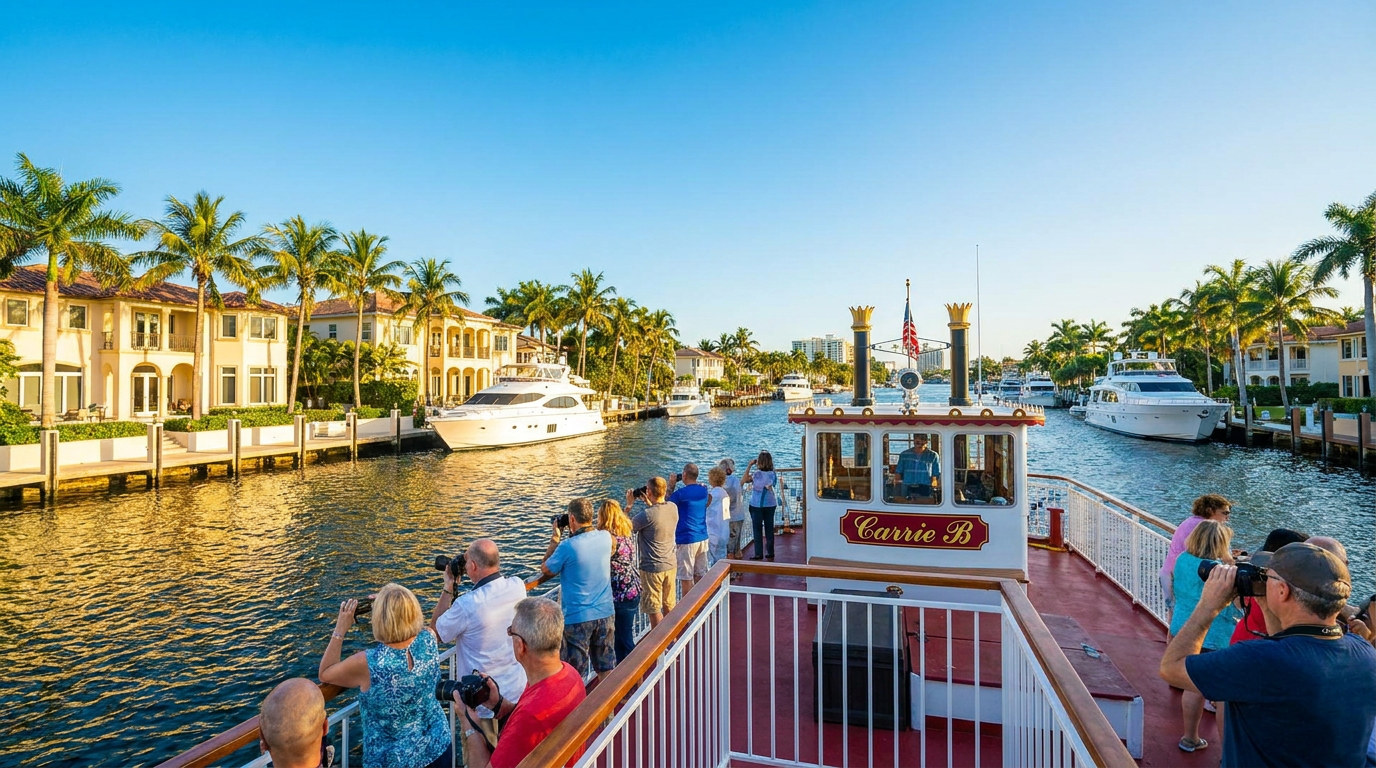
Heavy air sticks to the back of your knees the second you stop moving. The boat travels east toward Port Everglades before turning south into the wider channel. According to City of Fort Lauderdale archives, operators have charted this exact river path since the 1950s. The captain starts rattling off passing landmarks over the public address system.
Find a seat early if you want shade. The starboard benches offer clear sightlines of coastal estates creeping over the seawalls. I can't prove this, but the forward deck speakers sound like they surrendered to the salt spray months ago. They crackle with static. You get intermittent historical facts masked by audio distortion.
Marketing brochures insist the open-air bow provides the supreme viewing angle. If it is on a postcard, it is a trap. By the second mile, wind-hacked chop sends a salty mist over the front rail. It drives the amateur photographers back toward the covered mid-ship seating. Nature wins. According to the Florida Department of Environmental Protection, these deep-water canals were dragged out of the mangrove swamps decades ago purely to sell real estate. You are floating through a manufactured paradise, built entirely for aesthetics.
Navigating the Deck Reality
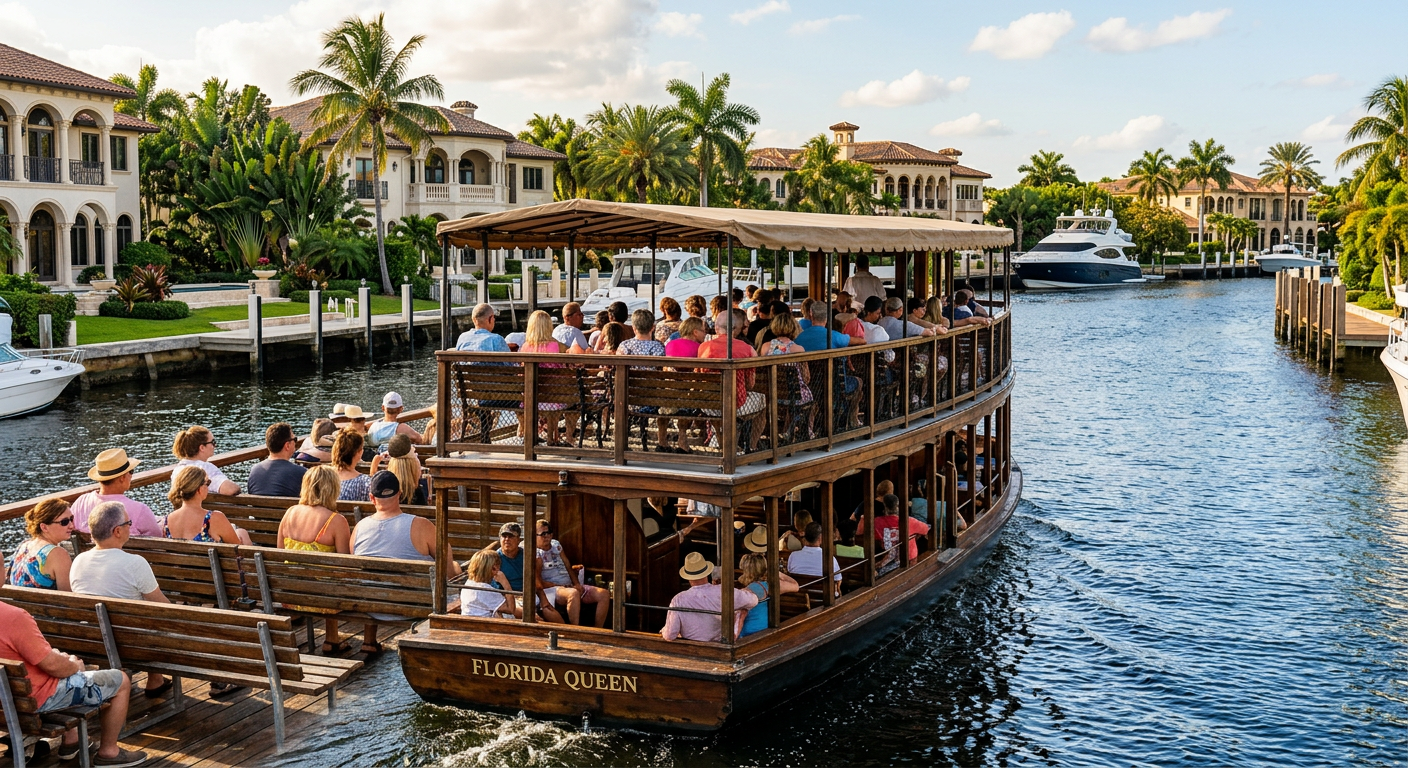
The canned lager from the lower-deck snack bar is cold enough to sting your back teeth. The interior setup serves up a specific 1980s marine aesthetic, featuring white vinyl cushions and faux wood paneling. The linoleum floors possess a slight stickiness that grips the soles of your shoes. Someone ordered a microwave pretzel, and the sharp scent of coarse salt and heated dough battles the lingering diesel fumes in the cabin. The menu operates on a minimal level, offering bagged chips and domestic beer. Small victories keep the morale high on a long float.
Engine vibration rattles through your shins as you ascend the tight wooden stairs. The United States Coast Guard rates this vessel for roughly 300 passengers, though mass-transit dynamics make the upper level feel cramped when half the group rushes portside to photograph a single lounging iguana. Up near the wheelhouse, the crowd noise fades into a low hum. For smaller groups wanting to avoid residential canal gridlock, Rockon Recreation Rentals lists private charter options. Beige is a sin, and sharing elbow space with fifty strangers pointing at the same yacht tests your patience.
Audio Glitches and Mansion Fatigue
A static hiss clicks over the overhead speakers. The boat shudders as the twin engines push forward. Underneath the starboard window, someone left a half-eaten bag of plain potato chips resting on a life jacket bin. It is a useless detail, but it anchors the reality of public transit on the water.
The captain’s narration functions as rehearsed stand-up. His dry delivery manages the midday crowd while steering past towering seawalls.
Marketing materials promise endless architectural wonder. Here is the glitch. Spotting three floating mansions holds your attention, but after the fourth massive estate, your brain stops registering the price tags. The sprawling waterfront compounds blur into a repetitive line of oversized white refrigerators.
The Architecture of an Intercoastal Gridlock
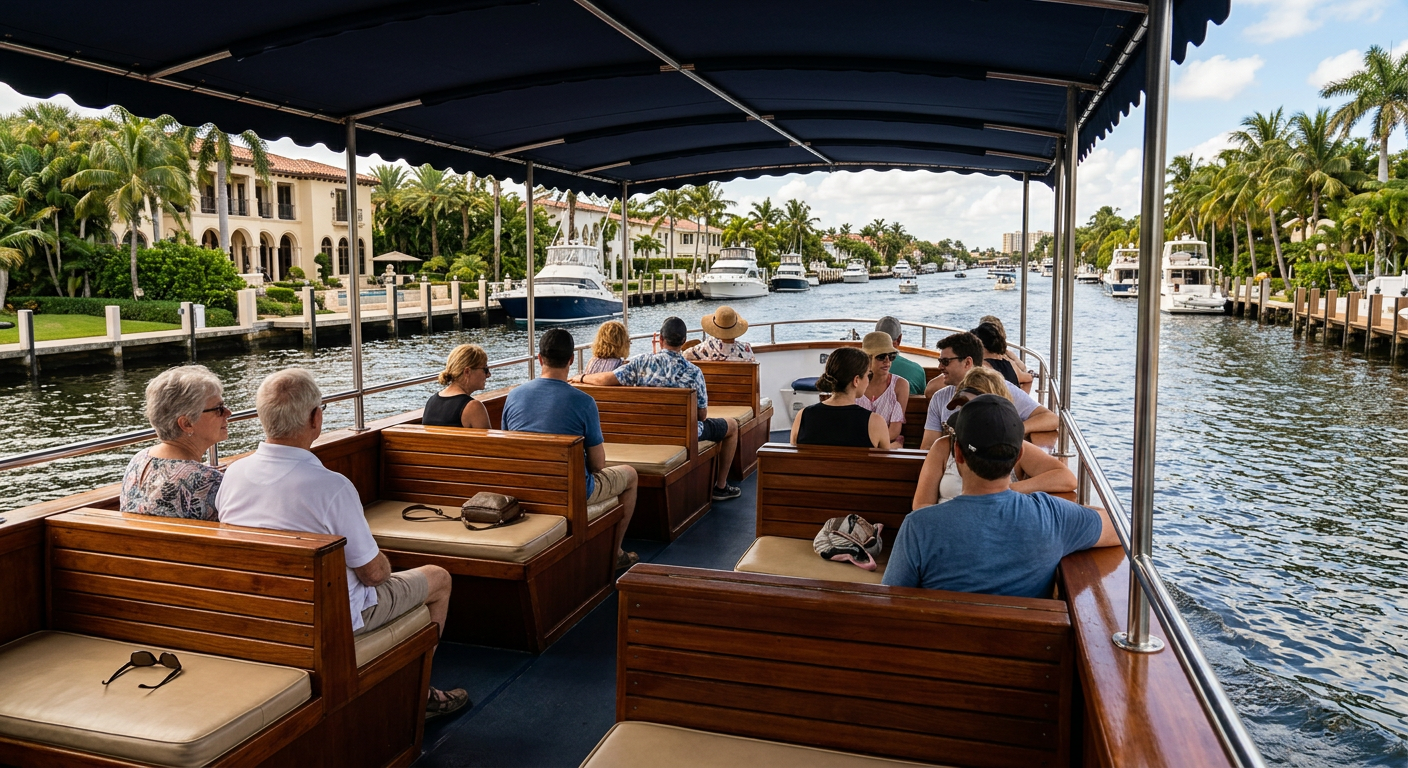
Afternoon heat radiating off nearby fiberglass roofs feels thick in your lungs. Broward County 2026 waterway maps show the channel narrowing to just fifty yards near the eastern residential cuts. You lean against the aft railing as the stern squeezes past docked sportfishers.
Stuck in the Marine Lane
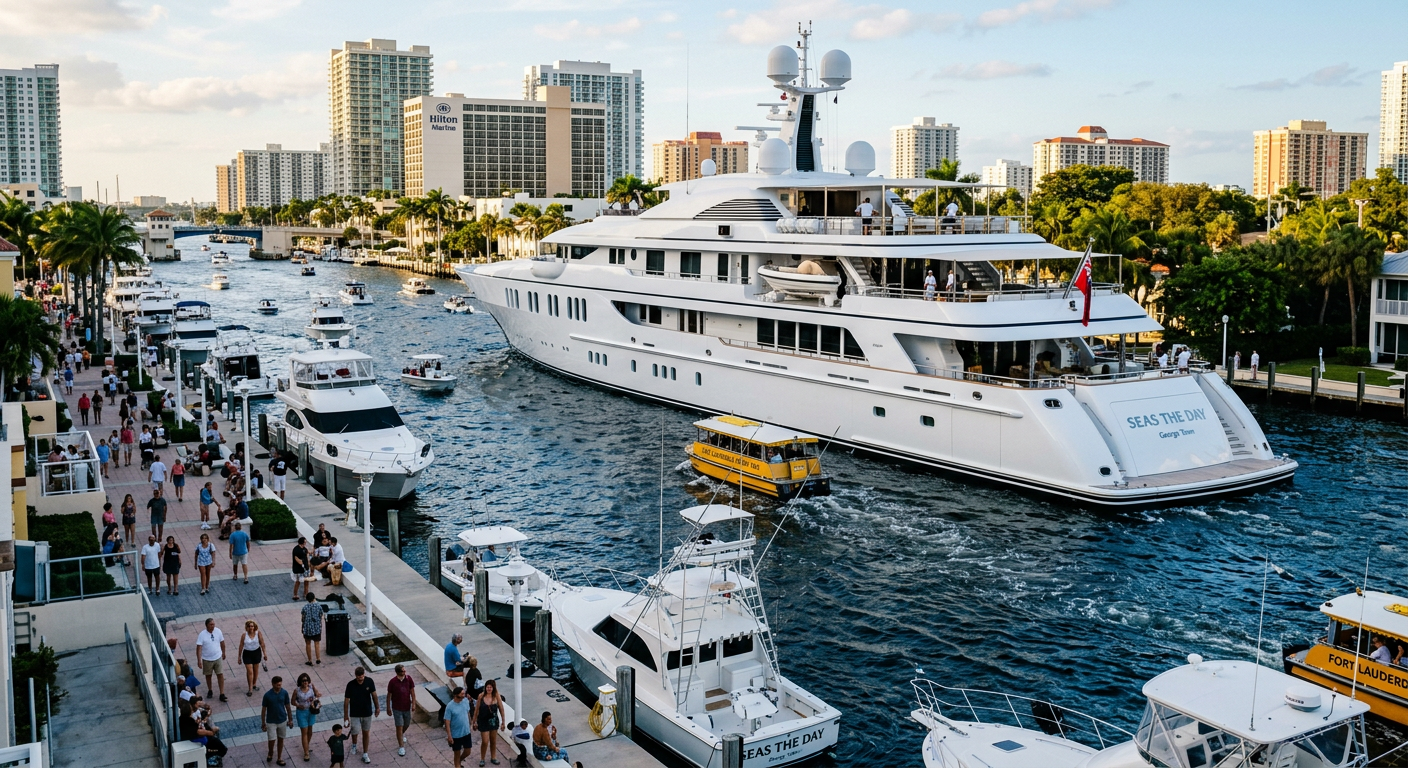
Fresh fiberglass wax mixed with dead algae hangs in the stagnant basin air. You find a spot by the starboard rail just as the captain throttles down. Instead of a sweeping coastal panorama, you stare straight up at the towering hull of a private motor yacht.
Who designs a leisurely sightseeing route straight through an active maritime parking lot?
According to the City of Fort Lauderdale commercial navigation limits, strict bridge schedules dictate the flow of vessel traffic. We sit third in line holding our position. The printed itinerary promises a seamless journey. The river delivers a nautical traffic jam. The idling engine burns fuel while we drift inches at a time.
Looking Up from the Water
2019 me would have dismissed this pacing as a logistical failure. I used to think floating was the definitive way to absorb the city skyline. 2026 me knows the slow crawl through a neighborhood of rich strangers forces a different kind of observation.
A rhythmic chopping noise slices through the baseline rumble of the riverboat engines. You feel the vibration hook into your chest before you spot the source. A tour helicopter lifts off from a nearby pad, banking sharply over the water. The rotor wash hits the surface, kicking up a harsh mist that pelts the side windows.
The Southeast 17th Street Causeway bridge clears the water by exactly 54.7 feet at mean high tide. Staring at that dripping steel barrier, waiting for our turn, a realization breaks through the midday irritation. I spent an hour mentally critiquing the captain for crawling through traffic. But watching the helicopter arc eastward reveals the truth. The boat is performing exactly as intended. The visual friction isn't a mechanical failure. The water limits you to the walls, deliberately trapping you at ground level to provide a base layer of geographical context. The problem was my expectation. If you want the map, you need the air.
Why an Aerial View Defuses Classic River Routines
The aluminum skids of the R44 leave the sunbaked tarmac, abandoning the ground in a wash of hot exhaust. The vibration settles directly into your jaw. You pull the heavy aviation headset over your ears, plunging the turbine pitch into a muffled digital hiss. The pilot runs through a staccato pre-flight checklist over the comms.
Ditching the Slow Lane
Aviation flight logs from the Federal Aviation Administration show the standard scenic route covers the identical territory you see from the water. It simultaneously exposes the flaws in the daytime boat routine. Down in the river basin, the coastal breeze stalls out between high concrete seawalls. Up in the aircraft, the cabin air conditioning blasts a dry chill across your collarbones.
We book water tours through Rockon Recreation Rentals because they offer a structured, reliable entry point for a weekend afternoon. Sitting on the local sightseeing boat gives you a grounded perspective of the wealth. But it fails the adrenaline test.
The Scale of South Florida from Above
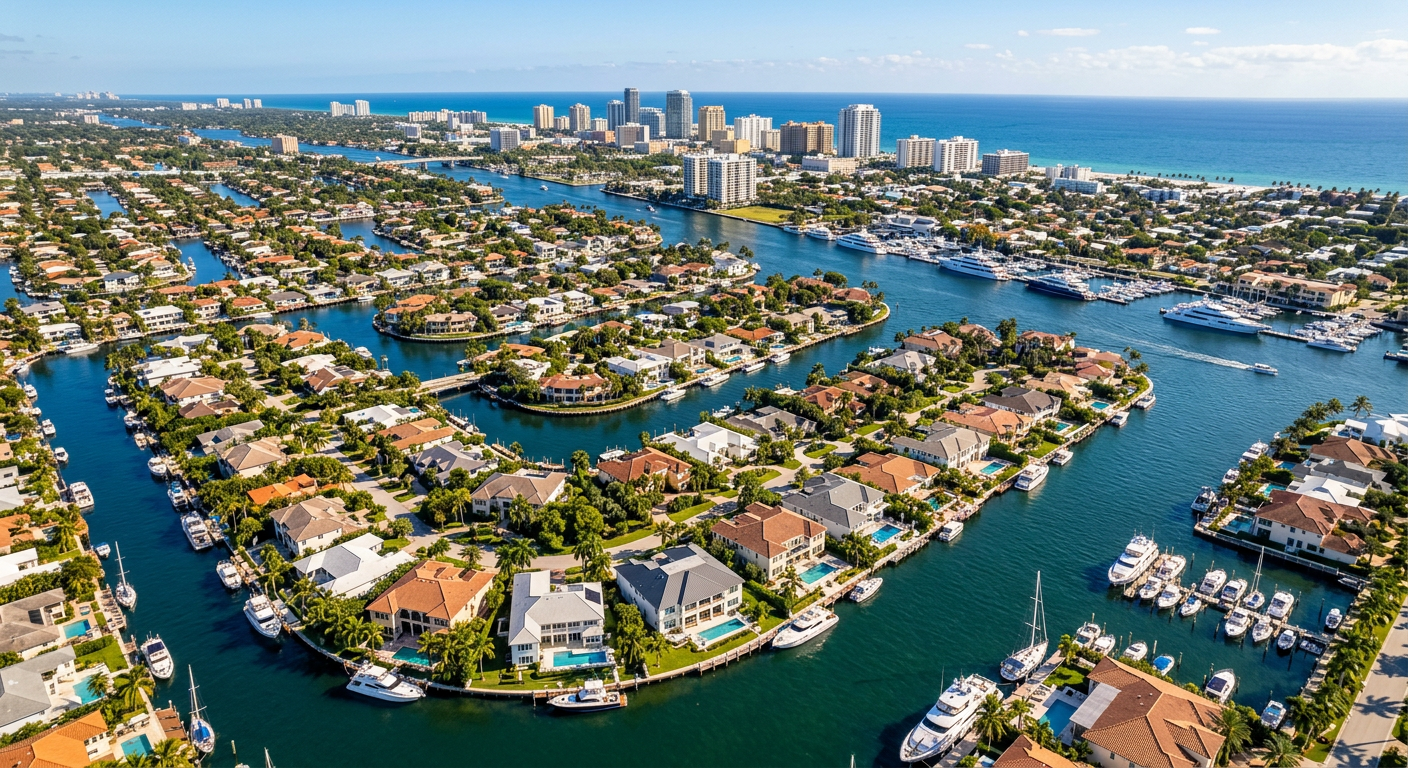
The sprawling canal grid makes visual sense when you look down on it from a sheer vertical drop. I ranked the traditional riverboat as the superior way to view local architecture prior to this 2026 trip. I assumed the water level offered the most imposing angle to grasp the regional wealth. The aerial perspective shatters that illusion. You press your shoulder against the cool plexiglass window. Those towering mega-mansions look like cheap plastic game pieces scattered on a green board.
Recent 2026 maritime block charts from the NOAA National Weather Service — Florida outline how narrow these channels actually run in the downtown sectors. Hovering alongside the beach compresses the city footprint into a fragile strip caught between the Atlantic Ocean and the Everglades. Down below, the tour boats march through the humidity. Up here, the geography clicks together.
A Recovering Perfectionist Guide to Waterways
A faint mineral tang of salt drying on your upper lip reminds you that the ocean is close. The current drops your speed to a crawl as the hull pushes against the incoming tide. This is the unpolished reality of booking the large local sightseeing cruisers. It relies on heavy machinery, saltwater friction, and municipal bridge schedules.
Embracing the Tour Pace
According to Coast Guard regulations for this specific stretch of the New River, vessels must maintain a slow bell. That constraint forces your pulse to drop, matching the heavy thomp of the engine block beneath the floorboards.
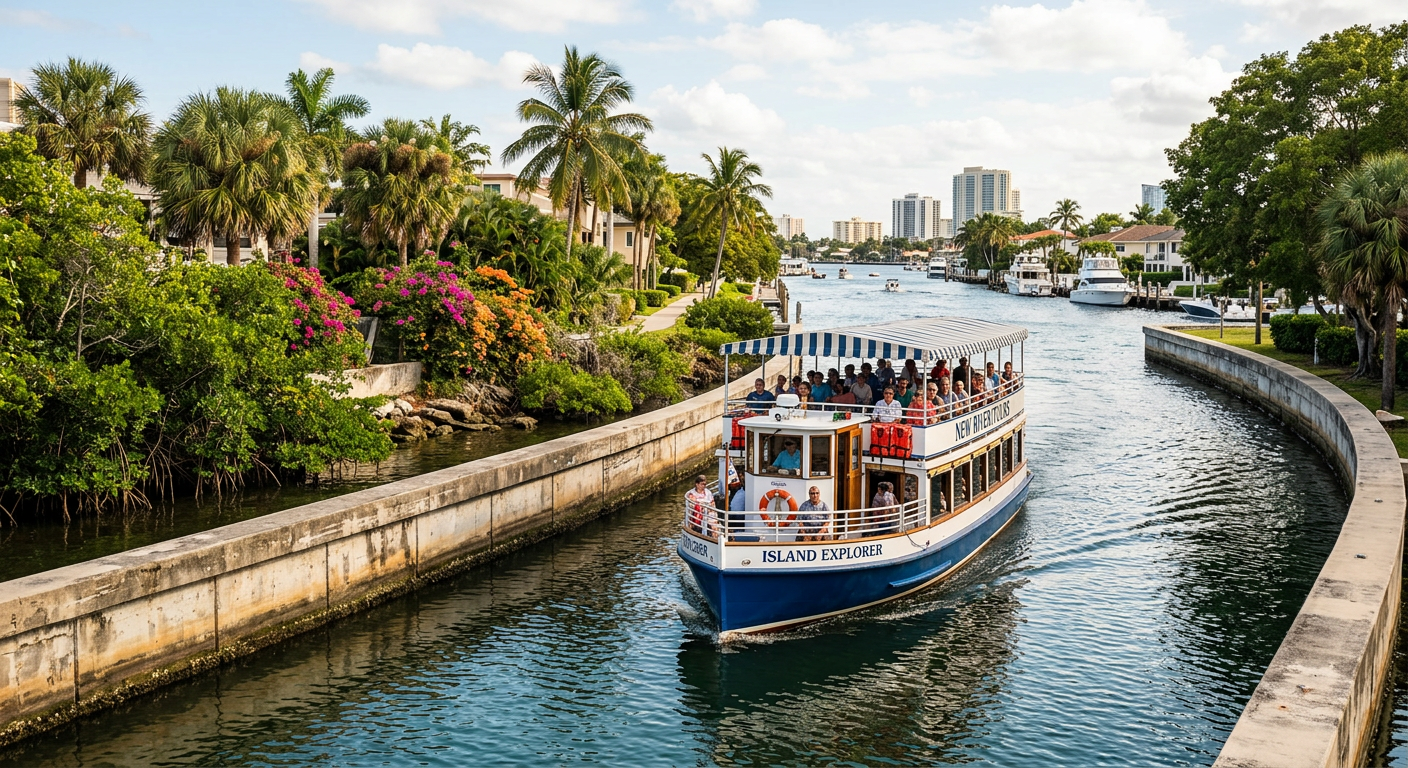
The boat turns eastward down the main channel. Two smaller skiffs wait near the starboard piling to let the larger vessel pass. The water in the wake churns light brown against the concrete barrier. The spectacle occasionally gives way to simple waterfront commuting. You just sit there waiting for the channel to widen.
Trusting Your Gut on Local Transits
Trust your gut on pacing. Locals often claim the residential stretch acts as dead time before hitting the open bay. But sitting near the starboard rail, feeling the damp shade of a low-hanging banyan tree slip over the deck, the sluggish crawl finds its purpose. A stray iguana watches from a bleached wooden dock. The unhurried navigation through tight canals provides the necessary spatial contrast for staring at the endless horizon later.
You catch a waft of sulfur off the disturbed river mud as the vessel approaches the 17th Street Causeway. The massive concrete spans scrape overhead, triggering a quick drop in your stomach. Then, the shadow breaks, and the boat pushes out into the sunlit harbor.
Pacing your afternoon requires dynamic contrast. The ground-level cruises help you grasp the localized wealth and traffic constraints. Booking a helicopter flight or private charter through Rockon Recreation Rentals strips away the stagnation, offering the panoramic reward. The vertical climb clears the mental fog left behind by the slow morning float.
The pilot cuts the engine on the asphalt pad.
You step out of the cabin, and the heavy Florida humidity reclaims your shirt. A few blocks away, the tide pushes quietly against miles of residential concrete bulkheads. Research is my love language; reality is my ex. The city just rests there, suspended on a fragile crust of porous limestone and dredged sand. For those following the National Park Service — Florida guidelines on coastal preservation, seeing high-density development from this angle is eye-opening. Before you leave, check the Visit Florida official tourism guides for boat safety tips.
Plan your trip: Ready to experience this firsthand? Book Adventures Fort Lauderdale – Helicopter Tour South Florida directly through our marketplace.