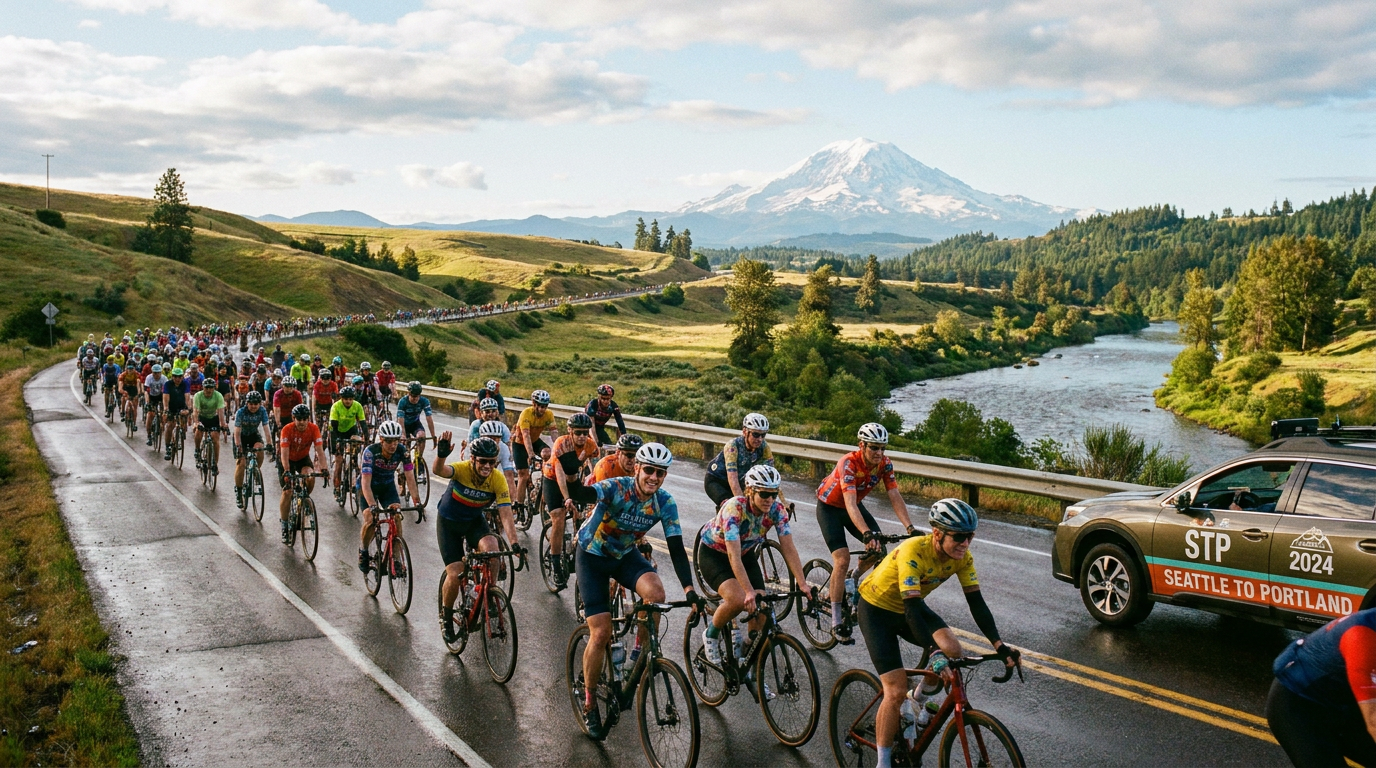
The Smell of Tiger Balm at the Start Line
Lining up for the seattle to portland bicycle classic at 4:45 AM means breathing in ozone, spilled coffee, and menthol muscle rub while standing on university asphalt. The event organizers market this as a seamless roll-out. It is a logistical traffic jam. You stand there while thousands of people try to figure out where the porta-john line ends and the starting chute begins. Beige travel brochures lie.
The Reality of Lot E1
The elevation profile for the first ten miles south of Seattle is flat. My stomach still felt like I was staring down a vertical drop.
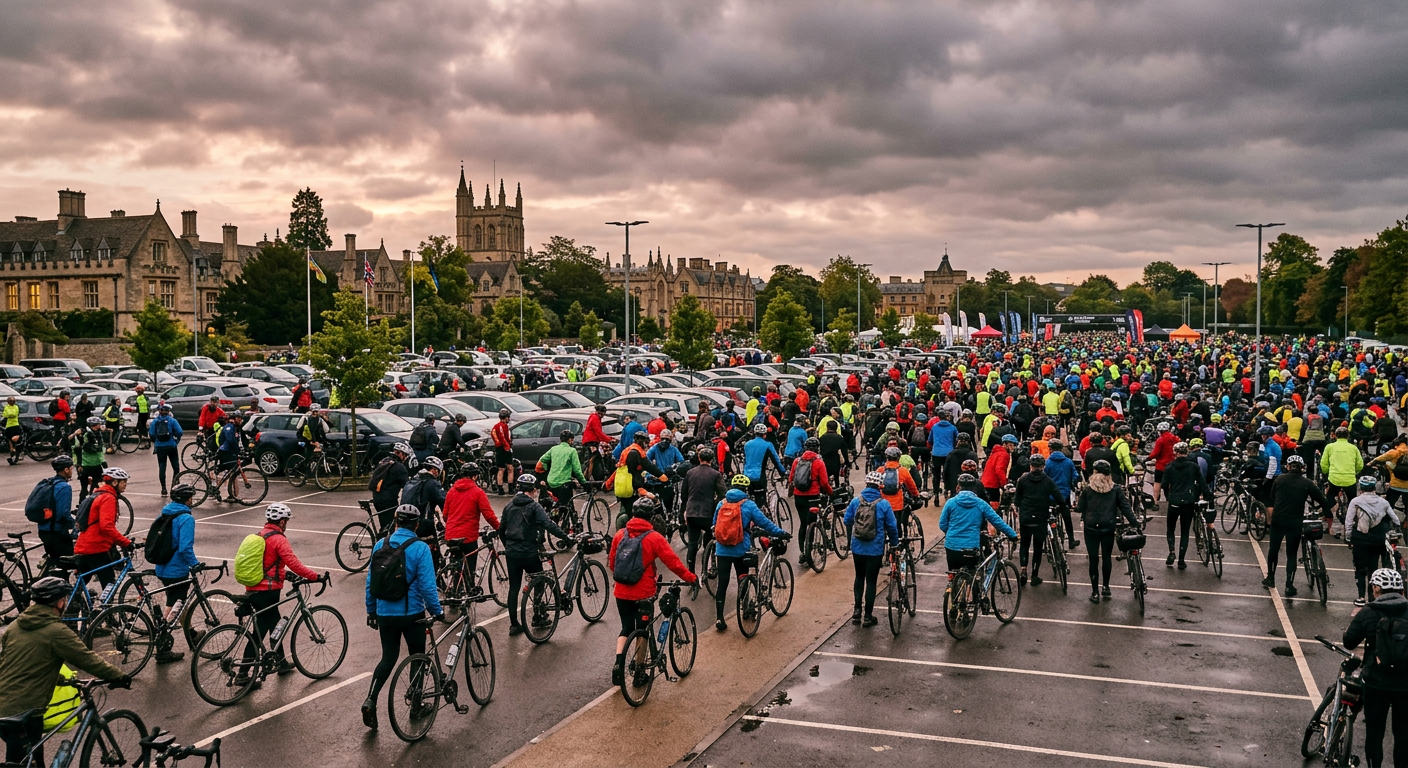
Riders stand next to their bikes in the dark. Nobody says much. 2019 me would have hated this crowded starting corral. 2026 me knows better. There is a strange comfort in watching 3,000 people in this early wave voluntarily submit themselves to the same bad idea.
The PA system crackles. The sound rolls backward like a falling deck of cards—the sharp, metallic clack of hundreds of cleats snapping into pedals. The metal handlebars are freezing under your gloves. Your mouth tastes like bitter pre-workout gel.
If you rent gear through Rockon Recreation Rentals for an endurance event, check your shifting beforehand. I watched a guy wait twenty minutes for a derailleur tweak while his group left without him. The seattle to portland bicycle classic waits for no one's mechanical issues.
This article was researched and written with AI assistance and editorially reviewed by Greg Faucher. Greg writes for Rockon Recreation Rentals, a VisitFlorida Travel Partner since 2018. Occasionally, a place earns every word of hype. He'll tell you when it does.
Why Alki Beach is the Only Testing Ground That Matters
The Pre-Ride Shakedown
The only reason my drivetrain survived the chaos of Lot E1 was a decision made forty-eight hours earlier. If you want to finish this ride, you do not test your equipment on race morning. You test it on the flat pavement of West Seattle.
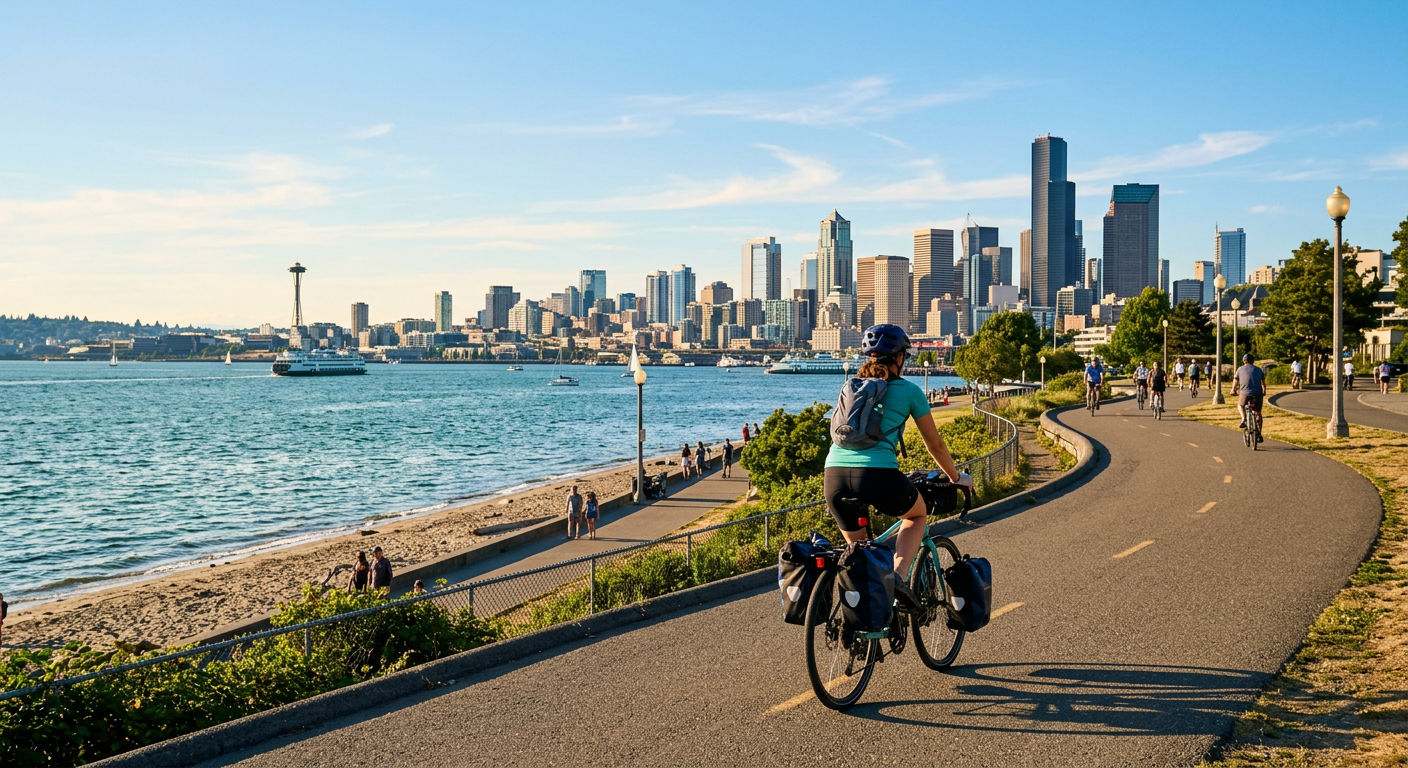
The salty mist hits your tongue the moment you roll onto the Don Armeni Boat Ramp path. Taking an informal Alki Beach bike tour offers a casual vibe, but its real value lies in the days before a two-hundred-mile effort. It feels disconnected from the anxious pace-lining waiting for you down south.
The official 2026 preparation guide suggests grinding through three 50-mile suburban loops the week before the event. Who writes these training plans? Doing that just wears you down. You need a shakedown ride, not another suffer-fest.
The data shows a full out-and-back route from the water taxi terminal to the lighthouse clocks in at roughly 6.5 miles. The relief of not having to dodge downtown delivery trucks washes over you. You can listen to your chain rings without highway noise drowning them out.
Finding the Flaws Before Mile Ten
I suspected this waterfront strip would be too clogged with rented surreys to be useful. My intuition was wrong. The dedicated bike lane flows cleanly, and wide sightlines let you focus on gear indexing. I shifted through every cog on my cassette twice. Everything clicked.
The city claims the trail repairs near the bathhouse were completed this spring. You hit that supposedly smooth patch of asphalt at fifteen miles per hour. The jarring vibration in your wrists tells a different story. It is the perfect simulation of the rough roads waiting in Pierce County.
You stop pedaling near the dock. A gull shrieks loudly over a dropped french fry. Your aluminum brake levers feel cold against your bare fingers. It is not a glamorous warm-up. It is practical preparation.
Surviving the Middle Miles of the Route
The official route gallery highlights lush forests and rolling rivers. It conveniently skips miles 40 through 75. This is where egos go to die.
You leave the city behind and enter a corridor of strip malls and automotive repair shops. You grip the handlebars, and the rough pavement vibration rattles straight up your forearms. The highway traffic hums constantly on your left.
The route map notes this stretch through Pierce County covers roughly 30 miles. It feels like pedaling on a stationary bike set in the back of an industrial park.
The Unicycle Incident
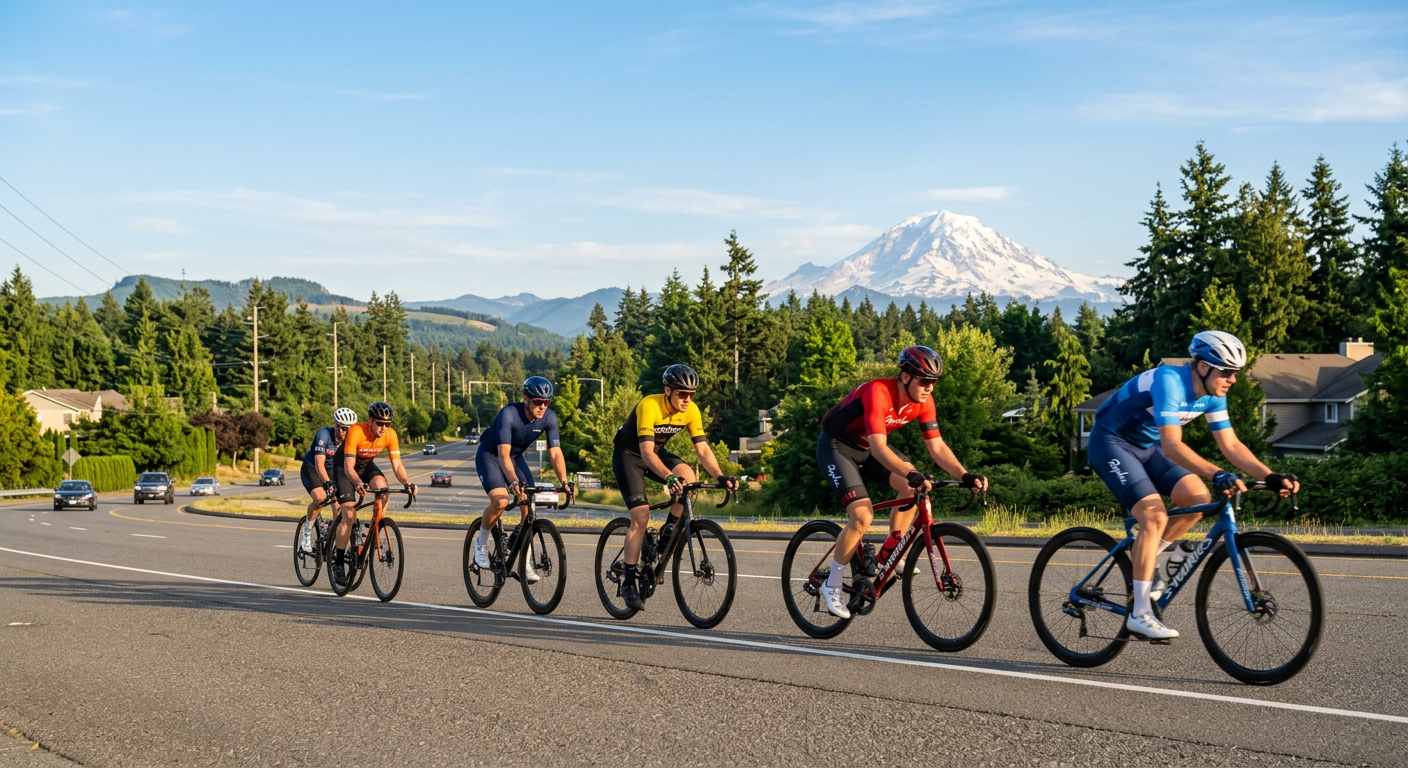
The event website calls the midday checkpoints revitalizing. They mostly smell like melting energy bars and warm asphalt. I pulled over near Puyallup to stretch my cramping hamstrings.
A guy leaning against the chainlink fence had a neon green sticker on his top tube that just read 'BREAD'. It was peeling at the corners. I stared at it for three minutes. Then I leaned my road bike against a steel guardrail. A man on a unicycle pedaled past me.
A standard commuter unicycle wheel is about 36 inches across. Watching one pass you at twelve miles an hour delivers a specific flavor of humiliation.
You stand there, tasting the dry metallic grit of road dust on your teeth, and watch him roll away. Your legs suddenly feel heavier.
Finding Grace in the Grind
The cue sheet promises another ten miles of commercial zoning before the trees return. I expected the 65-mile rest stop at Joint Base Lewis-McChord to be a chaotic bottleneck. It wasn't.
They processed nearly 4,000 riders through that checkpoint in under three hours. The ice-cold water hitting the back of my neck felt like a system reboot. If you ever rent a road bike from Rockon Recreation Rentals for a century ride, you quickly learn the value of a well-run pit stop.
The seattle to portland bicycle classic does not get physically easier after that break. But at least you have hydration while you chase a unicycle toward the state line.
The Myth of the Flat Route
You tape the official route map to your top tube. The elevation profile looks like a calm heartbeat monitor. The 206-mile distance sounds manageable when the paper suggests a smooth, horizontal glide.
The air moving past your ears carries the dull rushing sound of highway traffic. You shift into a heavy gear and settle into the drops. You convince yourself this lack of climbing will save your legs for tomorrow. It is an easy lie to believe.
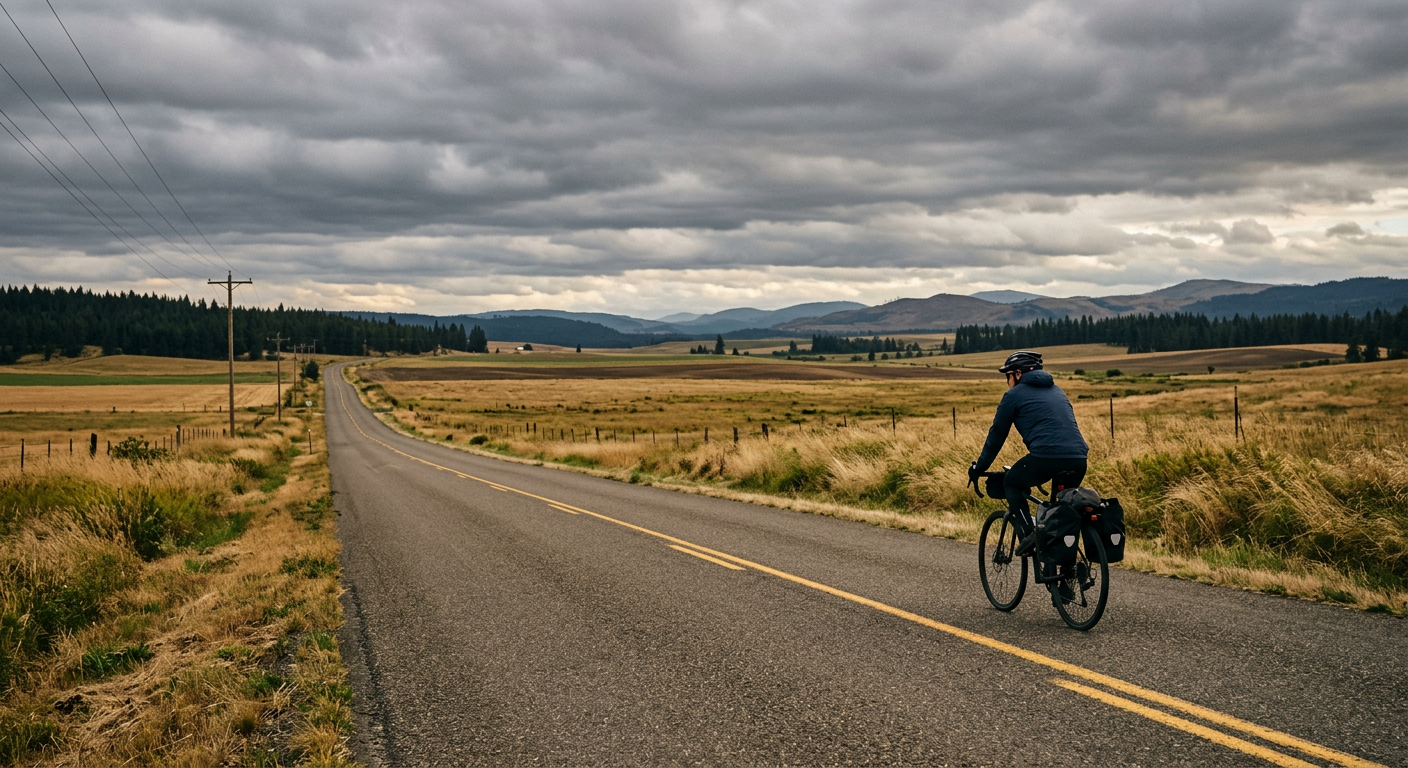
The valleys south of the city hold their own kind of friction. I didn't understand this until the road opened up alongside the river. The natural windbreaks vanished, leaving us exposed.
The headwind rolling off the water does not arrive in gusts. It is a thick, unyielding wall of damp air that smells vaguely of mud and rotting reeds. It forces you to pedal downhill just to maintain a walking pace.
I had spent weeks hoping for a flat ride. Somewhere around mile forty-five, my perspective shifted. As the breeze dried the salt into my skin, I realized I wanted a hill.
Climbing a steep grade offers a peak to conquer and a descent to enjoy. Fighting a flat-land headwind just demands uncelebrated suffering.
The Invisible Wall of the River Valleys
Local climate data shows winds funnel through these valleys at a constant fourteen miles per hour. That number feels abstract until you try to push a bicycle through it.
The resistance presses against your shoulders like a physical weight. You tuck your chin to your chest and stare at the white line painted on the asphalt. The valley air here is heavy and loud.
You hear the low humming of three hundred tires spinning against the grit. The sharp scent of agricultural fertilizer mixes with the metallic tang of sweat on your upper lip. You try to draft, but the breeze swirls into the gaps, leaving a chalky taste in your throat.
I suspect half the field lied to themselves about their training volume. Gravity is a harsh critic on the mountain passes, but a fifty-mile headwind simply erases your will to pedal. The wind will eventually find you. It will not care how flat the map looked at dawn. According to the NOAA National Weather Service, regional gusts can change in minutes, turning a quiet valley into a wind tunnel.
The Bridge Crossing Slog
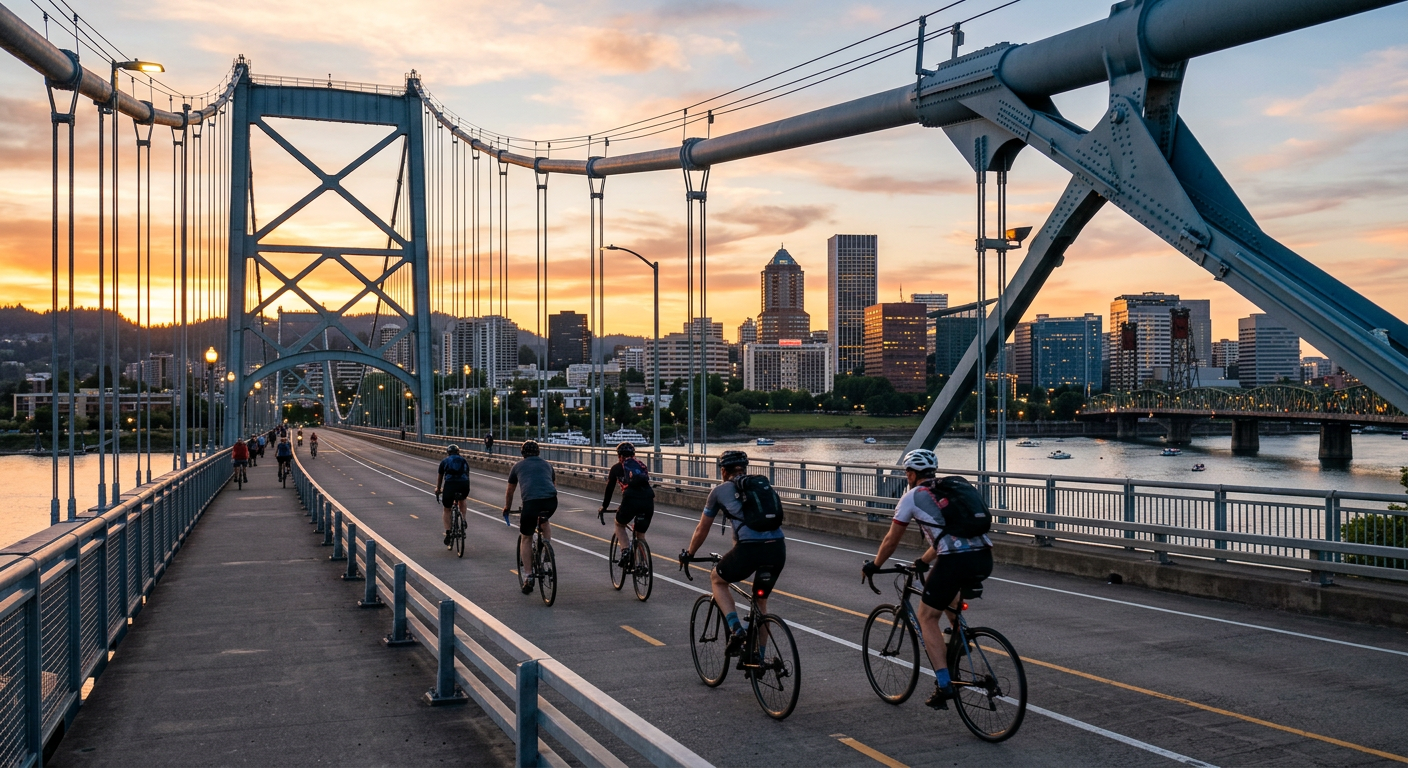
You hit the steel grating of the St. Johns Bridge. The vibration shoots straight up your front fork into your jaw. The official map logs this crossing at mile 195.
That number feels abstract until your shoulders absorb the shock of a thousand tiny metal ridges. Commuter cars idle a few feet to your left. The bridge smells like heavy diesel exhaust and damp river mud.
The weekend traffic patterns suggested a quiet Sunday morning arrival. Reality delivered a grinding bottleneck of commercial trucks and fatigued cyclists fighting for the same narrow shoulder. The air sits still and heavy over the water.
I spent the previous forty miles convinced I was done with cycling for good. I mentally listed my bike for sale somewhere around Scappoose. Then you crest the center of the span. The green hills of Portland drop into view, and that deep, bitter muscle ache simply stops registering. For those extending their stay, the Lonely Planet — USA travel guide highlights the city’s unique bike culture and culinary scene.
The Finish Line Festival
The route turns south along the Willamette River. The pavement flattens out for the final stretch. You pedal through a residential neighborhood before the finish line banner appears.
The final half-mile of the event is a dense wall of noise. The festival speakers push a massive wave of sound. That sheer volume hits your chest and somehow tricks your depleted legs into pedaling faster.
You roll across the rubber timing mat. I unclipped my left shoe and leaned against a chainlink fence. I didn't want a medal or a finisher photo. All I could think about was finding a large pizza.
Frequently Asked Questions About the Event and Prep
How long is the seattle to portland bicycle classic
The official route covers 206 miles of paved roads between the two cities. While most participants choose to split this demanding distance into two days of riding, a smaller contingent of endurance cyclists completes the entire route in a single day.
Where does the ride actually start
The official start line is located at the University of Washington parking lots in Seattle. This massive staging area (Lot E1) provides enough space for thousands of riders to gather in the early morning darkness before their assigned wave departures.
Why should I ride Alki Beach before the event
Alki Beach provides a flat, controlled 6.5-mile waterfront path. It is the perfect low-stakes environment for testing rented gear, checking your derailleur indexing, and dialing in your saddle height without dodging heavy downtown vehicle traffic or climbing aggressive hills.
Is the route closed to vehicle traffic
No, the course remains open to normal vehicle traffic throughout the weekend. Cyclists ride on road shoulders and dedicated bike lanes, sharing highways and rural county roads with local cars, commercial trucks, and farm equipment.
What is the total elevation gain for the ride
Riders will climb roughly 4,000 feet over the 206 miles. Event marketing often bills it as a flat route, but the rolling hills in the middle sections, particularly through rural Washington, slowly accumulate fatigue in your legs. Many of these routes pass near various Washington State Parks, offering scenic but deceptive terrain.
Are there mechanical support stations along the way
Yes. The route features official mini-stops and major food hubs staffed by volunteer mechanics. They can help with minor derailleur tweaks and flat tires, though every rider should carry their own spare tubes, tire levers, and basic multi-tool. Across the region, the National Park Service — Washington maintains adjacent lands that often serve as scenic backdrops for these long-distance corridors.
How many people participate in the ride
The event typically caps registration at around 8,000 riders. This massive turnout makes it one of the largest recreational bicycle events in the Pacific Northwest, requiring massive logistical support from local communities.
Is transportation provided back to Seattle
Yes, riders can purchase tickets for official return buses. Bicycles are loaded onto separate padded moving trucks in Portland and safely transported back to the starting lots at the University of Washington.
What kind of bike is required for this distance
Most participants ride standard road bikes equipped with 28mm to 32mm tires for comfort. You will also see hybrids, gravel bikes, and recumbents on the course, but heavy suspension mountain bikes will make the long paved miles significantly harder.
Do I need to carry all my own food
No, the official rest stops provide standard ride fuel like fruit, chips, and basic hydration. However, carrying a few emergency energy gels or snack bars in your jersey pocket is always a smart backup plan to avoid bonking between major checkpoints.
Plan your trip: Ready to experience this firsthand? Book Alki Beach in West Seattle Bike Tour directly through our marketplace.