The Myth of the Flat Waterfront Glide
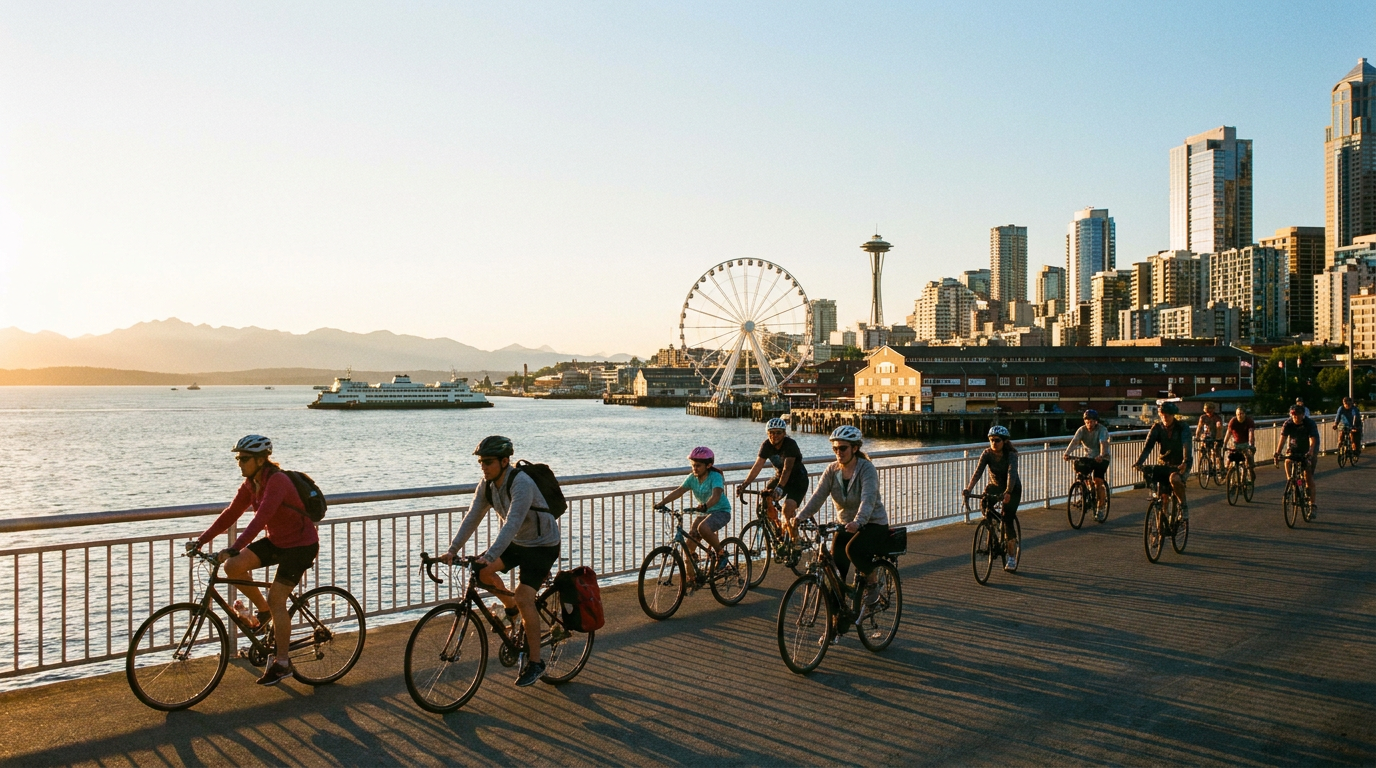
The damp marine air gathers around your collar at Alaskan Way. Pavement stretches level along the wooden piers marking the edge of Elliott Bay, and delivery trucks rumble past in the morning fog. You cruise past the ferry terminals. The flat terrain makes you feel light on the pedals. It's a trap. Turn inland at University Street, and the geography demands respect.
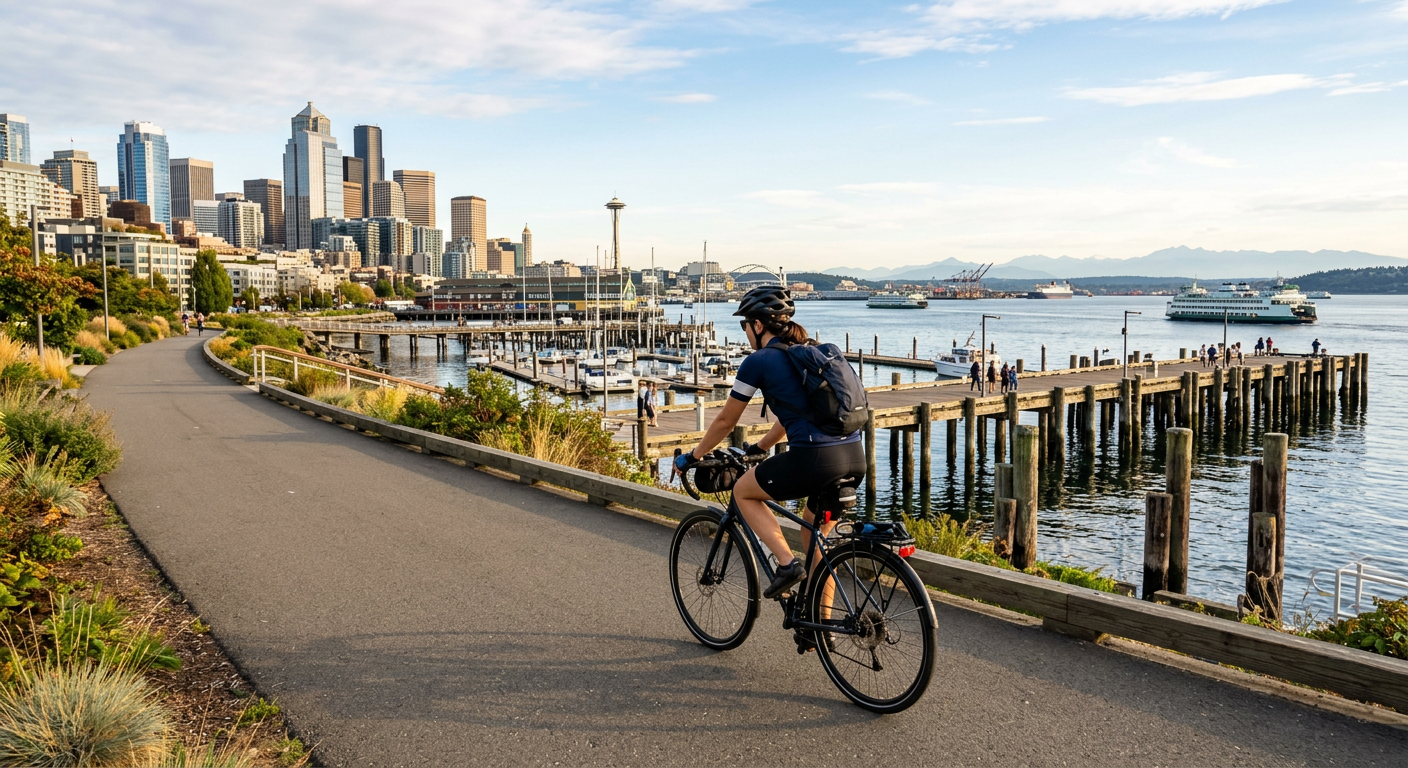
I used to stare at the steep downtown avenues, assuming the physical effort would ruin a relaxed morning. Grinding up those streets provides the only clean view of Puget Sound. You earn every single glimpse of the green ferries pulling away from the docks into the choppy water. Spring Street climbs upward for three consecutive blocks. It connects the waterfront directly to the upper transit lines. A painted white line gives you a dedicated climbing lane, though most casual riders end up pushing their frames here.
Check the topographical guides from the Seattle Department of Transportation before picking your daily path. They map out the main arteries. The maps gloss over which specific blocks hurt most. Take the Seneca Street ramp. It hits exactly an 18.2 percent grade right before First Avenue. If you rent gear from Rockon Recreation Rentals for a Pacific Northwest trip, secure an e-bike. The battery handles those inclines so you get to look at the passing architecture instead of wrestling your handlebars.
Surviving the Famous Commuter Trails
The sharp, rapid whir of a carbon-fiber wheel is a sound I can never unhear. It serves as the local warning siren of someone drafting three inches off your back tire. Riding the Burke-Gilman Trail means accepting that fast-moving commuters treat the shared path like a private velodrome. If you want to survive Seattle by bike, you have to abandon the crowded corridors.
2019 me thought these paved networks were the calmest spots in the region. 2026 me knows this famous public asset acts as a high-stress expressway disguised as a park. You share the narrow pavement with people turning their evening commute into a time trial. Beige is a sin, but stress is worse.
Finding Joy on Neighborhood Greenways
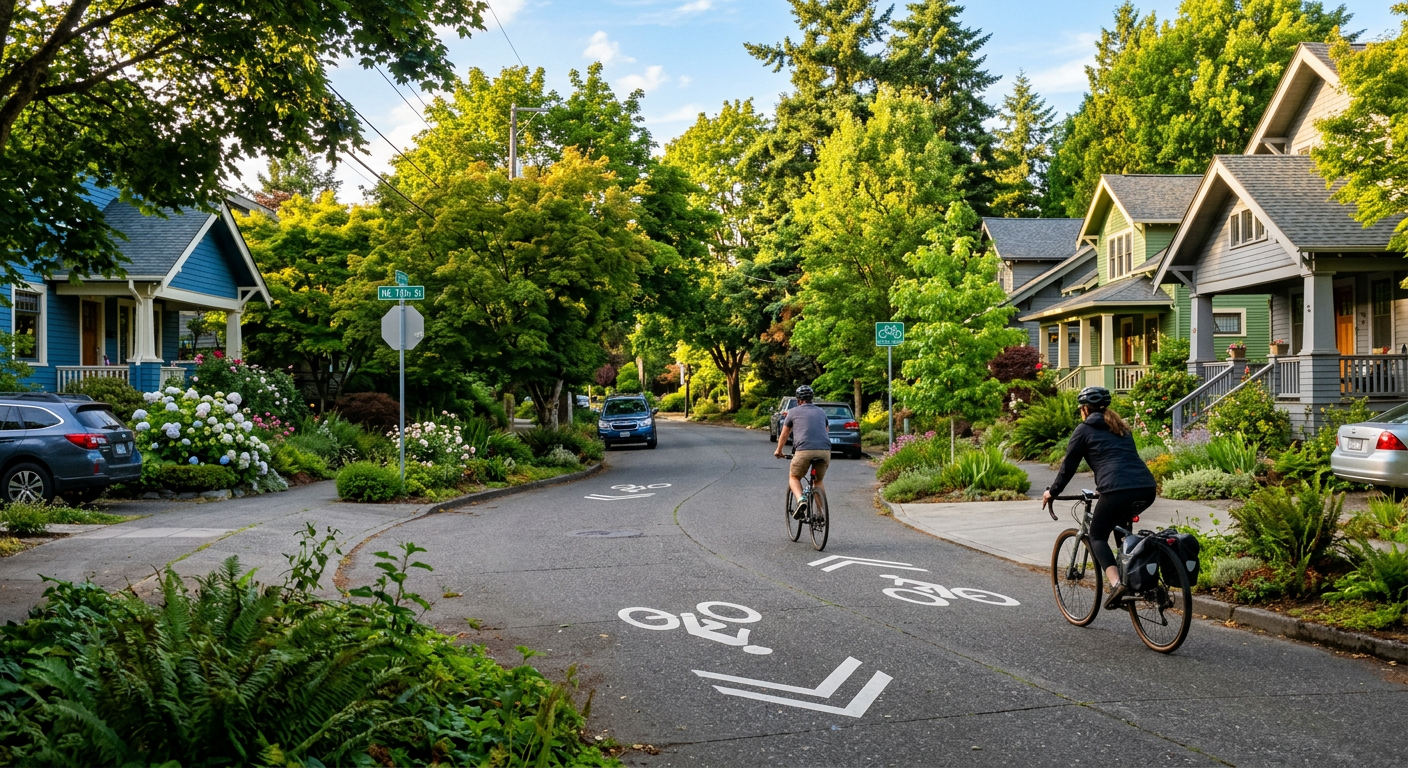
The Fremont Neighborhood Greenway runs parallel to the main commercial roads. White bicycle symbols mark the asphalt. Concrete planters full of ferns block car traffic at the intersections. A cat usually sleeps on the steps of a yellow craftsman house near 43rd Street.
Taking a greenway up through Phinney Ridge requires a five-hundred-foot climb, but the street-level views of the Olympic Mountains make the effort worthwhile. Map out these low-traffic routes via the Cascade Bicycle Club regional guides. The air smells sweet up here thanks to the cedar trees hanging over the sidewalks. The pedals just turn in a quiet rhythm.
The Metal Grating of the Ballard Crossing
Vibration shoots straight up your aluminum fork and right into your wrists. The pedestrian walkway over the Hiram M. Chittenden Locks features a heavy steel mesh floor. You have to dismount. Walking a bike across the churning spillway requires awkwardly dodging tourists watching the salmon ladders below. The water churns with a low, mechanical hum.
Getting dropped into Magnolia on the other side means facing a wall of asphalt. I can't prove this, but the wind coming off Shilshole Bay always seems to shift precisely to hit your face the moment you start the climb. Map algorithms treat this crossing like a simple flat bridge. They possess a bias against unpaved nuance. You spend ten minutes navigating metal gates and waiting for bulk cargo ships to float through the channel before the lock doors even close.
Taking Your Two Wheels on the Water
Breathe in the mix of marine diesel, spilled dark roast, and cold salt water at Colman Dock. This terminal functions as the beating heart of local aquatic transit. Seeing Seattle by bike inevitably means running out of land. That is when you wheel your frame onto a passenger vessel.
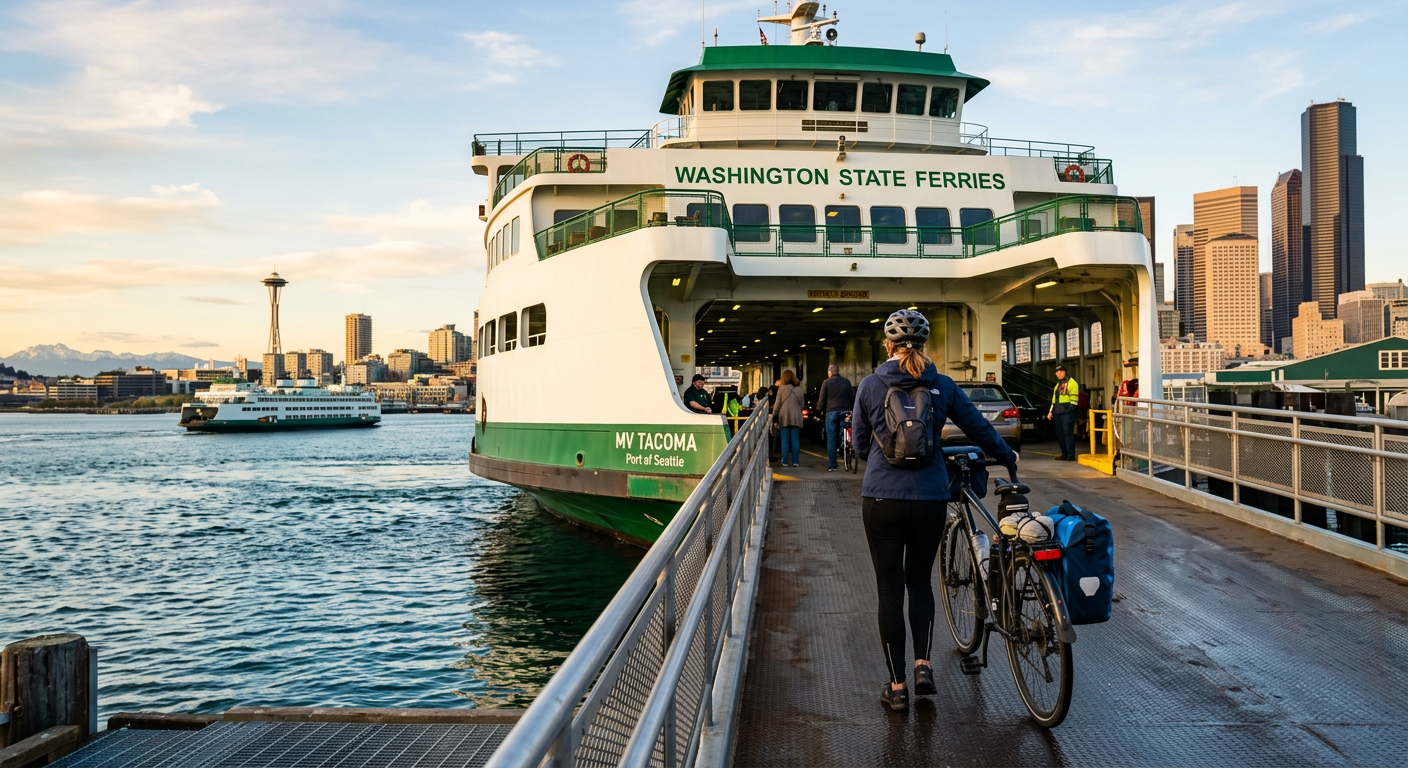
The ultimate transit asset here is a simple walk-on ticket. Vehicle lines stretch for blocks. Drivers languish in their idling cars. Cyclists just roll past the gridlock straight to the loading ramp. You pay the standard passenger fare and bypass the traffic.
The Short Hop to Island Time
The Bainbridge Island ferry leaves from Pier 52. Dedicated cycling lanes painted onto the steel car deck simplify the boarding process. Ropes hang along the interior bulkhead for quick frame securing. Riders load first. You tie off and walk upstairs before the truck engines even start.
A teenager wearing mismatched Converse sneakers leaned against the rail, eating potato chips one by one in the sea breeze. Data from a 2026 Washington State Transportation Commission report confirms bicycles dominate the morning boarding flow here. You drink a mediocre galley coffee while the downtown skyline shrinks behind the white froth.
Escaping to the West Seattle Peninsula
The King County Water Taxi operates out of Pier 50. The crossing takes fifteen minutes. You wheel your frame onto the back deck of the catamaran. Salt spray lightly coats the top tube while the boat bounces across Elliott Bay. Alki Trail waits on the other side.
This path curves around the peninsula, offering a wide concrete ribbon free of downtown construction zones. I suspect the view of the city skyline from Alki Beach keeps most real estate agents in business. You cruise past fire pits and beach volleyball nets. The headwind picks up near Duwamish Head, pushing sand across the trail. It stings the ankles. Navigating this perimeter gives a visual sense of scale you miss when buried between high-rises.
Going Rogue in the Industrial District
Dust kicked up from passing freight trucks coats your back teeth. I hated riding south of downtown initially. It felt loud, unpolished, and hostile. Routing through the industrial district seemed like a mandatory penalty just to reach the lower neighborhoods. The cement mixer engines drowned out my thoughts.
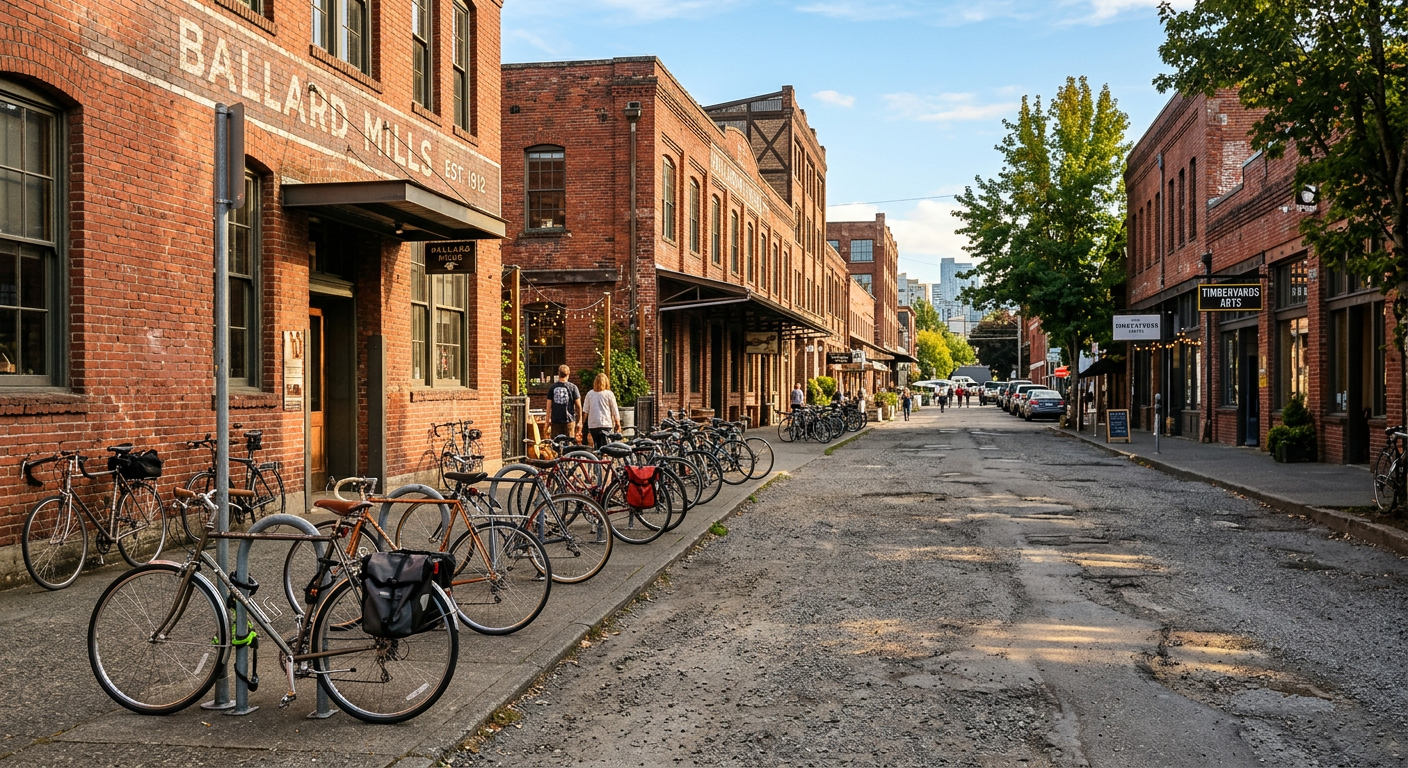
Then I hit Georgetown, and my entire assessment shattered. This dusty pocket is the actual heartbeat of the city. Away from the souvenir shops, real energy thrives among the neglected warehouses. The old brick facades conceal independent coffee roasters and vintage repair shops. The grit isn't a flaw; it serves a practical purpose as a filter. It repels the tourist crowds. It keeps the streets open for locals seeking authenticity over polished waterfront promenades. If it's on a postcard, it's a trap.
Finding the Pulse of Georgetown
Airport Way South cuts straight through the commercial strip. Two lanes of traffic crawl past older buildings. Galvanized steel racks sit outside almost every storefront. Riding through this corridor teaches you how the city operates on a blue-collar level.
According to the Seattle Department of Neighborhoods, Georgetown stands as the oldest residential neighborhood in the municipal borders. Uncovering the best of Seattle by bike means taking the industrial route for roughly two miles. It puts you face-to-face with the working mechanics of the port. Taking the gravel paths exposes the frayed, interesting edges of civic life.
Surviving Elements Without Losing Dignity
A 45-degree drizzle blowing off Elliott Bay feels heavy. It wraps around exposed wrists. It finds the smallest gap between your collar and helmet. Commuting across town in late fall demands recognizing that cotton is an active liability. The standard tourist uniform of a light fleece jacket fails a few miles into the ride. I can't prove this, but I think Gore-Tex was invented mostly because someone wiped out in Capitol Hill during a winter downpour.
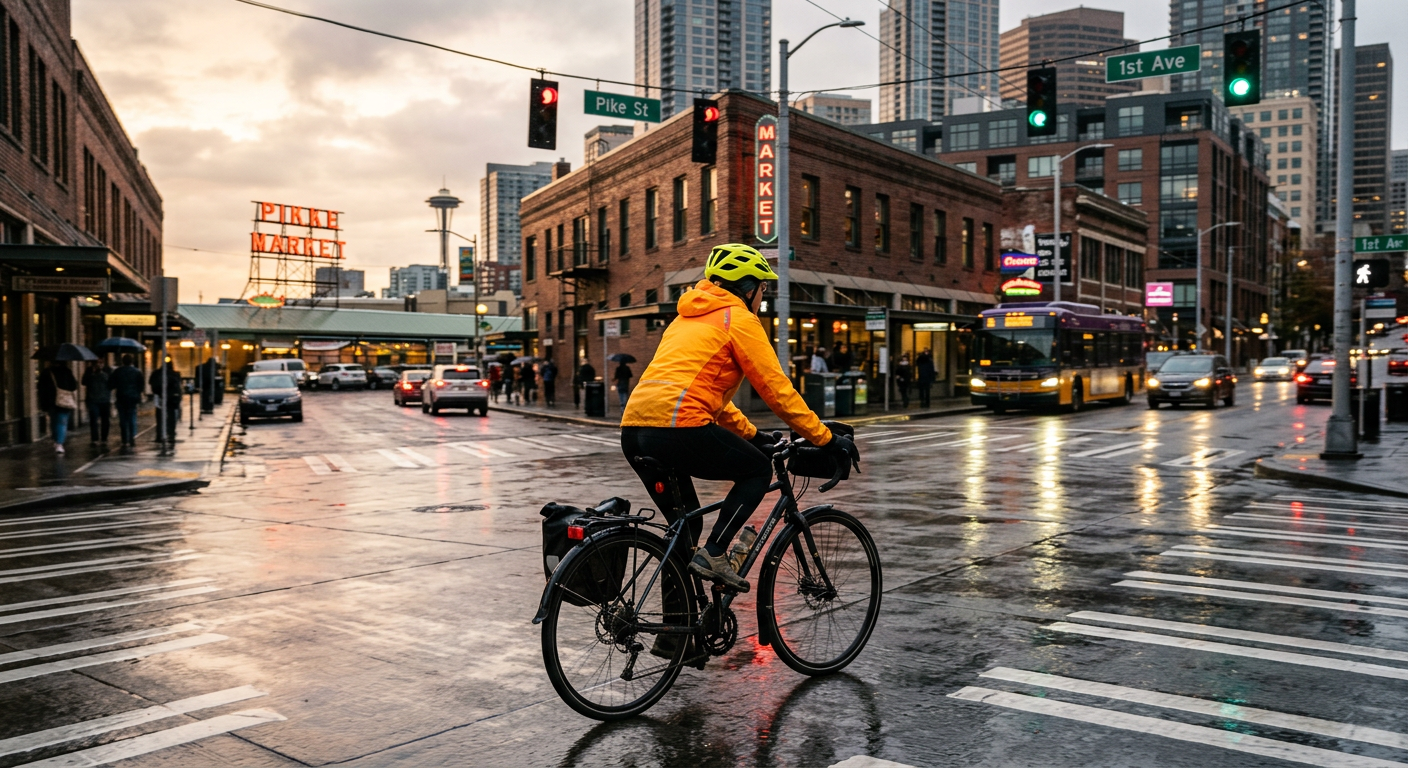
Weather station data shows November brings rain on most days of the month. Seattle receives roughly three dozen inches of rain annually. Most of this falls as a constant mist rather than heavy downfalls. The average afternoon high sits near 50 degrees.
Essential Gear That Performs
Fair-weather cycling attire belongs in a different time zone. You need waterproof layers that breathe when grinding up Madison Street. A man in a tailored grey suit pedaled past me holding an unlit cigar in his teeth. Research is my love language; reality is my ex. Reality here involves dressing for three different micro-climates on a single loop.
I relied on a thick vinyl poncho for years. It trapped the heat during a long climb toward Volunteer Park. It turned the interior into a swamp. Sweating out from the inside while cold rain hits your shell produces a fresh kind of misery. Breathable synthetic layers solve the ventilation problem.
- Swap casual shoes for neoprene booties or thick wool socks.
- Bring clear glasses to shield your eyes from grit kicked up by tires.
- Mount full-coverage fenders on your frame to prevent the dreaded muddy skunk stripe.
Leave the stylish sneakers back at your hotel. Wet cotton socks end a sightseeing route faster than a flat tire. Pack a waterproof roll-top bag for your dry clothes. Nobody wants to finish a ride looking like a dropped sponge.
Pair proper equipment with the 2026 route guides from the Washington State Department of Transportation to navigate the damp pavement. The wet chain rings squeak for the first hundred yards until the grit washes out. You wipe your goggles onto your sleeve and push the pedal forward, letting the tires find traction where they can.
Plan your trip: Ready to experience this firsthand? Book Gig Harbor to Seattle Ferry Adventure directly through our marketplace.