The Gravity Problem at Pier 60
The metallic tang of diesel exhaust mixed with spray-on sunscreen hits the back of your throat the second you wait under the canvas awning at slip 18. Most passengers stare down at their phones, avoiding the reality of an impending high-altitude flight over the Gulf waters. I watched a man in luxury loafers drop a single seasoned French fry on the wooden planks. A nearby laughing gull stepped over it to inspect a discarded piece of yellow zip-tie, offended by the carbs. 2018 me would have been checking the tension of my harness straps, convinced I was responsible for my own aeronautics. 2026 me just leans against the concrete piling, watching the waterfront machinery carve up the channel.
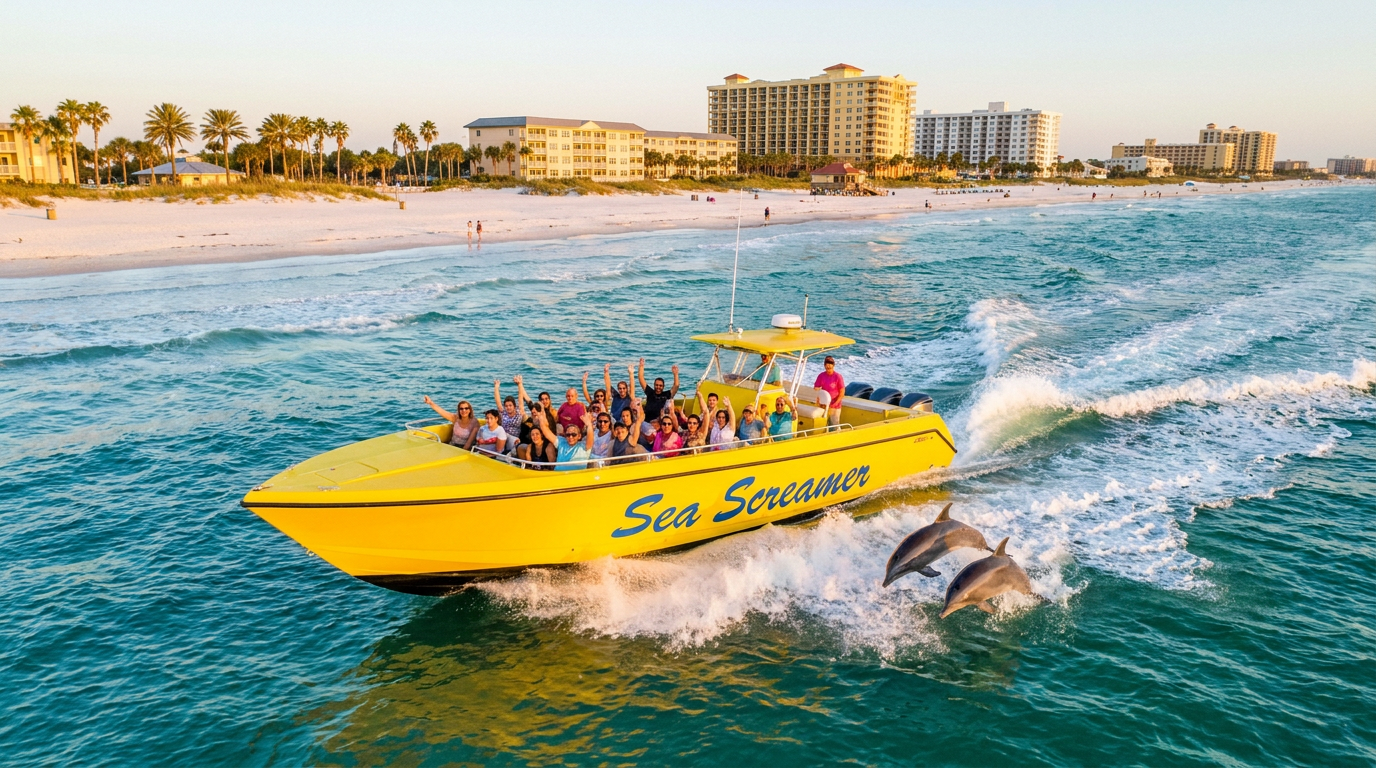
Over the dull thud of idling outboards, you hear a sea screamer clearwater beach vessel blast its horn near the commercial dock. The marina operates as a giant sorting mechanism, filtering tourists into different brackets of adrenaline tolerance.
The Mechanics Behind the Flight Deck
You walk down the sloped metal gangway to the parasail flight deck. I cannot prove this, but the captains sizing you up from the helm station know how your stomach handles motion sickness before you even speak. They read the tension in your shoulders. The thick braided towline sits spooled on a massive hydraulic winch at the stern. Its sharp, rhythmic clacking sets the tempo for the departure. This excursion is not a passive sightseeing float. It is a calculated exercise in marine towing.
The Deckhand Choreography
The crew communicates mostly through short hand gestures. The roar of the inboard diesel engine drowns out casual conversation. You watch the deckhand rig the sail using metal carabiners the size of your fist. They do not pause to explain the physics of the triple-stitched nylon harness. Their silent efficiency feels reassuring. If they look bored while snapping you into a rig that suspends weight 400 feet in the air, you are in safe hands.
Reading the Wind and Water
According to the Florida Fish and Wildlife Conservation Commission recreational boater guidelines, commercial operations in these nearshore limits must balance payload restrictions against shifting wind resistance. You sit on the molded fiberglass bench as the boat clears the breakwater. Salt spray coats your forearms quickly. A gritty, sticky layer of Gulf water settles on your skin that you will wear well into dinner. The vessel chokes back its throttle while the deckhand clips the primary securement line directly onto your chest rig.
Understanding the Flight Gear
A standard recreational harness distributes your body weight across thick webbing positioned under the thighs and around the waist. You step into it like a rigid pair of canvas overalls. The metal connection points feel cold against your collarbone. You do not hold on with your hands to stay aloft, though everyone grips the riser straps until their knuckles turn white anyway. Releasing your grip against every biological instinct requires deliberate effort. Once you pry your hands open and let your arms hang free, the true sensation of coasting sets in.
Trading Engine Noise for Altitude
The transition from deck to sky happens faster than the pre-flight briefing implies. The engine revs, the canopy behind you catches the coastal draft with a sharp crack, and you suddenly realize none of your mental preparation matters. I spent the morning planning how to handle the altitude, only to discover physics makes the decisions out here. You do not steer. You just let the parachute claim you. A dense, humid breeze shoves against your ribs, lifting you straight off the flight deck without a single jolt.
Finding Silence at 400 Feet
Exactly 400 feet of synthetic line separates the canopy from the transom of the boat. That is the only real measurement you get to keep. From that point on, distances become vague concepts. The boat below shrinks to a white sliver churning up a tiny ribbon of foam. Compared to the massive displacement wake dragged behind a sea screamer clearwater beach tour, the parasail vessel cuts a minimal, precise line through the water to maintain steady tension on the hydraulic drum.
Altitude changes the audio environment of the coast. Down at sea level, the Gulf is a chaotic wall of noise. You hear personal watercraft whining, waves slapping against aluminum hulls, and tourists yelling. Pass the hundred-foot mark, and someone mutes the world. All you hear is the hollow breathing of the parachute fabric and the wind sweeping past your ears. It is just a gut feeling, but the silence up there alters your perception of time.
The Overhead Vantage Point
Looking down at the barrier islands, the local geography finally makes sense. I go where the signage is poor and the locals eat, but sometimes you need an overhead vantage point to read the water currents. Off out to the north, the unmanicured edges of Caladesi Island bleed raw sand into the tide. Down south, the rigid concrete blocks of luxury resorts line up in uniform rows. You can spot the dark purple shadows of seagrass beds shifting beneath the shallow green water.
Spotting the Marine Highway
While suspended, you get an unprecedented view of the aquatic traffic beneath the surface. From a low-profile boat, dolphins appear as brief flashes of gray dorsal fins breaking the chop. From a canopy hanging high above the Gulf waters, you can watch entire pods coordinating their movements in real-time. The water acts as a magnifying glass.
According to tracking data published by marine research institutions, coastal bottlenose dolphins utilize the deeper channels cut by commercial traffic to conserve travel energy. You can trace their submerged paths as they trail behind the massive wakes of larger offshore boats. Research is my love language; reality is my ex. I expected to see a pristine, undisturbed marine ecosystem from the air. Instead, I saw nature actively exploiting human engineering. A school of tarpon waited near the fuel docks, feasting on bycatch dropped by returning fishing charters. Florida features several National Park Service — Florida locations that protect these critical habitats for local marine life.
The Tactical Dip and Recovery
The descent begins without warning. The captain taps the hydraulic release, and gravity reasserts its claim. Reeling you in requires precision throttle control. Most captains offer a tactical dip before securing you back to the platform. Your toes break the surface tension of the water. The Gulf is heavy, shocking your system with a sudden temperature drop before the winch locks and pulls you back into the dense Florida heat. Preservation of these waters is overseen by the Florida Department of Environmental Protection to ensure long-term health.
Getting wet is the point. Beige travel is a sin. If you demand a dry, predictable afternoon, you belong in a hotel lobby. The friction makes the ticket worth buying.
Booking Logistics That Actually Work
Securing your airtime requires actual strategy during the peak 2026 summer window. The glossy brochures tell everyone to come down whenever they have free time. The brochures lie. According to local NOAA National Weather Service — Florida aviation marine forecasts, the offshore thermal breezes stabilize primarily between mid-morning and noon. Afternoon slots introduce the unpredictability of coastal thunderstorms.
Lock in an early departure through a certified Visit Florida official tourism Travel Partner like Rockon Recreation Rentals. Let everybody else roast on the asphalt waiting for their afternoon sea screamer clearwater beach run to dodge the lightning delays. Morning flights offer clearer water visibility and zero weather anxiety.
Navigating the Parking Realities
Handling the Pier 60 parking lot demands more resilience than the actual flight. Do not fight a rented SUV for a metered space under the sun. The lot operates less like municipal infrastructure and more like an open combat zone. The smell of hot asphalt and burning brake pads hangs over the entrance queue.
According to the Pinellas Suncoast Transit Authority route maps, the Jolley Trolley drops you right at the marina crosswalk. Leave your car at a mainland garage, pay the minor fare, and step onto the docks without a blood pressure spike. You ride in an air-conditioned cabin instead of inching forward in a mile-long traffic snake over the Memorial Causeway.
The Return to the Concrete
You do not need a massive canvas beach tote for eighty minutes offshore. Boarding passengers routinely pack gear for a three-day survival expedition just to sit on a padded boat seat. Storage underneath the benches runs tight. Bring your sunglasses with a retention strap, a physical ID, and a smartphone inside a waterproof sleeve. Anything else becomes a tripping hazard once the vessel clears the no-wake zone.
The final approach brings you standing up, straight onto the stern deck. Your inner ear takes a good twenty minutes to figure out you are back on solid materials. The walk up the wooden ramp toward the street feels heavier than the walk down. Somebody tries to hand you a memory card full of digital photos of yourself dangling in the sky. You wipe the dried salt off your eyelashes. A street vendor up the block sells chilled lemon water that tastes like salvation.
Plan your trip: Ready to experience this firsthand? Book Clearwater Beach Parasailing Experience directly through our marketplace.