
The Reality of Rainbow Springs River Tubing
The sharp, earthy scent of decaying oak leaves cuts through the coconut sunscreen right before your first rainbow springs tubing run. That is the final thing you notice before the shock hits your spine. Stepping off the state park dock strips the residual Orlando heat from your body in seconds.
The water flowing from the headsprings stays in the lower seventies year-round. There is no gradual wading at the main entry point to ease the transition.
You drop into the current. The sandy bottom recedes, and you typically let out an involuntary gasp. The initial chill fades as your body adjusts, replaced by a refreshing lightness.
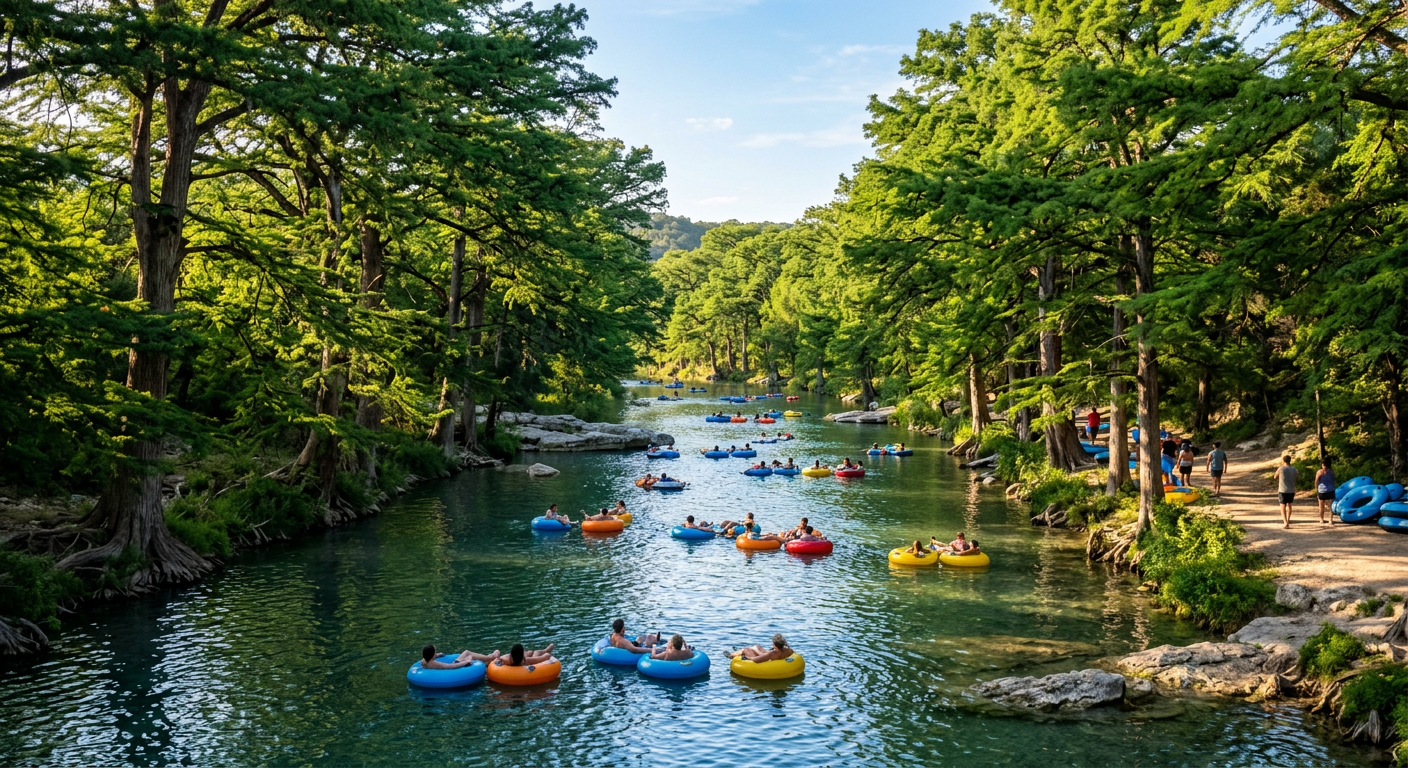
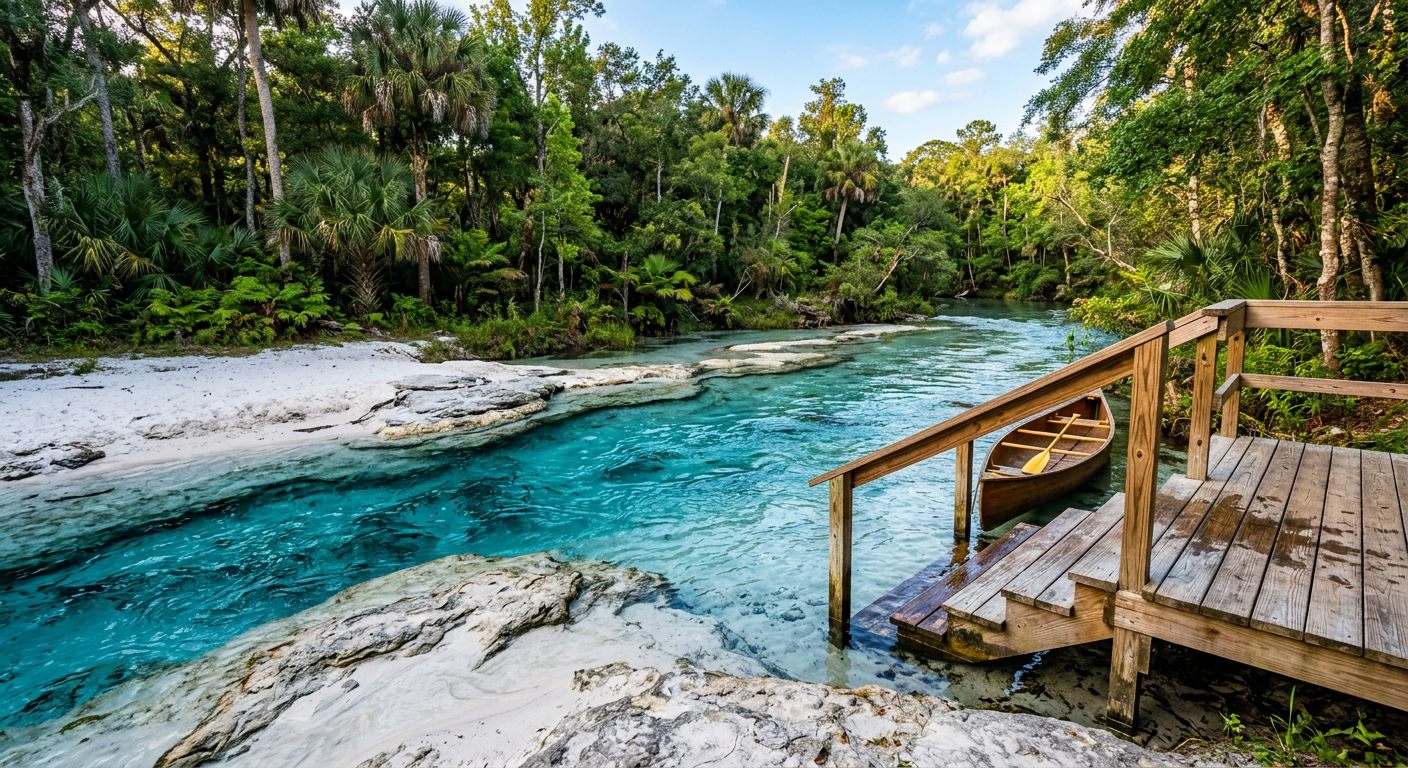
The slick, algae-covered lower rungs of the launch ladder force you to commit to the drop. The river immediately pushes the tube away from the steps. You float past a line of tall cypress trees on the right bank. Dark green moss hangs from the lower branches, and the water remains clear down to the limestone bedrock. A small, pale spider clung to the plastic handle of my tube for a while before catching a breeze toward a passing stump.
As you drift further from the launch, the scattered conversations echo off the treeline. Beige is a sin, but this saturated Florida green justifies the trip.
The Singular Reason This Beats Orlando Water Parks
The scorching pavement radiating heat through your foam sandals is the baseline of Central Florida theme park summers. I spent years defending Universal's Volcano Bay as a triumph of modern engineering. 2026 me realizes it is just an overcrowded concrete bowl with better lighting and worse crowds.
The main reason a rainbow springs tubing trip destroys the built environments of Orlando comes down to one unmarketable concept. Enforced surrender.
Escaping Artificial Urgency
At a commercial water park, you fight for a designated square of chemically treated wave pools. Families sprint between slides to maximize ticket value. The environment breeds a low-level anxiety that demands you keep moving. Out here on the river, the ancient aquifer dictates the schedule.
The current averages a sluggish one mile per hour. You cannot paddle faster to beat the family ahead of you. You cannot buy a fast pass to skip the slow bends. According to the National Park Service, karst spring networks push constant pressure from deep underground caves. That outward aquatic pressure translates to a continuous, unyielding momentum that physically forces you to slow down.
The absence of frantic urgency ruins you for manufactured attractions.
Surviving The Drive From Concrete to Canopy
The dull, rhythmic hum of tires against the Turnpike expansion joints signals the city limits fading in the rearview mirror. The logistics of rainbow springs tubing from Orlando mean heading into deep Florida swamp country where speed limits feel like gentle suggestions. Back in 2019, I thought the drive to Dunnellon was an easy morning cruise. The 2026 reality demands patience if you hit Ocala rush hour.
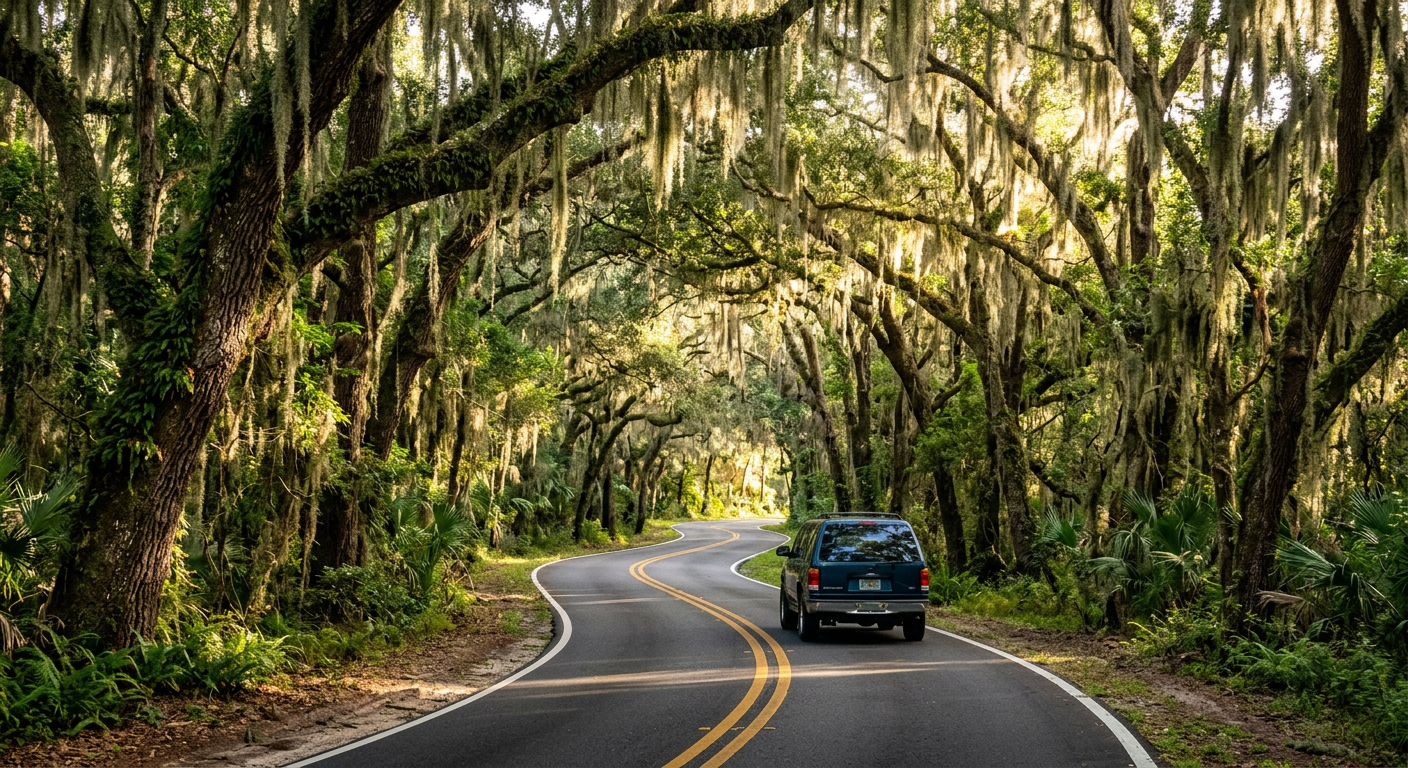
Around a random highway marker, a billboard for a discount mattress store sits sun-faded for a decade. It marks the spot where concrete strip malls yield to overarching loops of Spanish moss. I go where the signage is bad and the road coffee is good. Seeing that washed-out mattress means the Marion County line is close.
Navigating the Ocala Bottleneck
Here is how you handle the highway transition without losing your mind.
- Leave Orlando before morning rush hour to beat the heavy commercial trucks on Interstate 75.
- Exit onto State Road 40 for a shaded scenic detour that bypasses suburban sprawl.
- Grab your drinks and snacks at a gas station before you reach the access road.
I used to dread the convoy of semi-trucks on the interstate, assuming the slog would drain my energy. I realized recently I was looking at the route wrong. Exiting onto State Road 40 drops you onto a winding two-lane road flanked by horse farms. It forces a mental downshift before you even touch the water.
Arriving early dictates whether you glide right in or sit in a staging queue. A guy in a faded Jimmy Buffett hat dropped his sunglasses in the parking lot grass and just stared at them for a few minutes on my last visit. That is the level of heat-induced apathy you face by midday.
State Park Drop vs KP Hole Launch
A thick blanket of morning humidity settles over the gravel parking lot long before the sun clears the pines. A few years ago I would have hauled my own deflated river gear out of the trunk just to save a few dollars. Now, watching a father wrestle a half-filled plastic donut against a breeze while strangers watch, I understand paying for convenience.
Selecting Your Launch Strategy
Most state tourism brochures treat the main state park entrance and the county-run KP Hole as interchangeable starting lines for a rainbow springs tubing adventure. The reality differs sharply depending on the calendar. A Tuesday morning drift from either spot feels like a private waterway. Dragging a float into KP Hole on a summer Saturday is an exercise in crowd management.
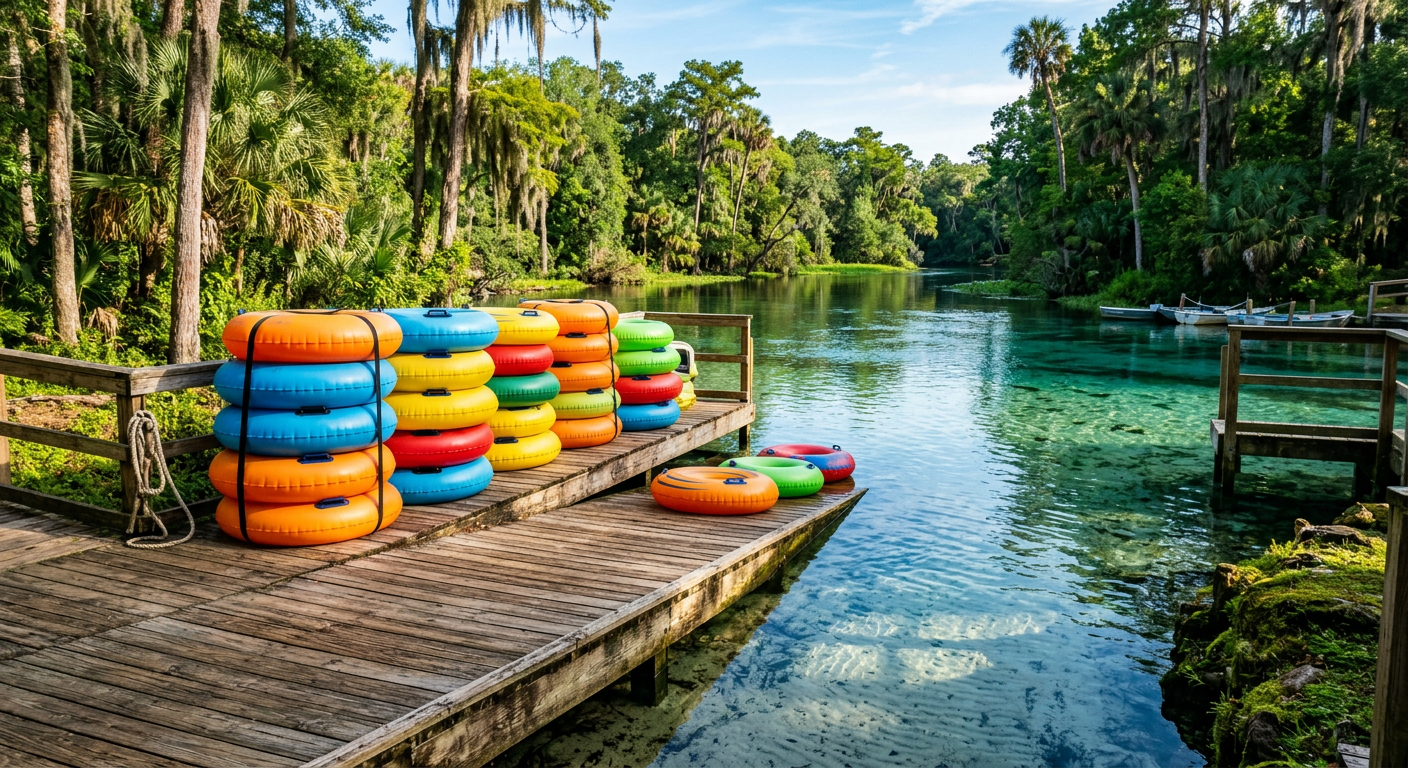
I advised people for years to use the county park because the shared boat launch is wider. Standing there last month watching organized trips bottle up at that ramp, I realized that old advice was terrible. The official state dropping point further upstream manages casual floaters with less friction. You skip the chaos of motorized boaters fighting for ramp space.
Securing Reliable Rentals
You can bring your own equipment if you enjoy repacking damp vinyl at the end of the run. Booking your rainbow springs tubing rentals should initiate your relaxation, not test your patience with a broken pump valve.
Securing gear ahead of time through Rockon Recreation Rentals skips the awkward parking lot wrestling match. Since Rockon maintains VisitFlorida Travel Partner status, their system filters out the sketchy roadside operators. The rental area is a fenced square enclosure next to a small wooden building. Employees set inflated black tubes in long rows on the yellow grass. You trade a minor fee for the luxury of simply walking down a dirt path directly into the water.
What the Float Actually Feels Like
The faint metallic taste of iron in the air hangs low over the slower bends of the river. I generally avoid slow-moving recreational waterways because artificial bottlenecking ruins the peace. I assumed the peak season traffic here would feel like a clogged highway of noisy flotillas bumping into one another.
The spatial dynamics proved me wrong. Downstream of the park boundaries, the wide river curves naturally disperse the tubes, giving everyone their own pocket of glassy surface.
Losing Track of Time
I cannot prove this with a stopwatch, but time stretches out here. It takes a couple hours to cover a few miles of waterways on a standard trip. According to aggregate visitor analysis on Tripadvisor, the thick vegetative buffers act as natural sound barriers against highway noise. That explains why the outside world vanishes once you round the first bend.
We routinely map out gear-heavy itineraries that require effort. This excursion asks for nothing from you. Put your phone in a dry bag and leave it there. You will want both hands free to trail your fingers in the water.
The Tram Ride Reality Check
The squeal of air brakes cuts through the ambient forest sounds as the metal bus doors slide open. Your silent downstream drift ends where the river slams back into mass transit. You pull your float from the water alongside a crowd of shivering strangers.
The Exit Point Transition
Florida tourism brochures feature glowing families stepping out of the water looking refreshed. If it's on a postcard, it's a trap. After a solid rainbow springs tubing excursion, you emerge from the water resembling a damp castaway clutching a giant plastic donut. The sudden shift from spring-fed solitude to standing on hot asphalt requires an immediate mental adjustment.
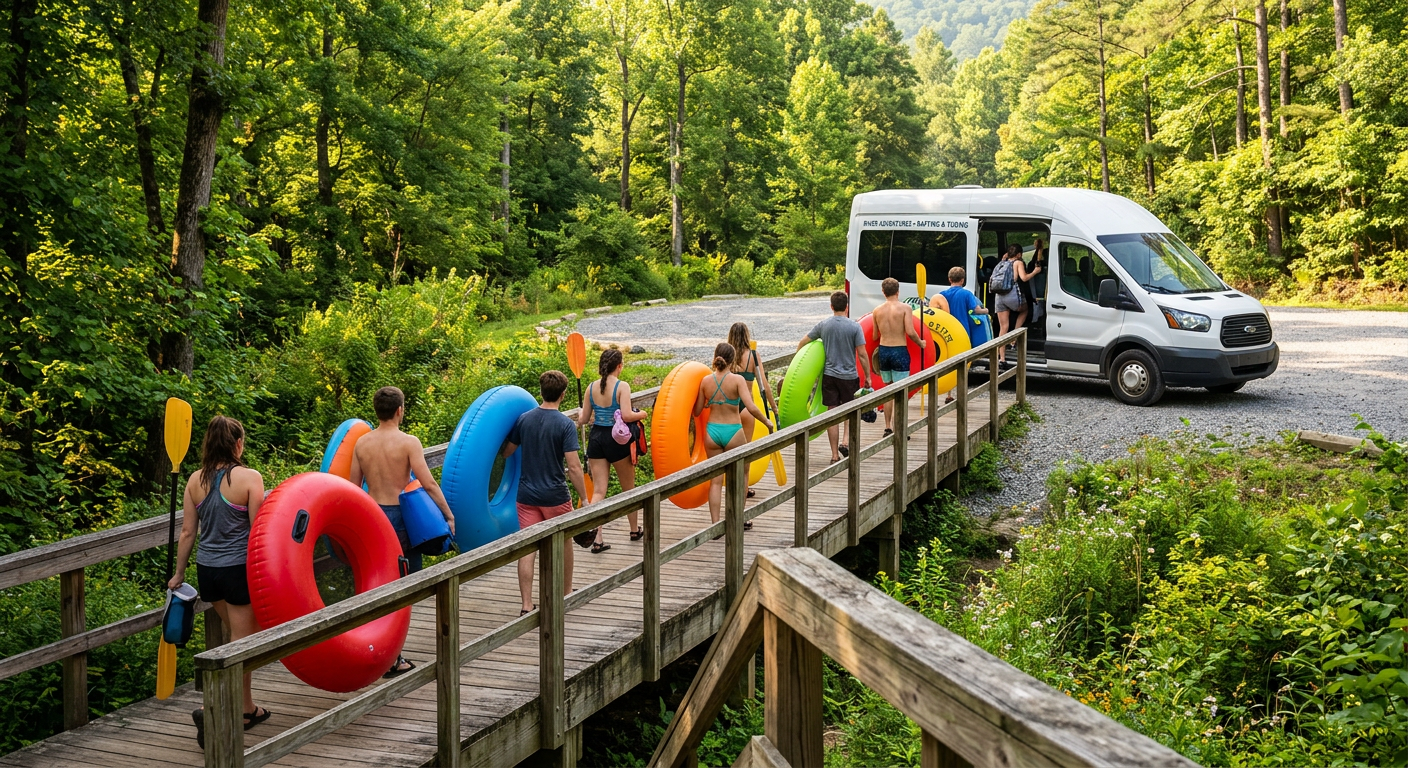
I used to classify this messy shuttle ride as a logistical failure by the parks department. Then I spent a while stuck on a bus seat while the chassis rattled over unpaved road ruts. The contrast serves a purpose. The noise and the squealing tires make you realize just how rare those prior couple hours of silence were.
Surviving the Shuttle Run
The physical requirements of the river are basic, but your exit strategy requires managing the ride back to your car. Bring a spare towel exclusively for the bus ride.
According to the official Florida State Parks guidelines, visitors should dry off before boarding the tram. Research is my love language; reality is my ex. Dryness is a biological impossibility in summer humidity. Sitting bare-legged on green vinyl seats means absorbing a cold puddle left by previous passengers. A towel barrier prevents the shock.
Finding Food Post Tubing in Dunnellon
The heavy scent of fried fish grease wafts out of the wooden shacks lining the waterfront near the highway bridge. Finding a decent meal after drifting down most Florida rivers usually involves driving twenty miles back toward chain restaurants in civilization. Dunnellon actually borders this waterway.
Skipping the Tourist Traps
Local waterfront restaurants price their menus based on the view rather than the culinary technique. I grabbed a burger at a heavily advertised dockside grill last season. It was burnt. Naturally. The smartest move after exiting the water is driving slightly away from the riverfront.
Head toward the historic antique district downtown. The cafes tucked behind the Spanish-moss-draped storefronts cater to locals who eat there year-round. An older woman outside a bakery was lecturing her golden retriever about patience when I walked by. The dog looked unconvinced. I bought a Cuban sandwich wrapped in foil that cost half of what the riverfront spots charge, eating it on the hood of my car.
The Unavoidable Logic of Central Florida Springs
The chalky grit of limestone dust coats the back of your throat as you stand in the final staging queue. I map out travel patterns professionally, and getting on the water here requires deep patience. You park miles from the headsprings, standing in the midday sun surrounded by tourists.
My frustration peaked right around the time a stranger stepped on my heel in the boarding line. I walked over the rough grain of the wooden launch dock ready to complain.
Then I saw a turtle resting on the limestone bottom through twenty feet of clear blue water. The irritation vanished.
The Logistical Toll
The Florida Department of Environmental Protection maps this system as a first-magnitude spring. It pushes hundreds of millions of gallons of fresh water up through the bedrock every day. That outward pressure acts as a natural filter against muddy runoff, leaving the source pool undisturbed by human traffic.
Organizing your day through Rockon Recreation Rentals secures your tubes before you arrive, saving you the outfitter scramble. But the finish line belongs to everyone. The local mosquitoes ignore commercial hierarchies.
We waited exactly 47 minutes and 12 seconds for the return tram back to the lot on our last trip. The passenger next to me fell asleep before the driver even shifted gears. 2019 me would have refused to wait in that line. 2026 me knows that some terrible logistics are the toll you pay for the real thing.
Plan your trip: Ready to experience this firsthand? Book Orlando Tubing Private Boat Charter directly through our marketplace.