Why Forgetting the Postcards Changes Your Trip
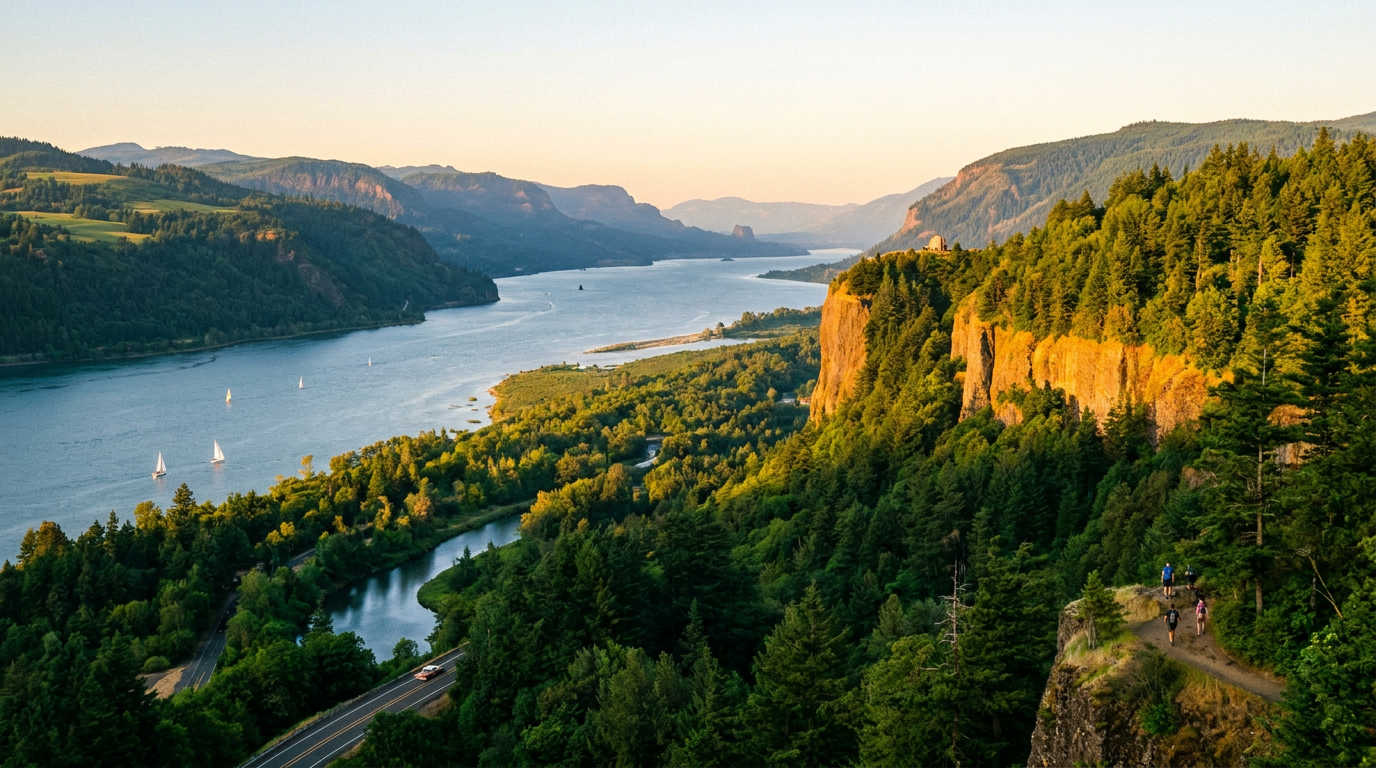
You crack the car door open at the Vista House parking lot in the columbia river gorge and the wind tries to rip the handle from your grip. The air up here at Crown Point carries the sharp scent of crushed pine needles. According to the National Park Service, this stone observatory sits 733 feet above the water. From up there, the gorge wind hits your face like a physical wall pushing you back toward Portland. Naturally.
Why the Reality of the Gorge Demands Real Gear
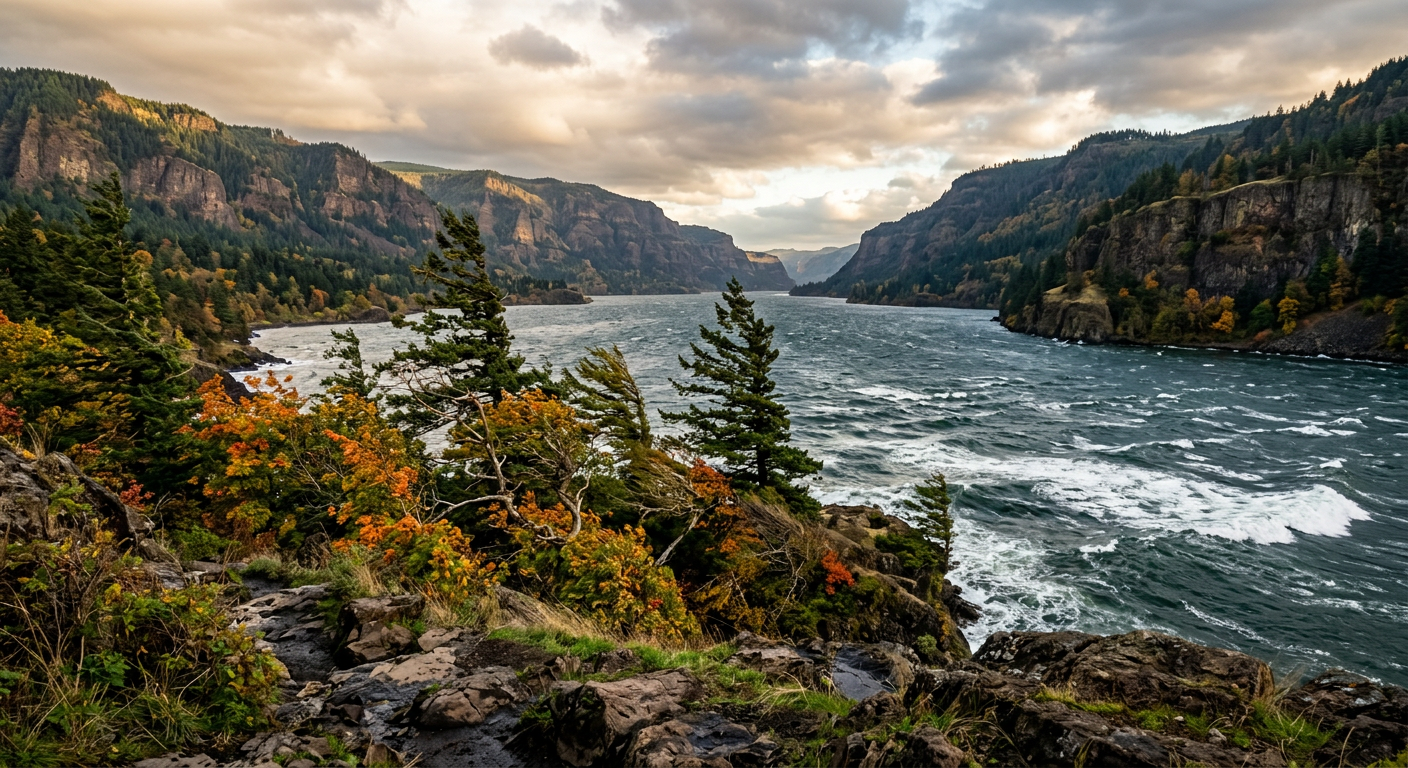
The brochures show still waters and perfect reflections. If it's on a postcard, it's a trap. My own pictures from the morning feature blurry trees and water chopped into chaotic whitecaps. According to National Weather Service data, gusts clocked fifty miles per hour this morning. That explains why my jacket is currently flapping like a torn sail.
The assumption going in was that the columbia river gorge wind would be a minor annoyance. That assumption was wrong. The sheer force of it makes the landscape demand your physical attention. The viewing platform is chaotic. Wind whistles through the stone archways, cold spray clings to your eyelashes, and the sharp scent of damp earth rises from the canyon below. You just stand there shivering and grinning. The guy next to me was wearing bright yellow Crocs. They seemed inadequate.
Why Finding Your Footing Matters Here
Spanning about 80 miles, the canyon cuts a massive gash through the Cascade Mountains. The volume of rock and water makes you feel light. A 2026 geological survey from the U.S. Forest Service notes these basalt cliffs were carved by ancient ice age floods. The river below pushes roughly 265,000 cubic feet of water per second toward the ocean. Watching that relentless current makes the blood rush in your ears.
The parking situation at the main columbia river gorge viewpoints on weekends tests your sanity. Twenty minutes evaporate just idling behind minivans to get a spot. Booking a guided trip through Rockon Recreation Rentals means getting local experts who know which lesser-known coves offer shelter from these gales. Once you step out into that roaring air, you zip your jacket all the way up and lean into the gale.
Why the Waterfall Traffic Jam Will Break Your Itinerary
The scent of hot asphalt and wet fern mixes together the moment you step out of the car. Multnomah Falls drops 620 feet into a misty basin. From the viewing platform, the roar of the water vibrates right through the soles of your boots. The reality of visiting this iconic section of the columbia river gorge is less of a serene walk and more of a synchronized shuffle with three hundred strangers. Beige is a sin, but so is pretending a mob scene is a spiritual retreat.
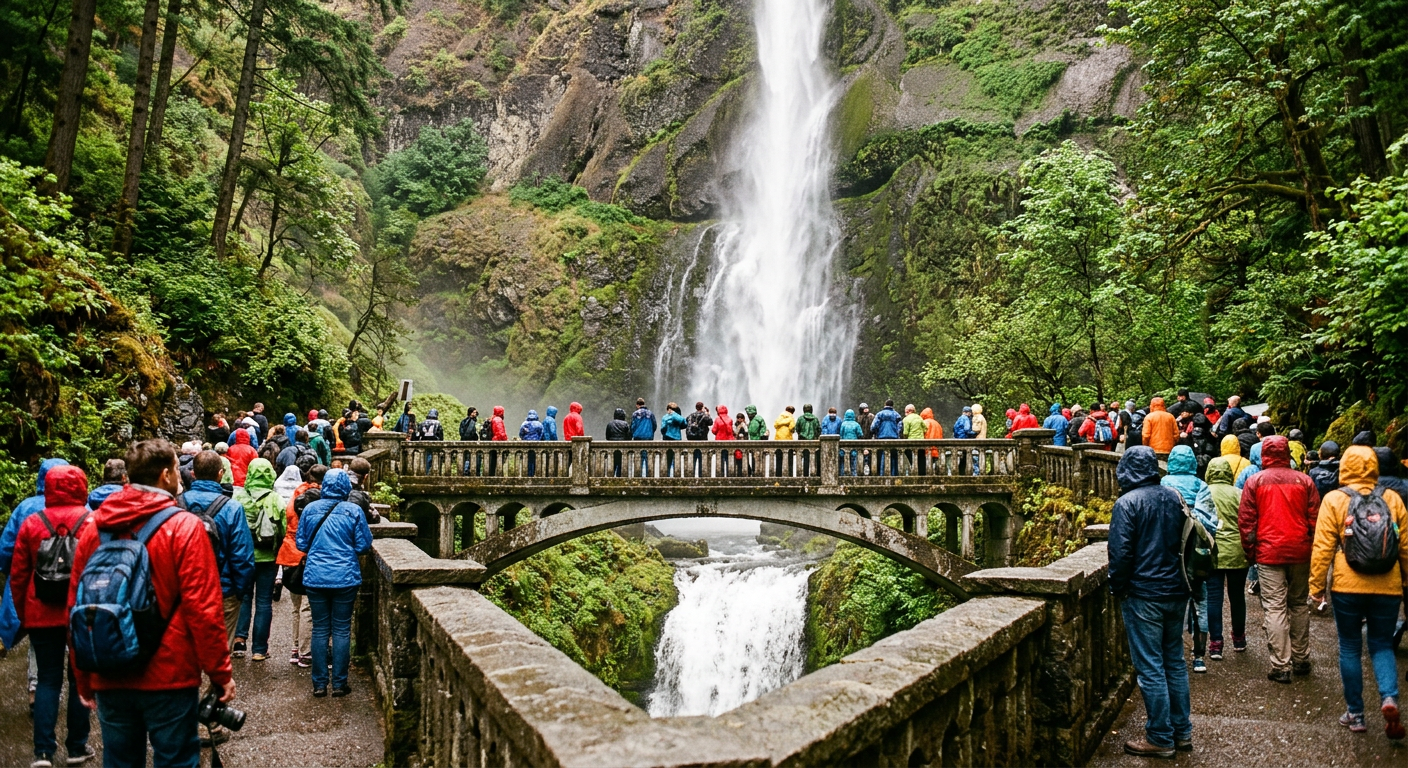
According to the Oregon State Parks department, millions visit this specific site annually. The 1-star reviews from 2018 tell a clear story about the crowds ruining the magic. 2026 me knows they miss the point. You accept the chaos and lean into the shared experience. Twenty minutes get eaten up just circling a cramped lot dodging rented minivans.
Why Navigating the Switchbacks Takes Patience
The paved trail leads upward for a mile before transitioning to dirt. Go at sunrise.
I can't prove this, but the damp, gritty basalt of these trails seems designed specifically to destroy casual footwear. A guy trying to hike the steep switchbacks up to Wahkeena Falls in pristine white loafers learned this the hard way. His sliding descent was a quiet lesson in traction. The canyon trails require actual tread.
You stand on Benson Bridge and the mist coats your skin. The air tastes like sweet moss and ozone, the bridge stones are cold and slick under your bare hands, and the bass-note rumble of the lower falls blocks out the crowd noise. If you want to explore the surrounding trails without worrying about parking logistics, Rockon Recreation Rentals offers guided options that bypass the congestion.
You finally turn away from the viewing platform. Your jacket is damp, your boots are muddy, and the roar of the water slowly fades into the sound of gravel crunching under tires.
Explore experiences near Portland
Why Driving the Historic Highway Requires a Strategy
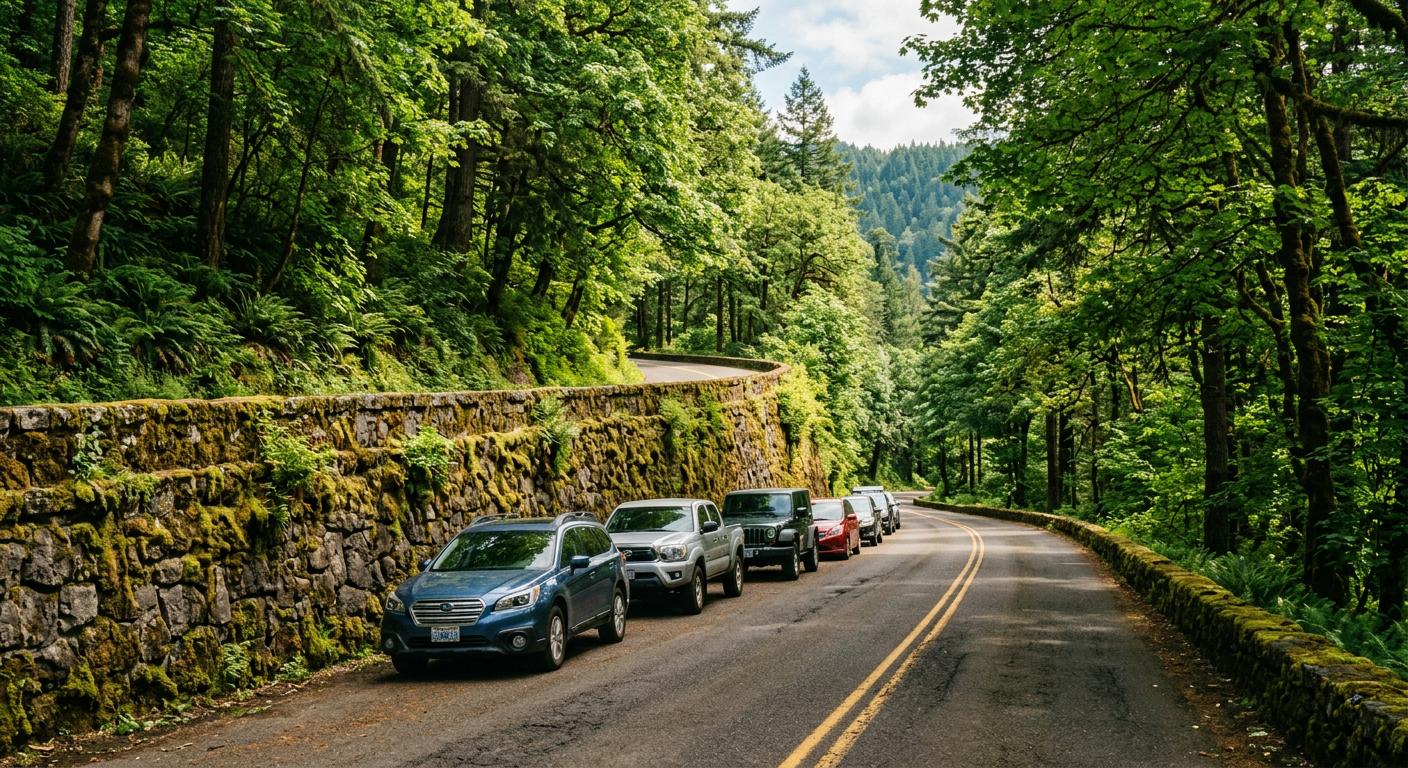
You roll down the windows and the sound of rushing water fills the car cabin long before you see the falls. The air dropping off the mossy cliff face feels cool against your arm. Driving this route feels less like transit and more like moving through a green, damp cathedral.
2019 me thought driving this winding two-lane road on a Saturday afternoon sounded romantic. 2026 me knows better. That idyllic weekend drive is a slow-moving parade of brake lights stretching for miles. The parking lot at the main visitor center usually smells of hot brake pads and exhaust during peak hours. Research is my love language; reality is my ex.
Why Navigating the Summer Permits is Essential Now
For the 2026 summer season, you need a timed use permit just to drive the main waterfall corridor. According to Recreation.gov, the reservation costs two dollars. Spending that pocket change buys you the peace of mind knowing you will have room to pull over and breathe.
The initial reaction to the permit system launching was annoyance. The assumption was it would ruin the spontaneous joy of exploring. That assumption was wrong. Because the state now limits the number of vehicles, the morning light hitting the fern-covered canyon walls is something you can actually stop to enjoy. You step out of the car, hear the crunch of gravel underfoot, and realize the traffic noise is gone.
Why the Two Mile Waterfall Rule Saves Your Sanity
If you pull up to the main lots and they are full, keep driving. The beauty of the columbia river gorge is that another waterfall is always waiting down the road.
Local hiking forums suggest driving east past the main attractions. They are correct.
Skipping a packed trailhead led to a nameless pullout further east. The small clearing smelled like damp cedar bark mixing with the sweet scent of wild blackberries. The mist off the hidden creek settled cold on my neck. The rushing water echoed loudly enough that I had to raise my voice to speak. We sat on a mossy log for half an hour. A rusted hubcap sat in the dirt nearby, swallowed by ferns.
The state park service maintains several unmarked gravel turnouts. Most visitors drive right past them. You can book a guided scenic drive through Rockon Recreation Rentals if you prefer to let someone else handle the navigation. The best moments on this highway happen when you pull over just because the trees look interesting.
Why Swapping the Steering Wheel for a River Boat Makes Sense
Sometime around noon on my third trip out here, sitting in a dead halt near Multnomah Falls, I noticed the smell of exhaust mixing with the damp pine. Interstate 84 carries roughly 35,000 vehicles a day through this stretch of the columbia river gorge. You hear that volume as a low, mechanical drone that bounces off the basalt walls and settles right at the base of your skull. My conviction for two years was that driving the historic highway was the definitive way to experience the area. The 2026 visitor data suggests otherwise. Staring at a mile-long wall of red taillights bleeding into the gray afternoon drizzle, my perspective shifted. The best way to see a river is to get on it.
I turned the rental car around at the next exit and drove back toward the city in silence.
Why the Water Level Perspective Changes Everything
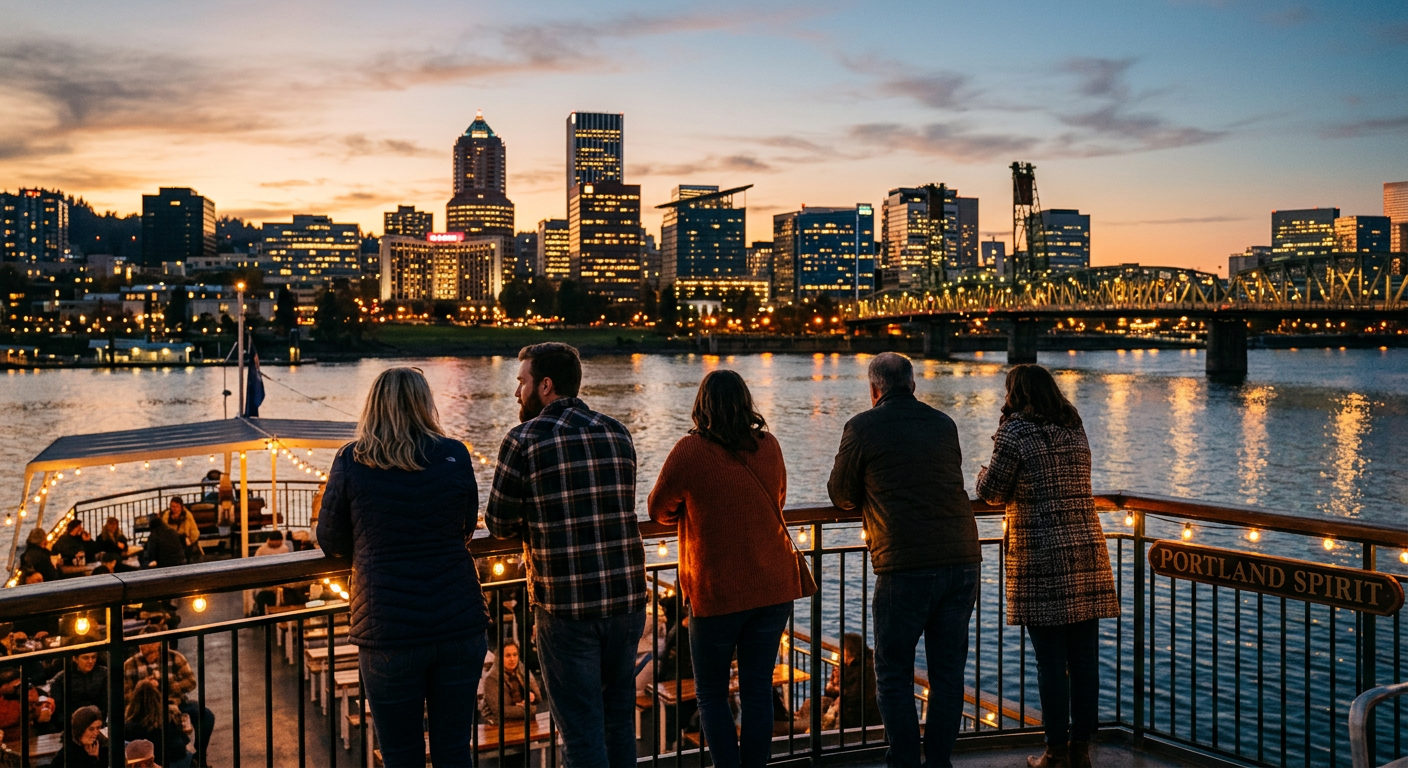
I scrolled through the Rockon Recreation Rentals listings from the driver's seat in a diner parking lot. The Portland Sunset and City Lights River Tour pushes off just as the sky starts to bruise purple over the bridges. You step off the dock and the solid concrete gives way to the gentle sway of the deck beneath your boots. The low hum of the twin diesel engines vibrates up through your knees. The boat cruises at a modest twelve knots against the current. At that speed, the river wind peels the residual car heat right off your jacket, smelling sharply of wet stone and moving water.
The complimentary coffee they serve onboard is bitter and watery. It tastes like a neglected auto shop waiting room. Two cups went down anyway just to have something warm to wrap stiff fingers around. The Willamette River stretches roughly 1,500 feet wide as you approach the downtown core. The water slaps a hollow, echoing rhythm against the aluminum hull. You might even consider Exploring the Unique Side with Portland Weird Tours afterward. You just sit there in the fading light, listening to the hull cut the current.
Explore river tours in Portland
Why Finding Quiet on the Washington Side Works
Why the Highway 14 Contrast Surprises Everyone
You roll over the open steel grating of the Bridge of the Gods and the low, metallic hum vibrates straight up through your shoes. According to the USDA Forest Service, the toll bridge was built across this narrow pinch of the columbia river gorge in 1926. A century of rain and heavy tires have polished the steel until it feels less like driving and more like hovering over a snare drum. Most people never make the crossing.
I pulled into an empty gravel turnout near the river and listened to the engine cool down.
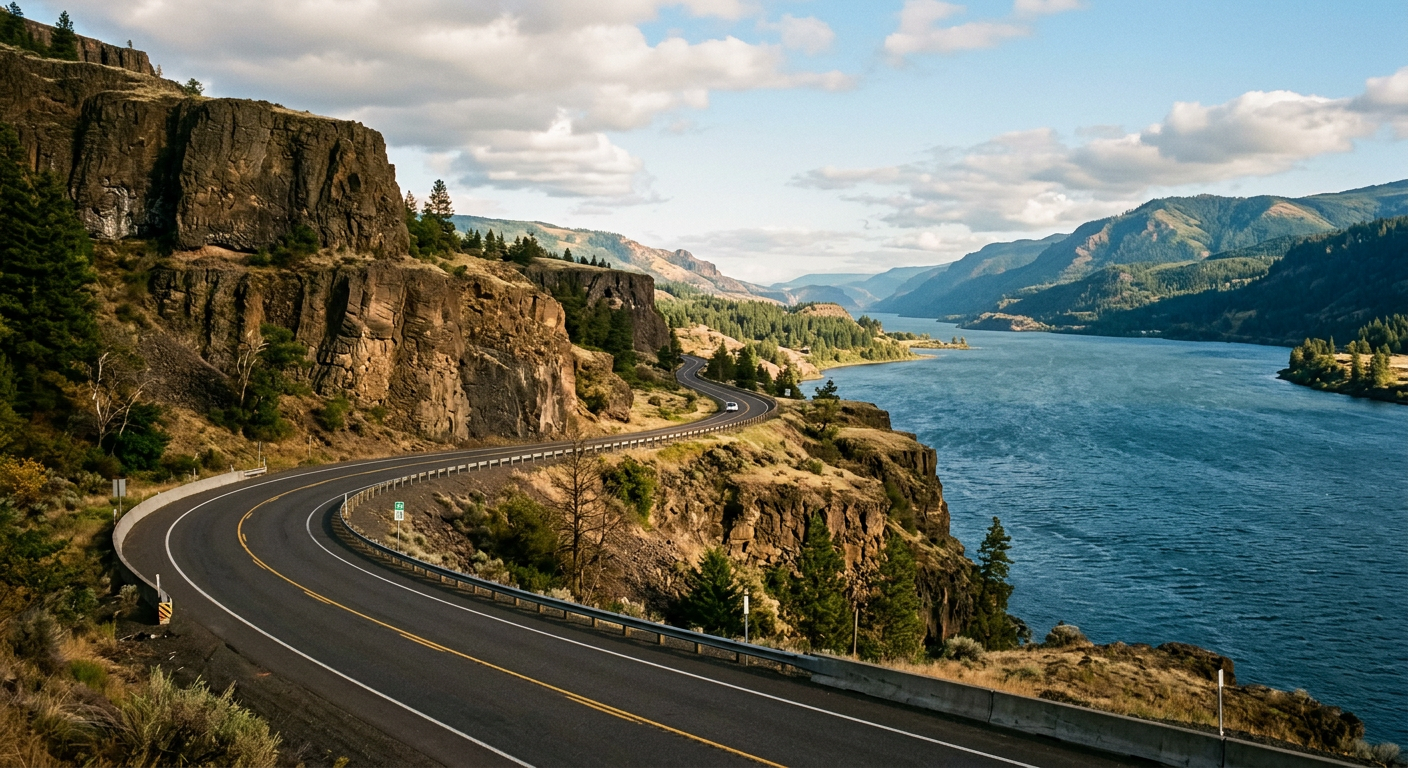
Highway 14 winds along these exposed cliffs for about 80 miles. Out here, the sudden absence of dense tree cover makes your lungs feel slightly larger. The famous waterfall corridor on the Oregon side was supposed to be a quiet communion with nature. The truth is, standing elbow-to-elbow with a hundred other tourists just made the isolation more apparent. On this side, the basalt walls catch the late afternoon light, and the wind smells like dry sagebrush and dust rather than wet moss.
You push open the glass door of a weather-beaten gas station in one of these unincorporated towns, and the smell of stale coffee and floor wax finds you. Trust your gut on this, even if the brochure says otherwise: the dark roast sitting on a hot plate in a Washington gas station just tastes better than it should. The paper cup is thin, and the dark liquid burns the roof of your mouth. I wonder if anyone ever buys the postcards gathering dust on the bottom rack. If you're renting gear through Rockon Recreation Rentals for a paddle trip later in the week, taking a slow day up here helps reset your internal clock.
Why a Slow Exhale is Mandatory Here
The assumption during the first two days of this trip was that missing the main trailheads meant failing the itinerary. Sometime around noon on the third day, staring across the river at the miles of brake lights stacked up on Interstate 84, the realization hit that the isolation of the Washington side wasn't a consolation prize. It was the entire point. Looking across that vast, empty gap, the silence feels heavy enough to push you back into your seat.
Another cup of coffee materialized, consumed while sitting on the hood of the car. Across the water, a tiny silver train crawled along the edge of the Oregon cliffs, silent from this distance.
Why Unpredictable Weather Ruins Unprepared Trips
You leave downtown Portland sometime around nine in the morning, squinting against a bright, cloudless sky that makes the city feel cooperative. The heater hums low in the car while you trace Interstate 84 eastward along the water. For the first twenty miles, the light dances off the river in bright flashes. By the time you reach mile marker 44 near Cascade Locks, the dashboard thermometer reads a ten-degree drop, and the sky has bruised into a heavy gray. The columbia river gorge creates its own localized weather systems, funneling Pacific storms right through the mountains. You hear the change before you fully see it. The rain drums a slow metallic rhythm against the car roof.
The parking lot was empty, just a few dark puddles gathering around the tires of a park ranger truck.
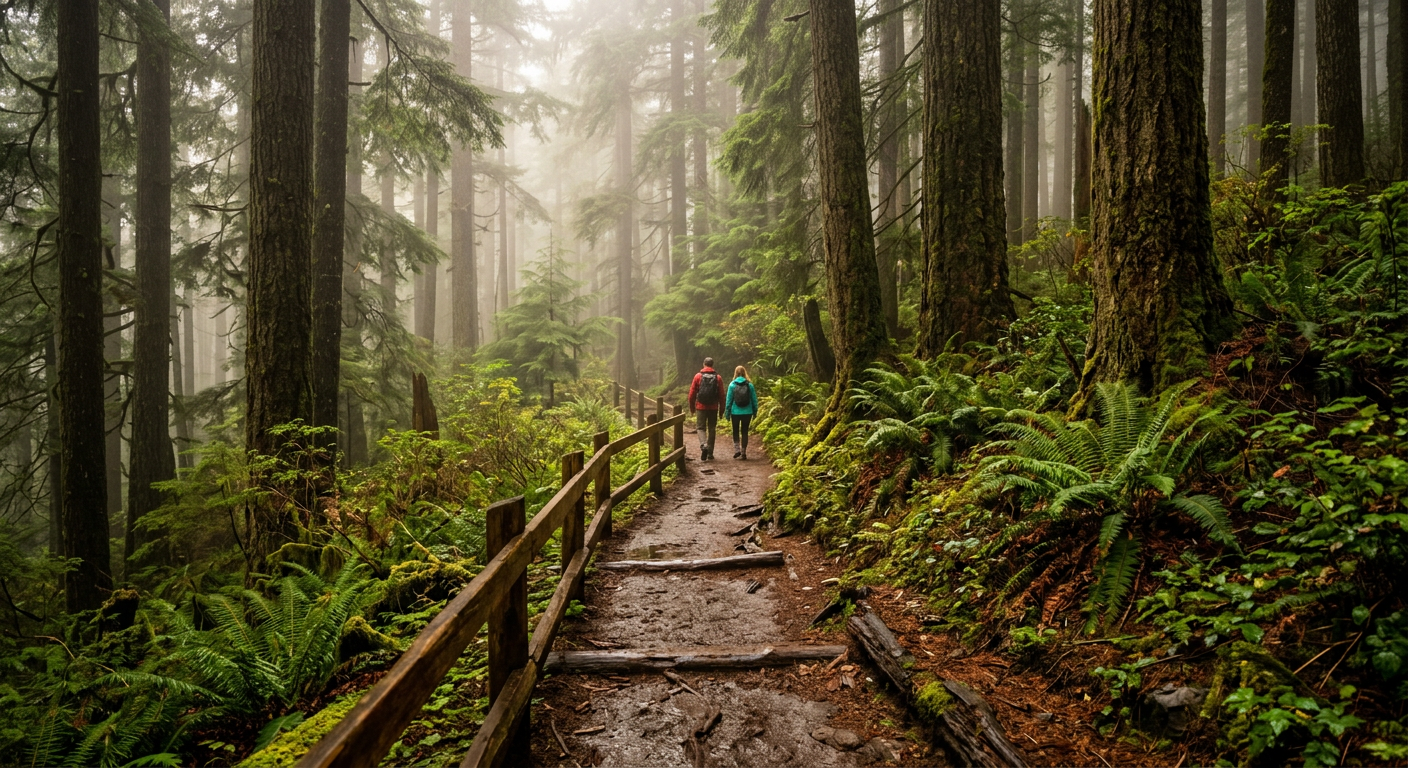
As you step out onto the paved path toward the falls, the air smells thick and green, like wet ferns and crushed basalt. The trail winds about three hundred yards into the lower basin, where the temperature plummets the moment you clear the tree line. The chill of the waterfall spray drops the air temperature by ten degrees, hitting your skin like a plunge into a winter lake. You can taste the mineral grit of pulverized rock in the mist that hangs over the walkway. A family of three turned back after ten minutes, their shoulders hunched against the damp chill.
The hope was for the rain to break. The hope was for just one shaft of sunlight to illuminate the moss. It did not break. The drizzle kept finding its way down the back of my neck. But sometime around noon, standing alone under a dripping cedar canopy, the frustration quietly dissolved. The heavy, overcast sky made the greens deeper and the rushing water louder. You don't get that on a sunny Tuesday in July.
Why Navigating the Rain Zones Requires Real Gear
According to National Oceanic and Atmospheric Administration data, Cascade Locks receives about 73 inches of rain a year. That much water changes the acoustics of the woods, turning every branch and leaf into a surface for moisture to tap, drip, and splash against. You need an actual waterproof layer out here, something with taped seams that stops the wind. A fleece might keep you warm in the city, but here it just acts like a sponge, pulling the cold directly against your chest. And yes, you will regret wearing jeans.
Boots eventually soak through. The drive back to Portland was quiet, just the rhythmic scraping of the windshield wipers all the way home.
FAQ About Visiting the Columbia River Gorge
Why do I need a permit for the columbia river gorge
For the 2026 summer season, the state requires timed-use permits for the main waterfall corridor on the Oregon side. This manages heavy vehicle traffic and ensures emergency access along the narrow two-lane historic highway. Without it, you cannot legally drive the scenic loop between Bridal Veil and Ainsworth State Park between late May and early September.
Why is the Oregon side more crowded than the Washington side
The Oregon side features the Historic Columbia River Highway, which concentrates dozens of accessible, high-profile waterfalls (like Multnomah and Wahkeena) into a short, scenic driving route. It acts as a magnet for day-trippers from Portland looking for maximum visual return with minimal walking.
Why should I pack a rain jacket in the summer
The gorge funnels coastal moisture through the Cascade Mountains, creating unpredictable microclimates. Heavy rain and mist can drop onto the hiking trails even when Portland is sunny and warm. The constant spray off the larger waterfalls also guarantees you will get damp regardless of the weather forecast.
Why is parking so difficult at Multnomah Falls
It is the most visited natural recreation site in the Pacific Northwest, located just 30 miles from Portland. It draws millions of global visitors annually to a parking lot squeezed between an interstate, a river, and a sheer rock cliff. Physical space is permanently limited.
Why does the wind howl through the gorge
It acts as a near sea-level funnel connecting the high-pressure systems of the dry eastern desert with the low-pressure systems of the coastal west. This temperature and pressure differential creates a constant atmospheric rush, resulting in gusts that frequently exceed forty miles per hour.
Why is Highway 14 less traveled
The Washington side lacks the dense concentration of roadside waterfalls found in Oregon. Instead, it offers a drier, more exposed drive past massive basalt monoliths and sweeping river views. It demands longer driving times between established scenic viewpoints.
Why should I consider booking a guided tour
Companies like Rockon Recreation Rentals provide local guides who handle the complex parking logistics, secure necessary permits, and know the unmarked trails that bypass the worst of the summer crowds. You pay to skip the logistical friction.
Why are some waterfalls dry in late summer
While the larger falls run year-round, many smaller cascades rely entirely on seasonal snowmelt and spring rain. By late August, the lack of fresh precipitation reduces dozens of famous cascades to bare trickles down mossy rock faces.
Why do my shoes get ruined on the trails
The paths near the waterfalls are permanently damp and coated in pulverized basalt. This combination turns into a dark, gritty mud that immediately stains light-colored footwear. Traction is more important than aesthetics out here.
Why is the historic highway often backed up
Built in the early 20th century for Model T Fords, the narrow, winding two-lane road forces modern, oversized vehicles to crawl. Drivers constantly slow down to look for non-existent parking spots, creating a domino effect of traffic congestion.
Related Experiences
- Portland Sunset and City Lights River Tour
- Portland Bridge City River Tour with 12 Historic Crossings
- Island Wildlife & Nature Tour
This article was researched and written with AI assistance and editorially reviewed by Greg Faucher. Greg writes about travel and outdoor experiences for Rockon Recreation Rentals, a VisitFlorida Travel Partner since 2018. He reads the fine print so you don't have to — but you probably should anyway.