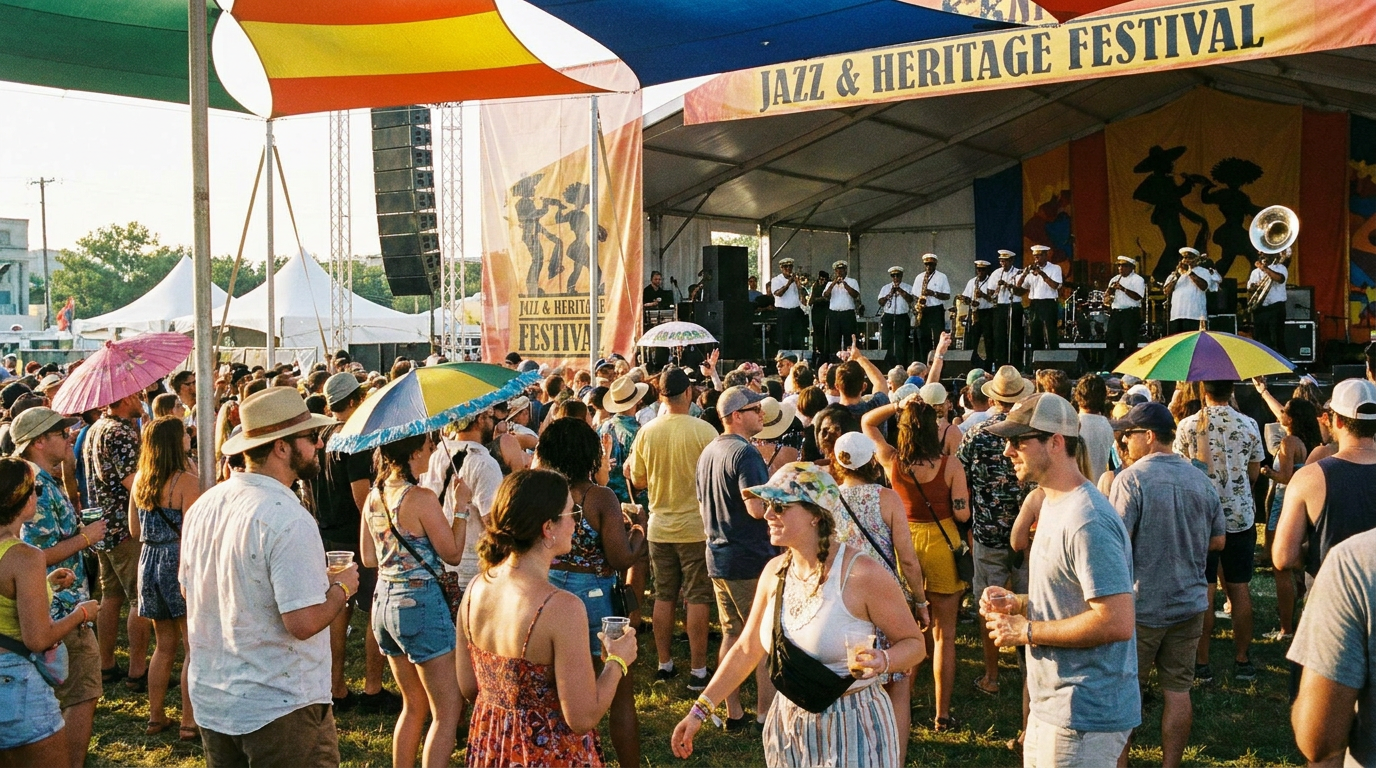
The Fair Grounds Reality Check Nobody Prints on the Brochure
By hour four, the crushed limestone and dirt track of the Fair Grounds feels like exactly what it is—a horse track turning the soles of your sneakers hard and flat. The air smells of boiling peanut oil, spilled sweet tea, and coconut sunscreen baking on hot asphalt.
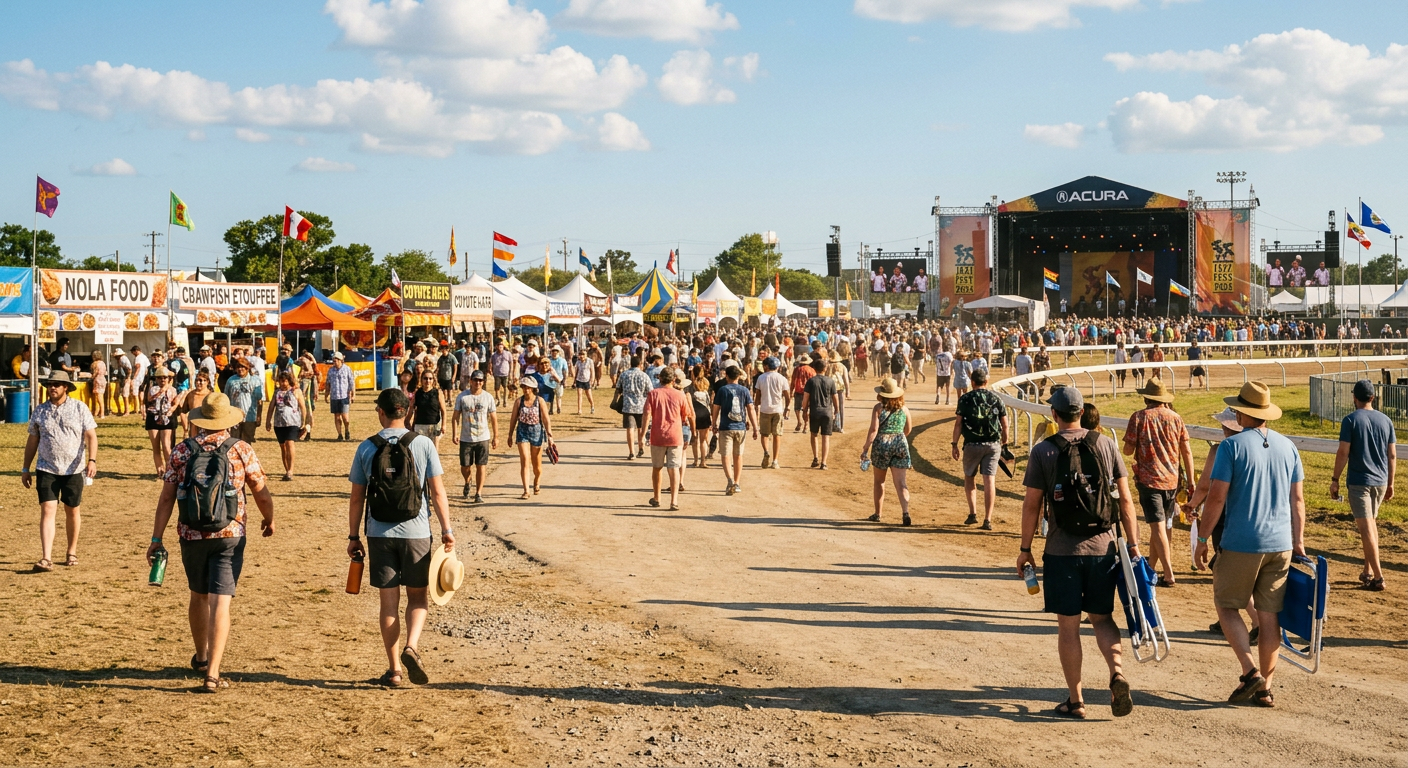
Glossing over the thick Louisiana humidity does nobody any favors. The layout is vast. The sun is unforgiving. National Weather Service historical data for spring points to an ugly truth. Afternoon temperatures sit around ninety degrees. On an open field, that translates to the physical sensation of wearing a damp wool blanket.
You walk out from under the shade of the grandstand. The heat hits your chest. But then you hear it. A trumpet bleeding through the sticky air from the Congo Square Stage pulls you forward. The sweat sliding down your back matters a lot less. Comparing New Orleans Jazz & Heritage Festival tickets for the first or second weekend usually comes down to artist preference. The heat is a constant either way.
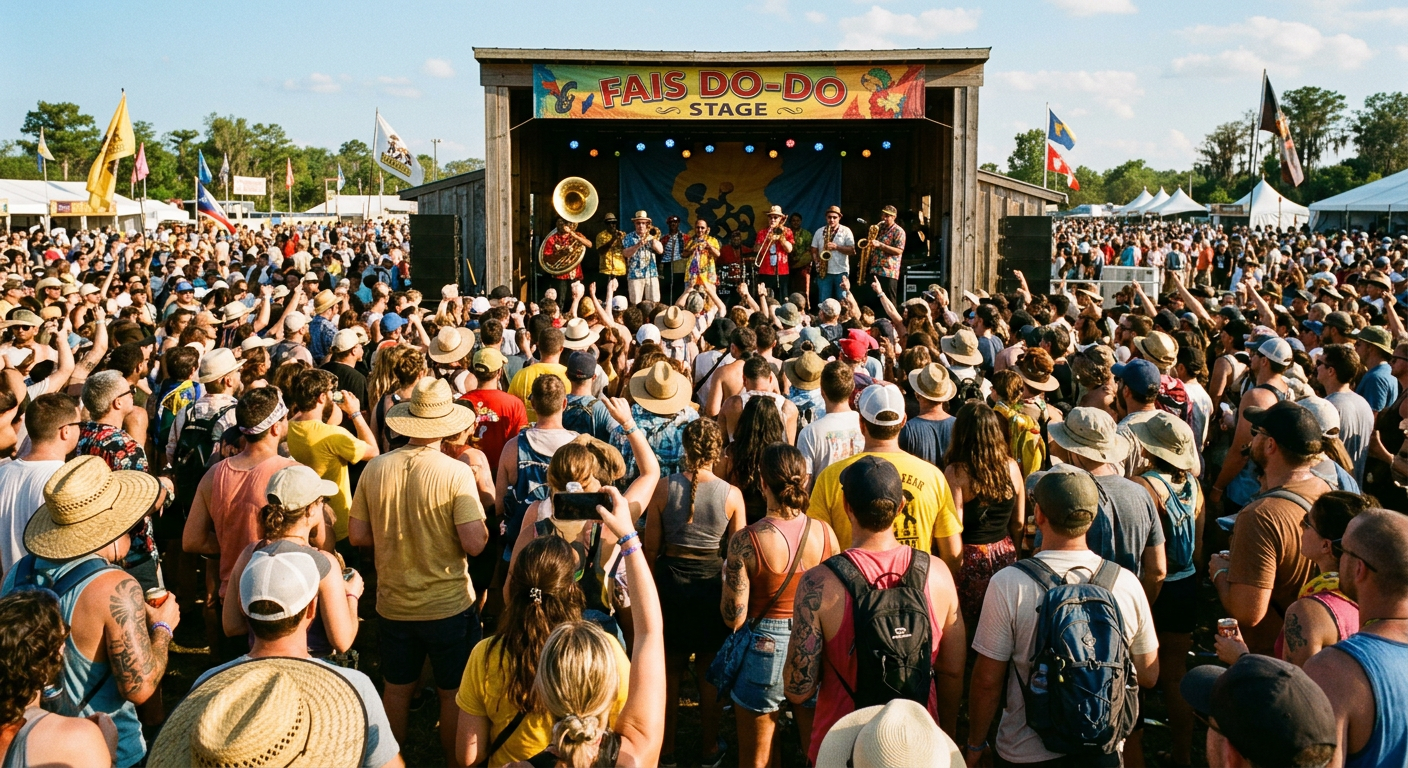
A man in a seersucker suit sat on a cooler near the Fais Do-Do Stage eating a strawberry snoball. He watched the crowd, unbothered.
Navigating the Bottlenecks With Grace
Forum veterans complain about festival congestion between stages. You brace for a miserable cattle chute of elbows and spilled beer. It rarely happens. People here do not push. They sway. Strangers step aside with a nod, turning a traffic jam into a slow parade route.
The Gentilly Stage sits at the far perimeter of the property. Walking there takes about fifteen minutes from the main entrance. That walk feels much longer at three in the afternoon. The lack of shaded eating areas near the food vendors outside this stage is a glaring oversight. You will stand in line for your crawfish bread. You will bake.
The Gospel Tent Shelter
Step inside the Gospel Tent around two in the afternoon. The floorboards vibrate beneath your boots from the heavy bass. The ambient noise fades below the organ chords.
My first year in 2018, I thought buying New Orleans Jazz & Heritage Festival tickets meant marching from tent to tent based on a strict color-coded timeline. I spent my days sprinting through the mud trying to consume every act. 2026 me just finds a spot in the Gospel Tent and lets the schedule burn. Best decision I ever made.
When everyone in that tent stands up to clap on the two and four, the air pressure in the room shifts. This is the pulse of the city. The sun dips below the oak trees around seven. The air cools by a couple of degrees. You catch your breath as the headliners step up.
Decoding the Ticket Structure
The official festival directory makes the Fair Grounds look easily walkable. It presents a tidy array of colored rectangles. If it looks tidy on a tourism map, it's a trap.
The reality of traversing that track on a Saturday afternoon is messy. The loop around the track measures just over a mile. Dodging folding chairs and dancing bodies stretches that walk into a humid, forty-minute pilgrimage.
Online maps fail to convey how the crowd moves. You expect a straight shot between tents. You end up in a shuffling detour past the food vendors just to avoid a sudden bottleneck.
General Admission Versus The Upgrades
The gate pass gets you inside. After that, every organized plan vanishes. You catch the low bass from the Congo Square Stage vibrating through your shoes. It mixes seconds later with sharp brass echoing from the Blues Tent.
2019 me dismissed the GA Plus option as an upcharge for tourists who hate sweating. 2026 me knows better. After twenty minutes in line for a portable toilet in the peak afternoon heat, air-conditioned restrooms are worth gold.
The festival offers three primary VIP packages Big Chief, Grand Marshal, and the Krewe of Jazz Fest. Local message boards break down the differences. Grand Marshal grants standing room right up front. Big Chief offers elevated bleacher seating and private bars.
A Big Chief VIP weekend pass runs almost two grand. Raised wooden platforms give you a clear line of sight. Yet, the elevation physically removes you from the heartbeat of the festival. Premium viewing areas offer relief. Still, the rigid barrier separating them from the main floor dampens the communal sway that makes this event work.
Finding The Magic At Fais Do-Do
My favorite memories never happen behind a barricade anyway.
You push your way into the dense crowd at the Fais Do-Do stage right as the sun drops. The grit of powdered sugar from a stray beignet catches in your teeth. The ground is slick. The washboard clicks fast enough to make your jaw vibrate. You stand elbow-to-elbow with strangers. For thirty minutes, nobody cares about the color of their wristband. Trust your own threshold for the elements. Buy the standard admission and embrace the dirt.
A teenager sat on a crushed cardboard box by the track railing. He held a crumpled paper schedule in one hand and a half-eaten mango in the other.
Weekend One Versus Weekend Two
The walk toward the Gentilly Stage feels different depending on your calendar. Local tourism projections for spring 2026 show a steep occupancy jump between the first and second week. It shifts the cultural gravity from a hometown gathering to a global event.
I had this ranked backward in my head my first year here. Massive legacy artists usually close out the final few days. I assumed the second weekend was the festival's main attraction. I was wrong. The first weekend is when the whole city shows up for itself. Neighbors buy each other beers. Local brass bands get genuine hometown respect.
You stand near the edge of the Gospel Tent. A high, clear vocal run cuts right through the sticky morning heat. The grass under your shoes is still springy and bright green. By week two, hundreds of thousands of attendees turn that same field into a flat, tan powder. It coats your ankles instantly.
Navigating the Thursday Mango Freeze Quirk
The second stretch draws heavy traveling audiences. That arrival brings a chaotic energy to the fairgrounds. Bathroom lines near the larger stages on the second Saturday will test your patience. But here is the glitch nobody prints on a schedule: the line for the famous Mango Freeze moves faster on Thursday than it does on Saturday, regardless of which weekend you attend.
The first weekend belongs to the neighborhood. The second belongs to everyone else. Securing New Orleans Jazz & Heritage Festival tickets for either comes with trade-offs. You just have to pick your chaos.
The Monday Between the Madness
The festival operates Thursday through Sunday. The days between are quiet. The city takes a collective breath.
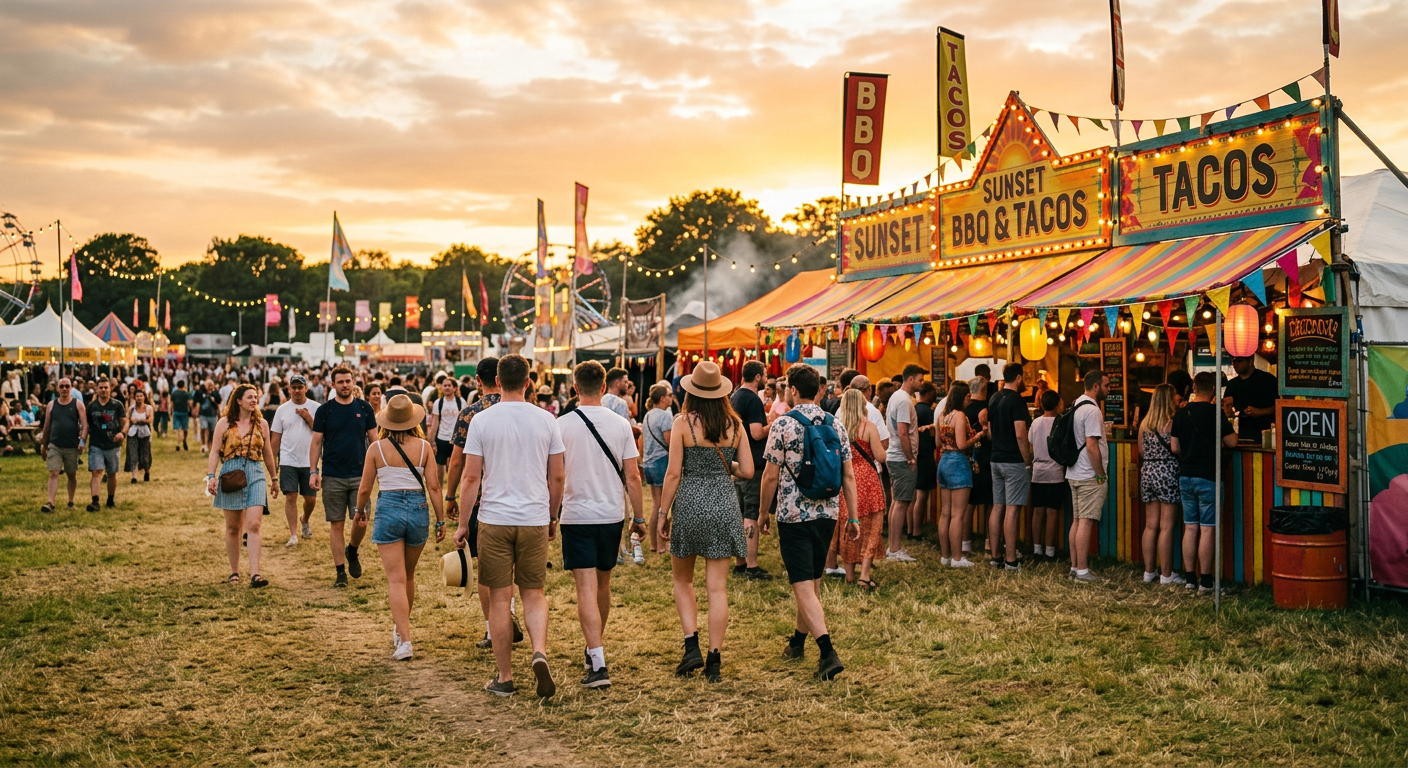
The food area at the festival hums with generators. Metal spatulas scrape hot griddles. The scent of sweet pralines and sharp cajun spices competes in the humid air. A cold lemonade practically bites against your throat. You realize you are exactly where you belong.
The Unspoken Expenses Behind the Gates
You step off the dirt track and onto Gentilly Boulevard. You catch the scent of diesel exhaust. The official festival shuttle costs a bit of cash. That little piece of paper feels like a lifeline when your calves are screaming from eight hours on crushed limestone.
The gate ticket is a cover charge for the privilege of opening your wallet again. Credit card statements from the opening weekend tell a grim story. Food and drink add up fast. Transportation is where the budget bleeds out.
Navigating the Post Festival Exodus
I used to assume the primary financial hurdle was buying the gate pass itself. The reality sets in around dusk near the Esplanade exit. The real expense is getting back to civilization.
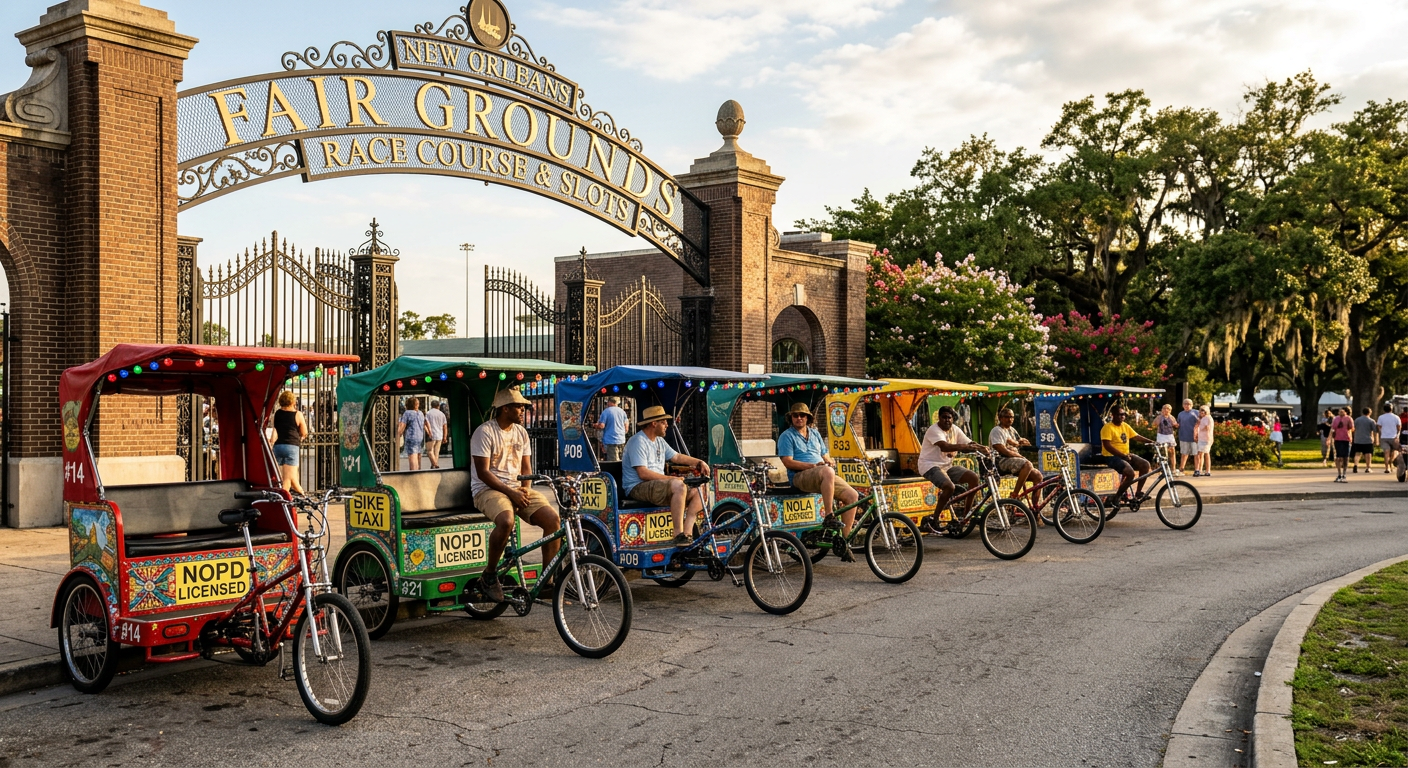
A determined pedicab driver offered to haul us to the French Quarter for eighty-five dollars. You sink into the vinyl seat. The driver pedals onto a side street lined with weather-beaten shotgun houses. The hum of the festival crowd fades. The ride covers miles of cracked asphalt. Every pothole jolts your spine.
Inside the festival gates, the math shifts every hour. City council mobility data confirms rideshare demand causes massive price spikes during the exodus. Count your cash before the sun goes down.
I can't prove this, but waiting out the surge by a row of portable toilets feels like passing into another dimension. You calculate whether a warm domestic beer justifies another ATM fee. You buy a straw hat you will never wear again just to escape the blinding sun.
Surviving the Track When the Asphalt Dissolves
The festival layout creates a distinct auditory map. Stand in the grass median behind the food tents. The low frequency of a stand-up bass from the Jazz Tent bleeds into the drumbeat from Congo Square. You catch brass in your left ear while a guitar solo fades into your right. The sound waves physically push against your chest.
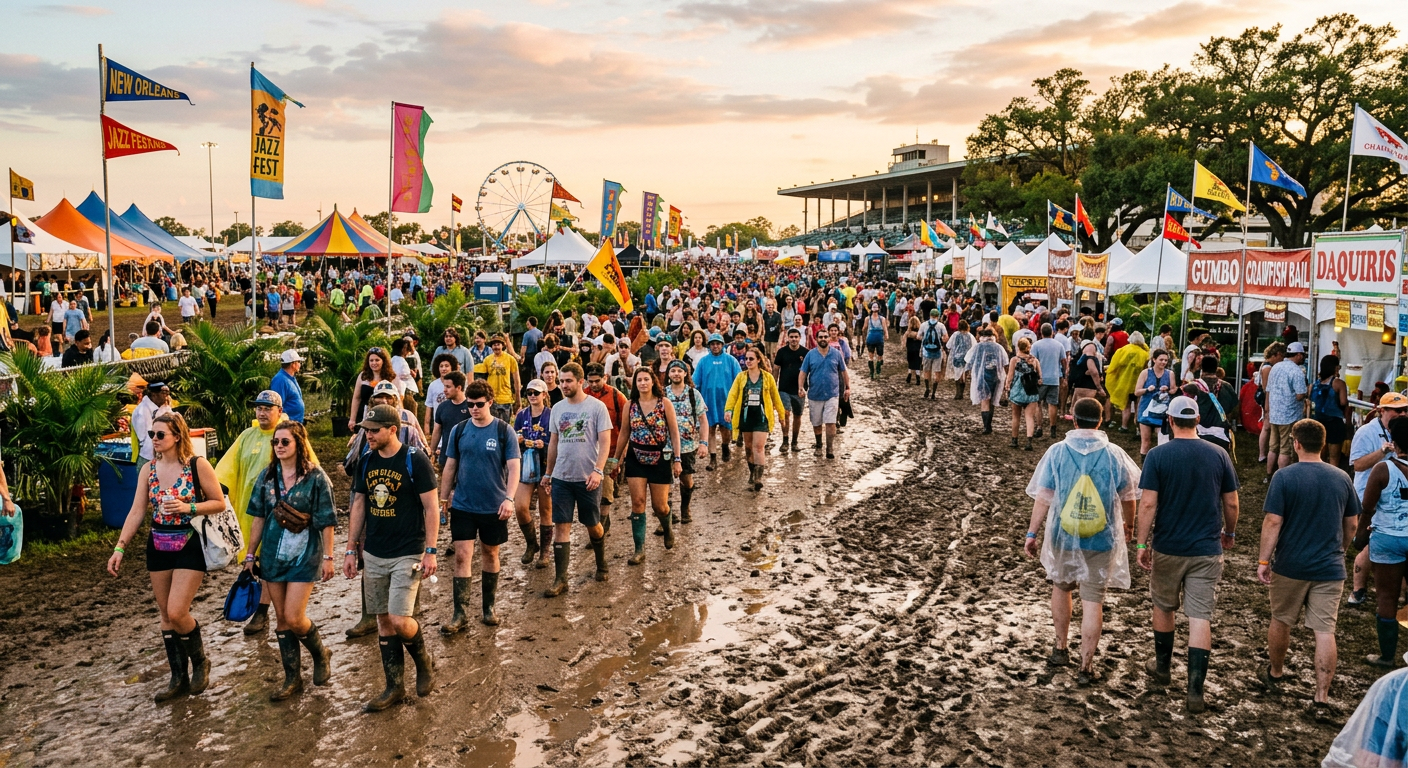
Then the sky opens up. Morning radar apps don't prepare you for quick Gulf downpours. The Fair Grounds Race Course spans over a hundred acres. After a short rain, that wide footprint transforms. Hard-packed limestone turns into a slick brown soup that pulls at your soles with every stride.
The Footwear Mandate
Local forums mandate the same rule: do not pack sneakers you intend to keep clean.
The rain stops. The brown standing water remains exactly where it fell.
Tourists arriving for the 2026 season walk through the gates wearing fresh white canvas at noon. By two o'clock, those shoes look like they lost a fight with wet concrete. Beige sludge coats the bottom of your jeans. It stiffens in the sun. You just have to lean into the slide.
Packing the right boots dictates how long you last once the asphalt ends. Rubber rain boots or designated junk shoes are mandatory equipment. If you tip-toe around the wide puddles, you end up exhausted.
Escaping the French Quarter Crowds on Two Wheels
The final chord rings out from the main stage around seven o'clock. The city mandates a hard stop. Eighty thousand people simultaneously realize their feet hurt. Dust hangs thick in the twilight air. It tastes of fried peanuts and crushed grass. You join the slow migration out the gates.
Regional transit runs on schedule, but the physical challenge remains when you reach your hotel. The energy of the city pulls at you. Yet, your legs refuse to cooperate. This is the exact moment out-of-towners make a critical error: they book a walking ghost tour. Walking tours involve cramped groups clustered on uneven slate sidewalks standing in traffic. Hearing history over a passing garbage truck is miserable.
If you want to coordinate evening logistics before facing the crowds, booking the Haunted Segway Tour NOLA through Rockon Recreation Rentals is the strategic pivot.
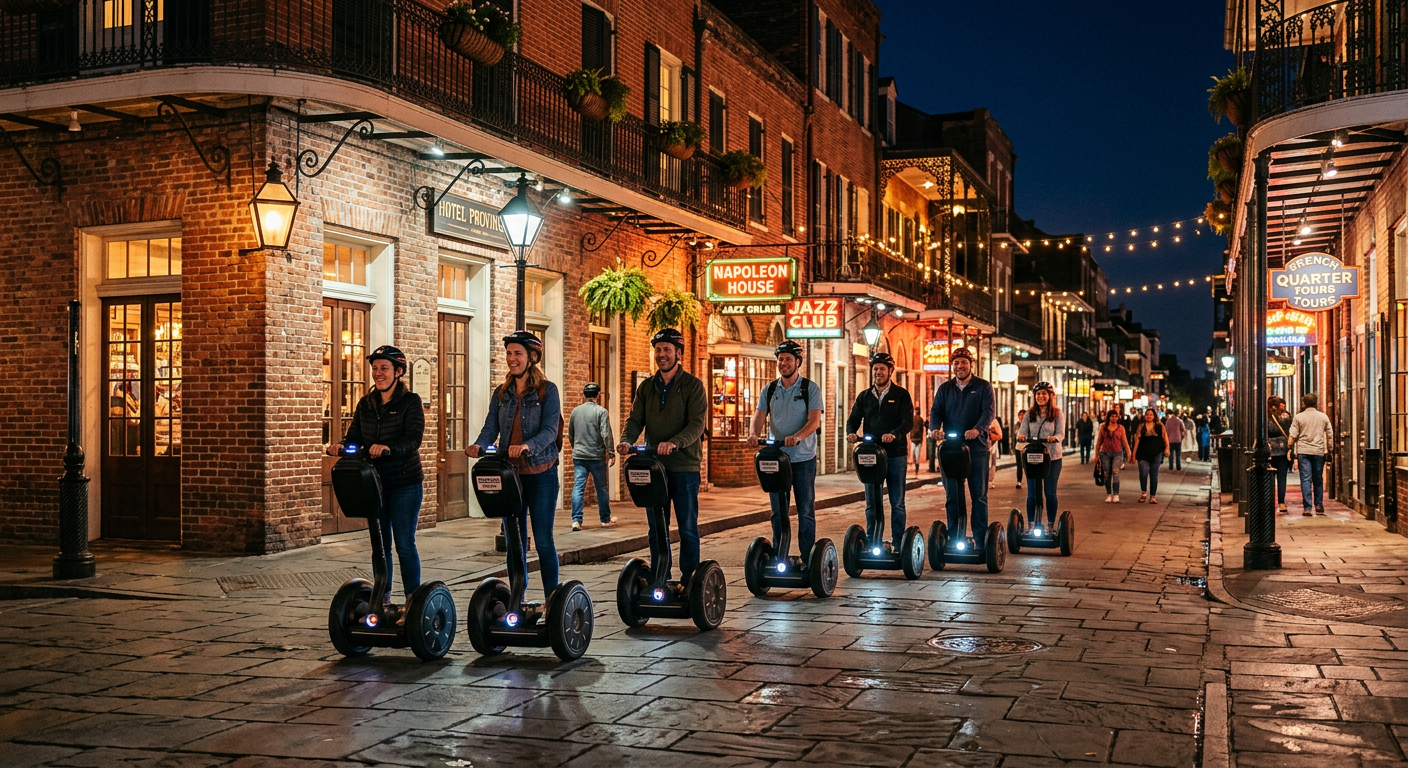
You step onto the Segway platform. The machine vibrates under your boots. A damp evening breeze rolls off the Mississippi River, cutting the stagnant heat. You lean forward. The wheels glide into the dark streets without requiring a single step.
I originally assumed the vehicle would feel like a distracting toy. Slicing through the warm air actually heightens the atmosphere. The silent electric motor lets you hear the low hiss of gas lanterns on Royal Street.
Navigating the Darker Neighborhoods
The tour covers a few miles over two hours. That distance is long enough to peel away from packed bars on Bourbon Street. You reach quieter corners where shadows feel heavier.
Municipal preservation documents reveal a structural glitch. The pale cobblestones near the Ursuline Convent arrived as ship ballast in 1789. They rattle hard against solid rubber tires. The sharp vibration shoots straight up your spine.
You roll past windowless brick walls near the old convent. The air here smells of blooming sweet olive. It hangs thick and heavy. The guide stops the group and points to the black iron gates. The original structure dates back to 1752. Standing before its weathered masonry, giving your legs a rest while the city's dark history washes over you, validates the choice to skip the foot tour.
The tour ends near the river. The Segways power down with a soft metallic beep. The city is still loud a few blocks away. However, you finally have the energy to walk toward it.
How to Exit the Fair Grounds Without Losing Your Mind
Let's rewind back to those festival gates. The humid air tastes like diesel exhaust and sweat. Look at the main gates. If everyone walks toward one exit, that's your cue to turn around.
The official festival map marks Sauvage Street as the primary pedestrian path. Being pushed through that fifty-foot gap feels like dissolving into a single sweating organism. The designated rideshare lot operates with zero efficiency. Bypass it.
The Trafalgar Street Bypass
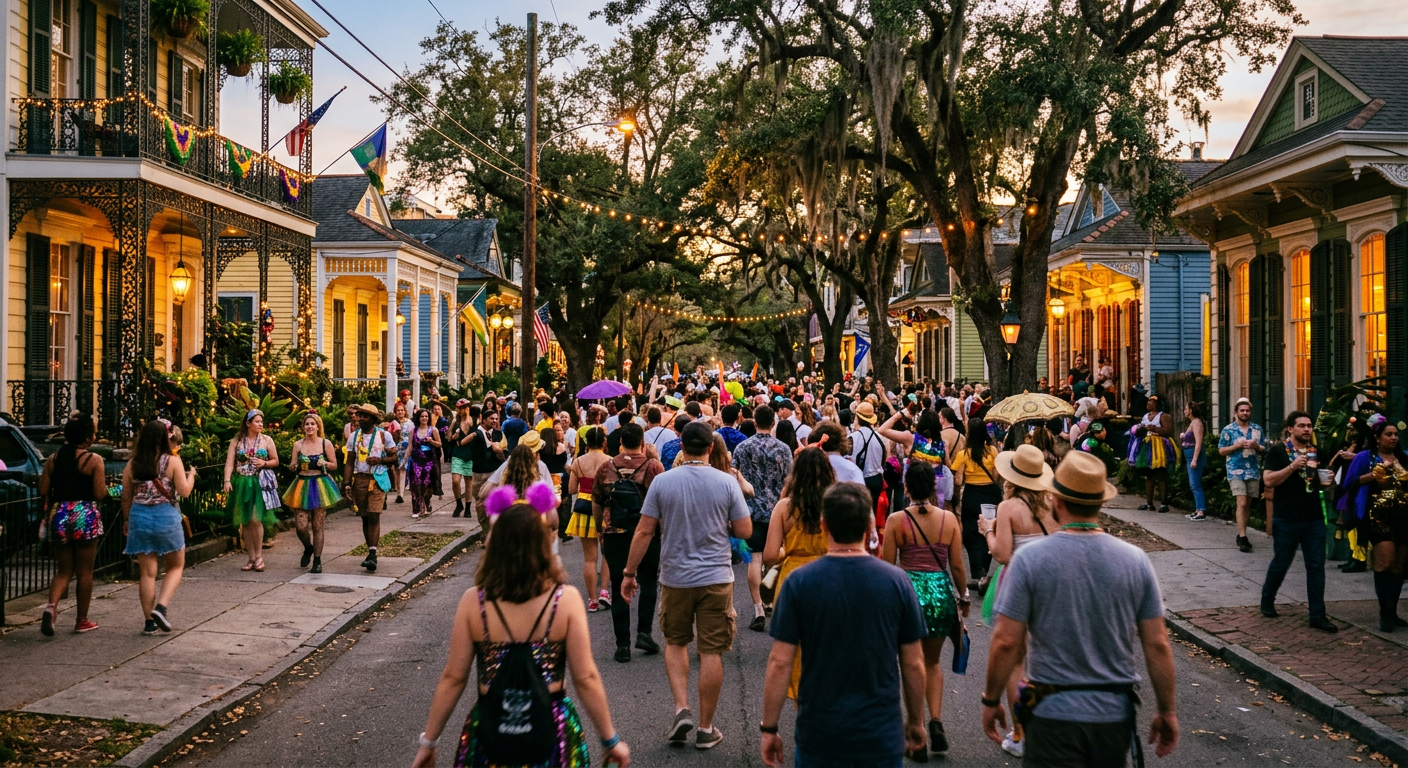
Logic suggests Trafalgar Street will be a bottleneck since it funnels into a residential area. It isn't. Most people stop walking the second they see the first taxi stall. That leaves deeper neighborhood streets quiet enough to keep a normal pace.
The walk down toward Canal Street spans several blocks. The sharp brass ringing in your ears softens into city traffic.
Outsmarting the Gridlock
Here is how you actually survive the exit. App prices jump at dusk. Waiting an extra forty minutes cuts the fare in half and gives you breathing room. Sit on a concrete planter and rest. Take the Canal Streetcar from the outer edge. You will stand the entire ride back downtown. Walk a few extra blocks away from the track limits.
You finally drop your shoes by the hotel door. White limestone dust falls onto the carpet. You shake the dirt off your shirt. You plug your phone into the charger. Then you smile, realizing you get to do it all again tomorrow.
This article was researched and written with AI assistance and editorially reviewed by Greg Faucher. Greg writes for Rockon Recreation Rentals, a VisitFlorida Travel Partner since 2018. Occasionally, a place earns every word of hype. He'll tell you when it does.
Plan your trip: Ready to experience this firsthand? Book Haunted Segway Tour NOLA directly through our marketplace.