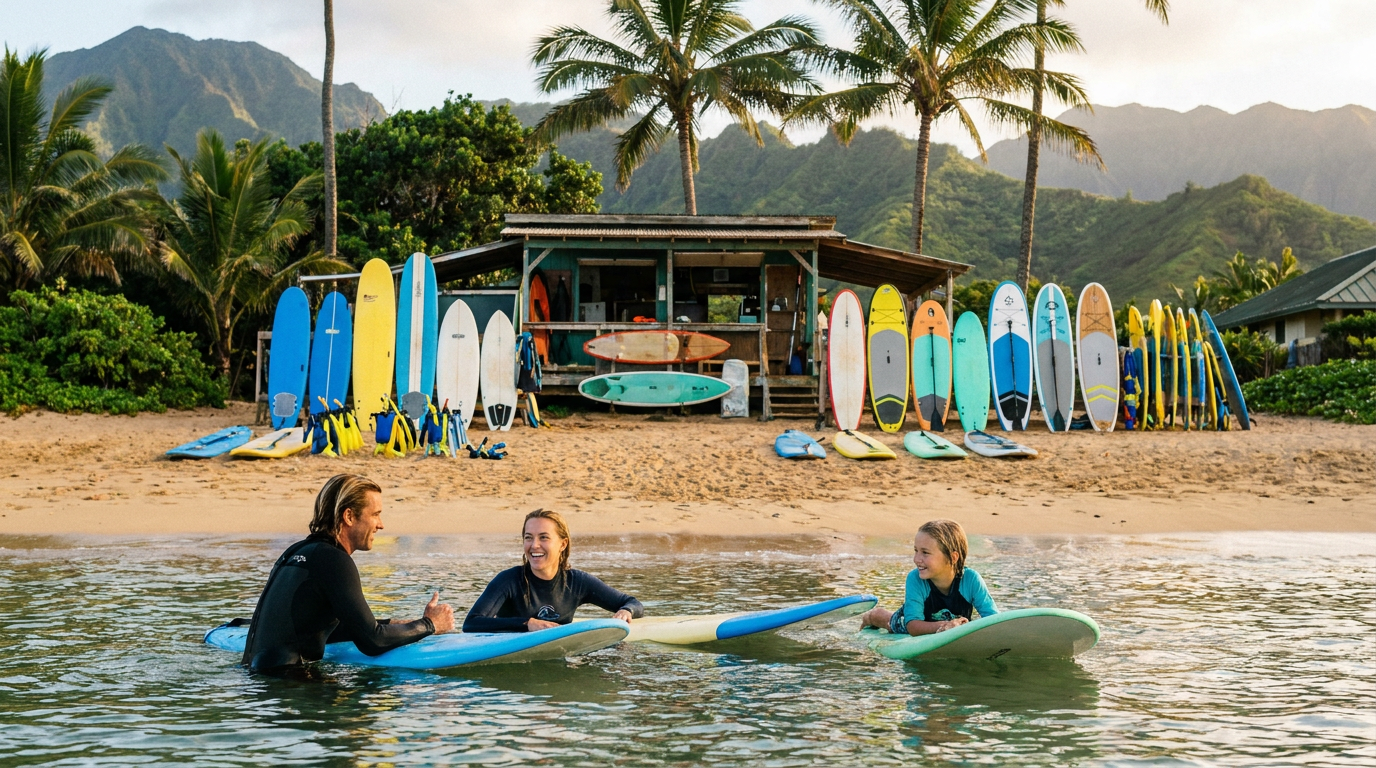
The Reality of the Waikiki Lineup
The thick blend of coconut sunscreen and sharp diesel exhaust from passing catamarans hits you before you even clear the Kalakaua Avenue crosswalk. Hundreds of foam boards bump rails in the shallow water. You type "lessons rentals oahu" into your phone while standing on the pavement, hoping the digital ether might reveal a quiet, secluded cove nearby. You won't find one. This is Waikiki.
The Pacific here transforms into a brightly colored traffic jam by 8:00 AM. Watching beginners drag their heavy gear into this mess looks like a recipe for a bruised ego. I can't prove this, but the chaos feels intentionally engineered. It acts as a filter. If you can handle the shoreline hustle without losing your nerve, you earn the right to paddle out.
Most surfers gather near the rental stands to attach their leashes before walking in. A guy in a faded neon visor was eating a Spam musubi on a bench nearby, unbothered by the wet sand sticking to his shins. The primary break sits out past a shallow reef.
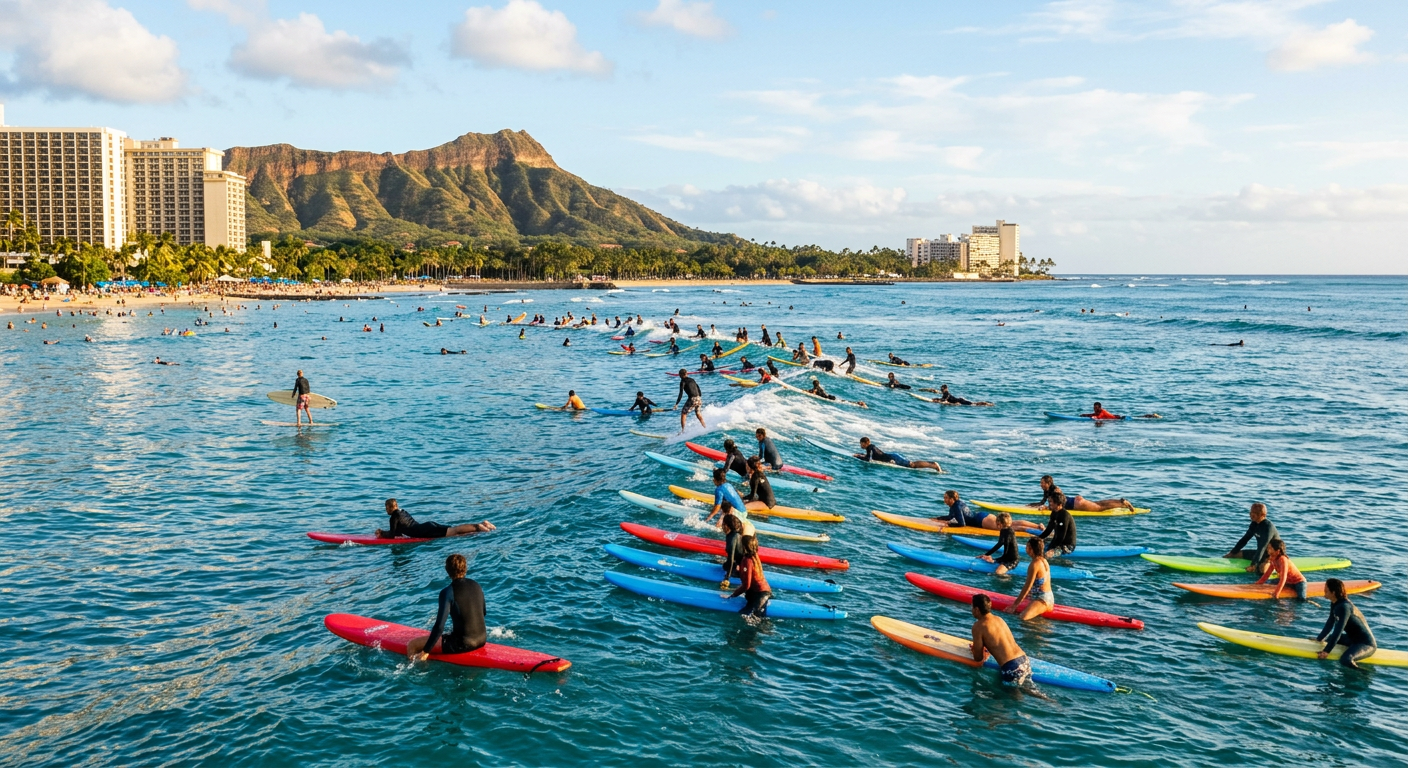
You assume the water is going to be an unmanageable free-for-all. Every logical instinct tells you to retreat back to the hotel pool and order something with an umbrella in it. Then you paddle out. The ocean sorts people out naturally.
Experienced locals drift further outside to catch the larger sets. The inner sandbars form gentle, rolling zones built for learning. The chaos melts into a polite rotation where everyone just waits their turn.
This is why securing the right guide matters for your first time out. A local instructor navigates that invisible water traffic for you. You just focus on finding your balance.
The outfitters we vet at Rockon Recreation Rentals have been reading these breaks for decades. According to the National Oceanic and Atmospheric Administration, Waikiki's unique ocean floor creates waves that roll rather than crash abruptly. That long, slow ride gives you time to actually pop up.
Navigating the Gear Without Losing Your Mind
The sharp clatter of fiberglass hitting pavement echoes down Duke's Lane at sunrise. Every ten feet, a different chalkboard sign declares its stand the original Waikiki surf school. It creates a historical paradox.
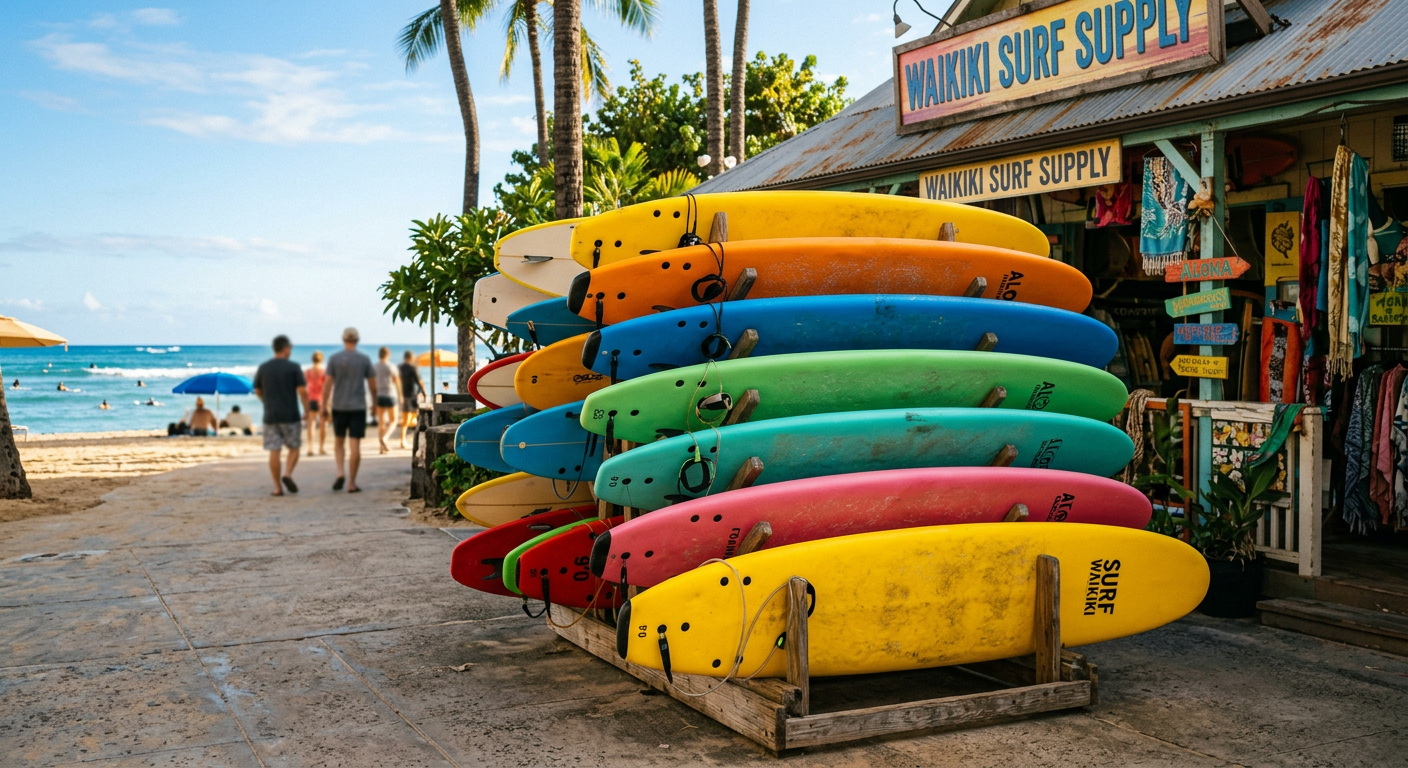
Apparently, a dozen different guys in boardshorts invented surfing on the exact same Tuesday in 1955. Wading through this marketplace of identical "lessons rentals oahu" search results feels overwhelming. You just need to know where to walk.
The pricing gap comes down to geography. Racks touching the actual beach sand charge a premium for convenience. If you walk exactly 47 paces inland past the corner ABC store, the rates drop by a third.
I always assumed hauling a board across Kalakaua Avenue would be miserable. Honestly, that short walk serves as a decent warmup stretch. Then comes the moment they hand you the mandatory student rash guard.
You wear a shirt colored in a neon yellow so loud it hums. Embrace the high-visibility aesthetic. Beige is a sin when you are learning to surf in Hawaii.
It makes spotting your instructor in the crowded lineup easier. They pull you out of the impact zone before you take a stray longboard to the shins. Rental packages usually include a foam longboard, an ankle leash, and a lycra top.
The standard beginner boards measure around nine feet long. You carry the board under one arm with the fins facing backward. A faded sticker of a smiling avocado was peeling off the pedestrian crossing signal as we crossed the street.
Is it possible to have a bad day when your biggest problem is carrying foam to the ocean? The inland shops just have a better vibe. If it is on a postcard, it is a trap. Check out the vetted local guides on Rockon Recreation Rentals to skip the guesswork.
The Foam Board Reality Check
The rough, textured deck pad scrapes against your ribcage as you haul buoyant foam across the coarse Waikiki sand. The inland shops provide heavy beginner boards for a reason; Oahu outfitters know these massive planks make your shoulders burn before your toes even touch the Pacific.
You lug this bright-yellow vessel past racks of sleek fiberglass shortboards. It feels like wearing training wheels in the middle of a busy street. The wet sand near the shoreline slopes downward into the ocean.
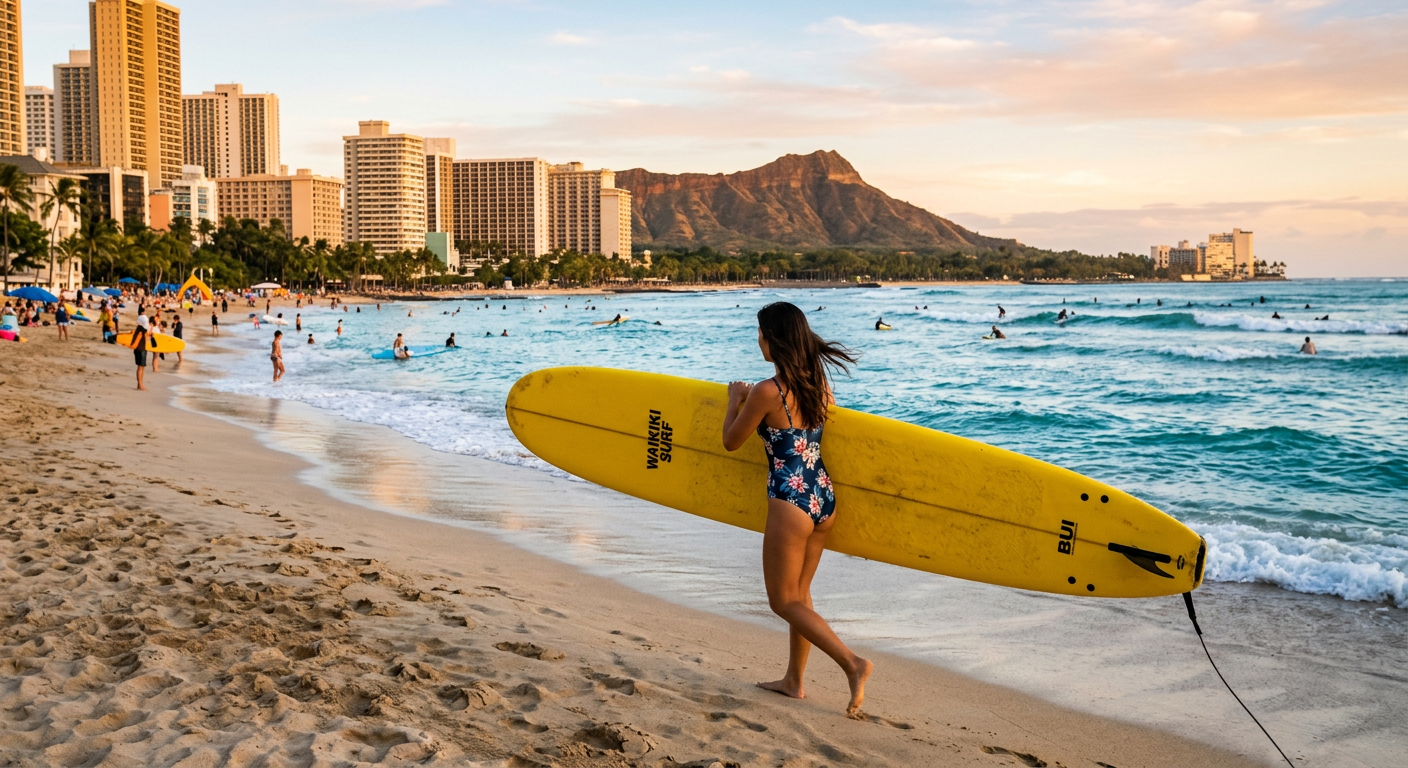
The rental board has a grooved surface and three black plastic fins. Looking down at my round-nosed board, my ego bruised a bit. I wanted to look like the locals effortlessly slicing through the lineup.
Then I caught my first rolling swell, and my perspective shifted. The high buoyancy of that foam plank caught the water's energy so early that I had time to stand up, adjust my footing, and actually ride. I realized the clumsy beginner board was not a punishment. It was a cheat code. My vanity had almost ruined a good afternoon.
The Physics of a Waikiki Wave
According to University of Hawaii oceanography resources, understanding local break mechanics keeps surfers safe. The reefs here do not produce pitching waves that crash over shallow water. The underwater topography creates sloping swells that lose power slowly as they roll toward the hotels.
To catch a wave with such a gradual incline, you need around 110 liters of foam volume under your chest. That is why local instructors insist on these big boards. Swallow your pride and embrace the giant foam longboard.
Many guides talk about proper stance. Few mention how forgiving these high-volume boards are when you misplace your feet. You can shuffle and stumble, yet the wide deck keeps you stable.
Finding the Right Break for Your Skill Level
A warm mist of salty sea spray coats your lips as you paddle past the surf line. It is a quick reminder that the ocean here writes its own rules. Waikiki stretches out across a massive submerged shelf.
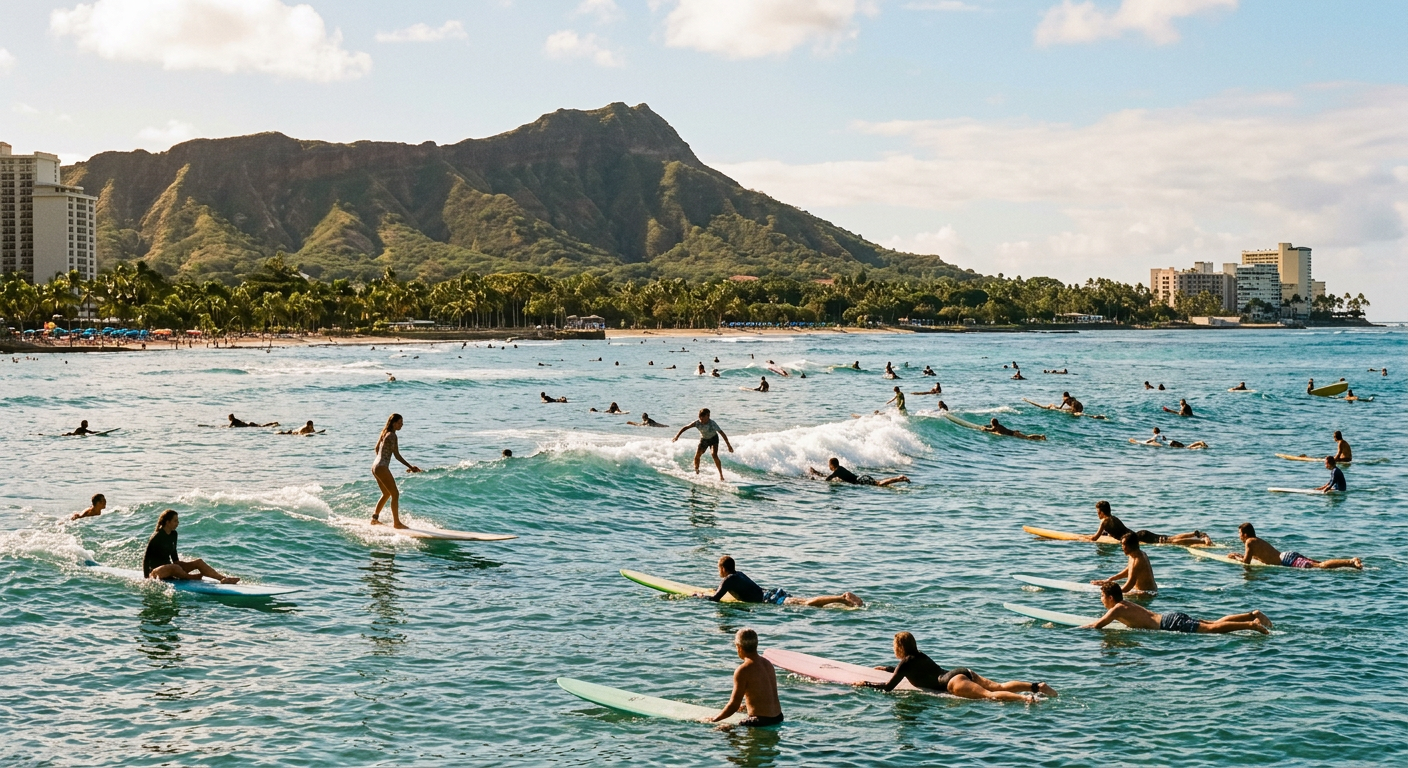
As a Rockon VisitFlorida Travel Partner more accustomed to the Gulf Coast, I've learned that Pacific reef breaks play by different rules. This shelf acts like a natural wave machine. The breaks have distinct personalities.
Learning where they sit changes everything about your morning. You will find that the ocean divides itself up neatly once you know where to look. Underneath the turquoise surface, jagged coral heads sit just a few feet below your board.
Queens and Canoes are the famous breaks most people recognize. Queens is the crown jewel of Waikiki, sitting a few hundred yards off the beach. It offers a long, glassy ride.
The regulars make it look effortless. The one thing I would caution about Queens is that the lineup is tight. The reef is shallow, making it better suited for experienced riders with good spatial awareness.
Where the Locals Ride Versus Where You Belong
If you are just starting out, Canoes is going to be your best friend. The waves here spill gently over a slightly deeper section of the reef. This gives you more margin for error when you inevitably slide off the foam board.
Further west, you will find Populars, known locally as "Pops." The paddle out to Pops takes a solid fifteen minutes of shoulder-burning effort. That long paddle acts as a natural crowd deterrent. Once you have a few sessions under your belt, Pops offers long, peeling lefts and rights with half the traffic of Canoes.
For your first time, however, stick to the beginner zone. Look for the outrigger canoes lining up. Stick near that channel for a forgiving playground. It makes surfing feel approachable rather than terrifying.
The Truth About Morning Sessions
The thick, humid morning air wraps around you as you drag yourself to the beach at dawn. The alarm went off at 5:21 AM. It hurts.
The streets are empty. The rhythmic clacking of metal security shutters rolling up breaks the silence. Down by the water, the ocean is glass.
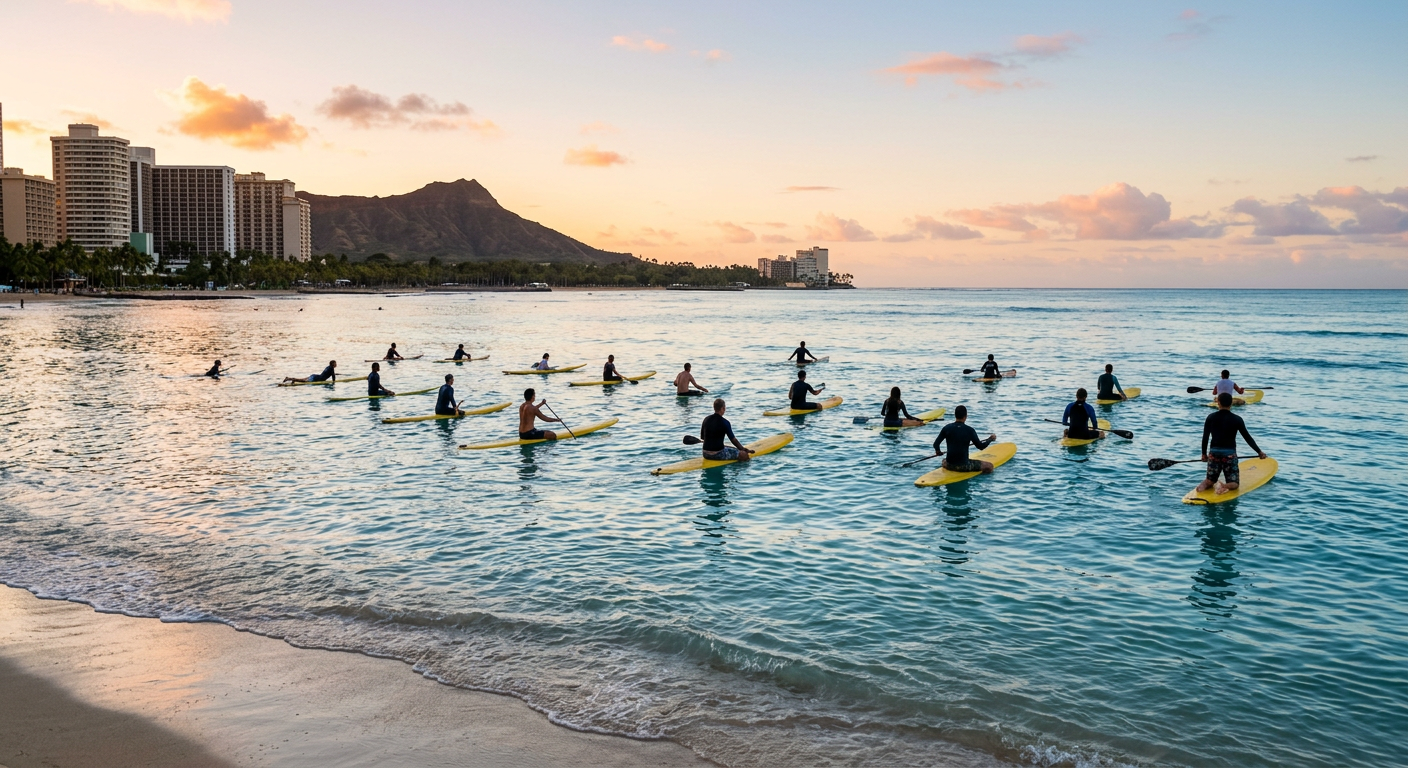
This is the brief window where the Pacific Ocean cooperates. Most visitors think the early start is about beating the crowds. 2018 me assumed the same thing.
2026 me knows the dawn patrol is not about avoiding people. It is about the trade winds. Hawaii acts as a giant obstacle in the path of the prevailing easterly winds.
By midday, those winds funnel down the Koolau mountains and hit the south shore. The resulting chop ruins the glide. If you try to stand up on a longboard in that mess, your legs work twice as hard.
Research is my love language; reality is my ex. You cannot negotiate with the afternoon wind. The Waikiki beach boys start arranging the longboards on the sand at dawn.
The boards are yellow, blue, and white foam. Instructors sit on plastic coolers while they wait for customers. This is why morning slots vanish fast.
Book your session for the earliest possible window. If you sleep in, you pay the penalty in sore calves and swallowed seawater. Set the alarm.
The calm surface is worth the temporary misery of a dark hotel room. Securing your spot through Rockon Recreation Rentals ensures you get the right board before the wind picks up.
Drink the coffee and go.
Frequently Asked Questions About Waikiki Surf Sessions
What is the average cost for a surf lesson in 2026?
Prices fluctuate, but booking a couple of blocks inland usually saves you about thirty percent compared to beachfront stands. Expect to pay around a hundred bucks for a solid group session. Private sessions will run closer to two hundred dollars depending on the outfitter.
Do I need to know how to swim to take a surfing lesson?
Yes. While the inner sandbars are shallow, the ocean is unpredictable. You need basic swimming skills to stay safe if you get separated from your board. Instructors will test your comfort level in the water before heading out.
Should I book my session in advance?
Yes. Morning sessions offer the best wind conditions and they sell out days ahead during peak season. Do not rely on walk-up availability if you want clean water. Searching for your ideal lessons rentals oahu package early secures the critical dawn patrol slots.
What should I wear for my surf lesson?
Wear a secure swimsuit that stays put when moving around. The school provides a high-visibility rash guard to prevent board chafing and identify you in the water. Leave the expensive sunglasses on shore.
How long does a typical surf lesson last in Waikiki?
Most sessions run about two hours. You spend the first twenty minutes on the sand learning pop-up mechanics, board anatomy, and safety signals before hitting the water for the remaining time.
Are there age limits for group surfing lessons?
Many schools require children under twelve to book private one-on-one sessions for safety reasons. Group environments require a level of independence in the water. Always check the specific outfitter's policy before booking for a family.
Do I need to rent a wetsuit in Hawaii?
No. The water temperature sits comfortably in the upper seventies year-round. A lycra rash guard is plenty of protection against the elements and board friction. Wetsuits will just make you overheat.
Can I keep the rental board after my lesson?
Some packages bundle the lesson with an all-day rental. Just remember that carrying a massive foam board around all afternoon gets tiring fast. If you have the stamina, it is a great way to practice what you just learned.
What happens if it rains during my scheduled time?
Surf lessons run rain or shine unless there is lightning or hazardous surf warnings issued by local authorities. You are going to get wet anyway, and overcast days actually save you from a nasty sunburn.
Is tipping expected for surf instructors?
Yes. If your instructor keeps you safe, navigates the reef, and helps you catch a wave, a standard twenty percent tip is customary and appreciated. They are doing intense physical labor to push you into waves.
Plan your trip: Ready to experience this firsthand? Book Best Lessons Oahu See the Secrets of Waikiki directly through our marketplace.