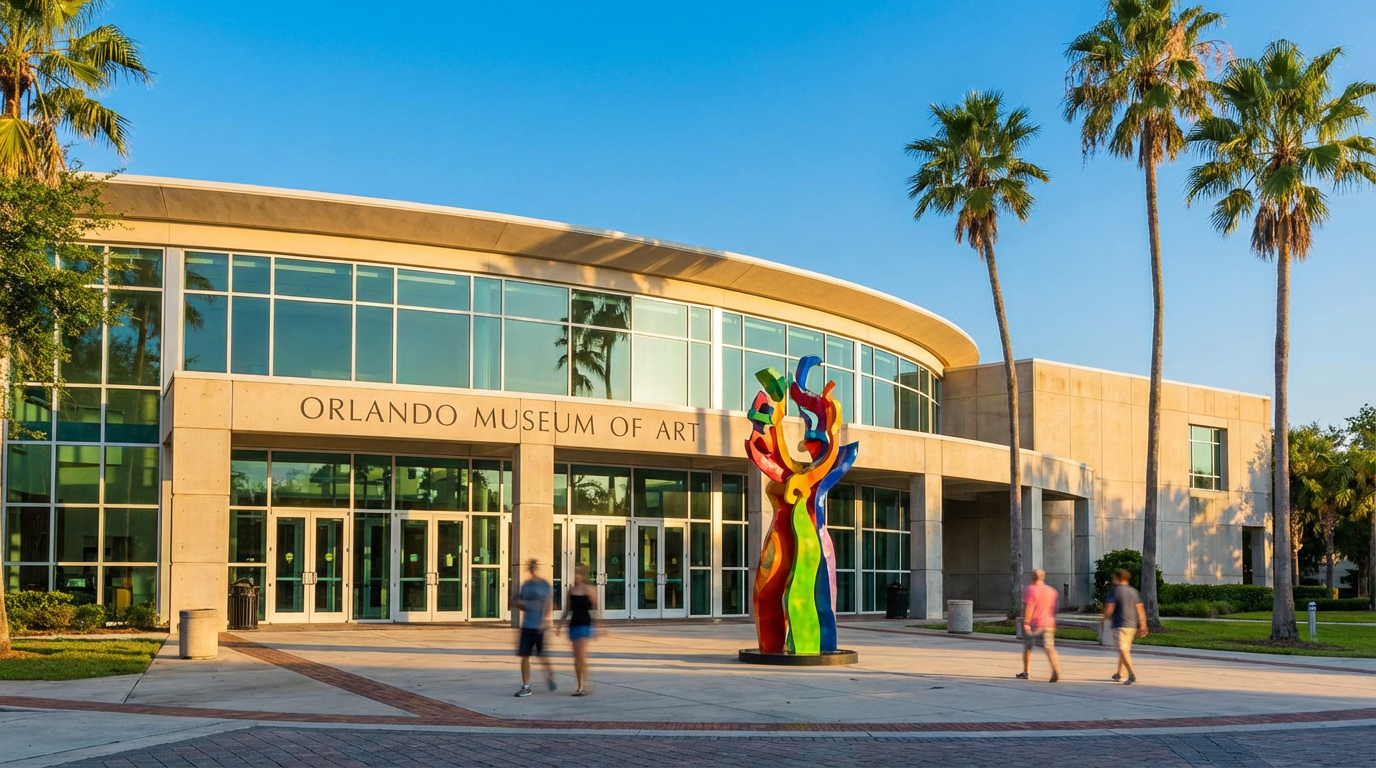
Reason 1 — The Architecture of Silence at Loch Haven Park
The acrid smell of hot brake dust usually dictates my mood in this city. A dozen miles down I-4, tourists pay a premium to stand in gridlock. Stepping inside the Orlando Museum of Art forces a deliberate sensory reset. 2018 me thought finding actual quiet required driving an hour north to dip a paddleboard into an isolated spring. 2026 me knows you just let the map reroute you off the pavement and under the heavy oak canopy lining North Mills Avenue. It works.
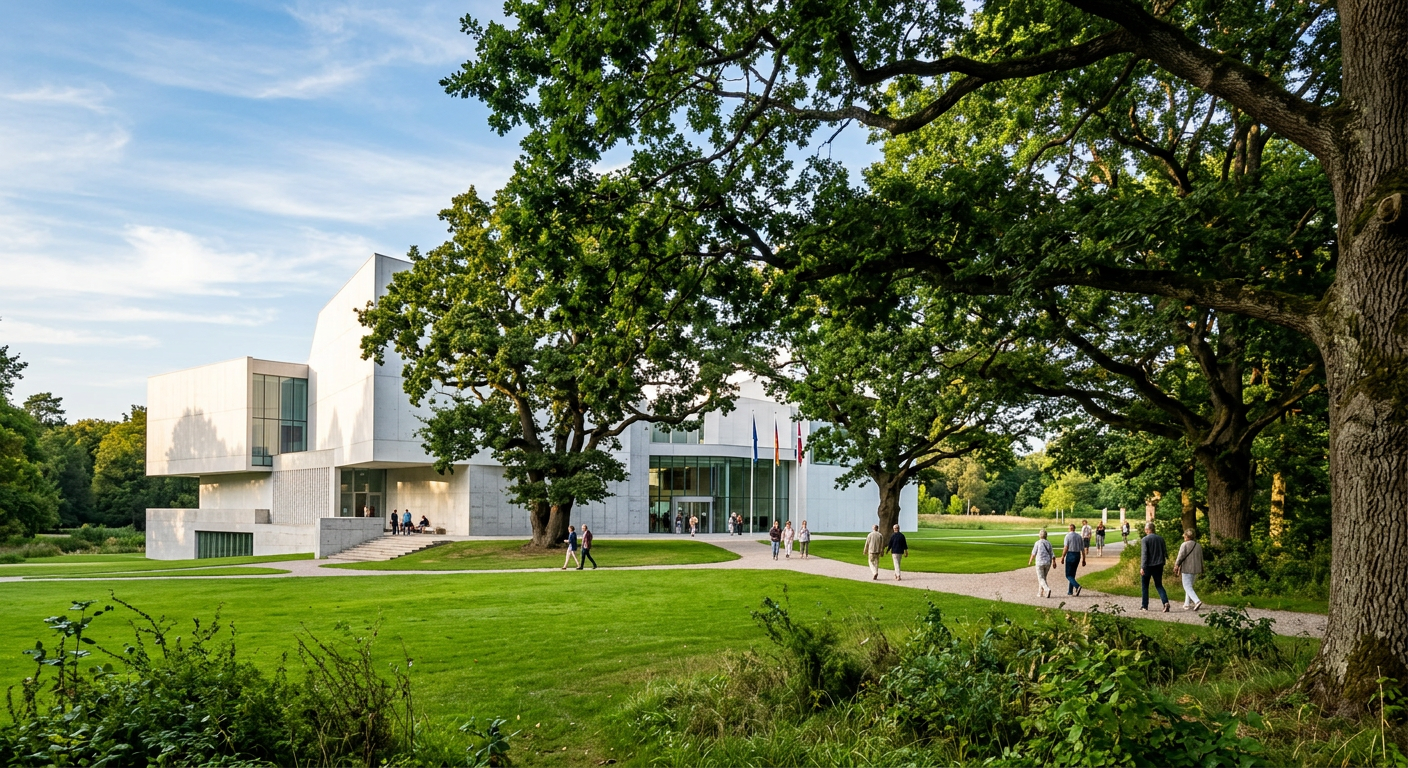
If a place appears on a glossy tourism brochure without a single criticism, I assume it is a trap. The Orlando Museum of Art operators know exactly what they are doing. The building acts like a structural noise-canceling headphone for the downtown grid. The ambient temperature drops the second the automated glass doors seal shut. You breathe.
According to the latest population figures from the U.S. Census Bureau, this metro area is ballooning. Standing anywhere near the interstate means feeling the engine vibrations through your shoes. Here, the floor is polished white terrazzo. A security guard leaning near the front desk wears a dark blue uniform. The lighting stays a flat, even gray. Over by the main entrance, a half-eaten sleeve of salted peanuts sits undisturbed on a concrete planter box. I guess someone meant to finish them eventually.
The pace required to look at a canvas alters your physical momentum. As a VisitFlorida Travel Partner operating Rockon Recreation Rentals, I spent years directing guests out toward the sprawling wetlands for isolation. I misjudged the utility of an empty hallway. The volume of the collection pulling from American graphics to ancient Mesoamerican pottery matters less than the breathing room between each display. You do not always need a boat to find still water.
Reason 2 — The Small Gallery Footprint is a Feature, Not a Defect
The hollow clack of footsteps echoes down the corridor leading toward the south wing. If you sort public feedback for the Orlando Museum of Art, a specific grievance surfaces repeatedly. The 1-star reviews from 2019 complain about the architectural footprint. Visitors lament they can walk the perimeter in about an hour. I used to subscribe to the idea that a cultural institution needed to consume a whole afternoon to justify the price of a ticket.
Beige travel is a tragedy, but exhausting yourself for the sake of perceived value is worse. Do less.
Smaller spaces force a necessary focus. They strip away the fatigue that sets in around the third wing of a large metropolitan gallery. You have to slow down and look at the actual brushstrokes. Curation does the heavy lifting here. When you only have roughly a dozen main exhibition rooms, no curator can afford to waste wall space on filler.
The permanent collection holds pre-Columbian artifacts that contrast sharply with the modern concrete sprawl outside. The lighting in the ancient Americas gallery stays notably dim to preserve the textiles. You lean in over the glass cases, trying to decipher the intricate carvings on a piece of pottery that predates the invention of the interstate highway system by centuries. It forces a humbling recalculation of time. You realize the tourist attractions selling plastic wizard wands down the highway will eventually crumble, while these clay vessels have already survived empires.
Reason 3 — The 2026 Florida Prize Picks an Intentional Fight
When I first paid admission in my early twenties, I anticipated a sleepy rotation of landscape paintings. I pictured polite watercolors of wading birds matching the manicured suburban energy around Loch Haven Park. Stepping into the annual Florida Prize in Contemporary Art exhibit shattered that assumption. I realized I had misjudged what this city values.
The 2026 showcase is bold and combative. It confronts the shifting cultural baseline of the state without blinking. Walking past a multimedia installation featuring salvaged neon signage, you understand the local art scene wants to start an argument about the future. According to a cultural sector analysis by The New York Times, mid-sized regional museums across the South frequently prioritize these disruptive voices over traditional portraiture.
It reframes this town from a passive vacation hub into a place with teeth. I cannot prove this, but the older, softer American landscape galleries in the neighboring rooms suddenly feel like camouflage for the radical work happening in the center.
A geometric pattern on the carpet near the south entrance looks like it has been surviving since roughly 1993. I respect the commitment to keeping it around. You start to appreciate the quirks that show a building has lived.
Explore experiences near Orlando
Reason 4 — Two-Wheeled Immunity from the Princeton Street Gridlock
The dense humidity hits you like a wet towel the second you walk out the exit doors. Getting back into a sun-baked rental car right after an exhibit strips away whatever calm you just found. Taking a bicycle to the Orlando Museum of Art remains the most functional tactic for navigating this cultural corridor.
Two wheels provide immunity to the downtown commuter surge. The traffic loop on Princeton Street does not negotiate. You skip the erratic parking maneuvers. You ride.
A continuous paved stretch connects these northern cultural hubs straight down into Ivanhoe Village. Securing a standard cruiser via Rockon Recreation Rentals or booking a tour with Bike Tours Orlando – Explore Downtown Orlando by Bike builds a clean bridge away from the stagnant lines of brake lights near Lake Highland. The museum parking lot charges a fee during special events, but the bike racks by the front door sit there waiting for free.
Navigating the Paved Shortcuts
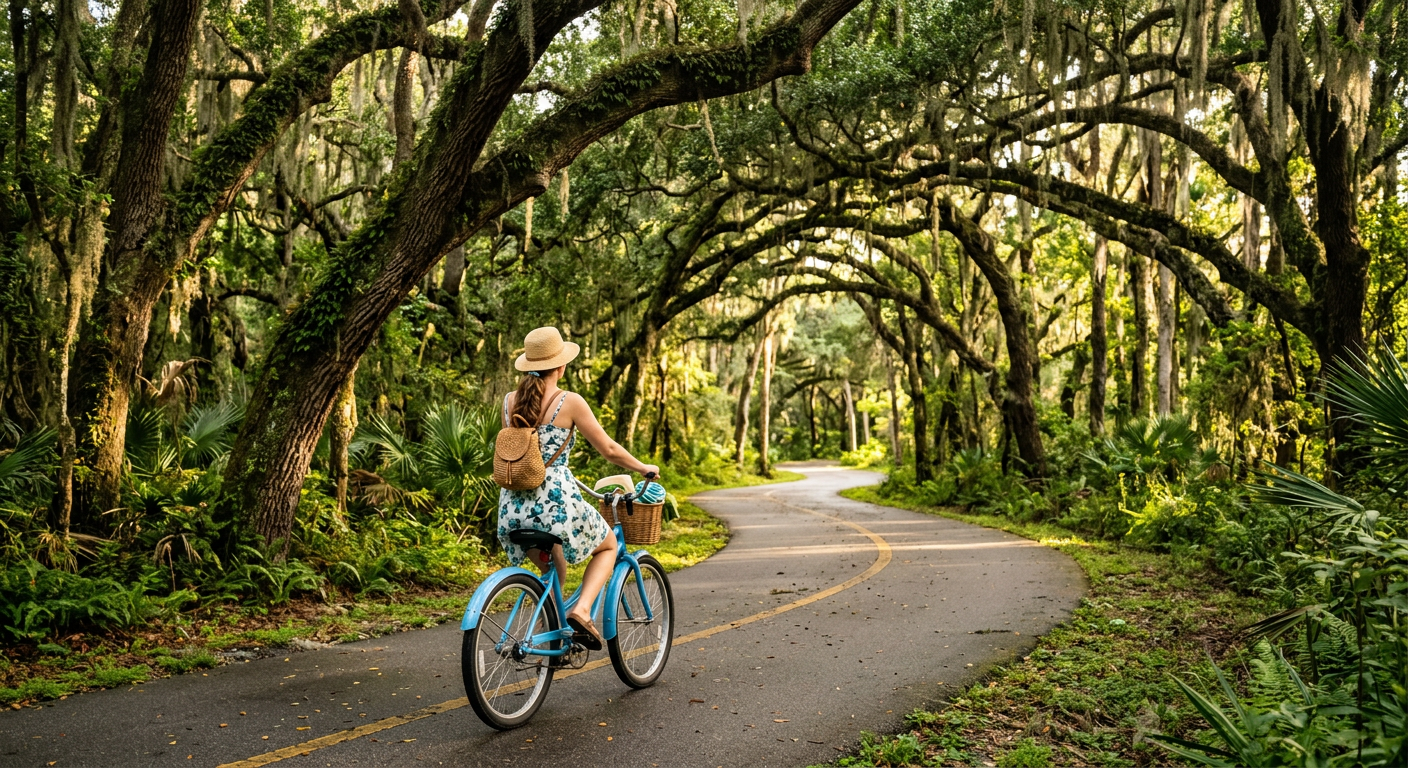
The trail pavement pushes a steady, rhythmic grit up through the handlebars. Decades of ancient oak roots have warped the ground over time, creating a washboard effect if you pedal too fast. Official mobility maps from the City of Orlando outline the route winding past lakes, but they omit how the atmosphere shifts out there. The dense canopy actively blocks out the heavy 2026 sun.
Commuters sit locked in their steel boxes with the climate control running. You pull past them on the shoulder. They stare.
Tourists routinely spend twenty minutes hunting for street parking near the Orlando Museum of Art on busy weekends. You just lock your aluminum frame to the rack by the front steps. Taking the local trail feels like finding a bypass code for a city designed primarily around cars.
Explore experiences near Orlando
Reason 5 — The Tactical Tuesday Afternoon Ghost Town
The squeak of rubber against terrazzo is often the singular sound echoing through the atrium on a weekday. Marketing brochures map out a predetermined journey through the Orlando Museum of Art to curate your cultural absorption. I prefer to skip the maps and walk toward whatever room looks empty. Grab your admission pass, drop your bag at the coat station, and trust your gut on where to go.
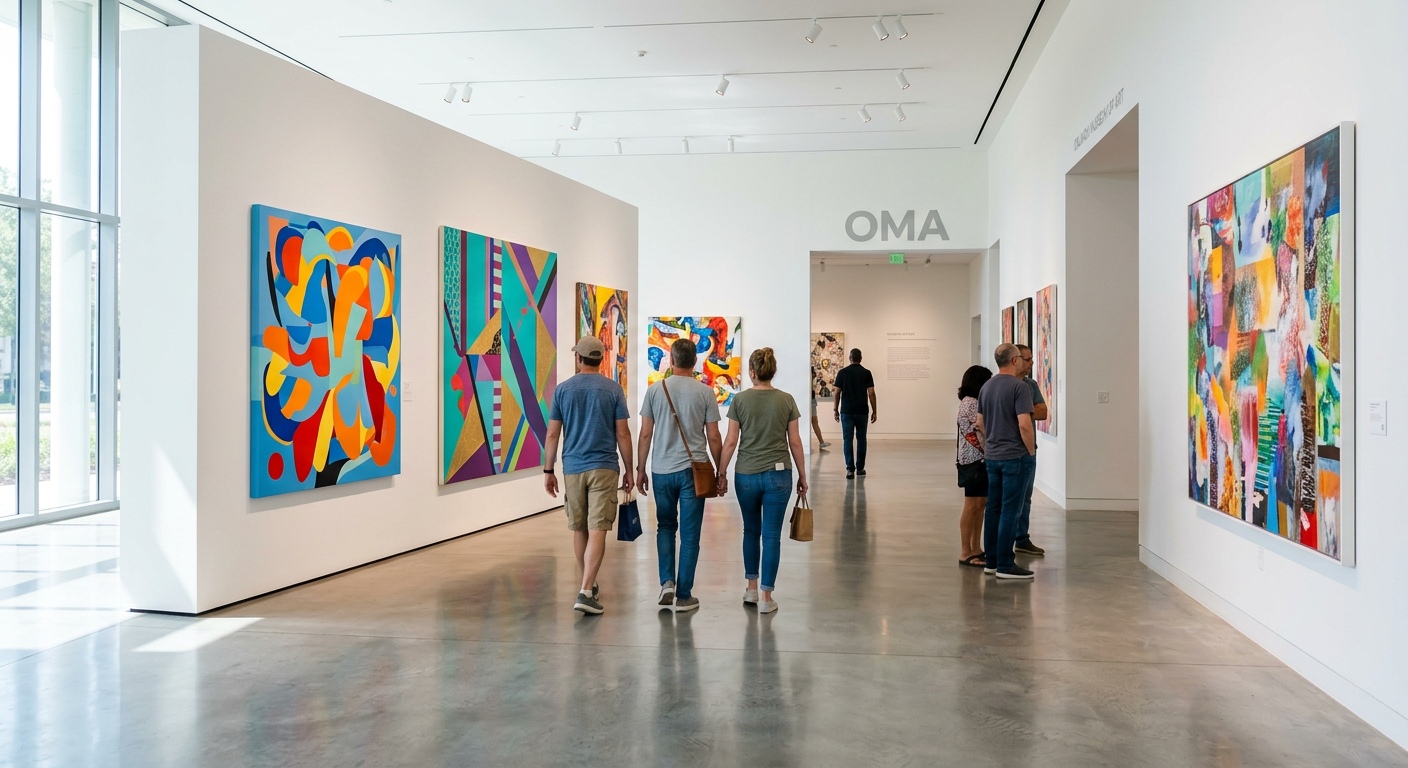
General admission runs about twenty dollars. It is a rounding error compared to a single-day theme park pass. The transaction at the front desk takes thirty seconds. No fingerprint scans, no digital queue systems, no frantic mobile app notifications telling you your boarding group is ready. The analog nature of walking up, buying a paper ticket, and walking into an air-conditioned room feels archaic in the best possible way.
Tourism boards insist there is a proven schedule for viewing contemporary exhibits to manage seasonal surges. The 2026 attendance tracking models show exactly when the galleries swell with field trips. If you want the space to yourself, hit the front doors at exactly 2:14 PM on a Tuesday. The rest of the week operates on a loose rhythm of roaming high school art classes and locals dodging afternoon thunderstorms.
If you seek a change of pace around the region, you might head out toward Kissimmee to link up with a Boat Tour Agency for Florida Adventures, or explore the Sam Houston Boat Tour – a Houston Bay Adventure. But for those looking inward, the first time I slowed down to look at the photography wing inside the Orlando Museum of Art, my perspective shifted.
Reason 6 — The 1st Thursdays Block Party Paradox
Then the pivot happens. You spend all this time praising the quiet, and suddenly the museum throws a party.
That predictable silence evaporates during the 1st Thursdays event. The museum trades its routine gallery atmosphere for a bustling neighborhood block party. Local vendors set up folding tables while guests try to balance plastic wine cups and discuss sculptures. According to community event records kept by the City of Orlando, these curated evenings draw the largest concentrated crowds of the month.
The sour tang of cheap white wine spills into the air near the temporary bar setups. You find yourself weaving around groups of talking strangers just to see the landscape paintings. A crumpled green admission receipt lay discarded near the base of a concrete pillar in the hallway. Some places demand quiet. The Orlando Museum of Art just demands you show up and pay attention.
Reason 7 — The Contrast with Downtown's Concrete Reality
The gift shop carries the faint scent of fresh paper and expensive soap. It sits off to the side, unassuming, selling thick architecture books and local artisan jewelry. It is easy to skip, but 2026 me always stops to browse the postcard racks. The typography on the exhibition books feels satisfyingly stark.
Leaving the museum is always jarring. You step back out into the glare of Loch Haven Park. The friction returns.
I used to think this museum was an escape from Orlando. I was wrong. The art inside does not hide from the city's chaos; it just organizes it onto walls and pedestals where we can finally look at it without getting run over. The Orlando Museum of Art is not a retreat. It is a mirror.
If you want to understand the tension of this region—the development clashing with the desperate need to preserve whatever natural history remains—you do not need to read a civic planning report. You just need to walk slowly through the contemporary exhibition spaces. Then you grab your bike, merge back onto the trail by Ivanhoe Village, and deal with the traffic all over again.