The Reality of the Lower Trails at Exit Glacier
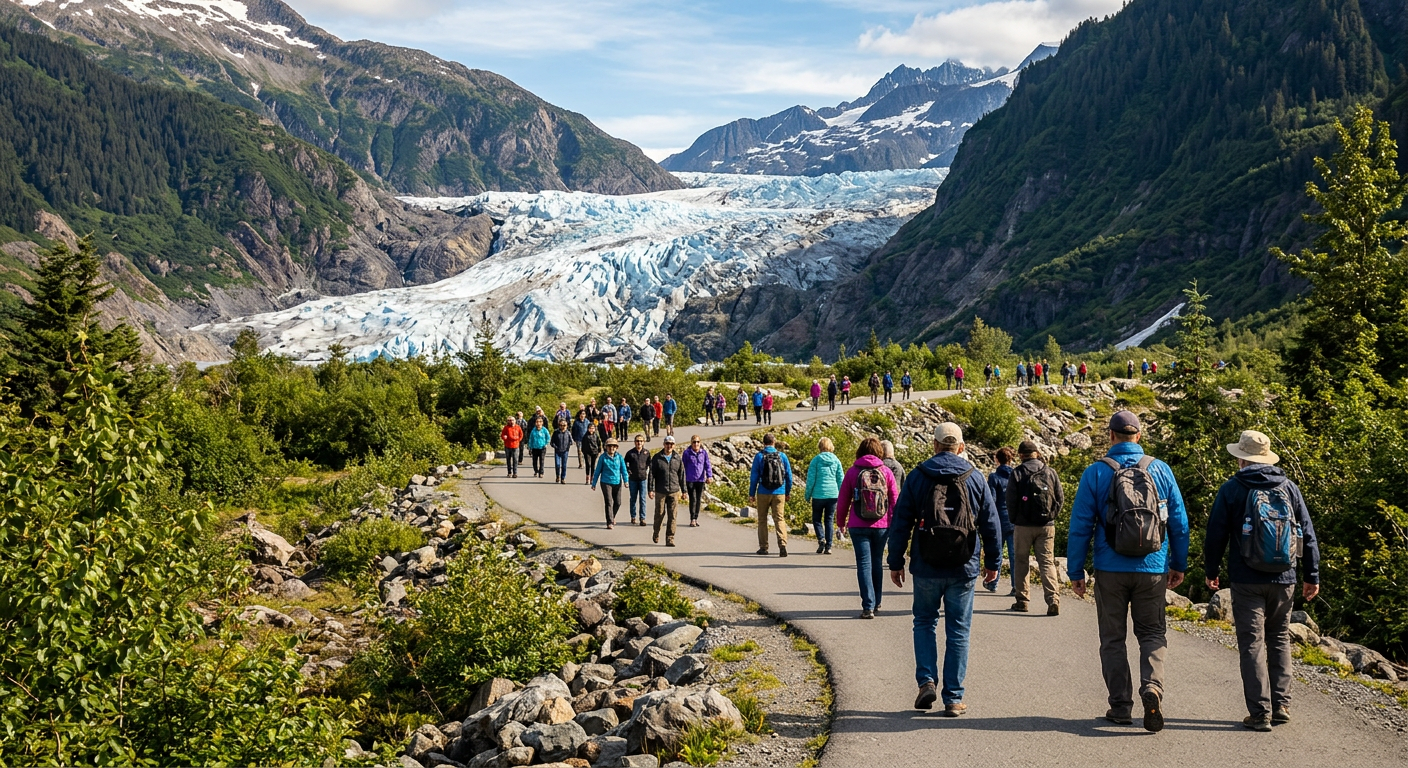
Seward glacier hiking begins in a parking lot that smells like diesel exhaust and damp fleece on a Tuesday morning. Bus engines idle near the trailhead while tourists line up for the restrooms. You pull on your boots on the gravel while a family applies bug spray upwind. A guy three cars down is eating a whole grocery store rotisserie chicken out of a gallon Ziploc bag. This is the starting line.
The glossy 2026 brochures promise solitary ice explorers staring into a crevasse under a flawless blue sky. The reality of the lower trail network is a paved loop clogged with selfie sticks and guided tour groups. The ice retreats every year. The crowds advance. Research is my love language; reality is my ex.
The Harding Icefield Escape
The paved path stops after a half mile and turns into dirt and rock. A flat piece of rusted metal sits near the base of a trail marker—a remnant of some forgotten infrastructure. The constant crunch of gravel under hundreds of boots fades out past Marmot Meadows. I can't prove this, but the casual walkers don't turn back because of the vertical climb. The steepness is a factor, sure. But the real deterrent is the sudden shift in exposure. You clear the tree line, and the valley wind hits you square in the chest. It strips the warmth out of your jacket before you can zip it up.
The air near the bottom hangs thick and wet, sticking your shirt to your spine in the July humidity. The upper trail is a slog. You earn your isolation with every step up that mountain, passing through distinct vegetation zones until nothing but alpine tundra remains.
Real seward glacier hiking requires a specific stamina. According to the National Park Service, the route is rated as strenuous, and they do not exaggerate. You gain nearly 4,000 feet of elevation over rocks and snowfields across roughly four miles. We always tell guests booking gear through Rockon Recreation Rentals to pack extra layers for the summit. The icefield creates its own weather system up there, distinct from whatever the coastal forecast promised at breakfast.
How Altitude Changes the Trek
The rotor blades chop the coastal air into a rhythmic thud that rattles the plastic headset against your skull. We lift off from the municipal airport near Resurrection Bay. The ground drops away. The coastal humidity vanishes, replaced by a dry, sharp cold that slips through the door seams. The passenger seatbelt in front of me had a frayed yellow inspection tag from 2021 flapping in the draft.
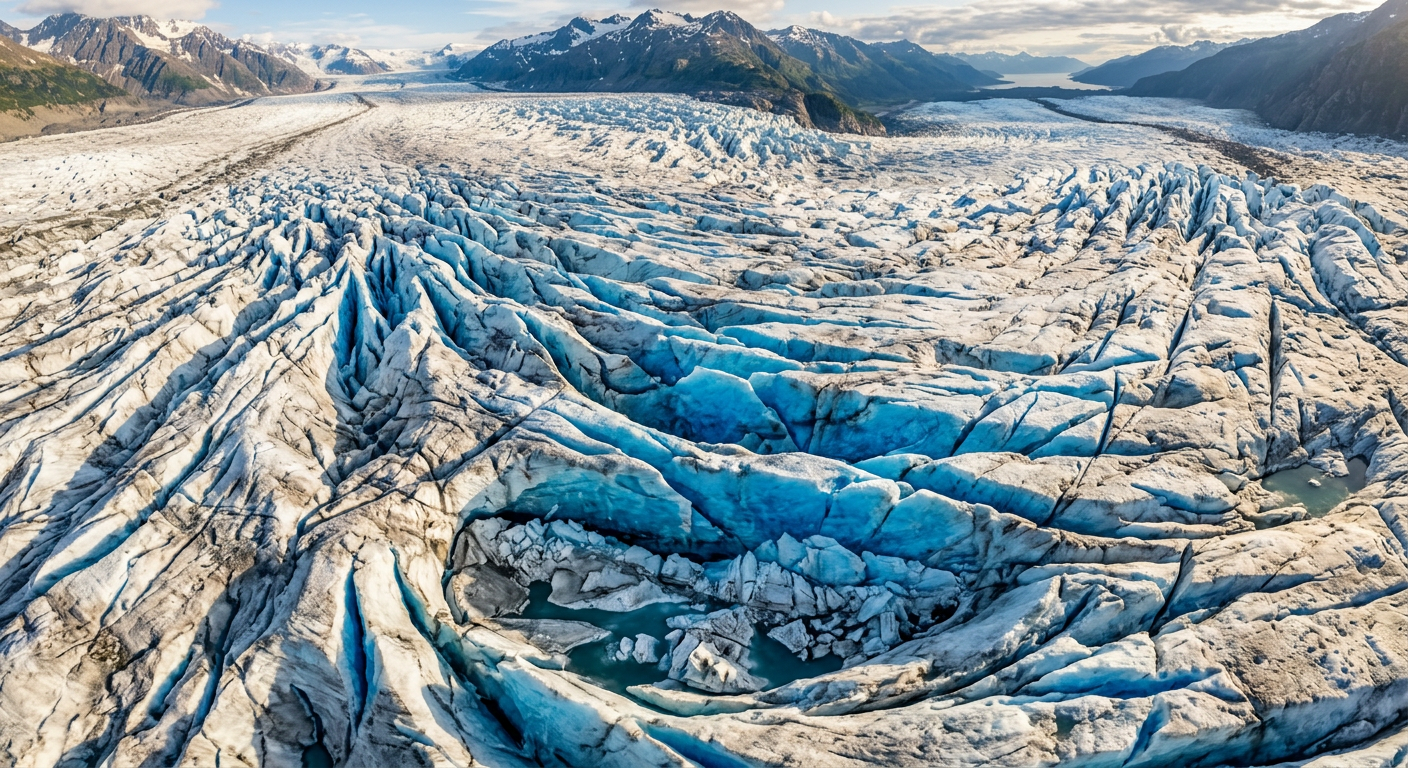
Down at the Harding Icefield Trail, you spend hours staring up at the toe of Exit Glacier. The lower ice is gray. It is covered in dirt and rock debris scraped from the valley walls. From the air, the perspective flips. The dirt vanishes. You look down into endless grids of blue crevasses that stretch toward the horizon. You see the massive scale of what the ground-level hikers miss.
2019 me believed physical suffering was a mandatory toll for entry. I thought seward glacier hiking meant earning the view through blisters and sweat. I was wrong. Fighting the valley crowds for a glimpse of retreating ice is a choice. A helicopter is a bypass code, reframing the landscape from an obstacle to an open map.
The Economics of Elevation
Flight tours cost money. The going rate for a 2026 helicopter drop-off will make you wince. You trade cash to skip the crowded trail. We book these tours for guests through Rockon Recreation Rentals, and it is a steep premium for solitude. You are paying for time, unblistered heels, and the immediate gratification of untouched ice.
The pilot wore a faded green jacket with a broken zipper. He adjusted a small dial on the center console three times before we reached the ice. The helicopter landed on a flat patch of snow. We stepped out onto the surface.
Ground Reality on the Icefield
The surface up here behaves differently. True seward glacier hiking begins after the helicopter departs. The silence closes in once the engine noise fades. You navigate between ice towers instead of dodging tourists with walking sticks.
According to safety guidelines published by the National Park Service, specific crevasse rescue knowledge is required for unguided ice travel. Most people just hire a guide. The guides supply the ropes and crampons. You just walk and listen to instructions.
Essential Gear for Navigating Ancient Blue Ice
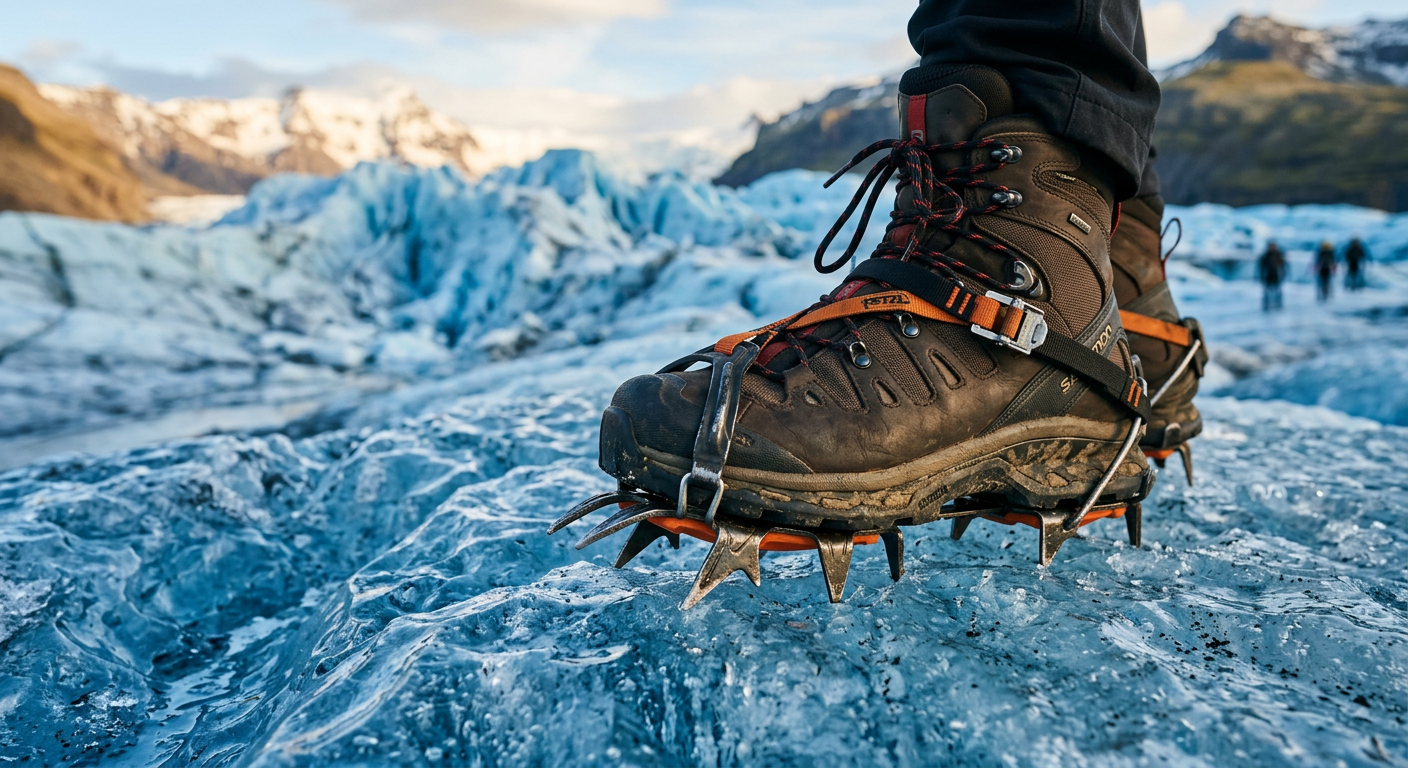
The friction of a ten-point crampon grinding against the rubber sole of a summer boot feels wrong. You tighten the nylon straps over your instep and feel the metal teeth bite into the rock dust. A flexible shoe and rigid spikes create a clumsy, flat-footed walk. It forces you to alter your natural gait before you reach the frozen edge. I borrowed a harness from a local guide shack last week. It still had a frayed piece of neon pink webbing tied to a locking carabiner from last season.
The Reality of Glacier Microclimates
I spent years running outdoor operations down south as a VisitFlorida Travel Partner. I assumed coastal humidity was the ultimate test of human endurance. That assumption broke on my first step onto the lower Harding ice. The wind flowing down a glacier behaves like a cold liquid, dropping the temperature fast. The thermal shock redefines your layering strategy.
Proper seward glacier hiking requires modular clothing. You start the dirt trail sweating in a base layer. By the time you reach the seracs, you need a mid-layer fleece and a windproof shell. Cotton clothing is a liability up here. Sweat freezes against your skin the moment you stop moving. Data from the National Weather Service notes that localized katabatic winds frequently hit this specific valley on clear afternoons. Pack the heavy jacket, even if it feels absurd in the parking lot.
The guides distribute identical gray waterproof shells. You put yours on and walk toward the ice, looking like part of a low-budget sci-fi expedition.
Most tourists rent boots a half-size too big. The resulting heel slip causes deep blisters before you reach the snowline. We tell people renting equipment through Rockon Recreation Rentals to bring proper wool socks. A thick sock fills the gap in a rental boot. Relying on thin cotton ankle socks is a rookie mistake. It ruins the descent and ensures you spend the afternoon limping through town.
What to Expect When the Rotors Stop
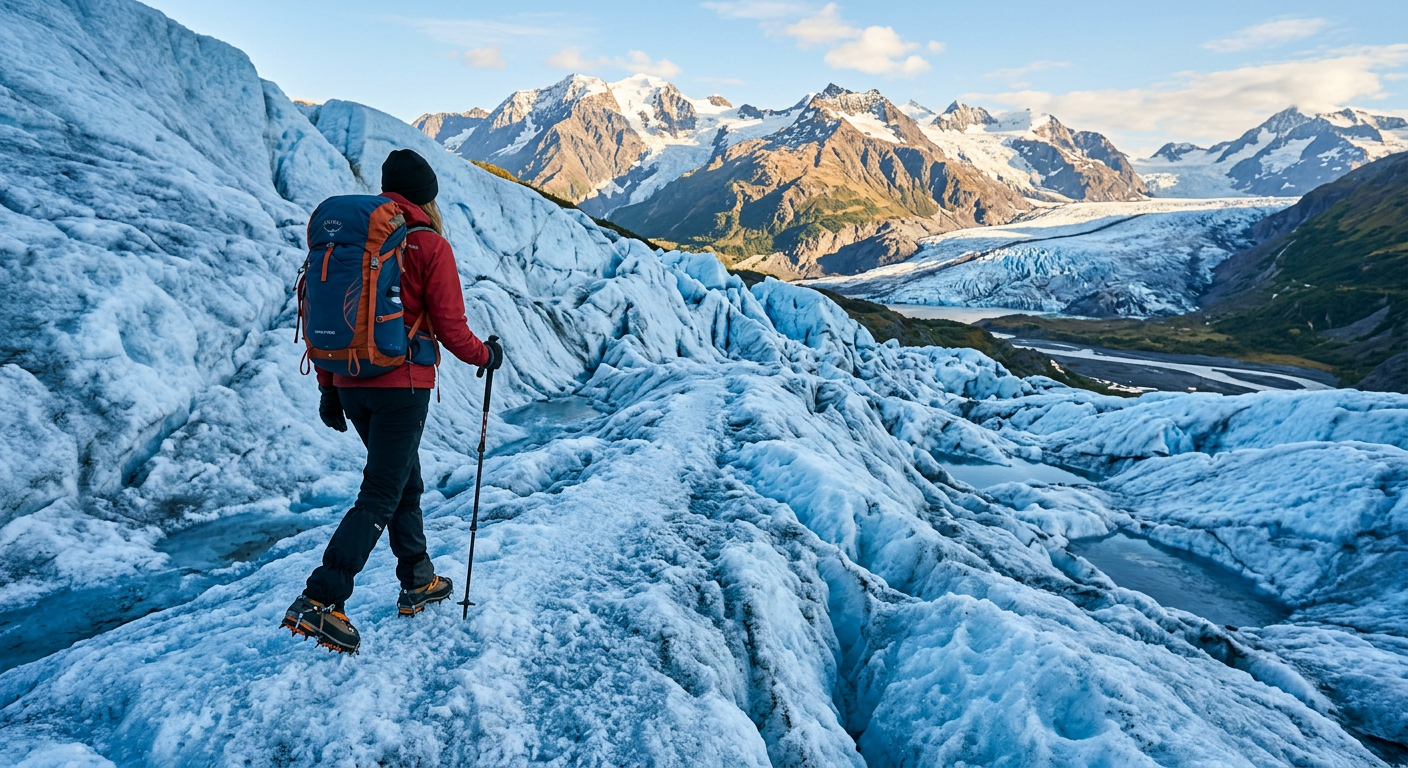
The helicopter skids settle onto the ice shelf with a hollow thud that reverberates up through your boots. The pilot flips a row of overhead switches. The mechanical roar of the rotors spins down into nothing. You step out of the cabin, and the first breath of glacier air tastes like biting on a nickel. It is a sharp, metallic tang in the back of your throat that coastal air never carries.
A stray spruce needle rests on the surface of the blue ice. It blew up here from miles away.
I used to think people booked heli-tours just to avoid the long uphill walk. A few seasons back, a woman on our tour refused to let go of the helicopter door frame. She thought the glacier would feel like a slick community skating rink. We nudged her onto the surface, and her crampons dug into the granular ice. It sounded like walking across a floor covered in crushed lightbulbs. The tension left her shoulders right there. The surface offers more grip than most paved sidewalks in town.
Revisiting the Scale of the Ice
My early assumptions about seward glacier hiking were mostly wrong. I always told visitors the appeal was the massive scale of the icefields. Looking at the horizon makes you feel small. I thought that was the point. Then I started looking down at my feet. The macro details of the ice are far more interesting than the panoramic views. You can spend half an afternoon staring at air bubbles trapped in the frozen layers from centuries ago.
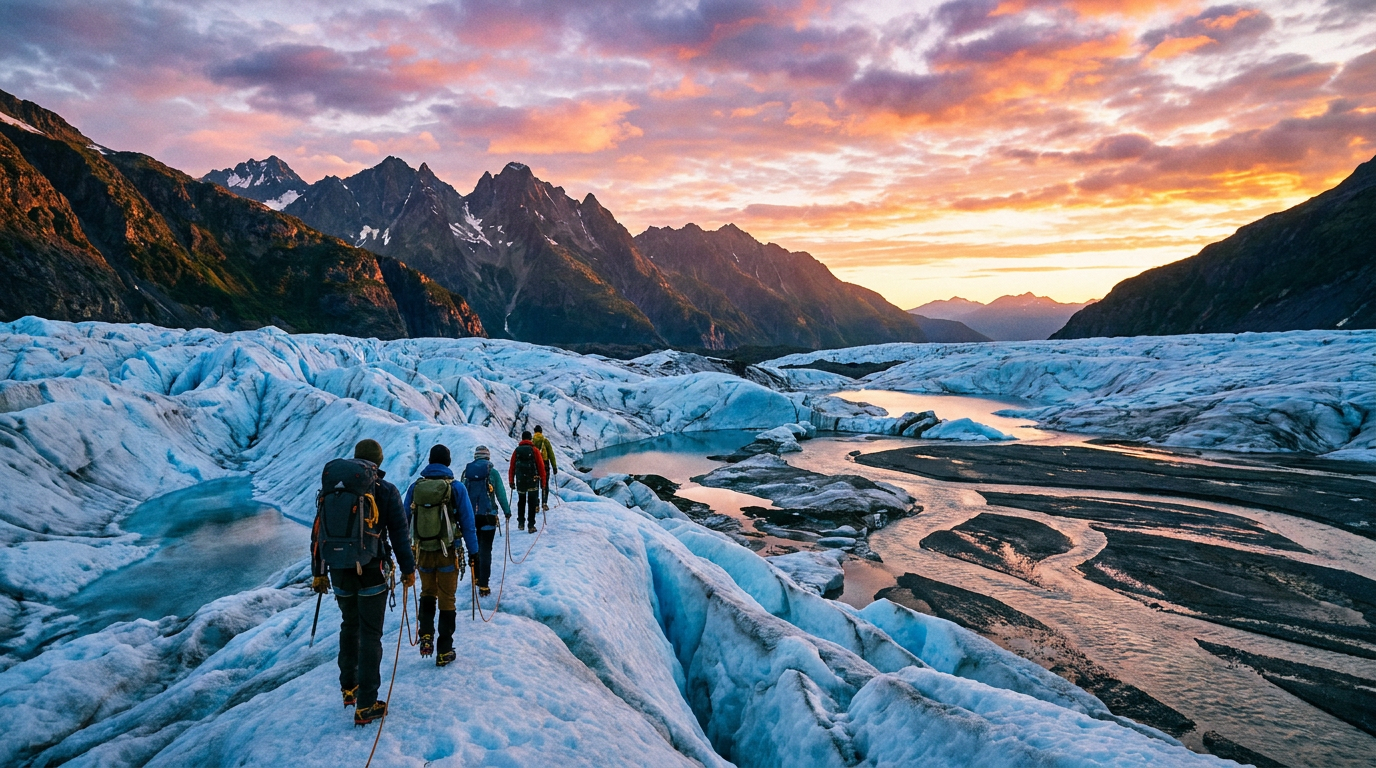
We walk away from the landing zone in a single line. The guide leads us toward a shallow depression in the ice. The surface changes from white snow to exposed blue ice. Water flows in a narrow channel down the slope. We step over the small stream and stand on a flat section of ice. The wind blows from the north. The mechanics of the glacier become obvious when you just stop moving and watch the meltwater.
Finding the right tour operator makes a difference when navigating these remote environments. We suggest checking the options through Rockon Recreation Rentals before committing to a flight path. Different tours land on different sections of the ice depending on the 2026 conditions. The weather shifts quickly up here. If it's on a postcard, it's a trap. Real seward glacier hiking involves cold fingers and sudden route changes. Getting up here takes some planning, but standing on top of the world is a quiet experience you hold onto. Beige is a sin.
Seward Glacier Hiking FAQ
Do I need a guide for the Harding Icefield Trail
No, the dirt and rock trail is open to the public without a guide. However, if you plan to step onto the actual ice at the top, National Park Service safety guidelines mandate crevasse rescue knowledge or hiring a professional guide. Do not attempt unguided ice travel without extensive alpine experience. The crevasses are often hidden by thin snow bridges that collapse under body weight.
How long does the hike take
The round trip from the Exit Glacier parking lot to the top of the Harding Icefield Trail takes most hikers between six and eight hours. This depends heavily on your fitness level, trail conditions, and how often you stop to layer up against the wind. The trail covers about 8.2 miles round trip with almost 4,000 feet of elevation gain.
Is seward glacier hiking safe for beginners
The paved lower trails are safe for anyone and fully accessible. The upper climb is strenuous but manageable for fit beginners who pace themselves. Walking on the ice itself requires crampons, safety gear, and a trained guide if you are a novice. As long as you respect your physical limits and hire a professional for the technical ice portions, it is a safe endeavor.
What happens if the weather turns bad
Katabatic winds can drop temperatures rapidly on the icefield. If visibility drops or heavy rain starts, the rock trail becomes a slick liability. Always carry a windproof shell and be prepared to turn back if the weather closes in. Tour operators will cancel and refund helicopter flights if the 2026 cloud ceiling drops too low for safe landing.
Are helicopter tours operating in 2026
Yes, helicopter drops on the icefield are active for the 2026 season. Flights depart near Resurrection Bay and Seward Airport, but they are highly weather-dependent and frequently delayed by fog or low cloud ceilings. Booking early in your trip gives you buffer days to reschedule if weather grounds the fleet.
Can I wear regular hiking boots on the ice
Standard hiking boots are fine for the dirt trail climb, but stepping onto the glacier requires rigid soles to properly support metal crampons. Most guide services provide specialized mountaineering boots for this reason so your feet don't flex out of the spikes. Flexible trail runners are dangerous on technical ice.
Where does the trail start
The trail begins at the Exit Glacier Nature Center parking lot, located at the end of Herman Leirer Road, just outside of Seward proper. The drive is roughly twenty minutes from the small boat harbor. Arrive before 9 AM if you want a parking spot during the peak summer months.
Will I see wildlife on the trail
Black bears and marmots are commonly sighted near the tree line and in the lower meadows. You must carry bear spray and know how to deploy it when planning your seward glacier hiking trip. Moose are also frequent visitors to the lower paved trails near the riverbed.
Are there restrooms on the upper trail
No. The only facilities are located at the parking lot nature center at the base. You must pack out all waste, including toilet paper, from the upper trail sections. Leave No Trace principles are strictly enforced in this fragile alpine environment.
Do I need reservations
You do not need reservations for the public hiking trail, but parking fills up fast by mid-morning. Guided seward glacier hiking routes, ice climbing excursions, and helicopter tours have limited daily slots and must be booked weeks in advance. The 2026 summer season books out rapidly, so secure your guides early.
Plan your trip: Ready to experience this firsthand? Book Seward Helicopter Tours From Marathon Helicopters directly through our marketplace.