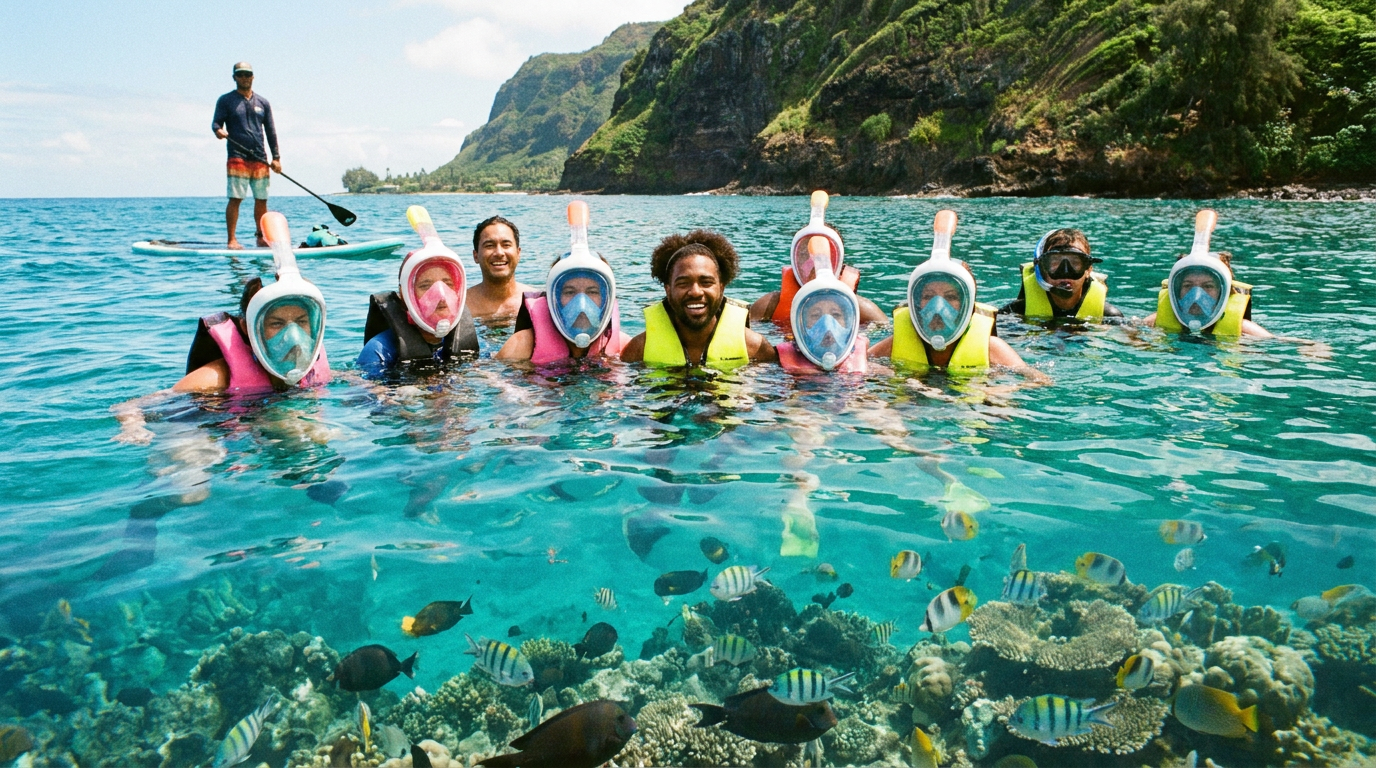
The Immediate Reality Check of Staring Down the Deep End
The briny sting of saltwater hits the back of your throat before you even leave the fiberglass deck. You squeeze a yellow foam waist belt, staring into a bottomless indigo drop-off roughly a mile off the Waikiki coastline. A molded silicone mouthpiece sits awkwardly against your front teeth. A guy sitting across the boat aisle has a faded tattoo of a toaster on his left calf. He adjusts his defogger bottle twice, staring at the horizon.
When looking into options for snorkeling Hawaii, non-swimmers hit a wall of anxiety right at this exact moment. The 2026 tourism boards sell a quiet mermaid fantasy. They promise gliding over coral nurseries in serene silence. Reality is a heavier, louder affair. Trusting a plastic pipe for oxygen feels fundamentally wrong to a land-dweller. It involves tight neoprene jackets and Darth Vader-style breathing echoes.
Navigating Catamaran Etiquette Before You Jump
The thick musk of marine diesel and chemical sunscreen bakes into the afternoon air while the captain cuts the engine. I go where the signage is bad and the coffee is passable. Today that means a functional thirty-foot charter tossing out an anchor at Turtle Canyon. The captain's microphone has a piece of blue painter's tape holding the battery cover shut. He taps it once before beginning the deck briefing.
I always assumed the main challenge for weak water-dwellers was leg fatigue from kicking against the open ocean swell. It turns out the true hurdle happens before you touch the ladder. The briefing details how to avoid stepping on a stranger's carbon-fiber fins while the boat pitches sideways. You learn to walk like a duck with flat, dragging footsteps. Dignity stays back at the harbor.
The Equipment That Keeps You Afloat
The wet friction of pulling on a rented neoprene top feels restrictive. Your palms cramp on the slick aluminum rungs of the boat ladder. Letting go of that bottom step demands blind trust for anyone lacking inherent aquatic confidence.
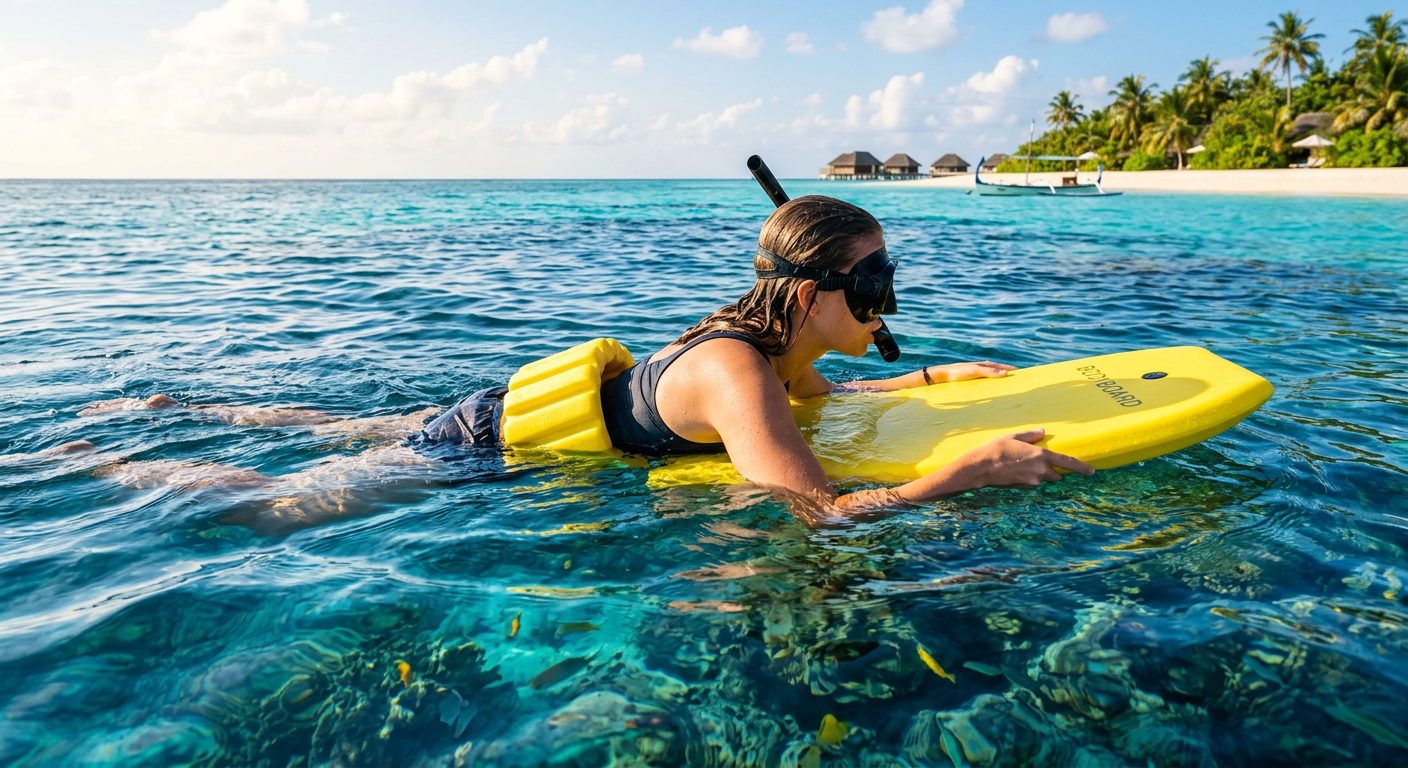
Proper gear choices separate a good morning from a stressful retreat to the swim step. A fancy panoramic diving mask fails you the moment you hyperventilate. When browsing outfitters on platforms like Rockon Recreation Rentals, look specifically for operators who prioritize horizontal buoyancy gear for novices.
Flotation Devices Dictate Your Posture
Most folks assume any bright orange marine vest works for coral viewing. Standard life jackets are built for emergency survival, not recreation. The buoyant panels cluster on the front chest area to deliberately flip an unconscious person onto their back. You want to look downward at marine life. Fighting a bulky survival jacket just to force your face into the water constantly strains your neck muscles. Beige is a sin, but bad gear is a tragedy.
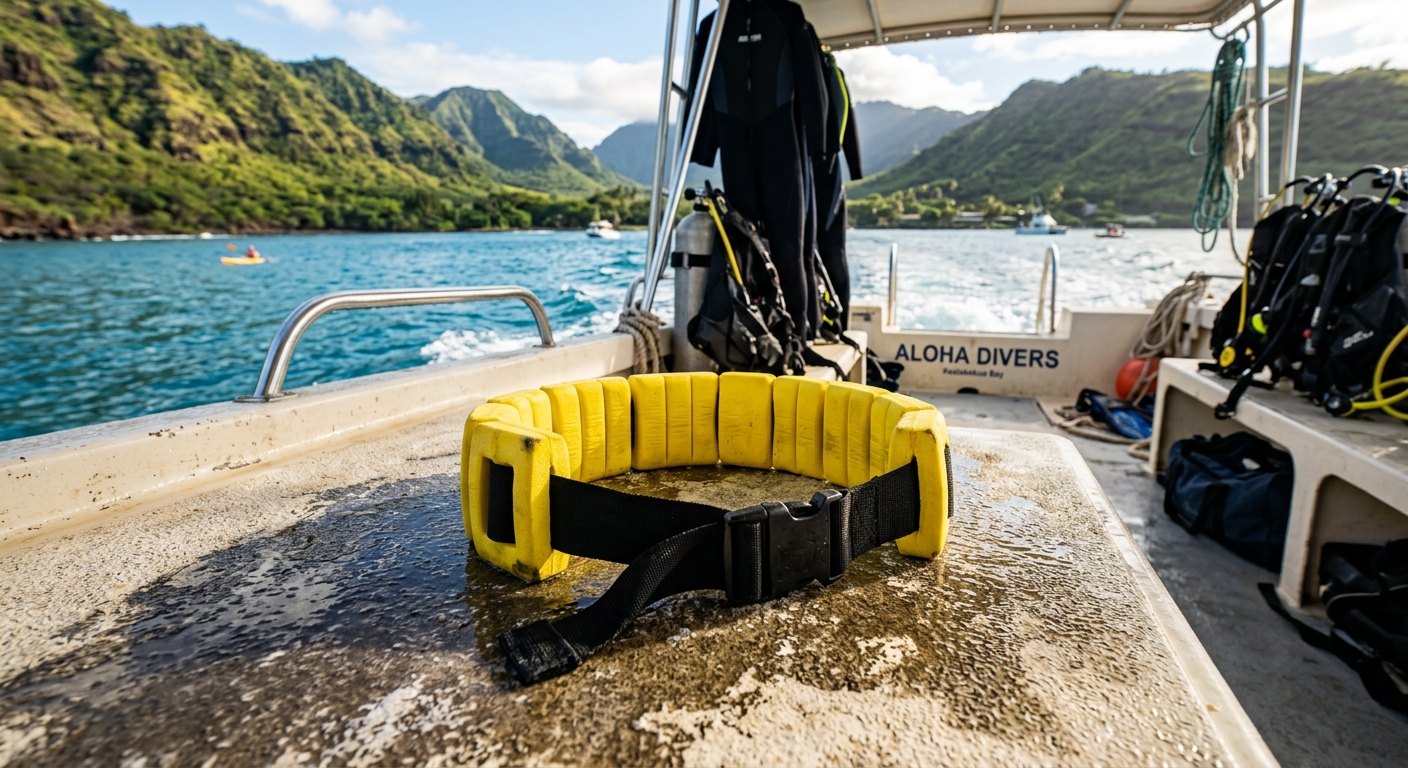
This explains why, for safe snorkeling Hawaii, non-swimmers require horizontal buoyancy tools. Smart guides trade front-heavy preservers for dense foam waist belts. These ride low on your core to elevate your legs. Almost all of your surface panic evaporates the second that foam block supports your lower body weight.
2019 me used to tell nervous guests to ignore the waist belts because they chafe under your arms. 2026 me knows that was terrible advice. The belt stops heavy legs from sinking. You stop fighting the mild offshore current. According to biomechanics research from the University of Hawaii, maintaining a horizontal water posture lowers your base calorie burn. You conserve energy for breathing instead of treading.
Why the Bobbing Strategy Beats Actually Swimming
The rhythmic slap of the hull against the Pacific swells drowns out the chatter on deck. When an athletic swimmer hits the water, the noise mimics a washing machine on the spin cycle. They kick with wide arcs that churn the sandy floor into a cloudy mess. Strong swimmers splash continuously to maintain speed. That underwater noise travels for miles.
For years, I viewed the inability to swim efficiently as a massive flaw. The faster you move, the more you see, right? I sat on this exact Waikiki charter recently watching a local college swim team dive in. I expected them to spot every creature hiding in the bay. Then I looked down over the rail. I watched the reef life immediately scatter from all the aggressive splashing. My assumption was backward. Being awful at swimming is your best tactical advantage.
The Realities of Turtle Canyon
Turtles hate cardio.
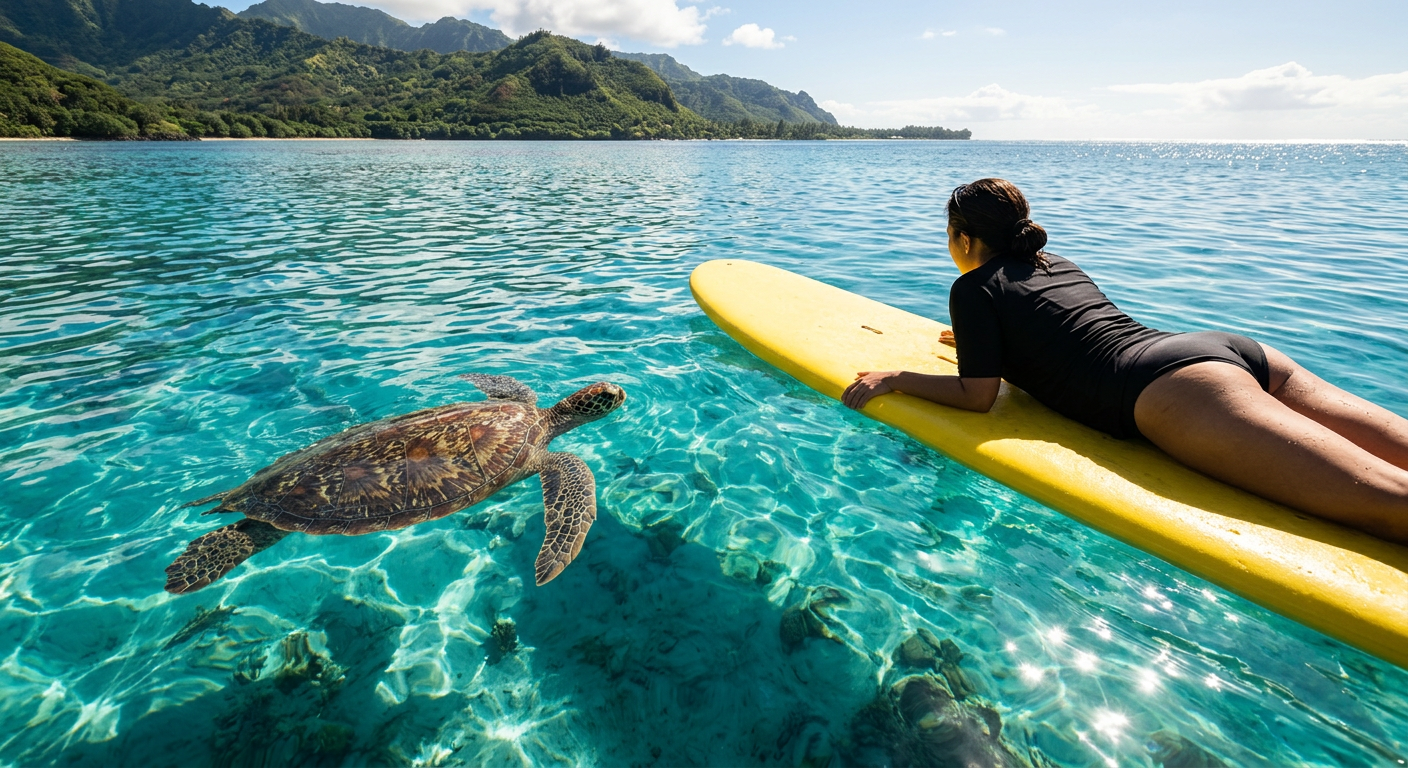
Those without strong swimming skills cling to thick foam belts because letting go means sinking. The fear of deep open water leaves everyone physically frozen. We lock our arms in place. We just bob with the current.
Turtle Canyon is not a residential neighborhood for the Hawaiian green sea turtles (honu) — it is a cleaning station. They travel to this specific shallow reef so small wrasse fish can eat the algae growing on their shells. Just like a car wash, the operation requires the client to remain parked. When an athletic tourist swims frantic circles around a resting honu, the turtle bails. It dives back down to the safety of the dark blue depths.
Data from NOAA Fisheries shows these ancient animals require calm resting environments. By anchoring yourself to a rigid float or a foam noodle, you stop being a threat. You become another piece of floating driftwood. The honu rise from the coral heads about 30 feet down, slowly breaking the surface to breathe right next to the stationary floaters. If you book an excursion catering to snorkeling Hawaii, non-swimmers often walk away with the best wildlife photos. You aren't a disruption.
Accepting the Drift
Does this make you look graceful in the water? No. Drifting like a lost cork strips away all aesthetic dignity. Dignified people scare the turtles away.
Surviving the Stern Drift Line
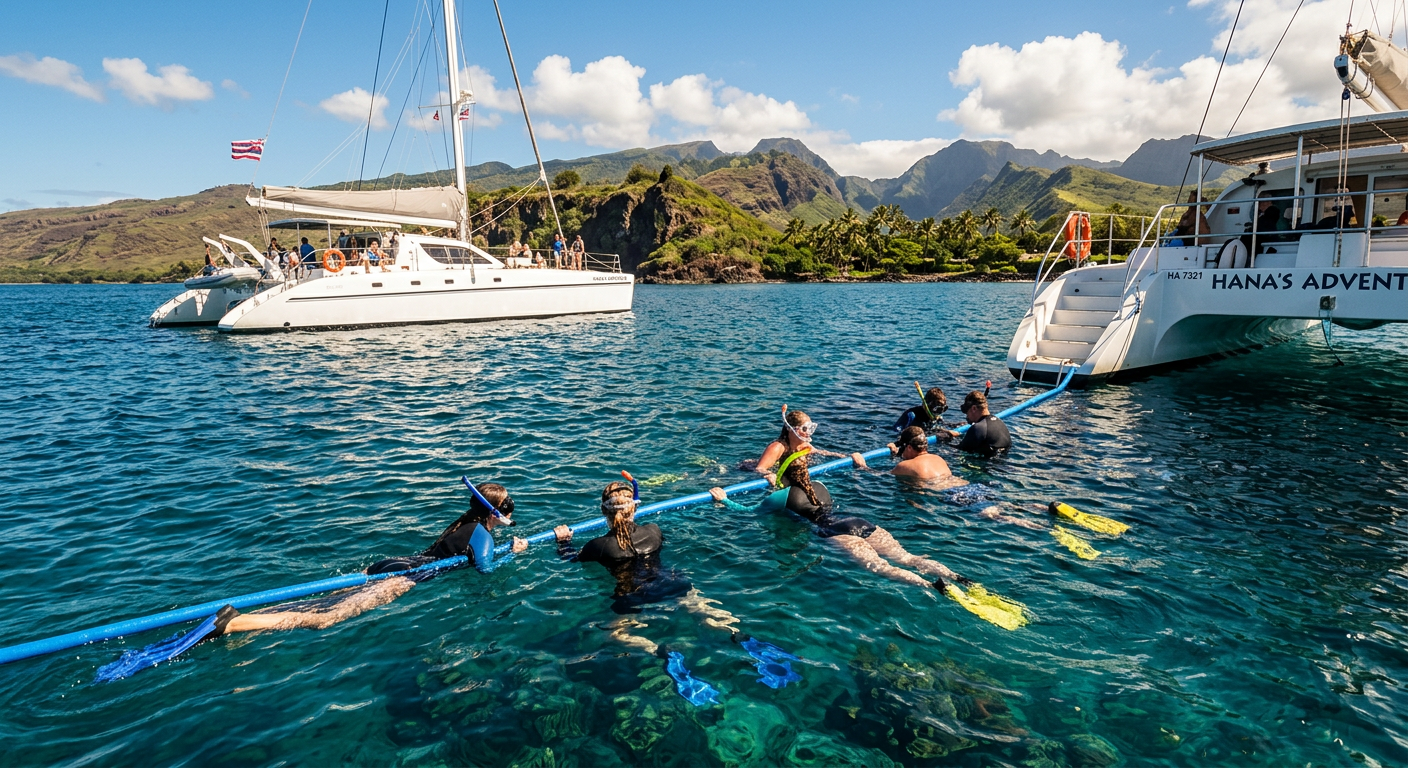
The abrupt temperature shift from the sun-baked deck to the cool mid-70s water shocks your system. You stand frozen at the top of the aluminum ladder. Below you, the water is a bright sapphire blue. The deckhand, sporting neon orange sunglasses, casually points toward a rope trailing behind the motors.
Slipping into open water off a vessel goes against basic terrestrial instincts. You brace for a chaotic plunging sensation. Instead, the yellow buoyancy belt catches your weight near your ribs. The splash is loud. Gravity just sort of pauses.
The Magic of Being Tethered
If you have anxiety about currents, ask the boat crew one specific question before leaving the harbor. Ask if they deploy a stern drift line. This long, braided safety rope trails directly behind the boat while anchored.
The captain ties the blue line to the back cleat. White foam buoys attach to the periodic knots. Swimmers grasp the rope with both hands. The ocean current gently pushes the line straight out from the vessel, keeping it perfectly taut. The cleat on our boat had a frayed piece of yellow string tied to it for no apparent mechanical reason.
I used to dismiss these trailing ropes as restrictive training wheels. Research is my love language; reality is my ex. The moment you grab that braided line, navigation anxiety vanishes into the warm trade winds. Bypassing the kicking entirely feels liberating.
The 2026 water safety guidelines from the National Park Service emphasize that staying physically linked to your vessel mitigates most offshore current risks. The rope delegates the physical labor to the boat. You hold on, look down, and let the Pacific take over.
The Core Mechanics of Breathing Through Plastic
The dry hiss of inhaling ambient air through a tube contrasts sharply with the wet pressure of the ocean against your scalp. This sensory divide breaks basic human instinct. 2018 me would have stayed dry on the boat drinking flat ginger ale. Present me smiles because that brief burst of physiological panic is just a cheap toll to pay.
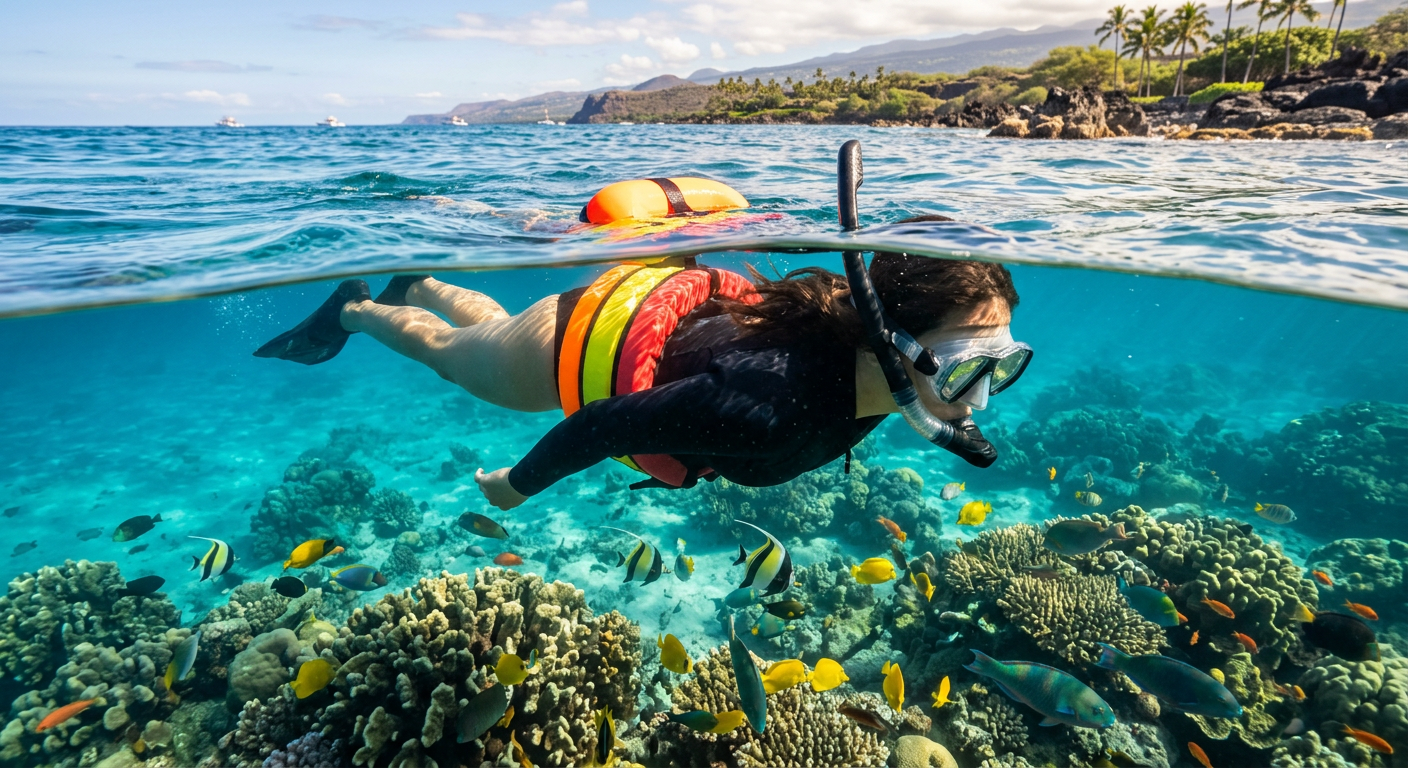
A standard silicone tube attaches to the left side of your mask strap with a plastic clip. The mouthpiece rests between your teeth. Making an outing involving snorkeling Hawaii non-swimmers manageable usually comes down to pacing their breath. Novices bite down hard on the tabs, causing sudden jaw spasms. Regulate your air intake slowly. Taking shallow, rapid breaths recycles carbon dioxide right there inside the tube casing. Your brain registers this as suffocation. Focus entirely on long, deliberate exhales to purge the chamber.
Rewriting Your Brain's Rules on Oxygen
I honestly believed anyone with poor mobility would eventually swallow a wave and panic. My stance shifted when I inspected the modern rental masks rolling out across Waikiki charters. The new dry-top snorkels house a tiny internal float valve at the very top. It snaps shut the millisecond a rogue wave tries to enter the opening. You skip the confusing, forceful blow-out technique required by vintage gear. The plastic valve does the heavy lifting.
Always spit in your mask to prevent fogging before securing the strap around your ears. Obscured vision stacked on top of weird breathing guarantees a shortened trip. I can't prove this, but the people who squeamishly refuse to spit in their rented masks are always the ones sitting on the swim step complaining about the views ten minutes later.
Returning to the Real World
The crew signals the end of the drift. You pull yourself hand-over-hand up the blue line, relying entirely on upper body leverage while your foam belt resists the drag. Hauling yourself back up the dripping aluminum ladder requires a final burst of crude effort. The guy with the toaster tattoo stumbles slightly onto the deck, tossing his fins into a wet plastic bin. Your jaw aches from clamping the mouthpiece. The wind picks up as the catamaran pivots back toward the Honolulu harbor. The engines rumble back to life, shaking the deck plates beneath your bare feet, and leaving the silent cleaning station behind in the wake.
Plan your trip: Ready to experience this firsthand? Book Snorkeling Adventure at Turtle Canyon in Hawaii directly through our marketplace.