The Loud Dock and the Quiet Sky
The heavy scent of unburnt outboard diesel and coconut sunscreen hits you the moment you arrive for florida parasailing at the Bahia Mar marina. You stand on sticky wooden planks and hand over a credit card to hang from a giant piece of nylon. So much for rational decisions.
You pile onto the stern of a towboat, and the captain throttles up past the Fort Lauderdale breakwater. The ride from the dock to the open ocean launch zone takes exactly 14 minutes. That gives you ample time to reconsider your life choices. Honestly, focusing on the mechanics of a thin towline fighting the Atlantic breeze will do that to you. The crew silently sorts harnesses while the hull slaps against choppy gray water. Research is my love language; reality is my ex.
Why Leaving the Dock Noise Behind Matters
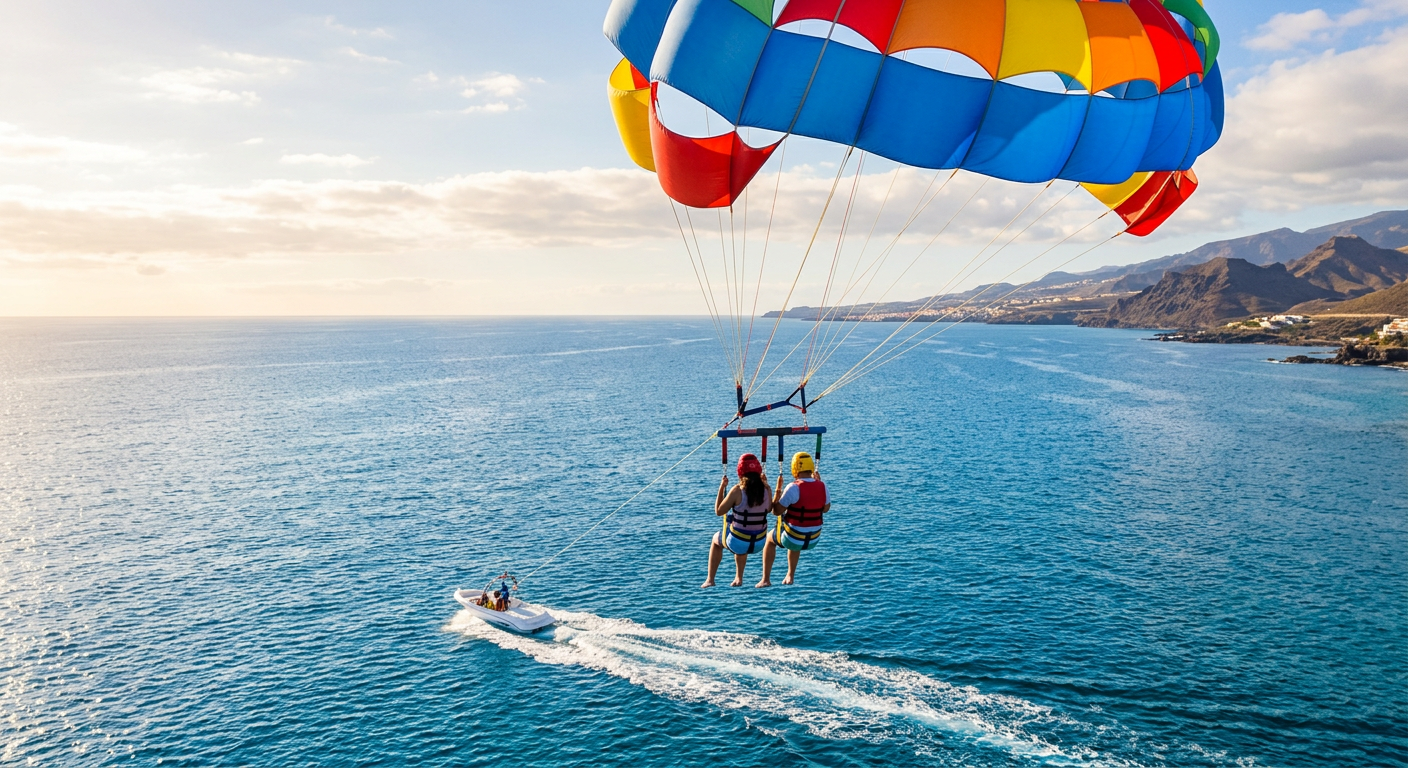
The hydraulic system whines as the canvas canopy fills with air. You expect the ascent to feel like standing in front of an industrial fan. The truth is different. The second your bare feet leave the fiberglass deck, the chaotic rumble of the outboard engine vanishes. You meet silence up there. The only sound is the flat rush of wind sliding over a chute.
Here is the issue. Mass-market florida parasailing vendors just herd tourists onto boats to churn numbers. If it is on a postcard, it is usually a trap. However, the verified operations vetted by Rockon Recreation Rentals cap passenger limits. The crew speaks to you without shouting. Up in the current 2026 season, local captains report unusually high visibility days, offering clear lines of sight to the dark reef patches below. I cannot prove this trend will hold, but the water clarity feels sharper this spring.
Navigating Clinical Pre Flight Jitters
The thick nylon strapping bites into your thighs the moment you step forward. This is the harness. It wraps your waist and loops between your legs with all the elegance of a giant climbing diaper. You waddle toward the rear launch platform with a stiff, unnatural gait while the deck pitches.
A small scuff mark shaped like a thumbnail sits near the base of the hydraulic winch drum. The metal underneath is a dull gray.
The Value of a Bored Deckhand
2019 me assumed a talkative, cheering crew meant a safer operation. 2026 me knows that assumption is backwards. You step onto the rear deck expecting a high-energy briefing right before takeoff. Instead, you want the crew to look bored out of their minds. A bored deckhand proves the routine is seamless. They handle the offshore Fort Lauderdale gusts the same way you drive to the grocery store.
Flashy mass-market florida parasailing operations often use noise to mask a rushed process. Trust your gut on this, even if the brochure says otherwise. The verified outfits listed with Rockon Recreation Rentals skip the hype. They let standardized safety protocols dictate the pace. According to a 2026 commercial vessel safety report from the US Coast Guard, standardized launch patterns prevent most towline incidents. Routine keeps people safe.
Reading the Deck Dynamics for Safety
New flyers always nervously scan the sky. You are much better off watching the deckhand's hands. A safe florida parasailing experience relies on this dull, repetitive process. If their movements are smooth and they barely look at the carabiner as it clicks, you are in great shape. Muscle memory handles the heavy lifting.
The crew member grabs the metal rings on your harness. He snaps them onto the towbar. A quick push on the locked gates confirms they are secure. Meanwhile, the boat maintains a steady speed through the ocean chop.
This clinical boredom is your best aviation asset. The deckhand gives a weak thumbs-up and taps his clipboard. Your pulse might spike. His stays flat. That mechanical apathy is what keeps you alive above the Atlantic.
The Physical Reality of Lifting Off the Coast
Salt spray leaves a faint taste of brine on your lips as the yellow nylon canopy catches the wind. It sounds like a canvas sail tearing apart on a mast. Sitting there on the fiberglass, you brace yourself for a massive physical jolt.
The deckhand working the stern is wearing neon green socks with sandals. Naturally. He clicks the final carabiner into the metal yoke and taps your shoulder.
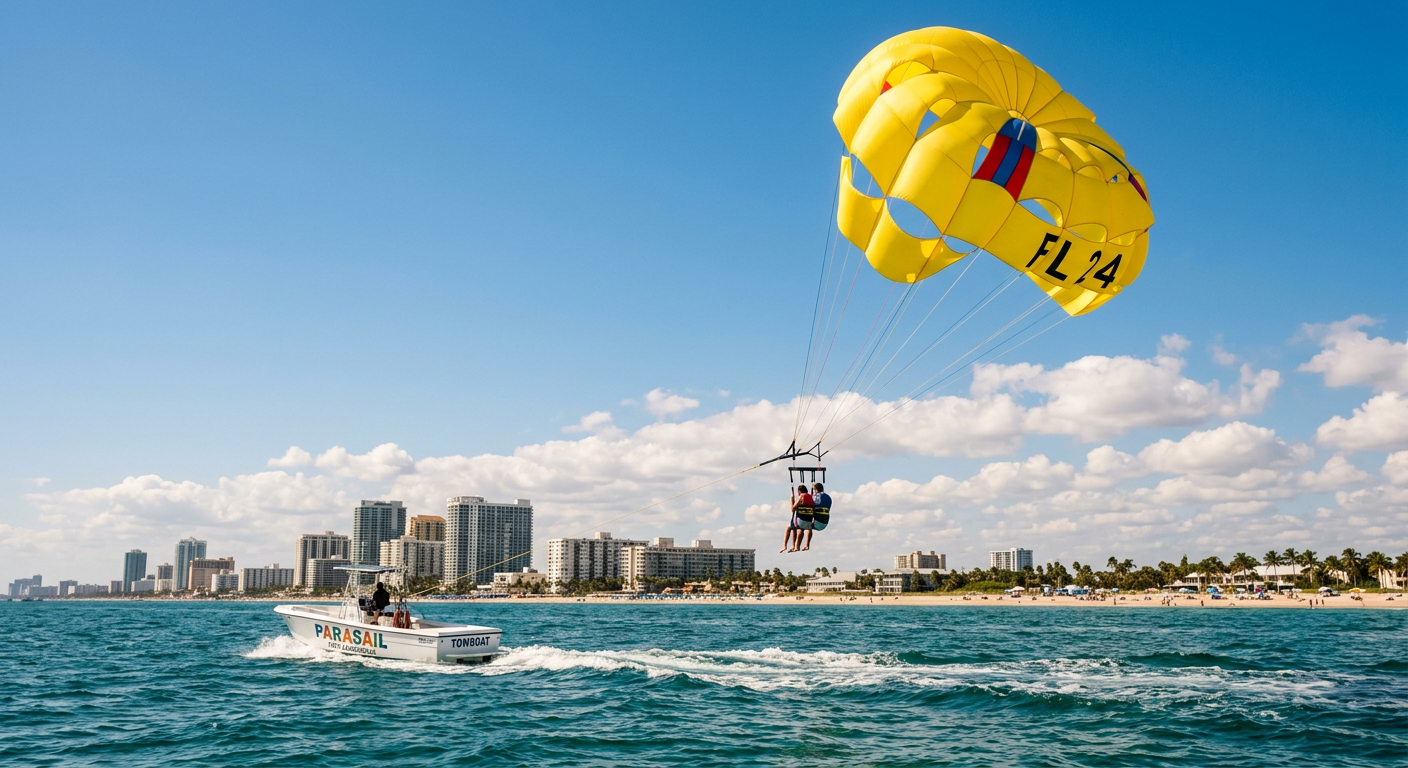
The winch releases the thick line. The deck suddenly drops out from under your feet. I assumed lift-off would drop my stomach. A jarring pull straight into the clouds. The slapping canvas stops the moment the towline pulls tight. The winch spins out wire. The physical sensation is nothing like being hurled into the atmosphere. You just feel like you are sitting in a floating chair while a boat drives away without you. The horizon never tilts. The fear I carried onto the boat was misplaced.
The Mechanics of the Towline
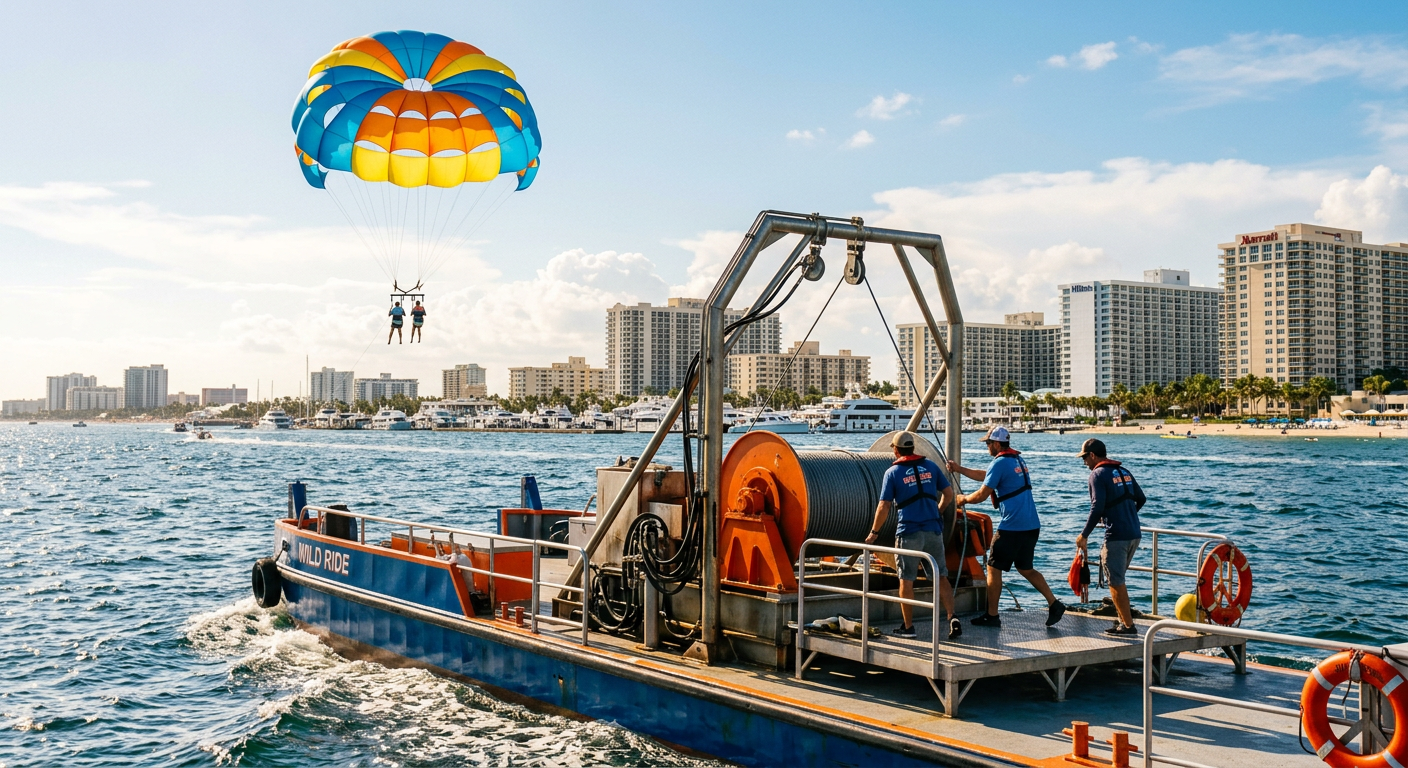
Thick wire unwinds from a metal drum on the back deck. The crew watches a tension gauge on the console. Getting the most out of florida parasailing means understanding this equipment lifts your harness a few hundred feet up. The ascent takes about two minutes under standard conditions.
You pay for controlled distance over the reef. Shady operators stack trips back-to-back, reeling you in the exact second your timer ends. But the wind dictates the real schedule. According to 2026 NOAA atmospheric data, distinct thermal drafts form over Fort Lauderdale beach by mid-morning. The smart captains found via Rockon Recreation Rentals adjust their vessel speeds to match these drafts. They use the wind to stretch their fuel. It saves them gas money, and it randomly buys you extra time in the air.
Viewing Fort Lauderdale from the Harness
I normally avoid the crowded tourist strip along highway A1A. But from up in the harness, the rigid grid of the city finally makes visual sense. You look down and spot the dark, rectangular shapes of artificial wrecks resting near the sandbars. According to the Florida Fish and Wildlife Conservation Commission, nearshore visibility historically peaks during these dry late-winter months. Up above it all, the chaotic ocean scene below reduces to tiny white wakes cutting through blue water. You just hang there, miles from the noise.
Why The Aerial Reality Defies Coastal Tourism
The Marketing Machine Versus The Ascent
Most local florida parasailing brochures look like a conveyor belt aimed at overcharged, sunburned families. Every billboard from Hollywood to Pompano uses the same stock photo of grinning tourists in neon life jackets. Beige travel is a tragedy. I cataloged this entire industry as a standard coastal trap designed to empty wallets. Then the line unspooled from the drum, and my cynical assumptions stayed on the boat.
A distinct drop in air temperature hits your arms as you clear the main deck structure, and the premise of the trip flips. You expect the ride to mirror the loud hustle of the beachfront below. Instead, the persistent thumping of dockside stereos vanishes. The outboard engines fall silent. The canopy catches a steady offshore breeze. The towboat shrinks into a tiny white rectangle crawling across the ocean surface. The sweat on your forehead actually dries.
Sitting high up there, a massive silence replaces the marine exhaust. It shuts up the inner critic very quickly.
Geological Isolation Above Sea Level
The Atlantic Ocean unrolls into sharp geological zones once you escape the surface glare. You look down past your scuffed harness straps. You clearly see the shallow sandy flats snapping off into dark purple water along Florida's coral reef system. Way down near a channel marker, someone in a neon green kayak is paddling in uncoordinated circles. He looks ridiculous.
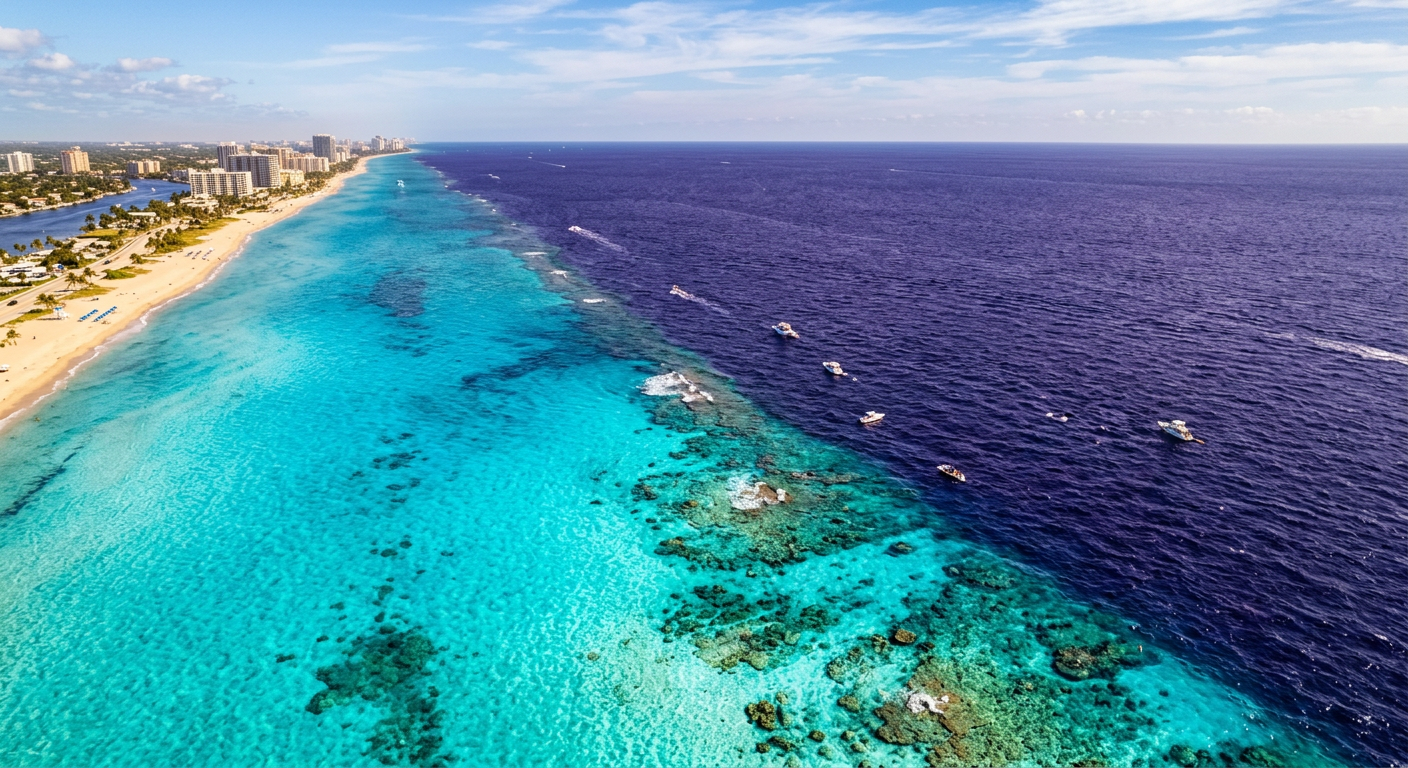
It takes a specific type of sensory deprivation to salvage a mass-produced activity. The altitude simply does the heavy lifting for you. You bypass sketchy operators by booking through Rockon Recreation Rentals for proper safety checks, but the atmosphere up there belongs to no one. Surprisingly, modern florida parasailing delivers a rare, floating isolation. You cannot find that kind of peace anywhere else on this busy coast.
Grounding Yourself Back in the Humidity
The thick coastal humidity wraps around you like a wet wool blanket the second you drop below fifty feet. The motorized reel groans before you even feel the initial downward pull. That harsh mechanical scraping cuts right through the wind. It signals the end of your quiet tenure in the clouds. The towboat grows larger with every rotation of the metal drum.
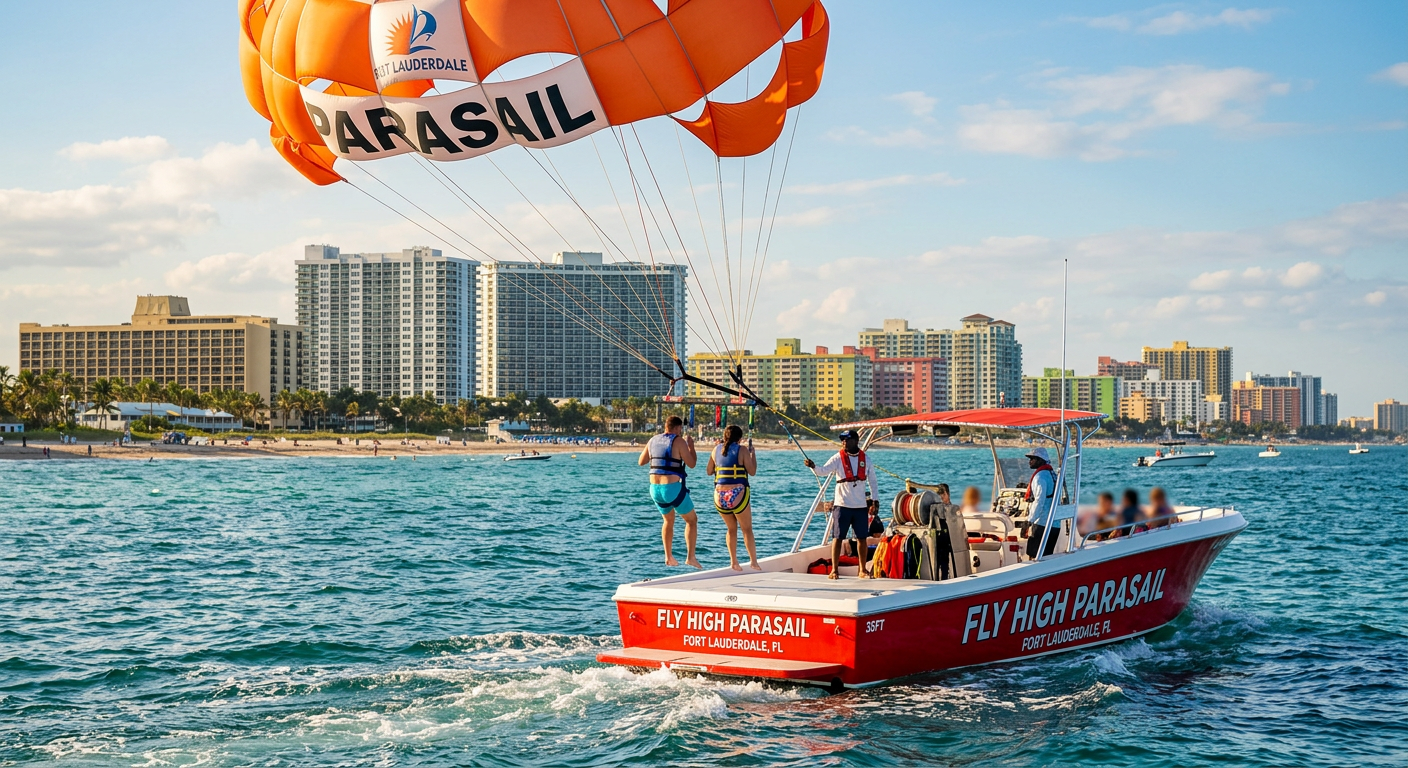
Data from the National Weather Service puts local moisture levels hovering around seventy percent, but high Atlantic winds mask that heat when you fly. Down near the surface during the current 2026 season, the mugginess claims you instantly. A faded yellow warning sticker on the winch housing peels at the bottom left corner.
The captain throttles down the motor to align the hull with the headwind. The deckhand waits on the stern platform. Your bare feet hit the white fiberglass deck with a solid thud. The crew quickly unclips the heavy metal hardware from your harness. I planned this florida parasailing trip assuming the launch held all the adrenaline, and the return was just a formality. The opposite is true. The sky is a passive, quiet backdrop. Meanwhile, standing up on a pitching deck demands serious physical balance. You stumble onto the rocking stern with the grace of a newborn calf as your inner ear chases a moving horizon.
You just survived beige tourism's edgiest cousin. Finding authentic florida parasailing operations that do not shuffle you off the boat without a second glance is difficult. Luckily, reserving through Rockon Recreation Rentals connects you with crews who value breathing room over maximum headcount. Anyone pursuing florida parasailing expects an amusement park ride, but they walk away with a strange sense of geological scale. I go where the signage is bad and the coffee is good. Navigating coastal tourist traps tests that logic daily. Now go find a terrible cup of coffee on Las Olas and process what just happened.
Plan your trip: Ready to experience this firsthand? Book Parasailing Fort Lauderdale directly through our marketplace.