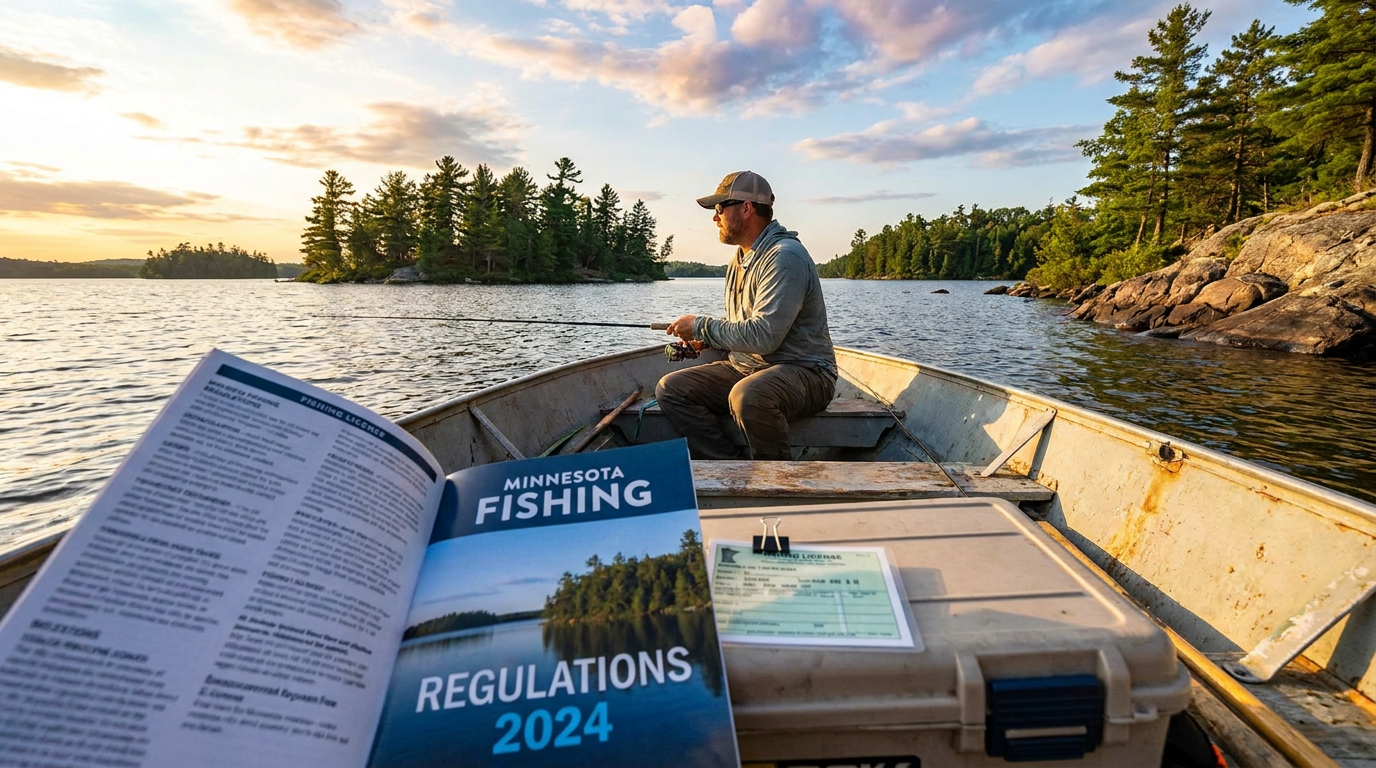
The Reality of Sharing Central Minnesota Lakes
The scent of unburned two-stroke exhaust hangs low over the water at Big Swan Lake before the sun clears the tree line. It is a sharp reminder that understanding the current fishing laws in minnesota matters before you ever cast a line. You dip your hand in to clear floating weeds. The morning water numbs your knuckles. The daily standoff between the pontoon operators and the bass boats drifting along the drop-offs begins shortly after dawn.
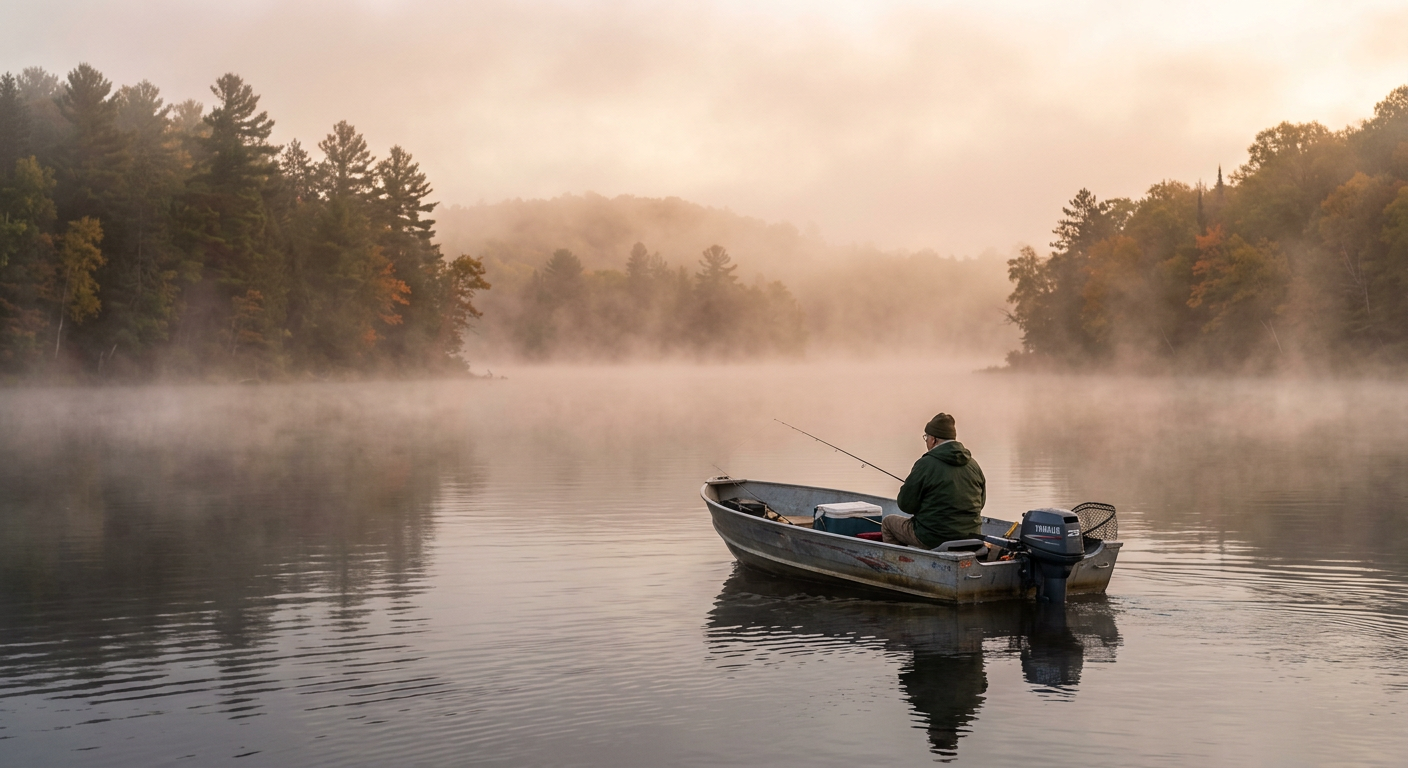
Staying compliant with the state rules requires reading the current DNR handbook. Surviving the boat traffic in Grey Eagle requires watching the people around you. A heavy wakeboard boat carving circles near the public launch displaces enough water to swamp a flat-bottom skiff.
The guy running the bait shop on the corner has a slight limp on his left side. He sells leeches out of a rusted galvanized tank.
The Daily Standoff on Big Swan
The high-pitched whine of a personal watercraft engine carries across the bay long before the machine comes into view. Personal watercraft operators want flat water and long straightaways. This route often puts them directly over the submerged rock piles holding early summer walleye. The resulting chop turns a morning of jigging into an exercise in maintaining your balance on a fiberglass deck.
According to the Minnesota Department of Natural Resources, state law mandates watercraft travel at a slow, no-wake speed within 150 feet of shorelines, docks, swimmers, and non-motorized boats. Boats moving faster than no-wake speed generate destructive energy. The 2026 guidelines strictly enforce this boundary to prevent shoreline erosion and protect anchored anglers.
Nobody wins a shouting match over engine noise.
Every operator who books through Rockon Recreation Rentals gets a briefing on local water dynamics. Following the fishing laws in minnesota keeps the local warden from writing a citation. Knowing when to yield the main channel keeps your tackle boxes from sliding into the bilge.
Catch and Release Rules You Probably Forgot
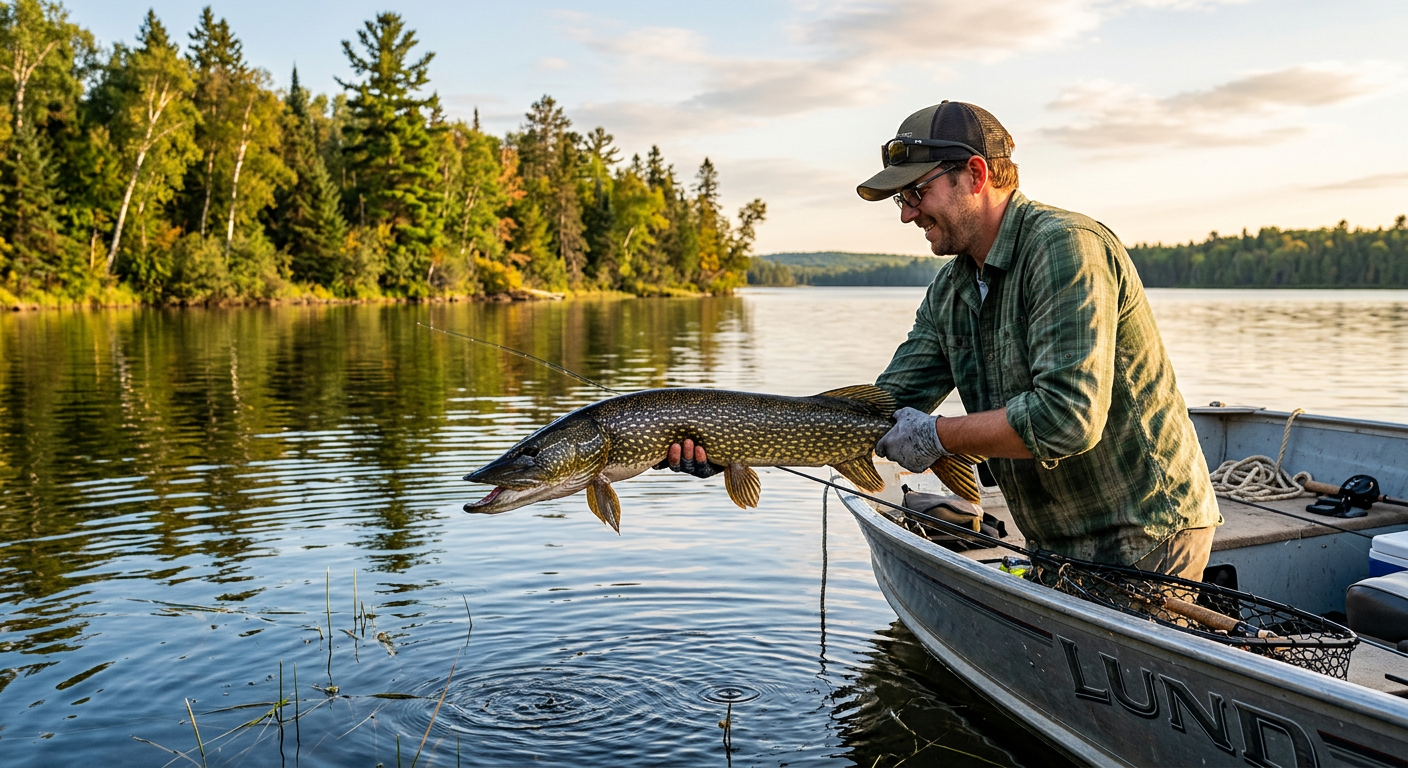
The grit of a dry nylon net rubbing against your palm is the first sign you are mishandling a fish. Northern pike in Todd County require wet hands and horizontal support before you even reach for the pliers. Anglers haul them out of the water by the jaw and wonder why they float belly-up minutes later. The jaw structure of a pike cannot support its own body weight outside the water.
Game wardens patrol these lakes in unmarked aluminum boats. I cannot prove this biologically, but the fish always seem smaller when the warden pulls alongside your hull to check the livewell. A walleye that looked legal in the landing net shrinks below the protected slot limit the moment a green uniform steps onto your deck.
The 2026 Focus on Fish Stress
The metallic taste of cheap thermos coffee hits your tongue as you read the climate data. It is just as important as the rulebook. Navigating the fishing laws in minnesota involves understanding thermal shock. The 2026 regulations prioritize water temperature as a primary metric for catch and release viability. When the surface temperature crosses the mid-seventies, fish lose their ability to recover from lactic acid buildup.
2019 me would have assumed the updated handling guidelines from the DNR were just bureaucratic paperwork designed to justify a budget. 2026 me watched half a dozen floaters wash into the reeds at Mound Lake after a July tournament. The state is just trying to stop us from killing the resource we paid to access. Thermal shock is a quiet killer.
I go where the signage is bad and the coffee is good. The boat ramp parking lot has a faded yellow stripe that ends halfway into the grass. Booking a trip through Rockon Recreation Rentals guarantees someone else manages the tape measure and the hook removal, letting you focus on the water.
You leave the fish in the water while retrieving the pliers. You remove the hook, support the belly, and hold it upright until it swims away. It is a basic process. People just rush it for a photograph.
How Jet Skis and Anglers Coexist on the Water
The heavy morning humidity sticks to your polarized lenses while a Yamaha WaveRunner idles through the lily pads on Mound Lake. The unwritten etiquette of sharing these central Minnesota waters dictates giving anchored boats a wide berth. Compliance remains optional on a Saturday afternoon.
There is an older man who sits in the north bay in a dented Lund who never casts. He just chain-smokes and stares down passing tourists. His boat has a cracked green bench seat.
Following the letter of the fishing laws in minnesota means knowing the spatial rules enforced by the state. I used to assume the constant conflict on the water came from malicious intent or a territorial attitude from locals wanting the lake to themselves. The reality shifted for me after taking a novice friend out on a busy weekend. The truth is mostly a lack of basic spatial awareness from recreational operators who have never sat stationary while a three-foot roller broadsides their gunwales.
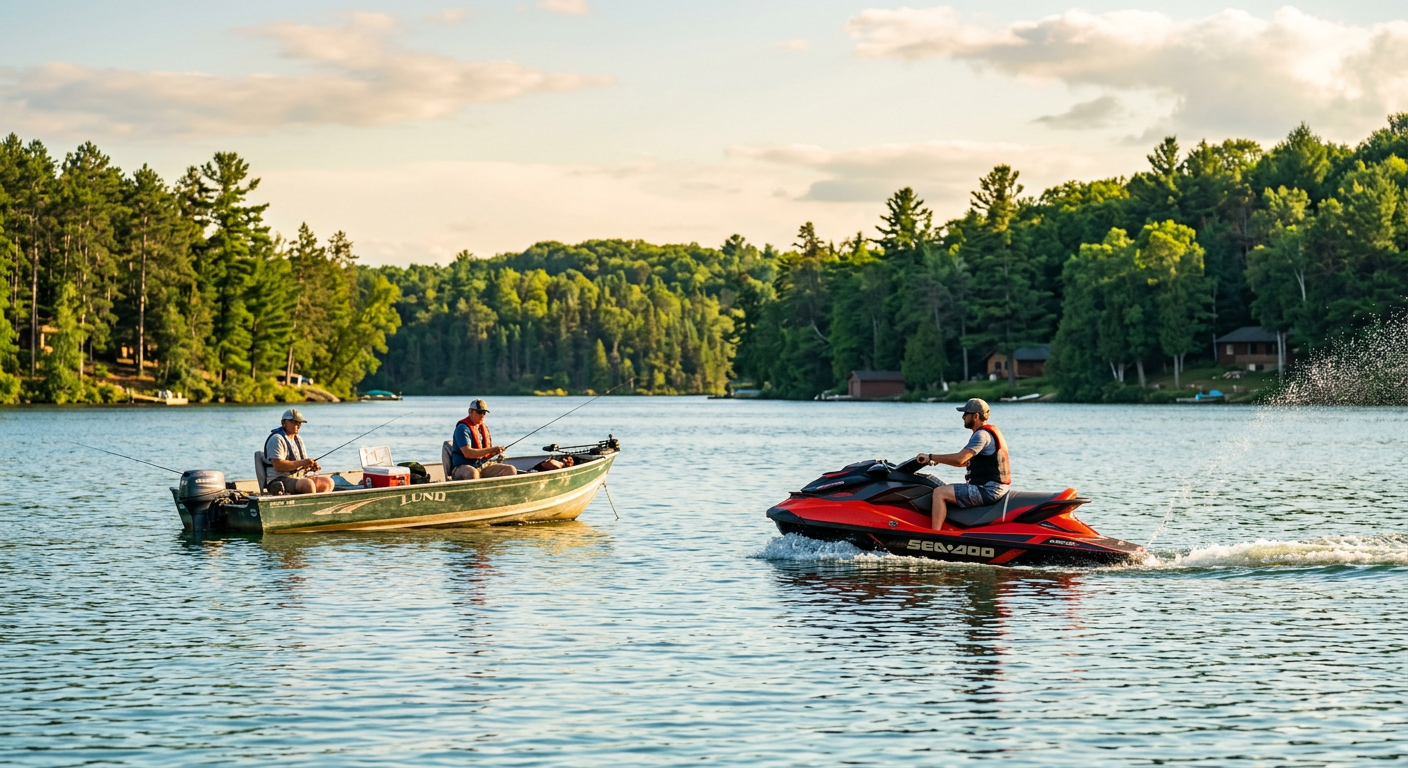
The physical distance separating a rented jet ski from a bass boat matters less than the speed of the passing vessel. Chopping the throttle just as you pass an anchored boat pushes a heavy wave of displaced water forward. Renters getting their equipment through Rockon Recreation Rentals are briefed on the physics of wake dispersion. Maintaining a steady, predictable path on plane at a safe distance creates less disruption for the people trying to pull panfish out of the cabbage weeds.
Fish do not care about who has the right of way. They just stop biting.
Regulations for Personal Watercraft Anglers
The vibration in the aluminum hull of your fishing boat signals a fast-moving vessel before the wake hits. It feels out of place for a serious angling trip. Most traditional boaters give personal watercraft a wide berth, assuming anyone riding one just wants to jump wakes.
I assumed rigging a jet ski for bass fishing was a social media stunt. Then a local on a modified Sea-Doo silently slid into a shallow cove near the Grey Eagle town limits. He cast a plastic worm into a couple feet of water and pulled out a three-pound largemouth while I was still navigating my trolling motor. Fishing from a nimble watercraft like this is a real edge. The state regulates it just as strictly as any fiberglass bass boat.
Navigating Gear and Storage Rules
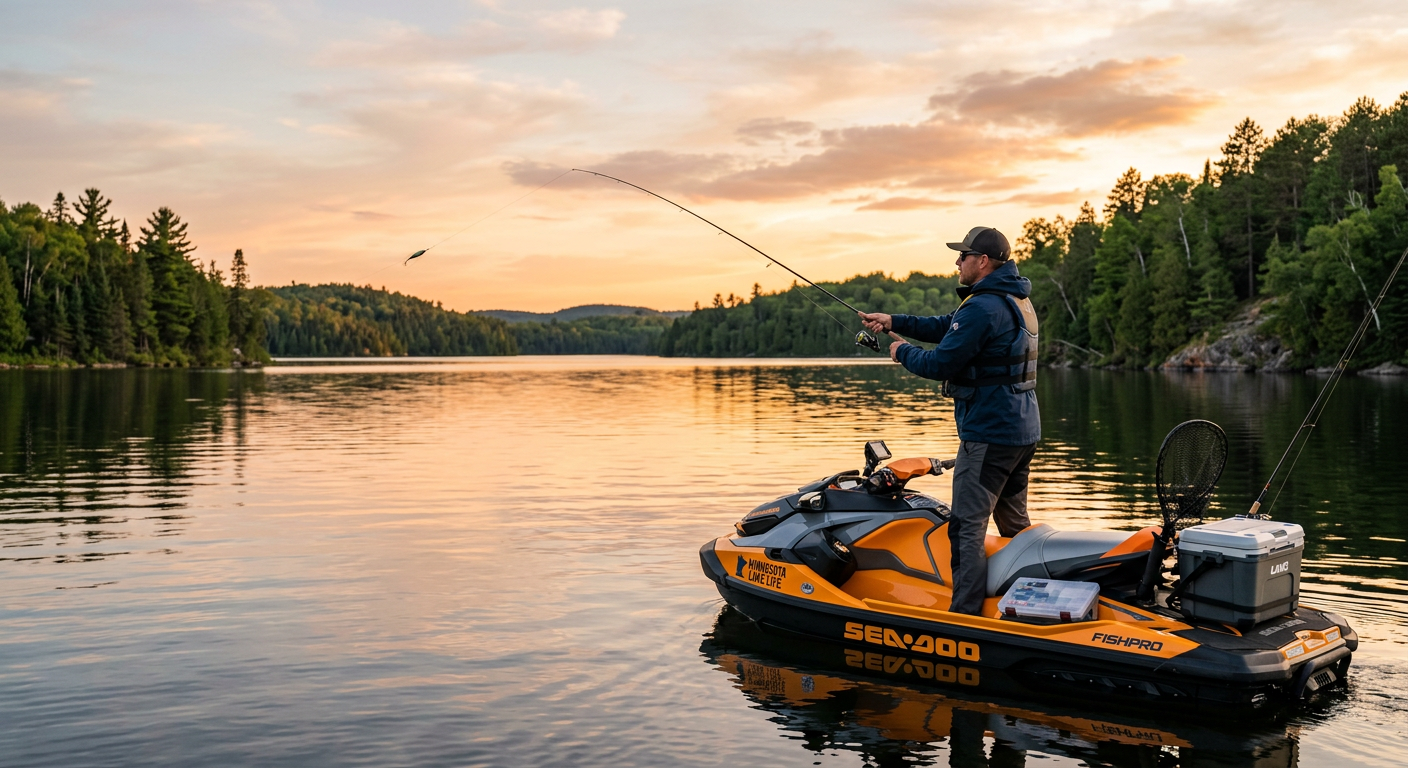
Minnesota requires personal watercraft operators to follow specific gear storage protocols while fishing. Rods must be secured in rod holders or compartments when the engine is running above idle speed. You must carry a measuring device and a hard-sided cooler if you plan to keep your catch.
The Life Jacket Nuance You Need to Know
The sudden chill of a pre-dawn northwest breeze cuts through your thin jacket. The most common citation handed out to PWC anglers in 2026 involves the life jacket rule. In a standard aluminum skiff, you just need a wearable vest readily accessible under a seat. Navigating the fishing laws in minnesota for personal watercraft demands a different approach. The state mandates that anyone operating or riding a PWC must wear a USCG-approved life jacket at all times.
Yes, that means you keep it zipped even when the engine is off and you are drifting through a quiet bay. The feeling of wet neoprene sticking to your shoulders takes a few minutes to get used to, but it beats paying a fine. Anyone booking a jet ski through Rockon Recreation Rentals gets a fitted vest for the trip.
Aquatic Invasive Species Laws for 2026
The chalky taste of road dust coats your teeth while waiting in the boat inspection line at the highway 71 access. It is a necessary evil. Stopping the spread of Eurasian watermilfoil and zebra mussels dictates how everyone enters and exits the local fisheries.
Research is my love language; reality is my ex. The 2026 MN DNR handbook requires pulling the drain plug before leaving any water access. You must keep the plug out while transporting the boat on public roads. Bait water must be drained and replaced with tap or bottled water before you drive away. Ignoring these steps results in an immediate citation from the inspectors working the concrete ramps.
I once saw a guy argue with a young inspector over three strands of milfoil stuck to his trailer axle. He lost. The fine is substantial, and the environmental cost is worse.
The Truth About Lake Regulations in Todd County
The crunch of gravel beneath a Department of Natural Resources truck tire breaks the morning silence at the public parking lot before dawn. Visitors often assume a town of about 330 people lacks consistent law enforcement on the water. That assumption results in unexpected fines. In a community this small, game wardens know the hidden coves. A weathered plastic Folgers can sits empty next to the aluminum fish cleaning station.
Enforcement Beyond the Brochures
Glossy tourism guides ignore the presence of game wardens. If it's on a postcard, it's a trap. Beige is a sin. The reality involves a polite officer with a clipboard checking your livewell. They keep our fisheries healthy for future generations and possess a deep knowledge of current fishing laws in minnesota. Running into these friendly wardens is just part of fishing the backwaters.
Panfish Limits That Surprise Visitors
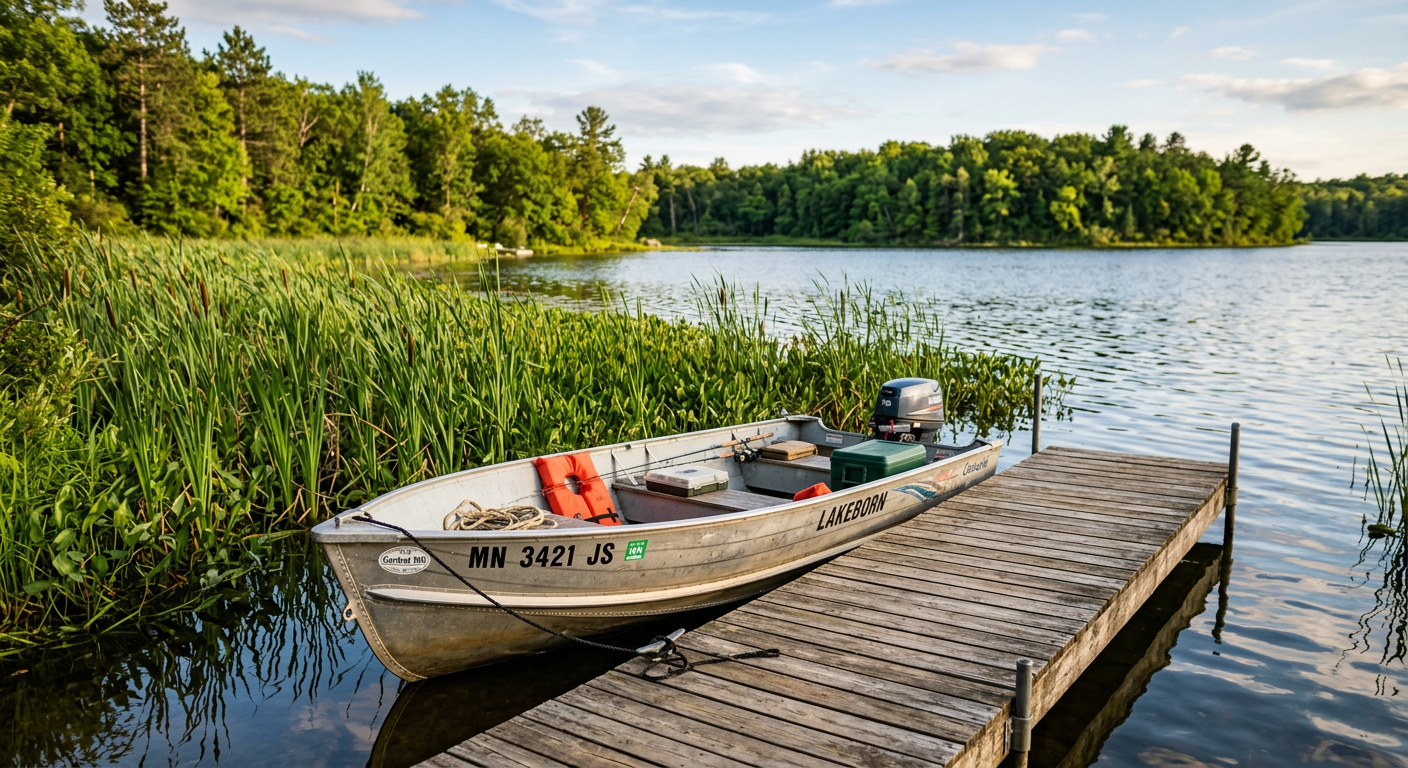
I initially felt frustrated by the tight daily quotas on sunfish for these seemingly abundant lakes. My perspective shifted after watching an older local angler pull up his morning catch near the lily pads. Every single bluegill on his stringer was large enough to overlap the edges of a standard dinner plate. The restrictive local rules protect the genetics of these fish so they have time to grow. Who wants to take home a bucket of stunted fish anyway?
Certain Todd County lakes enforce reduced daily limits for sunfish. The current regulation permits an angler to keep five sunfish per day on these designated waters. Crappie limits are also set at five per day on specific lakes.
Navigating these specific local rules protects the ecosystem we all love to enjoy. Every operator who lists their local expertise on Rockon Recreation Rentals understands these boundaries. They handle the complex fishing laws in minnesota so you can focus on the joy of a bent rod.
Getting Your DNR License Without the Headache
The rhythmic hum of a fluorescent bulb buzzing overhead greets you walking into the Grey Eagle gas station. Grabbing a paper copy of your permit used to have a nostalgic charm. You got to buy overpriced beef jerky before heading to the lake.
The state rolled out an Electronic Licensing System modernization for 2026. Now you can purchase a digital pass on your phone while standing right on the dock. It beats waiting behind a guy buying a dozen scratch-off tickets.
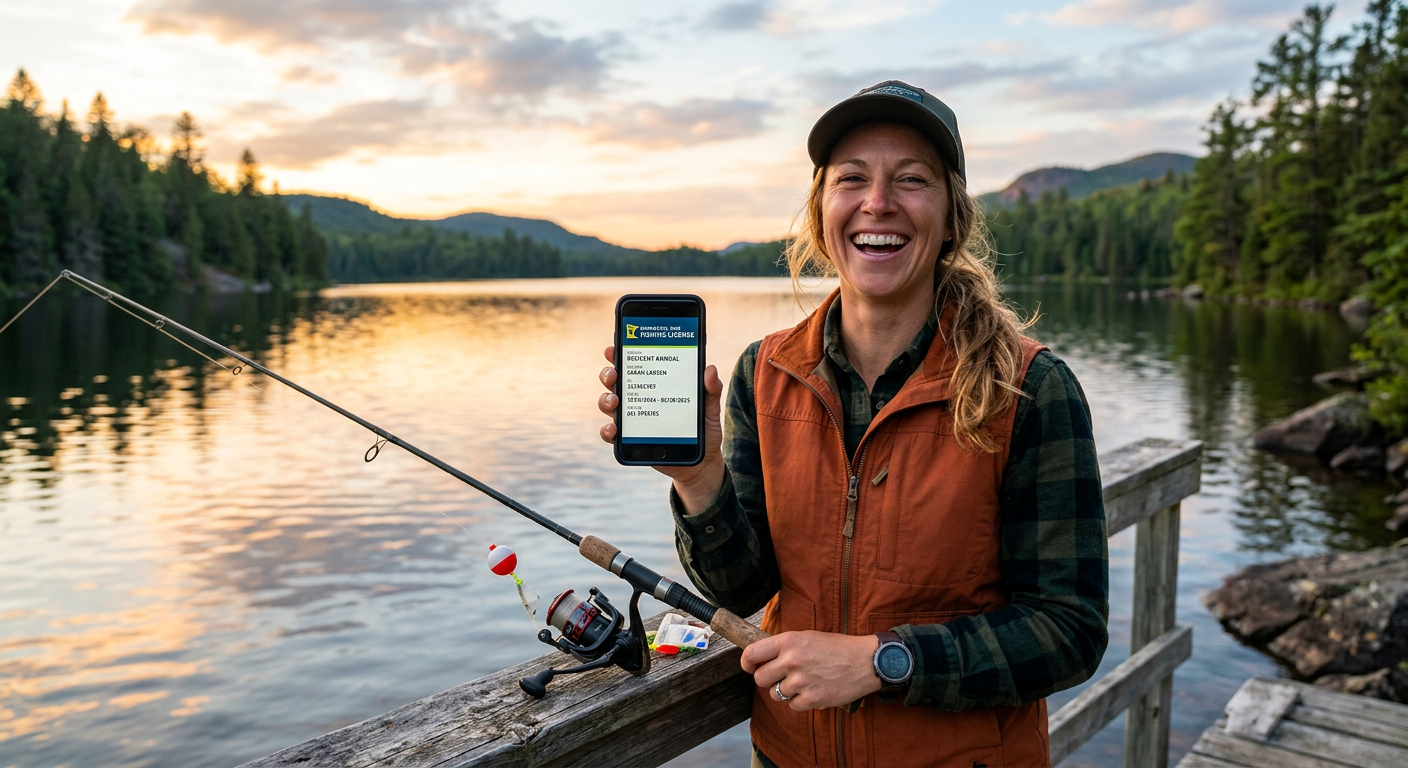
I always expect government portals to crash when I need them most. The new mobile site loaded right away and pulled up my old customer record without a glitch. Getting legal took less time than tying a standard clinch knot.
The guy checking out ahead of me at the bait shop had a small tear near the collar of his faded purple sweatshirt.
A resident individual angling license costs about $25. You can buy it online or in person. The license is valid from March 1 through the last day of February.
If you book a watercraft through Rockon Recreation Rentals, the boat arrives ready for a day on Mound Lake. You still need your own angling permit to stay compliant with fishing laws in minnesota. The rental covers the vessel, not your legal right to harvest bluegills.
Keep Your Digital Proof Handy
A local conservation officer can scan the barcode on your screen from exactly 18 inches away. That quick scan pulls up your entire profile and purchase history.
Saying you forgot to download the email attachment is not a valid defense on the water. A dead phone battery will not get you out of a ticket either. Take a quick screenshot of your barcode while you still have decent cell service in town. The bass are not going to ask for your permit, but the warden idling toward your stern definitely will.
Plan your trip: Ready to experience this firsthand? Book Jet Ski Rentals in Grey Eagle Minnesota directly through our marketplace.