The Lure of the Open Water Versus Traditional Paddling Constraints
Planning a coastal excursion often begins with travelers standing at the edge of Centennial Park in Sarasota, mapping out a picturesque morning itinerary. The Intracoastal Waterway stretches infinitely north and south, while the deep blue expanse of the Gulf of Mexico beckons just a few miles to the west. For many travelers visualizing their upcoming 2026 trip, the allure of that boundless horizon is profoundly compelling. We want to feel the aerosolized salt spray, cover miles of uncharted open water, and chase the vibrant sunset near Lido Key. Yet, that expansive playground often remains out of reach for those relying entirely on self-propelled vessels. As a VisitFlorida Travel Partner, Rockon Recreation Rentals has observed since 2018 how thousands of visitors possess ambitions that simply outpace their physical stamina when confronting the harsh realities of local coastal currents.
The Hidden Toll of Coastal Currents
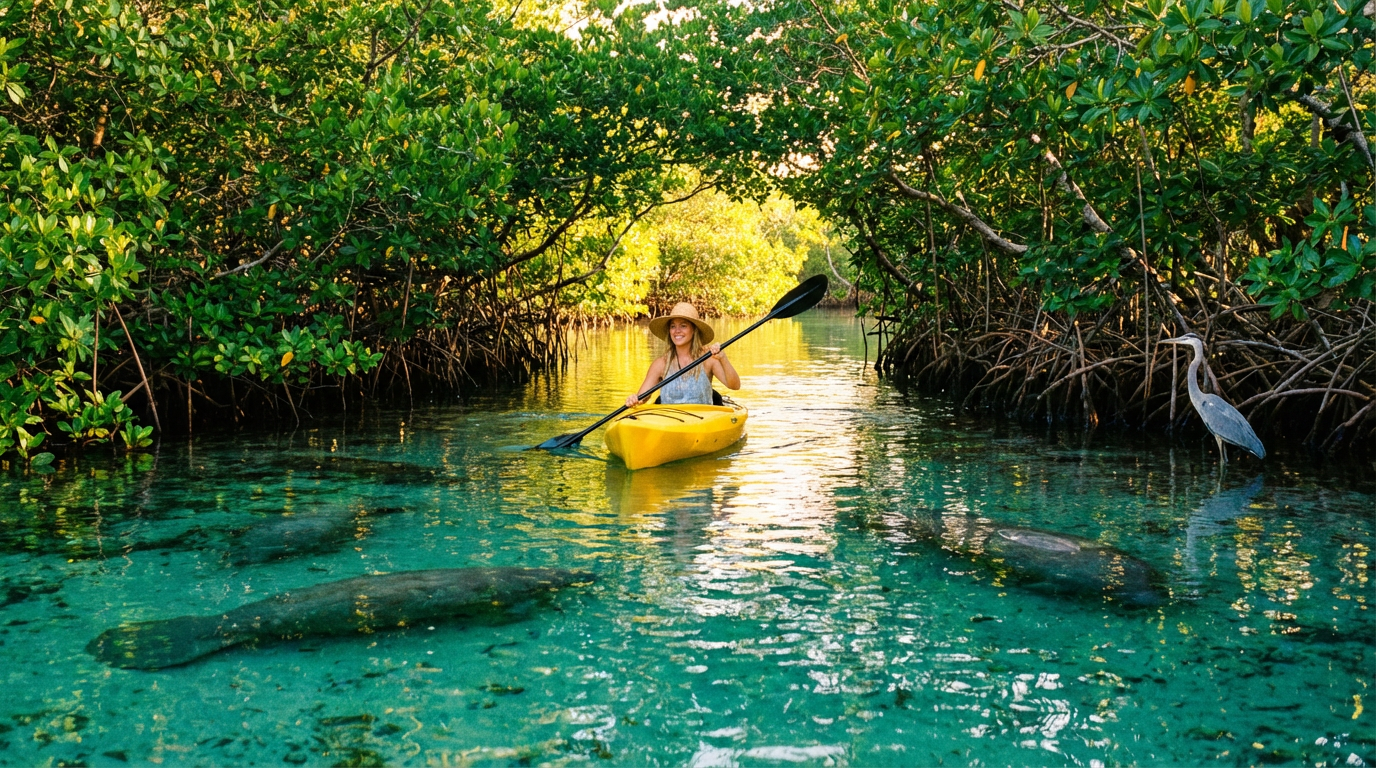
There is an undeniable charm in navigating a traditional Florida kayak through the sheltered mangrove tunnels of South Lido Park. It represents a peaceful, ecologically intimate way to explore shallow estuaries. However, what most visitors do not realize until they are entirely committed mid-stroke is the sheer physical toll demanded by unprotected open water. Having tracked coastal excursion patterns since 2018, seasoned local guides know that the tranquil morning waters are famously deceptive. According to 2026 navigational data published by the National Oceanic and Atmospheric Administration (NOAA), tidal currents rushing through Big Sarasota Pass regularly exceed three knots during an outgoing ebb tide.
If you are paddling against that immense force in a non-motorized hull, you are effectively trapped on a marine treadmill. Furthermore, research from the University of Florida Institute of Food and Agricultural Sciences highlights how rapidly estuarine wind conditions shift when moving from protected mangrove canopies out into the open bays. The initial dream of exploring distant barrier islands quickly devolves into an exhausting, shoulder-burning 45-minute battle just to maintain your geographic position. This physical reality severely constrains how far you can realistically roam before severe exhaustion completely overrides your enjoyment of the wildlife.
Trading Physical Exhaustion for Mechanized Stability
Travelers visualizing their coastal itineraries often harbor a lingering fear when contemplating the transition from a familiar human-powered craft to faster, motorized open-water exploration. The psychological hesitation typically centers on control. There is an inherent anxiety that a highly responsive, fast-moving machine might feel unmanageable or less stable than a heavy plastic Florida kayak, which often weighs upwards of 70 pounds and sits low in the water. In reality, the exact inverse is frequently true when dealing with authentic coastal chop, as the added mass and advanced hull geometry of powered vessels provide massively superior linear tracking.
Overcoming the Fear of the Throttle
Modern powered hull designs provide a uniquely low center of gravity and a powerful gyroscopic stability that slices cleanly through the notorious afternoon sea breeze. Beginners often equate speed with danger, fearing they will lose control of a powerful vessel. However, marine engineering in 2026 has completely shifted this dynamic. The thrust generated by a four-stroke personal watercraft actually acts as an anchor in rough water, granting the operator absolute directional mastery. According to meteorological data published by the National Weather Service (NWS) Tampa Bay, the localized thermal wind predictably kicks up to around 15 miles per hour along the Gulf Coast almost every afternoon between March and October. If you are paddling, this daily weather shift turns a calm two-mile return trip into a grueling survival test. If you command a throttle, you simply bypass the turbulence by riding smoothly atop the chop.
The Mechanics of Absolute Control
Despite the undeniable appeal of this geographical reach, many first-time visitors express natural apprehension during the operational planning phase, visualizing high-speed watercraft as bouncing broncos that require immense physical strength and split-second reflexes to control. Contemporary marine reality tells a vastly different and highly reassuring story. Today's hulls feature deep-V designs and aggressive chines that naturally carve through standard bay waters, providing a grounded ride that actively absorbs the shock of routine one-to-two-foot waves.
According to safety and stability analytics published by the United States Coast Guard, contemporary personal watercraft equipped with sophisticated electronic braking and reverse systems offer unprecedented operational control. This actively lowers the learning curve for absolute novices, allowing them to stop on a dime. The team at Rockon Recreation Rentals constantly fields inquiries from travelers anxious about managing raw horsepower on the open Gulf. We point out that modern off-throttle steering assist actively mitigates historical handling concerns, proving that motorized torque is a tool for safety, not a liability.
Conquering the Scale of the Gulf Coast Horizon
Instead of tapping out after a strenuous two-mile loop, embracing modernized aquatic exploration opens up a stunning 15-to-20-mile scenic radius. This striking expansion in range means you can actually reach the crystal-clear, sparsely populated sandbars near Jewfish Key or track coastal wildlife through the 12-foot-deep channels of Sarasota Bay without the nagging anxiety of a draining return journey. The modern hunger for excitement on the water fundamentally centers on empowerment. Breaking free from physical paddling constraints allows curious explorers to safely conquer the scale of the Gulf Coast horizon, transforming an intimidating geographical expanse into a highly accessible 50-square-mile playground.
Maximizing Your Coastal Exploration Radius
To truly grasp the scale of that accessible playground, consider the logistics of standard coastal navigation. The average recreational paddler cruises at approximately 2.5 miles per hour during calm, glass-flat dawn conditions. A journey from the John Ringling Causeway to the pristine white-sand lagoons of north Longboat Key covers roughly eight nautical miles. Attempting that route on a standard Florida kayak morphs into a grueling, three-hour endurance test. By the time you arrive, the physical toll leaves most travelers too exhausted to snorkel the shallows or appreciate the delicate marine ecosystem.
A motorized personal watercraft turns that arduous trek into an effortless and visually spectacular 20-minute transit. Speed affords you the luxurious ability to watch the sunrise over downtown Sarasota, throttle northward through the Intracoastal Waterway, and drop anchor at a secluded spoil island near Anna Maria before the morning crowds even unpack their cars. You can zip across deep open bays and weave around barrier islands on a single tank of gas, transforming a heavily localized outing into a sweeping, multi-island regional expedition.
Escaping the Crowded Shallows
Sarasota County boasts an exceptionally active maritime population. On any given weekend during the 2026 season, the primary mainland launch points and near-shore mangrove fringes are heavily congested with recreational traffic. Yet, seasoned local captains acknowledge a distinct threshold often referred to as the "two-mile barrier." Beyond this invisible geographical demarcation, the dense crowds essentially vanish. Having an agile, high-speed craft grants you the decisive power to completely outrun the bottleneck. Genuine aquatic tranquility frequently requires a machine built for distance, enabling you to swiftly bypass the congested local shallows and discover private pockets of the Gulf that slower vessels simply cannot reach before the tide abruptly turns.
Finding Private Solitude Amidst a Bustling Local Hub
When you effectively manage your energy reserves by upgrading your mode of transport, you actively redefine the geographical limits of your excursion. Local guides who have meticulously mapped these estuaries since 2018 understand a fundamental truth about coastal geography. The physical and mechanical limits of your vessel dictate the ultimate visual scope of your adventure. While a manual draft limits you to looking constantly at the shoreline, the thrust of a modern engine allows you to position yourself strategically for unparalleled panoramic views.
Capturing the Elusive Urban Skyline
Once you command the mechanical capability to venture securely into the deep water of the central bay, an entirely new visual perspective opens up. Looking eastward from two miles offshore, the Sarasota urban skyline rises dramatically against the coastal horizon. The sweeping architectural curve of the John Ringling Causeway, featuring a massive 65-foot vertical clearance that boldly catches the midday sun, creates a striking visual contrast against the natural marine environment. According to 2026 regional tourism data from Visit Florida, this specific panoramic spectacle largely remains out of reach for slower vessels confined strictly to hugging the mainland shoreline for safety.
Mastering the Surge With Environmental Confidence
What visitors quickly discover heading into the 2026 season is that twisting a throttle actively reduces environmental anxiety. Instead of battling asymmetrical wind loads and fighting a losing tug-of-war against outgoing tides—a harsh and unavoidable reality of any extended Florida kayak excursion—riders use mechanical thrust to gracefully slice right through the heavy swirling currents funneling out of New Pass. Imagine swapping the burning sensation of lactic acid in your shoulders for the cooling rush of a 40-mph ocean breeze. This seamless power transition yields absolute mastery over the elements, completely freeing your mind to safely scan the seagrass flats for leaping spotted eagle rays or pausing to observe surfacing manatees without the constant fear of drifting into a navigational channel.
Selecting the Optimal Water Adventure for Your Vacation Style
Ultimately, finalizing your 2026 coastal itinerary requires an honest psychological assessment of what you genuinely want to extract from your time on the water. Do you crave the quiet observation of a microscopic nearshore ecosystem, or are you dreaming of absorbing the sweeping, vibrant grandeur of the Gulf of Mexico? Since 2018, local outfitters have noticed a recurring pattern among vacationers. Visitors arrive with heavily romanticized notions of coastal exploration, vastly underestimating the vast 50-square-mile physical scale of the local geography. Before confirming your reservations, it is mathematically vital to balance your appetite for adventure with the undeniable physical realities of the tidal environment.
Protecting Your Finite Vacation Energy
Planning an optimal getaway requires ruthlessly protecting your finite vacation energy. There is a profound difference between a deliberate morning gym routine and the exhausting surprise of an hour-long battle against shifting onshore winds. Experienced local guides recognize that the most memorable wildlife encounters occur when visitors possess the physical bandwidth to simply stop the engine, drift quietly, and observe without panicking about their remaining glycogen reserves or rushing back to beat an incoming storm front.
Modern coastal exploration should prioritize genuine awe over sheer athletic survival. By contrasting muscular effort with highly efficient motorized alternatives, the fear of unpredictable currents completely evaporates. According to recent travel trend analysis published by Condé Nast Traveler, independent travelers in 2026 are increasingly prioritizing activities that maximize sightseeing efficiency without sacrificing environmental immersion. Eliminating the anxiety of headwinds allows you to reclaim the mental space needed to absorb the diverse estuarine environment fully.
Upgrading from Muscular Effort to Unmatched Performance
If you genuinely want to chase the horizon without the physical burnout, swapping a paddle for a Jet Ski Sarasota Rental acts as an unparalleled strategic upgrade. Rather than remaining confined to the shallow, sheltered flats of Lido Key, a motorized excursion empowers you to witness the beautiful juxtaposition of remote wildlife sanctuaries directly alongside towering waterfront architecture. Educational data maintained by the Florida Fish and Wildlife Conservation Commission (FWC) emphasizes that with a basic understanding of navigational right-of-ways, recreational boaters securely access miles of open water functionally off-limits to small, non-motorized craft due to heavy wake zones and strong localized currents.
The choice ultimately hinges on whether you want your transportation to be an exhausting workout or a highly efficient vehicle for discovery. Letting go of physical paddling limitations opens up an expansive and utterly thrilling estuarine environment. A high-speed vessel delivers exactly what the dreaming traveler desires—the exhilarating freedom to zip safely across the bay, pause the engine on a dime, and float silently the exact moment a pod of dolphins surfaces nearby.