Dropping Into the Fray at the Public Ramps (Reason 1 — Agility Wins The Staging Lane)
Burning outboard two-stroke exhaust and rotting sea lettuce hit you in the face the second you open your car door at the marina. The morning rush runs on a vicious, unspoken hierarchy. A guy in a faded, oversized visor watches the incoming tide from the seawall, offering zero help to the chaos unfolding on the concrete. The regional navigation maps make this waterway look like a wide, forgiving avenue of leisure. The 2026 reality is a tight staging lane packed with flat-bottom skiffs and out-of-towners who just backed their rented trailers directly into the sabal palms.
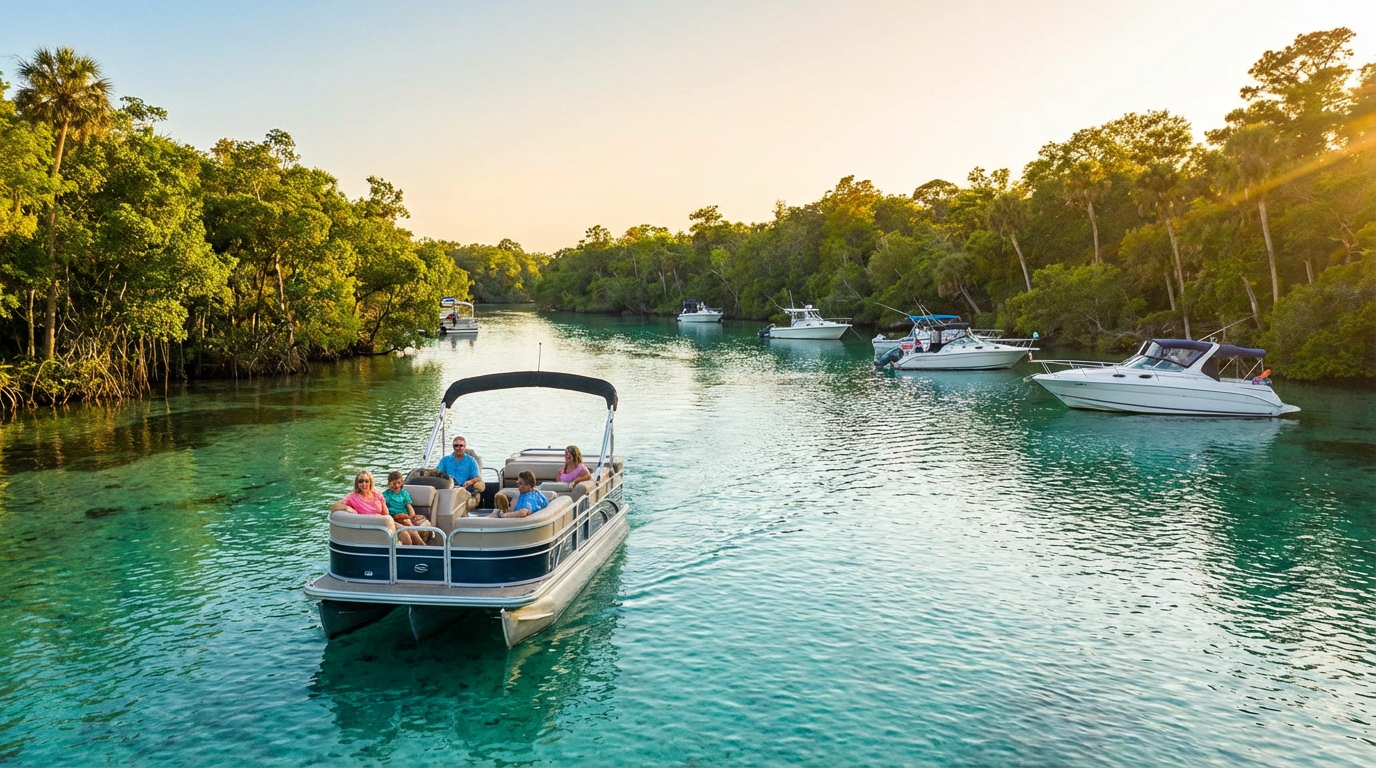
I trust glossy marina brochures about as much as a leaky bilge pump. When you source boat rentals in homosassa, your first major bottleneck is not the river. It is the launch ramp. Massive double-decker pontoons dominate the visual landscape here. They clog the single operational loading lane for twenty minutes at a stretch while frantic families try to decipher their canvas bimini tops.
As a VisitFlorida Travel Partner handling local water logistics since 2018, I watch this gridlock play out every Saturday. Taking the keys to a smaller deck boat lets you slip right into the current. You leave the ramp while the barge captains are still arguing over who forgot to load the ice.
Sizing Down for the Limestone Lottery (Reason 2 — Shallow Drafts Save Propellers)
The jarring grind of an aluminum propeller striking submerged rock vibrates straight up your spine. It is the signature daytime soundtrack of the lower Homosassa. Evaluating a local fleet forces a reckoning with vessel dimensions. Have you ever tried steering a patio deck through a swamp? Most folks grab the biggest multi-hull they can afford. A barge with L-shaped lounge seating seems luxurious right up until the tide rips out toward the Gulf.
My preferences underwent a severe correction a few years back. Bigger meant better, or so my logic went. Then I spent three hours pinned against a mudbank near Marker 47, waiting for the afternoon flood tide to lift my rented party barge free. I abandoned the pontoon life forever before the sun even set.
The Math Sinks the Pontoon
Standard pontoons draw roughly fourteen inches of water empty. A loaded vessel equipped with eight people and heavy coolers drafts closer to two feet. Trying to maneuver that footprint past the tricky doglegs tests every ounce of your patience. A rented 24-footer turns with the agility of a laden freight train in exactly 17.4 inches of navigational clearance.
When comparing availability on the Rockon Recreation Rentals platform, filter for agility over square footage. Carolina skiffs and nimble bay boats dominate these shallow systems for a reason. They draft less. They do not fight the jagged limestone that defines this specific coastline.
According to NOAA National Weather Service — Florida coastal charts, the main channel depth hovers around three feet near the upper springs at low tide. The riverbed hides shelves that simply tear lower units apart. A smaller, flatter hull glides over the tension.
Navigating the July Snorkel Fields (Reason 3 — Maneuverability Among Human Obstacles)
Crusty salt from the Gulf breeze turns your shirt stiff by midday. You wipe your polarized lenses on a dry patch of cotton, assuming the channel ahead relies on standard maritime flow. A blue Coleman cooler floats aimlessly near the port bow.
The summer scallop harvest throws established river protocol into a paper shredder. None of your tide charts matter when hundreds of vessels anchor squarely in the shipping lanes. The official tourism board portrays scalloping as a unified, peaceful aquatic Easter egg hunt. It actually resembles a demolition derby moving at idle speed. Maneuvering a twenty-foot pontoon through this gauntlet is a miserable exercise.
Threading the Needle
You idle past a family anchored in three feet of water on the outer grass flats. A teenager in over-sized water shoes is trying to eat a dripping meatball sub while treading water next to an anchor line. That is your maneuvering window.
According to the Florida Fish and Wildlife Conservation Commission, boaters must travel at idle speed within 300 feet of a displayed red and white dive flag. The lush grass beds near the St. Martins Keys harbor thousands of scallops. Therefore, they harbor hundreds of flags. A smaller skiff offers the precise steering needed to weave through the floating human labyrinth without severing an anchor line or drifting onto protected seagrass.
The Halls River Squeeze (Reason 4 — Taking the Scenic Upland Cuts)
The air turns into a thick, stationary soup once the Gulf breeze dies behind the mangrove islands. Taking a detour up Halls River instead of the main Homosassa run offers an entirely different logistical puzzle. Narrow, winding channels cut through dense upland hammocks. This is where wide-beam rental boats go to collect expensive fiberglass damage.
I cannot prove this, but I swear the channel markers on the upper river drift overnight based on some strange tidal geometry. Yesterday you had a comfortable lane. Today you thread a needle between an ancient cypress stump and a sandbar that was not there on Tuesday.
Earning the Quiet
Creeping along at low RPMs in a low-profile boat removes the underlying anxiety of these tight bends. The physical constraint of the creek forces you to actually see the ecosystem. You look down into the tea-colored water and spot snapping turtles resting on submerged branches. The silence here carries weight. The four-stroke engine hums low. Water laps softly against the fiberglass hull. The overarching canopy blocks the harsh afternoon glare. It is just you and a winding ribbon of brackish water cutting through wild Florida.
Braking For The Speed Traps (Reason 5 — Surviving the Federal Zones)
The chalky, metallic tang of brackish water coats your tongue whenever the wind whips up a sudden burst of river spray. A wet, sputtering exhale breaks the quiet off the port side. Spotting a Florida manatee used to conjure up ideas of some whimsical, consequence-free wildlife encounter. You just float around and take photos.
The narrative shattered when I started reading the actual coastal enforcement logs. Federal protection in the Homosassa is not a loose guideline. It is an active dragnet. Operating any motorized vessel near the Blue Waters requires rigid, absolute compliance.
The Reality of Sanctuary Lines
Marine patrol officers do not hand out casual warnings for wake violations in a sanctuary zone. They write citations that ruin vacation budgets. The National Park Service — Florida dictates idle speed zones that shift dynamically with the migrating herds during the cooler months. This makes piloting a bulky pontoon a stressful liability.
Large, high-profile boats catch the surface wind. That wind pushes them out of the designated channels while the engine is idling. A nimble 19-foot center console allows you to hold your line against the current while maintaining a legal, crawling speed. You share this specific stretch of water with protected mammals that cannot maneuver out of a heavy boat's path. Control saves lives and bank accounts.
The Gulf Transition (Reason 6 — Handling the Chops Past Marker 71)
A sudden rush of cold air sweeps through the Bimini top as you clear the final markers. The confined river opens abruptly into the Gulf of Mexico. The water color swaps from dark coastal tannin to a cloudy, churning emerald. Transitioning from the protected interior waterways to the open Gulf chop is where flat-bottom party boats simply fail.
The local barrier islands look formidable on your digital GPS display. In reality, they are fragile strips of shifting mud and oyster clusters providing minimal windbreak. Taking a blunt-nosed rental pontoon into a standard two-foot afternoon Gulf chop results in a kidney-bruising ride. It takes a V-hull or a well-designed hybrid skiff to slice through that chop without soaking everyone onboard.
Sourcing reliable boat rentals in homosassa is less about picking a color scheme and more about matching the hull to the physics of the bay. I often see tourists turn back before they even reach the prime fishing grounds because their vessel cannot handle the transition waves. A smaller, sharper hull punches through the chop, keeping your gear dry and your dental work intact.
Beating the Algorithmic Rush (Reason 7 — Why Inventory Disappears)
The sour scent of stale dockside coffee lingers near the marina office window at dawn. You watch a group stroll up to the rental counter at 10 AM on a Saturday, expecting a walk-up reservation to materialize for a weekend excursion. That level of optimism died out a decade ago. Every functional hull capable of handling this environment sits miles out by Marker 2 by mid-morning.
The availability data paints a stark picture for 2026. Coastal tourism supply is capped by limited marina space across Citrus County. Demand scales upward every single season. Securing a specialized, nimble boat requires weeks of lead time if you want prime weekend slots. According to Visit Florida official tourism maps, millions visit these waterways annually. Leaving it to chance means you end up with the lumbering pontoon nobody else wanted to drive.
Finding your craft through Rockon Recreation Rentals circumvents the broken paper clipboard system of the past. The live digital inventory reflects actual reality on the ground. Do the math early. Determine your route, acknowledge the water depth, and grab keys to something that will not ruin your afternoon on a sandbar. Information from the Florida Department of Environmental Protection helps boaters stay within safe zones. The river rewards the prepared. It punishes the stubborn.
Plan your trip: Ready to experience this firsthand? Book Private-Boat Manatee Extravaganza Tour (4-Hr) directly through our marketplace.