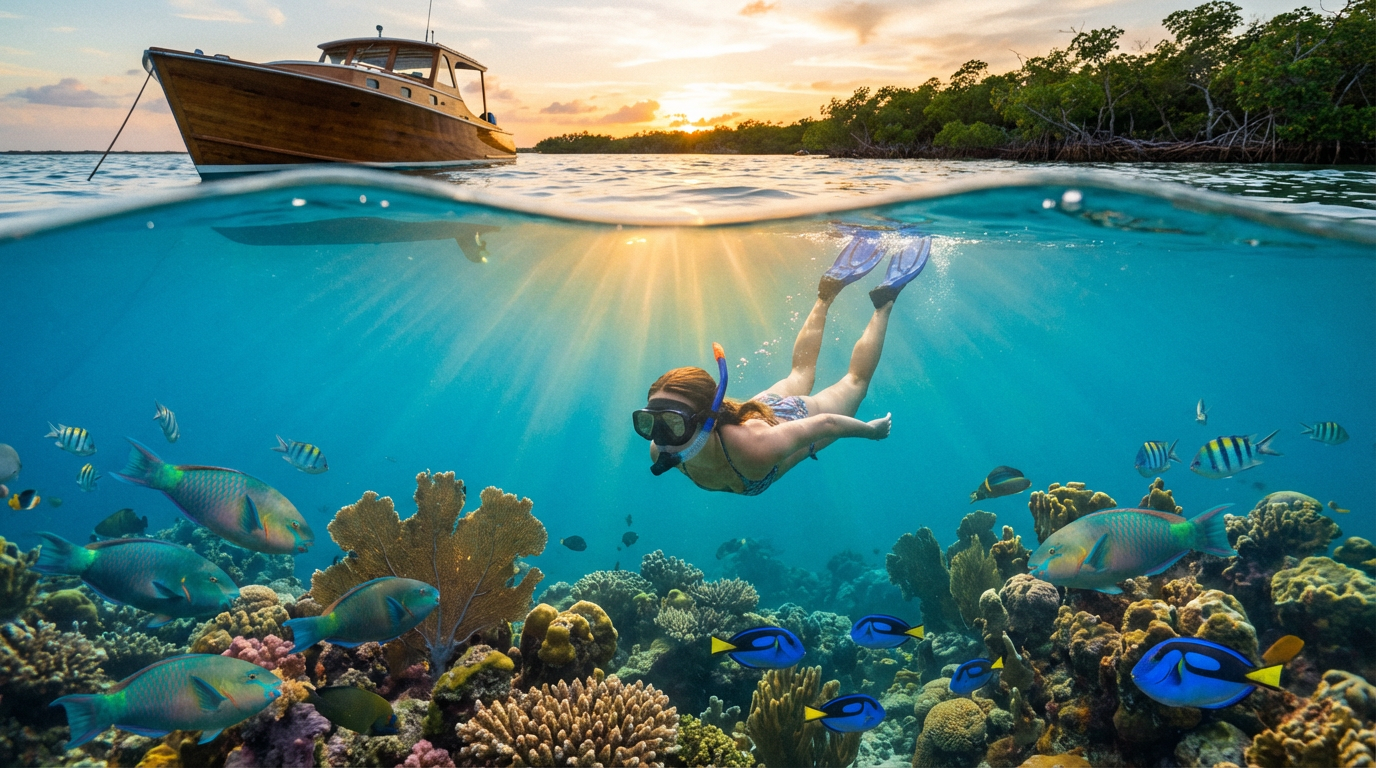
Most visitors arrive in the Upper Keys expecting accessible beaches where they can simply wade out to the coral, but experienced locals know that the best key largo snorkeling requires navigating the complex underwater topography of the Florida Reef Tract. As the self-proclaimed "Dive Capital of the World," this region offers access to the third-largest living barrier reef system in the world, yet the reality of accessing it is often misunderstood by first-time travelers.
Having navigated these waters since 2018, I can confirm that the difference between a mediocre trip and a world-class memory often comes down to logistics rather than luck with the weather. While scuba divers seek depth, the premier snorkeling experiences are actually found at patch reefs and shallow spur-and-groove formations where the coral crests less than five feet from the surface. Major publications like Travel + Leisure consistently rate these waters among the top aquatic destinations in North America, but they rarely mention the trade-offs between boat types or the necessity of timing the tides. This guide covers the operational realities—from boat drafts to wind directions—that shape the actual experience of key largo snorkeling.
Discover the Best Key Largo Snorkeling Spots
The Florida Reef Tract lies anywhere from three to six miles offshore, meaning you cannot swim to the primary sites from the beach. While there are hundreds of mooring balls maintained by the sanctuary, three locations consistently draw the most attention. However, crowd levels can affect marine life behavior, so knowing a "Local's Alternative" for each famous site is a crucial strategy for seasoned snorkelers.
John Pennekamp Coral Reef State Park
Established in 1963 as the first underwater park in the United States, John Pennekamp Coral Reef State Park preserves approximately 70 nautical square miles of Atlantic Ocean waters. While many tourists flock to the land-based headquarters at Mile Marker 102.5, seasoned travelers realize that the "park" is actually the water itself, accessible from various marinas throughout the island.
Essential ecosystem components here include seagrass beds and mangrove swamps, which serve as nurseries for the fish you will eventually see on the reef. Snorkel Tours Key Largo booked through private operators often provide a superior experience by visiting less crowded mooring balls within the sanctuary boundaries. If you stick to the main park concessions, expect to share the water with 50 to 100 other snorkelers at peak times.
Local's Alternative: If the main Pennekamp reefs feel too chaotic, ask your captain to head to Grecian Rocks. Located within the sanctuary but often more protected from the wind by the reef line itself, Grecian Rocks features large Star Coral formations and is designated as a Sanctuary Preservation Area (SPA). This designation ensures a high density of protected marine life without the main tourist crush found at the Christ statue.
Christ of the Abyss at Dry Rocks
Perhaps the most photographed underwater site in Florida, the Christ of the Abyss statue rests in about 25 feet of water at a site known as Key Largo Dry Rocks. This 8.5-foot-tall bronze sculpture, a duplicate of the original "Il Cristo degli Abissi" in the Mediterranean Sea, was submerged here in 1965. According to the Florida Keys National Marine Sanctuary, this area is a "no-take" zone, resulting in abundant fish populations.
For snorkelers, this location is ideal because the reef structure around the statue is exceptionally shallow—often breaking the surface at low tide. This creates a "fishbowl" effect where snorkelers can hover safely above the fire coral while remaining face-to-face with schooling Barracuda and Midnight Parrotfish. However, a practical warning: this site is incredibly popular. To avoid flailing fins and cloudy water from kicked-up sand, plan your trip for a weekday morning or a late afternoon charter.
Molasses Reef
If visibility is your priority, Molasses Reef is arguably the premier key largo snorkeling destination. Located on the outer edge of the reef line, it benefits from the cleansing flow of the Gulf Stream, which often clears out sediment and particulates that cloud inshore reefs. Visibility here frequently exceeds 50 to 80 feet, significantly better than the shoreline average.
The National Oceanic and Atmospheric Administration (NOAA) maintains over 30 mooring buoys here. Molasses Reef creates a classic spur-and-groove environment, where long ridges of coral are separated by sand channels. This geography allows snorkelers to drift over the shallow ridges while watching larger marine life, such as Hawksbill turtles and Southern Stingrays, in the deeper channels below. Unlike the sheltered waters of the Sound, Molasses is more exposed to open ocean swells, so check the forecast for wave heights under two feet before committing to this location.
Select the Right Boat for Your Group
Once you have identified your target reefs, choosing the correct vessel becomes the single most significant variable in the quality of your trip. In Key Largo, the marketplace is sharply divided between high-capacity commercial tours and private "six-pack" charters. Having coordinated countless excursions, I have seen that satisfaction often hinges on matching the boat type to the group's specific temperament and physical abilities.
Commercial Catamarans Versus Private Charters
The most common option for visitors is the large commercial power catamaran. These United States Coast Guard-inspected vessels typically carry between 40 and 100 passengers. The primary advantage here is stability; the twin-hull design minimizes rolling in choppy seas, which can be a savior for those prone to seasickness. They also usually feature full-size marine heads (bathrooms) and ample shade, making them suitable for seniors or families with small children who need facilities.
However, the trade-off is a lack of autonomy and specialized attention. You adhere to a strict timetable—usually two stops of 45-60 minutes each—and you will be in the water with dozens of other snorkelers. Conversely, Key Largo Private Snorkeling Tours operate under "uninspected passenger vessel" regulations, capping the group size at six known passengers. A 25-foot center console boat cruises at 30-40 mph, compared to the 10-15 mph plod of a loaded catamaran. This speed differential gives you significantly more time in the water or the ability to outrun localized weather systems to find a sunny patch of reef.
Vessel Draft and Reef Accessibility
A detail few travelers consider is the vessel's draft—the minimum depth of water required to float the boat. Large tour boats often draw four to six feet of water, prohibiting them from approaching the shallowest, most vibrant patch reefs. For a snorkeler, depth is the enemy of color; red and orange wavelengths of sunlight are absorbed significantly after 15 feet of depth.
Smaller private vessels, specifically deck boats or bay boats, often have drafts of under 18 inches. This allows them to safely access shallow patch reefs like "Mosquito Bank" or "Basin Hill Shoals" where the coral crests less than five feet from the surface. These shallow zones offer superior key largo snorkeling experiences because the coral colors appear more vivid and marine life acts more naturally without the presence of a massive hull casting a shadow overhead.
Understanding Costs and Time Commitments
Budgeting for a Key Largo aquatic adventure requires looking beyond the advertised ticket price. I have frequently observed visitors underestimate the total cost of a trip due to hidden fees and logistical nuances distinct to the Florida Keys. The price of key largo snorkeling varies significantly depending on whether you choose a shared "cattle boat" experience or a private charter.
Analyzing Public Tour Pricing Versus Private Charters
Public tours are the most accessible entry point. As of 2026, the industry standard for a seat on a commercial catamaran typically ranges from $60 to $85 per adult, with children's tickets averaging roughly $10 less. These vessels operate on volume. High-traffic operators near Key Largo fisheries or the State Park prioritize turnover, which keeps the base ticket price low.
Conversely, private charters operate on a flat-rate basis for the whole boat. A half-day private charter generally costs between $600 and $900 for up to six passengers. While this sticker price appears higher, the math changes for families or groups. For a group of six, a private boat might cost approximately $100-$150 per person. When you factor in the personalized instruction, ability to choose your own music, and freedom from crowds, travelers booking through Boat Charter Key Largo often find the value proposition superior to the public options.
Hidden Fees and Real Water Time
A standard "half-day" snorkeling trip is widely advertised as 3.5 to 4 hours, but locals know that "dock-to-dock" time can be misleading regarding how much snorkeling you actually get to do.
- Transit Time: Expect a 30 to 45-minute boat ride each way to reach the outer reef. On a 2.5-hour budget tour, this leaves only 60 to 75 minutes of actual water time.
- Gear & Wetsuits: While mask, snorkel, and fins are usually included in the ticket price, wetsuits are almost always an upcharge. Expect to pay $10 to $20 per suit. Locals highly recommend renting a "shorty" wetsuit if visiting between November and March, as water temperatures can drop into the low 70s.
- Gratuity: It is industry standard to tip the boat crew. On public boats, crews rely heavily on tips as a primary income source; $5-$10 per person is standard. On private charters, a gratuity of 15% to 20% of the charter fee is customary for the captain and mate.
Amenities to Expect on Your Trip
When booking a charter in the Florida Keys, the difference between a comfortable outing and a stressful one often lies in the amenities provided. Having utilized various operators, I have found that managing expectations regarding gear and safety is the most important factor in preventing day-of-trip frustration.
Standard Gear Inclusions vs Bring Your Own
Almost every reputable key largo snorkeling operator includes the "trinity" of gear: a mask, a snorkel, and fins. However, the quality fluctuates. Large volume boats often use stiffness PVC masks which leak on bearded faces or narrow face shapes. Premium charters typically offer silicone-skirted masks that provide a better seal. Crucially, towels and sunscreen are rarely provided. You must bring your own, and you should exclusively use mineral-based sunscreens containing non-nano Zinc Oxide. Chemicals like oxybenzone are proven to damage coral DNA and are strongly discouraged by the National Ocean Service.
In-Water Guides vs Lifeguards
There is a distinct difference between a safety lookout and an in-water guide. On budget-friendly tours, the crew functions primarily as lifeguards; they remain on the boat to monitor for distress. If you want to identify specific marine life like the elusive Spotted Eagle Ray or understand the difference between Fire Coral and Elkhorn Coral, this model may leave you disoriented. Private charters are more likely to offer optional in-water guidance. If this instruction is important to you, specifically request a "guided" tour rather than just a "snorkeling trip" when booking.
Seasonal Timing and Water Conditions
The timing of your visit dictates the conditions of the reef. Unlike the Caribbean, Key Largo has distinct seasons that affect visibility and comfort.
- Summer (May - September): This is the flattest, calmest time of year. Water temperatures soar into the mid-80s, allowing you to snorkel for hours without a wetsuit. However, this is also hurricane season, and the humidity can be intense. August and September can also bring "sea lice" (jellyfish larvae) or Moon Jellyfish, so wearing a rash guard is a smart precaution.
- Winter (December - March): Cold fronts push through regularly, bringing wind and chop. While the air temperature is delightful (70s), the water can feel brisk, and visibility often drops after a strong north wind stirs up the sediment. If you are prone to seasickness, winter snorkeling is best done on the bayside or at very protected inshore patch reefs.
From Key Largo Reefs to Lower Keys Backcountry
While the Upper Keys are world-famous for their offshore coral reefs, they offer a primarily passive experience: you float, you observe, and you drift. For adventurers seeking a more active, participatory connection with the marine environment, the Lower Keys offer a completely different ecosystem that complements the key largo snorkeling experience perfectly.
Just a scenic two-hour drive south along the Overseas Highway lies Big Pine Key, home to the National Key Deer Refuge and pristine backcountry shallow flats. Here, the game changes from observation to interaction. Instead of looking at fish from the surface, you can engage in the hunt. Swapping your snorkel fins for a paddle allows you to access inches-deep water that even the smallest skiffs cannot reach.
Travelers looking to round out their Florida Keys itinerary should consider booking a Kayak Fishing Charter in Big Pine Key. Unlike the open ocean swell of Key Largo, the backcountry channels of Big Pine Key are calm and sheltered, making it an excellent option when the wind blows out the reef snorkeling plans. This experience offers a chance to target Mangrove Snapper, Redfish, and even Tarpon from a stable fishing kayak. It is the perfect "Part 2" to a Keys vacation: spend your first days observing the reef in Key Largo, and your final days immersed in the quiet solitude of the Lower Keys mangrove tunnels.
Navigating Reservations and Check-In
Securing a seat on a commercial vessel in the Florida Keys involves more than a simple transaction; it requires an understanding of maritime logistics. Since 2018, I have witnessed countless visitors arrive at the dock expecting a hop-on-hop-off experience, only to be turned away because passenger manifests were finalized hours prior.
Strategic Booking for Peak Seasons
Key Largo operates on a distinct high-demand cycle, particularly from December through April and during the "Mini Season" for lobster in late July. During these windows, availability for high-quality charters evaporates weeks in advance. To secure a spot on a smaller vessel—which offers a vastly superior reef experience—booking digital reservations at least 14 days out is standard practice. Visitors should book through trusted platforms like Rockon Recreation Rentals to verify real-time inventory and avoid the "ghost booking" issues common with old marina reservation books.
Weather Policies and Cancellations
The most common point of friction is the cancellation policy regarding weather. Florida weather is highly localized; a thunderstorm in Islamorada does not mean it is raining at the reef. Decisions are legally the prerogative of the licensed captain based on wind speed and wave height, not just rain. Standard industry policy dictates that if the captain cancels for weather, you are entitled to a full refund or a reschedule. However, if you choose not to show up because it looks "cloudy," you will likely forfeit your deposit. Always communicate with your captain early on the morning of your trip.