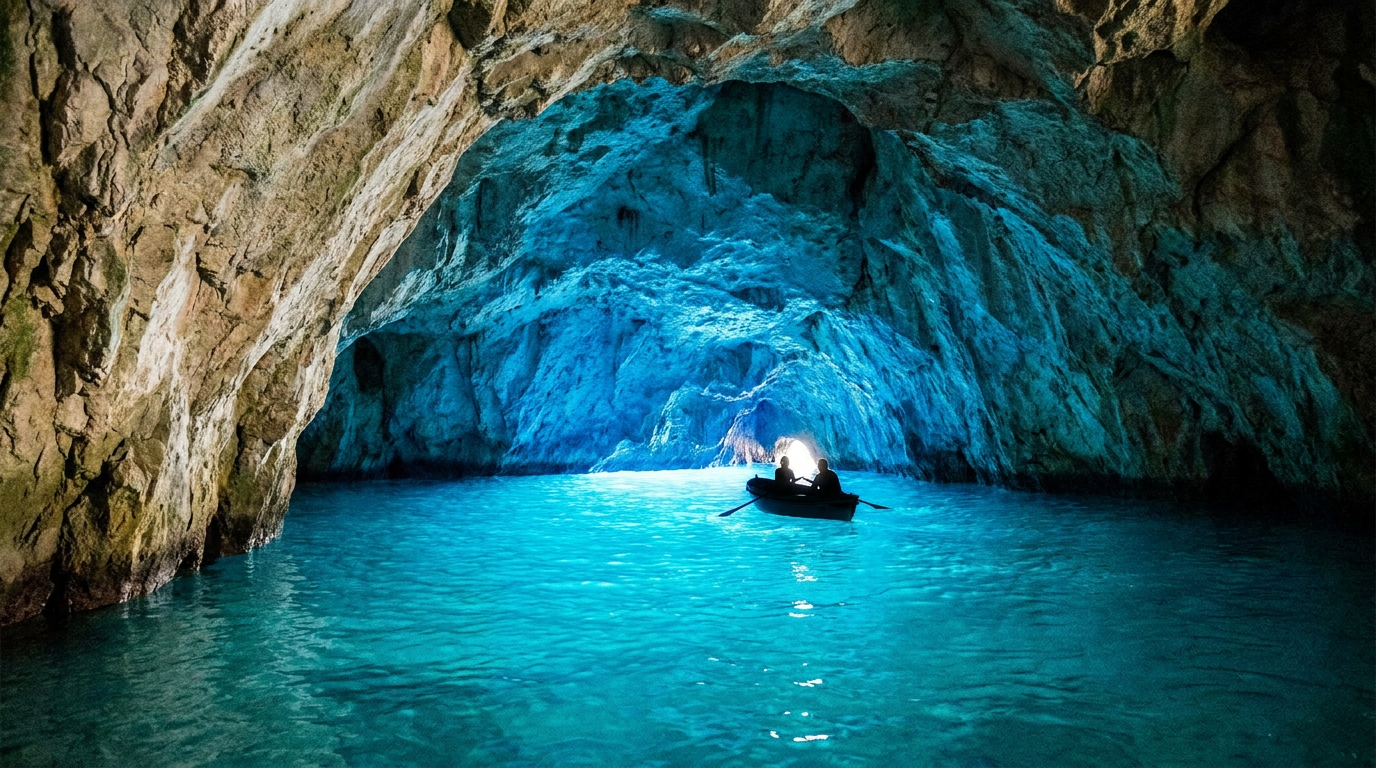
The Smell of Neoprene and the Cold Splash of Truth
The sharp, chalky tang of wet limestone dust at the blue grotto hits the back of your throat before you even open the truck door. Damp neoprene bakes under the 2026 Florida sun on wooden gear racks.
You walk exactly 114 steps from the loose gravel lot to the dock. Sweat soaks your shirt before you see the water. A single brown lace from a hiking boot sits abandoned on the first gear bench.
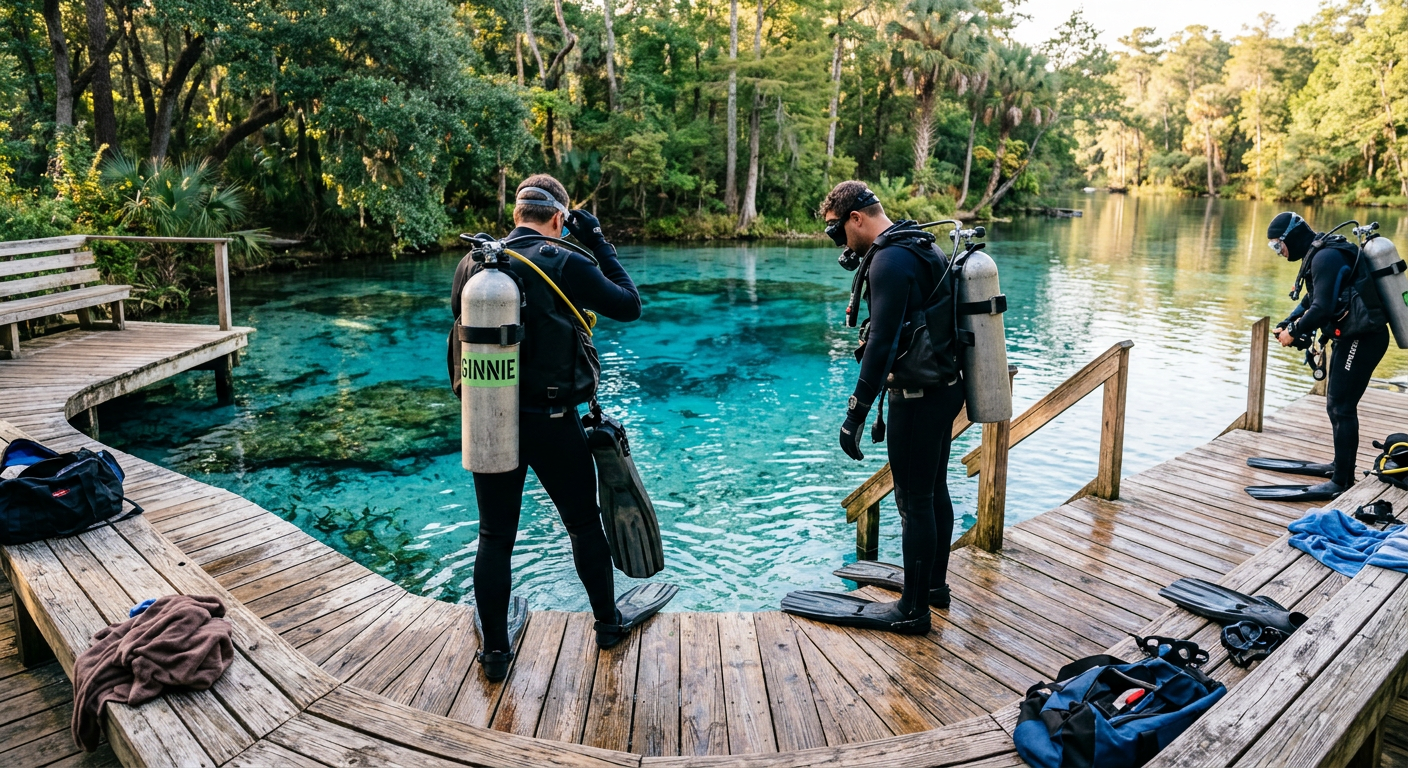
Online satellite maps paint this access point as a tiny blue dot in rural Marion County cow country. Why book a crowded offshore boat charter when the earth casually opens up right next to a horse pasture? If it's on a postcard, it's a trap.
Standing on the edge of the basin fractures your perspective. You are not looking at a pond. You are staring down the elevator shaft of a submerged skyscraper.
The Mechanics of the Blue Grotto Sinkhole
Standard brochures map out the expected visibility. They omit that the lower cavern traps silt fast if a clumsy diver kicks the bottom. As a VisitFlorida partner, we at Rockon Recreation Rentals advise guests to secure morning water time.
By noon, the pristine water turns to milk. According to the US Geological Survey, features like this operate as karst windows. You swim inside the exposed underground aquifer. The blue grotto filters millions of gallons daily.
The dull hum of a distant agricultural tractor vibrating through the ground stops the moment your ears break the surface. Silence takes over. You drop into the void.
The Wetsuit Penalty
Thick exposure gear is non-negotiable here. A 72-degree reading sounds pleasant on a digital weather app. Reality bites when that water steadily pulls the core heat from your chest during a standard bottom cycle.
Novice divers arrive at the blue grotto wearing thin surf rash guards. They spend half their dive shivering near the habitat bell air pocket. Bring a thick suit if you plan to loiter near the deeper vents.
The Truth About the Blue Grotto Depth Before You Sink
The slick summer algae on the lower wooden step reminds you to tread carefully before you submerge. Local guides recite the blue grotto depth statistic just like a badge of honor. They tell you it bottoms out around a hundred feet.
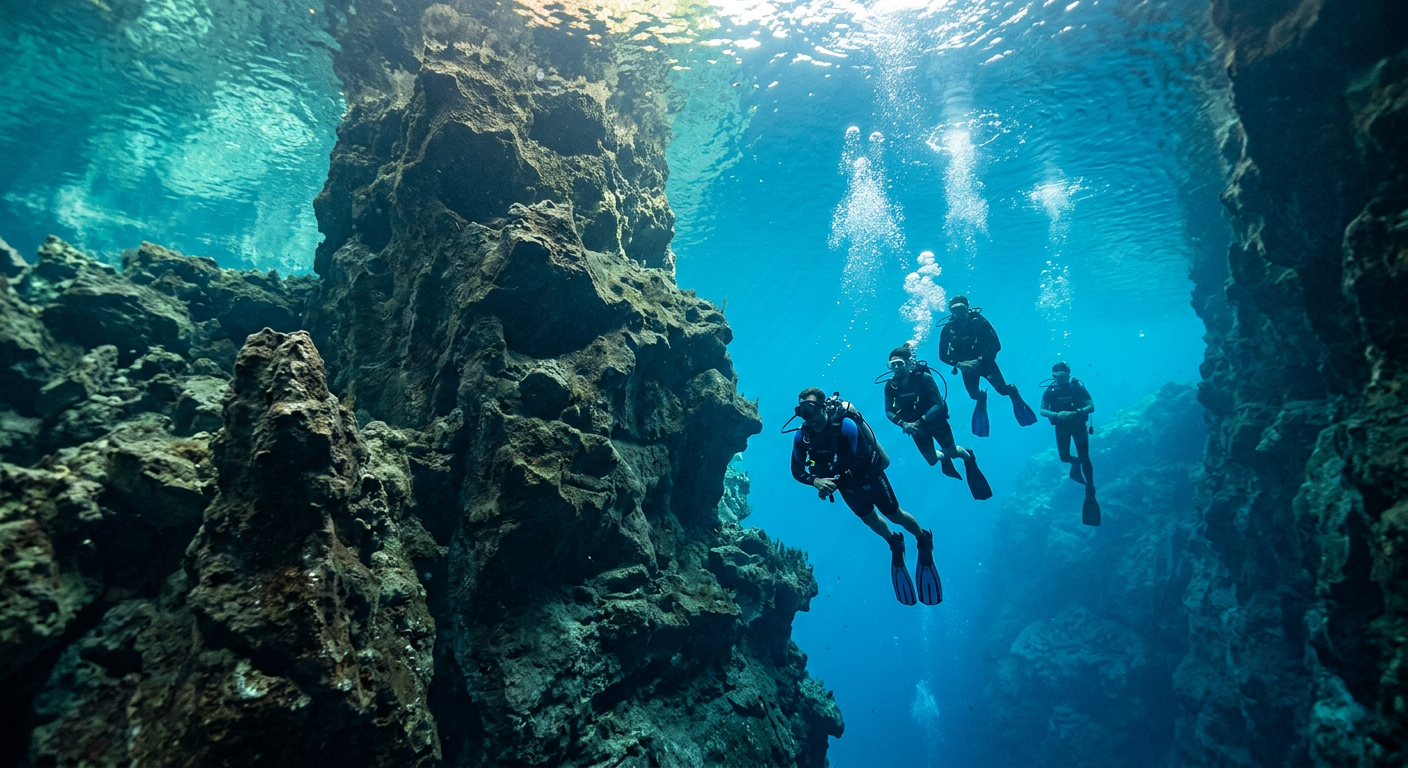
Plunging into an underground aquifer creates a visual glitch that renders that number useless. This optical illusion causes people to dump air from their jackets too fast. You think you hover ten feet above the floor. Your dive computer reads forty.
Web searches focus on the upper basin layout. The lower expanse is what rewrites your brain's spatial processing. The cavern floor spreads wide enough to park a commercial supply vessel down there.
The Optical Illusion of Clear Water
You drop through the neck of the sinkhole and the walls keep receding. According to dive physics data from the Undersea and Hyperbaric Medical Society, fresh water lacks ocean particulates. Without that suspended marine snow, human brains lose distance cues.
Passing the Submerged Air Stations
I used to blame poor buoyancy control for the awkward descents I watched near the bottom. Halfway down the main line last season, my own trim went sideways. The issue was environmental all along.
I cannot prove this in a lab, but the water feels heavier once you pass the diving bells. The pressure gradient shifts. Trust your gut on this, even if the physics manual argues otherwise. You watch your gauges down here, not the floor.
Trading Lake Bryan Surface Trips For Subterranean Gloom
Surface humidity clings to your neck when you emerge for a tank swap. You rent a vessel at Lake Bryan expecting the standard Orlando aquatic afternoon. Lukewarm ripples and wakeboard boat exhaust dominate that surface-level loop.
An afternoon paddle works fine for killing a few hours. Exploring the blue grotto shatters that passive recreation model. You trade a plastic seat for karst cliff drop-offs.
2019 me thought Florida was just flat beaches and theme park asphalt. 2026 me knows better. The state is a fragile limestone sponge, and the aquifer below is where the actual pulse is.
Leaving The Manufactured Surface Water Behind
Most coastal tourists never look down. They hover on top of the water without considering the flooded caves beneath Central Florida. Beige travel is a sin.
At Rockon Recreation Rentals, we watch travelers default to predictable boat tours out of habit. The contrast between a sluggish neighborhood pond and a giant geologic conduit requires a reality check.
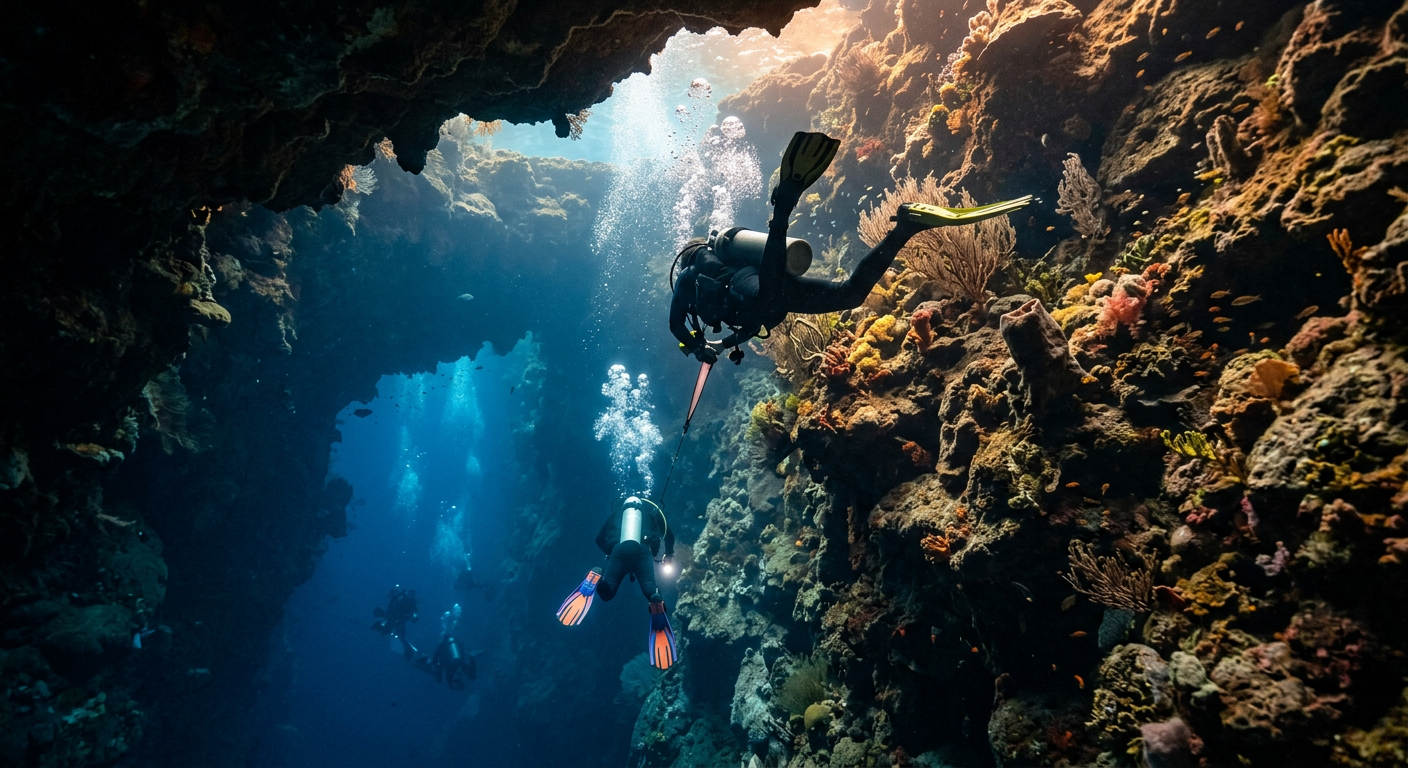
Data from the Florida Department of Environmental Protection maps out thousands of these subterranean passages beneath the state. You swim inside the region's main freshwater reserve. The sheer walls swallow sunlight fast, requiring a primary dive light to expose the fossils carved into the rock. A stray piece of duckweed brushes against your mask strap. Nature reclaims its space quickly.
How the Blue Grotto Dive Sites Demand Actual Respect
Gritty limestone dust bakes into the metal railing leading to the primary entry platform. Getting out of the water here carries a heavy toll. I battled the moisture for nearly an hour trying to peel off a rented wetsuit without popping a shoulder out of its socket.
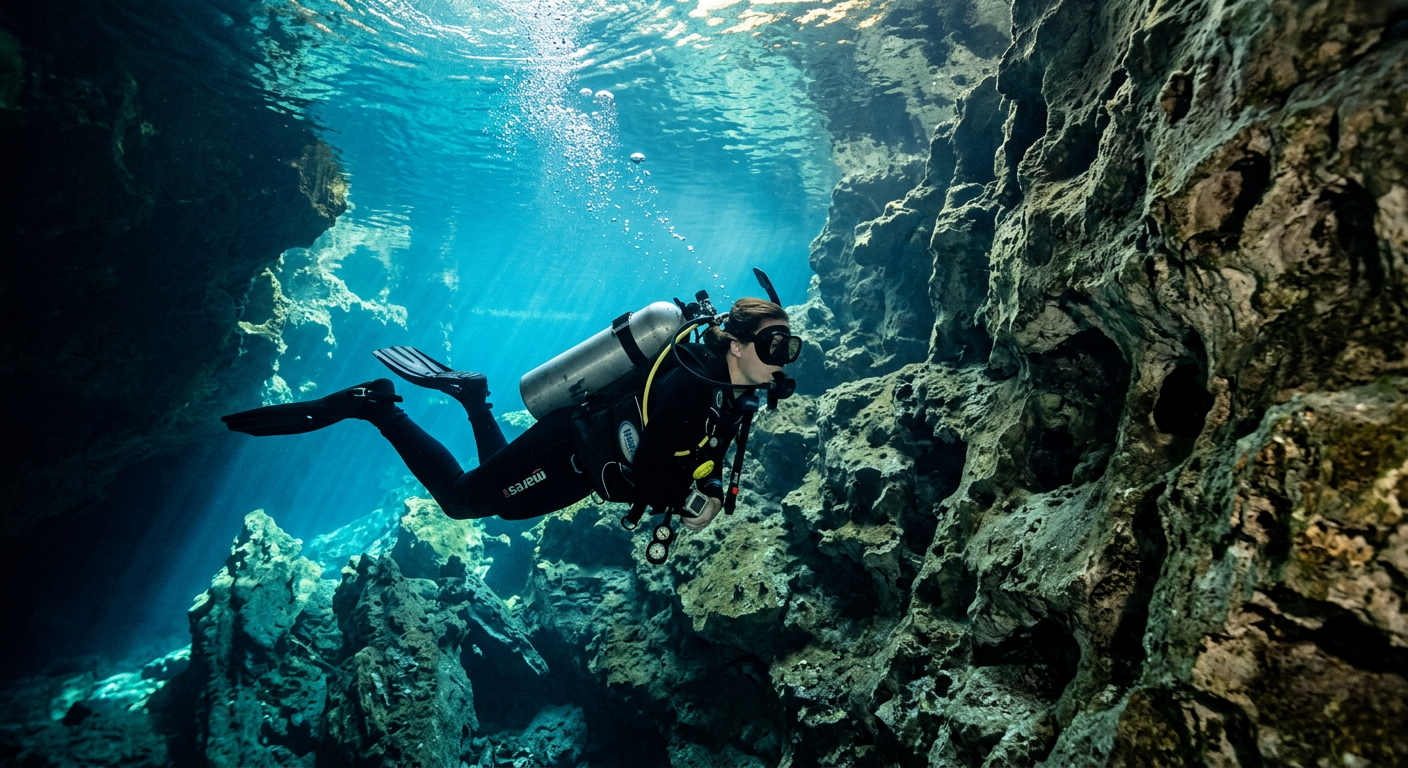
Leaving the sunny open-water basin for shadowed overhangs usually triggers warning bells in my head. Entering this space reframed my perspective on overhead environments. The massive limestone roof stops feeling like a trap.
It acts as an acoustic vault, buffering out the baseline stress of farm highway traffic. The rock is just holding space for you.
The Reality of the Cavern Zone
The permanent guideline begins near the main entrance restriction. It runs down a deep slope toward the lower chamber.
The walls wear pale horizontal erosion bands. The water sits at 72 degrees. You breathe. You float. The ceiling meets the floor.
Treat that guideline as a hard border. Light vanishes past the permanent markers of the lower bowl. According to safety protocols set by the National Speleological Society Cave Diving Section, open-water divers have no business pushing beyond daylight zones.
A single improper fin kick in the dark ruins visibility for hours. Booking a guide for the blue grotto through Rockon Recreation Rentals ensures you learn to navigate these environments smoothly.
Entering the Twilight Reality of the Blue Grotto Aquifer
The scent of wet pine needles occasionally drifts over the staging dock if the wind shifts south. Florida limits underground access strictly. Most natural springs kick you out before sunset. The blue grotto operates differently.
Staring into the basin at night strips away your remaining land-locked comfort zones. Your primary light beam cuts a sharp white cone through the black water. The surrounding walls disappear entirely. It feels like hovering in deep space.
The Habitat Bell Experience
You reach the submerged fresh air bell anchored at thirty feet. The compressed bubble inside echoes with the metallic rasp of exhaust regulators. A strange metallic tang clings to the trapped oxygen when you pull your primary breathing source from your mouth.
Removing your regulator underwater goes against every survival instinct. Here, you sit inside a plastic dome talking to your dive buddy. The conversation sounds hollow. Your voices bounce off convex acrylic walls. Most visitors spend three minutes making jokes about the pressure before the damp chill forces them back onto their main tanks.
The Logistics of Booking the Blue Grotto in 2026
The dry rustle of palmetto fronds masks the sound of approaching dive vans. You drop gear onto a picnic table and realize the parking lot fills up by breakfast. Securing a spot at the blue grotto takes a bit of planning now.
Walk-ins face the reality of maxed-out capacity rules. I learned this the hard way a few seasons ago. We drove two hours just to photograph the entrance sign from the wrong side of the gate.
Now, signing waivers online cuts the morning friction in half. Check-in becomes a quick verbal exchange rather than a paperwork nightmare. Avoid the peak holiday weekends. A Tuesday morning here means you share the basin with turtles instead of twenty-person training classes.
Navigating the Surface Facilities
A faded 1990s diver decal peels off the side of the air fill station window. The compressor chugs loud enough to rattle your teeth if you stand too close. Local instructors shout commands over the mechanical roar.
You grab your filled tanks and retreat to the quiet side of the grassy field. The blue grotto provides pavilions, but snagging one requires arriving before the fog burns off the neighboring fields. Pack a folding chair. You end up sitting on wet grass otherwise.
The Unexpected Inhabitants
The blue grotto holds a resident softshell turtle that treats novice divers with borderline contempt. Virgil, as the locals named him years ago, usually hovers near the 30-foot mark. He eyes your shiny regulator second stage and decides you are boring.
You expect a barren rock tomb. Instead, you get judged by a reptile the size of a manhole cover. Bluegill follow your fins, waiting for the sediment kick-up to reveal breakfast.
Gear You Actually Need for Swimming the Blue Grotto
A gust of dry farm wind coats your wet boots the moment you step off the metal stairs. Glossy rental equipment lacks the limestone scars required to earn my trust. Give me faded, sun-bleached neoprene and scratched regulator gauges for this plunge.
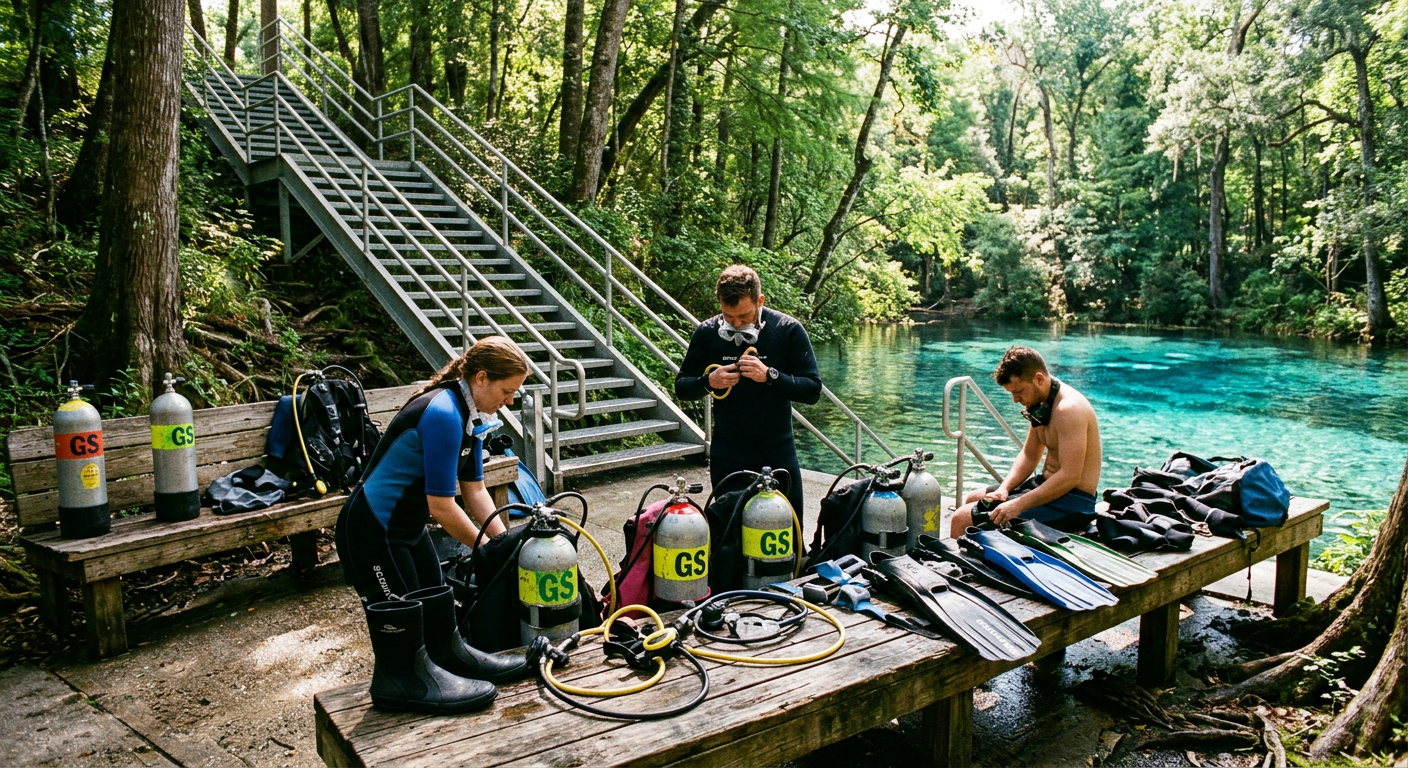
Those battle scars prove the gear works under pressure. According to experts at the Professional Association of Diving Instructors, seasoned rental equipment often provides a better seal around the jawline than stiff new models.
The blue grotto gear rental shed smells faintly of simple green and aged silicone. It is the perfume of the dive industry.
Rethinking the Wetsuit Rules
I used to avoid tattered rentals out of stubborn pride. Giving in and wearing a patched-up thick suit shifted my approach to diving the blue grotto.
The buoyant lift of thick neoprene suspends you weightless above the rock formations. It turns a shivering endurance test into a relaxed glide. We map out trips through Rockon Recreation Rentals with this specific baseline advice. Grab the warmest suit available.
Packing for the Surface
Rural air pulls a fast one on visitors. The water holds steady, but ambient temperatures crash fast when the sun dips behind the Marion County tree line.
- Bring at least three heavy cotton towels per person.
- Skip those thin, sand-free travel cloths.
- Wrap up in a bulky fleece hoodie post-dive. It feels like survival.
- Leave your expensive sunglasses locked in the glovebox.
Navigating Post Dive Hunger and Rural Williston Reality
The adrenaline crash leaves you craving immediate calories. Research is my love language; reality is my ex. You might expect a glossy resort café waiting for you after such a monumental excursion.
The blue grotto sits near Williston, offering a sunbaked landscape of farm roads and open pastures instead.
Finding Highway Calories
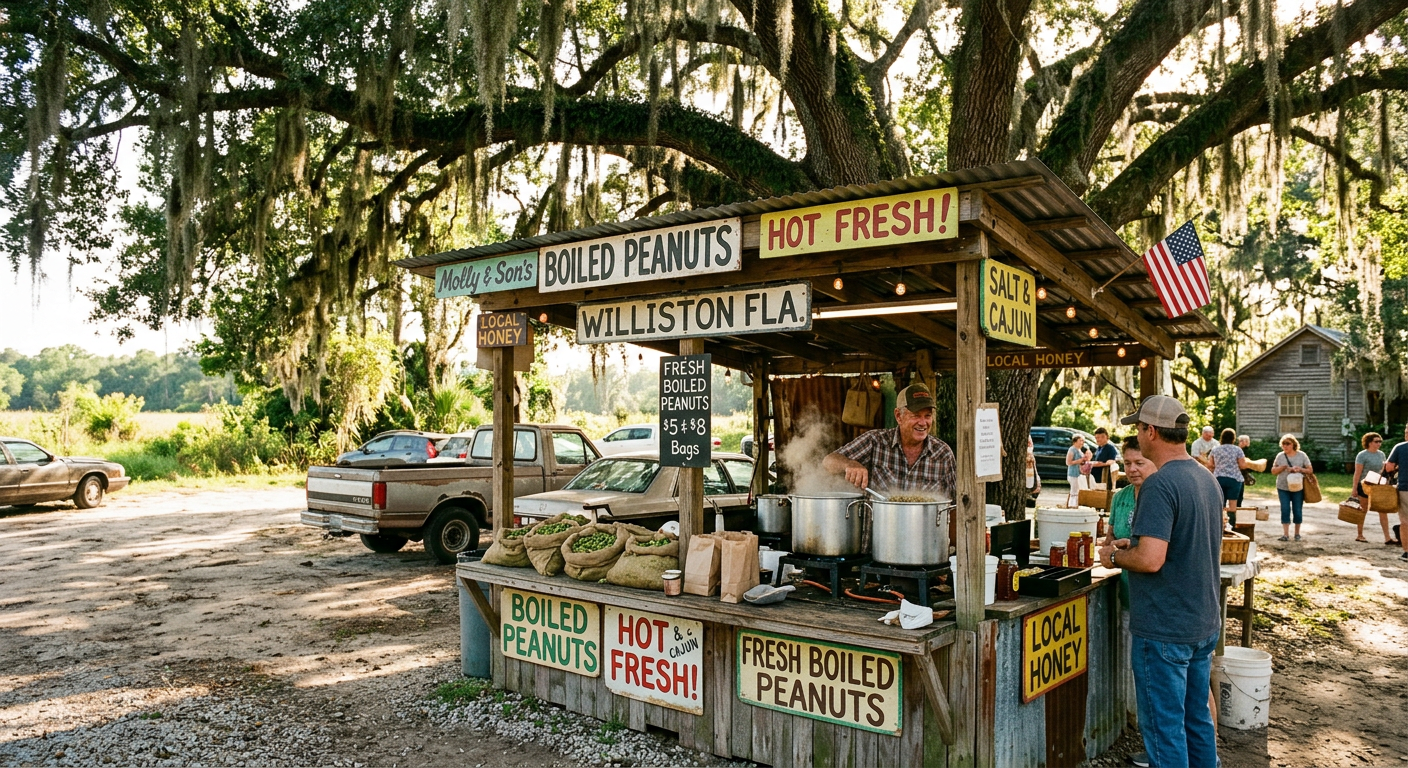
I always assumed we would rush back toward city limits just to find decent food. Then we stopped at a tin-roofed shack operating out of a dirt lot a few miles down the highway. The earthy, salty mush of a hot boiled peanut straight from a Styrofoam cup changed the game.
Savory broth delivers the salt replacement your tired muscles demand. Roadside specialties happen to be the superior post-dive meal.
The drive south to Orlando takes about two hours via the Florida Department of Transportation turnpike routes. State toll systems cover the bulk of the asphalt. Book your slots ahead of time at the blue grotto so you skip the logistics on the road.
The heater blasts quietly in the truck cab. The surrounding pine forest fades as city traffic thickens. You check the rearview mirror and catch a glimpse of your faded dive bag. Your mind drifts past the brake lights ahead, sinking right back into the dark.
Plan your trip: Ready to experience this firsthand? Book Kayak Rental Orlando on Lake Bryan directly through our marketplace.