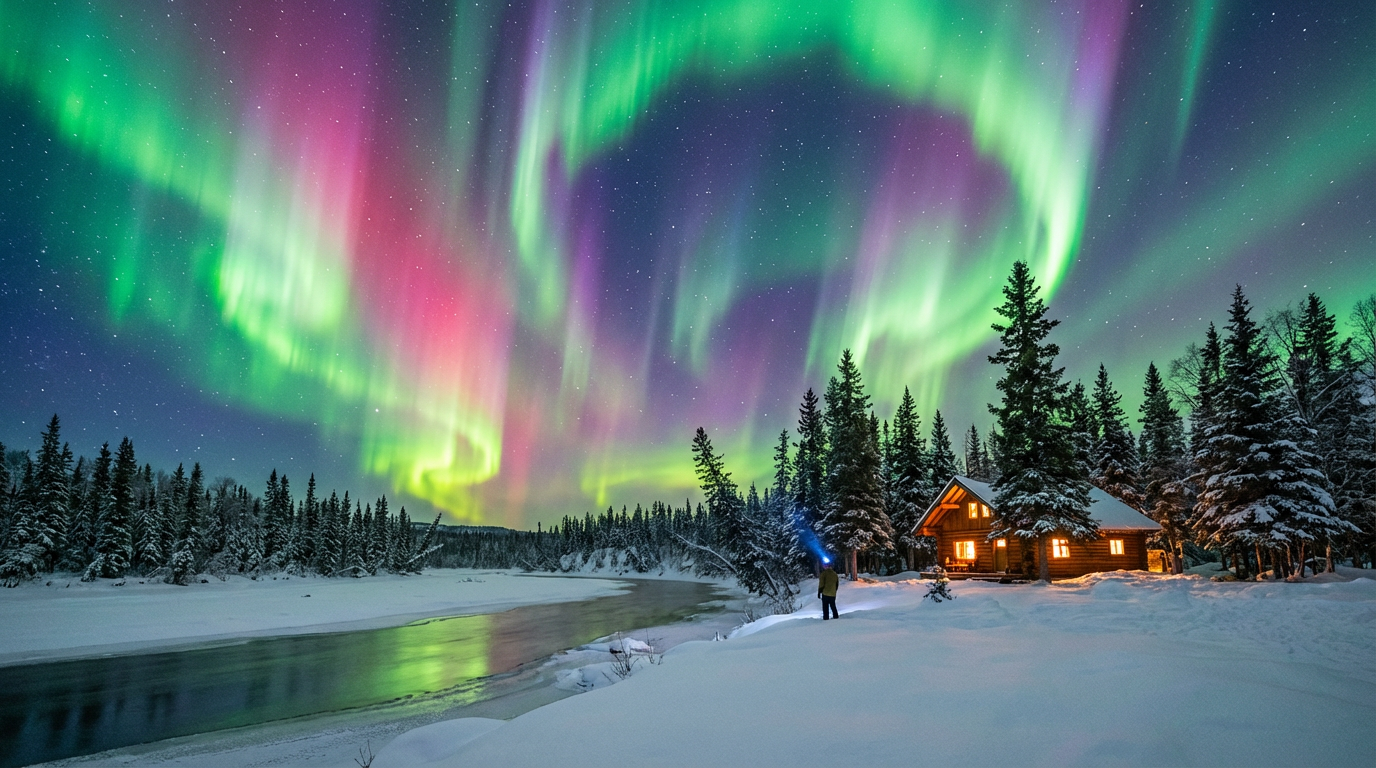
My right boot is slowly freezing to the surface of Chena Lakes at 2:14 AM. The wind whipping off the ice literally tastes sharp, like inhaling microscopic glass. I am aggressively tapping my phone screen through triple-layered mittens, desperately trying to refresh a push notification that promises a massive geomagnetic storm. My eyelashes are currently fused together. It is incredibly glamorous. If you are hunting for the exact best time of year to see the northern lights in interior Alaska, you usually find the brutal answer in humbling moments exactly like this.
Since starting my career as an adventure guide in the Florida swamps back in 2018, I thought I intimately understood harsh weather. The oppressive August humidity of the Everglades is deeply uncomfortable. But a subarctic winter is actively hostile. Research is my love language; reality is my ex. I came up here expecting a pristine frozen postcard and got humbled immediately.
I spent three weeks before this trip acting like a rogue NASA engineer. I had fourteen different space weather tabs open on my laptop simultaneously. I memorized local magnetic latitudes. I downloaded three very loud, very expensive aurora forecasting apps. I was prepared. Wrong.
Look up. You know what a massive, once-in-a-decade solar storm looks like when there is a ten percent cloud cover?
Nothing. It looks like dirty gray flannel.
The Great Aurora App Fallacy
Here is the brutal truth the glossy travel brochures intentionally omit. The aurora apps lie to you.
They do not do it maliciously. According to the official tracking models from the NOAA Space Weather Prediction Center, these tools accurately measure solar winds hitting the atmosphere sixty miles above your head. What they entirely fail to measure is the localized micro-weather standing between you and that atmosphere.
You could map out your trip perfectly trying to nail down the absolute best time of year to see the northern lights in interior Alaska. You could study the 2026 data. But if there is a whisper of stratus clouds over your specific valley? You are just blindly standing in a freezing void holding a glowing rectangle.
Surrendering to the Dark
2019 me thought smartphone technology could outsmart the subarctic sky. I spent hours staring at my frozen screen while the real show probably peaked exactly behind my back.
2026 me knows those push notifications mostly just induce severe travel anxiety. I cannot scientifically prove this, but I swear the aurora knows exactly when you are looking down at your phone. It actively chooses that precise moment to dance. Trust your gut and your eyes over a digital ping.
The real trick isn't tracking space weather. It is strictly tracking regular earthly weather.
According to meteorologists at the National Weather Service in Fairbanks, checking the hourly cloud forecast before leaving a heated room is mandatory. You need to find a dark physical pull-off far from glaring city streetlights, like Murphy Dome or Cleary Summit. Put your phone deep in an inside pocket so the extreme subzero temperatures do not brutally kill the lithium battery in three minutes flat.
A gentle Kp2 solar rating on a crystal-clear night will always visually outperform a massive Kp7 rating hiding behind a thick cloud bank. A clear, starry sky is your actual golden ticket.
The Autumn Double Reflection Glitch
If it's on a postcard, it's a trap. I used to blindly trust the postcard-industrial complex. I fully assumed if you weren't shivering so violently your molars naturally cracked in a January whiteout, you weren't experiencing the authentic Alaskan hunt.
Wait, what? I know. I used to aggressively preach the mid-winter gospel to anyone who would listen.
But after agonizing over a decade of historical temperature logs so you don't have to, I had a sudden, terrifying realization. The travel brochures are aggressively selling us unnecessary physical pain. September and October are vastly superior for sheer human comfort.
Why Open Water Beats Frozen Tundra
Here is the reality check most superficial visitors miss entirely. They arrive precisely three months too late to experience the glitch. By late November, every massive body of water around Fairbanks is heavily sealed under three opaque feet of white ice.
But in late September or early October of 2026? These massive lakes exist in this magical, liminal space.
The water is still a pure, unfrozen dark liquid. The atmospheric air sitting directly above it hovers comfortably around 25°F. Breathing it in feels genuinely crisp, not lethal. You catch the faint, wet-earth smell of decaying birch leaves right before the massive snowdrifts violently bury them for the next seven months.
When the sky rapidly erupts, that ink-black water dynamically acts like a massive natural mirror. You do not just see the aurora overhead. You literally get it twice.
The vivid neon green spills aggressively across the sky and slices directly through the tiny ripples at your boots. It completely breaks your brain. Trust your gut on this. Double reflections heavily beat the frozen tundra every single night.
The Brutal Truth About Deep Winter Hunts
Let's do some quick subarctic endurance math. Standing strictly outside for three consecutive hours in late October usually means dealing directly with 15°F to 30°F temperatures. You wear a decent insulated parka. You gracefully sip tepid thermos coffee. You survive just fine.
Try casually pulling that exact same stunt in late January.
I finally threw my dead phone deep into my heavy parka pocket last December. I just looked up. And then the absolute, freezing reality of a subarctic deep winter aggressively hit me.
There is a specific sound heavy snow makes when the ambient temperature violently drops below minus thirty. It completely stops crunching. It squeaks loudly like dry styrofoam being aggressively rubbed together directly beneath your thick boots.
The air rapidly gets incredibly thick and heavy. You can distinctly smell distant cabin woodsmoke heavily trapped deep in the thermal inversion layer. I consciously packed four insulated layers. I needed six. Beige travel is a sin, but freezing in the woods is a localized medical emergency.
Many local diehards—and even recent features in The New York Times—will quietly point to January or February as peak season. Why? The extreme deep freeze actually yanks all the ambient moisture entirely out of the air. It naturally generates a brutally, violently clear night sky. The distant stars do not just quietly twinkle up here. They look exactly like tiny laser pointers repeatedly aimed directly into your frostbitten retinas.
Rental Car Delusions and Frozen Oil Sludge
Wait, here is the craziest part of the deep winter season. Every single week, overconfident tourists explicitly rent standard front-wheel-drive economy sedans at the local regional airport. They confidently point their digital GPS toward a dark, entirely unplowed logging road.
Do not do this. You will not become an intrepid explorer. You will quickly become a localized search and rescue incident.
When the temperature rapidly dips into the negative forties, basic mechanics entirely fail. Rubber tires freeze heavily flat on the bottom. Inferior engine oil slowly turns into thick, unusable sludge.
This is precisely why booking a proper Northern Lights Alaska Tour is purely mandatory in the heavy dead of winter. You cannot DIY this aggressive deep freeze unless you genuinely know exactly what you are doing. You strictly need heavy winterized artillery.
As a VisitFlorida Travel Partner, I actively remind folks booking excursions through Rockon Recreation Rentals to lock down a vetted local guide immediately. A real interior guide intimately knows exactly where the localized valley microclimates shift. They calmly hand you a steaming cup of boiling hot cocoa right when your toes go entirely numb. In that exact moment, it is the absolute greatest liquid you will ever firmly taste, violently burning your tongue in the best way possible. Pay the pros. Keep all your fingers.
Why the March Equinox is the Mathematical Sweet Spot
If I am being entirely selfish, late March is my absolute favorite operational window.
I scrubbed five years of local daylight and ambient temperature charts from the University of Alaska Fairbanks Geophysical Institute to manually confirm my own heavy bias. By the spring equinox, those dangerously brutal cold snaps finally start losing their razor sharp edge. The air simply feels slightly more forgiving directly against your exposed face.
The Russell McPherron Effect Explained Simply
This is not just a romantic hunch. According to heliophysics data from NASA, the equinox months actively push far more solar wind directly into our upper atmosphere. The science is incredibly specific.
It is genuinely called the Russell-McPherron effect. This complex phenomenon naturally opens microscopic cracks in the Earth's magnetic shield. You rapidly secure dramatically heightened solar activity, but you dodge the crippling frostbite. It is purely mathematical beauty.
When people ask about the absolute best time of year to see the northern lights in interior Alaska, I firmly point tightly to these final weeks of winter. You get raw chaos in the sky. You get perfectly clear sightlines. You finally get to put the phone entirely away.
The Ultimate Strategy Is Complete Inaction
We neurotically obsess over raw scientific data because aimlessly standing out in the freezing dark strictly feels deeply unproductive. We desperately want to manage and forcefully schedule the cosmos. But the dark subarctic sky does absolutely not owe you a majestic performance.
You could successfully memorise complex magnetic latitudes. You could rigidly stare at your bright screen until your eyes completely dry out. None of it actively forces the thick sky to open up. The wild aurora arrives strictly on its own brutally chaotic, unmanageable schedule.
Stop annoyingly treating the sprawling night sky like a delayed commuter train you can actively track. Forcefully put your smartphone back in your pocket. Grab a heavily insulated metal thermos of scalding hot coffee. Quietly listen to the absolute, ringing terrifying silence of the frozen taiga.
You might wait two hours in the punishing cold just to see a faint gray smudge. Or the sky might suddenly tear open and rain down vibrant, violent ribbons of neon green directly onto your frozen boots. That profound unpredictability isn't a glitch in the experience. It is the entire point.