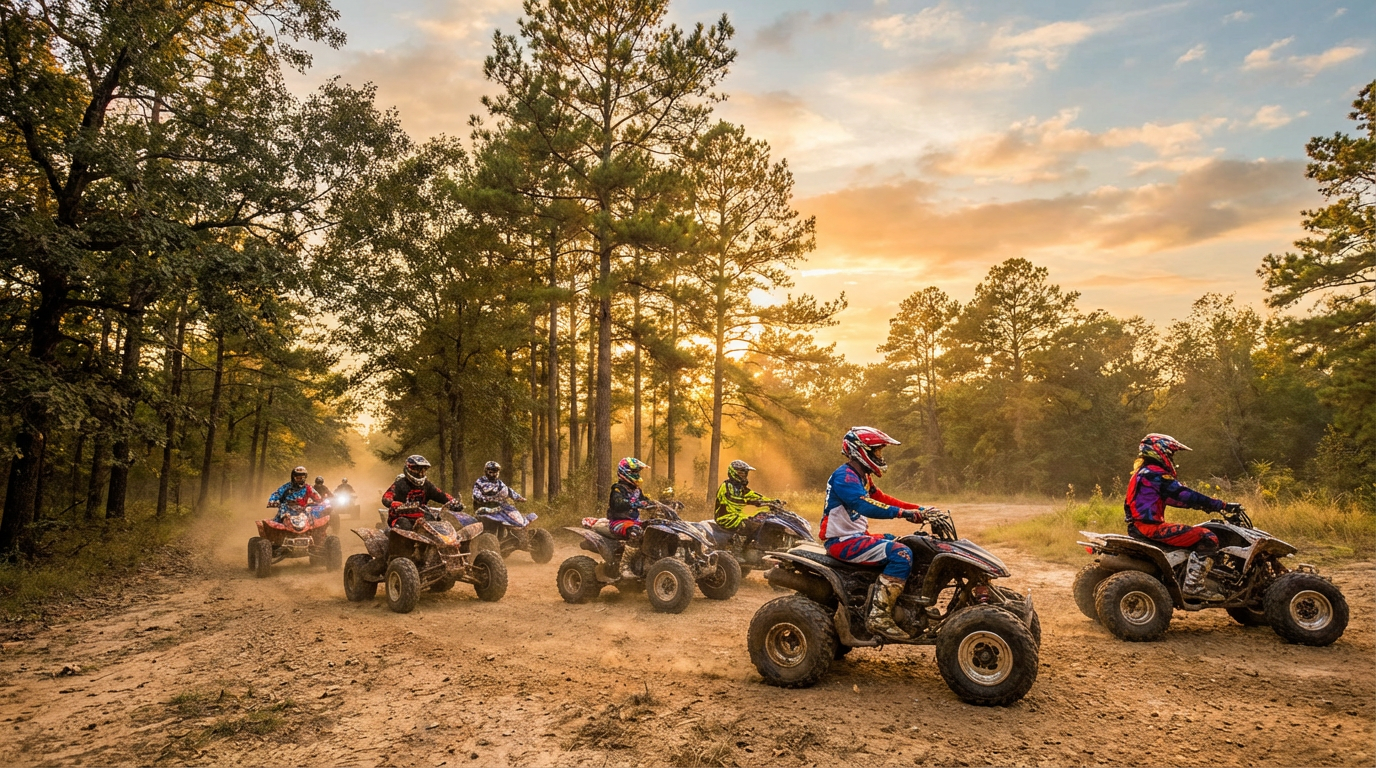
Rethinking the Traditional City Weekend Escape
Ditching the dense, climate-controlled tourism districts of southeast Texas for a rugged outdoor escape is the fastest way to avoid the predictable 2026 gridlock of Interstate 45. While approximately 2.3 million people live directly within the heavily paved city limits, a comprehensive 2026 demographic report published by the U.S. Census Bureau indicates that Harris County still preserves over 50,000 acres of open, unpaved terrain. Compared to top metropolitan recommendations from platforms like Tripadvisor, which lean heavily toward walking through air-conditioned museums, venturing out to the perimeter natural parks offers a highly tactile, louder, and distinctly muddy contrast for genuine outdoor enthusiasts.
As a recognized VisitFlorida Travel Partner actively guiding cross-terrain tours since 2018, I constantly compare the mechanical differences between coastal environments and inland trails. Comparing Florida's deep sandy swamps to the thick, unforgiving Texas clay reveals a sharp mechanical difference in vehicle handling and outdoor preparation. Loose coastal sand requires constant, aggressive throttle just to float over the top surface, whereas local southeast Texas backwoods trails demand steady, low-gear torque to safely push through 30-inch deep ruts. Securing a reliable ATV riding Houston package serves as the perfect mechanical conduit to experience this unique geography, granting visitors access to off-road parks sitting just 45 minutes from downtown but fully blocked from the highway view by towering Loblolly pine forests.
You strictly do not need to own a specialized lifted truck or heavy overlanding equipment to reach these hidden trailheads. By strategically reserving a well-maintained quad from outfitters like Rockon Recreation Rentals for a 9 AM morning slot, you effectively secure an average starting temperature of 75 degrees before the brutal afternoon heat index pushes past 105. Escaping the city concrete for a dedicated ATV riding Houston trail run guarantees cooler operating temperatures not just for the machine's air-cooled engine blocks, but for your own cardiovascular system as well.
Evaluating the Physical Demands of Outdoor Texas Exploration
Many urban travelers mistakenly assume that transitioning from city sidewalks to off-road trails requires zero athletic adaptation, but navigating a 400-pound motorized quad demands substantial, active physical exertion rather than passive sitting. An hour spent wrestling handle bars over local ATV riding Houston courses heavily engages the deltoids, core stabilizers, and lumbar muscles, directly mirroring the cardiovascular demand of a steady 30-minute high-resistance rowing session. Managing this unexpected physical toll is what separates an exhausting afternoon from a thrilling woodland adventure.
Professional guides actively mitigate early muscle fatigue and sudden cramping by enforcing strict mechanical warm-ups before ever hitting the dense vegetation. It is standard practice to mandate a mandatory five-minute warm-up on flat, grassy terrain to teach proper hydraulic braking techniques and weight displacement before allowing groups to push into the heavily forested canopy. Understanding how to dynamically shift your body weight to combat the lateral forces of unpredictable clay ridges is a localized skill that standard walking tours Houston operators physically cannot simulate downtown.
Navigating the Extreme Microclimates of Suburban Woodlands
The potent combination of a 90-degree ambient daytime temperature and 80-percent atmospheric humidity generates a highly specialized local microclimate that severely tests human thermoregulation. Because dedicated ATV riding Houston routes typically snake through extremely dense, wind-blocking pine vegetation, the stagnant trail air actively prevents standard evaporative sweat cooling from functioning at peak efficiency. Failing to artificially lower your physical core temperature during these deep woodland runs directly results in rapid cognitive fatigue, manifesting visibly as delayed braking reactions and dangerous throttle indiscipline.
A strict 2026 extreme heat response protocol published by the Centers for Disease Control and Prevention conclusively details how proactive fluid loading significantly delays the sudden onset of heat exhaustion in stagnant environments. I universally mandate that my guided clients consume at least 32 liquid ounces of premium electrolyte-infused water exactly 45 minutes before turning the ignition key. Relying heavily on reactive post-ride hydration wholly fails to support the human cardiovascular system during the peak muscular strain of fighting an off-road steering column out of a dried mud trench.
Integrating Safety Strategies for Backwoods Terrain
Heavy protective trail apparel often lacks visual appeal for casual vacation photos, but it effectively prevents severe dermal abrasions when transitioning from forgiving urban environments into unpredictable rural terrain. Heavy, compressed clay rotates off deep-tread knobby tires at speeds routinely exceeding 40 miles per hour, creating localized, high-velocity dirt projectiles that can easily breach unprotected skin. We strongly require all recreational riders to wear long tactical layers, regardless of the sweltering 95-degree southern heat, to physically block both harmful UV radiation and flying organic debris.
Securing Head and Vision in High Debris Environments
A tightly fitted, Department of Transportation (DOT) approved powersports helmet establishes the absolute, non-negotiable baseline for head protection. According to 2026 dynamic testing data from the Consumer Product Safety Commission, modern off-road safety helmets drastically reduce the instance of blunt force trauma during low-speed tactical rollovers by over 60 percent. Proper chin strap tension remains vital; precisely two fingers must fit snugly between the nylon webbing and the rider's jawbone, preventing the rugged fiberglass shell from violently ejecting upon sudden directional impacts against a tree branch.
Furthermore, standard designer sunglasses completely fail to block the fine microscopic silica dust generated during dry Texas summer months. Riders must equip high-density foam-sealed, shatter-resistant goggles to maintain clear operational vision when closely trailing another 400cc exhaust pipe through dry creek beds. Premium goggles included with an ATV riding Houston package typically feature tinted dual-pane polycarbonate lenses that seamlessly block 100% of external UVA rays while simultaneously preventing the rapid condensation build-up typical in severe 80% bayou humidity.
Shielding Bare Skin From Scrub Brush and Exhaust Heat
Exposed lower legs easily suffer the highest statistical risk of localized thermal burns from exposed 200-degree steel exhaust pipes mounted near the primary right foot peg. During a guided run in the spring of 2025, a trail participant wearing thin athletic yoga leggings experienced superficial thermal burns through the synthetic material after merely resting her calf against the factory heat shield for roughly 15 seconds. Thick, durable denim jeans or heavy canvas utility pants fully insulate sensitive skin against both aggressive mechanical heat and the scratchy, invasive mesquite brush surrounding the most popular Texas bayou paths.
Accessing Unpaved Zones Without the Long Highway Commute
Out-of-state travelers erroneously assume that finding untamed Texas terrain requires a brutal two-hour drive to the rural outback, but operational 50-acre commercial mud parks currently sit just 20 minutes from the terminals at George Bush Intercontinental Airport. Suburbs like Alief and Spring possess highly active zoning laws that legally permit recreational motorized vehicle usage directly adjacent to established commercial warehouse sectors. This incredibly unique urban layout allows adventure groups to complete a specialized two-hour mud run and return directly to a high-end urban steakhouse within a highly efficient, unified three-hour window.
Understanding Micro Parks and Zoning Infrastructure
Regional suburban trailheads underwent a massive, focused infrastructure overhaul for the 2026 recreation season, with property owners actively installing thick corrugated steel drainage pipes to safely control sudden swamp flooding. A modern regional travel feature recently updated by Lonely Planet accurately highlighted how these carefully controlled micro-parks allow nervous beginners to experience genuine off-camber riding without risking isolation in unmapped, dangerous wilderness. Track marshals deploy commercial grade bulldozers on a weekly basis to aggressively cap trench depths at precisely 24 inches, decisively preventing stock rental machines from hydraulically locking their engine blocks in unexpectedly deep standing waterway crossings.
Minimizing Interstate Drive Times and Maintaining Safety
Choosing established border towns that boast managed ATV riding Houston parameters dramatically limits wasted windshield time on Interstate 45 and smartly keeps the designated riding group firmly within robust 5G cellular network coverage in case of emergencies. Furthermore, local suburban operators actively monitor the heavily trafficked routes for displaced native wildlife, enforcing strict operational right-of-way rules for migrating snapping turtles and indigenous arboreal reptiles. Booking early through reliable platforms like Rockon Recreation Rentals seamlessly pairs riders with these closely monitored, boundary-defined suburban adventure centers rather than sending them into unmaintained public hunting lands.
Mastering Mechanical Dynamics Beyond Paved Roads
Modern off-road engineering has radically simplified the barriers to entry for inexperienced city dwellers looking to traverse rough terrain. Modern 2026 rental fleets intentionally sit two full inches lower to the axles than older generation carburetor models, actively lowering the mechanical center of gravity to safely stabilize the chassis on highly uneven topography. When you aggressively squeeze the left handbrake on these new models, the advanced hydraulic dual-disc system actively stops the spinning wheels in under 15 feet from a 20 mph rolling speed.
Unlike casual pedestrian activities, operating a heavy machine demands active visual targeting to maintain structural balance. The mechanical steering column naturally veers exactly where the driver's eyes physically focus, meaning that nervously staring at a deep mud ditch typically pulls the front tires directly into the hazard. By actively looking straight over the front steering assembly and targeting the precise apex of the next upcoming turn, novices can routinely eliminate their erratic steering habits within the first three miles of the unpaved circuit.
The Financial Logistics of Recreational Woodland Access
Purchasing a baseline 2026 four-wheel sport quad outright currently requires a massive capital investment of roughly $8,500, a figure that explicitly excludes the mandatory 12-foot steel transport trailer, complex hitch systems, and heavy annual liability insurance premiums. Alternatively, securing a structured hourly package fundamentally transforms a notoriously high-barrier motorsport into a highly accessible, low-commitment afternoon escape from city boundaries. A simple upfront flat-fee structure predictably covers the rapid mechanical depreciation, highly expensive premium unleaded fuel, and the exhaustive routine pressure-washing required to effectively strip away 40 pounds of caked red clay from the radiator grilles.
Breaking Down Transparent Flat Fee Structures
Current 2026 market rates for safe, guided suburban trail access fall comfortably between $85 and $125 per operational hour. An extensive travel economics study published by Forbes heavily emphasizes the tangible financial value of transparent local flat pricing, vastly preferring systems completely devoid of unadvertised resort gratuities or arbitrary ecological taxes. Local reputable outfitters strictly mandate a verified zero-hidden-fee policy, clearly packaging the safety helmet rental and the mandatory geographic trail access pass directly into the single digital checkout price.
Optimizing Group Budgets Through Shared Assets
Selecting a structured two-hour maximum operational window heavily prevents the rapid onset of severe muscular failure often experienced by unconditioned urban riders attempting ambitious four-hour backcountry marathons. If travel groups want to strictly split the financial weight of the excursion, reserving a side-by-side two-seat utility task vehicle (UTV) dramatically lowers the per-person monetary output while still reliably delivering thrilling off-road momentum and scenic views. This intelligent cost-sharing dynamic directly mirrors the financial efficiency of booking an ATV Rental El Paso adventure, where passengers can safely trade driving duties midway through the verified route to rest. You can explicitly view baseline comparative regional pricing for various machine sizes by reviewing an aggregated local index like ATV Rentals Houston before confirming an afternoon timeslot.
Broadening Your Texas Adventure Horizons
Transitioning from a standard urban tourist itinerary filled with crowded restaurants and slow museum walks to a rugged peripheral escape completely resets the pace of a 2026 Texas vacation. By actively leveraging the suburban boundaries where commercial zoning safely meets untouched pinebrush, travelers unlock thrilling motorized access without sacrificing the logistical comforts of a major metropolitan hub. Whether traversing a treacherous clay ridge behind the handlebars of a 400cc machine or actively learning how to manage heat index strain beneath towering southern pines, exploring beyond the dense concrete grid effectively proves that the most memorable travel destinations often exist exactly where the paved roads suddenly disappear.