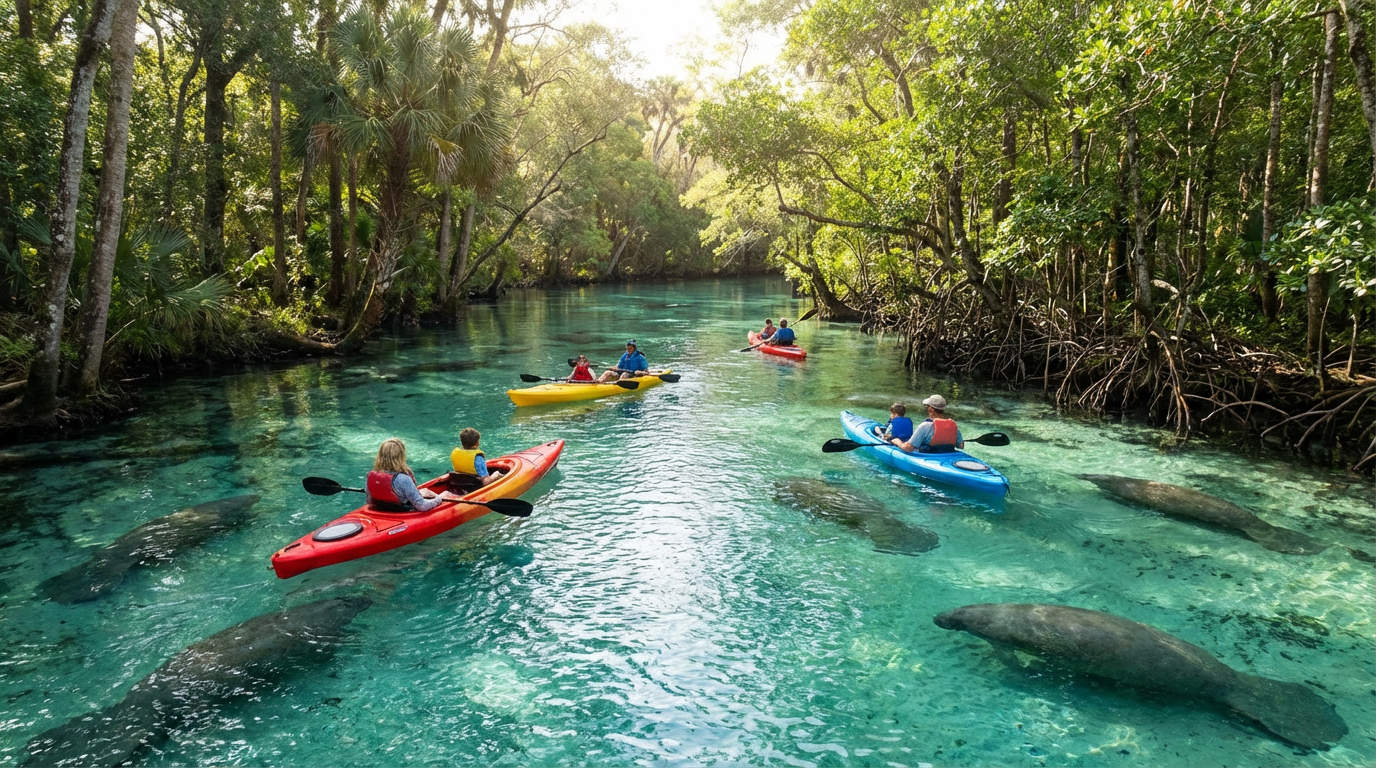
1. Exploring the Unique Waters of Crystal River
Start kayaking Crystal River Florida to explore a complex hydrological system fed by the Floridan Aquifer, located in the heart of Citrus County. While many visitors arrive expecting a simple river paddle, what they find is King's Bay. This sprawling, 600-acre bay is fed by more than 70 individual springs and serves as the headwaters of the Crystal River.
For those planning on kayaking Crystal River Florida, understanding this layout is crucial. Unlike linear paddling trails found elsewhere in the state, King's Bay is an intricate network of residential canals, open water, and hidden spring runs. Navigating this area requires distinct directional awareness and a respect for the environment.
As a Rockon Recreation Rentals partner and recognized VisitFlorida Travel Partner, we advise paddlers that the experience here fluctuates drastically depending on the season and tide. While the open bay can become choppy with afternoon sea breezes reaching 12 knots, the sheltered spring runs generally remain glassy and calm.
The Allure of Natural Springs
The defining characteristic of this ecosystem is its thermal consistency. The springs pump out approximately 600 million gallons of fresh water daily. This massive volume maintains a temperature of 72°F (22°C) year-round. This thermal stability is the primary driver for local tourism and ecological activity.
In summer, the water feels refreshing against the humid Florida heat. In winter, it acts as a warm refuge for cold-sensitive wildlife relative to the cooler Gulf of Mexico temperatures. This phenomenon is why the area becomes the "Manatee Capital of the World" during cooler months.
For kayakers, the premier destination is Three Sisters Springs. However, a detail often omitted in general travel guides is the tidal dependency of this location. The entrance is partially blocked by concrete pilings to restrict boat access to non-motorized vessels only.
During extreme low tides, the water level can drop enough to expose rocks and make the gap between pilings impassable. This makes entry difficult or potentially damaging to rental equipment. Conversely, high tide offers the best water clarity and easiest access, allowing you to float over obstacles without scraping the hull.
According to the U.S. Fish and Wildlife Service, strict conservation measures are also in play. During manatee season (November 15 through March 31), access to the water inside Three Sisters Springs may close completely if manatee counts are high. Checking current status reports before launching is a vital logistical step.
Wildlife Encounters Beyond Manatees
While the Florida Manatee is the primary draw, kayaking Crystal River Florida offers a biodiversity profile that rivals the Everglades. Because King's Bay is an estuary where fresh spring water mixes with brackish Gulf water, the species variety is unique.
Paddlers frequently encounter Tarpon rolling near the surface, particularly in warmer months. These massive game fish use the bay as a nursery. Birdwatchers can expect to see Ospreys diving for mullet and Anhingas drying their wings on navigational markers.
A keen eye might even spot river otters near the quieter residential canals of Hunter Springs. If you are looking for guided expertise to spot these creatures without physical exertion, the Marvelous Manatee Public-Boat Tour (3-Hr) is an excellent alternative.
2. Selecting the Right Vessel for Kayaking Crystal River Florida
Choosing the correct vessel is less about personal aesthetic preference and more about maneuvering the specific hydrological conditions of King's Bay. When planning your excursion through Rockon Recreation Rentals, it is critical to recognize that King's Bay is susceptible to wind fetch.
A boat that performs well in the sheltered run of Three Sisters Springs may struggle against a 12-knot headwind in the open bay. Your choice between a clear kayak, a standard vessel, or a paddleboard directly dictates your stability and fatigue levels.
Benefits of Clear Kayaks
In recent years, clear kayaks have become the preferred choice for visitors seeking an immersive view. Typically constructed from polycarbonate, the material used in bulletproof glass, these vessels are game-changers during manatee season. They offer a unique perspective that traditional hulls simply cannot match.
A clear bottom acts as a magnified window into the aquatic world. This is particularly advantageous for visitors uncomfortable with swimming or on days when air temperatures drop below 50°F, making getting wet undesirable.
However, clarity comes with operational trade-offs. Clear kayaks generally lack the tracking fins found on touring kayaks. This means they can sway more significantly while paddling across open water ("yaw"), requiring more corrective strokes.
Furthermore, because polycarbonate scratches easily, renters must be hyper-vigilant about avoiding limestone rocks. Despite these nuances, the photographic advantage is unmatched, allowing for glare-free images of manatees gliding beneath you.
Standard Kayaks vs Paddleboards
For visitors prioritizing distance or stability, standard sit-on-top kayaks remain the industry standard. These vessels feature scupper holes for self-bailing. This ensures the boat won't swamp if choppy bay waves splash over the gunwales.
Standard single and tandem kayaks generally offer superior primary stability. They are the safest option for novices or those carrying expensive camera gear. Maintaining control is a legal requirement near manatees, and these vessels offer the most responsive handling.
On the other hand, Crystal River Paddle Boarding offers a tactical advantage given your height above the water. Standing five to six feet above the surface increases your angle of incidence, significantly reducing glare.
This allows you to spot "manatee footprints" (circular calm spots on the water surface created by the animal's tail) from a greater distance. The significant downside to SUPs on King's Bay is wind exposure. Your body acts as a sail. If the afternoon sea breeze kicks up to 10-15 mph, paddling a SUP back to the launch site can be grueling.
3. Pricing and Rental Duration Options to Expect
Budgeting for a paddling trip involves more than glancing at an hourly sticker price. When planning on kayaking Crystal River Florida, costs are tied to rental duration. The market in Citrus County follows a predictable pattern that rewards longer excursions.
Unlike theme parks where prices are static, rental inventory here fluctuates based on visitor demand. Most visitors underestimate the time required to navigate from launch points like Hunter Springs toward the springs. A 2-hour rental often leads to a rushed experience.
Standard Rate Ranges
Rental outfitters generally offer three primary time blocks including 2-hour, 4-hour, and full-day rentals. The price difference between a half-day and a full-day is often negligible. It is frequently only $10 to $15 more for the full day, offering far better value.
Based on current market averages for the Crystal River area, expect the following:
- Single Kayak Half-Day 4 Hours Ranges from $35 to $45. This is the most popular option, allowing enough time to paddle to Three Sisters Springs, swim, and return without panic.
- Tandem Kayak Half-Day 4 Hours Ranges from $55 to $70. Ideal for pairs with unequal stamina, as two paddlers can combat the bay’s current effectively.
- Full-Day Rentals Capped between $50 and $65 for singles and $75 to $90 for tandems. Highly recommended during summer Florida Scallop Charters season when days are long.
- Clear Kayaks These specialty vessels command a premium. They often start at $60+ per person for guided tours due to the intensive hull maintenance required.
Seasonal Price Fluctuations
Seasonality in Crystal River is dictated by the Florida Manatee. The peak season runs from November 15 through March 31. During this window, demand skyrockets and dynamic pricing may apply.
While base rates may not double, the effective price rises because affordable unguided rentals sell out weeks in advance. This leaves only premium guided tour options which can cost upwards of $75 to $100 per person.
Access to Three Sisters Springs can be closed abruptly by the Three Sisters Springs Center if water temperatures drop significantly. Visitors booking non-refundable rentals during cold snaps might be restricted to the open bay. Conversely, the off-season from April through October offers stabilized prices and immediate availability.
4. Navigating the Booking Process and Required Documentation
Securing your vessel is the logistical hurdle that separates a seamless adventure from a morning wasted in a rental office queue. While the Nature Coast suggests a relaxed vibe, the reality of kayaking Crystal River Florida is strictly dictated by inventory limits and legal paperwork.
As a VisitFlorida Travel Partner, we observe that nearly 40% of peak-season visitors attempting walk-in rentals on weekends face delays or sell-outs. Fleets often sell out completely before noon on Saturdays.
Online Reservations versus Walk-ins
Advance booking is a strategic necessity for accessing Three Sisters Springs. Most reputable outfitters operate on strict launch schedules to manage canal traffic. We strongly recommend reserving equipment at least two weeks in advance for weekend trips between December and February.
Through Rockon Recreation Rentals, you can view real-time fleet availability to secure specific preferences. This ensures you can reserve high-weight-capacity fishing kayaks before arrival, rather than settling for a standard hull that might be uncomfortable.
The walk-in experience often involves a location trade-off. Prime launch sites adjacent to King's Bay Park or Hunter Springs Park command premium demand. Walk-in renters are frequently pushed to secondary outfitters located further inland, requiring shuttle rides.
Waivers and Liability Forms
Administrative requirements are strictly enforced due to maritime liability laws. Every adult paddler must sign a liability waiver, and purely digital systems are the industry standard. Creating a profile and signing this on a smartphone prior to arrival expedites check-in significantly.
At the shop, the primary renter must present a valid, government-issued photo ID. Be prepared for a security deposit. Outfitters typically place a provisional hold of $200 to $500 per group to cover potential equipment damage or lost gear.
5. Included Amenities and Essential Gear
When booking a rental for kayaking Crystal River Florida, the quality of gear and scope of included amenities varies significantly between outfitters. As a Rockon Recreation Rentals partner, we see first-hand that the difference between an enjoyable paddle and a logistical headache often comes down to equipment.
Safety Equipment Checklist
Florida maritime law is strict regarding safety equipment. Verified outfitters will always include the legal minimums in the rental price. According to the Florida Fish and Wildlife Conservation Commission (FWC), every vessel must carry a USCG-approved PFD for each person on board.
A standard rental package typically includes:
- Type II or Type III PFD Ensure the vest fits snugly; a vest that rides up over your ears is useless in an emergency. Children under 6 must wear their PFD at all times.
- Sound-Producing Device This is usually a plastic whistle attached to the vest, a legal requirement in Florida waters.
- Paddle Standard aluminum-shaft paddles are the norm. If planning a trek of 4+ miles, ask if lightweight fiberglass upgrades are available.
Wet Suits and Comfort Gear
The most overlooked piece of gear is the wet suit. Visitors often assume the 72°F springs guarantee warmth. However, during manatee season, air temperatures frequently drop into the 40s or 50s. Sitting in a wet sit-on-top kayak exposed to wind chill can lead to hypothermia risks.
Most outfitters charge a nominal fee of roughly $10 to $20 for a 3mm "shorty" wet suit. We consider this mandatory if you plan to snorkel or paddle before 10:00 AM in winter. In summer, focus instead on a high-quality dry bag (10L–20L) for towels and electronics.
6. Choosing Between Top Rated Providers for Kayaking Crystal River Florida
Selecting the right outfitter is arguably the most critical logistical decision of your trip. The geography of King's Bay covers roughly 600 acres. Your launch point determines whether you spend energy exploring the springs or fighting headwinds to reach them.
As a recognized VisitFlorida Travel Partner, Rockon Recreation Rentals emphasizes that the lowest price often comes with significant trade-offs regarding equipment quality and proximity.
Proximity to Three Sisters Springs
The single biggest differentiator is proximity to Three Sisters Springs. Not all launch sites are created equal. Knowing the difference can save up to 45 minutes of paddling across choppy water.
- Hunter’s Springs Park Many providers utilize this public launch. Accessible, but approximately a 20-30 minute paddle to Three Sisters Springs. This route forces you to cross the open bay.
- King’s Bay Park Located deeper within the bay, this launch cuts travel time slightly but still requires navigating active boat channels.
- Private Canals and Marinas Several top-tier providers operate from private docks adjacent to the refuge entrance. While these rentals may carry a small premium, they typically allow entry to the springs within 5-10 minutes.
Evaluating Customer Reviews and Fleet Quality
When vetting reviews on platforms like TripAdvisor, look beyond generic star ratings. Specific feedback regarding equipment condition is vital. In King's Bay, where sharp limestone and concrete pilings are common, hull integrity matters.
Top-rated outfitters maintain fleets of modern, self-bailing kayaks rather than older, sun-bleached hulls which can be brittle. For clear kayaks, maintenance is paramount; scratches render the view cloudy. Look for recent reviews specifically mentioning clarity.
7. Safety Guidelines and Manatee Manners
Engaging in kayaking Crystal River Florida is distinct from paddling elsewhere because King's Bay operates under the strict jurisdiction of the Crystal River National Wildlife Refuge. This is a federally protected habitat for the West Indian Manatee.
Safety here encompasses two responsibilities: physical safety amidst recreational traffic, and legal adherence to mandates protecting endangered species. Navigating King's Bay requires a defensive mindset.
The bay is utilized by commercial tour boats, fishing vessels, and swimmers simultaneously. Local maritime law dictates that human-powered vessels should stick to channel edges, while motorized vessels occupy the center.
Mandatory Educational Videos
Before launching, reputable outfitters are required by the U.S. Fish and Wildlife Service (USFWS) to ensure all renters view the "Manatee Manners" educational video. This is a regulatory requirement, not a formality.
The videos assist in defining "passive observation." New visitors often underestimate the scrutiny here. During peak season, "Manatee Watch" volunteers and federal officers patrol the waters to monitor for rule-breaking behavior.
Federal Wildlife Protections
The legal framework protecting manatees includes the Marine Mammal Protection Act (MMPA) and the Endangered Species Act. Harassment is defined broadly, covering acts that change the animal's natural behavior, such as feeding or resting.
According to the Florida Fish and Wildlife Conservation Commission (FWC), federal conviction can result in fines up to $50,000. A specific infraction many visitors miss is "watering" manatees. Offering fresh water from a hose involves habituating animals to boats, putting them at risk of propeller strikes.
8. Navigating Routes Near Crystal River Archaeological State Park
While Three Sisters Springs attracts the majority of paddle traffic, seasoned locals know the river offers a vastly different experience just miles downstream. For those kayaking Crystal River Florida who wish to trade bumper-boats for solitude, existing routes downstream are ideal.
The stretch leading toward the Crystal River Archaeological State Park presents a rugged, "Old Florida" atmosphere. This section serves as a transition zone where freshwater springs mix with Gulf tides, creating a unique estuary environment.
Paddling Through Pre-Columbian History
Most visitors overlook that this region was a major ceremonial center for Native Americans. According to Florida State Parks, the site contains a six-mound complex occupied from around 800 B.C.
Paddling along the northern bank offers a view of the imposing Temple Mound—rising 28 feet above the marsh—from the water level. Logistically, this route requires awareness of open-water dynamics. The river widens here, making wind exposure a real factor.
We advise launching early (before 10:00 AM) to beat the seabreeze. If renting through Rockon Recreation Rentals, inquire about shuttle options closer to the park. This avoids a strenuous 4-mile round trip from the main bay against potential incoming tides.
Quiet Zones for Bird Watching
Escaping the crowds opens opportunities for the Great Florida Birding and Wildlife Trail. Without constant swimmer activity, paddlers are likely to observe wading birds hunting in the shallows. Watch for Ospreys and Bald Eagles using tall cypress snags as vantage points.
9. Essential Tips for a Successful Day on the Water
Planning a trip for kayaking Crystal River Florida requires a strategic approach to equipment and timing. As a recognized partner of Rockon Recreation Rentals, we frequently see visitors struggle because they underestimate the Florida sun or King's Bay logistics.
A successful excursion hinges on three critical factors: specialized gear, proactive heat management, and strategic timing.
Optimizing Your Gear for Visibility and Safety
First-time visitors often overlook eye protection. We strongly recommend polarized sunglasses with amber or copper lenses. Unlike standard grey tints, these increase contrast.
This is essential for spotting manatees resting on the riverbed or navigating shallow limestone shoals. Without polarization, the water surface acts like a mirror, obscuring the underwater world you came to see. Additionally, launch sites often feature sharp limestone and oyster shells. Flip-flops are inadequate; wear secure, closed-toe water shoes with thick rubber soles.
Managing Hydration and Solar Exposure
The Florida sun is deceptive when a cool Gulf breeze is blowing. According to the National Weather Service in Tampa Bay, the UV index frequently exceeds 10 between 11:00 AM and 3:00 PM.
Sunlight reflecting off the water effectively doubles exposure. We advise wearing long-sleeved UPF 50+ shirts rather than relying solely on sunscreen. This also helps keep chemicals out of the spring ecosystem.
Strategic Timing for Parking and Crowds
Logistics can be a bottleneck. Parking at primary public launches like Hunter Springs Park typically reaches capacity by 8:30 AM on weekends. Arriving late often results in long walks with gear. Beyond parking, launching early captures the "morning glass." This refers to the calm water before afternoon winds of 10-15 mph create choppy conditions. Wildlife is also most active during these quieter morning hours.
Related Experiences
- Marvelous Manatee Public-Boat Tour (3-Hr) - A guided boat tour maximizing your chances of spotting manatees without the physical work of paddling.
- Homosassa Airboat Rides and Wildlife Encounters - Experience the thrill of high-speed airboats on the nearby Homosassa River.
- Scalloping Tours Homosassa - Join a seasonal scalloping adventure in the grass flats of the Nature Coast.