The Reality of the Bronze Monument
You roll backward off the gunwale at the key largo christ of the abyss, and the muffled, heavy silence of the Atlantic immediately presses into your ears. The sudden shift from the sticky Florida humidity hits you fast.
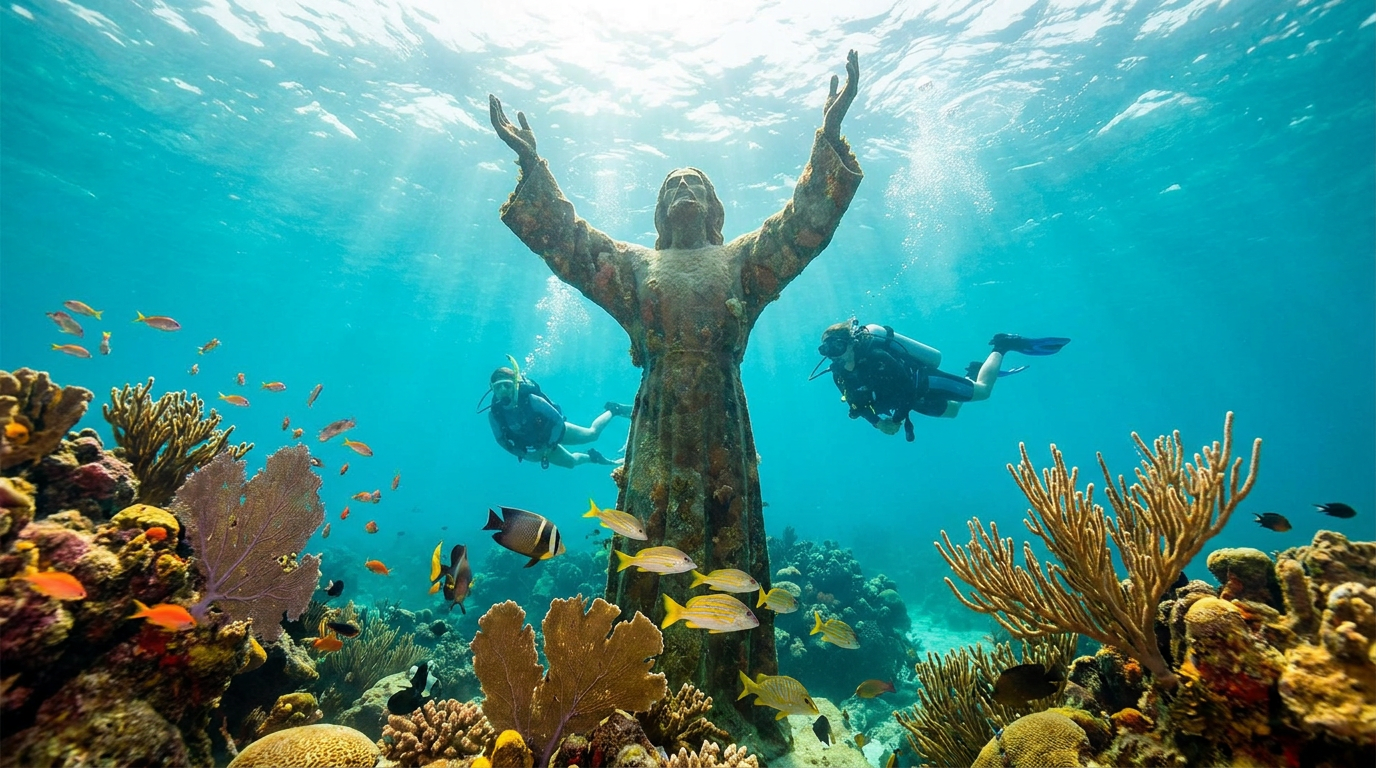
The Florida Keys National Marine Sanctuary brochure promises a towering, gleaming savior reaching for the surface. What you actually see through your fogged mask is a shadowy, green-brown shape a few fathoms down, fading into the surrounding brain coral. The statue stands exactly 8.5 feet tall on its 120-ton concrete base. From the surface, looking down through the current, it feels smaller than a backyard birdbath.
Oxidation and the Ocean Claim
Travel blogs love using saturated, close-up photos that make the bronze look polished and pristine. It is a glossy lie. Check the raw footage yourself. The key largo christ of the abyss hasn't been scrubbed clean since it went into the water in 1965. Fire coral coats the outstretched arms, and the face is obscured by algae and a crust of sea sponges.
2019 me would have been annoyed by this degradation. I used to assume the lack of maintenance was just tourist-trap neglect. I was wrong. Watching a blue tang dart through the fingers of the right hand, I realized the ocean isn't ruining the monument. The deterioration is the only thing that makes it belong here.
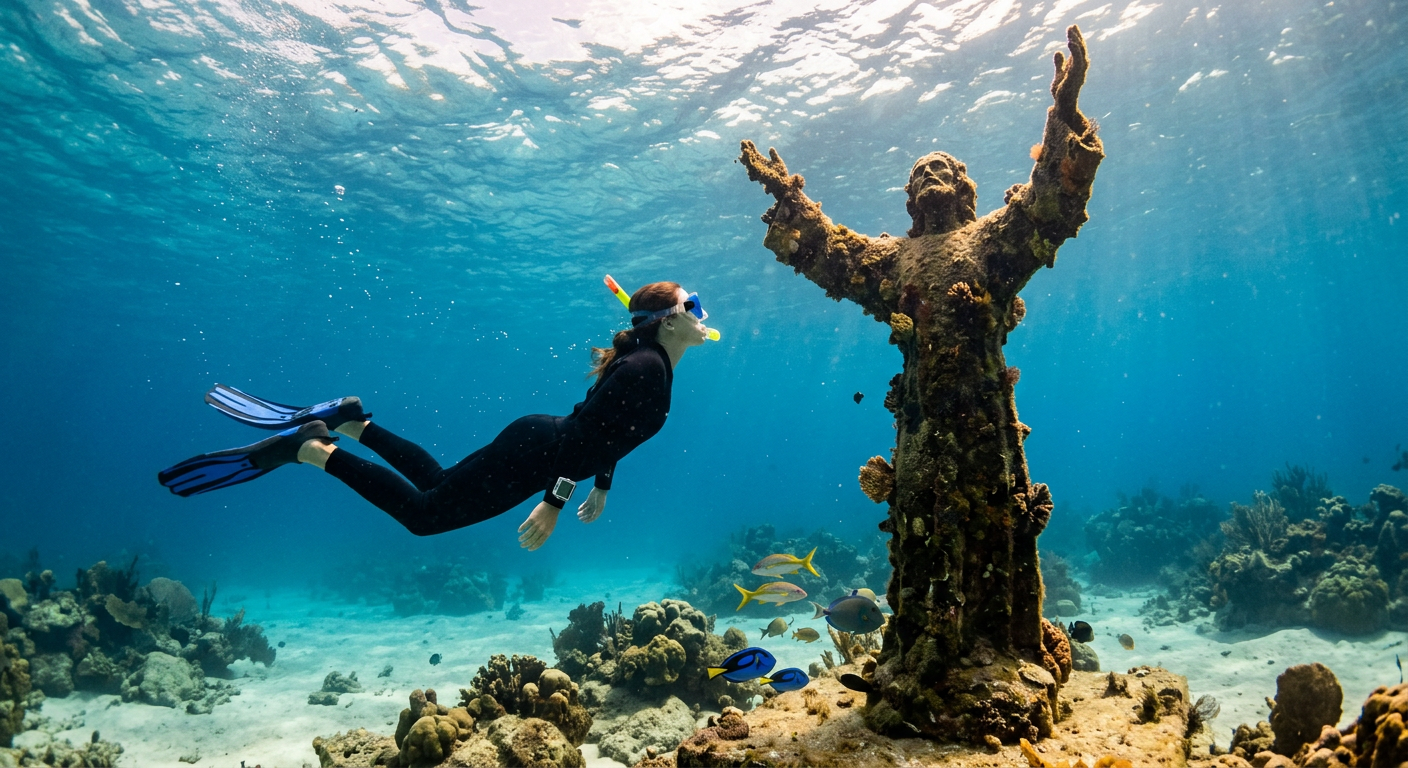
The bronze sits in a natural sand channel at John Pennekamp Coral Reef State Park. Most snorkelers float directly above it.
According to the NOAA sanctuary website, the top of the statue rests roughly 10 to 15 feet below the surface depending on the tide. Hovering over it, you swallow a mouthful of brine as a wave catches the back of your snorkel. It tastes like copper and dead seagrass.
Managing Your Expectations
The state park's 2026 visitation data claims over a million annual visitors to these reefs. When three different dive boats drop forty people into the water at once, that number feels like a joke. You will likely get kicked by a stranger's fin while trying to look at the statue. The sheer volume of neoprene-clad tourists thrashing around the perimeter ruins the quiet solemnity the sculptor probably intended. A guy on my boat was wearing bright orange water shoes.
If it's on a postcard, it's a trap. Or at least a crowded one. Look into the early morning charters through Rockon Recreation Rentals to avoid the midday chaos.
When the divemaster finally signaled us back to the boat, I took one last look down. The current stirred up the sand, and the algae-covered hands vanished into the gloom.
Navigating Key Largo Dry Rocks
The official state park map labels this specific reef area as "Key Largo Dry Rocks." The name suggests land. There is no land.
There is just rolling blue water and charter boats jostling for limited mooring balls. If you get seasick easily, the diesel fumes mixing with the sharp smell of spray sunscreen on the crowded boat deck will test your stomach before you even jump in.
You drop off the swim step, and the ocean current grabs your legs. You have to kick hard just to stay aligned with the reef line.
The reef structure here covers a few miles on a chart. That sounds massive, but when fifty other snorkelers are crowding the same GPS coordinates, it feels like swimming in a packed public pool.
Beyond the Bronze
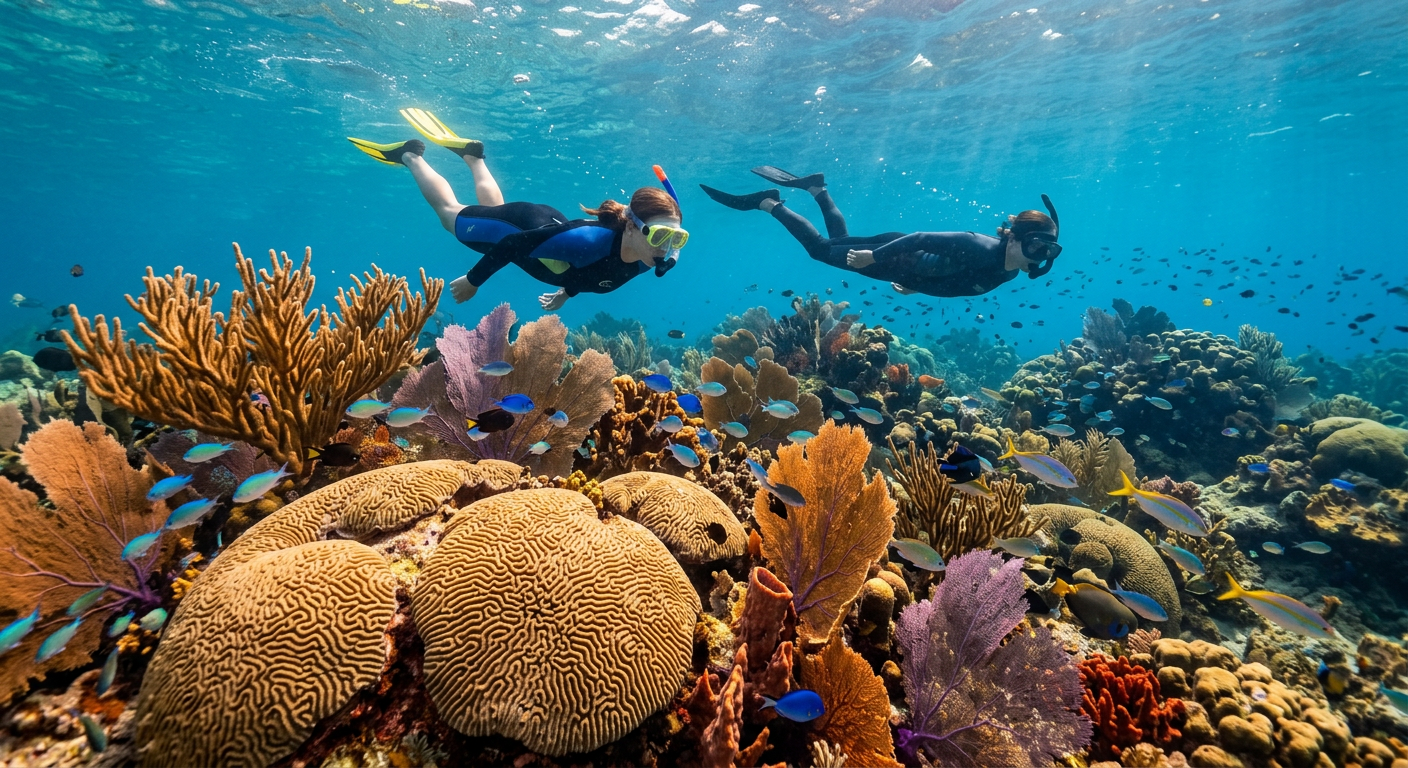
The 2026 species log on the REEF.org marine database lists over 400 types of fish here. The brochures tell you to expect a rainbow of colors. Do the tourism boards actually believe their own copy? Most of the hard coral here is colored in muted tones of mustard and gray.
I expected the surrounding reef to be a dead zone, damaged by decades of careless fin kicks. But as I drifted thirty yards away from the key largo christ of the abyss, the habitat shifted. The crowds vanished. The marine life thrives here.
A resident barracuda measured about four feet long. A guy in neon green trunks kept trying to point at it, but everyone ignored him. Hanging motionless below me, its silver scales reflected the sunlight while the only sound was my own slow, raspy breathing echoing through the snorkel tube.
I can't prove this, but the larger predators at this reef seem to know exactly how far away to float to stay out of a GoPro's focal range.
The Reality of the Ecosystem
We help people book snorkeling trips at Rockon Recreation Rentals all year. A common misconception is that the statue is the only thing to see. In reality, the coral formations offer hiding spots for moray eels and nurse sharks.
When you swim over the shallow crests, the outgoing tide pulls the warm water across your back like a heavy blanket.
Keep your hands off the rocks. Fire coral grows naturally everywhere here, and brushing against it leaves a burning welt that lasts for days.
The boat horn blasts twice. A spotted eagle ray glides past the mooring line, ignoring the noise. It just keeps moving toward the drop-off.
The Marina Logistics Nobody Mentions
Most visitors fixate on the reef, forgetting that getting there is half the battle. The John Pennekamp State Park marina parking lot fills up by 9:30 AM on weekends. If you arrive late, you are parking in overflow grass and walking a quarter-mile carrying your fins. It is a sweaty, frustrating way to start a vacation.
The dockside operation runs like an assembly line. You sign your waiver on a damp clipboard, grab a mesh bag of gear, and file onto the fiberglass deck. The crew works hard, but they process hundreds of people daily. Do not expect personalized concierge service. You are cargo until you hit the water.
Once you clear the no-wake zone of Largo Sound, the captain throttles up. The transition from the mangrove channels to the open Atlantic is jarring. One minute you are looking at sleepy iguanas in the trees, and the next you are bouncing over three-foot rollers.
What to Expect When Visiting the Key Largo Christ of the Abyss
Local tourism boards sell this trip as a serene tropical excursion. Most commercial boats pack dozens of passengers onto a single fiberglass catamaran.
Transit times across most tour operators and the Florida State Parks guidelines allocate about 45 minutes to reach the reef.
The monument sits a few miles off the coast. By mile three, you grip the sticky aluminum rail as the boat slams into a swell, and warm salt spray hits your teeth.
Navigating the Mooring Field
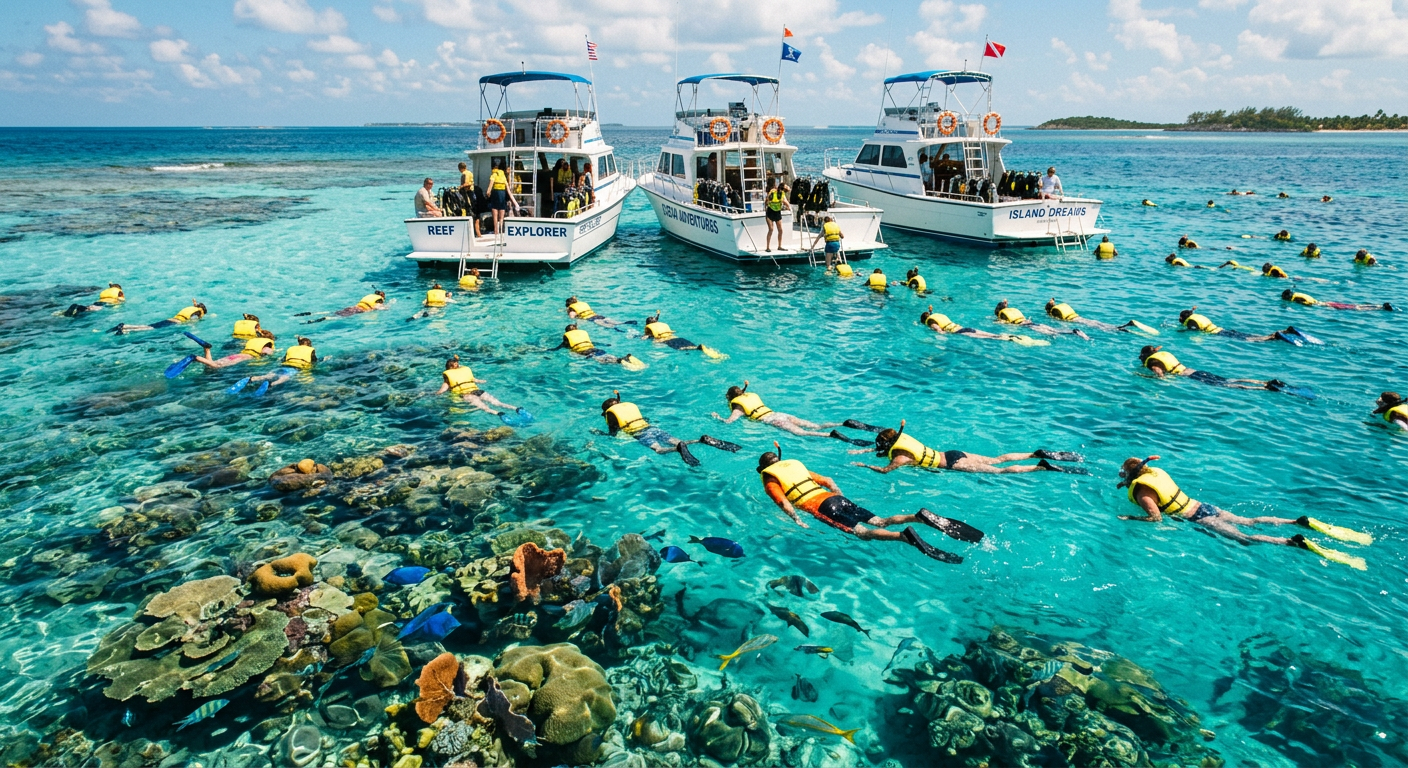
Who exactly is the marketing board trying to kid with those promotional videos of solitary divers? When you arrive at the reef, you aren't discovering a quiet underwater sanctuary. You are joining a crowded aquatic parking lot.
The captain cuts the engines and the crew throws a line to a white mooring ball. Six other boats are already tied up nearby. Snorkelers in neon vests are kicking around the surface everywhere.
If you want to avoid taking a plastic fin to the face, smaller charters are your best defense. You can find independent local operators that strictly limit their group sizes through Rockon Recreation Rentals.
The water above the key largo christ of the abyss is usually calm. Just swim defensively once you step off the dive platform.
How Deep Do You Actually Have to Swim
According to NOAA depth charts, the concrete base of the monument sits on the sand at about twenty-five feet. That number doesn't sound very deep until you are floating above it, kicking against a choppy surface current, trying to force your eyes to focus through the murk.
Snorkelers will not be able to touch the statue. It is simply too far down for a casual freedive.
The Surface Perspective
You suck in a breath through your plastic tube and duck-dive to get a closer look. The pressure squeezes your ears immediately. Most snorkelers make it down about eight feet before the buoyancy of a standard wetsuit forces them back up. The view from that depth is distorted by the water column. The outstretched hands of the key largo christ of the abyss are still a solid ten to fifteen feet below you.
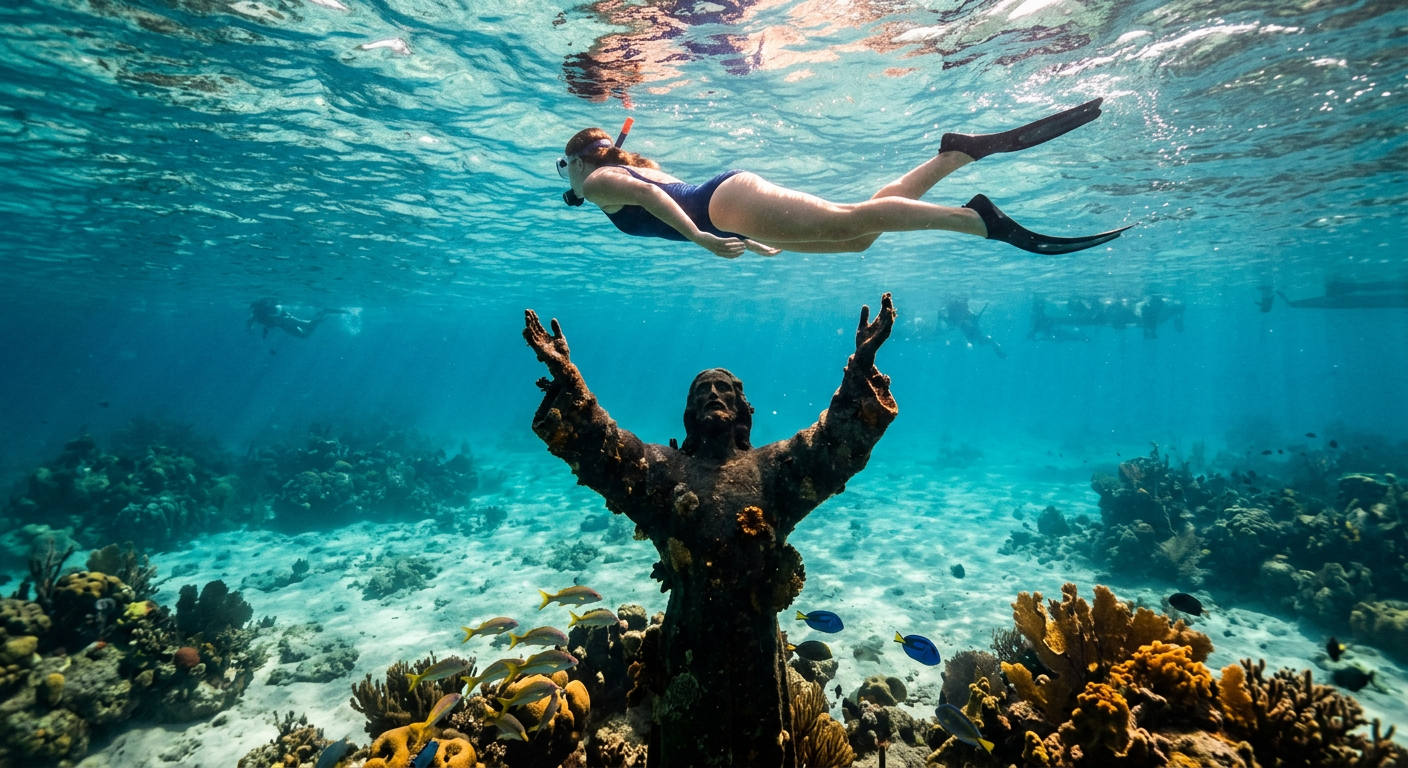
I expected this distance to feel like a disappointment for surface swimmers. It is actually just a practical safety barrier. If snorkelers could reach the hands, the fire coral currently growing on the bronze would leave a lot of tourists needing medical attention.
Manage your expectations. If you want clear details of the face, you need a tank on your back.
The Scuba Advantage
Scuba divers get the actual access. The tank valve hisses behind your head as you descend into the thermocline, dropping into noticeably cooler water near the ocean floor. At twenty-five feet, the ambient light shifts to a muted twilight. From this angle, hovering right at the base, the structure finally looks to scale. It is just you, the sand, and the bronze.
The base itself is surrounded by a barren patch of sand. The boat captains call it a natural channel, but it looks more like a high-traffic intersection where decades of sloppy fin-kicks have killed the coral. The ecosystem immediately surrounding the pedestal is noticeably degraded compared to the reefs just a short swim away.
Book a scuba charter through Rockon Recreation Rentals if you want to inspect the base. Snorkelers should just accept the wide-angle view from above.
The Real Story Behind the Bronze Statue
From Italy to the Florida Keys
The original 1965 dedication archives get padded with political names, but the physical logistics are what actually matter. The statue was never meant for Florida.
It is a duplicate of Guido Galletti’s original Italian monument. It sat in storage in Chicago for months. Nobody had a clear plan to move it south.
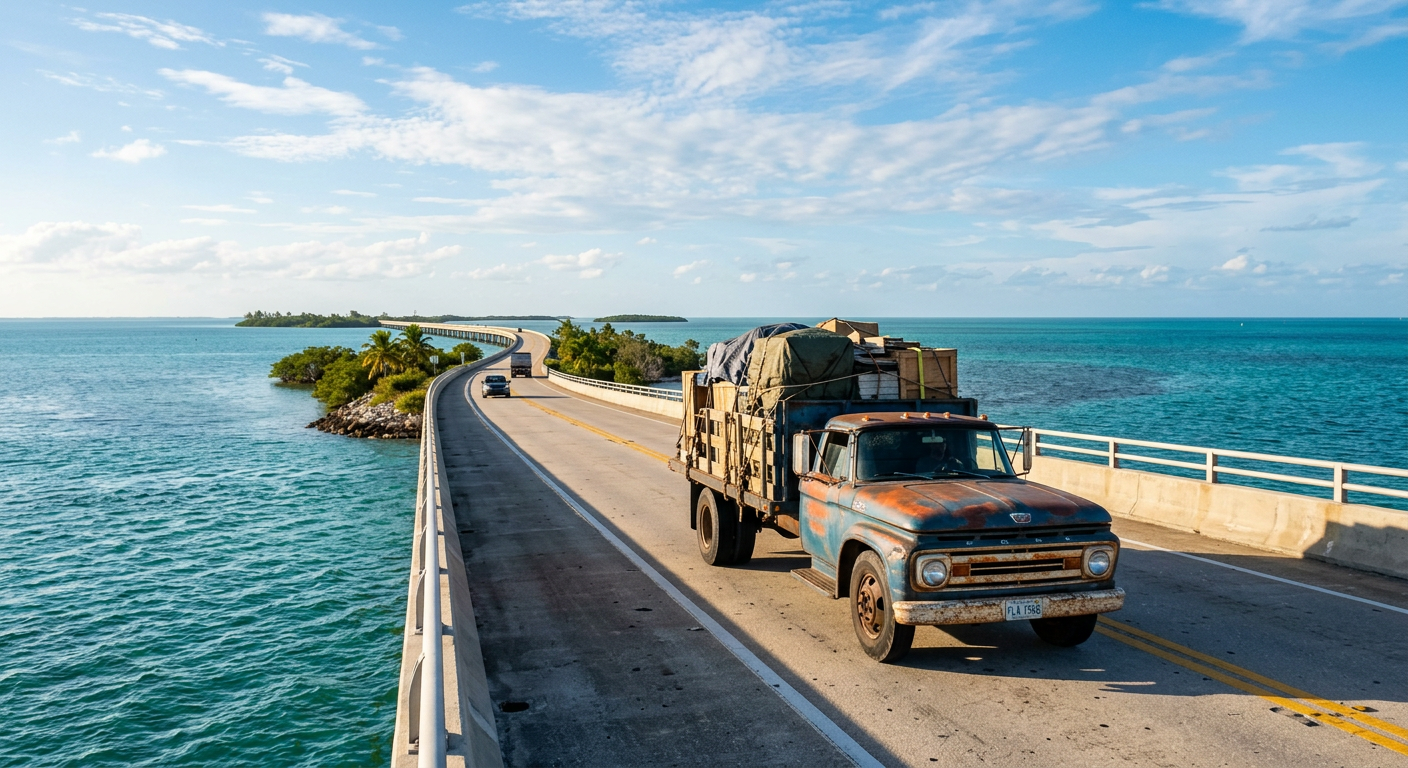
They eventually strapped the cast to an open flatbed truck for the drive down the coast. You stand on the shoulder of US-1 today, feeling the warm grit of diesel exhaust on your skin as modern traffic blasts past, and try to picture a massive bronze figure rolling down this same two-lane road. It was an absurd solution to a heavy problem.
The Sinking Logistics
According to the NOAA sanctuary website, the placement depth required careful calculation to prevent boat keel strikes. Lowering the metal onto a live reef without shattering the surrounding coral required a barge and a lot of luck.
Local historical displays often frame the sinking as a dignified nautical ceremony. Original archival footage shows a stressful operation involving thick ropes, shifting weights, and shouting locals. It was a chaotic construction job that barely succeeded.
They dropped the statue onto a concrete pedestal in late August 1965. The heavy iron chains scraped against the bronze during the descent, sending dull, metallic vibrations through the water that the riggers could feel in their chests.
Research is my love language; reality is my ex. I went into this history expecting a slick, state-funded tourism campaign. It was actually just a group of local dive operators figuring it out as they went. It changes how you view the key largo christ of the abyss today. It is less of a formal monument and more of an improvised community art project.
Book your charter early through Rockon Recreation Rentals. Bring your own mask. Skip the afternoon trips when the visibility drops.
You dive down to the sand channel and hover near the base. The stone looks rough and permanent, while the current constantly pushes cold water against your wetsuit. Now, in 2026, the concrete has fused with the sea floor.
Snorkel Gear and Saltwater Realities
The Mechanics of Fog and Chop
You float on the surface as swells lift your torso and drop it back into the trough. Saltwater sloshes down the breathing tube, coating the back of your throat in a bitter, briny film.
The charter companies usually hand out standard silicone masks. These will fog within four minutes. The consensus on local Keys dive forums is to bring your own commercial defogger gel. Trust your gut on this, even if the brochure says otherwise.
Spit in your mask if you have to. Do it before you hit the water.
The boat ride from the docks to Dry Rocks reef takes about 45 minutes. By minute thirty, the diesel fumes mixing with the rocking hull will make you question your breakfast choices. It is a long, exposed ride across the open Atlantic.
The crew keeps a bucket of fresh water near the stern for rinsing gear.
Looking Past the Bronze
I expected the key largo christ of the abyss to be the focal point of the trip. The statue is a recognizable landmark, which is why people book the ticket. I was wrong about what makes the dive worth doing. After ten minutes of hovering over the bronze, I turned around.
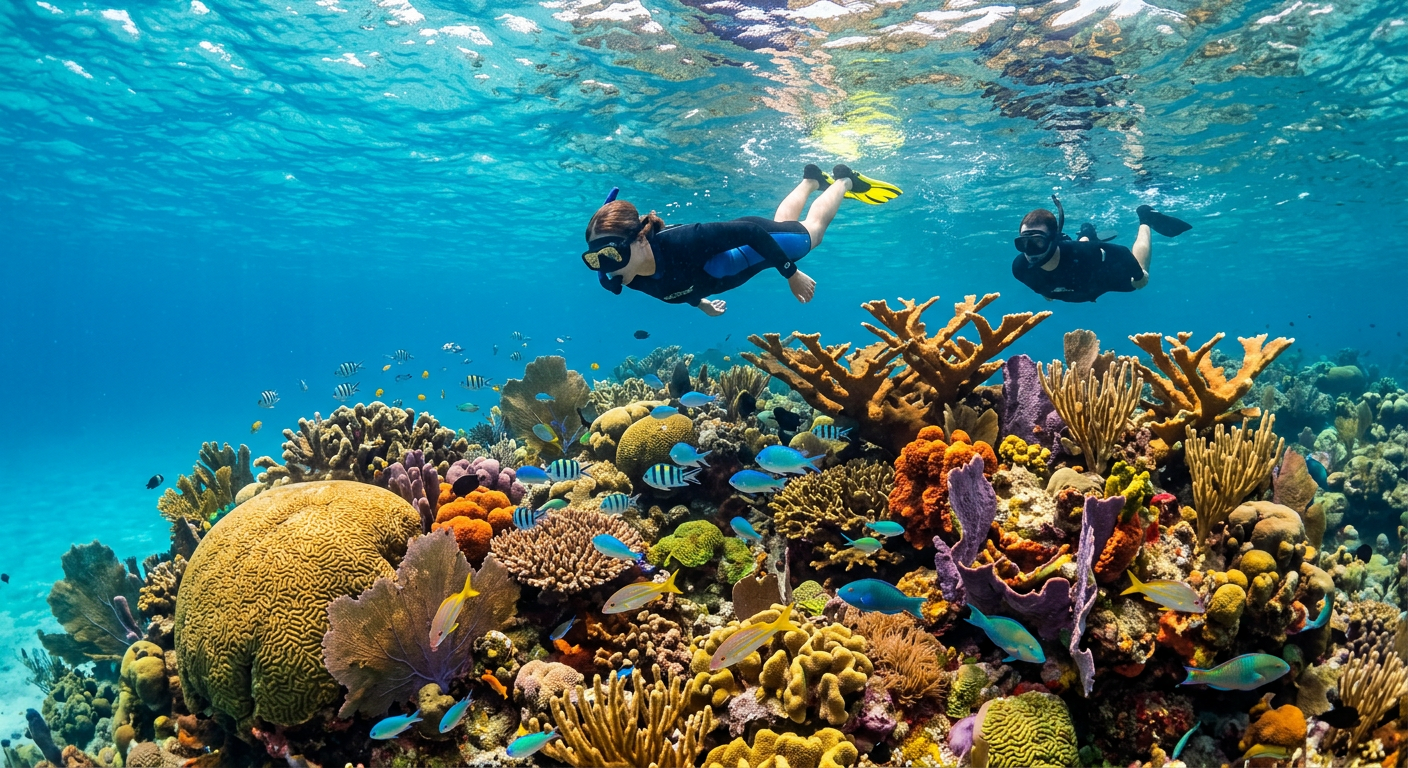
The surrounding Dry Rocks reef spans roughly 40 acres of shallow water. The coral structures here are dense and jagged, forming ravines that hide moray eels and juvenile barracuda. According to the state park data, this area is one of the most concentrated habitats for marine life in the upper Keys.
This is the real reason to book a charter through Rockon Recreation Rentals. The monument is just a heavy piece of metal. The living reef ecosystem surrounding it is actually good. Beige is a sin, and this reef is anything but.
The wind usually picks up in the afternoon. Book a morning departure.
Frequently Asked Questions About the Key Largo Christ of the Abyss
How deep is the statue?
According to NOAA, the statue sits in about 25 feet of water, with the top resting 10 to 15 feet below the surface depending on the tide.
Can snorkelers touch the bronze?
No. The statue is too deep for casual freediving, and touching it is prohibited to protect the fire coral growing on the surface.
Where exactly is it located?
The monument is located at Key Largo Dry Rocks within the John Pennekamp Coral Reef State Park and the Florida Keys National Marine Sanctuary.
How long is the boat ride to the reef?
Most commercial charter boats take about 45 minutes to reach the reef mooring field from the local Key Largo marinas.
Do I need a wetsuit?
In the winter months, a 3mm wetsuit is practical due to cooler water temperatures and wind chill. In the summer, a rash guard is usually sufficient for sun and jellyfish protection.
Is the site crowded?
Yes. During peak morning and afternoon hours, multiple commercial dive boats tie up at the same mooring field, making the water very busy.
Can beginners snorkel here safely?
Yes, but the open ocean swells can be intimidating. You need to be comfortable swimming in choppy water and managing a surface current.
What else is there to see besides the statue?
The surrounding Dry Rocks reef contains over 400 documented species of fish, large brain coral formations, resident barracuda, and swaying sea fans.
How much does a snorkeling tour cost?
As of 2026, standard group snorkeling charters typically run between $45 and $70 per person, not including rental gear or state park entrance fees.
Is scuba diving better than snorkeling here?
Scuba divers can reach the 25-foot sand bottom to inspect the key largo christ of the abyss up close and to scale, while snorkelers are restricted to viewing it from the surface.
This article was researched and written with AI assistance and editorially reviewed by Greg Faucher, a travel writer for Rockon Recreation Rentals, a VisitFlorida Travel Partner since 2018. He tends to remember the sounds of a place long after he's forgotten the name of the hotel.
Plan your trip: Ready to experience this firsthand? Book Snorkeling Key Largo – Reef Exploration in the Florida Keys directly through our marketplace.