Reason 1 — The Airport Luggage Penalty is Extortion
The hollow clatter of a seven-foot PVC tube slapping against the baggage carousel at FLL hits your ears first. It wedges horizontally across the metal belt, creating a dam of rolling luggage. No one else can grab their suitcases. The plastic handle digs a harsh red groove into your palm as you pry the heavy pipe loose from the rubber flaps.
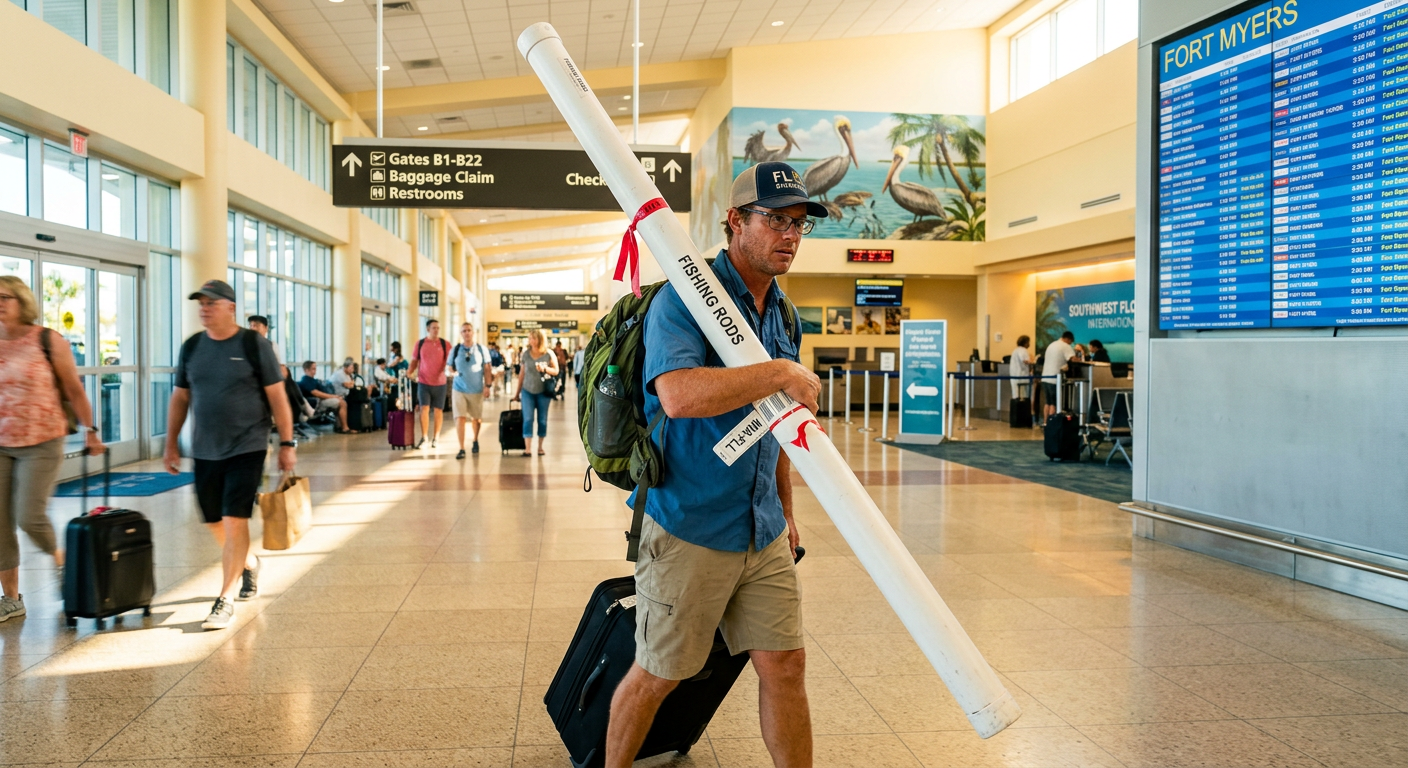
According to the Transportation Security Administration, rod tubes frequently exceed standard dimensional limits. Airlines enforce a flat oversized luggage fee each way. That cost stings, but the knot in your stomach forms when you wonder if the baggage handlers snapped your graphite blanks during the layover in Atlanta. The 2026 airline baggage policies remain strict, normally requiring a signed waiver releasing the carrier from damage claims.
You drag the tube past a guy in neon green Crocs staring blankly at the oversized claim door. He gets it. The stale, recirculated terminal air feels heavy with the collective regret of overpackers.
Reason 2 — Rental Sedans Despise Long Rod Tubes
Ever try angling an eight-foot piece of hardware through the automatic sliding doors of a compact rental while a line of hurried travelers forms behind you? It is an embarrassing spatial puzzle. You fold the front passenger seat flat, resting the tip of the rod tube inches from the windshield glass. A discarded lime wedge sits rotting in the cupholder, a useless detail that somehow makes the cramped interior feel even smaller.
The heavy wind resistance of driving down Highway A1A with a bundle of rods strapped to the roof rack ruins the illusion of a carefree escape. A persistent low hum vibrates through the metal roof directly into your jaw. You spend the drive worrying about highway debris instead of watching the water.
2018 me stubbornly hauled rods from the Midwest down to Pompano Beach. I assumed local charter equipment would be compromised salvage. That calculus changed in roughly ten seconds on my first guided trip. The local captains maintain premium tackle matched to what is biting this week, and letting them hand you a freshly rigged line feels like a relief.
Reason 3 — You Are Guessing at Gulf Stream Physics
Selecting saltwater tackle from a desk in Ohio means attempting to predict coastal ocean currents a month in advance. The wind shifts, the bait moves, and the setup you packed on Tuesday feels inadequate by Thursday afternoon. The ocean always seems to move faster down here than the charts suggest.
The sharp scent of raw diesel and drying seaweed fills the early morning air at the Hillsboro Inlet marina. A plastic bag of ice hits the concrete with a wet thud and splits at the seam. You step over the slush and board the boat.
The Gulf Stream flows just a few miles offshore. That short distance holds pelagic species bearing enough mass to send aggressive head shakes vibrating directly into your forearms. The 2026 tide apps try to map a steady flow, but the water pulls hard by seven regardless of what the screen says.
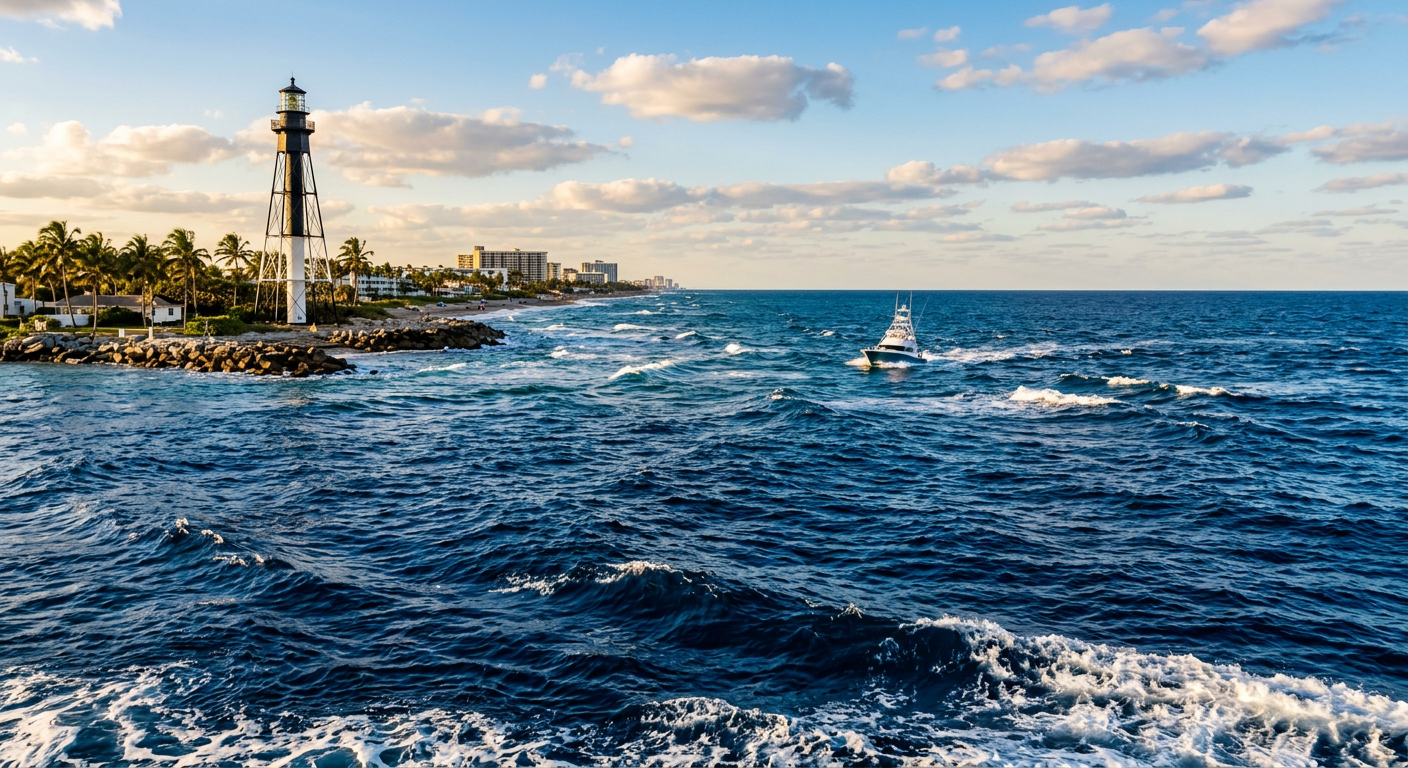
You idle past the Hillsboro Lighthouse and the murky green coastal water turns a bruised cobalt blue. According to 2026 National Oceanic and Atmospheric Administration bathymetric data, the depth lines stack so close off this coast they form a solid black boundary on the map.
Reason 4 — Heavy Saltwater Trolling Obliterates Lightweight Drags
People pack 4000-size spinning reels from home expecting a modest fight. I see this twice a week. That gear burns out its drag washers in ten minutes and leaves you reeling up limp braided line.
The bite outside the inlet is a deepwater offshore battle happening physically close to land. The Gulf Stream flows north at about four miles per hour. Fighting an incoming catch in that moving current makes pulling a twenty-pound weight feel like dragging a sheet of plywood against the wind.
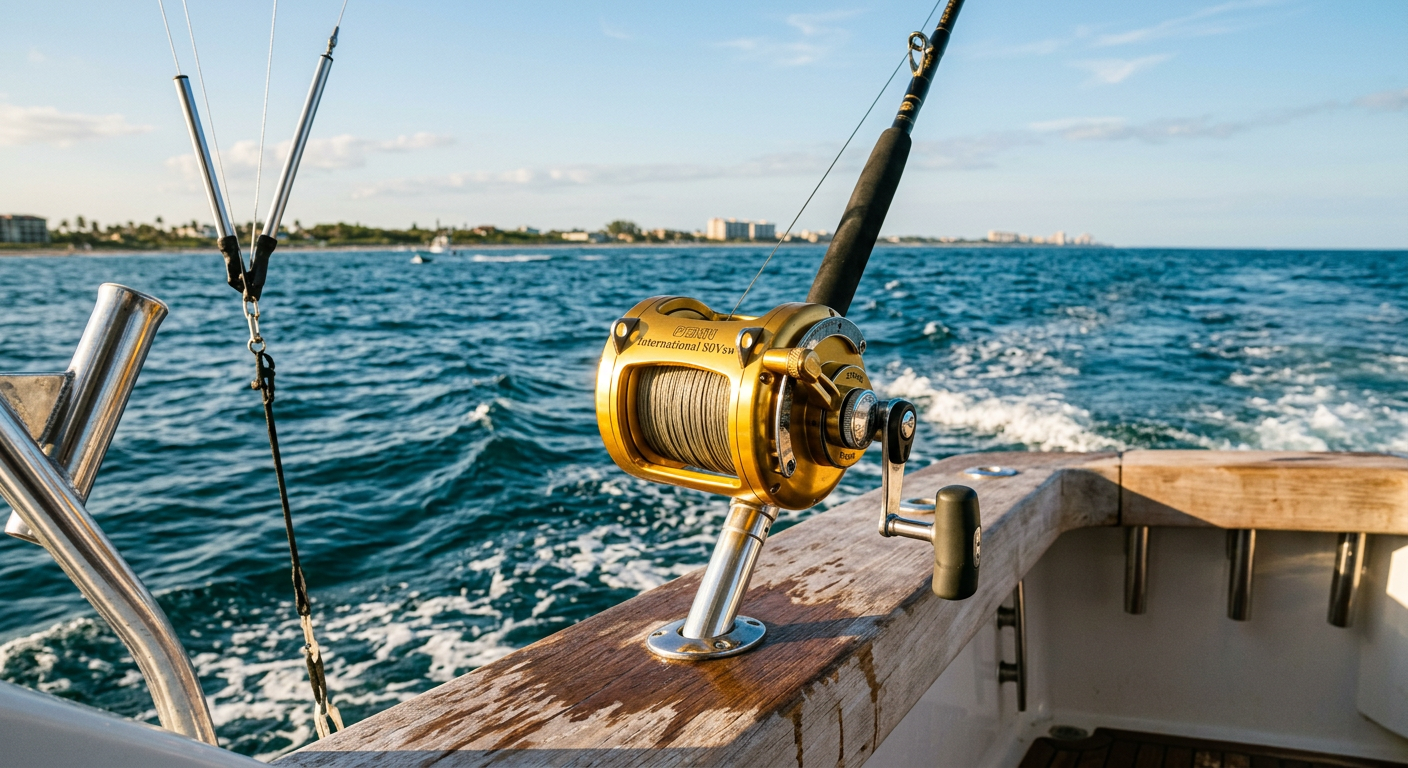
The boat thumps against the choppy surface until a strike snaps the outrigger clip with a sharp thwack. Sometime around the second hour of my first deep-water trip, my perspective shifted. I used to think recreational light-tackle fishing was purer. I looked down on heavy, winch-like setups as blunt instruments masking a lack of finesse. I wanted ocean fishing to be this quiet, delicate art form.
Watching an eighty-pound wahoo hit a lure at 15 knots and strip three hundred yards of test line in ten seconds changed my mind. The internal drag system on a 50-pound class conventional reel is the only barrier keeping that collision from snapping the line. A lighter setup melts. The heavy equipment handles basic survival. I stopped caring about finesse and focused entirely on keeping my footing.
Reason 5 — The Elements Degrade Unprepared Hardware Fast
The afternoon humidity in South Florida sits thick enough to chew by 1:00 PM. The most critical gear isn't what catches the fish, but what prevents the environment from ending your day early.
You grab the aluminum rail and feel the damp chill of the morning salt spray. By noon, that same metal gets hot enough to blister your palm. When finalizing what to bring, skip the winches. Prioritize the items that touch your skin and eyes.
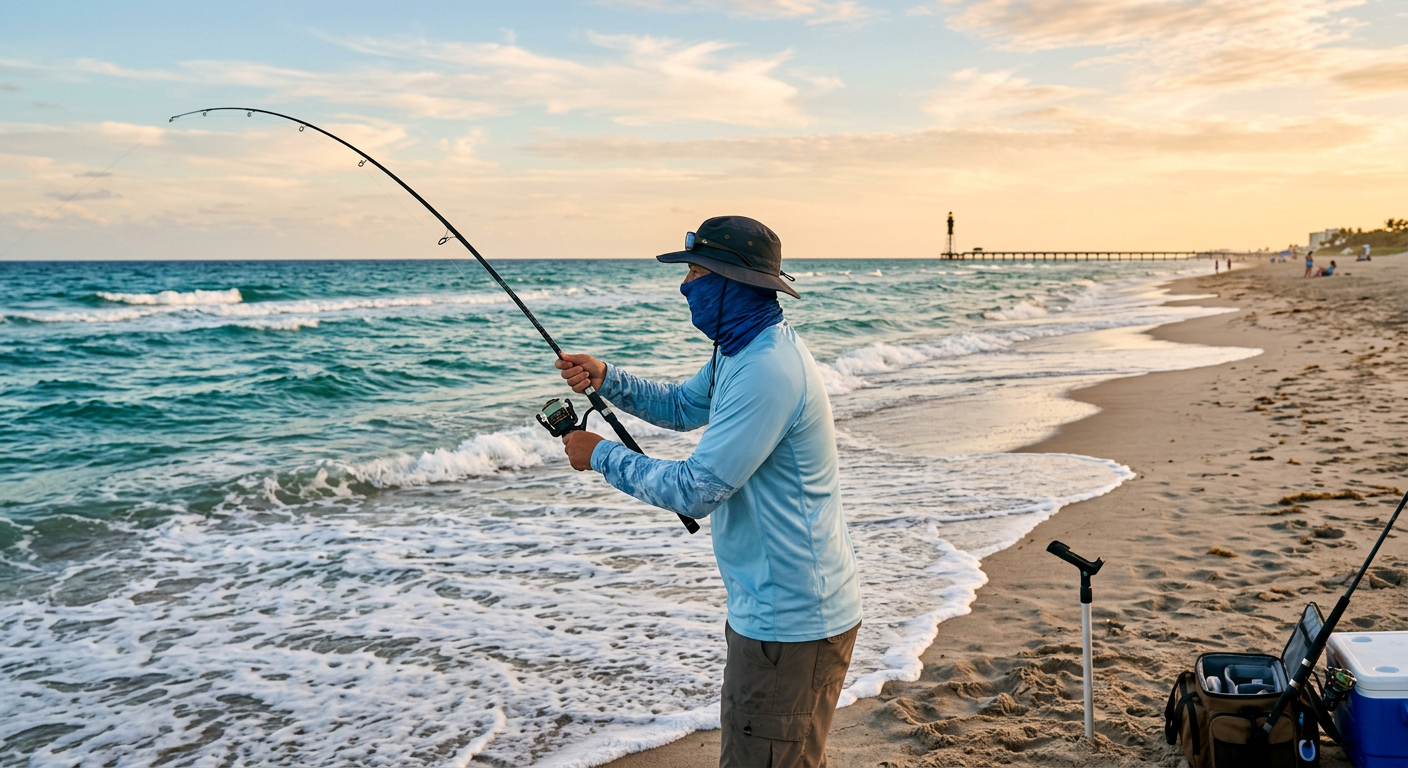
- Amber-Tinted Polarized Glasses. According to clinical guidance from the American Optometric Association, broad-spectrum UV protection forms the medical baseline. The amber tint is the local advantage. It cuts through the green surface glare so you spot the silver flash of baitfish. Visitors show up with cheap gas-station aviators that just tint the glare yellow.
- Mineral Sunscreen. Bring a reliable sunscreen that does not smell like artificial coconuts. Cheap aerosol sprays burn your eyes when you sweat, making your hands slip on the reel handle.
- UPF Sun Shirts. Cotton holds moisture and clings to your shoulders like a cold washcloth. Synthetic long-sleeve hoodies breathe and dry fast.
I used to want the South Florida sun to feel like a welcoming presence. If it's on a postcard, it's a trap. The 2026 sunburns hit differently when the fiberglass deck bounces the midday light straight up under your chin.
Reason 6 — Hotel Sink Maintenance Ruins the Evening
You drag a heavy fish to the surface and the deckhand steps in with the gaff. Your shoulders ache from the exertion. A metallic taste lingers in the back of your mouth from breathing hard in the salt air. The lighthouse is still right there marking the inlet channel you left hours ago.
When you bring your own reels, the end of the trip signals the start of the labor. The reality of saltwater corrosion demands an immediate freshwater purge. The salt crystals form inside the reel housing, grinding against the gears with the texture of fine sandpaper.
You end up sitting on a slick tile floor in your hotel, rinsing hundreds of yards of braided line in a shallow shower basin while the exhaust fan rattles overhead. Housekeeping knocks on the door. It is miserable. The satisfying ache in your arms should be paired with a cold drink, not an hour of mechanical breakdown. Leaving the maintenance to the locals preserves the evening.
Reason 7 — Local Knowledge Overrides Expensive Hardware
Spending a fortune trying to secure the perfect rods feels empty once you pass the drop-off. A carbon-fiber blank still cannot read a tidal shift or sense a temperature break.
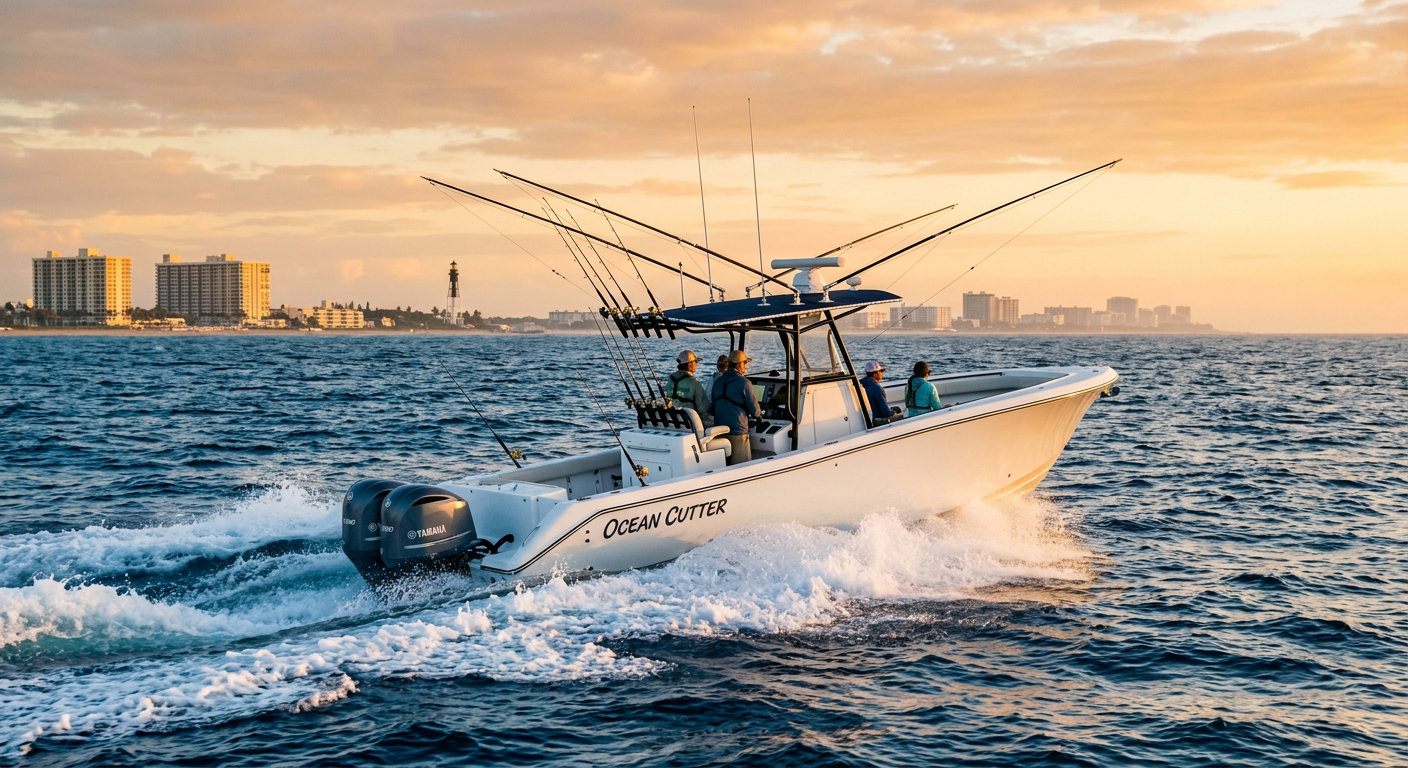
I treated the Atlantic like a mute adversary holding my prize. The water was just a stubborn puzzle. Watching the lines trail behind the transom of a 35-foot vessel, that adversarial grip gave way. I stopped trying to outthink the ocean because the captain read it like a familiar map.
The shipwrecks stretch across depths from a hundred to over three hundred feet. The 2026 marine charts plot over a dozen artificial reefs scattered near the municipal pier. Glossy county brochures promise a bustling underwater metropolis, suggesting any basic setup will pull a trophy. Beige is a sin, and those brochures lie. The reality is mostly barren and quiet—dark patches over flat sand where the current strips away anything not hiding inside the rust.
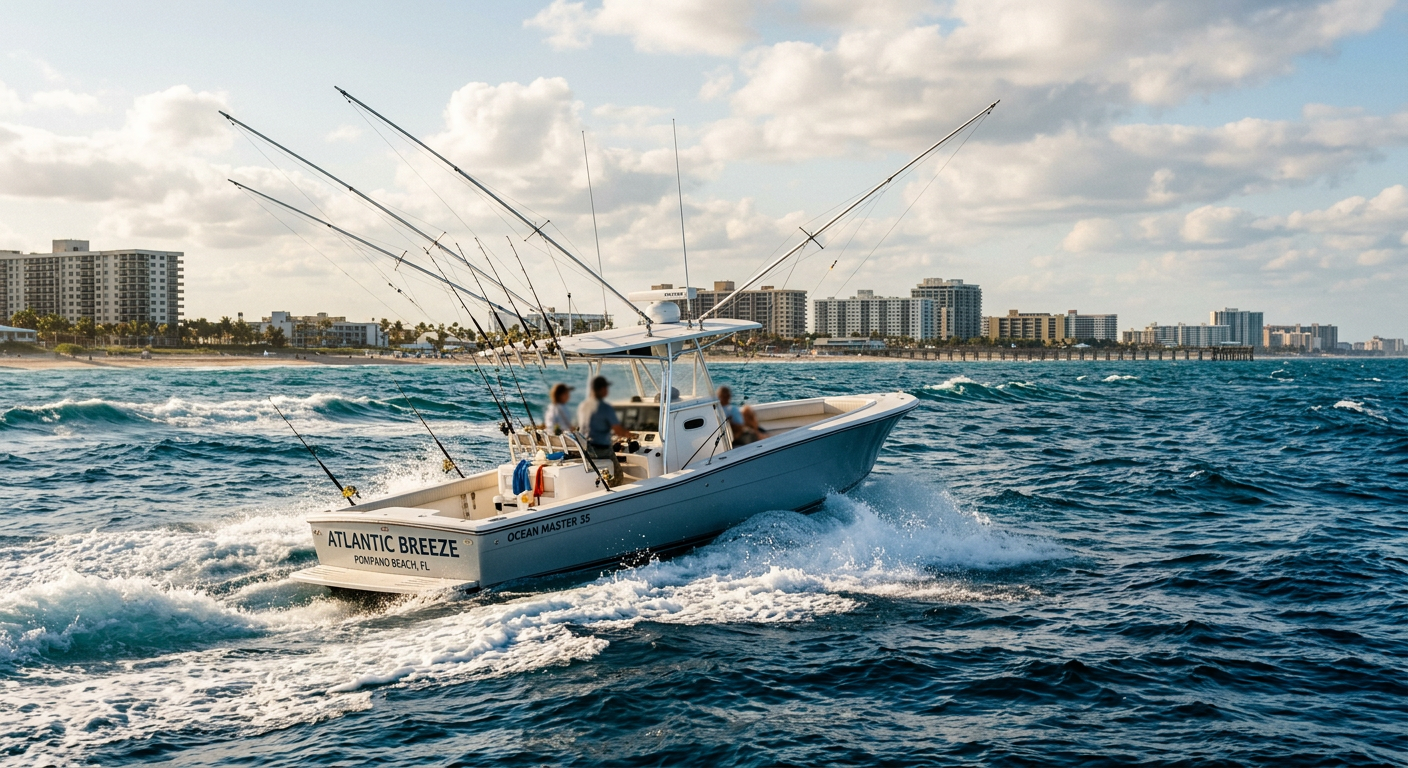
Reserving a fully equipped outing through Rockon Recreation Rentals deletes the luggage math. As a VisitFlorida Travel Partner, their outfitters maintain the tournament-grade gear while you just exist on the water. You roll the rental car windows down on the drive back. The sticky breeze hits your face, and the travel stress evaporates.
This article was researched and written with editorial review by Greg Faucher. Greg covers travel and outdoor recreation for Rockon Recreation Rentals, a VisitFlorida Travel Partner since 2018. He reads the fine print so you don't have to — but you probably should anyway.
Plan your trip: Ready to experience this firsthand? Book 35' Ocean Master - Sport Fishing - Pompano Beach directly through our marketplace.