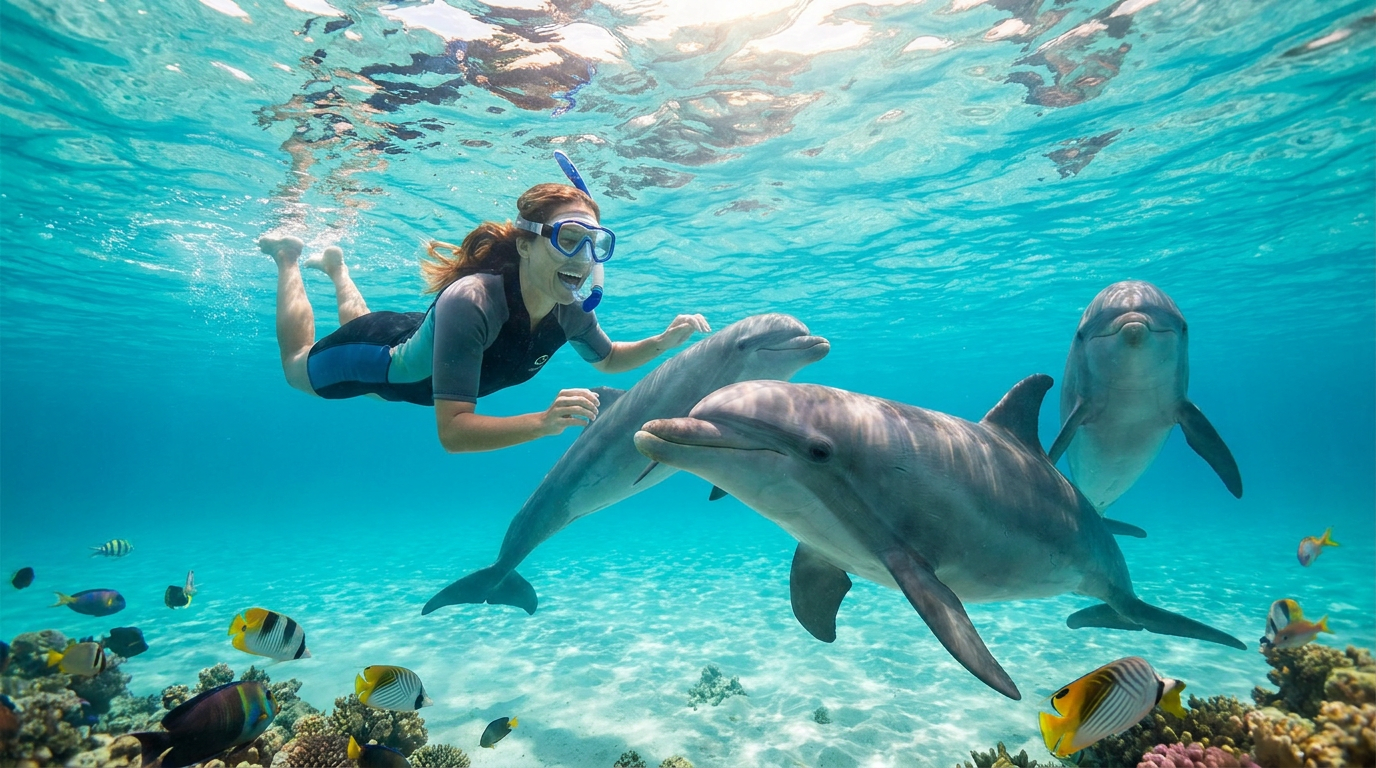
The Chlorinated Lie of the Scheduled Encounter
The air inside the marine park smells like stale bait fish and industrial bleach. You stand on a painted ledge waiting for a trainer's whistle. A marine mammal swims up for a wet, rehearsed handshake. It feels less like wild exploration and more like a theme park ride that happens to have a heartbeat.
According to the National Oceanic and Atmospheric Administration, federal regulations mandate staying at least 50 yards away from wild marine mammals in the ocean. That 2026 rule makes the forced intimacy of captive tanks feel uncomfortable. The contrast is hard to ignore once you know the laws. The brochure racks in every A1A hotel lobby sell the exact same beige certainty. You get a guaranteed photo locked into a 10:15 AM timeslot. Beige is a sin.
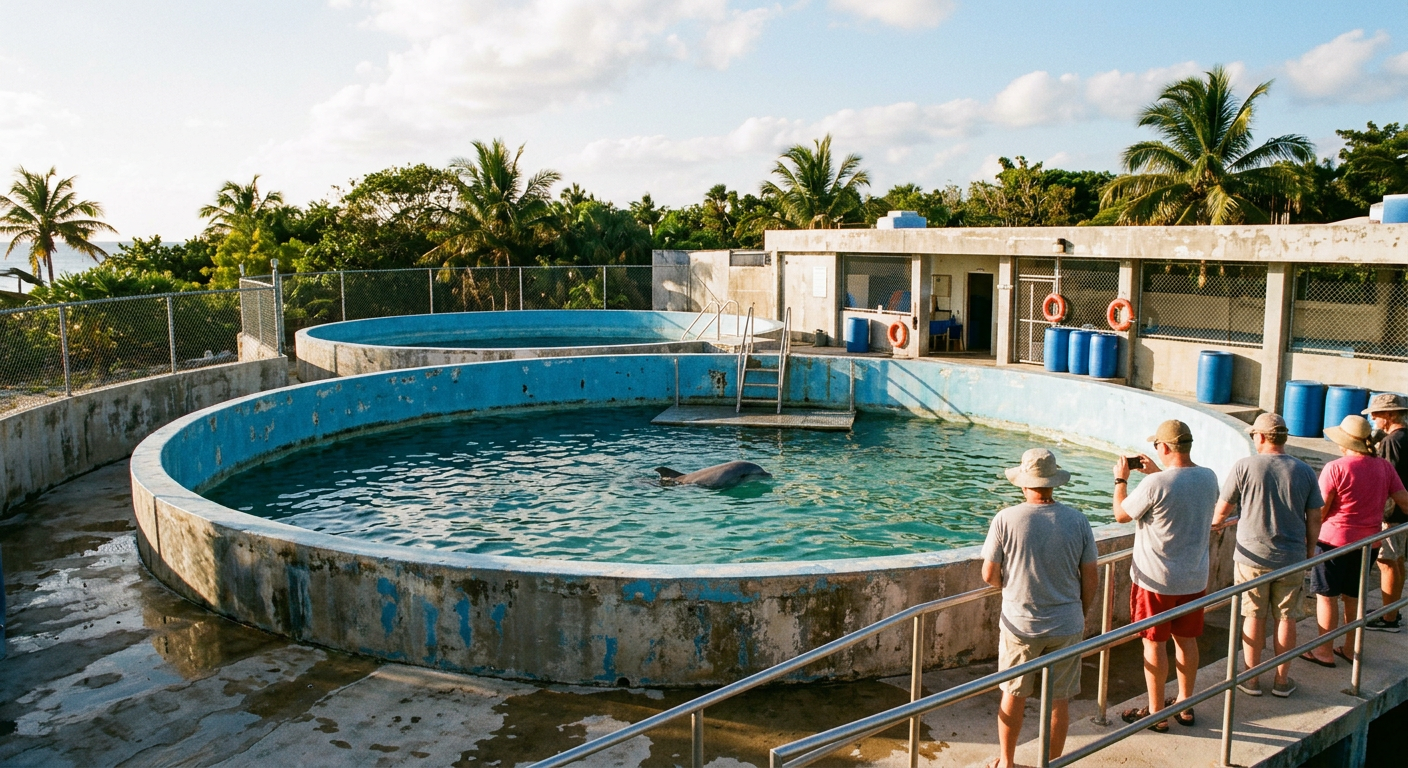
2018 me thought a scheduled encounter was peak Florida travel. I wanted the guarantee of the photo and the safety of shallow water. 2026 me knows better. The first time I saw a wild pod cutting through the open Atlantic just off Pompano Beach, the captive experience morphed into a depressing transaction. Many visitors arrive in South Florida intent on swimming with dolphins. They leave with a $45 printed photo and a vague sense of guilt.
This article was researched and written with AI assistance and editorially reviewed by Greg Faucher. Greg writes for Rockon Recreation Rentals, a VisitFlorida Travel Partner since 2018. Occasionally, a place earns every word of hype. He'll tell you when it does.
Experience 1 Drifting the Hillsboro Inlet on a Personal Watercraft
The coastal wind hits your face with a sticky, salt-heavy grit as you clear the breakwater at Hillsboro Inlet. The outgoing tide fights the incoming swell. It creates a chaotic washing-machine effect right beneath the historic lighthouse that rattles your teeth. But once you punch through those breakers, the ocean flattens out into deep blue.
A jet ski puts you right in their living room. You sit closer to the waterline. Book a personal watercraft through Rockon Recreation Rentals and you'll understand why smaller vessels work better. You can launch right from the 14th Street ramp in Pompano.
People spend hours out here chasing fins. I cannot prove this, but wild dolphins seem to mock boats that try too hard. If you race toward them, they vanish into the depths. They only show up when you cut the engine, secure your lanyard, and stop looking. Out here, they set the schedule.
Experience 2 Free Diving the SS Copenhagen Wreck
The water off Lauderdale-by-the-Sea tastes sharply of brine and stirred-up limestone. Just three-quarters of a mile offshore sits the SS Copenhagen, a 19th-century cargo steamer resting in 25 feet of water. You do not need a charter for this. You just park near El Mar Drive, pay the meter, and swim out from the beach past the second reef line.
The structural ribs of the ship are encrusted with brain coral. Instead of paying for a sanitized encounter, you float above a thriving artificial reef. Nurse sharks sleep under the rusted metal plates. Moray eels dart through the collapsed decking. The ecosystem operates without any human intervention. You are just a guest holding your breath.
Experience 3 Mangrove Paddleboarding at Whiskey Creek
The rhythmic slapping of your paddle against the surface echoes through the dense canopy of Von D. Mizell-Eula Johnson State Park. The acoustics in the mangrove tunnels amplify everything. A jumping mullet sounds like a dropped bowling ball.
Renting a paddleboard provides access to a labyrinth of brackish waterways just south of Port Everglades. The water is shallow, sometimes less than two feet deep. Manatees use these corridors to rest and feed on seagrass. You drift silently over their massive, scarred gray backs. Unlike the frantic energy of a theme park, the mangroves demand quiet observation. A rusted aluminum beverage can sits lodged in the muddy bank near the launch. A small reminder that pristine is a relative term.
Experience 4 Watching the Bait Migration from Pompano Pier
The morning humidity wraps around you like a wet wool blanket by 7 AM. You walk out to the end of the Pompano Beach Fisher Pier, dodging the regulars setting up their cast nets. The seasonal mullet run in early fall turns the coastal waters into a massive feeding frenzy. You do not need a boat to witness the food chain in action.
Current marine reports track massive schools of baitfish hugging the shoreline to escape predators. Tarpon, jack crevalle, and spinner sharks crash through the silver clouds of fish right beneath your feet. The sheer violence of wild feeding makes the bucket of dead fish at a marine park look absurd. The ocean provides its own unscripted theater, and admission is just the cost of parking.
The Pivot Embracing the Empty Horizon
A heavy easterly wind pushes across the coastal shelf, dropping the air temperature by ten degrees. You stand near the inlet shivering in a damp rash guard. The water here does not care about your carefully planned itinerary. It turns the surface into a gray washing machine. If the wind is up, spotting a wild pod is mathematically impossible. I wanted a glassy theater for marine life this morning. The ocean handed me chop and whitecaps instead.
For years, I believed the ultimate coastal prize was the close-up photo. I treated the ocean like a vending machine where I inserted my time and expected a dolphin in return. Sometime around my fourth fruitless trip last season, the framing broke. I sat on the gunwale for three hours staring at an empty horizon. I realized the failure to see anything wasn't a defect. The quiet pursuit is the actual experience. The animal is just a bonus.
Experience 5 Bioluminescent Kayaking in the Indian River Lagoon
The slick, oily texture of the water breaks into glowing blue shards as your kayak paddle slices the surface. Driving north to the Indian River Lagoon near Titusville during the summer months offers a phenomenon no captive facility can replicate. Dinoflagellates emit cold light when agitated. You launch in the pitch black.
According to Lonely Planet's ethical wildlife guidelines, experiencing nature without altering it is the gold standard. When a mullet darts under your boat, it leaves a glowing comet trail. When you drag your hand through the water, your fingers drip with liquid neon. The darkness hides the shoreline. You just float in the center of a glowing aquatic galaxy. Mosquitoes will eat your ankles if you forget bug spray. Bring the spray.
Experience 6 Snorkeling the Gulf Stream Edge
The low thrum of the twin outboards vibrates through the fiberglass hull as you push past the third reef line. When you take a charter out here, the water turns a deep, bruised purple. The Gulf Stream acts as a massive oceanic highway for pelagic species. Sea turtles, sailfish, and occasionally wild bottlenose pods ride this current north.
Drifting in 100 feet of water creates a tension you never feel on dry land. The visibility can exceed 80 feet. You stare into the abyss waiting for a shape to materialize. It requires patience. When you book a trip through Rockon Recreation Rentals, ask the captain to find the weed lines. Sargassum mats floating on the surface provide shade for smaller fish, which inevitably draw the larger predators. It beats staring at concrete walls.
Experience 7 Passive Acoustic Observation at Dawn
The smell of unburned marine diesel hangs in the still morning air at the marina. Getting out on the water before the sun breaks the horizon is a strategic move. The sound of a blowhole exhaling is a sharp, percussive blast over flat water. It sounds like an air hose detaching from a tire. You hear it before you see it.
The commercial fishing fleets have not fired up their heavy engines yet. The ocean retains a rare acoustic margin. If your plan involved swimming with dolphins, swap that desire for simply listening to them. A gray dorsal fin breaks the surface forty yards to port. A second one surfaces behind it. They pace the drifting hull for three minutes. Then they vanish. Naturally.
FAQ Why You Should Reconsider Your Wildlife Encounter
Is swimming with dolphins in captivity ethical
Many marine biologists and conservation groups argue it is not. Holding pelagic animals in shallow concrete enclosures restricts their natural behaviors and ranges. The artificial environment fundamentally alters their socialization and acoustic communication. The debate has largely shifted against the practice in 2026.
Can you go swimming with dolphins in the wild legally
The Marine Mammal Protection Act prohibits pursuing, harassing, or interacting with wild dolphins. Passive observation from a safe distance is the only legal approach in US waters. Entering the water to deliberately swim with them constitutes harassment under federal law.
What is the required distance to maintain from wild marine mammals
Vessels must maintain a distance of at least 50 yards from dolphins in the wild. This distance prevents acoustic trauma from engines and allows the animals to continue their natural feeding and nursing behaviors without stress.
What is the fine for touching a wild dolphin
Fines for violating the Marine Mammal Protection Act can reach up to $100,000 and include potential jail time. Always keep your hands in the boat and let the wildlife maintain its space. The ocean is not a petting zoo.
Why do people prefer wild sightings over captive encounters
Wild sightings offer unforced behaviors in natural habitats. The animals choose to approach or leave on their own terms, making the interaction genuine rather than a transactional performance for a bucket of dead fish.
Where is the best place to see wild dolphins in Florida
The Atlantic coastal waters off Pompano Beach and Hillsboro Inlet are prime locations. The Gulf Stream pulls pelagic life close to the shoreline, creating an accessible deep-water corridor just off the beach.
What time of day is best for spotting wild pods
Early morning, typically right around sunrise, provides the calmest water conditions. Glare is minimal, and boat traffic hasn't stirred up the ocean yet, making it easier to spot dorsal fins breaking the surface.
How do boat captains find marine life in the open ocean
Experienced captains look for environmental clues rather than just scanning for fins. Diving sea birds, current rips, and sudden bait ball flashes all point to active predators feeding below the surface.
Do jet skis scare away marine life
Aggressive driving and sudden throttle changes do create acoustic stress. However, if you cut the engine and drift silently, curious wild pods will sometimes investigate a stationary watercraft of their own accord.
What should I pack for a wild observation boat charter
Polarized sunglasses are mandatory for cutting through the ocean glare to spot movement below the surface. Bring windproof outerwear, reef-safe sunscreen, and realistic expectations about the unpredictability of the open ocean.
Plan your trip: Ready to experience this firsthand? Book Jet Ski Rentals in Sunny Florida for Thrilling Water Fun directly through our marketplace.