The Reality of Puget Sound Dirt and Roots
If you go mountain biking in seattle during the spring, you will eventually find yourself scrubbing dried grit out of a hydration pack zipper with a toothbrush. The nylon teeth make a grinding hiss that echoes in the empty garage. If you let Puget Sound dirt settle on your gear overnight, you lose the use of that pocket.
You drop in on the first descent and feel wet pine needles pasting themselves to your shins. The mud out here is not just dirty water. It has a thick, binding structure that clings to fabric and metal with equal dedication.
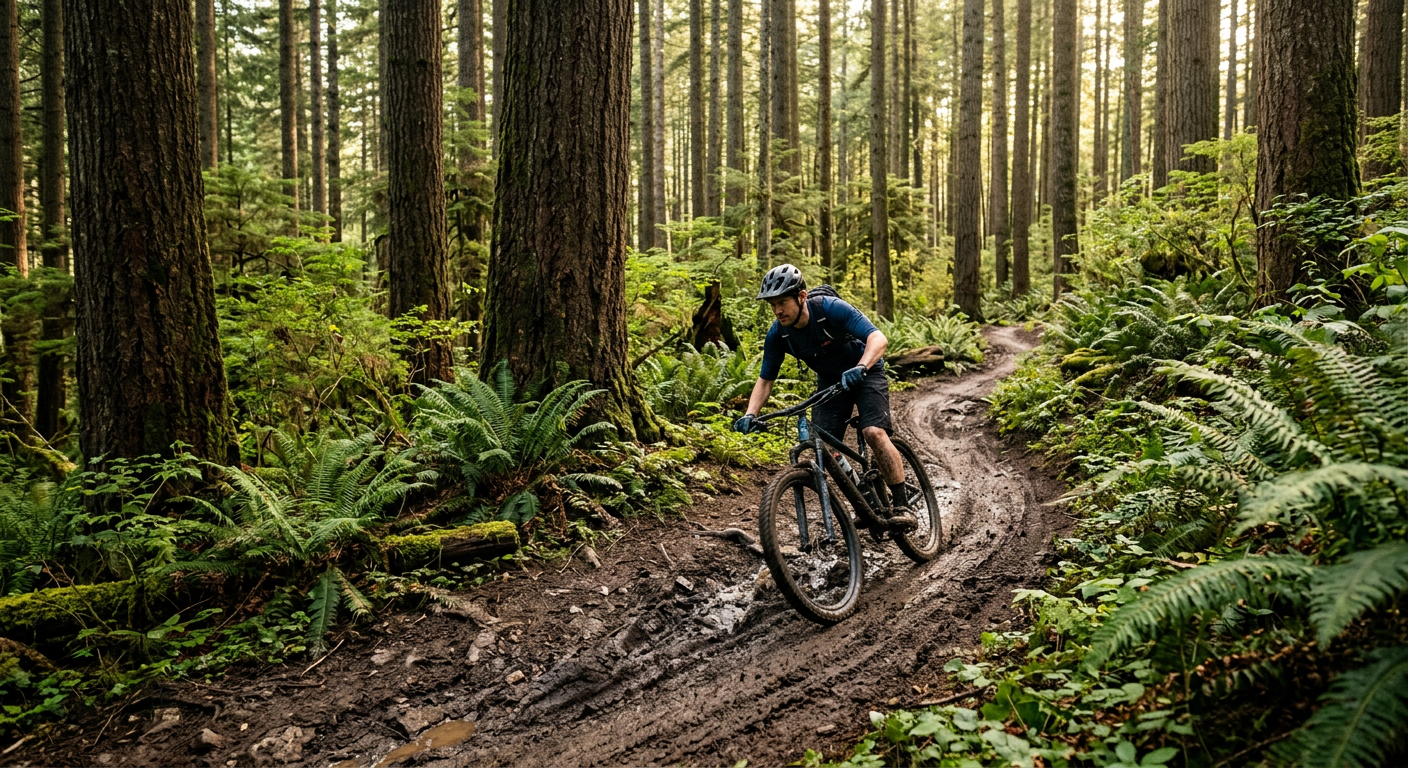
Giant Douglas firs anchor the hillside above dense thickets of sword ferns that swat against your bike frame. The air temperature drops a few degrees within fifty feet of the trailhead. Then you crash.
What Hero Dirt Actually Means
2018 me thought the famous hero dirt was just internet forums exaggerating for local pride. My mind shifted on the lower switchbacks when my tire caught a sloppy berm and held the line across the slope. The grip defies logic.
But the forums skip the part where that dirt yields to diagonal tree roots slicker than black ice. The ground grips your tires right up until it sends your front wheel sideways into a rotting stump.
That is the baseline for mountain biking in seattle. According to the United States Forest Service, some sections of the Snoqualmie corridor see around a hundred inches of rain a year.
You feel that history of water in the damp, rotting smell of the soil the moment you unclip. According to the Washington Trails Association system logs, dozens of downed trees block the eastern approaches after a storm cycle. Hauling a heavy bike frame over wet cedar bark tears the skin right off your knuckles.
Bring an extra set of rear brake pads. Leave them in the glovebox of your car.
The Cost of Canopy Cover
The problem with old-growth tree cover is that it acts like a giant green tarp. The rain stops falling in the city, but the forest keeps dripping for another couple of days. Moisture sits suspended in the air, coating rocks and wood features in a translucent slime.
The official elevation gain on the Raging River loop sits at about two thousand feet. The climb burns the back of your throat when the damp air settles in your lungs.
As a Rockon VisitFlorida Travel Partner, I usually chase southern sun. My time in the Pacific Northwest taught me the ground holds the truth longer than the sky does. At Rockon Recreation Rentals, staff measure trail readiness by soil saturation rather than rain gauges.
Navigating the Organized Chaos of Duthie Hill Park
A humid fog hangs over the main clearing, making your riding glasses fog up before you even leave the parking lot. It is early Saturday, and the lot is already a nightmare of overlapping truck tailgates.
A guy in neon socks is eating a crushed Pop-Tart while trying to zip-tie his front fender back onto his forks. The plastic strap snaps twice. He gives up and stares at the trees. A single, child-sized red mitten hangs over the nearest trail marker.
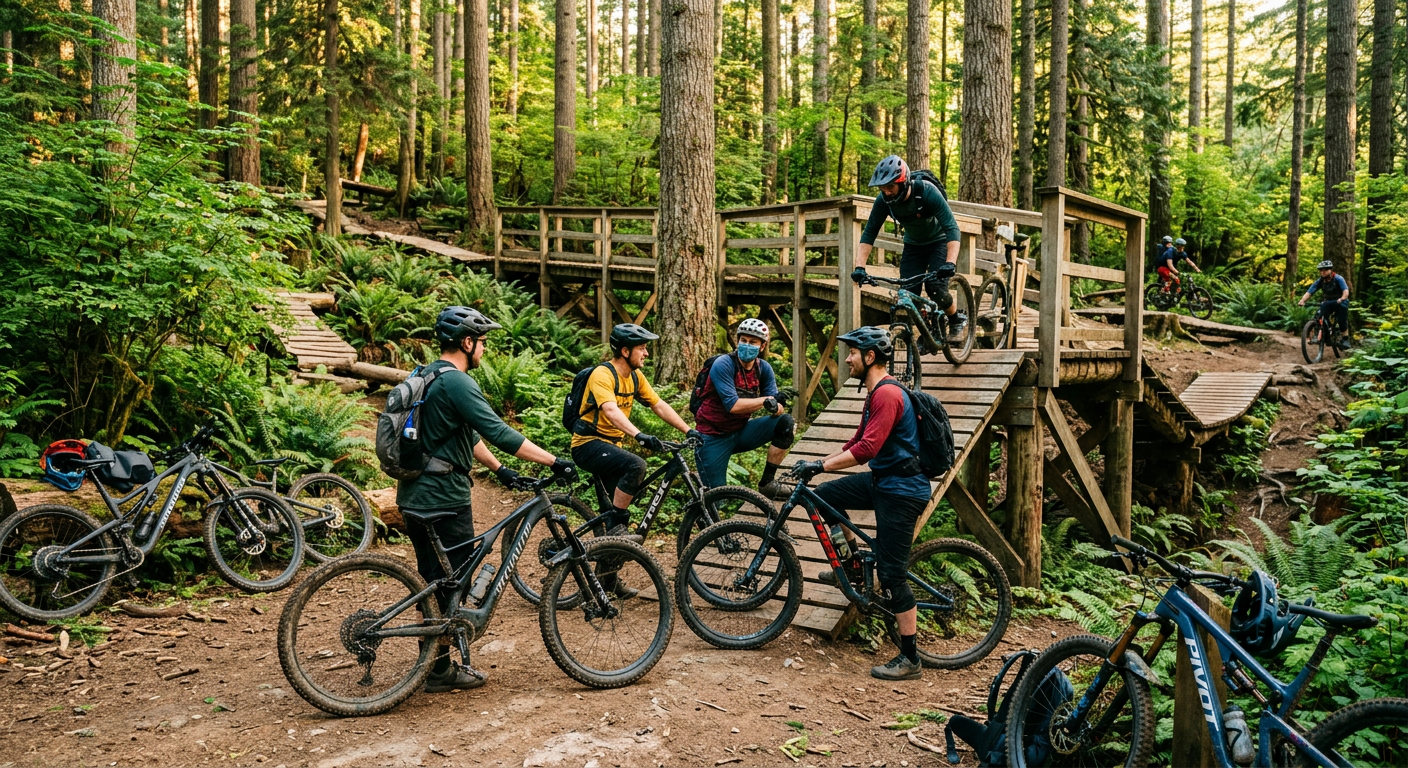
Duthie Hill Park packs a few miles of trail into a small footprint. The tight proximity means you hear the metallic clatter of dropped chains echoing from three different directions before you unclip. It feels like an arena. For anyone mountain biking in seattle, Duthie is an unavoidable rite of passage.
The 2019 version of me brought a cheap hardtail here expecting a casual loop. I assumed a suburban community park meant forgiving terrain. The 2026 version of me knows this place demands respect and decent suspension.
The roots here have polished, hardened ridges that catch your tires like concrete curbs. Duthie is the central nervous system for mountain biking in Seattle. That popularity creates bottlenecks by mid-morning.
According to regional route heat maps, riders clog the main cross-country entry loops before breakfast.
You push off the wooden start deck and the highway noise vanishes. The air sits damp under the cedar canopy, cooling the sweat on the back of your neck. Your tires slap flat against the packed dirt of the first downhill section.
Hit the freeride networks early. Park at the elementary school lot down the road if the primary gates are full.
If your current bike struggles with repeated wooden drops, upgrading your hardware changes the afternoon. Renting a modern setup through Rockon Recreation Rentals makes the root sections feel less like a gamble.
Late Summer Moon Dust at Tokul East
By August, the famous Seattle precipitation vanishes and the forest bakes. You inhale a gritty, chalky powder that gets trapped behind your molars. It tastes like dry leaves and old copper, leaving a strange residue on your tongue.
This is the seasonal phenomena locals call moon dust. The ground dissolves into a fine silt that billows up into hovering clouds the moment a tire touches it. You cough, and a small puff of dust escapes your lips.
The primary hurdle at the Tokul trail network is administrative. Campbell Global manages the timber harvest across this land. Riding here without purchasing their specific annual recreation permit yields a trespassing violation. The state Discover Pass means nothing behind these gates.
Online forums occasionally suggest slipping past the main gate on weekdays, but the private security patrols run standard enforcement routes. The 1-star reviews from 2018 tell a different story of riders facing hefty fines from unmarked security trucks. Pay the fee. Put the printed pass on your dashboard.
The climbing trail at Tokul follows an exposed logging road. The sun beats down on your neck. The pale gravel reflects the afternoon glare. Then you duck back into the trees for a steep, off-camber descent where the dust makes your tires float rather than dig. The bike drifts through corners in a controlled slide.
Earning Your Descent on Tiger Mountain
Looking up from the base of the mountain, the gravel crunches loud enough under your tires to make you wince. Topographical charts of Tiger Mountain differ from actual GPS data collected on a cloudy Tuesday morning.
According to the Washington State Department of Natural Resources, the Master Link climbing route offers a steady, predictable grade. I cannot prove this, but I am certain the dirt slope artificially steepens right when your quadriceps start burning.
You reach exactly 47 minutes and 12 seconds into this upward grind, gasping cold mountain air, and question every life choice that brought you here.
Glossy Maps and Reality Gaps
Leave the glossy trail brochures in the dirt. Deciding what routes to ride based on official coloring systems is a mistake for mountain biking in Seattle.
The local association categorizes this primary climbing route as moderate. Who exactly decides the baseline for a moderate climb in the Pacific Northwest?
What the signage calls moderate translates to a relentless workout where you sweat through your base layers. The trail is properly maintained. But whoever painted those little green map circles operates with a different definition of casual exercise.
The Drop on Predator Trail
Then you crest the summit and point your front wheel down the Predator trail. I expected a rutted-out rock garden that rode like a poorly managed construction site.
I was wrong. The design here earns its reputation, folding through the timber with flow drops that reward your suffering on the climb.
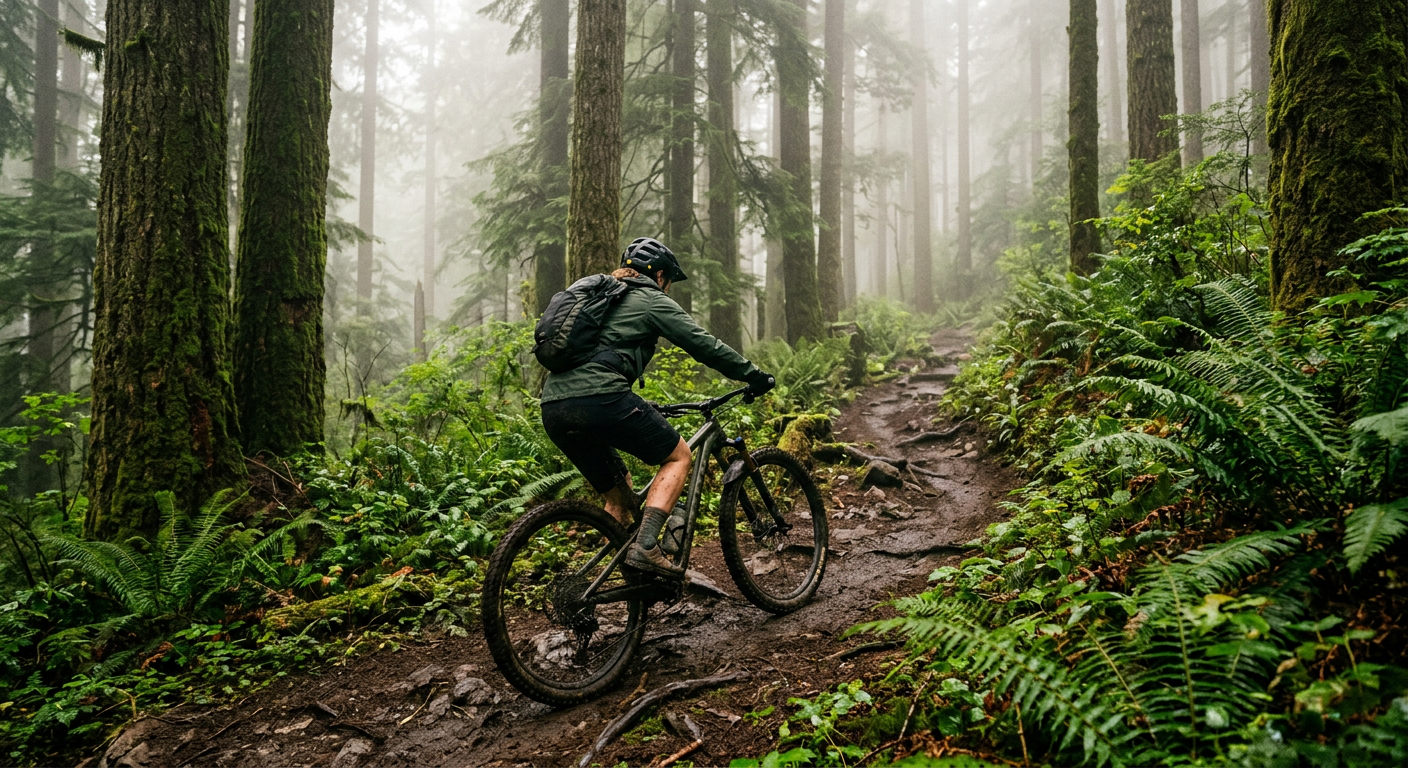
You plunge down a slick root staircase, feeling your suspension bottom out with a sharp metallic clank. A blast of freezing wind hits your face as you pick up speed.
By the time you reach the lower switchbacks, the thick air smells of damp earth mixed with the chemical burn of overheating brake pads. The official segment covers about two thousand feet of descending elevation.
That translates to fifteen minutes of holding on for survival, feeling the wet wind sting your face until the pain in your legs vanishes. When folks rent their gear through Rockon Recreation Rentals, I advise them to prioritize stopping power over suspension travel for these descents.
The trail spits you out into the gravel parking lot. You stand there breathing while the rotors ping in the drizzle.
Securing Rental Bikes Without Losing Your Mind
You step into the Fremont rental garage and the air smells like citrus degreaser and fresh rubber. It coats the back of your throat before you even reach the check-in desk.
Travel blogs love calling these neighborhood mechanics overlooked treasures. Research is my love language; reality is my ex. They are chaotic, echoing concrete rooms where technicians shout over the noise to turn over dozens of rigs by noon.
The shop is loud. Wrenches drop against concrete floors. An air compressor leaks in the corner. The heavy bite of chain lube hangs in the rafters.
The Reality of Fleet Bikes
The Evergreen Mountain Bike Alliance partner directory displays a grid of supported regional outfitters. In practice, weekend inventory disappears fast in 2026.
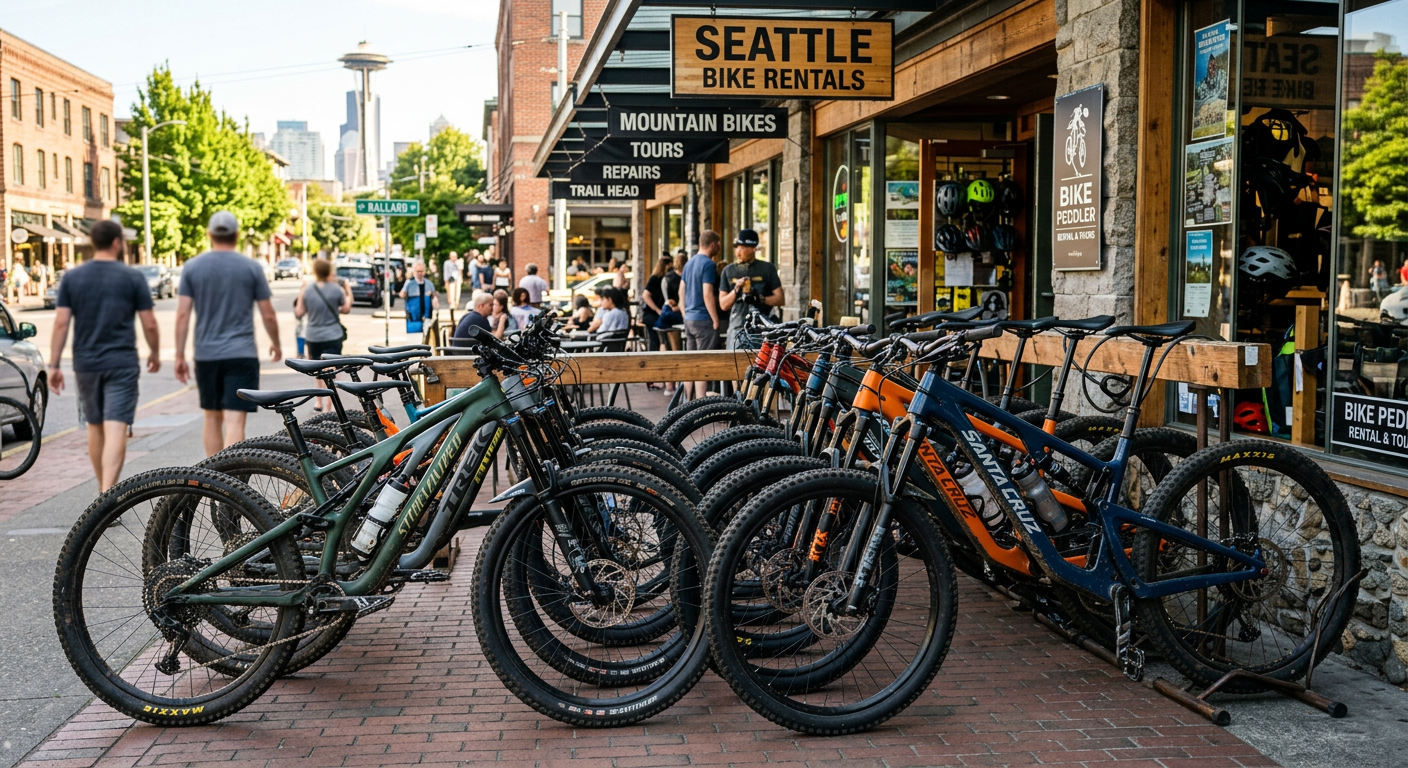
When preparing for mountain biking in Seattle, a rental fleet model sat at the bottom of my option list. I was wrong again. The mechanic handed over a heavy enduro rig, asked my ride weight, and dialed the fork pressure in about a minute.
The suspension swallowed the curb ledge outside the shop, the aluminum grips pushing back into my palms with a firm resistance. The storefront stocks spare tubes, patch kits, and physical map sets. They require a major credit card for the damage deposit.
The Trailhead Math
The drive east to Tiger Mountain covers about thirty miles from downtown. You sit trapped in idling traffic, listening to the monotonous engine drone of surrounding cars.
You realize the morning commute might outlast the ride itself. Who exactly is the city's weekend highway grid designed for?
Securing the physical machine is only half the friction. You also need a legal place to put your vehicle. Buy an annual Discover Pass online before you skip town.
The state charges around thirty bucks for the yearly parking permit. That small slip of paper feels heavy with value when you reach the Duthie Hill lot.
You spot neon orange violation envelopes trapped under three different windshield wipers. The chill of the morning wind cuts through your riding jersey as you scramble to hang your own tag from the rearview mirror.
According to the Washington State Parks digital portal, temporary passes can be purchased via mobile signal at the lot. The cell reception drops to zero bars long before you shift the transmission into park.
Booking your gear beforehand through a verified platform like Rockon Recreation Rentals manages the shop logistics. It guarantees a properly sized machine awaits your arrival in the valley.
You finally unrack the heavy frame, the wide tires making a loud crunch as they hit the wet limestone gravel. Another car rolls into the lot behind you. The driver stares blankly at the empty spaces that no longer exist.
Trading Mud for the Verdant Landscapes Experience
A gritty layer of drying mud flakes off your shins and scratches against your socks. My quads seized up somewhere near the rear bumper as I tried to lift the bike off the transport rack.
The metallic scrape of the pedal pins dragging against the plastic housing made me flinch. You sit on the edge of the open liftgate and smell the sharp, burnt resin of overused brake pads. Your legs are useless.
The tourism board sells this fantasy where you crush a wilderness downhill track at dawn and still have the energy to hike around Pike Place Market by lunch. That is a lie.
After three days of mountain biking in Seattle, the only thing you want to navigate is a padded seat cushion. The physical toll of the Pacific Northwest root systems requires a mandatory recovery period.
According to King County Metro transit data, combining the main regional nature parks without a car requires multiple complex bus transfers.
It looks exhausting just to read. I usually avoid sightseeing packages because they feel engineered for people who wear matching lanyards.
I was wrong about this one too. The 'Seattle City and the Verdant Landscapes of Washington State-4 Day Experience' turned out to be the smartest booking of the trip.
Mostly, I just didn't want to touch a steering wheel. You can find similar sanity-saving transit options on Rockon Recreation Rentals. Easing the logistics of a riding trip is paramount.
Relinquishing the Steering Wheel
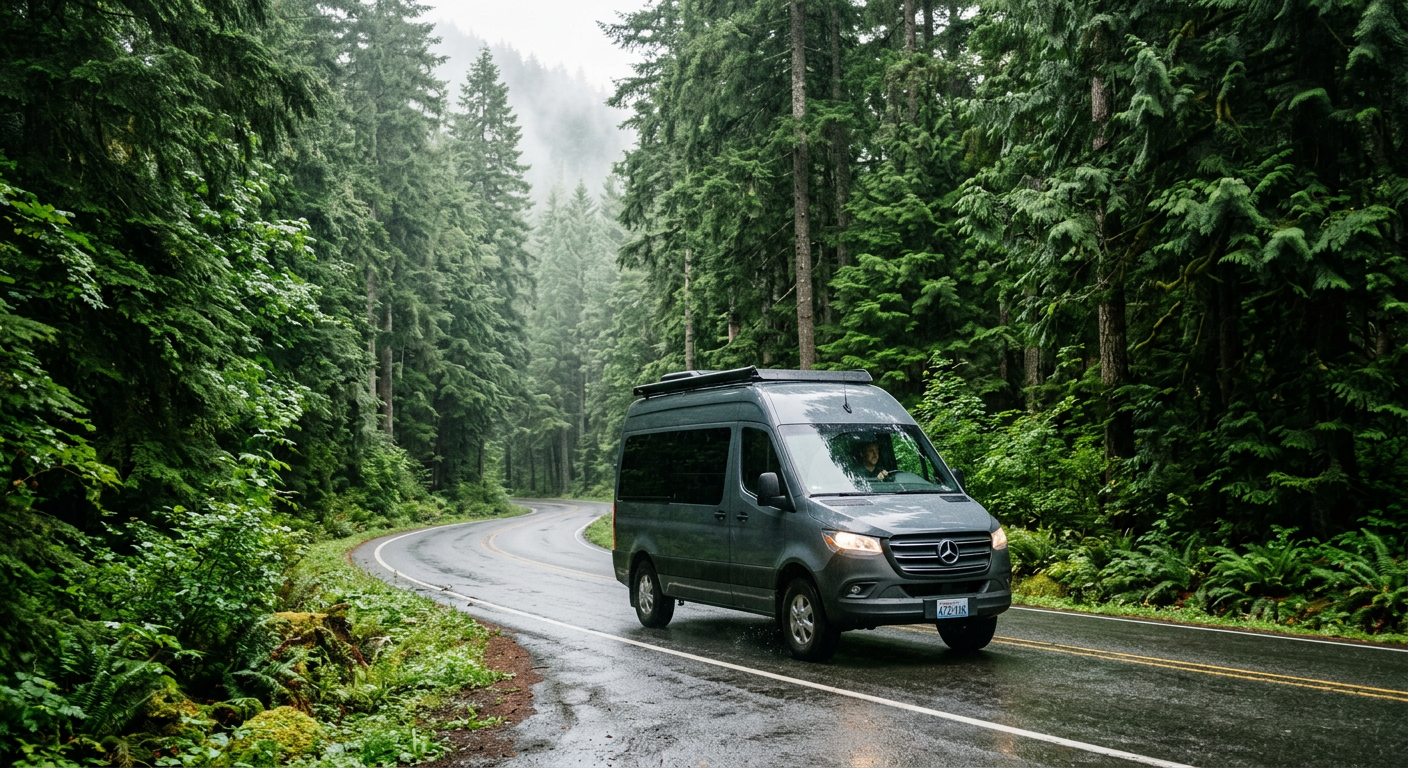
Who exactly are these rugged adventure guides trying to impress? Why do they pretend navigating regional traffic is part of the fun? Let your legs recover while someone else fights the merge lanes near the Space Needle.
According to the Washington State Department of Transportation, Interstate 5 handles hundreds of thousands of vehicles a day near the downtown corridor.
That number shifts from a dry statistic to a deep sense of relief when you sit in the passenger row. You watch a tour guide ride the brake pedal for forty minutes instead of doing it yourself.
The van covers hundreds of miles over four days. You press your forehead against the cold window glass, listening to the muffled hiss of tires spinning over wet asphalt. The city eventually peels away.
I should note that the tour’s promised complimentary morning coffee tasted like burnt pennies and wet cardboard. I drank two cups anyway. The caffeine was necessary.
A Proper Physical Reset
Pike Place Market occupies acres of multi-level concrete floors. Your arches feel every single yard of that industrial concrete if you try to tour it unassisted after a grueling weekend.
Having a driver drop you directly at the upper entrance saves you the steep hike up from the waterfront piers. Digital walking tour maps show extensive stair climbs between levels. I decided I did not want to walk at all.
Our guide spent twenty minutes talking about the architectural history of a ship canal bridge we could not even see through the morning fog. I zoned out.
But the value of the tour was never the historical trivia. The van pulled into the designated loading zone next to the ferry terminal.
Three passengers got out and walked toward the ticket booth. One of them was wearing bright yellow slip-on Vans. The heater hummed near my damp hiking boots.
We still had twenty miles to go on the day's itinerary. The terminal was loud. Heavy diesel engines idled. Rain drummed against the tin roof. Somebody dropped a steel luggage rack onto the wet pavement.
The damp air carried the briny scent of sea salt mixing with exhaust fumes. The seat was dry, the temperature was regulated, and the mountain dirt was miles away.
Plan your trip: Ready to experience this firsthand? Book Seattle City and the Verdant Landscapes of Washington State-4 Day Experience directly through our marketplace.