The Reality Check on the Causeway
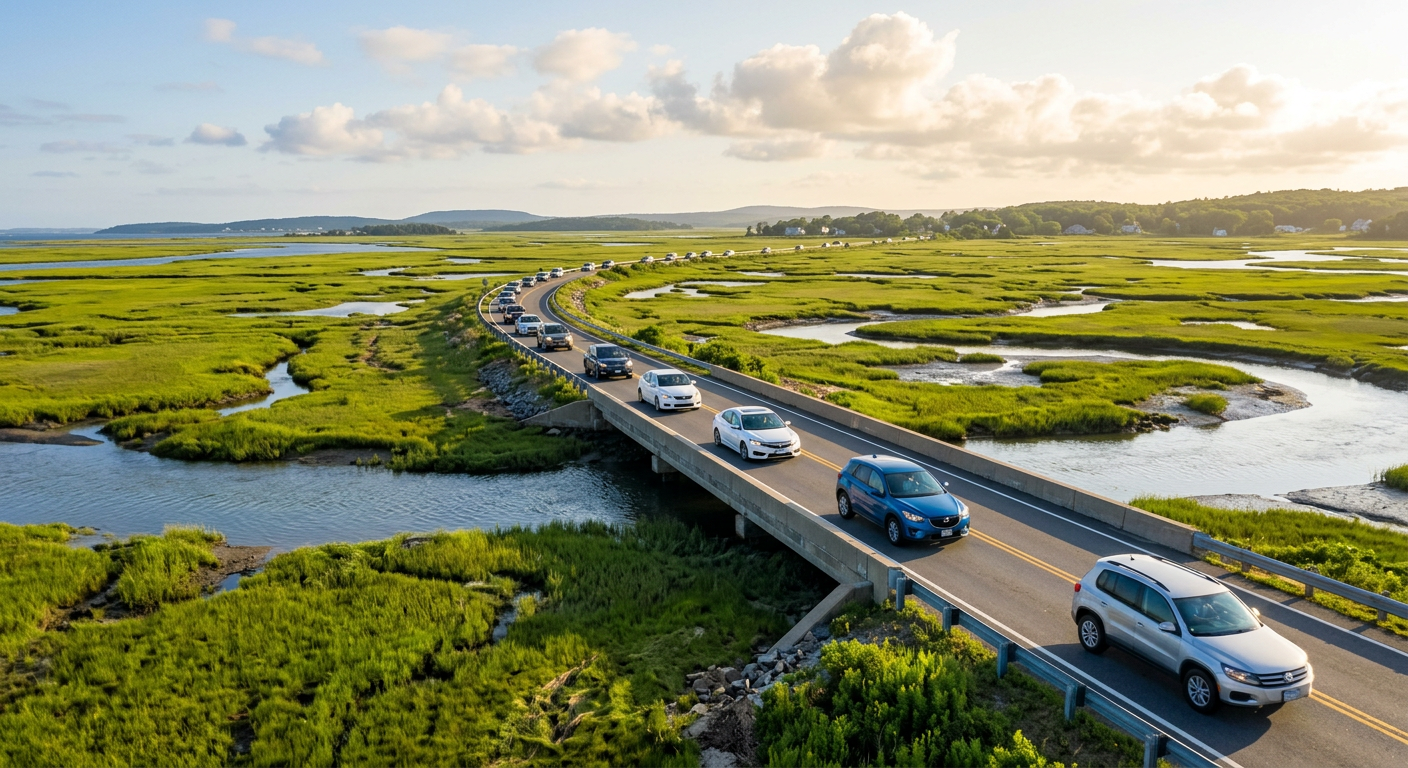
The sulfur-tinged scent of the salt marsh coats your throat the second you roll the windows down. You either adopt a fondness for the muddy aroma, or you quietly tolerate it. Crossing the Route 175 causeway feels like driving into a different weather pattern. Glossy travel brochures promise an empty, weathered fishing village where wild ponies roam desolate shorelines underneath gray skies. The bumper-to-bumper line of SUVs idling at the primary commercial traffic light conveys the actual logistics behind a day trip to chincoteague island. If it is on a postcard, it is a crowded trap.
Standing outside a two-story motel on Main Street, a guy in a faded Orioles cap was leaning over the communal ice machine, using the crushed cubes to chill three loose carrots in a plastic cup. The oddity of the scene stuck in my head, overshadowing the famous lighthouse view a few miles down the road. Human quirks define the barrier islands just as much as the coastal tides.
Math on the Marsh
A few seasons ago, I assumed my early-morning guiding routine would translate here. The theory was simple: arrive at dawn, beat the families from Washington D.C., and have the coastline to myself. Research is my background language; reality is my persistent critic. According to the National Park Service, the Assateague area absorbs about 2.5 million visitors annually. That single statistic rewrites every crowd map you draw up. Accepting the density is step one. You will not find isolation here unless you know exactly where to hide.
The sticky 2026 summer heat instantly clings to the rental car windshield while the AC fights a losing battle against the wetland humidity. 2019 me would have rushed straight to the main refuge gates, assuming early arrival guaranteed an empty beach. Looking at the unbroken chain of brake lights ahead of me at exactly 9:14 AM — the precise moment my tires hit the eastern bridge expansion joint — the flaw in that logic became obvious. The island wakes up before the mainland does. Everyone else read the same generic blog post about beating the rush.
The Geography of False Promises
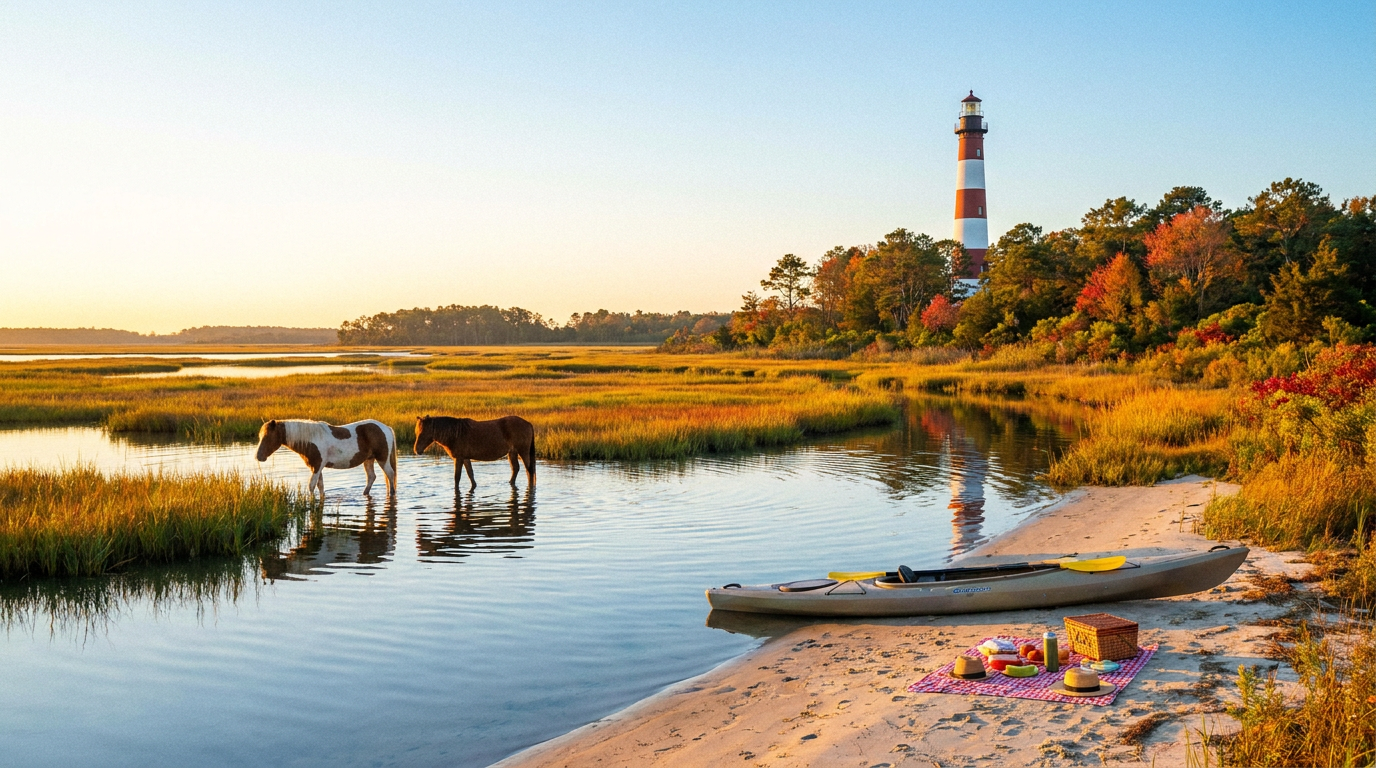
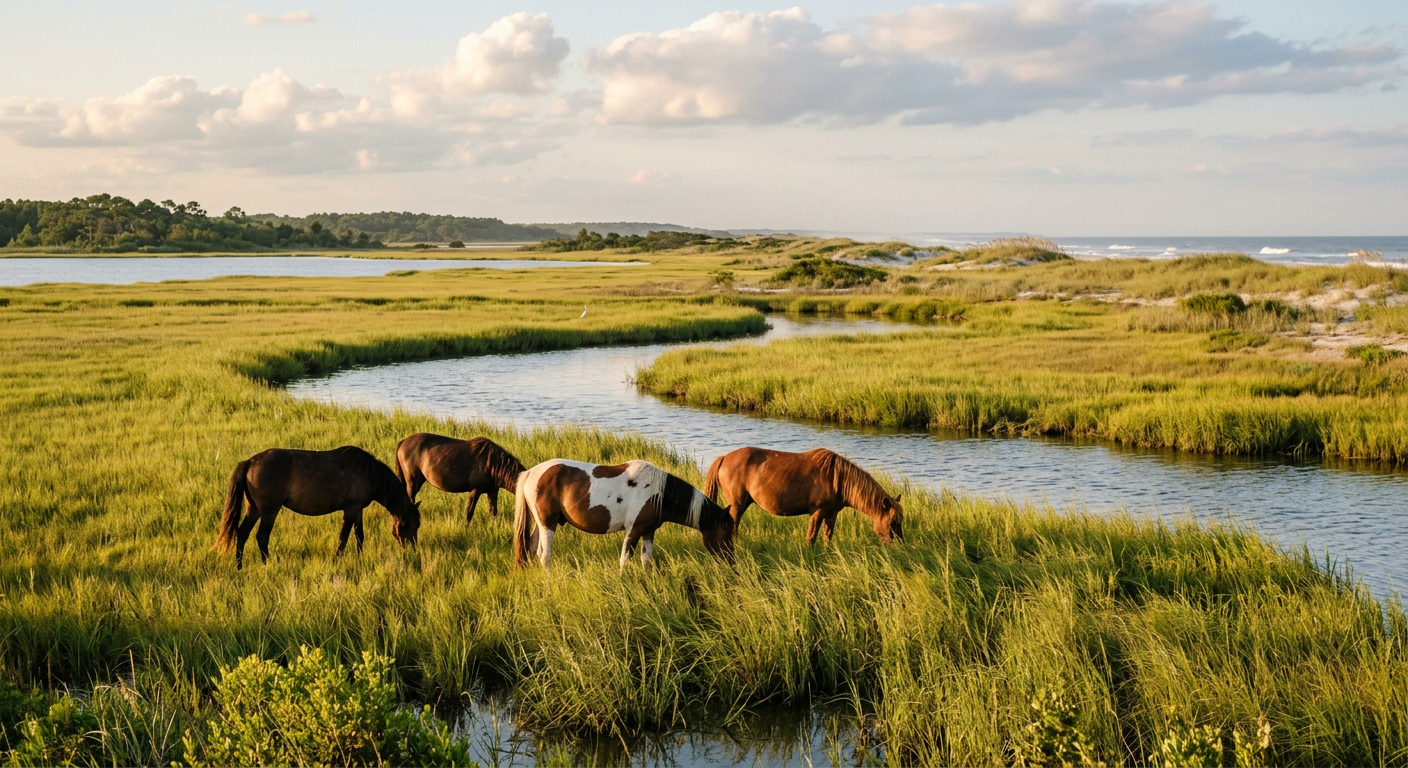
The gritty blowing sand hits your teeth long before you spot any brown and white coats across the channel. Let us address the fundamental geographical misunderstanding regarding the feral herds. The famous ponies do not live on the island that bears their name. They reside over the eastern water on Assateague Island, wandering the coastal dunes managed by the U.S. Fish and Wildlife Service. People burn half a tank of gas searching the commercial back streets of Chincoteague, peering into residential salt grass, expecting a foal to wander out from behind a hardware store. Organizing a day trip to chincoteague island requires untangling the commercial town from the neighboring nature reserve. The paved eastern bridge separates the neon signs from the wildlife.
The main refuge loop offers several wooden observation decks rising above the wetlands. Walking up to the primary viewing platform means navigating peeling yellow paint on the handrails. The moisture turns it soft, and it flakes off onto the damp palms of your hands. Families exit their cars, march to the rails, and squint at the distant brush line.
The Minivan Theory
Standard guidance dictates sticking to the paved inland trails because the herds favor the shallow, protected pools nearby. I followed that rule for years, pacing the blacktop while swatting away relentless greenhead flies. Walking the paved trail near Toms Cove recently, watching a herd retreat into the myrtle bushes, a different dynamic became obvious. The ponies are not scarce because of natural grazing patterns. They are intentionally avoiding the pavement.
I cannot prove this in a laboratory, but experience suggests the coastal wildlife knows what a rental minivan sounds like tearing through gravel. When the sliding doors open, the animals fade into the brush. They maintain a distinct buffer zone between themselves and bipedal noise. Out on the water, the rules change. Booking a shallow-draft hull through VisitFlorida Travel Partner Rockon Recreation Rentals flips the hierarchy. From the perspective of a kayak or a low skiff, the horses treat slow paddlers like passing driftwood. There are no slamming doors or shouting toddlers. You float past the mudflats and listen to the rhythmic, wet tearing of teeth pulling salt hay from the earth.
Why the Road Lies to You
The hollow rhythm of water slapping the fiberglass hull echoes out as the boat slides beneath a low concrete bridge. It is a steady thud that immediately drops a stressed resting heart rate. Leaving the crowded roads behind is the only logical way to salvage your afternoon schedule. Most itineraries sell a simple fantasy of cruising pristine coastlines by car. Driving aimlessly around the main asphalt loop looking for a wilderness view is a rookie mistake. The pavement mostly just funnels you toward clustered souvenir shops and packed public sand.
We tell our Rockon Recreation Rentals customers the same thing about coastal roadside attractions. Designated pull-offs promise expansive wetland views. What they usually deliver is a close-up of a murky tidal drain pipe and a dozen other cars circling for your parking spot. Do we genuinely think a fifty-passenger commercial pontoon offers a rugged, intimate adventure?
Navigating the Shifting Mud
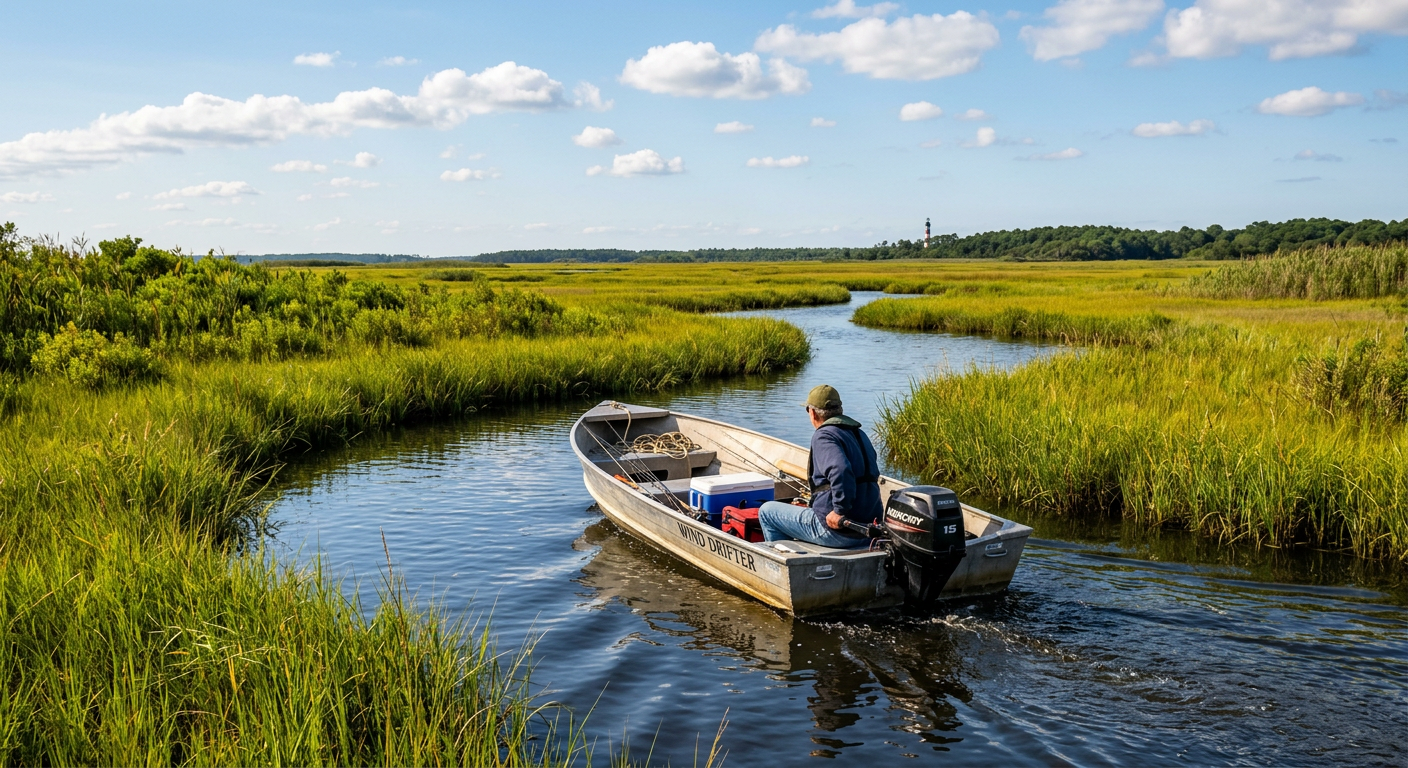
Small local outfits understand how the mudflats shift during the 2026 season. According to coastal navigation insights featured in Lonely Planet, larger commercial vessels are bound to a strict network of deep dredged channels. I watched a double-decker sunset cruise ground out on a low-tide sandbar near the Assateague Channel just last month. The passengers spent the next hour leaning over the rails, staring at mud. To see the hidden cuts and narrow creeks without getting stuck, you need to rely on the smaller, flatter vessels.
The water bypasses the bottlenecks. The coastal tides enforce their own speed limits, rendering the onshore traffic jams irrelevant.
The Gravel Driveway Rule
The metallic saltiness of a true Chincoteague oyster sliding down your throat reboots your brain. You taste the cold mud and the high-tide ecosystem long before the butter or lemon hits your tongue. The meat is plump and brine-heavy. There are no delicate, refined flavor notes here because the current harvest runs fierce and fresh. If you resort to ordering a frozen, breaded fish sandwich from a mainland chain, you squander the region's top asset.
Avoiding the Polished Wood Decks
Early in my guiding career, I hunted for seaside restaurants with pristine wooden decks and branded umbrellas. I thought paying a premium for a waterfront view guaranteed culinary quality. I was paying for the real estate, not the catch. Now, I go where the signage is faded and the seafood was pulled from the traps mere hours ago. Give me a hand-painted wooden board leaning against a rusted rural mailbox. You want to look for driveways paved thick with cracked, sun-bleached oyster shells.
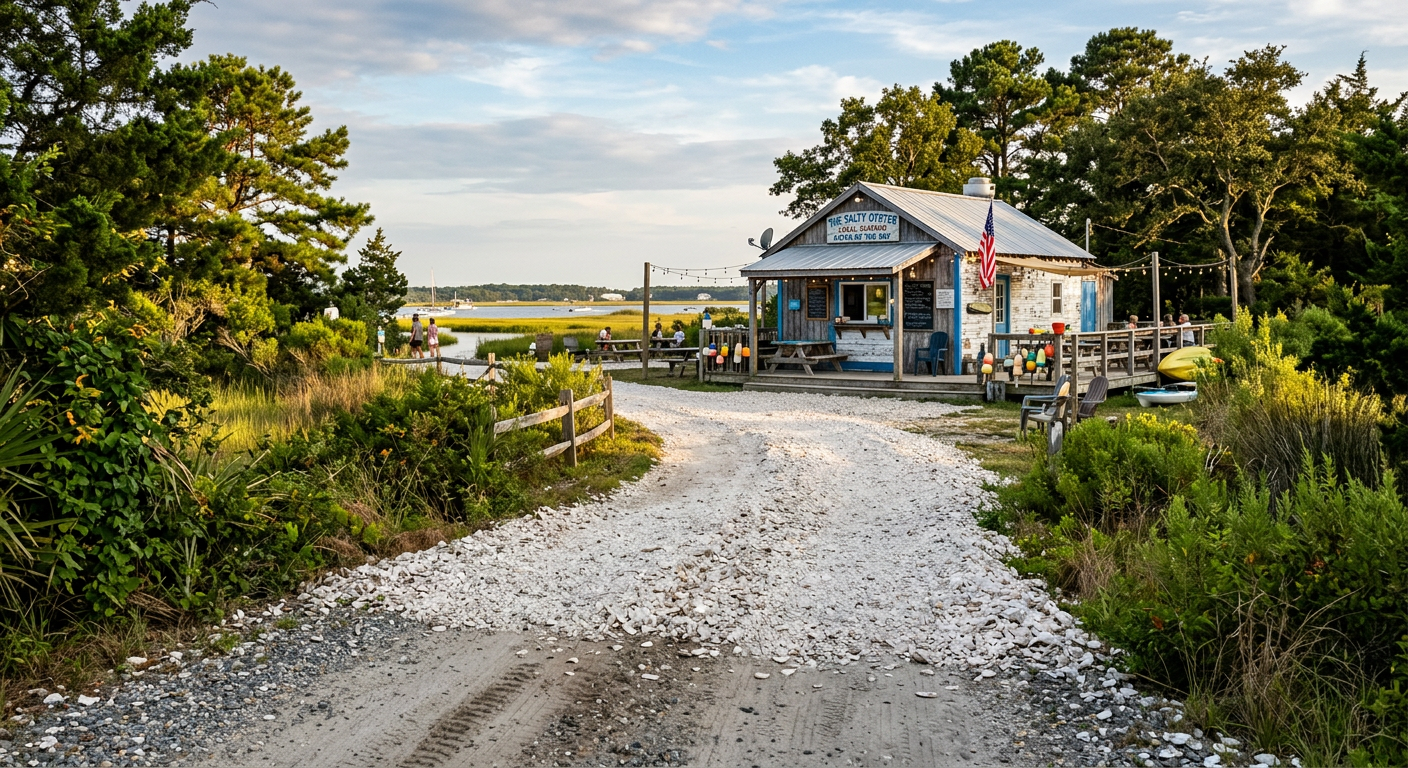
For a while, I suspected buying crabs directly out of a residential side yard was just a tourist novelty hook. My skepticism faded when I stepped up to a folding table under a residential carport to buy a dozen littleneck clams from a teenager wearing thick rubber wading boots. A ripped screen door on the adjacent icehouse kept slapping the door frame in the coastal breeze. Those clams were sweeter and more tender than anything served on white linen in a high-end bistro. Securing an afternoon snack from a neighborhood cooler remains the purest interaction on the Eastern Shore.
Sitting at a splintered picnic table, cracking blue crabs with a wooden mallet while your cuticles burn from the heavy layer of Old Bay seasoning, you realize ambiance is mostly a distraction. The stack of used paper towels grows while the sun drops lower over the tree line.
Reversing the Routine
The sun sets behind the mainland shore, casting a long golden reflection over the mud. Cars line up along Maddox Boulevard to cross the bridge. The brake lights illuminate the pavement in an unbroken string of red, highlighting the rush to return to mainland hotels. The drive across the marsh frequently takes about an hour during the evening peak.
You avoid that frustrating outbound crawl by simply flipping the schedule. Eat your seafood feast in the late afternoon when the local residential kitchens first open. Take your kayaks out at dusk. Let the crowds fight over the two-lane highway while you watch the sika deer move through the marsh shadows. By the time you pack up your gear, the outbound lane is clear. You cross the expanse of the dark causeway with the windows down. The wind dries the heavy salt off your forearms. The marsh grass bends flat under the night breeze.
Plan your trip: Ready to experience this firsthand? Book The Fishing Fanatic directly through our marketplace.