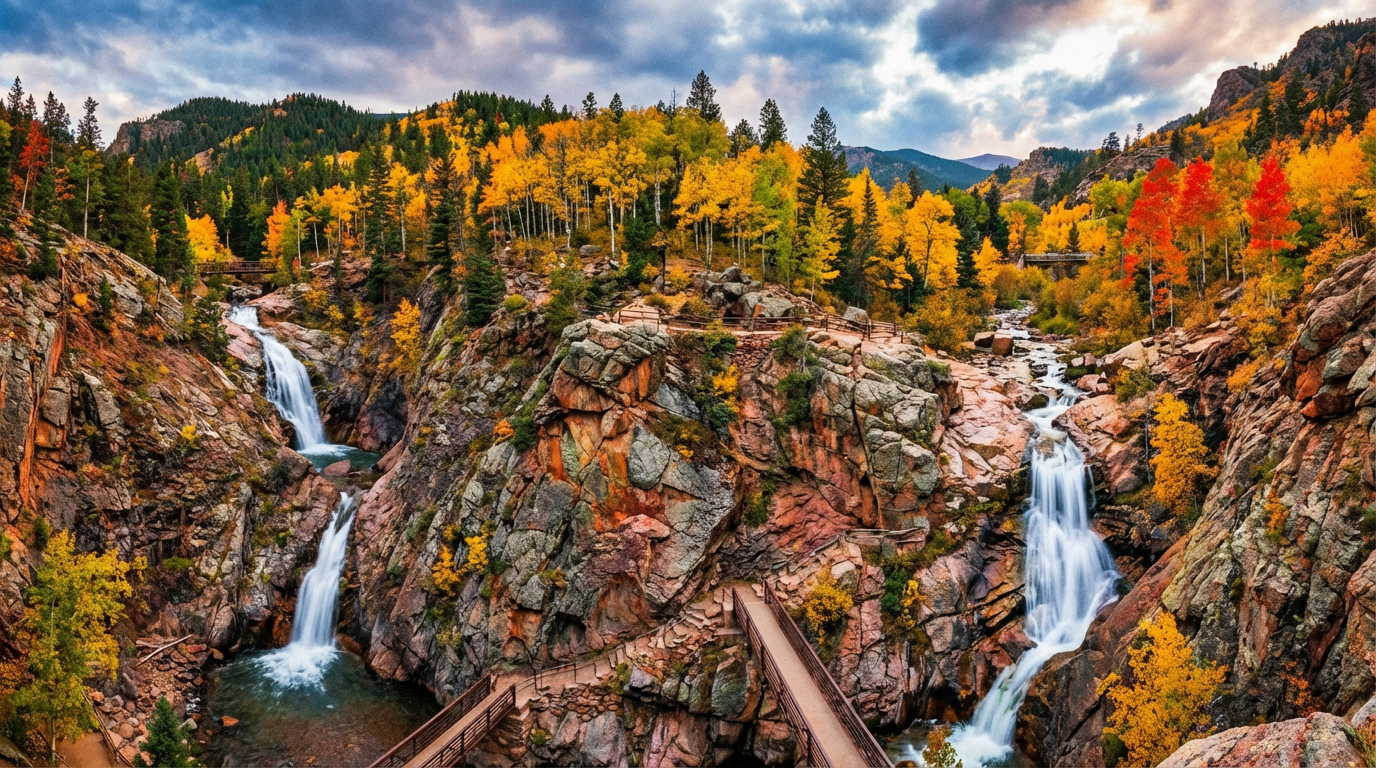
The Smell of Diesel and the Inevitable Shuttle Ride
To access the 7 Waterfalls in Colorado Springs, you must first inhale the sharp scent of diesel exhaust and damp wool inside a mandated Broadmoor shuttle. You sit shoulder-to-shoulder with strangers, rattling up a paved incline away from the parking lot. Up north in Silverthorne, where I usually base my backcountry skiing operations, we earn our mountain solitude by skinning up silent, heavy snowdrifts in the Arapaho National Forest. Down here, at this managed box canyon, you access the frozen ice wall via a mandatory bus ride. I can't prove this, but the collective anxiety on the bus always feels like people just realized they wore flexible mesh running shoes to an ice climb.
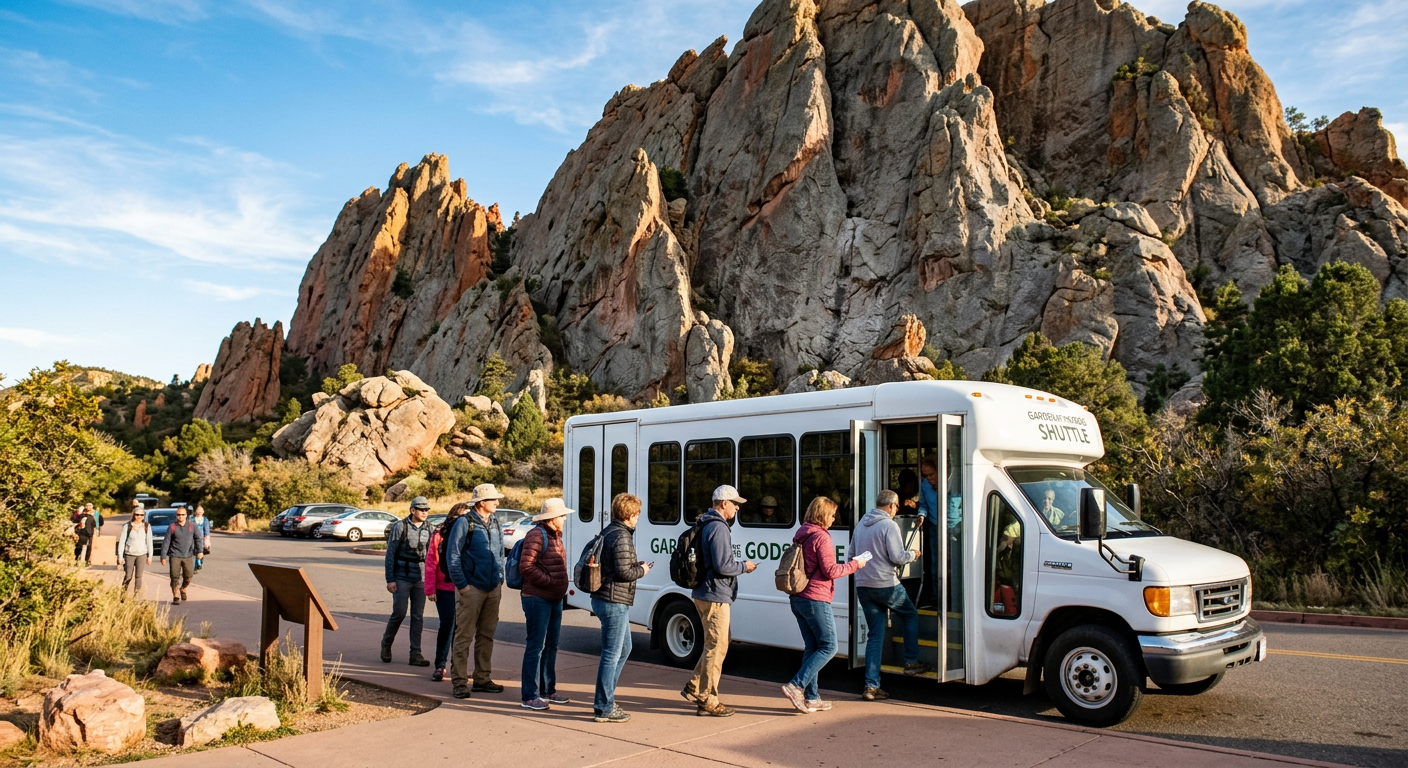
The shuttle stops in a paved turnaround area at the base of the canyon. A large iron gate marks the entrance. Visitors scan tickets at a wooden booth. The pink and grey granite walls stand vertically next to the ticket station, pinching the valley floor into a narrow bottleneck.
Working as a local Florida adventure guide since 2018 taught me how industrial access shapes wild spaces. Down at Rockon Recreation Rentals, we negotiate crowds across sensitive outdoor ecosystems daily. Seeing a Colorado mountain environment handle seasonal volume requires the same structural logic. When a natural site pulls massive crowds per season, pavement is the primary defense against erosion. You trade wild backcountry isolation for engineered access.
Years ago, I dismissed managed shuttle systems as the death of outdoor authenticity. Stepping off that bus beneath the towering pink granite changed my mind. The rock walls squeeze so tight at the base that building a visitor parking lot would require dynamiting the landscape. The bus does not ruin the outdoors here. It keeps the narrow canyon floor intact.
Navigating the Granite Infrastructure
We need to discuss reality. Guides often frame these sites as a raw mountain discovery. Did you expect total wilderness isolation three miles from a major luxury resort? According to the National Park Service, true wilderness retains its primeval character. This canyon sacrifices that for volume and safety, operating more like a geology museum than a rugged trail.
You will stand in line for about fifteen minutes to use an elevator carved into the mountain. You will walk on iron grates bolted into the stone. Accept the infrastructure, and the cascading water remains a striking geological feature. Fighting the commercial environment just guarantees a miserable afternoon.
Climbing the Metal Stairs When You Expected a Dirt Path
Coarse, gritty rime coats the cold iron handrails. The rough deposit bites through thin fleece gloves. You grip the wet metal anyway because frozen spray from the lower basin coats the steel surfaces beneath your boots.
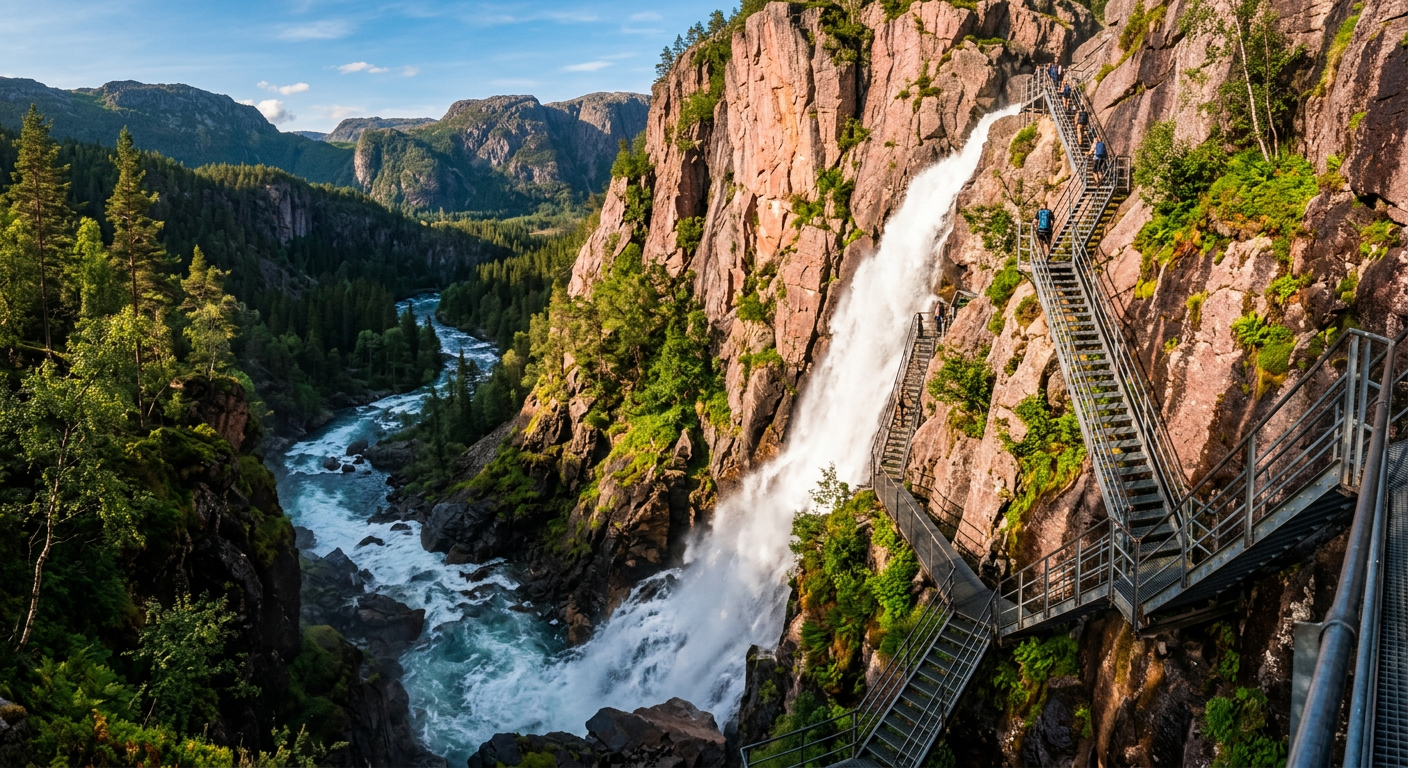
This brings us to the footwear problem. Most tourists pack for the 7 Waterfalls in Colorado Springs expecting a standard dirt hiking path. Instead, the route up the cliff ignores the concept of a natural hike. The infrastructure operates as a giant fire escape bolted into a steep rock face next to a river. Industrial steel grids rattle under the weight of strangers bottlenecked on the ascent. Flexible trail runners fold over the metal slats, leaving your arches bruised by the time you reach the midpoint.
Up in Silverthorne, I check my clients' boots before we ever hit the snow. You need a rigid shank—something found in a sturdy approach shoe or a mountaineering boot—to comfortably navigate this kind of industrial grading. The metal demands stiffness. You fall into an enforced marching rhythm dictated by the crowd, and soft rubber outsoles offer zero protection against the sharp steel edges.
The Mechanics of Elevation
For about a quarter mile of vertical space, my downward vision rested on a stranger's generic sneakers. The loose fabric laces dragged across the rusted grating with every upward step.
The sign politely claims there are 224 stairs to the top. My burning quads logged precisely 14,832.
The stairs terminate at a flat wooden viewing platform. The deck sits against the rock wall. Water runs down the smooth stone surface just above the railing.
We manage logistics for outdoor enthusiasts daily, and controlling physical exertion here requires strict pacing. Safety warnings from the National Park Service mention that climbing steep utility structures at high elevations drains muscle oxygen fast. The granite canyon walls block the afternoon sun early. Your sweat freezes against your neck the moment the bottleneck stops moving. There is no grassy shoulder to pull over and rest.
Reading the Winter Terrain at the Box Canyon
The sharp crack of shifting ice echoes down the granite hallway. Beneath the thick white crust, you hear the muffled hum of rushing water fighting gravity. Standing at the base of the frozen 7 Waterfalls in Colorado Springs triggers a specific reflex for anyone accustomed to navigating the Gore Range. Your eyes naturally start tracing fall lines. The sheer walls look less like a tourist attraction and more like a high-alpine avalanche chute.
We list backcountry skiing excursions out of Silverthorne on Rockon Recreation Rentals. I always tell novice clients to study accessible box canyons in winter to understand snowpack. The terrain here mimics the dangerous gullies found deeper in the Rockies. You see how wind loads snow on the leeward cliffs. You notice where the ice bulges over dead air space. Recognizing these patterns in a controlled environment saves lives in the ungroomed backcountry.
Translating Ice Formations to Avalanche Cues
Tourists look at the ice and see a frozen block. Skiers look at it and see a couloir. A couloir is a steep, narrow gully on a mountainside where loose snow funnels down at high speeds. If you catch an edge in a couloir up in Summit County, you tumble until you hit bottom. The steep iron staircases here run parallel to roughly two hundred feet of bulletproof ice. Climbing alongside that sheer drop puts the terrain scale into perspective.
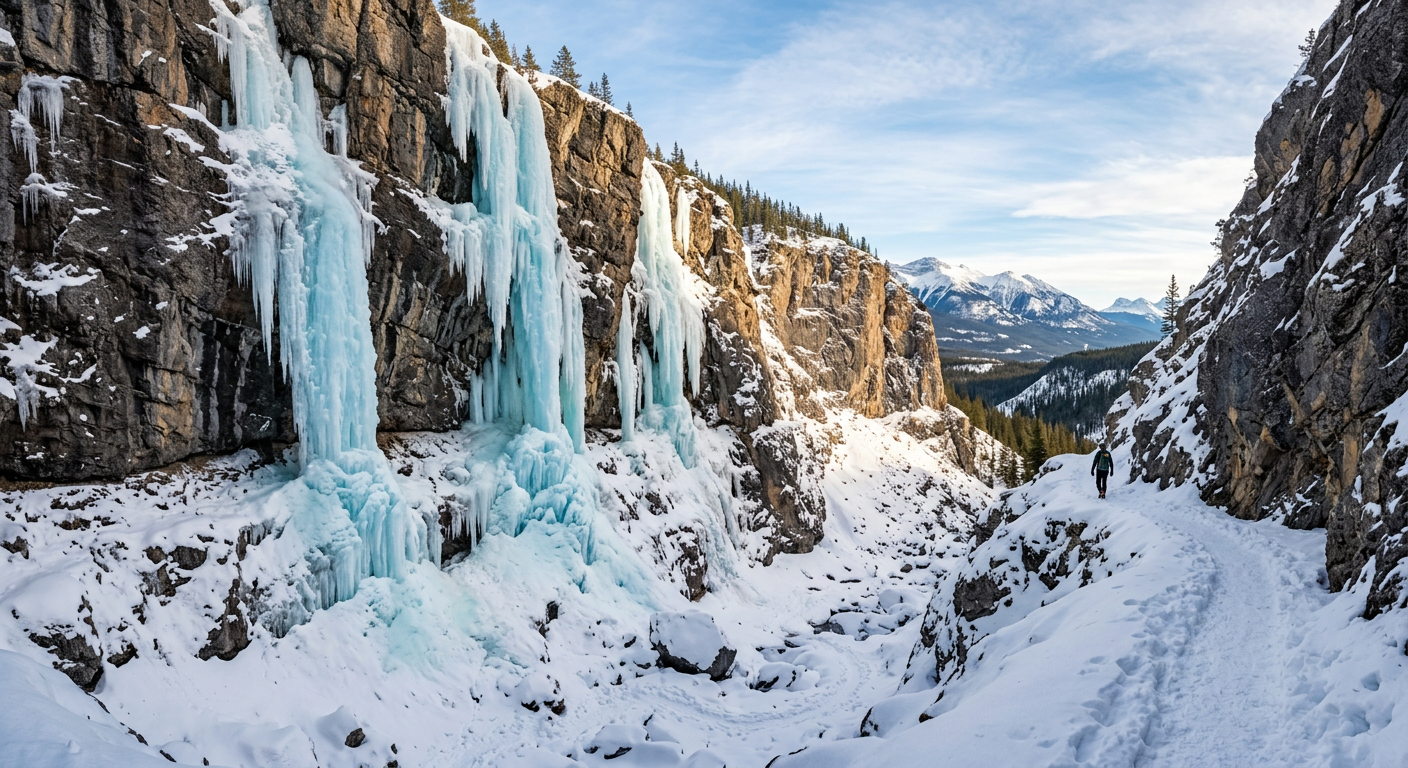
I used to assume managed parks held no educational value for winter athletes. I figured the handrails and paved paths negated any actual nature reading. Watching the surface fracture here proved me wrong. The controlled setting isolates the variables. Findings from the Colorado Avalanche Information Center indicate that observing ice shear mechanics on bare rock faces helps forecasters predict weak layers. Here, you study ice shearing off a cliff without the threat of being buried by it.
The frozen basin functions as a classroom for recognizing terrain traps. You do not need skis to learn how gravity moves snow when the valley temperatures dive.
The Midnight Pivot on the Inspiration Point Trail
The heavy mist from the 7 Waterfalls in Colorado Springs clings to your jacket, leaving a damp weight on your shoulders as you hit the final metal stair at nearly seven thousand feet. Most visitors cluster around the iron platform railing to snap pictures of the main drop before descending. 2019 me would have taken the selfie at the top and immediately gone back down for an expensive beer. 2026 me knows the paved part is just the waiting room for the real hike.
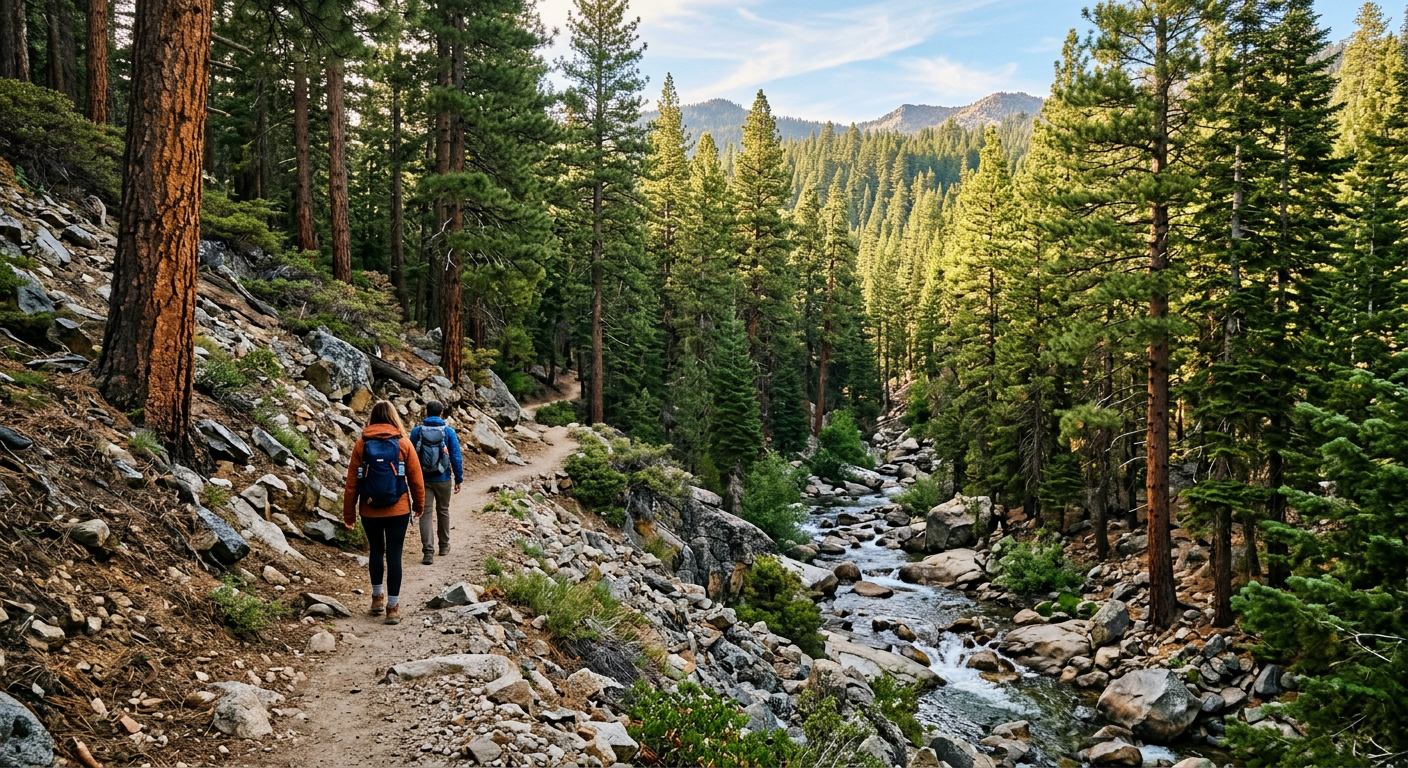
I always assumed the metal viewing deck served as the canyon finale. I figured an engineered park could not offer a genuine wilderness experience. Spotting a narrow dirt path ducking behind a dark grove of pine trees changed my mind. The heavy crowd noise fades to a soft hum within a few yards of stepping off the steel grating. The rigid staircase yields to dark, forgiving soil and scattered spruce needles.
Trading Pavement for Pine Needles
If it is on a postcard, it is a trap. The actual view requires getting mud on your shins. The Inspiration Point trail weaves back into the dense forest, providing an acoustic shield from the echoing valley below. Documents from the US Forest Service indicate that trails funneling away from heavy recreation hubs often act as sanctuaries for local wildlife. You regularly catch the distinct blue flash of a jay diving through the branches overhead.
A small gray moth with torn wings sat motionless on the side of a wooden trail post. The sparse directional signage near the stairs confused a few tourists, but that minimal marking likely keeps the upper route peaceful. We tell the guests booking Silverthorne guides through Rockon Recreation Rentals that the best discoveries live past the designated turnaround spot. Taking an extra hour to push toward the ridge transforms a passive sightseeing trip into a satisfying afternoon effort.
Evaluating the Reality of Broadmoor Waterfalls
A metallic tang of thin mountain air coats the back of your throat. At this altitude, the atmosphere carries a crisp, iron-like flavor that lowland boardwalks cannot replicate.
This taste defines the broader scene. You navigate a managed environment built to shuttle thousands toward the 7 Waterfalls in Colorado Springs. Getting to the water means walking across asphalt past a small ticket booth. Research is my love language; reality is my ex. I expected the metal infrastructure to ruin the canyon aesthetic. I arrived ready to criticize the painted handrails. My perspective shifted the moment I stepped onto the first suspended viewing platform.
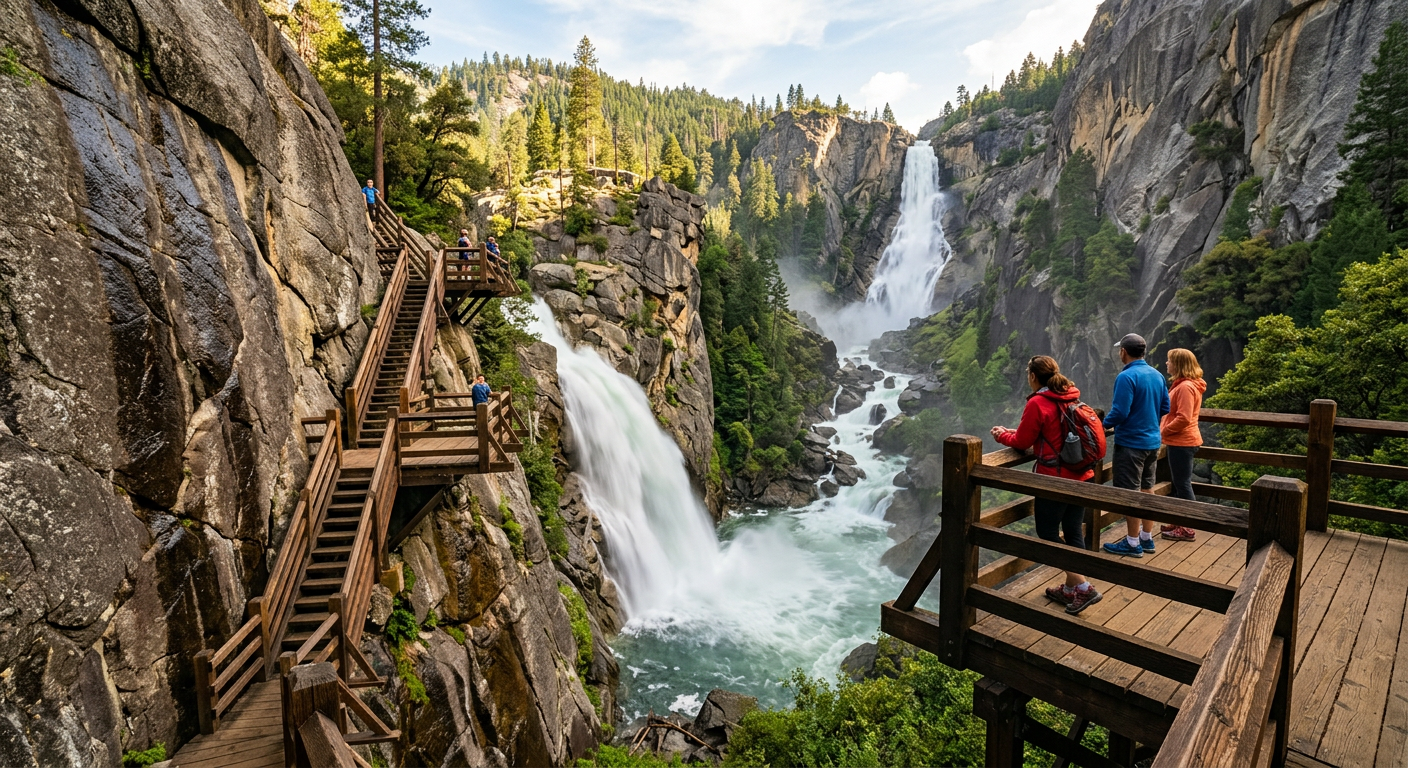
The platforms succeed by floating you directly into the mist without demanding technical rock climbing skills. We manage fragile access points in winter environments, and we recognize good environmental design. The structure highlights the rushing water rather than distracting from it.
Most visitors bypass the stairs to ride the mountain elevator straight up. According to editors at Lonely Planet, prioritizing the motorized ascent is standard for casual visitors. Taking the elevator skips the best angles of the mid-level drops, masking the scale of the canyon.
Maximize Your Time on the Route
This brings up the true duality of the 7 Waterfalls in Colorado Springs route. The paved section only tells half the story. If you hike a mile past the stairs, the asphalt ends. You trade the observation decks for an authentic hike along South Cheyenne Creek. The crowds vanish the moment the pavement stops. In 2026, these upper trails remain thankfully empty.
- Ride the earliest shuttle to beat the crowds at the base.
- Take the metal stairs up instead of the elevator for better photo angles of the ice formations.
- Wear rigid hiking boots capable of supporting your weight on steel grates.
- Push past the lookout points and head toward the upper reservoir trail.
You get engineered thrills and quiet woods in roughly three hours. The dual nature of this canyon works in your favor if you pack the stamina to leave the observation decks behind.
The Exit Strategy No One Talks About
The ambient heat pulls out of the air the moment the shadow from the western rim clips the observation deck. You are sweating through your base layer one minute, and shivering the next. The destination marketing brochures for the 7 Waterfalls in Colorado Springs always feature golden-hour lighting, but they omit the physics of a deep box canyon in late afternoon. High-altitude rock acts like a giant refrigerator when deprived of sunlight. According to the National Park Service, shaded canyon floors can drop twenty degrees within ten minutes of losing direct exposure.
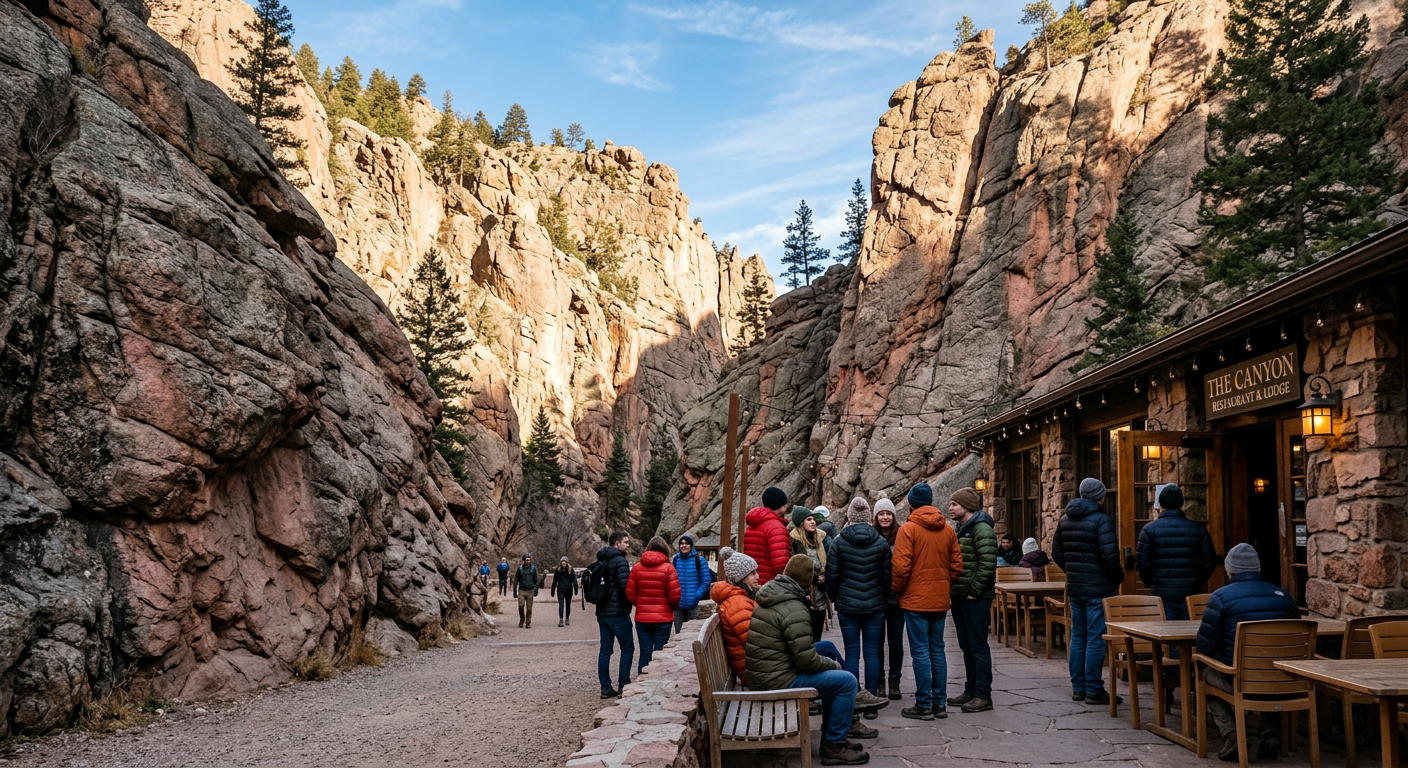
The transition is not gradual. The downdraft picks up, channeling through the narrow granite corridor and pushing the chill of the creek water into the faces of tourists wearing thin pullovers. An unspoken urgency spreads through the crowd loitering near the ticket booth as the surrounding pink rock turns a dull, flat grey.
The sun dropped. The canyon froze. We ran.
The Myth of the Casual Dinner Walk In
You assume you can stroll into Restaurant 1858 after burning off your lunch on those steep stairs. The polished signage outside implies a welcoming tavern atmosphere for weary hikers.
I used to think the sprawling waitlist at the restaurant was an artificial scarcity tactic designed to manufacture prestige. Catching sight of the cramped kitchen visible through the swinging service doors corrected that assumption. This isn't a ploy by management to seem exclusive. They physically lack the square footage to cook food fast enough for a thousand cold, hungry tourists. The dining room operates on reservations, and walk-ins sit on a list that barely moves before dusk.
As a guide operating in Summit County, I tell my clients to have a hard out-time for any mountain excursion. Do not rely on canyon-floor amenities to save you from poor planning. If you skip securing a table weeks in advance, pack dense snacks in your day bag. The final buses out of the 7 Waterfalls in Colorado Springs pack full of irritable people by sunset, and nobody wants to be the last one standing on the freezing asphalt in the dark.
Plan your trip: Ready to experience this firsthand? Book Adventures Colorado are You an Unparalleled Backcountry Skier directly through our marketplace.