The sharp tang of saltwater hitting the launch ramp cuts through the smell of stale beer and hot pavement hanging over the marina. A sunburned guy in a neon visor is yelling at his phone about sunscreen prices near a streetlamp. By block three, your shirt clings to your back. The conventional playbook tells you to grab another frozen margarita and wait for sunset. Burn that playbook. Beige is a sin.
As a Rockon Recreation Rentals VisitFlorida Travel Partner, I see people make the same mistake every season. Letting a hangover trap you on a barstool all day is a tragic use of an island. Getting off the pavement and onto the flats flips the script. The sticky heat gives way to a steady sea breeze the minute you cross out of the boat basin. Most visitors automatically default to standard key west kayaking, but renting a standup paddleboard alters the entire geometry of the flats.
7 Reasons Why Escaping to the Flats on a Board Beats a Duval Hangover
I grabbed a rented ten-foot SUP at the southern marina. The hull was white fiberglass. The traction pad had deep diamond grooves. A leftover french fry sat melting on the wood pylon. I pushed off the dock and followed the red channel markers out toward the water, balancing bare feet on the wet foam.
2019 me assumed paddling the local channels was merely a distraction between seafood lunches and historic tours. 2026 me knows better. Floating past the first mangrove island, I realized I had the hierarchy backward. The shallow grass beds are not a side quest. They are the actual heartbeat of the ecosystem. The chaotic hum of scooters fades, replaced by the rhythmic splash of water against the nose of the board. If you want to understand the island's coastal defenses, standing up on the water offers the most honest geography lesson.
The U.S. Fish and Wildlife Service confirms these backcountry waters harbor some of the dynamic marine habitats left on the continent. Standing on a board gives you a direct vantage point to the whole show. Once you paddle out past the harbor protection, the breeze drops the perceived air temperature by about ten degrees.
How Balancing Alters Your Paddling Perspective
The grit of pulverized coral sand scrapes against the fiberglass fin as you glide over a submerged limestone shelf. You dip the composite blade into the clear water. For years I assumed coastal tourism meant sitting low in a plastic hull. Slipping my board into this shallow green expanse shifted that old perspective.
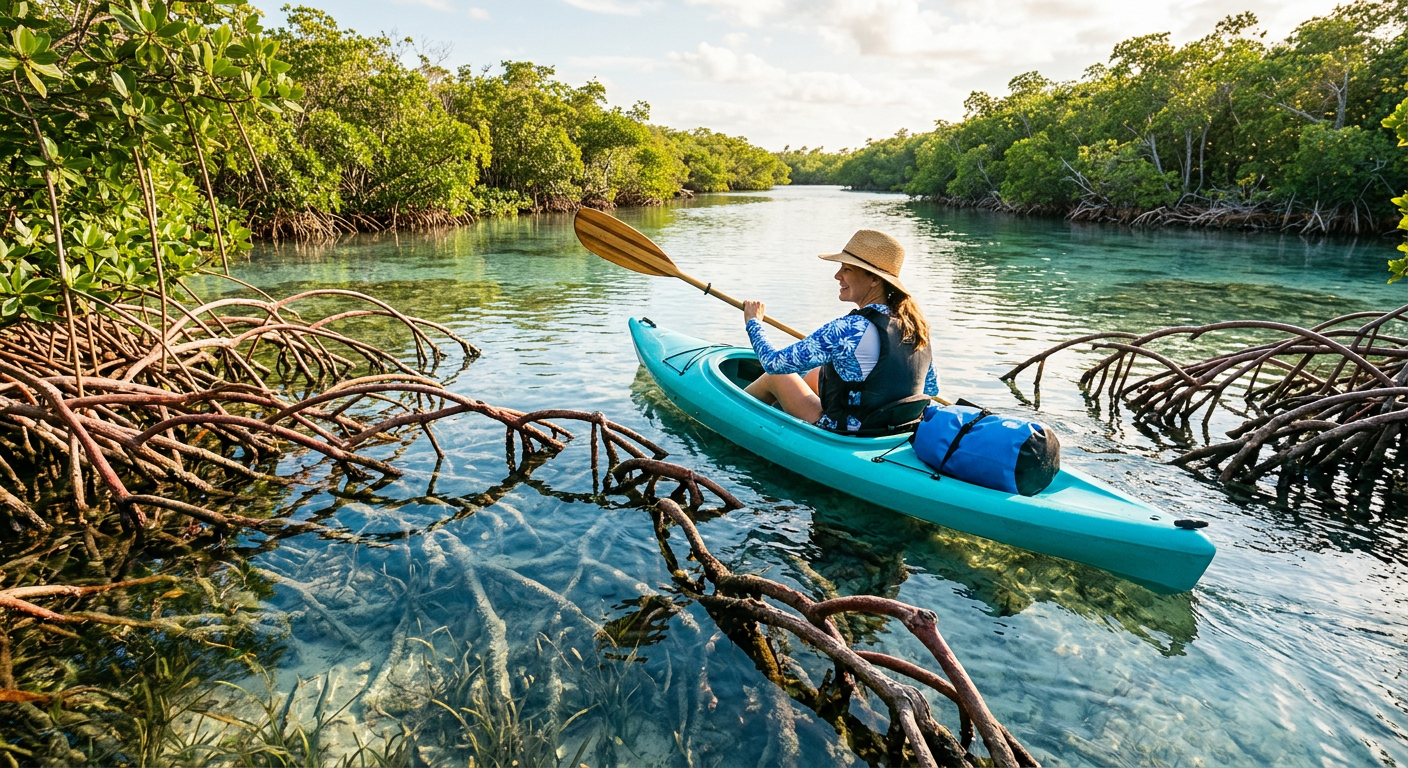
Taking the traditional key west kayaking route means your line of sight maxes out at three feet above the surface. On an SUP, you command a much higher vantage point. It sounds trivial. It changes everything. From up high, surface glare vanishes. You look straight down into the grass, rather than scanning across it.
The primary draw of a paddleboard is how it forces you to engage your core and notice the subtle shifts in the current. You cannot zone out. The ocean demands your attention.
Why the Wind Acts as Your Enemy and Your Anchor
A single white clam shell rests upside down on the muddy bank to your right. You wipe the sweat off your sunglasses and adjust your grip on the shaft. Authentic backcountry exploration requires an open mind and a willingness to fight the breeze.
Research is my love language; reality is my ex. A 2026 mapping project by the National Oceanic and Atmospheric Administration indicates these estuaries protect miles of vulnerable shoreline from erosion. By standing up, your body essentially acts as a human sail. When the wind is at your back, you glide effortlessly over the turtle grass. When it turns against you, the physical toll multiplies. I can't prove this scientifically, but the natural rhythms of the flats feel purposely designed to test your patience when the tide and wind oppose each other.
Why Tide Charts Dictate the Perfect SUP Route
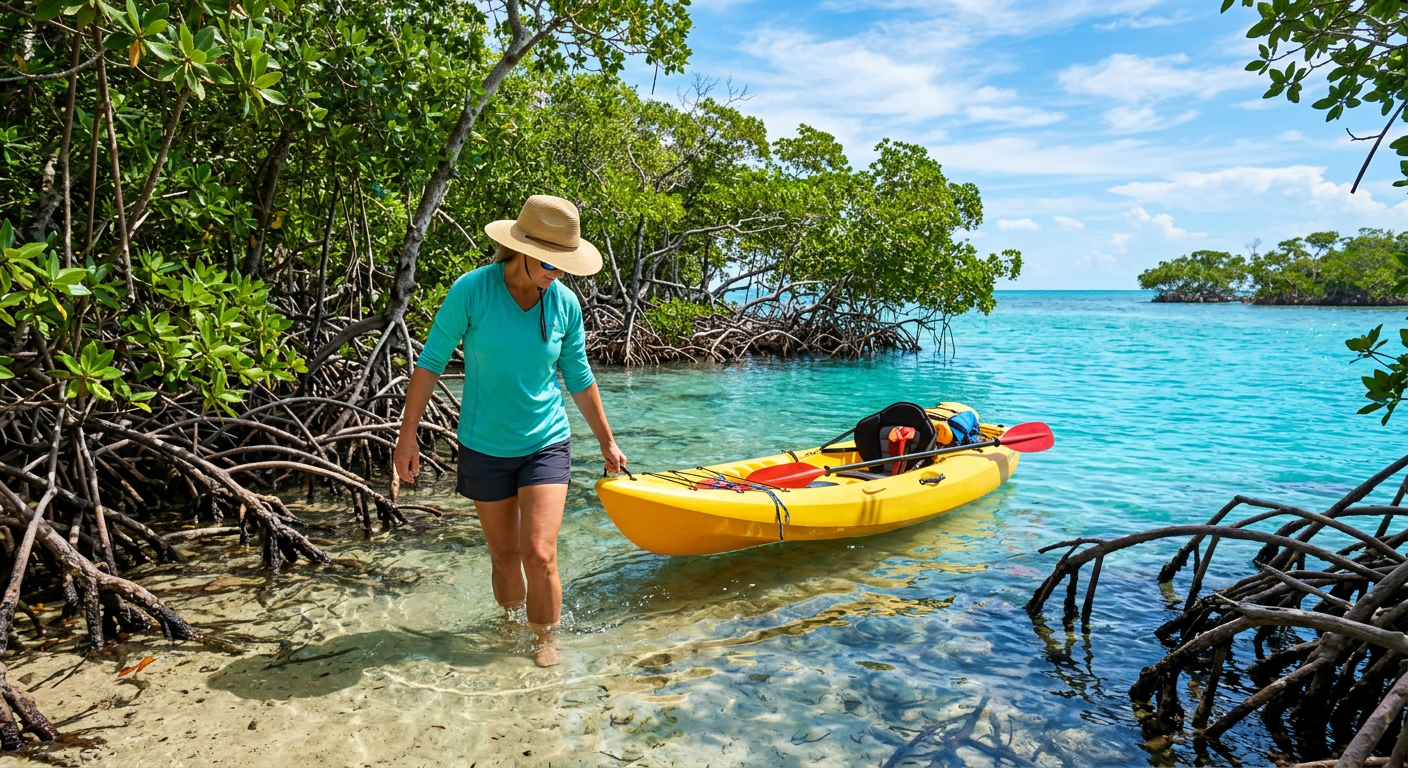
The taste of sea salt lingers on your lips as the Florida Straits tidal exchange commands your afternoon. High tide lets you glide straight over submerged mangrove canopy roots with inches to spare below the center fin. Low tide reveals a sprawling network of grass flats that routinely catch casual paddlers off guard. Dragging a rigid board a few yards through ankle-deep muck feels like a mile. The fiberglass scraping against the sand serves as a physical warning that you miscalculated the depth.
Getting Stuck on a Sandbar is Actually the Best Part
A rusted spark plug sat balancing on an exposed oyster bed near Cow Key. According to the National Oceanic and Atmospheric Administration daily predictions for Key West Harbor, high slack water provides a two-hour window for effortless navigation through the narrowest cuts. When the ocean rushes out, the navigable landscape shrinks fast.
The 2026 local paddling guides stress the importance of avoiding the flats during negative tides. The fear of getting stranded pushes most people to stick to the motorized boat channels. I always agreed with this cautious approach until I misread the chart near Geiger Key. The trailing fin dug into a muddy ridge. My forward momentum stopped dead, and I nearly pitched face-first into the shallows.
Being stuck on a sandbar is brilliant. The accident forces you to stop paddling. You step off the board, put your wet feet in the gray sand, and just listen to the tide pushing through the root systems. The water dropped a few inches by noon. The exposed roots were gray and covered in barnacles. A small green heron landed on a low branch in the sun. If you spend your whole trip staring at a watch, you miss the actual mechanics of the estuary.
You have to read the water. Align your launch window with the incoming tide. Ride the current inward. The outgoing tide then sweeps you back out toward the marina basin. It is basic arithmetic.
4 Reasons Why the Shallows Outperform Deep Water Safaris
The rhythmic slosh of water against the rail goes silent as your paddle blade digs into the soft gray mud. A southern stingray abandons its camouflage in the silt. It glides away into the adjacent turtle grass. This interaction anchors the reality of navigating the flats on a solid board. Sitting in a boat, you spot the ray only after it spooks. Standing on an SUP, you see the outline buried in the sand ahead of you.
Postcard racks on Duval Street promise pods of bottlenose dolphins surfing off your bow. If it is on a postcard, it is a trap.
According to authoritative 2026 data from NOAA Fisheries, coastal marine mammals stick to the deeper Atlantic channels. The nearshore grass beds serve as nurseries for smaller marine life. Stop straining your neck looking for blowholes.
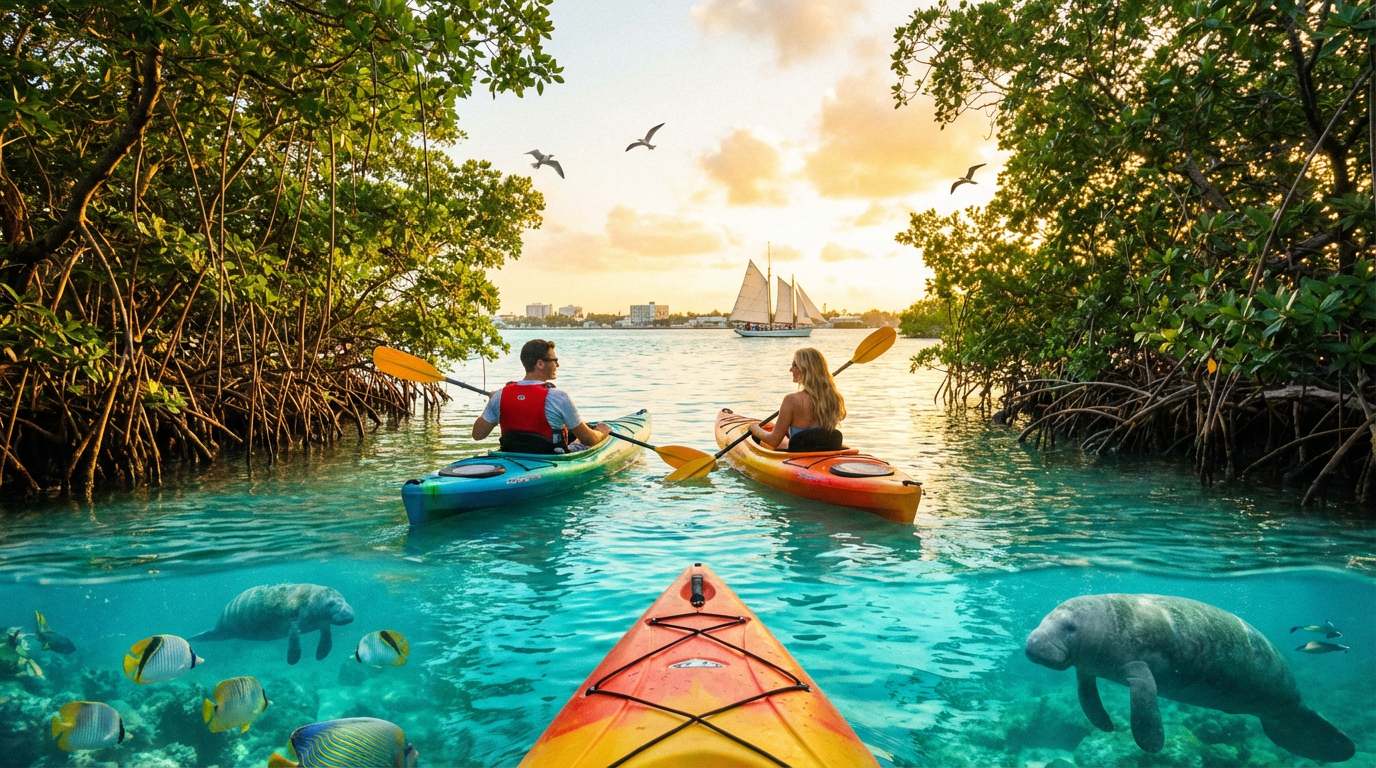
Spotting Manatees and Nurse Sharks from Above
The sudden splash of a brown pelican crashing into the water echoes off the channel walls. They hit the surface with the grace of a dropped cinder block. The local fauna requires a methodical approach. You will see upside-down jellyfish resting on the sandy bottom looking like discarded contact lenses.
The water is clear green. The sand underneath transitions from white to gray. A brown bird sits on a wooden post.
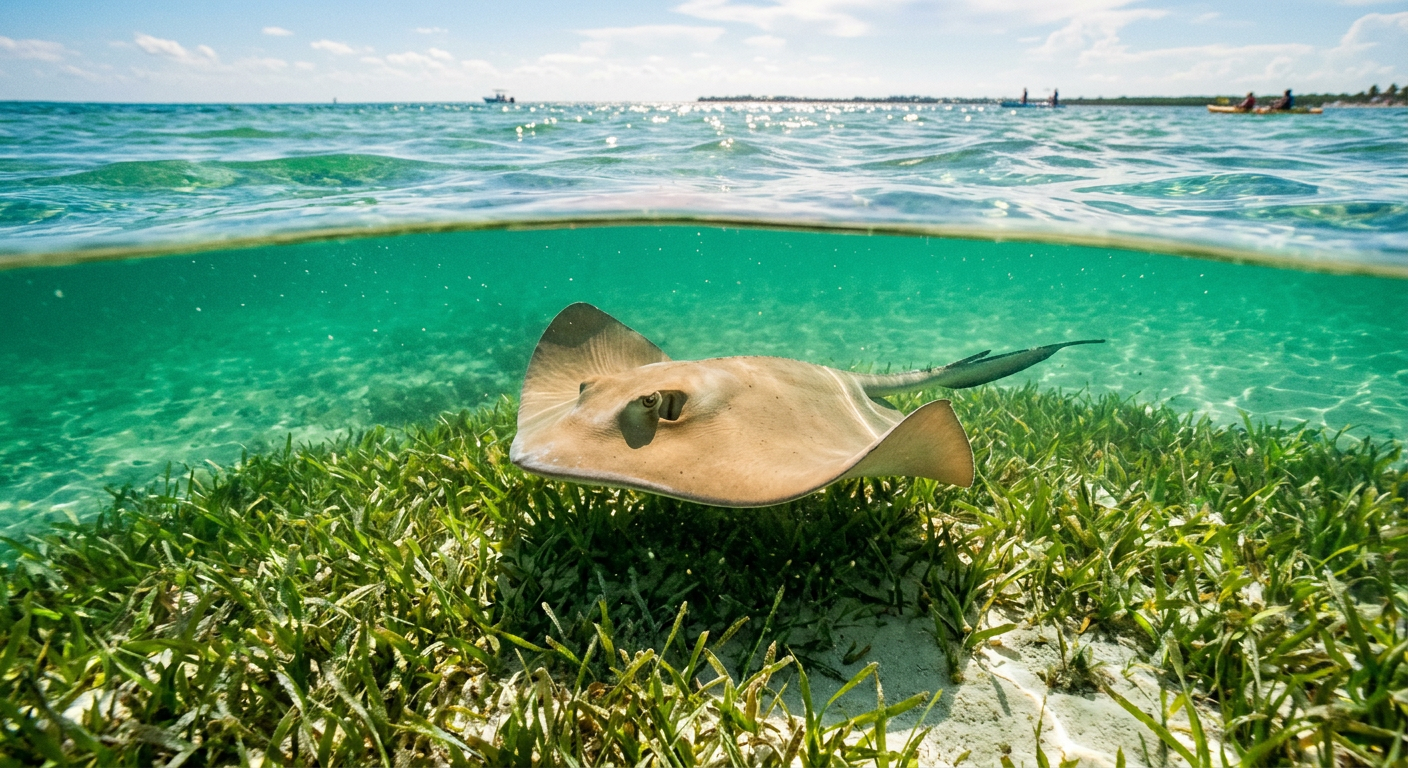
A plastic bottle cap floated past the port side. For years, I directed guests straight over the seagrass on the assumption it was empty terrain. Catching sight of a juvenile nurse shark resting beneath a limestone ledge shifted my stance. I had dismissed the primary habitat. The shallows command the core mechanics of the ecosystem. The elevation of a paddleboard gives you the exact downward angle required to pierce the surface glare.
Watching the bottom takes a few miles to master. The dark patches indicate dense grass beds. The light zones denote sandy clearings. Most marine hunters wait on the edges of these terrain transitions. A solitary barracuda idled near the mangrove roots. Keep your eyes on the grass.
Navigating the Mangrove Tunnels on a Paddleboard
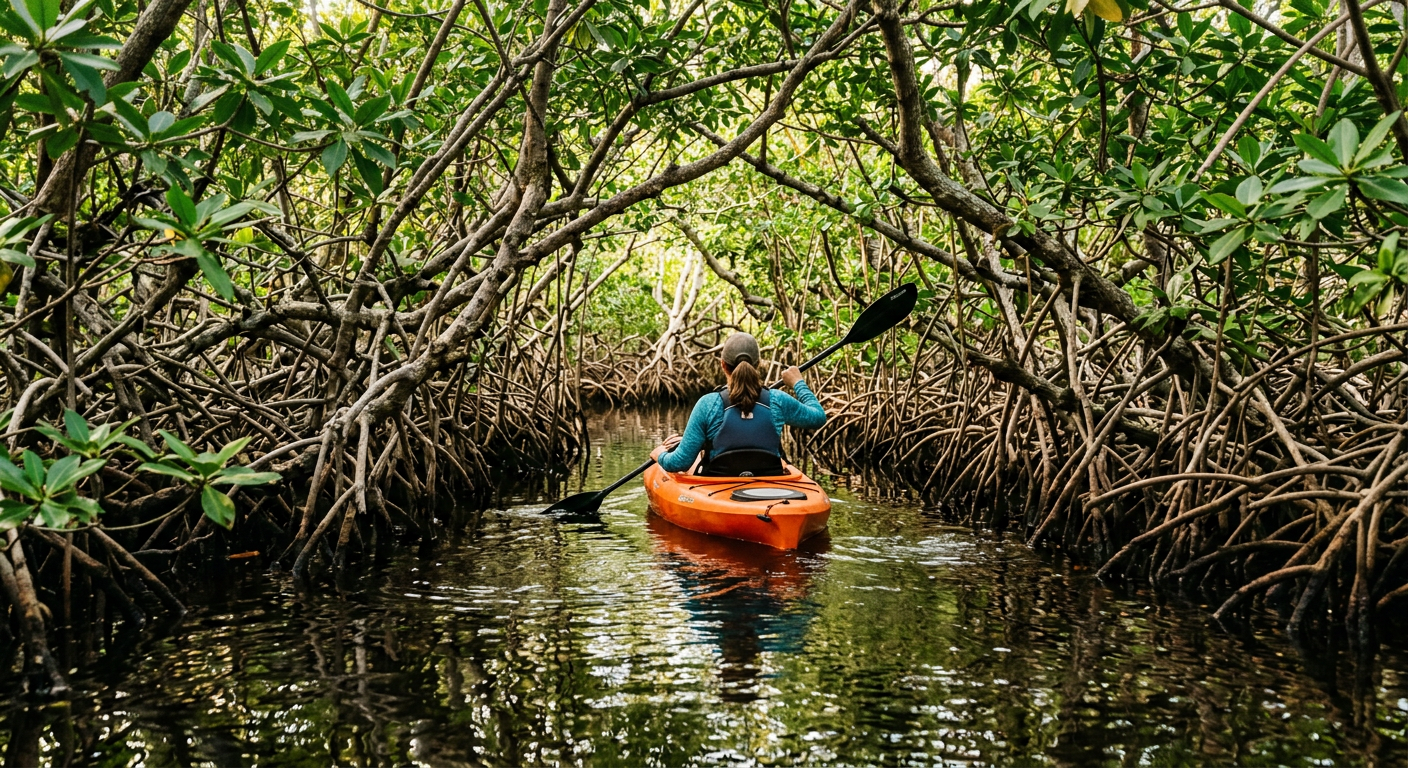
The sticky humidity wraps around your neck like a damp towel the minute you enter the dense foliage of the backcountry corridors. You duck your head to dodge a low branch. The channel entrance is narrow. Green mangrove leaves block the sky. The salt water below is shallow and clear.
This is the moment where standing on a board gets complicated. Tunnels designed by nature do not accommodate someone standing six feet tall on a foam pad. You have to drop to your knees. Sometimes, you just sit flat on the traction pad and paddle like a conventional kayak. The physical humility of crouching down to squeeze under a web of red mangrove roots is strangely grounding. Trust your gut on this—the temporary discomfort is a fair trade for the solitude.
The Required Humility of the Green Canopy
The one thing I would change about this route is the occasional spiderweb. You squeeze through a tight gap and brush a sticky thread off your cheek. Do you mind a few bugs when the reward is a private corridor through the ocean? The minor mess feels justifiable.
Renting proper gear from a reliable outfitter like Rockon Recreation Rentals ensures you get a board wide enough to remain stable while transitioning from standing to kneeling. You can maneuver the board with subtle shifts in your body weight. The quiet approach prevents you from spooking the small lemon sharks that use these protected areas to hunt.
5 Reasons Why Evening Sessions Beat the Midday Heat
The metallic scent of drying seagrass wafts off the banks as you push away from the treeline. You might question why you traded a functional bar stool for the dark backcountry waters. That hesitation evaporates the moment your board slices outward into the open channel.
The fading twilight surrenders to the night. Floating excursions after dark promise a rare glimpse of glowing bioluminescence. The ritual application of bug spray is part of the territory when chasing the best maritime conditions of the day.
Losing Your Sightlines Upgrades the Experience
I kneeled on the fiberglass deck through the channel near Sugarloaf Key. The water was dark. A small silver fish jumped out of the water and landed on the nose of the board. I turned my headlamp off to let my eyes adjust.
I always dreaded the idea of navigating after sundown because I rely on the horizon to check the incoming swell. Gliding through those unlit mangrove trails, the loss of visual cues reframed the trip. I found that feeling every vibration of the water against the fin beneath my feet was grounding. The natural rhythms become clearer when you stop trying to catalog them visually.
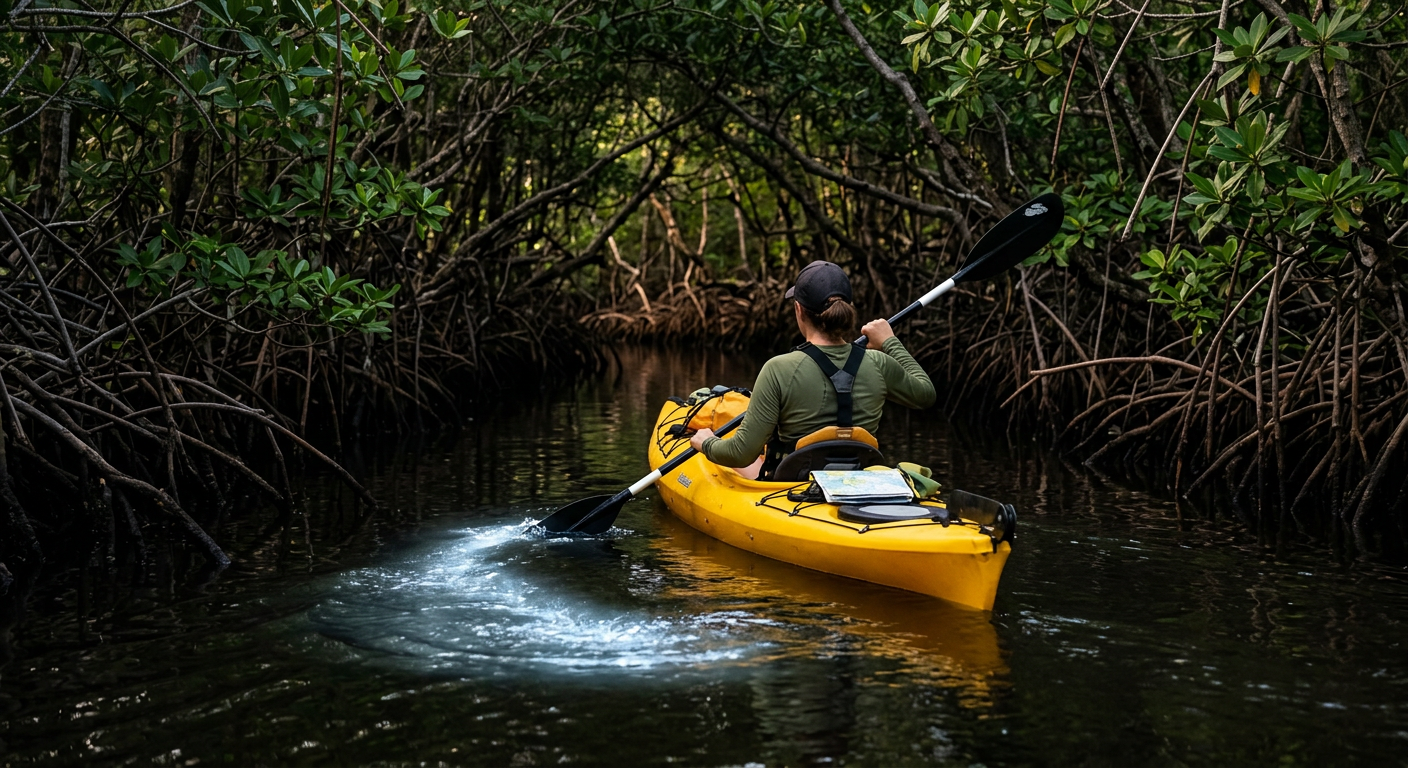
A short piece of red synthetic rope hung tied to the lowest branch of a black mangrove tree near the bank. Giving up your sight lines turns out to be an unexpected advantage.
What Glowing Water Actually Looks Like in Reality
The rhythmic slurping sound of the tide retreating marks your arrival at the shallow basins. This is where a night session offers sensory rewards you cannot replicate at noon. Do not expect Las Vegas neon flashing beneath your board. It is a ghostly white spark that trails off your paddle edge when you break the surface.
According to the National Ocean Service, this glow is a chemical defense reaction marine organisms use to evade predators. Booking a scheduled night excursion guarantees you get the regulated navigation lights and a guide familiar with the nocturnal pull of the straits.
A sudden chill sweeps across the water as you float through the final channel. The crackling sounds of snapping shrimp fill the water column. The larger fish jump more frequently when they know you cannot see them coming. You hear a loud splash three feet to your left. Then a harmless thump sounds against the fiberglass rail. You paddle with the ocean, let it push you toward the dock, and accept that standing above the flats beats looking at them from the pavement.
Plan your trip: Ready to experience this firsthand? Book Key West Paddle Boarding – Explore the Mangroves directly through our marketplace.